The Thaw at Taughannock Falls

A Friday Evening Stroll through a February Thaw

Pam and I were drawn outside the day after Valentine’s a bit of sun, an unreliable warm breeze, a promise of exercise. Our expectations were disappointed for all but the last at the foot of the Taughannock Falls gorge trail.

We had a reminder mid-February marks the start of avian mating behavior with this addition to the view from Taughannock Creek, the first large waterfall. For the cold, drizzly excursion I chose the IPhone, in a waterproof case, for the images. The fanicful birdhouse inscription reads “The Old Birds from Pa.”
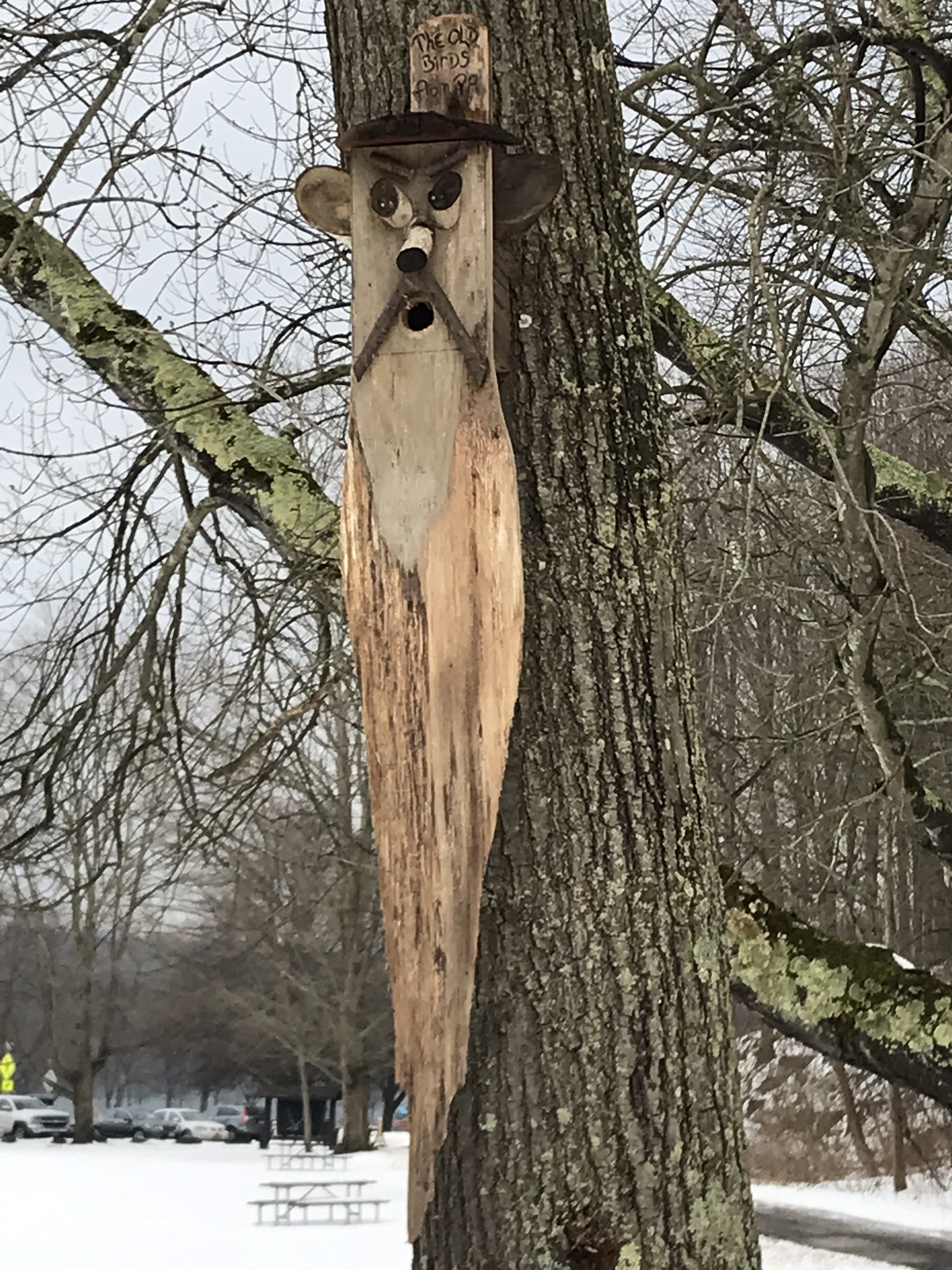
Click the photograph for my “Finger Lakes Memories” Online gallery.

The winding gorge takes a general east, southeasterly direction. Where the sun cannot reach the snow was reduced to a treacherous slushy ice mix more nasty than dangerous.

View from the Overlook on the way to the trail. This is the endpoint of our hike, viewed from the gorge rim.

Of all the area hiking experiences, Taughannock Gorge Trail is the only one available year round. The gorge is wide with enough room for the footpath to avoid the cliff edge. Today, there were places were ice formations were throwing large ice chunks down the slope. The park ranges place tree trunks along the cliff base, with warning signs to stay away. Still, there are visitors who stray too close with fatal outcomes reported by local news.

Pam was fascinated by the appearance of snow and ice accumulated on the talus, here seen from the Taughannock Falls viewing bridge.

Click photograph for my “Finger Lakes Memories” online gallery. Photo by Pam.

You can just pick out the viewing bridge in the Falls Overlook video.

Click photograph for my “Finger Lakes Memories” Online Gallery.
Photo by Pam.

Taughannock Falls bound by ice is a most dramatic sight. I need to post photographs from a 2005 visit during an especially frigid February. Here, the falls have thrown off the ice, leaving this house-size chunk.
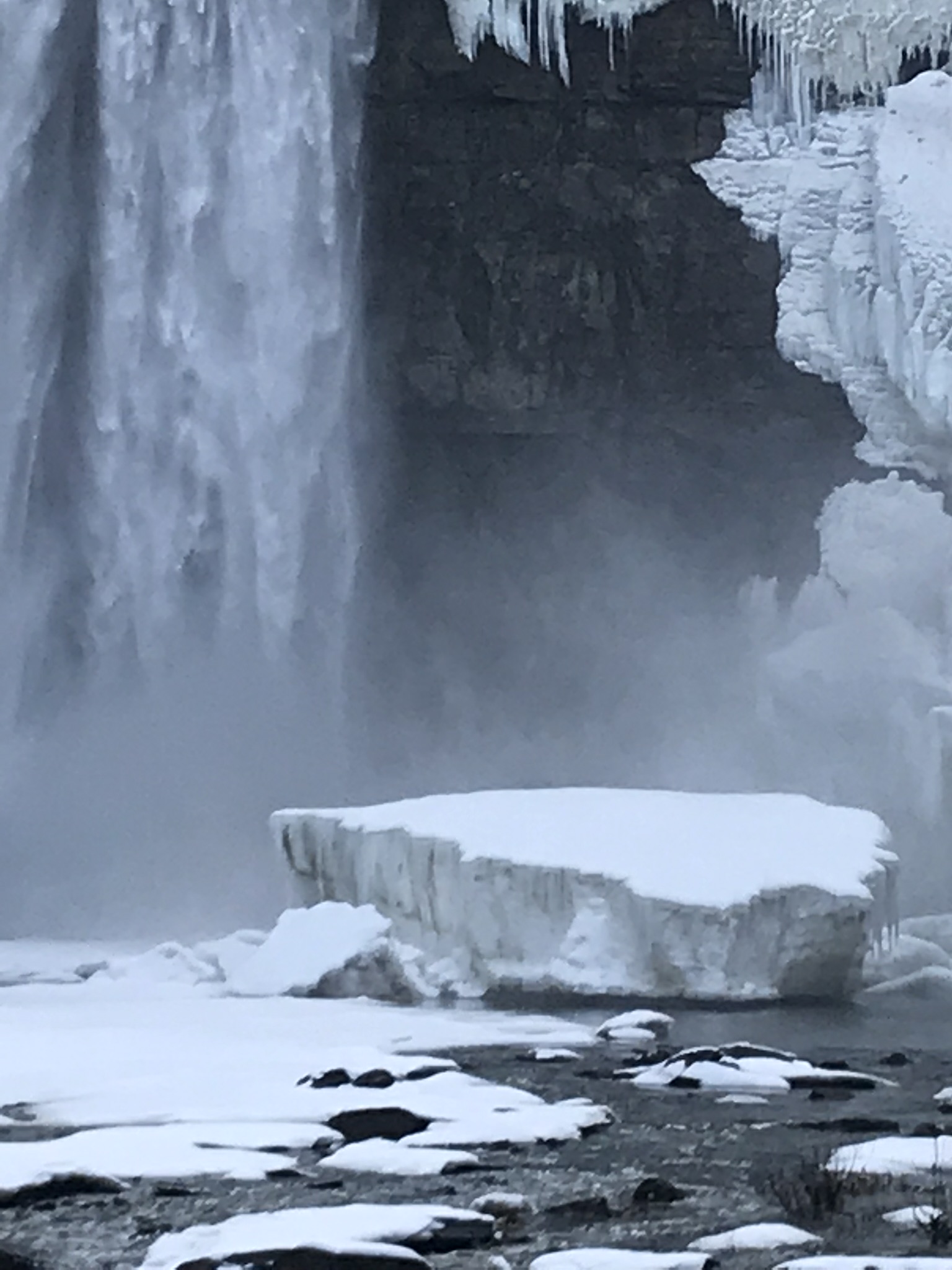
Click photograph for my “Finger Lakes Memories” Online Gallery

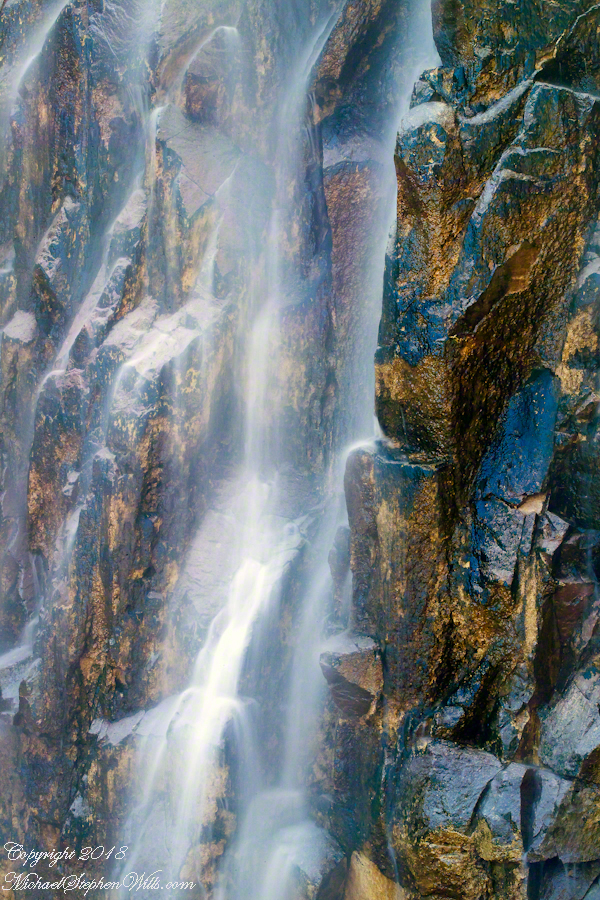
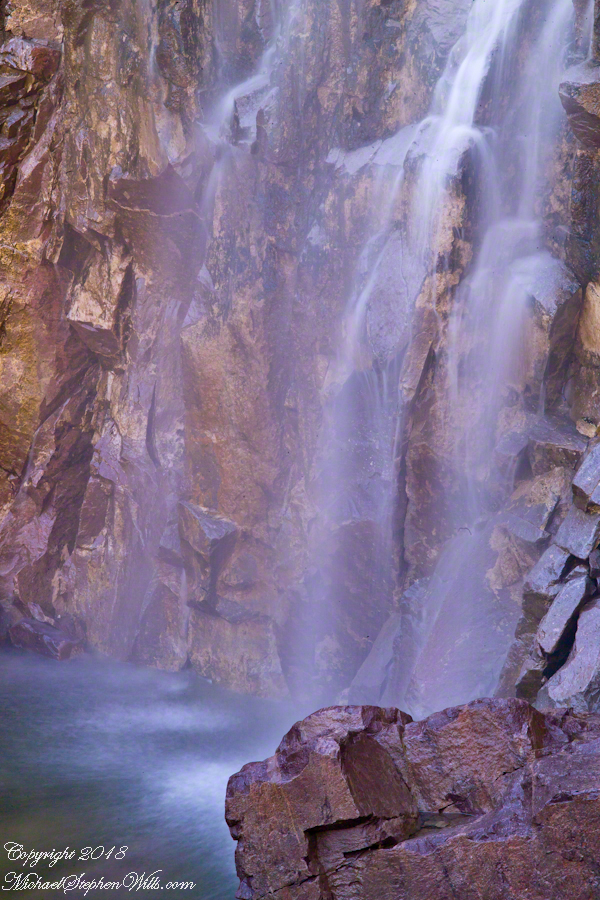
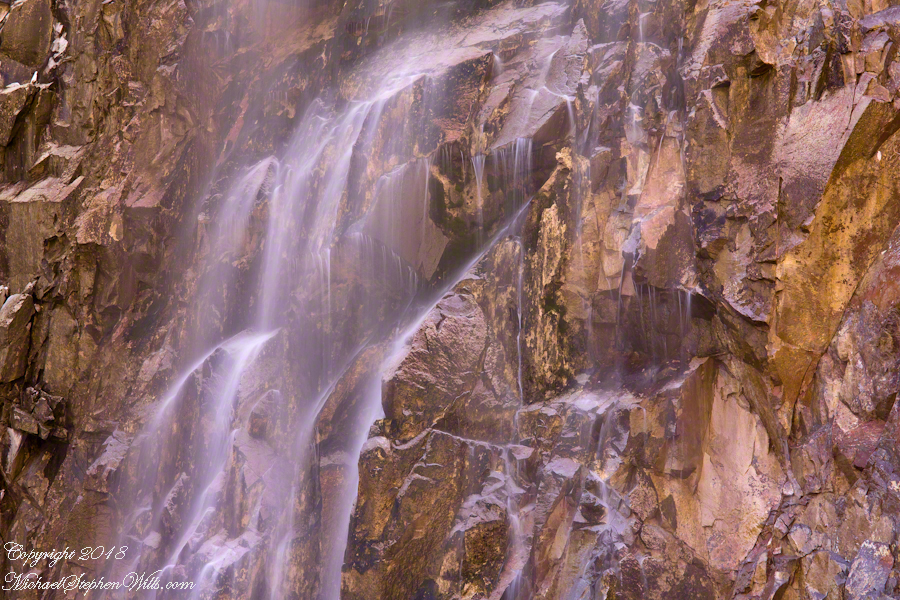
The surrounding gorge walls are continually frost coated by the mist.
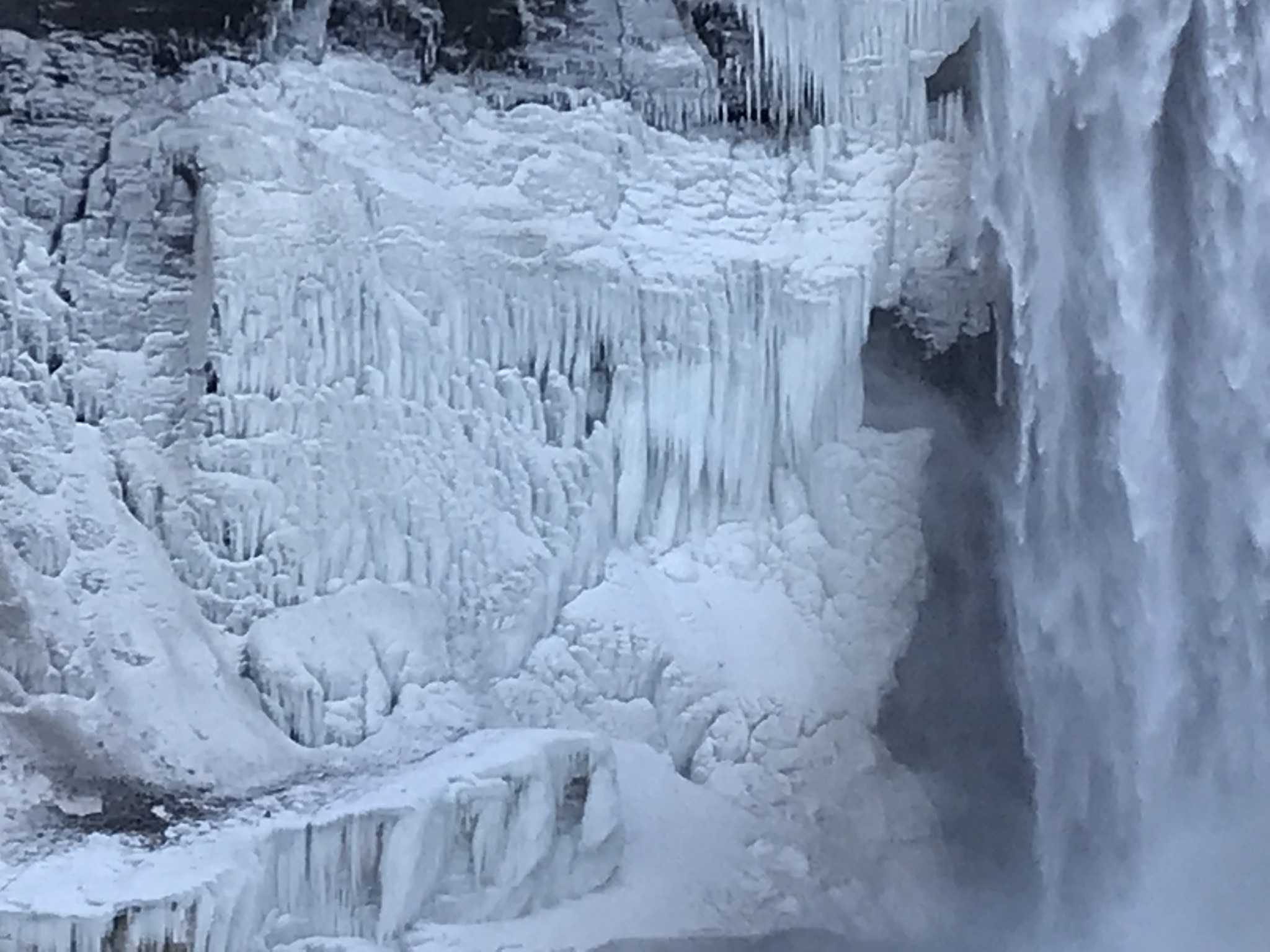
Click the photograph for my “Finger Lakes Memories” Online Gallery
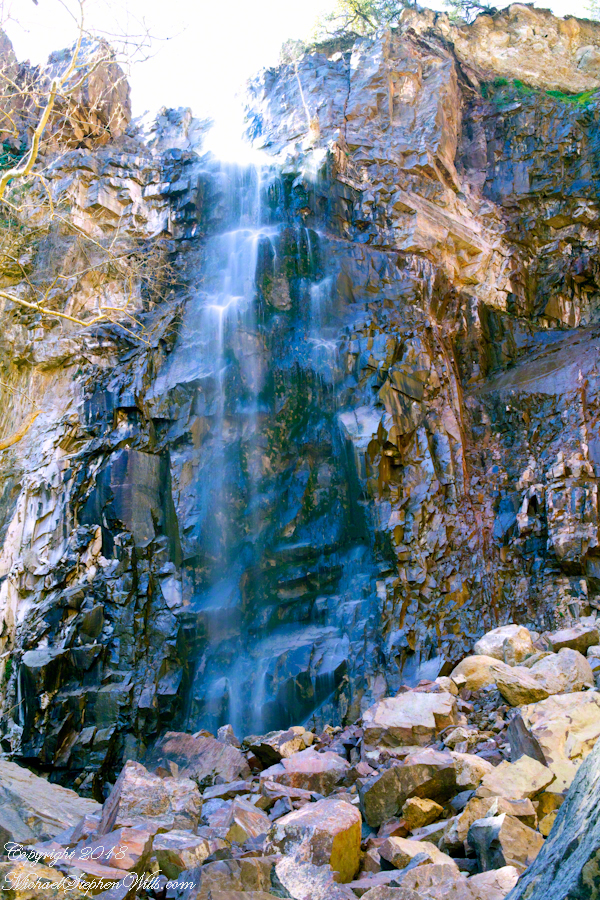
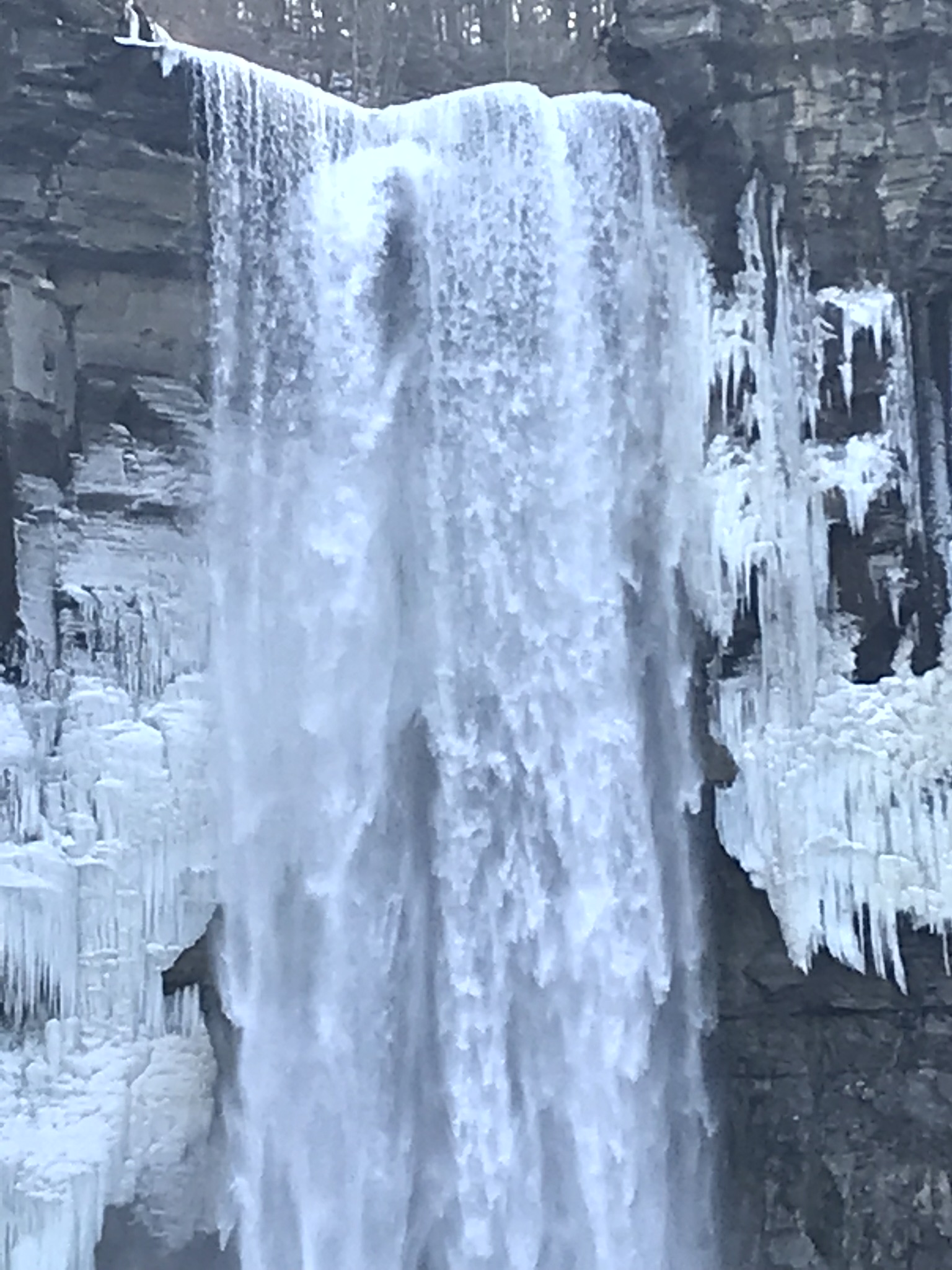
210 foot Taughannock Falls from the viewing bridge.

In more clement seasons the Gorge Trail ends much closer to the falls. Today, it was closed as, during winter and especially thaws, blocks of the sandstone cap break away to fall with great force across that part of the trail. This viewing area is visible in the Falls Overlook video.
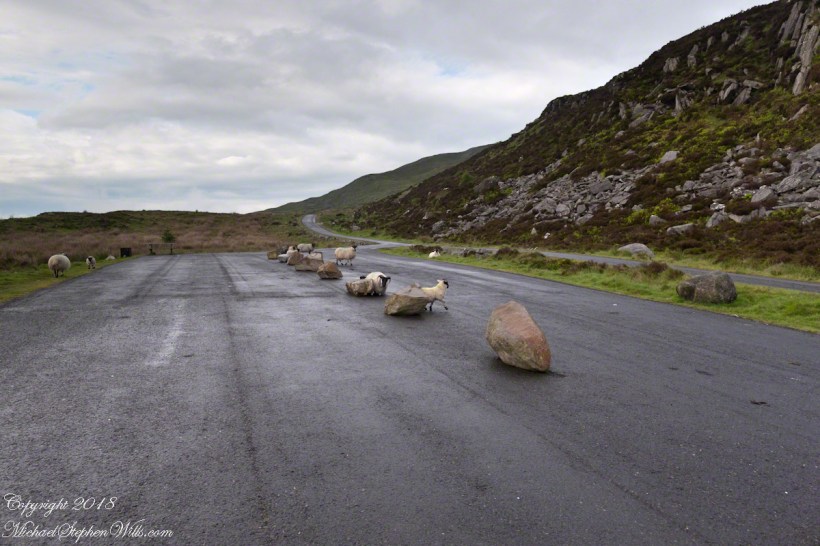
Above Muirthemne Plain

Romance of Ruins

This series of posts started with “Proleek, Grandfather McCardle’s home” where we explored the site of great grandfather James McCardle’s Proleek farm.  A kilometer from there, at Proleek Dolmen, the ancient portal stones line up to face the plain rising to Slieve Gullion, a name for the mountain taken from the Irish,  Sliabh gCuillinn, meaning “mountain of the steep slope” or Sliabh Cuilinn, “Culann’s mountain.”

There is an connection between Proleek and Slieve Gullion.  Cycles of Irish Myth place a boy named Sétanta living on Muirthemne Plain, of which what we call Proleek Townland was a part.  One day, the king Conchobar was passing his kingdom, Muirthemne, on the way to a feast on the slopes of Slieve Gullion hosted by the blacksmith Culann when he stopped to watch boys playing hurling, Sétanta among them (it is ironic the Proleek Dolmen is surrounded by a golf course in modern times).

Impressed by the Sétanta’s skill, the king invites him to the feast.  Having a game to finish Sétanta promises to follow.  As evening falls the boy approaches the smith’s house to find himself attacked by a huge, aggressive dog.  Acting in the moment, Sétanta dispatches the dog with the hurley and ball he had at hand, driving the ball down the hound’s throat.  (In another version he smashes the hound against a standing stone.)

Feeling Culann mourn the loss of his beloved animal, Sétanta promises to raise and train a guard dog equal to the one he slew.  Until that time he also pledged to guard Culann’s home.  From that time Sétanta was known as “the hound of Cullann”, Cú Chulainn in Irish.

References
Wikipedia articles “Slieve Gullion” “Cú Chulainn” and “Conaille Muirtheimne.”

The Striking Colors of Petrohué Waterfalls

Emerald Water, colored by glacial minerals

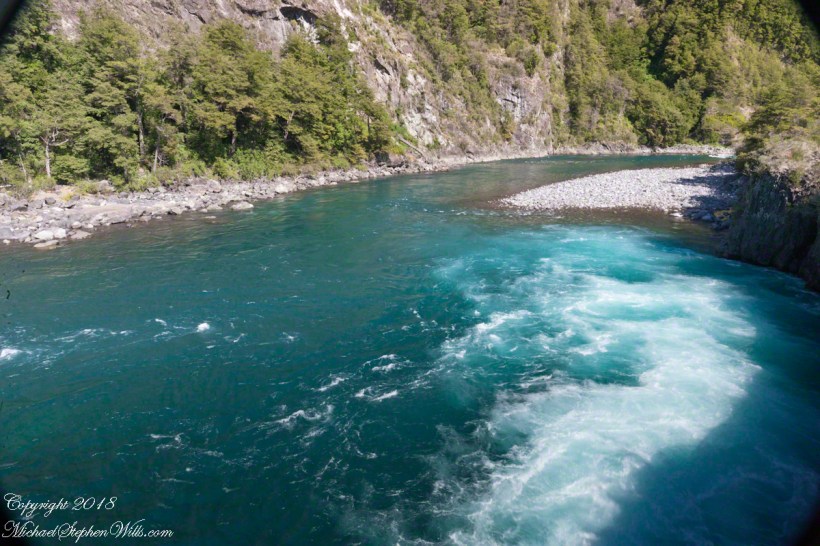
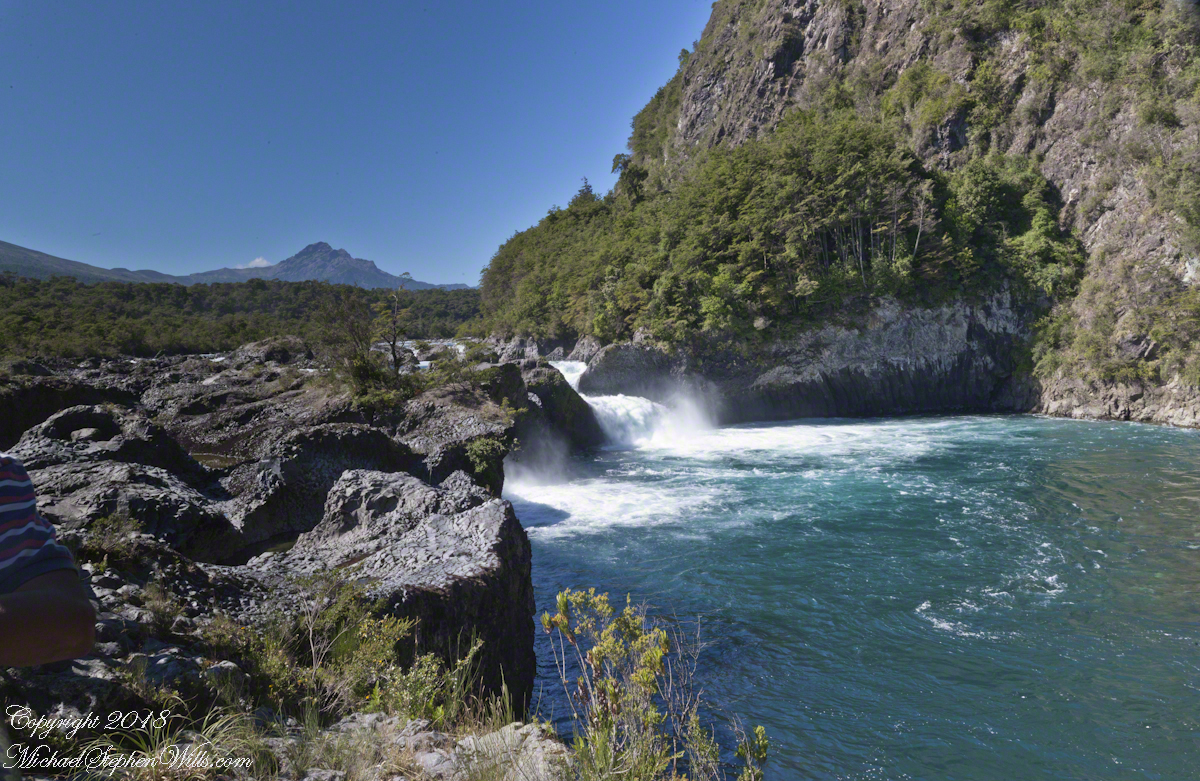
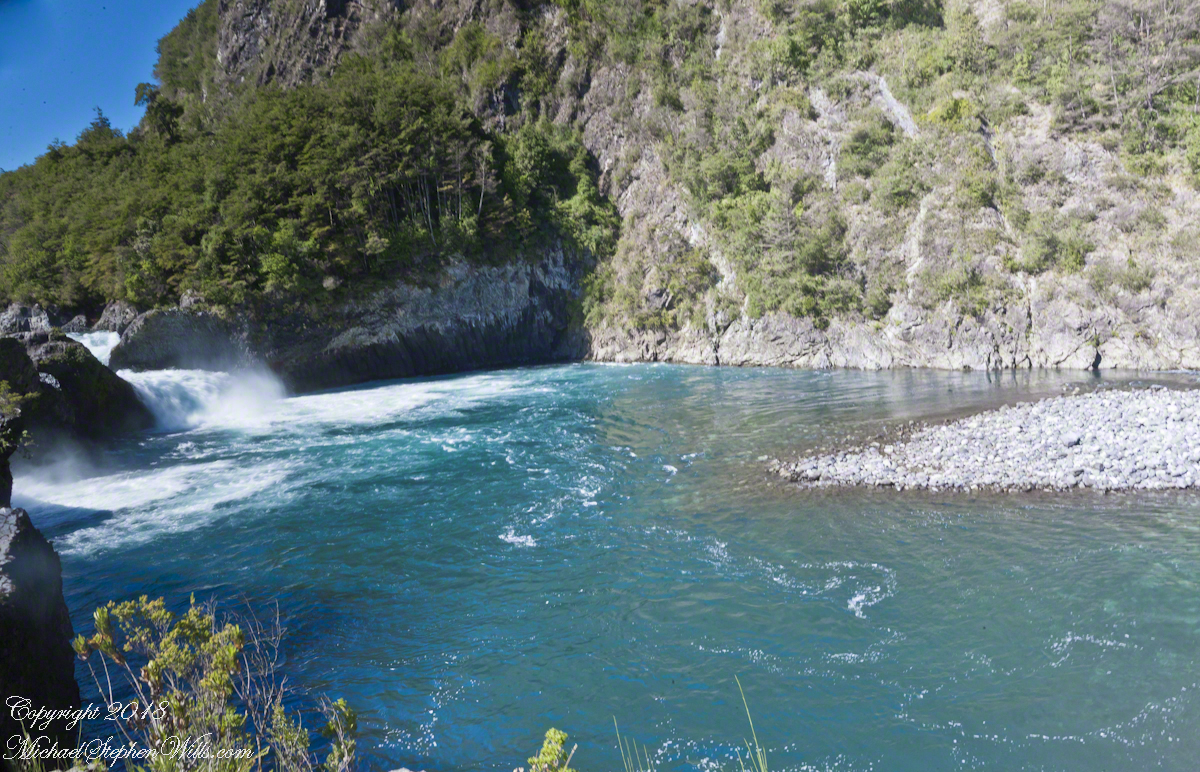
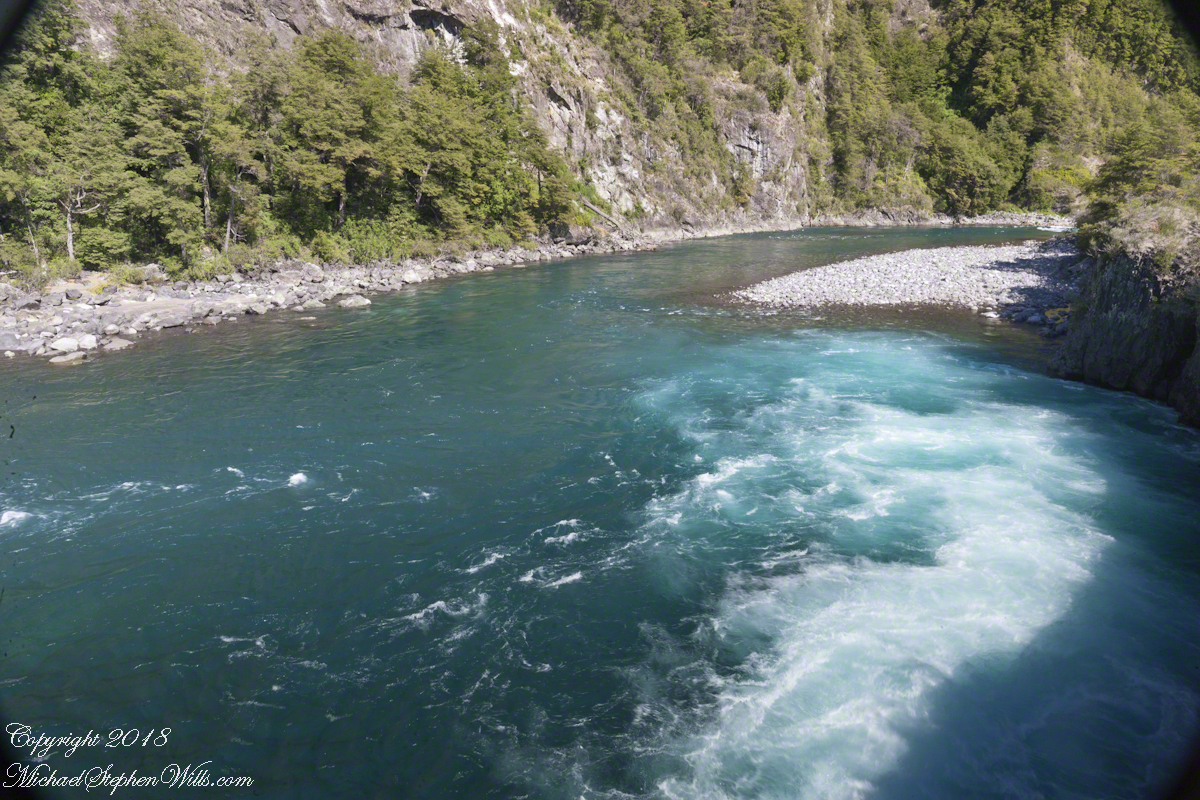
Glacial meltwater from Lake Todos los Santos (All Saints Lake) forms Petrohué River and, where the river flows over lava from the Orsorno Volcano, Petrohué Falls. This set of photographs features the emerald color the river originating from glacial minerals.

Click any photograph for a larger view.

A strangeness of these photographs is this is the middle of February, Chilean summertime.

Force of Nature

Another strangeness, not readily apparent, is the effect of the Coriolis force. Here in the Northern Hemisphere water (any moving mass, really) moving perpendicular to the rotating surface of the earth (a property of water is the surface follows the contour of the solid surface over which it flows) will tend to flow in a clockwise direction. Crossing the equator, in the Southern Hemisphere the tendency reverses, tending to flow to the left, counter-clockwise. With some imagination the effect of the Coriolis force can be seen in the following photograph.

First Water Trailhead

A desert garden with plans

First Water Trail Head

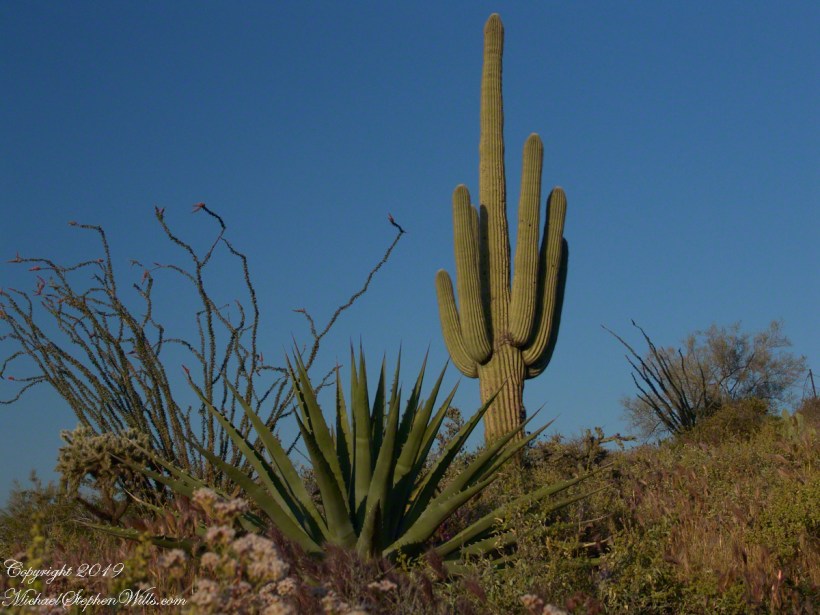
Notable Sonoran Desert Plants, all in the same frame. From the left, back row: staghorn cholla, ocotillo, saguaro. Front row: teddy bear cholla, yucca. I am not certain the greenery to the left of the yucca is brittle bush.
First Water trail head is the most used access point to the Superstition Wilderness, being the closest to Phoenix and its satellite cities and suburbs. For day hikers there are ample and interesting route choices as all foot trails of the west side terminate at First Water making for a variety of loops and incredible views. For horse people there are facilities to park huge trailers.

The ready access from Mesa, where my sister and husband had their home, was the primary reason I planned to finish my cross wilderness hike on the Dutchman Trail. Named for Jacob Waltz of the fabulous legend of the Lost Dutchman mine, the inspiration for The Searcher’s Superstition Wilderness expeditions and, ultimately, why he and I met and my change of plans.

On our ride over from Roosevelt he told of his difficulties building a home in Apache Junction, sleepless nights spent guarding building supplies from thieves. He looked forward to moving day.

This photographic record of five days in the wilderness would be much different without that meeting yet, there I was that afternoon with plenty of time for photography during the golden hours of late afternoon as I wandered the desert gardens until my sister arrived.

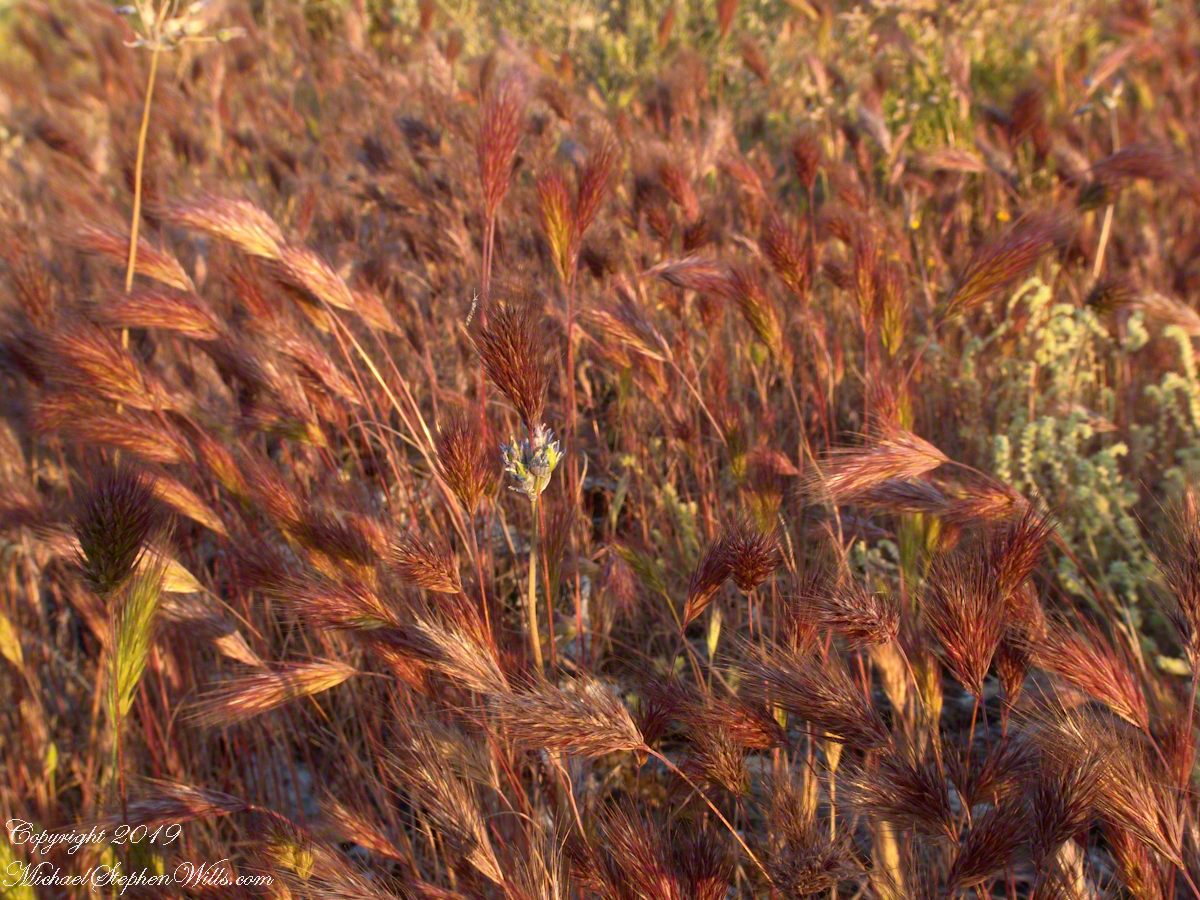
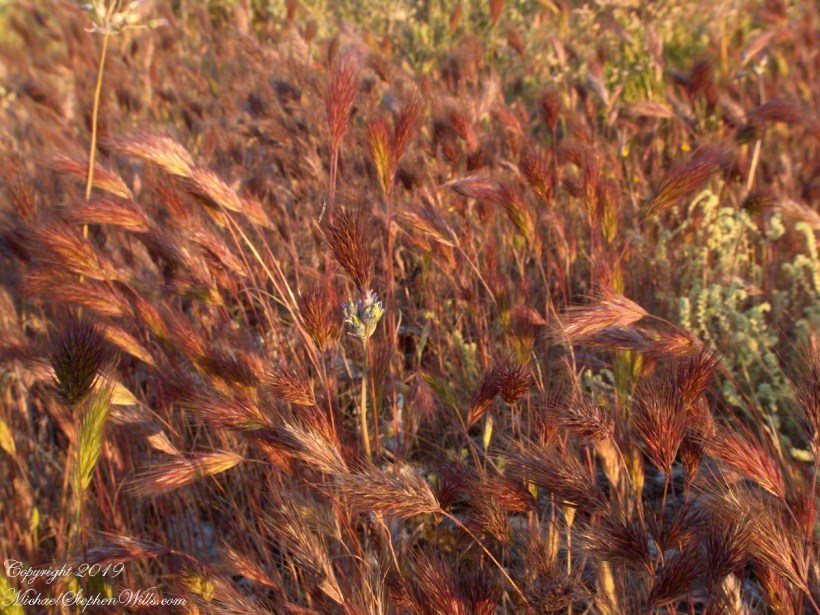
Wild Barley

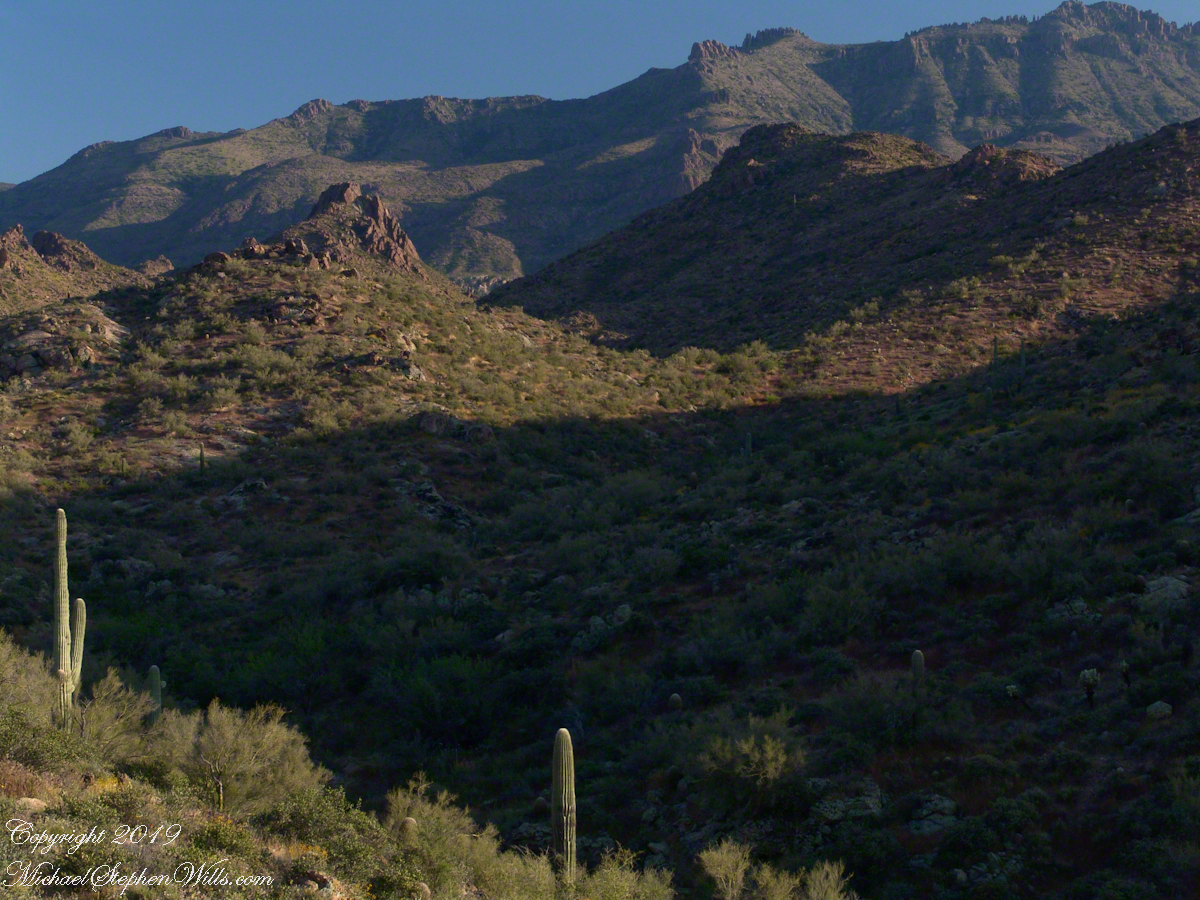
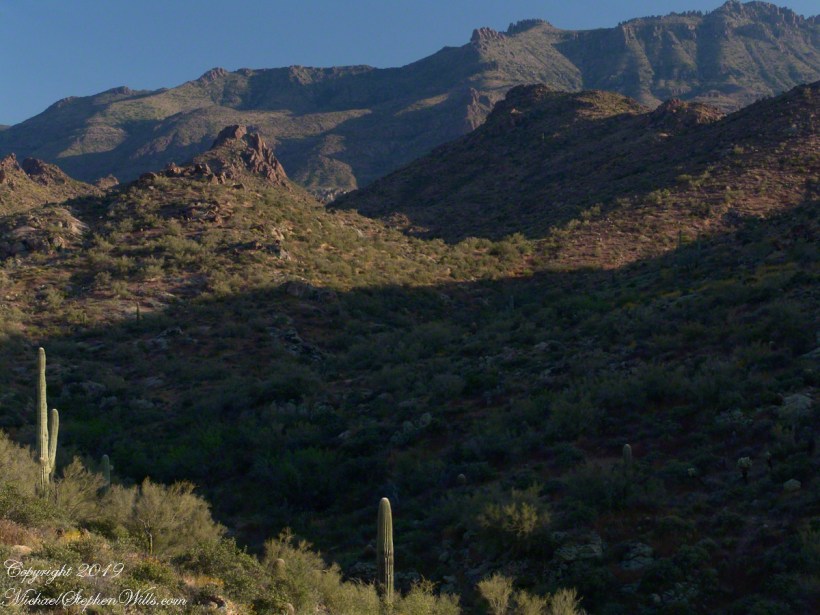
The long distant ridge beyond the rugged near hills is the backbone of the famed “Superstition Mountain.” On the far right are hoodoos, appearing as so many teeth on a jaw. Gorgeous saguaros in the foreground.

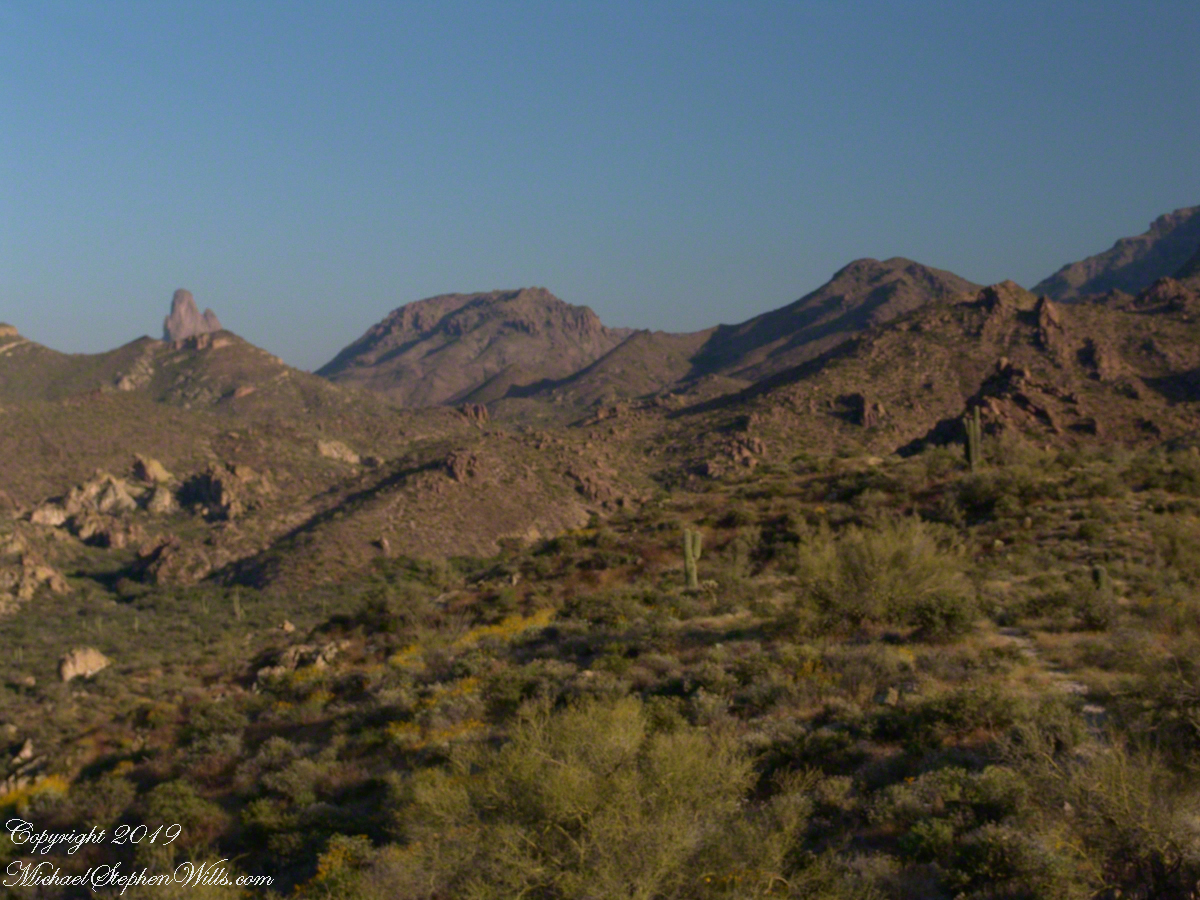
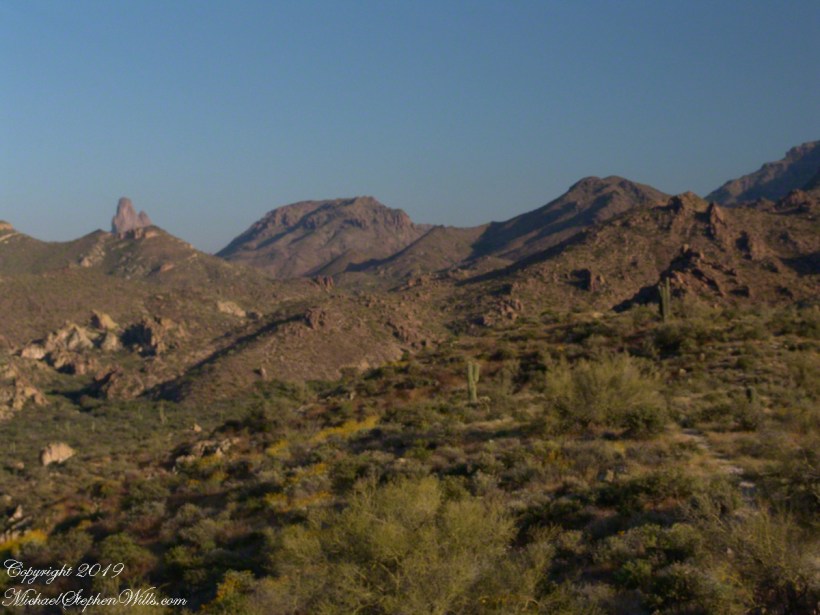
Weavers Needle is the distant peak, 5.5 dry miles away in this view to the west / southwest.

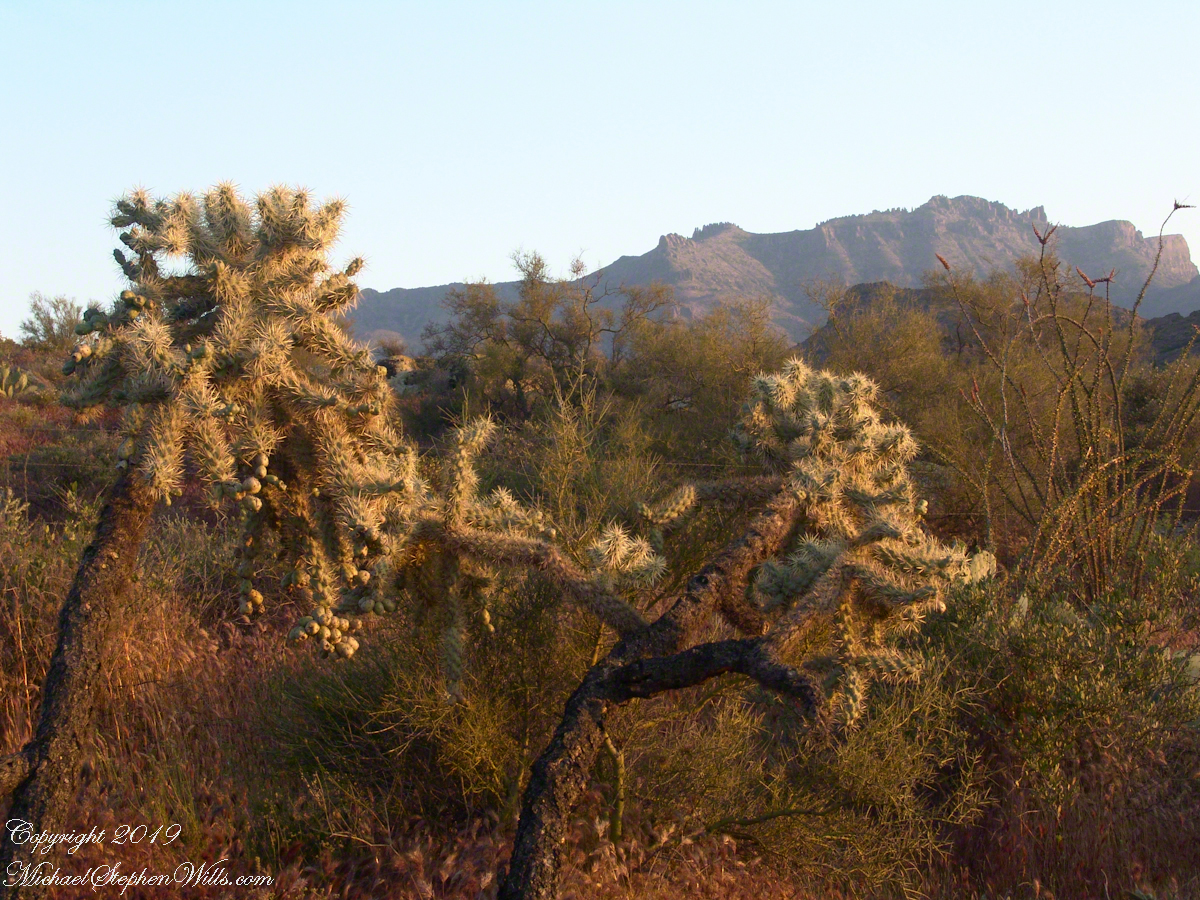
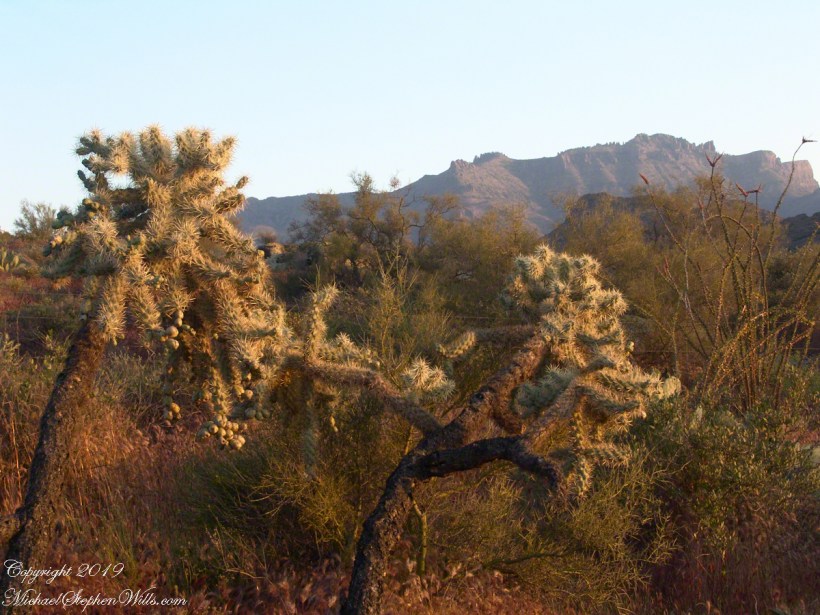
I’ve always been partial to how the dense spines of cactus catch the evening light. These staghorn chollas are in front of the same ridge of the Superstition Mountain. A famous formation, “The Flatiron” is visible on the far right.

The road to the trail head, Service Road 78, winds through 2.6 miles of hills. Here is another overview of Sonoran desert life.

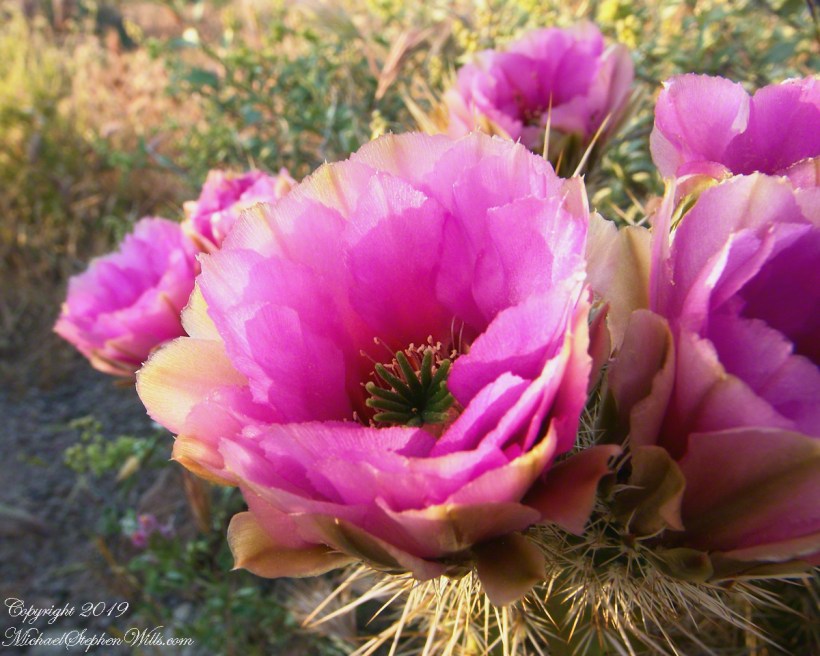
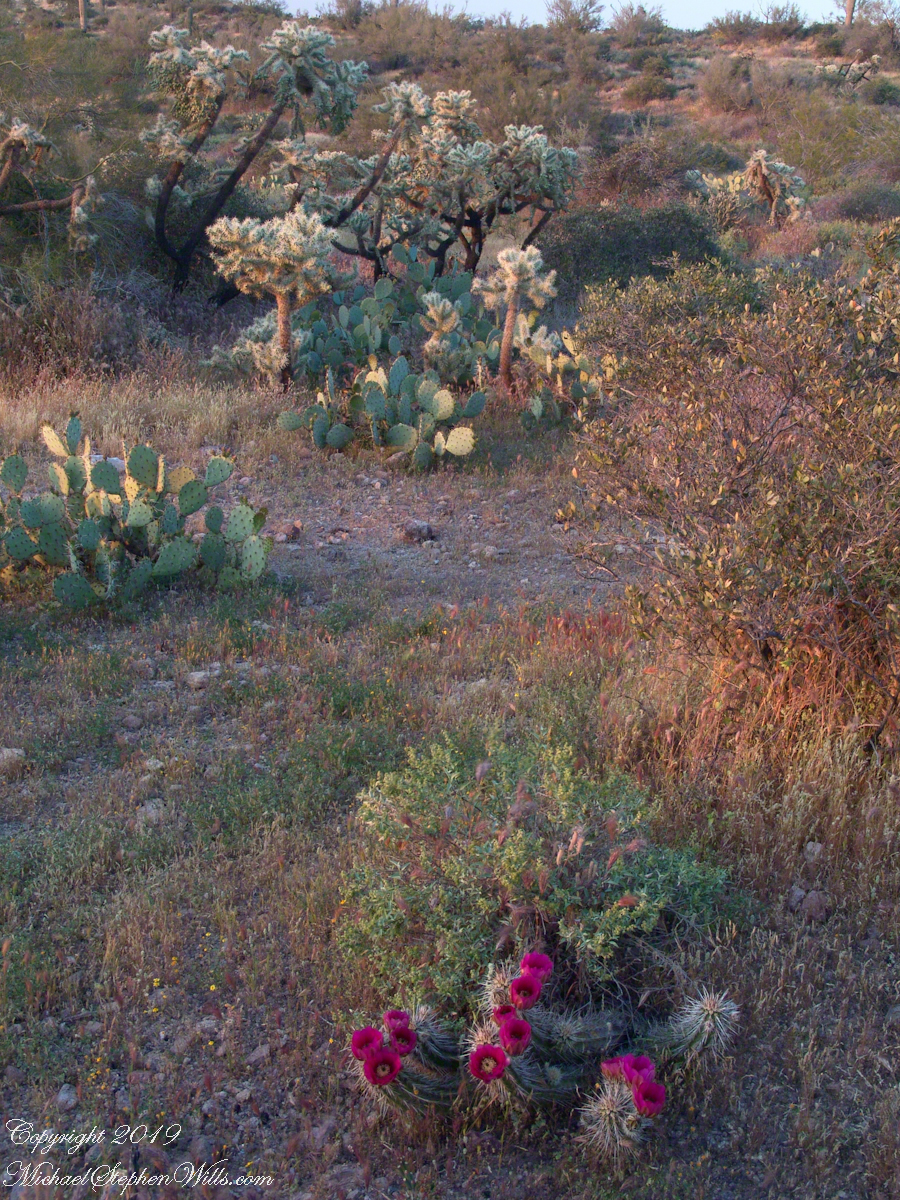
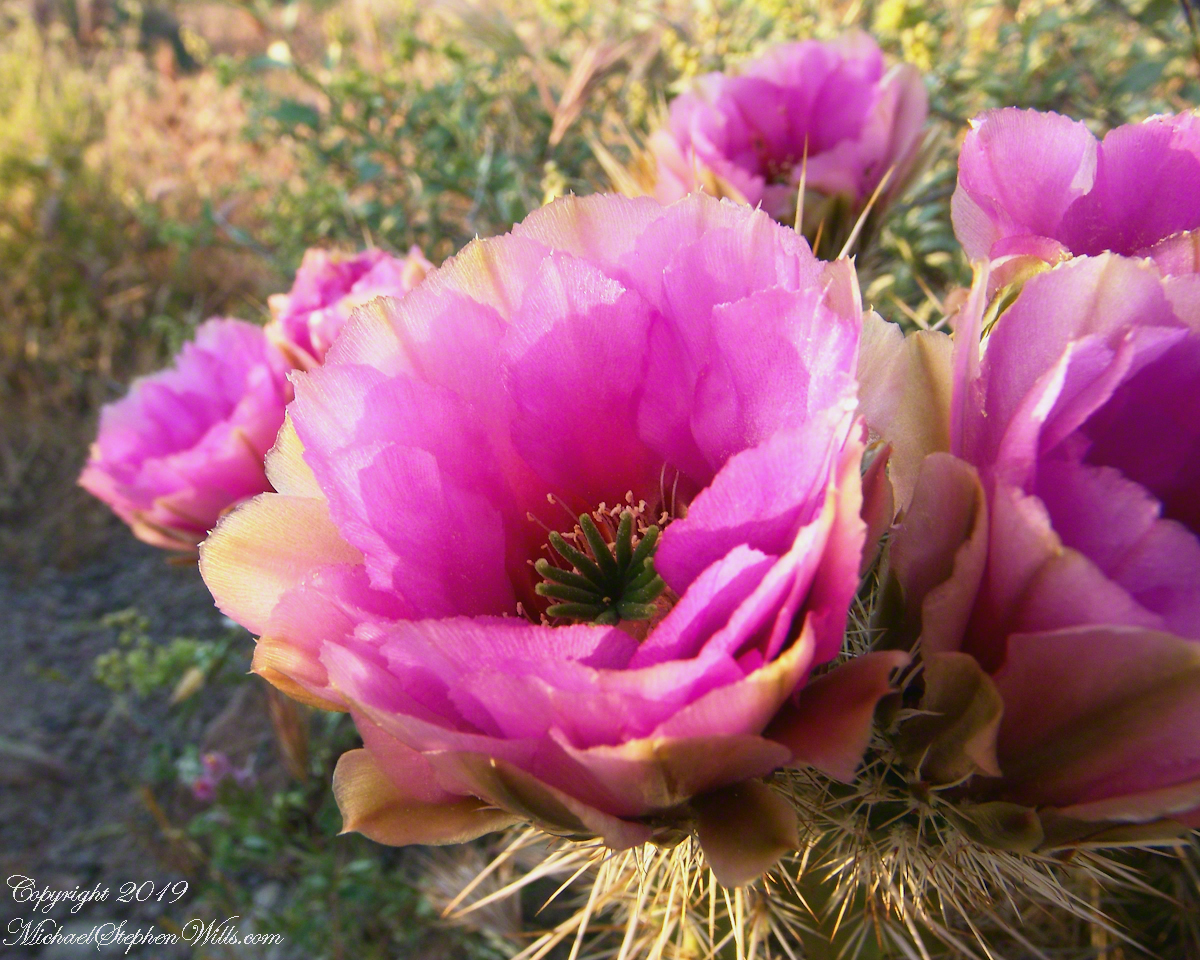
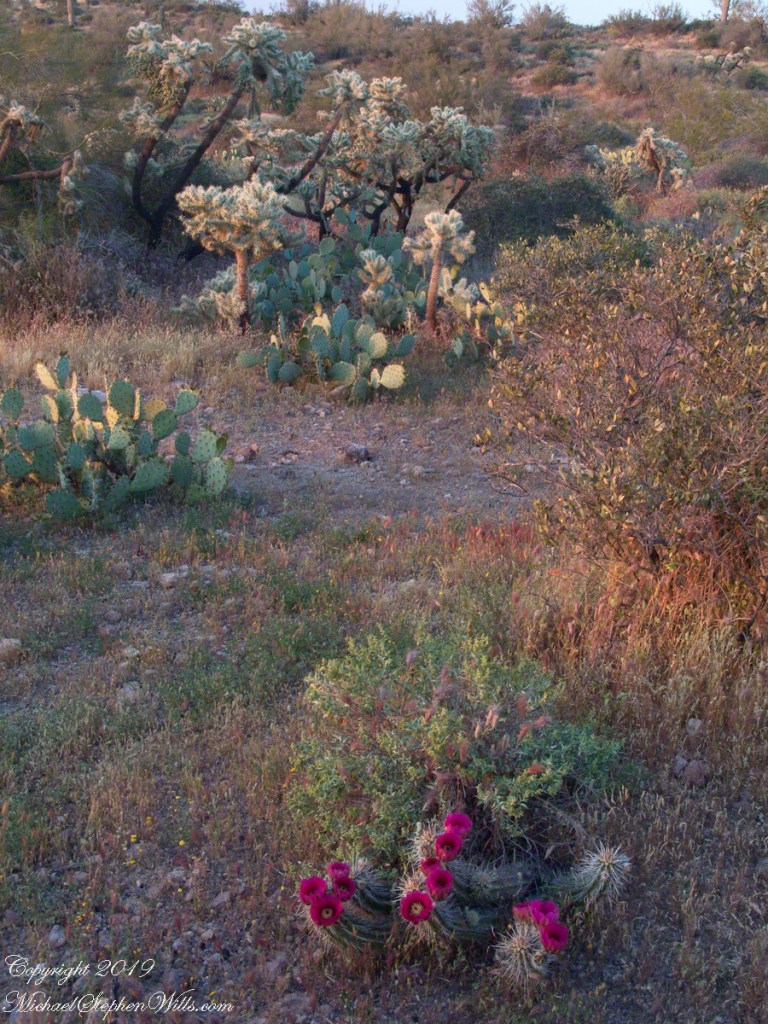
You might remember hedgehog cactus blossoms from my posting “A Dry Piece of Paradise”. The following are from the large hedgehog cactus in the foreground of the preceding photograph.

Future Plans

During the drive back with my sister, Diane, we talked of plans for returning to the Reavis Ranch together, as a backpack expedition. In coming days I met with The Searcher to explore possibilities for a horse expedition and, three years later, these plans came together for a trip kicked off from this same First Water trail head.

Hedgehog Cactus Blooms

Here is a gallery of the same photos. It is fun to flip back and forth with me disappearing from the scene.

Click me for the first post of this series.

End of the Beginning

Exploring Arizona in my Fifth Decade of Life

….continued from the chapter “A Rocky End to a Perfect Day.”

The Searcher arrived after breakfast. My camp was bundled up to join the rest of The Searchers equipment and supplies on Colorado’s panniers that replaced the saddle where I sat, and was dumped from, yesterday. This fifth morning of the adventure, I was to have the experience of a light pack for the 4.7 mile trail from Pine Creek to Campaign Creek, past the Reavis Mountain School of Self Reliance.

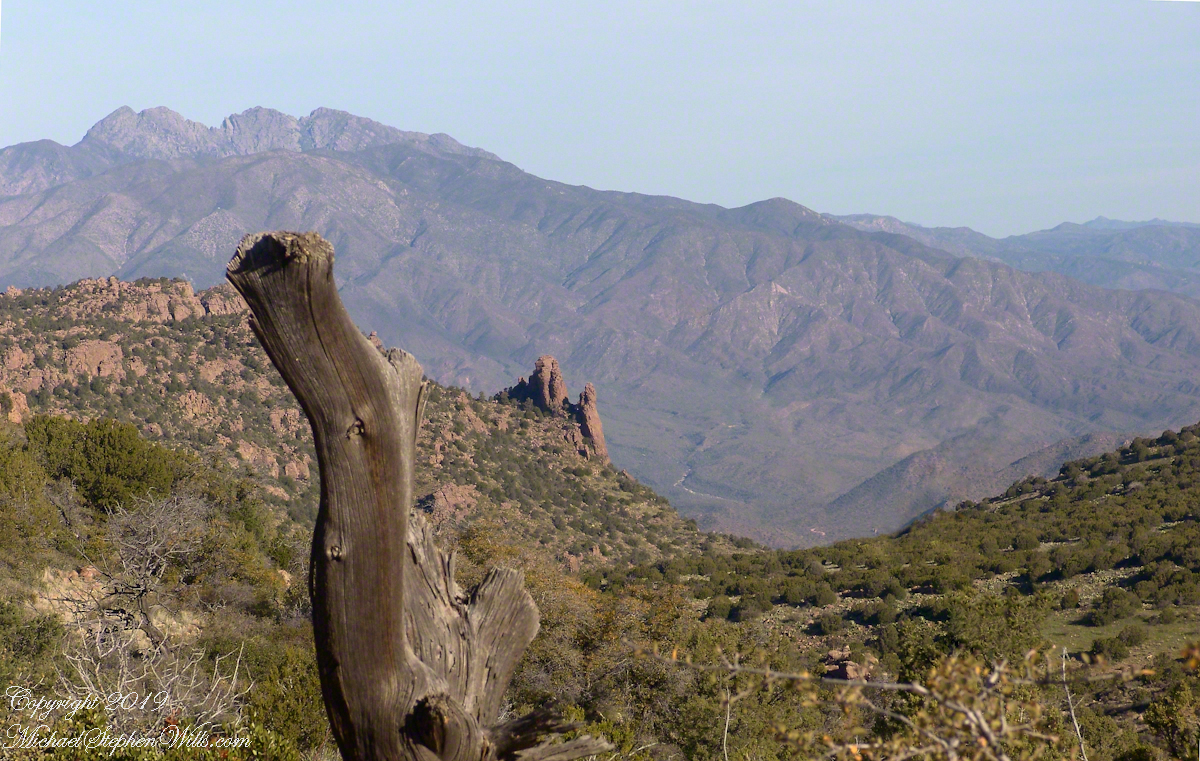
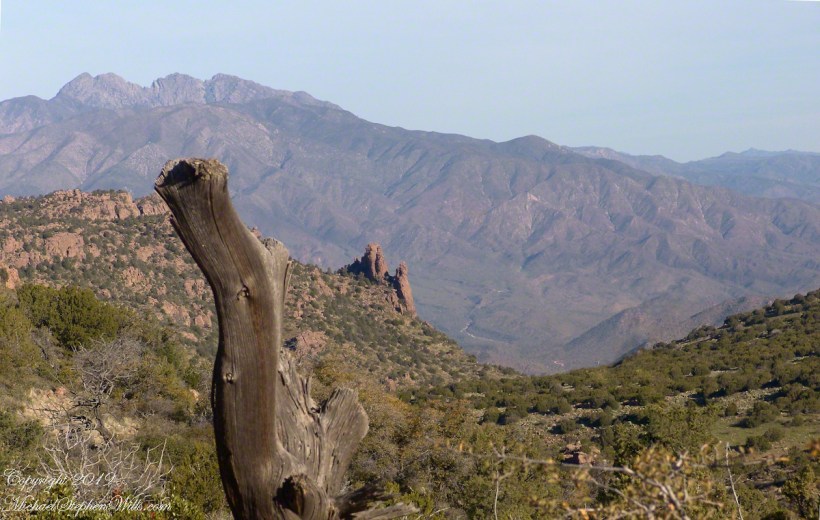
First, there was the climb to the edge of Pine Creek canyon where we, for the last time, enjoyed the view to the north of the Arizona Trail and, in the distance, the Four Peaks Wilderness.

North from Reavis Gap

At Reavis Gap we took a rest before the 1500 descent to Campaign Creek on a trail rated as so difficult backpackers go miles out of the way to access Reavis Ranch.

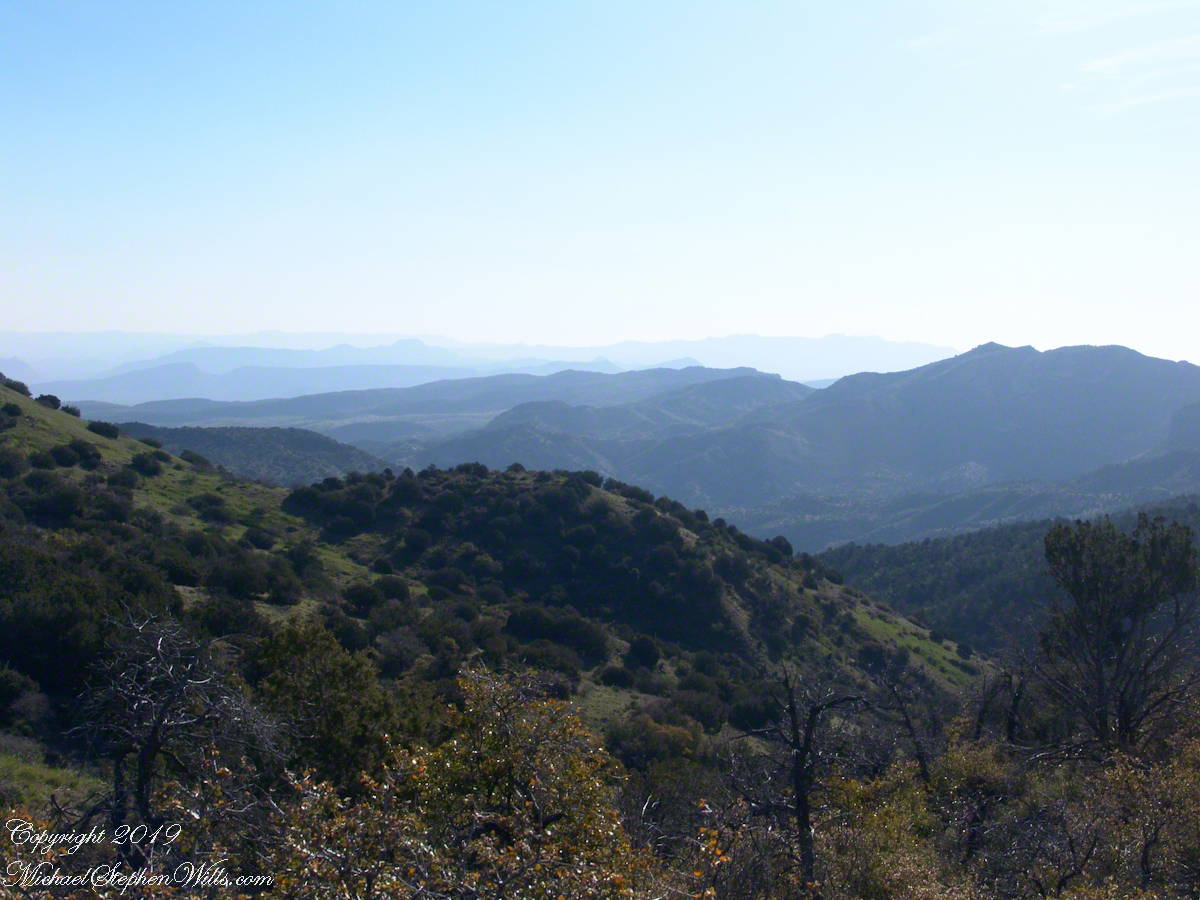
I split an energy bar and took a swig of water before setting up the tripod to capture the following view of our path. The ridge, hazy in the distance of 22 miles, is Apache Peaks, the near descending ridges an improbable green after a wet winter. In the previous photograph, “North from Reavis Gap” you can clearly see the transition from the desert to a grassland biome as the elevation increases.

Generations

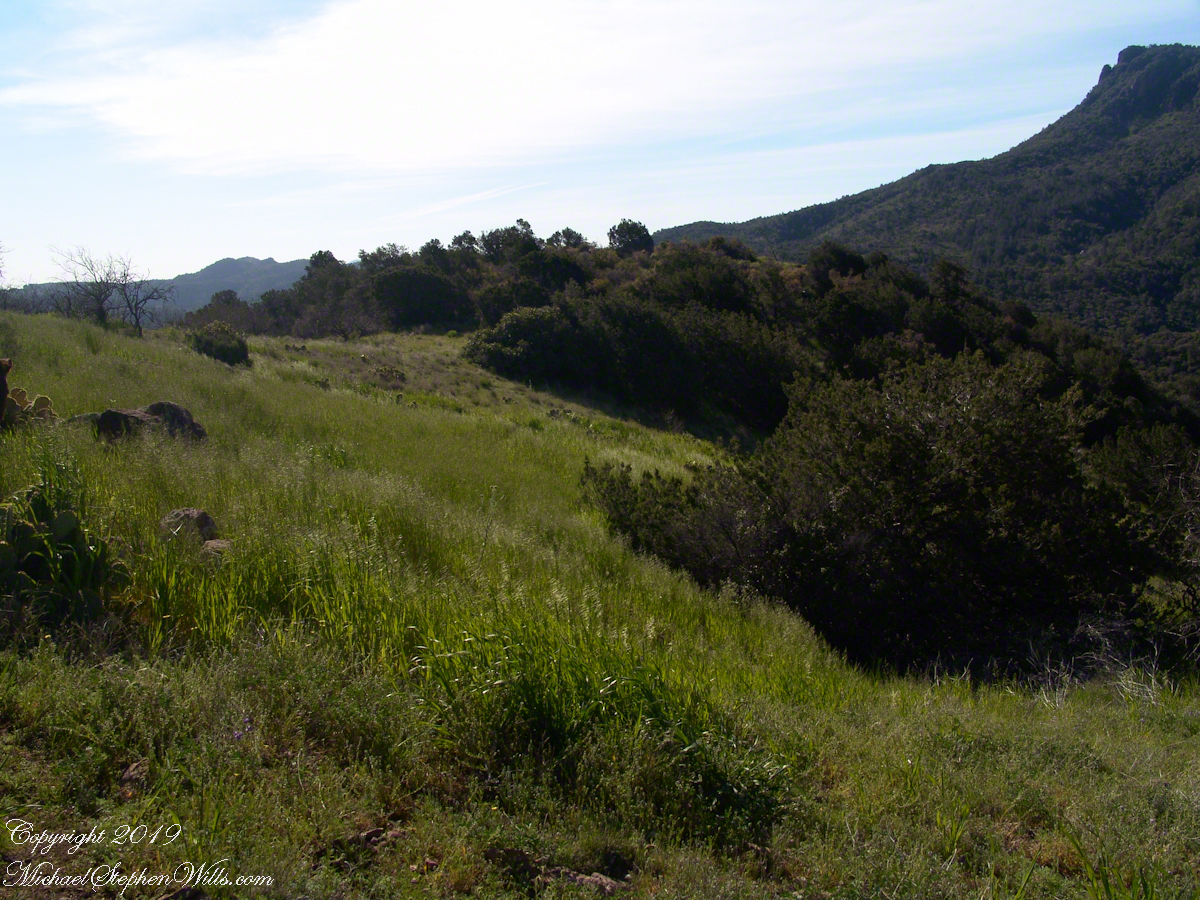
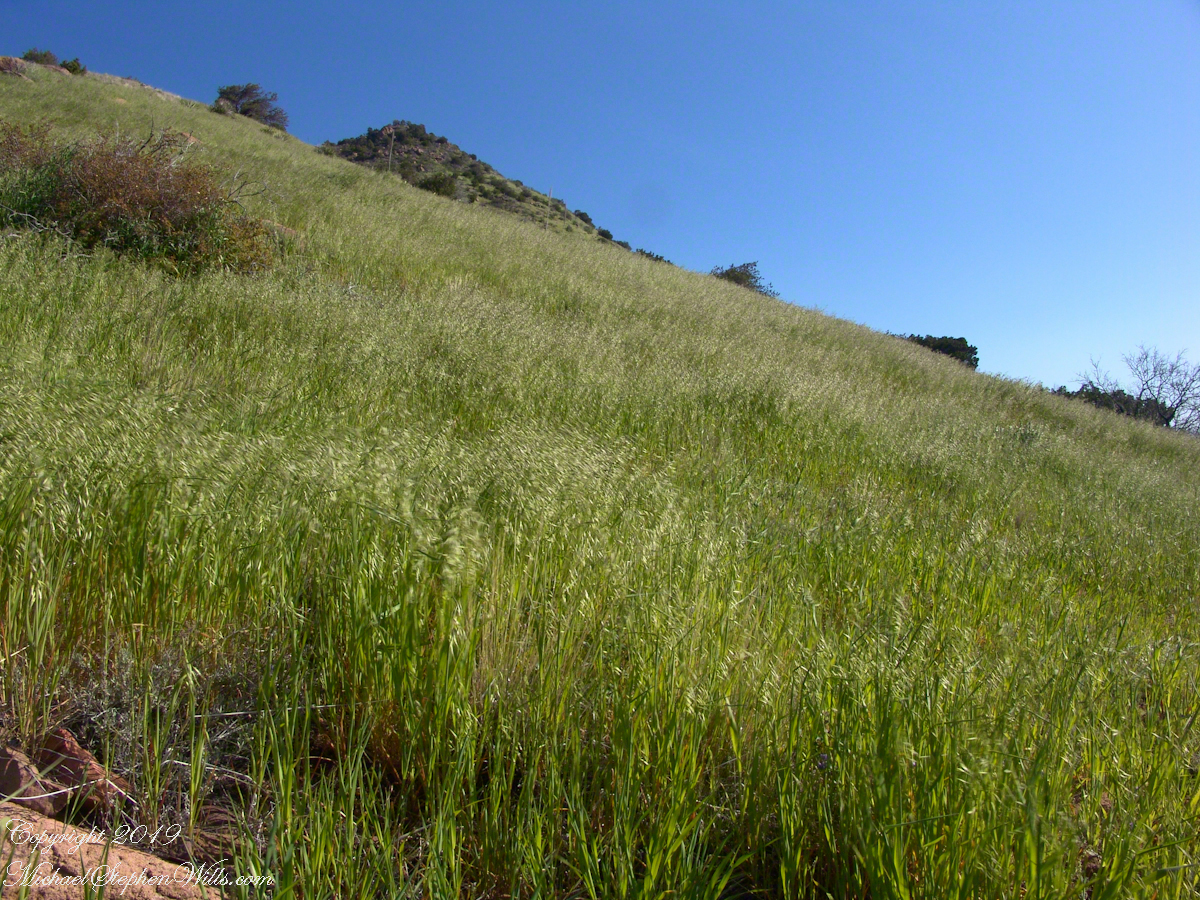
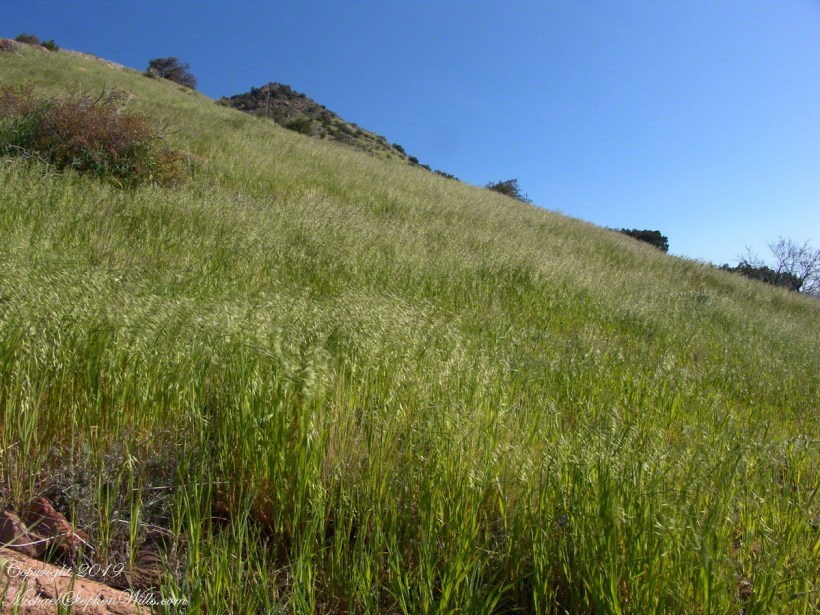
On this, the southern shoulder of Two Bar Mountain, we enjoyed desert grasslands almost the entire length, starting with this unlikely oat field. The higher, eastern Superstitions are the western and northern-most Sky Island of Southern Arizona: rising from the desert as isolated mountain systems, catchments for passing storms, with life zones progressing with altitude, the highest typical of Canada. As with oceanic islands, each is a haven for life with potential for evolution of unique species from the isolating effect of the surrounding desert.

These oats are domesticated grain spilled from a horse or donkey pack to thrive in the decades since, sprouting into this spread of light green after a wet winter, ripening, then turning gold with the summer, the grains falling to wait for the next opportunity. This green hue is my first impression of Reavis Gap, see my post “Two Meetings” for a video of the morning breezes rippling along the hillside.

The camera sweeps 180 degrees for all the views from this spot, including prickly pear cactus among the grasses, a butte-like formation to the west, as in the following photograph.

Upper Horrell, the end of the beginning.

We passed the length of the Reavis Mountain School of Self Reliance, the Reavis Gap trail is 100 feet or so higher on the north side. The name “Upper Horrell” is attached to this location. Reavis Gap trail used to start at a ranch house, part of the “Upper Horrell Ranch.” Horrell is the family name of the former owners.

Upper Horrell is a fortunate location for the school, with the perennial Campaign Creek flowing parallel to their 13 acres on which is a large garden, many fruit trees, livestock and poultry. The school provides lodging and classes throughout the year.

The Searcher initiated his time in the Superstitions with wilderness survival classes and they allowed him to park is horse trailer and pickup outside the gates. We were loaded and out of there with a stop at Roosevelt, population 28, where we were the only customers for mesquite grilled hamburgers and french fries. We talked about the potential for future trips and I took him up on an offer to store my stuff until then. In the following years I did more Superstition Wilderness day trips, backpack expeditions, some with my sister Diane, and one horse expedition with The Searcher and a friend.

Here is a gallery of this post’s photographs, for you to flip through.
Click me for the first post of this series.

Abstracts: graceful shadows

Shadow and Rock

Two Nature Abstracts, macros of Reavis Creek below the falls

The light of a early spring desert afternoon on a broad rock shelves along the creek.

I spent a day hiking in, two days hiking out and a day of canyoneering to the foot of Reavis Falls. The featured (i.e. “header”) photograph is a view of the inner canyon, the raw material for these abstracts.

Click this Link for a Superstition Wilderness Adventure

Waterfall Textures

Unrestrained chaos at the foot of Arizona’s highest waterfall

I received notice of IStock acceptance of select photographs from my last posting, “Wilderness Textures”, was accepted.  Click to view my IStock Portfolio, including  photographs from today’s posting included in the acceptance notice.

In this post I move up the Reavis Creek canyon from where the last posting, “Wilderness Textures”, was sited to the foot of Reavis Falls.  With the first photograph you look up at the falls from the head of the canyon carved by the creek over eons.  The rock wall, the canyon “head”, is thick with microorganisms, fungi, mosses.

Reavis Creek Water and Light – CLICK ME for more abstract photography.

In the foreground is a jumble of boulders, some washed down at flood time, spread wide at the bottom of the falls, piled to a jumbled height of 15 feet. 

Talus is the geological term for this formation.  Derived from the Latin word for slope (talutum) the definition, from the Oxford English Dictionary, is “A sloping mass of detritus lying at the base of a cliff or the like consisting of material fallen from its face.” 


The ankle bone is also called talus, from the French word for heel, I bring it up because climbing this chaotic, unstable jumble is a way to break your ankle.  The route to Reavis Falls, a climb up one side of Lime Mountain then down the other on a non-existent (lightly marked) trail, is rated difficult and impossible with a broken leg or ankle.  I was alone and very careful to check each rock for stability before putting my weight on it.

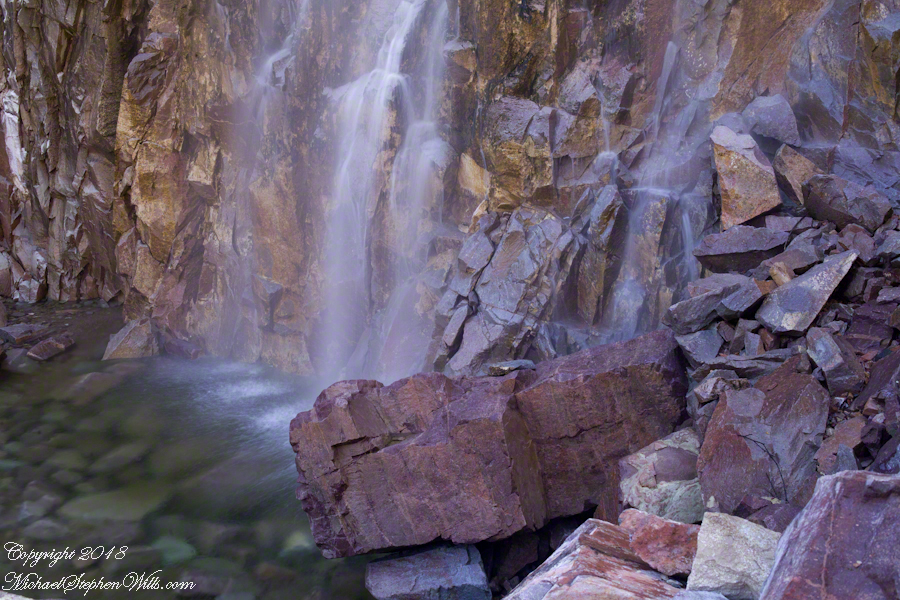
A climb of the talus pile was necessary to view the pool at the waterfall base, for this photograph.

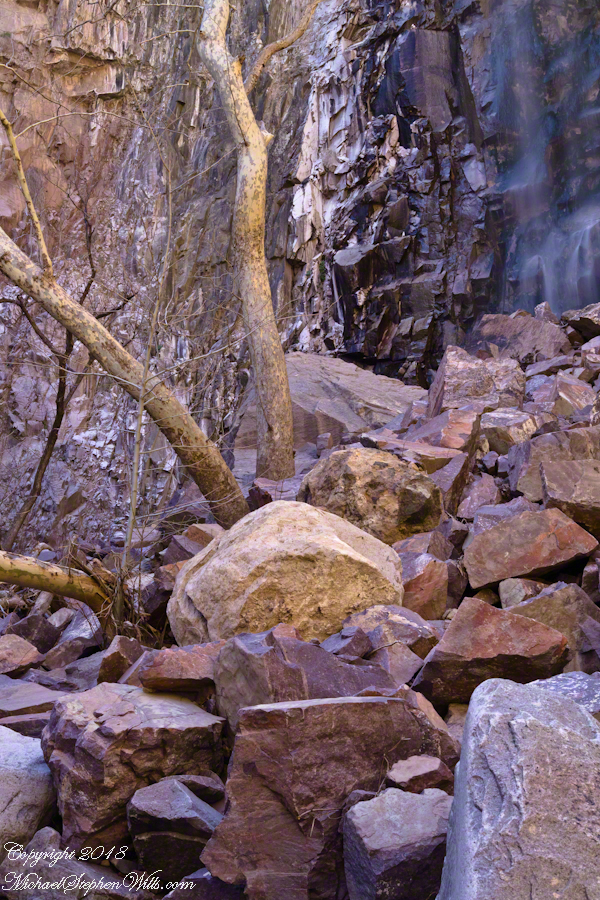
A more artistic vertical format version, below, captured with the Canon EF 100mm “macro” lens.  All shots are using the Kodak DCS pro SLR-c (the “c” designated Canon lens compatibility) and a Manfrotto studio tripod with a hydrostatic ball head.  The horizontal format shot was captured with a Canon EF 50mm f/1.4 USM lens.   I prefer the vertical version, artistically, because the talus jumble is all but cropped out while the upper corner of the angular basalt boulder is left as an interesting focal point.  The boulder, not being in the spray, is in focus to contrast with the basalt wall behind the water.

I captured a series of shots from this precarious vantage point, working up from the pool to the brim of the waterfall.

My goals was a composite photo of the falls.  I have yet to succeed with this project.  Maybe I will give it one more shot in spite of having learned the hard lesson the best photographs are a single moment captured in a single frame.

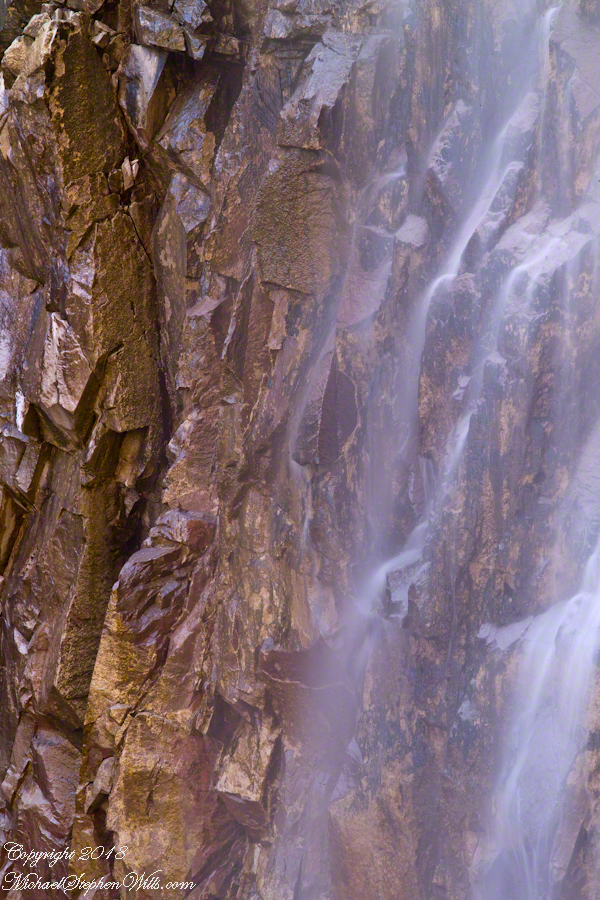
I find in this series the vertical aspect is more artistic.  The water volume, of the falls, at this time of year offers only the finest of sprays with most of the basalt rock wall only moist.  The 100mm “macro” lens allowed me to include only the falling water with a bit of the moist wall for contrast.

In the following version I experimented with color, moving from the narrow range of hues, to more contrast.

Please browse my reasonably priced stock photography. License a photograph, download and use it for your website or blog. Click this link to browse all my Getty IStock Photography offerings.

Or click this link or any photograph or this link to select a print with custom framing from my “Textures” Fine Art Gallery.

Here’s another of my Arizona wilderness adventures, “Racing the Sun.”

Wilderness Textures

Abstract Beauty of the Superstition Wilderness of Arizona

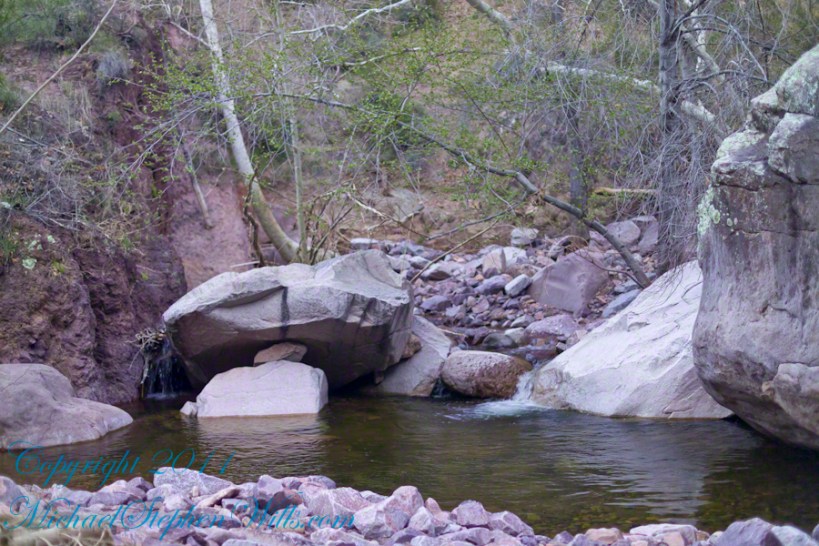
These abstracts are some of my photographic output from four days and nights spent alone in the remote eastern Superstition Wilderness.  For the first three days I met not a soul, all these images were captured on a single afternoon spent in the canyon below Reavis Falls, a jumble of landslides, flood debris and boulders.  There is no trail.  The few people who enter the canyon must negotiate around boulders, crossing Reavis Creek many times.

Reavis Creek Water and Light – CLICK ME for more abstract photography.

My backpack kit included a full sized Manfrotto studio tripod with hydrostatic ball head.  The benefits more than outweighed the effort (I was a lot younger in 2008) when the Canon EF 100mm (macro) lens is mounted on a  Kodak dSLR body, allowing me to take crisp shots.  The tripod legs can be adjusted to precise positions for stability.

Reavis Creek Water and Light – CLICK ME for more abstract photography.

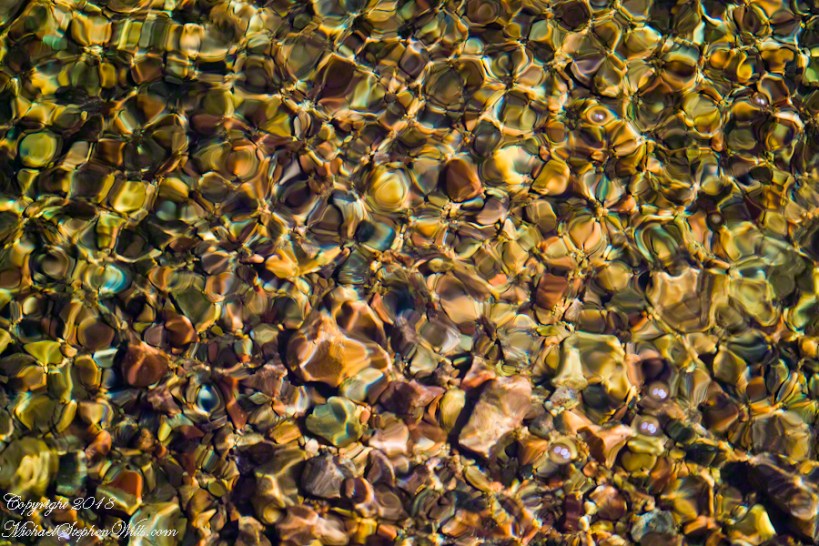
I can feel the bright afternoon desert spring sunshine in this photos.  It was after the spring floods, the flow of Reavis Creek and ample still but slow.  Gathering in pools over the rough stones of the creek bed, the water absolutely clear.

Reavis Creek Water and Light – CLICK ME for more abstract photography.

I held the shot over many minutes, capturing ever changing diffraction patterns.

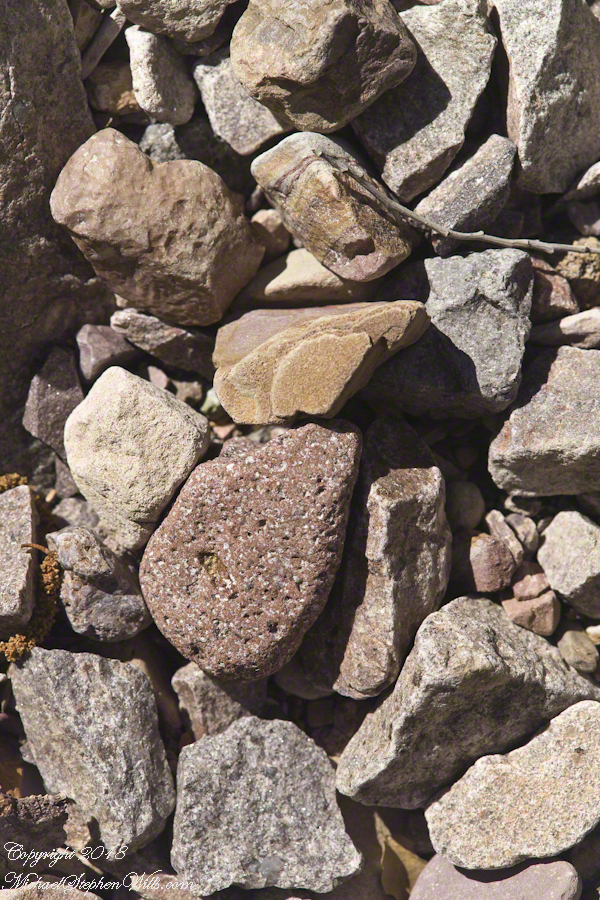
We see in all these photos, not a homogenous blend of stones from a shared geology.  Reavis Creek washes over diverse geologies: volcanic, ancient igneous extrusions, sedimentary and metamorphic are jumbled together.

Reavis Creek Water and Light – CLICK ME for more abstract photography.

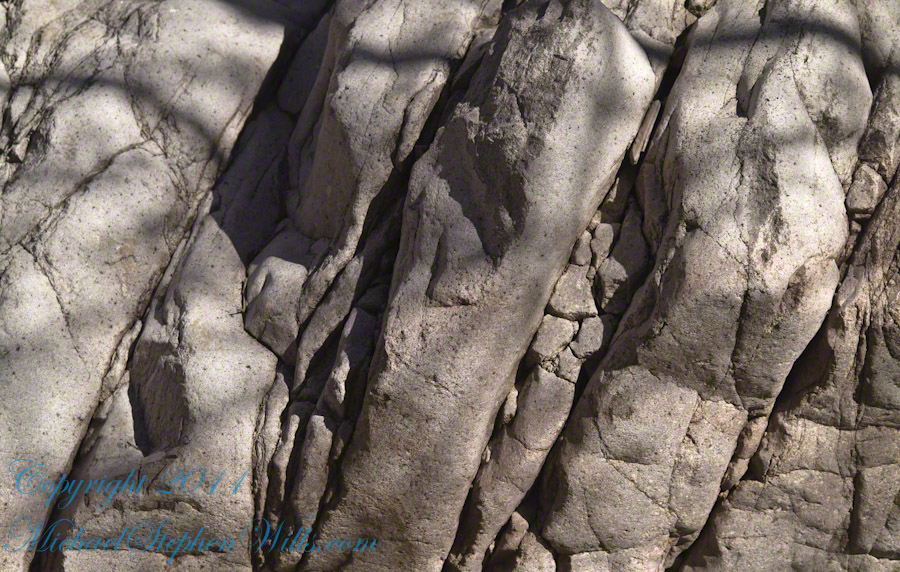
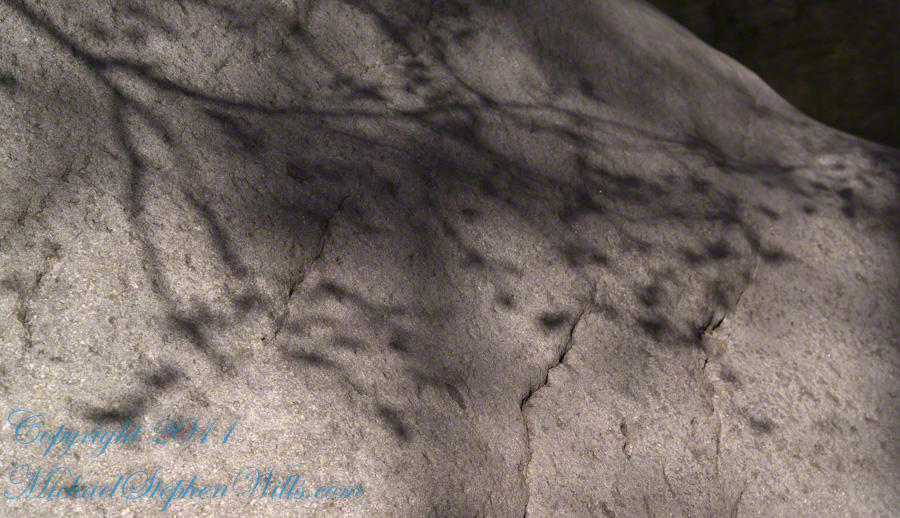
This is a series of photographs of smooth, white igneous boulders with shadows of  still leafless sycamore and cottonwood trees.

Reavis Creek Water and Light – CLICK ME for more abstract photography.

Graceful shadows

Reavis Creek Water and Light – CLICK ME for more abstract photography.

Strong, demonstrative shadows.

Reavis Creek Water and Light – CLICK ME for more abstract photography.

A leaning cairn, not a trail marker….

Reavis Creek Water and Light – CLICK ME for more abstract photography.

A 15 foot high jumble of stones piled at the bottom of Reavis Falls, carried over by the floods.

Reavis Creek Water and Light – CLICK ME for more abstract photography.

A metamorphic conglomerate stone….

Reavis Creek Water and Light – CLICK ME for more abstract photography.

Another metamorphic conglomerate.

Reavis Creek Water and Light – CLICK ME for more abstract photography.

Please browse my reasonably priced stock photography. License a photograph, download and use it for your website or blog. Click this link to browse all my Getty IStock Photography offerings.

Or click this link or any photograph or this link to select a print with custom framing from my “Textures” Fine Art Gallery.

Here’s another of my Arizona wilderness adventures, “Racing the Sun.”

Jim Thorpe Black Friday

Around and About the Town of Jim Thorpe, Pennsylvania

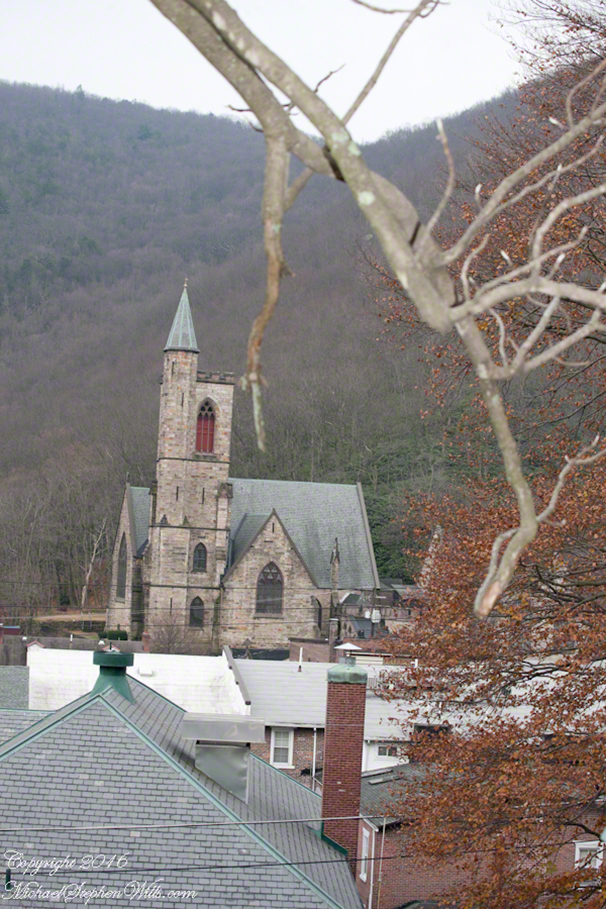
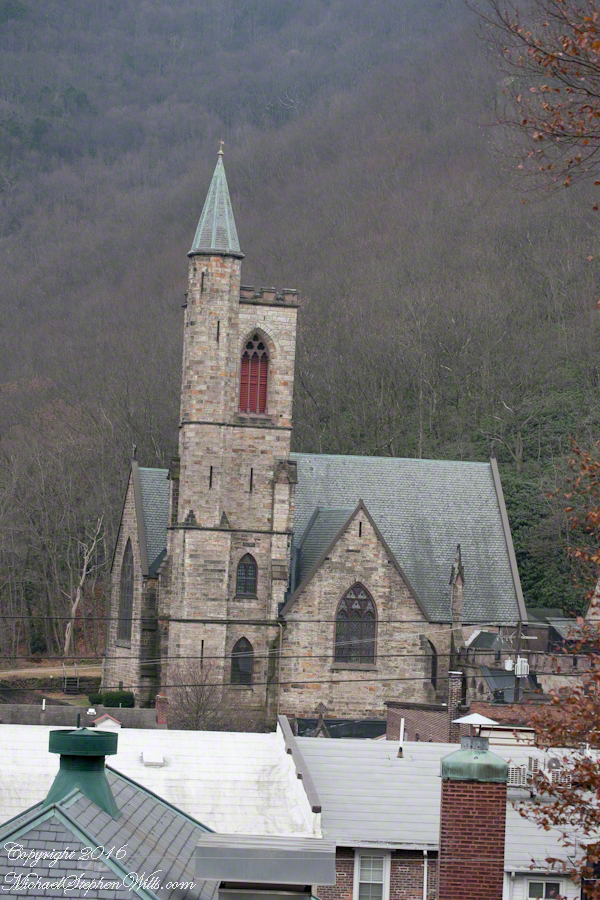
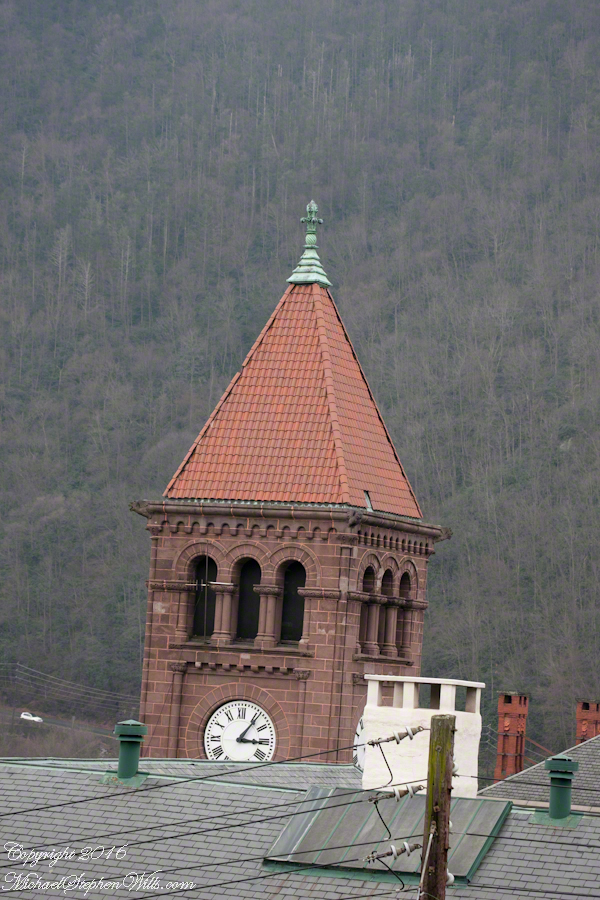
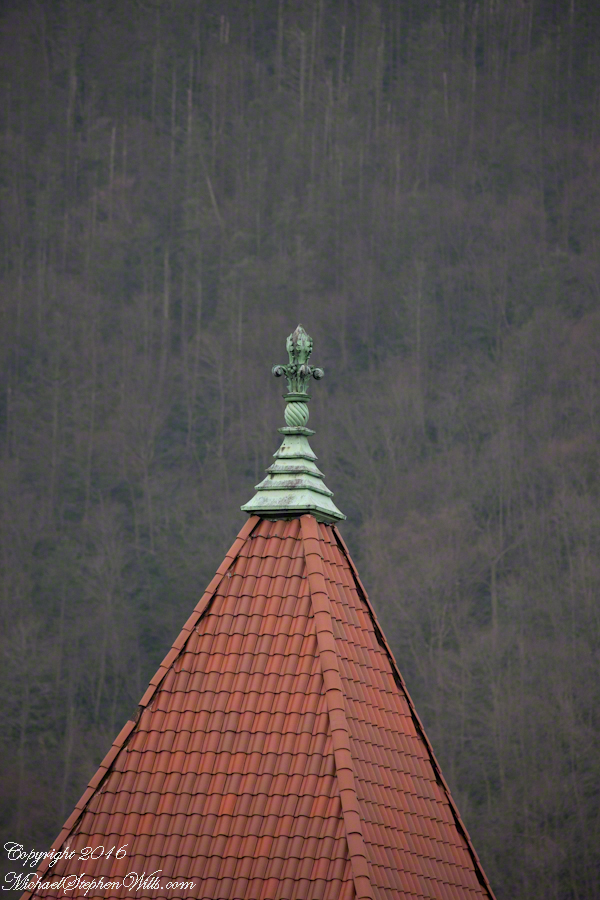
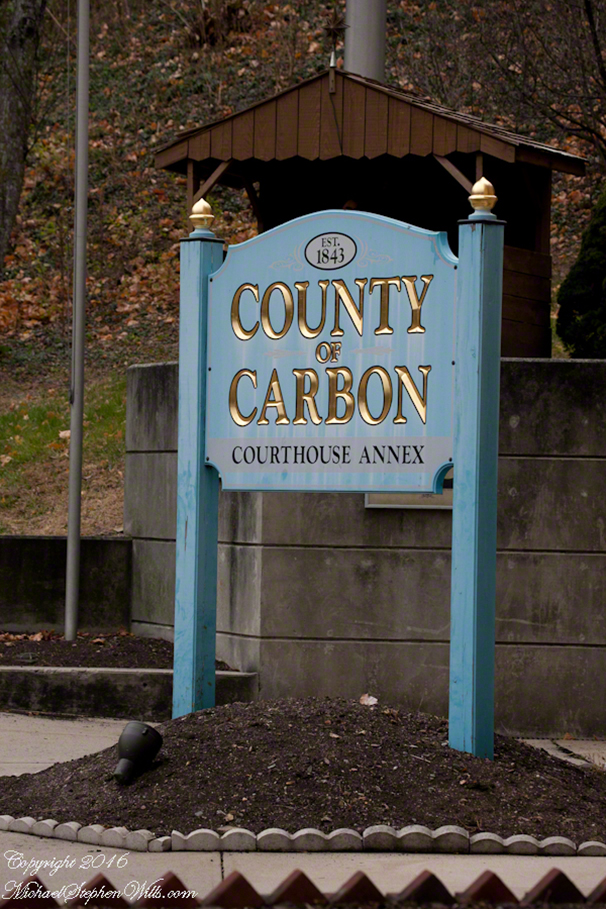
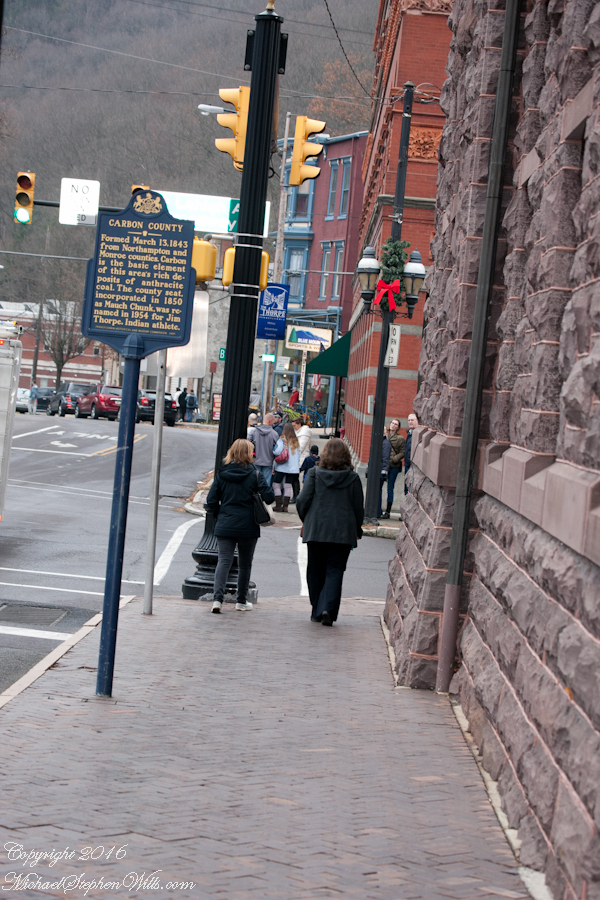
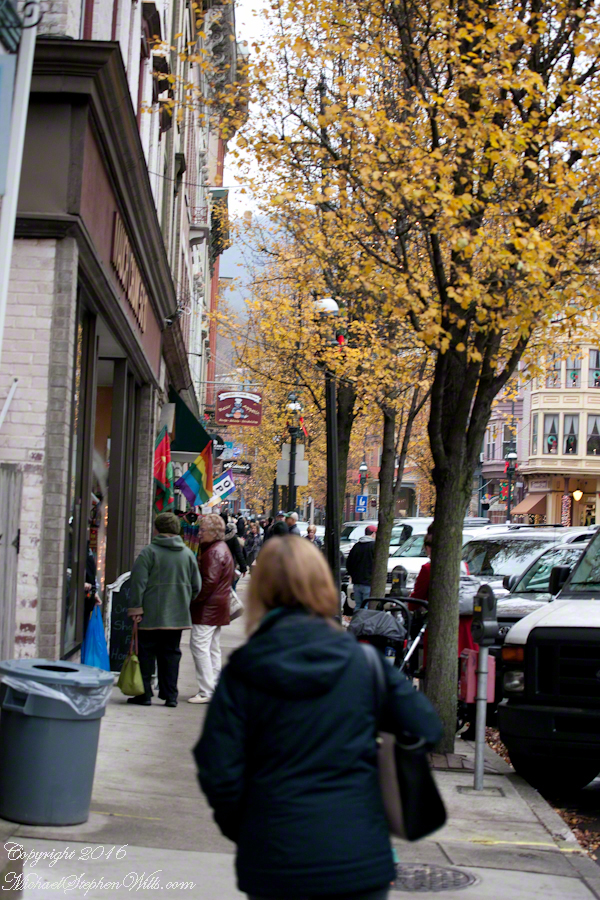
Presenting impressions of Jim Thorpe town on Black Friday 2016: unedited shots taken in late afternoon.

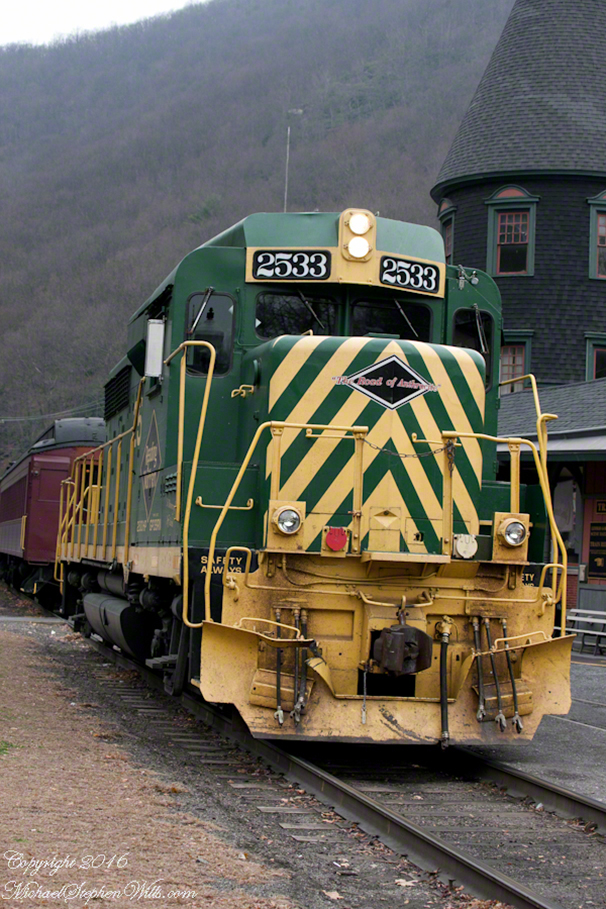
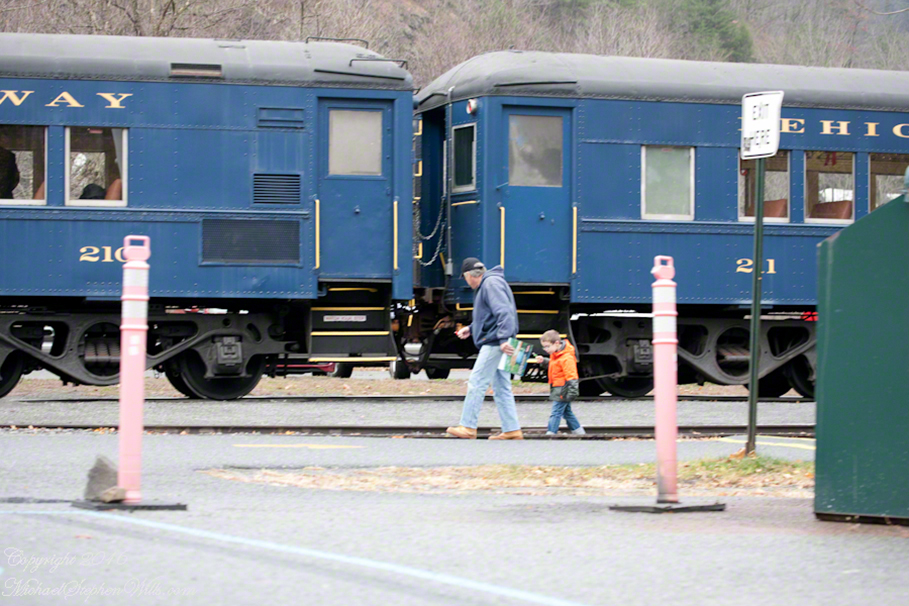
The best place to park is behind the train station, along the river.  $5 for the day.

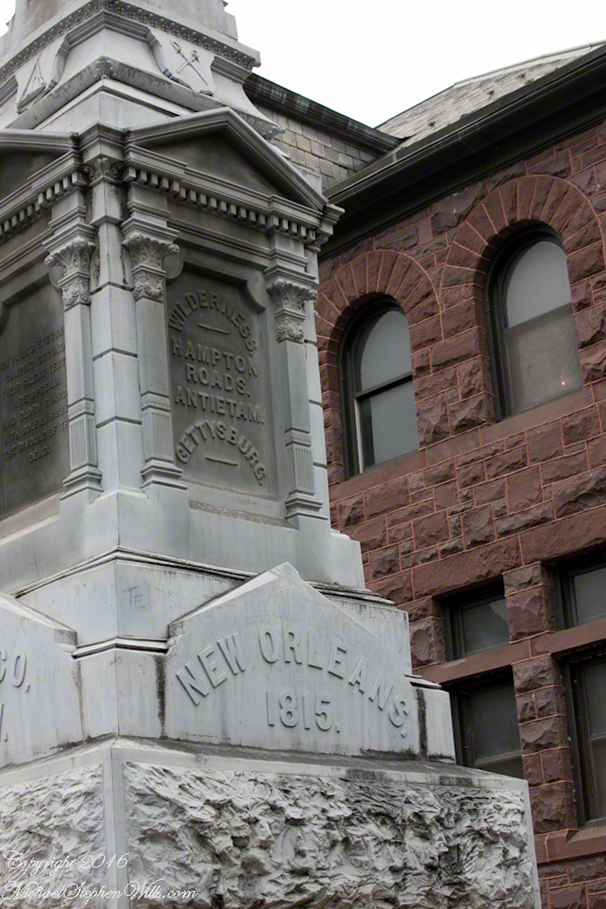
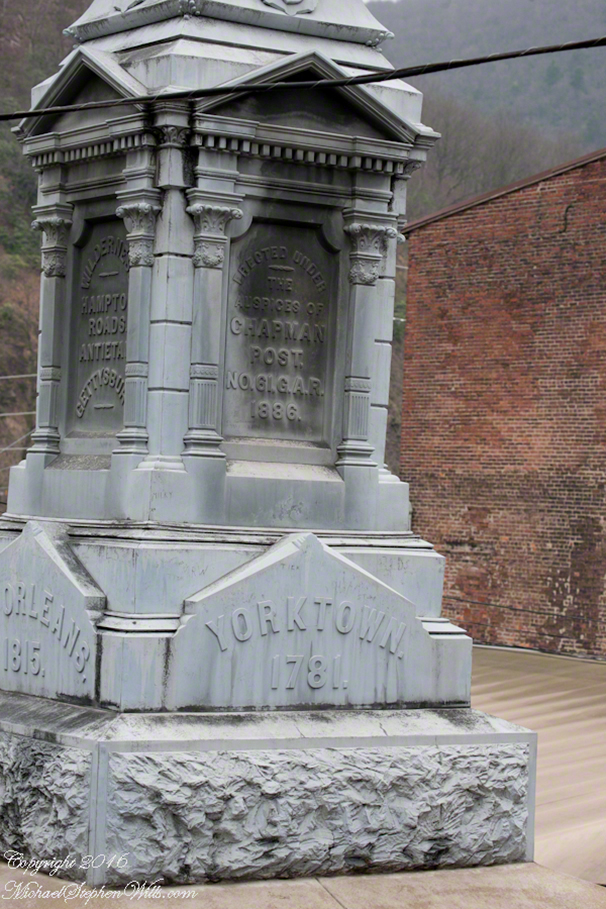
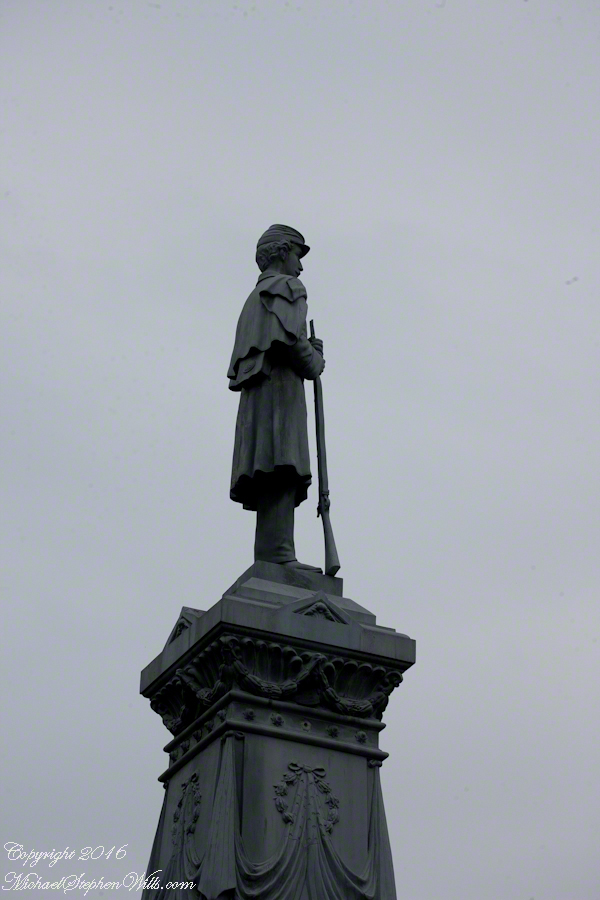
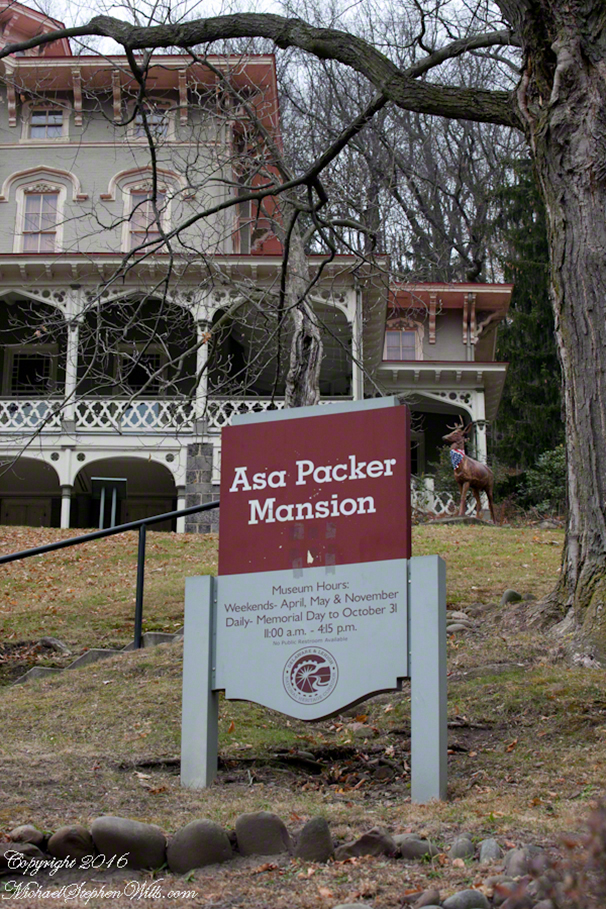
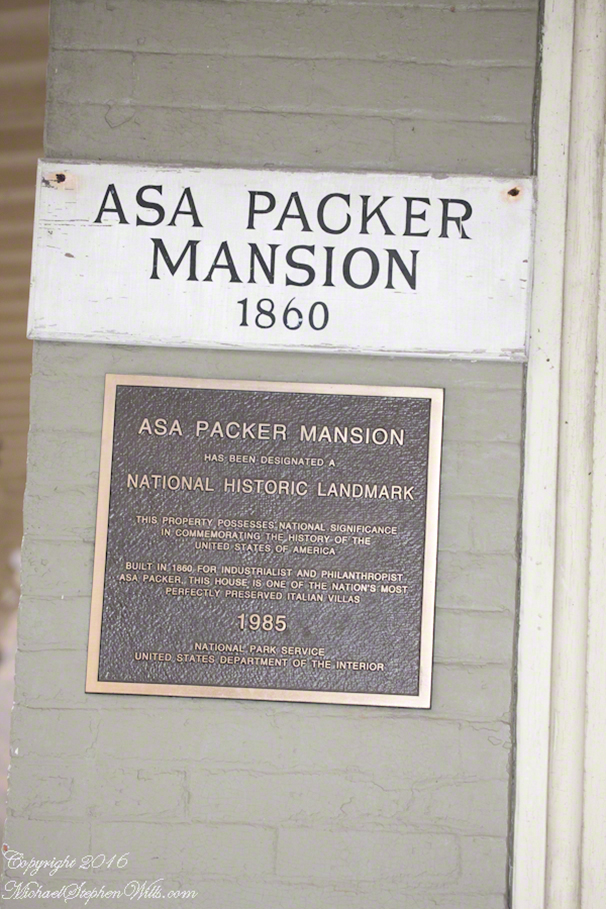
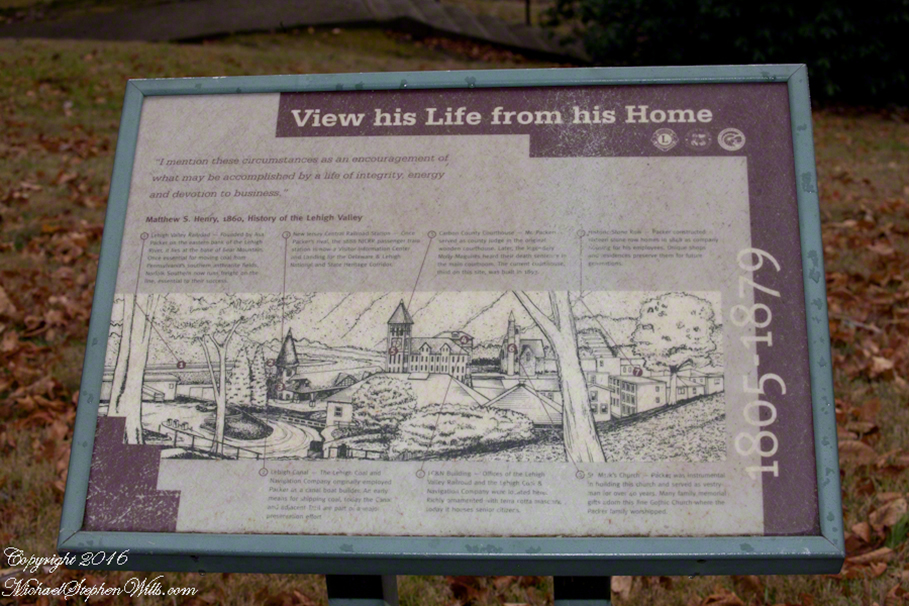
Hike up the hill to the Asa Packer Museum.  The attraction is closed for the winter, but well worth the climb past the Civil War monument, so steep there are switchbacks.

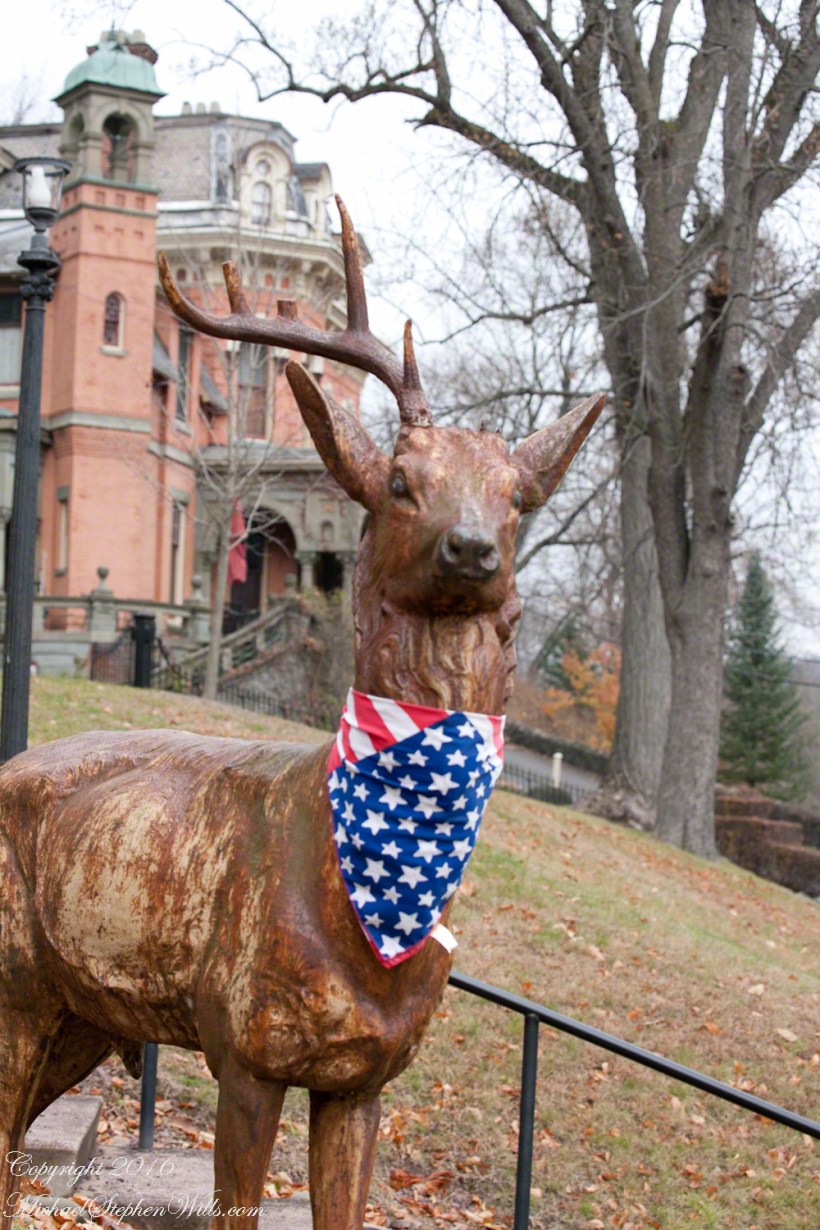
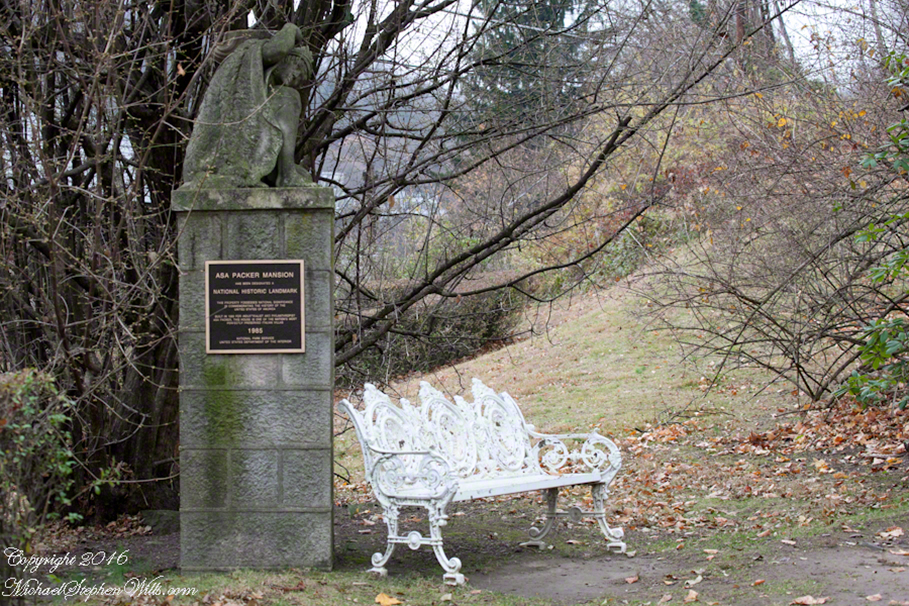
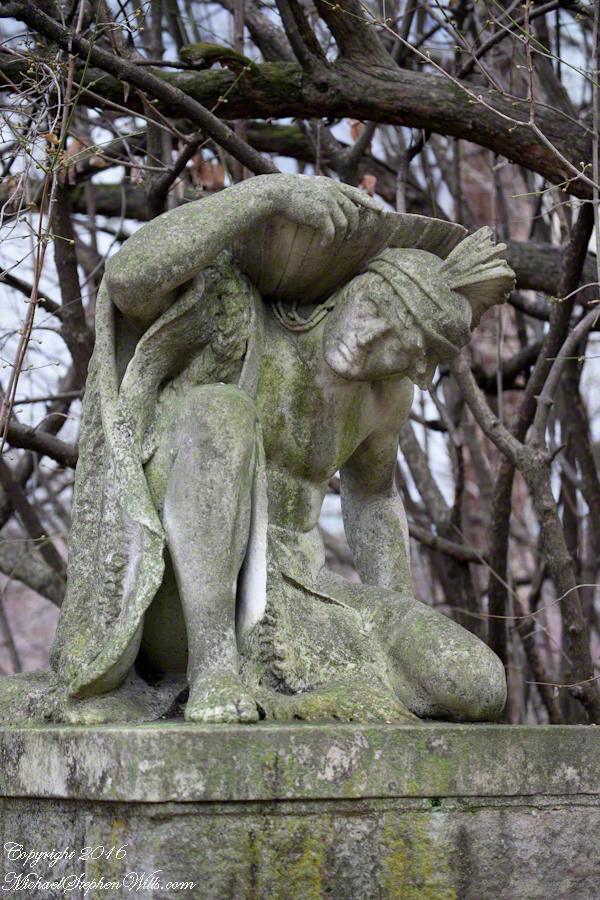
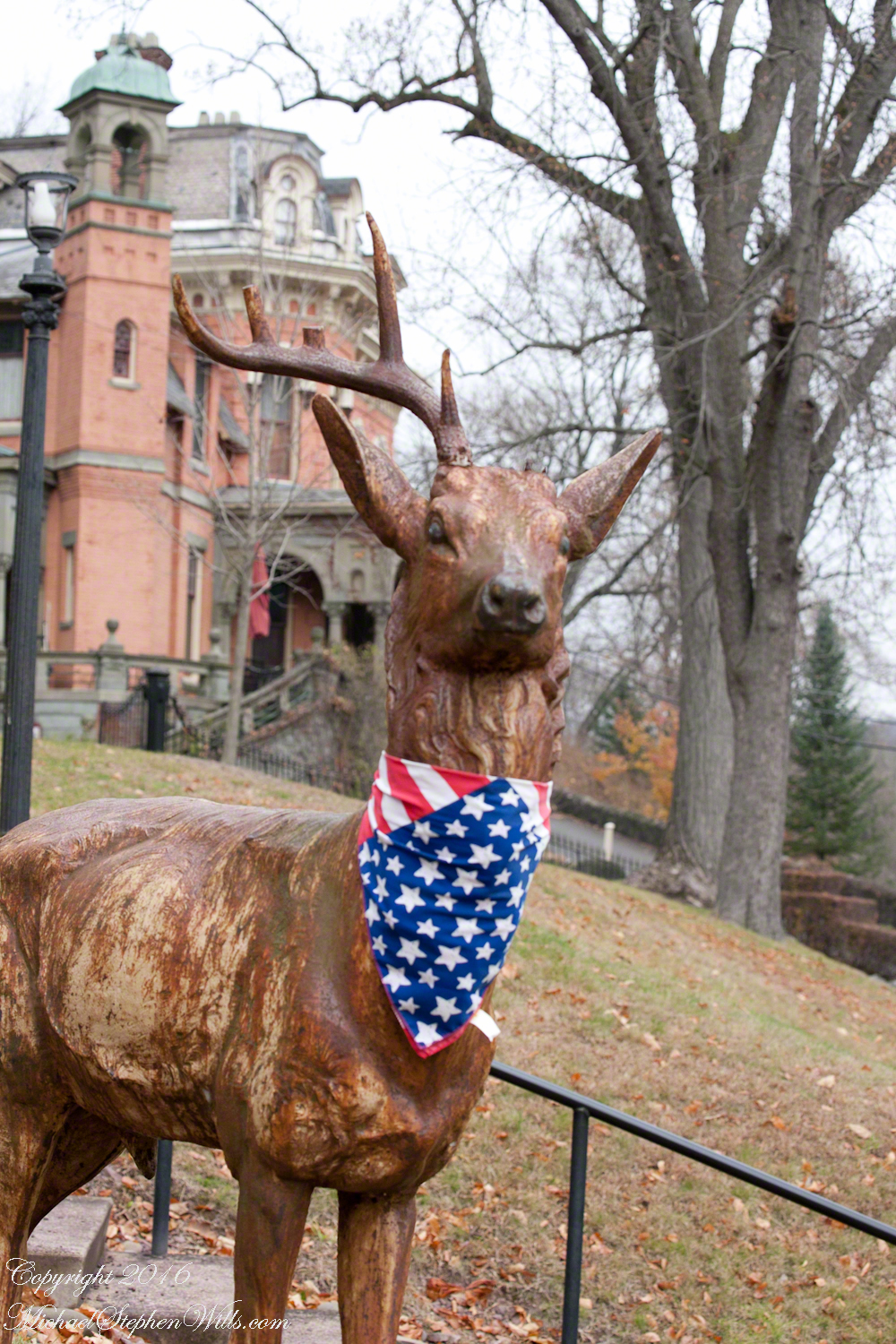
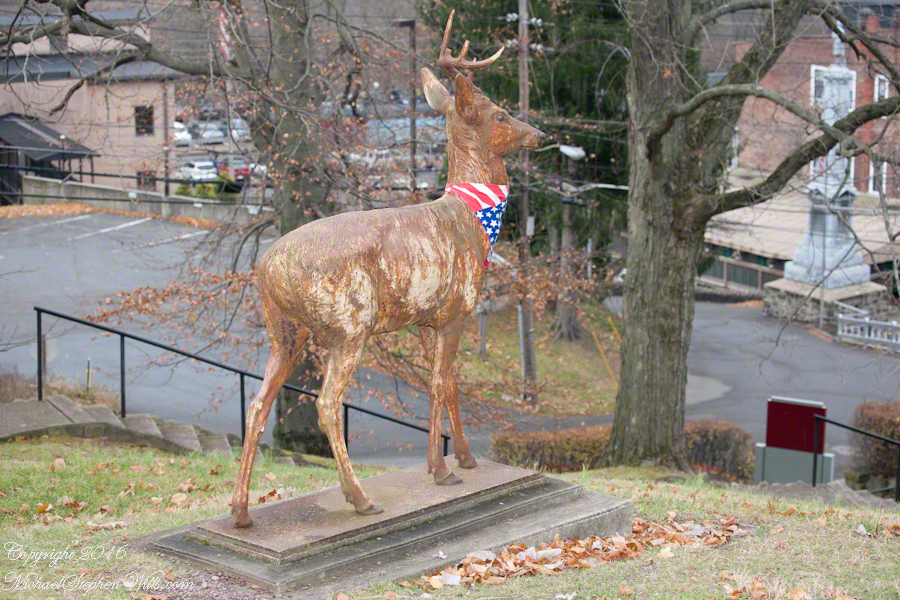
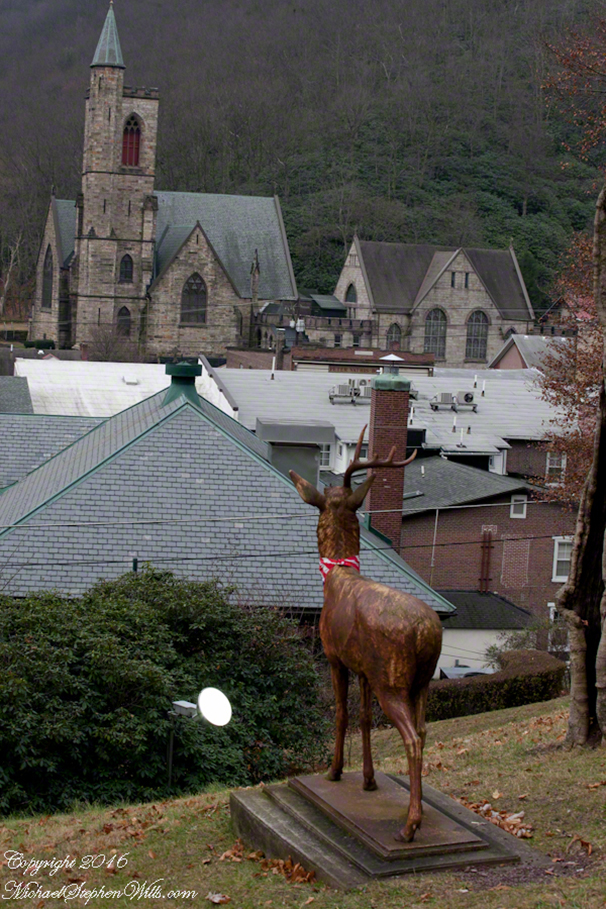
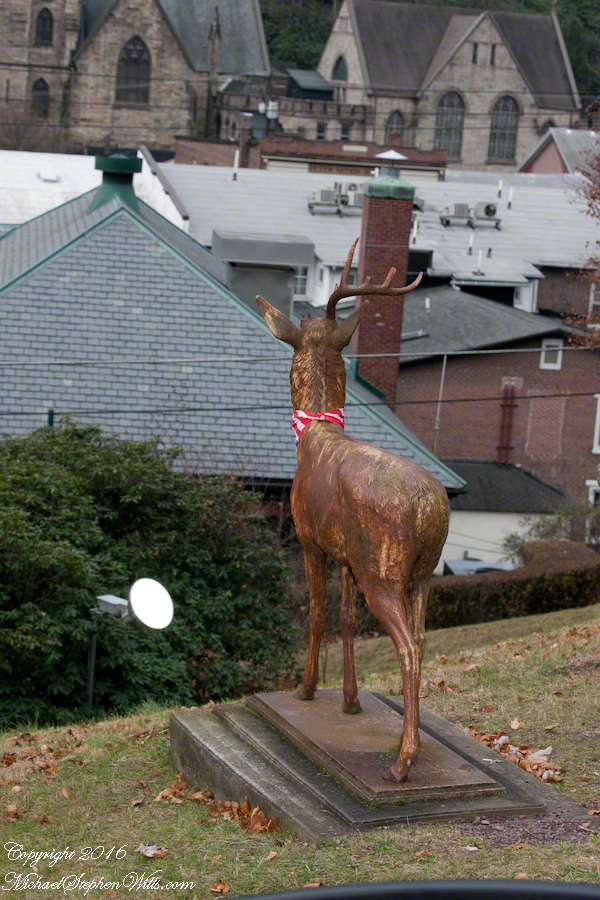
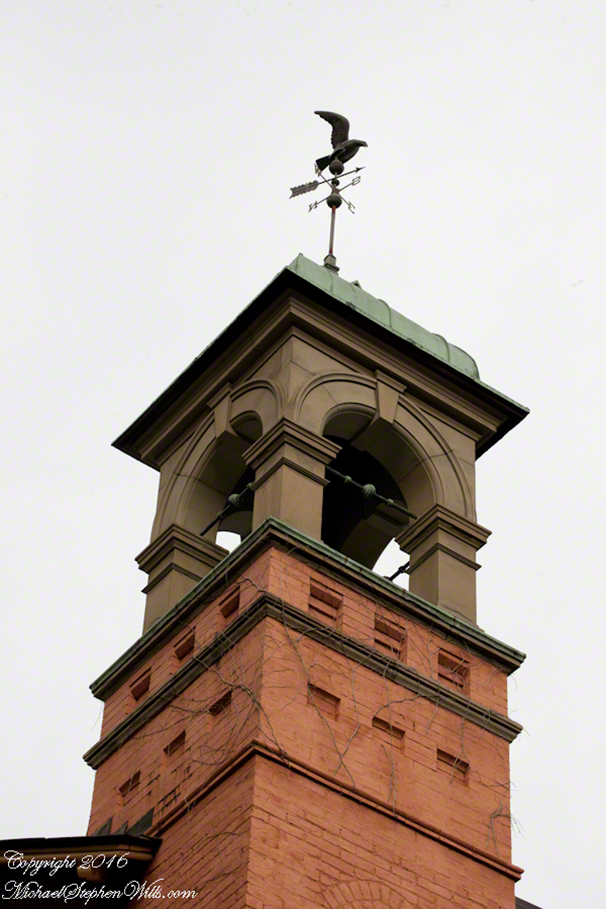
Even closed the site yields detail after detail, all interesting and worth learning more about.  I was fascinated by the casted buck sculpture, can you tell?  Placed to greet visitors, it demands your attention.

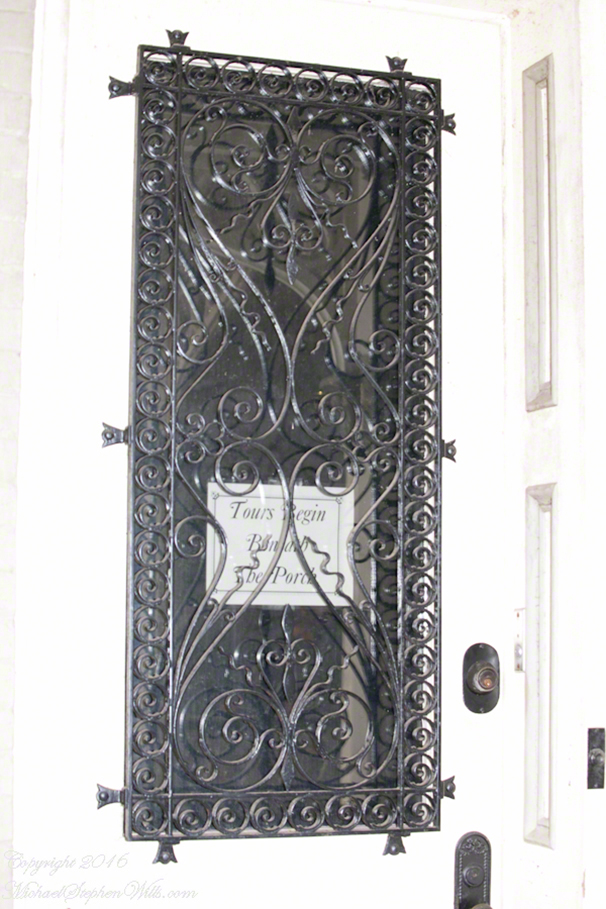
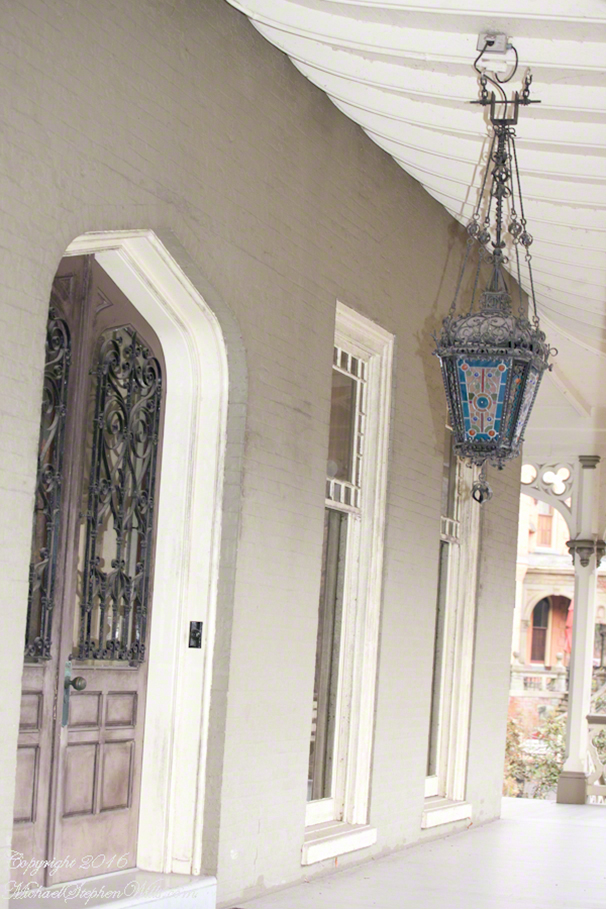
Climb some more to explore the porch…

The sun makes an appearance, drawing attention to the other mansion of the site.  Two brothers, and families, lived up here.

blackfridayjimthorpe-9606new

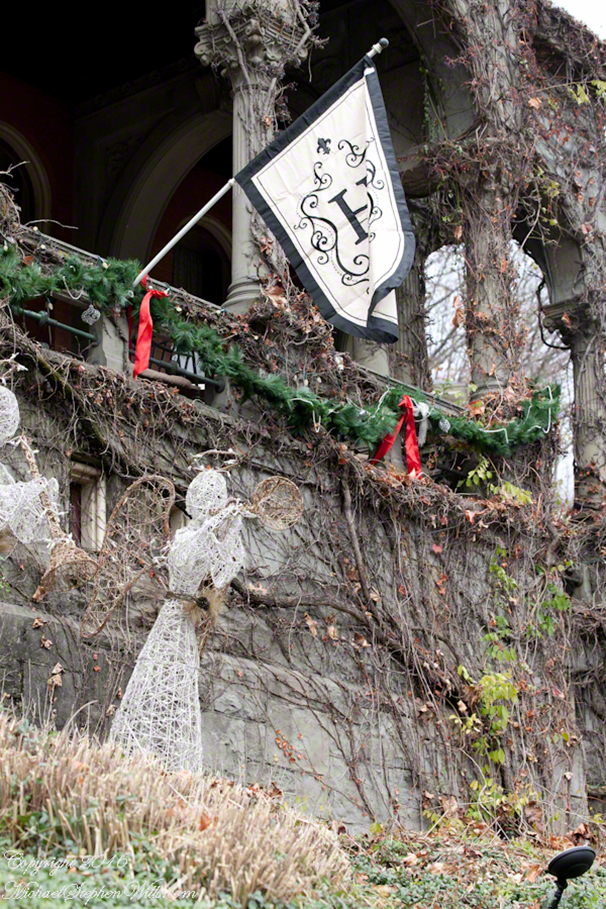
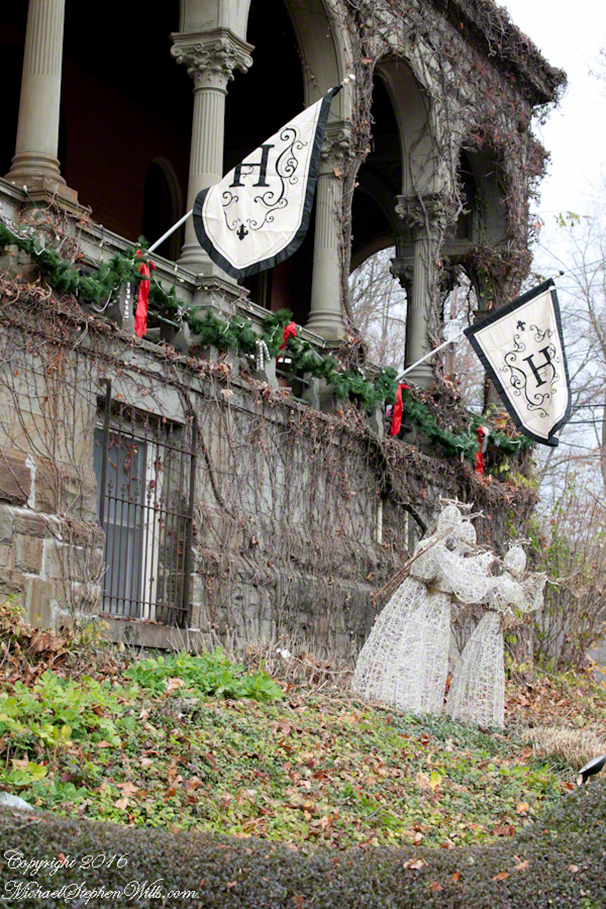
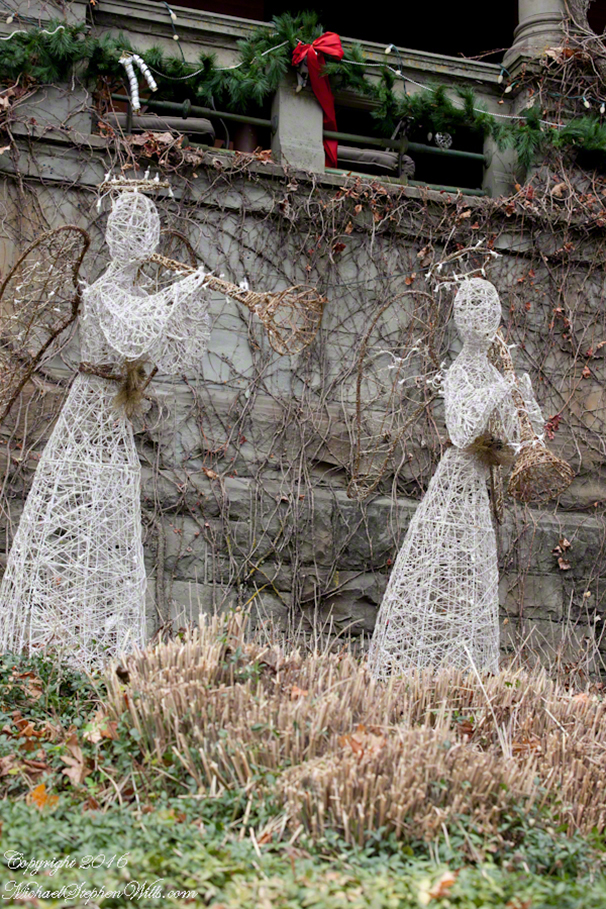
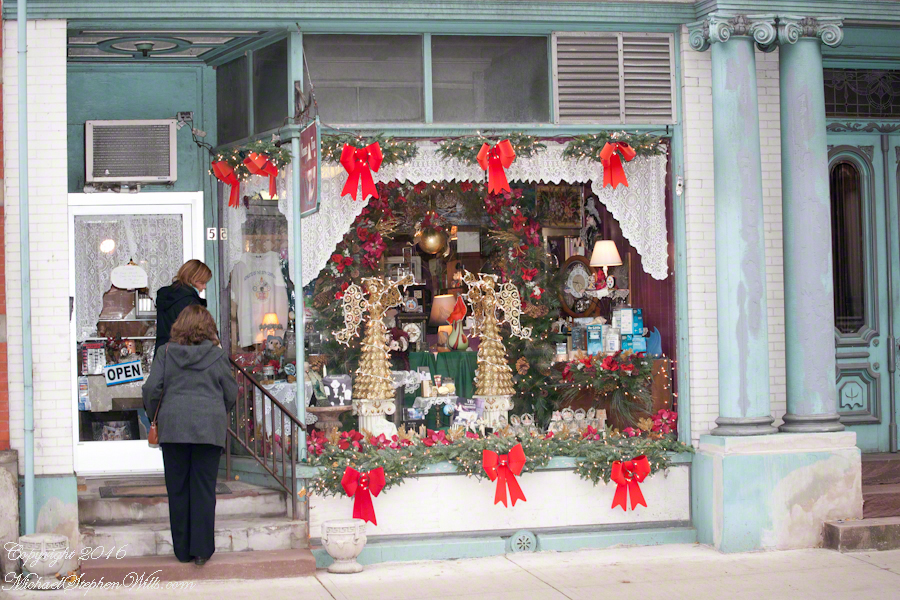
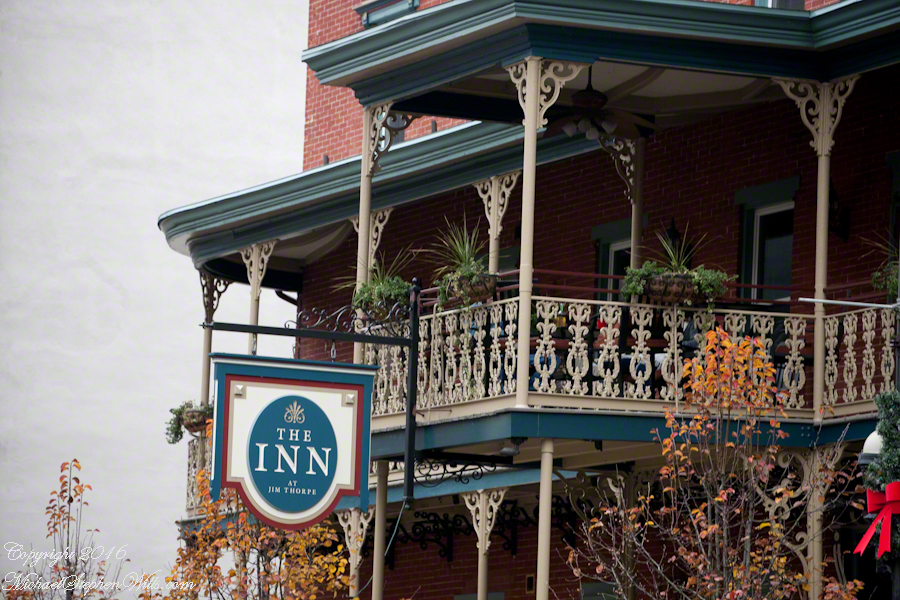
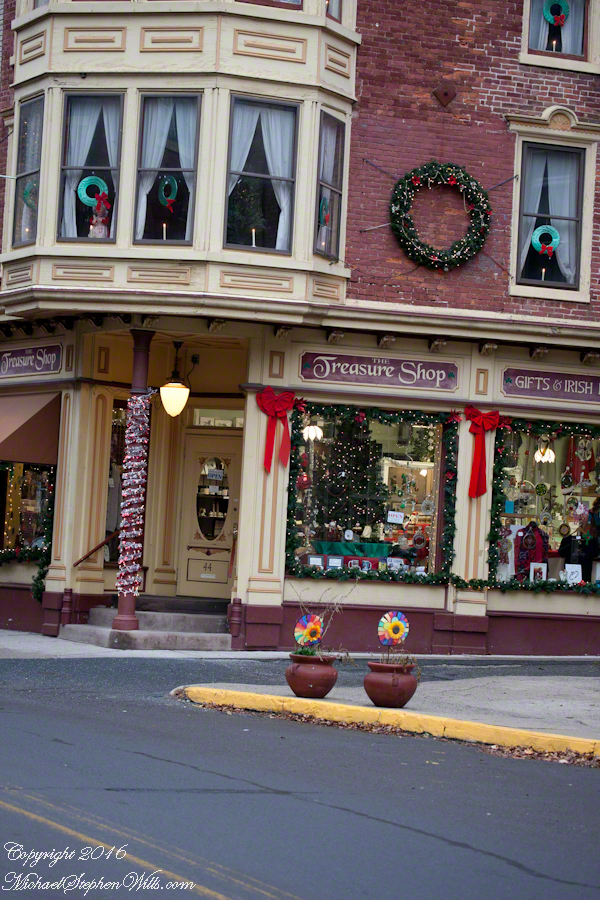
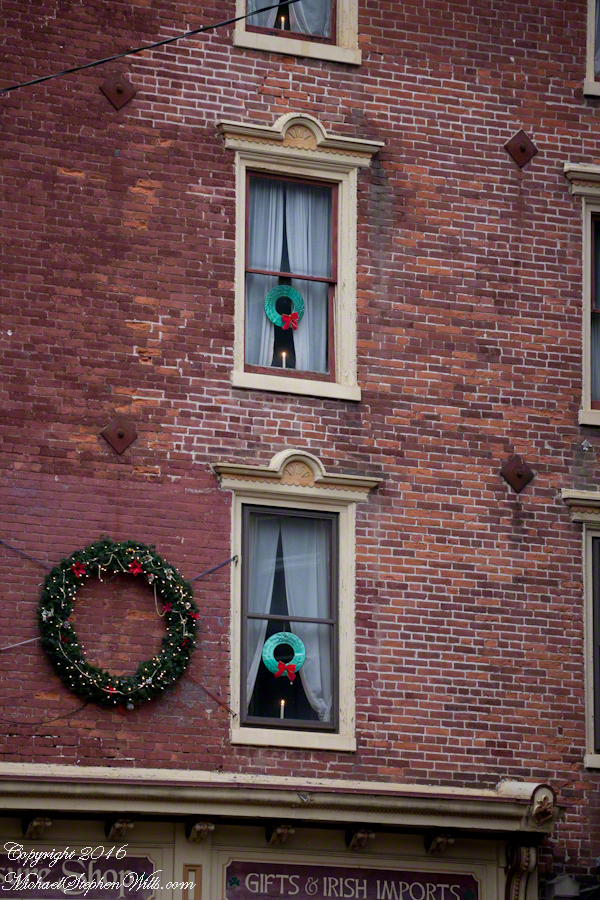
Of course, my interest turned to that neighboring mansion.  It is a B&B.  “Mystery weekends” advertised.  That is a two day event.  Guests, presented with a scenario, draw on their resources to solve…..a crime.  Today, the façade decorated for Christmas.  The entire village decorated for Christmas!!  Christmas!!  Christmas!!!  I just love CHRISTMAS

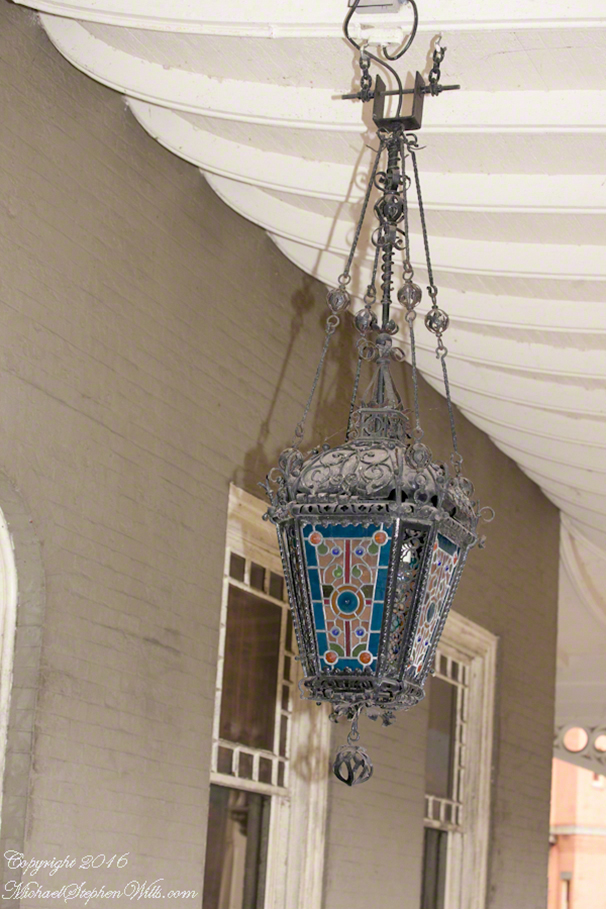
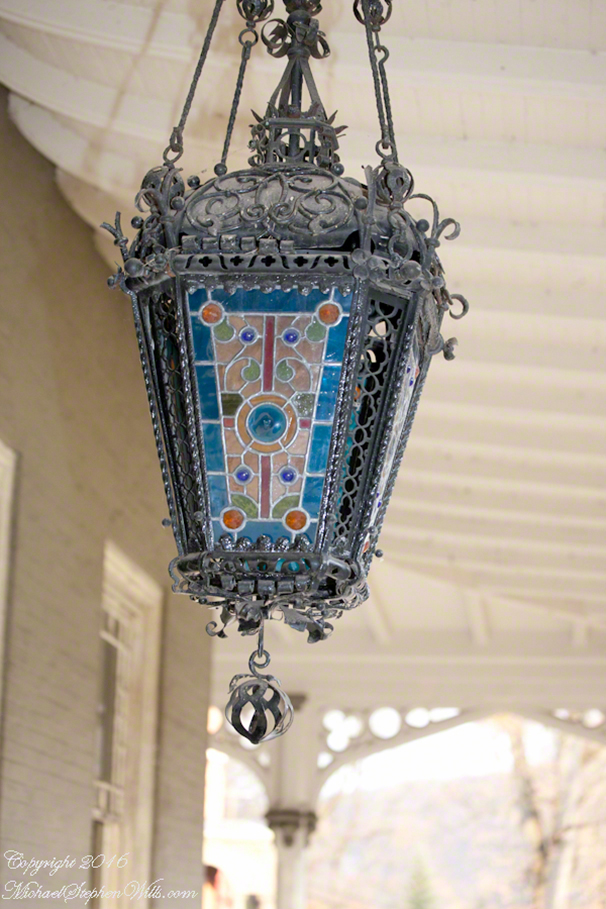
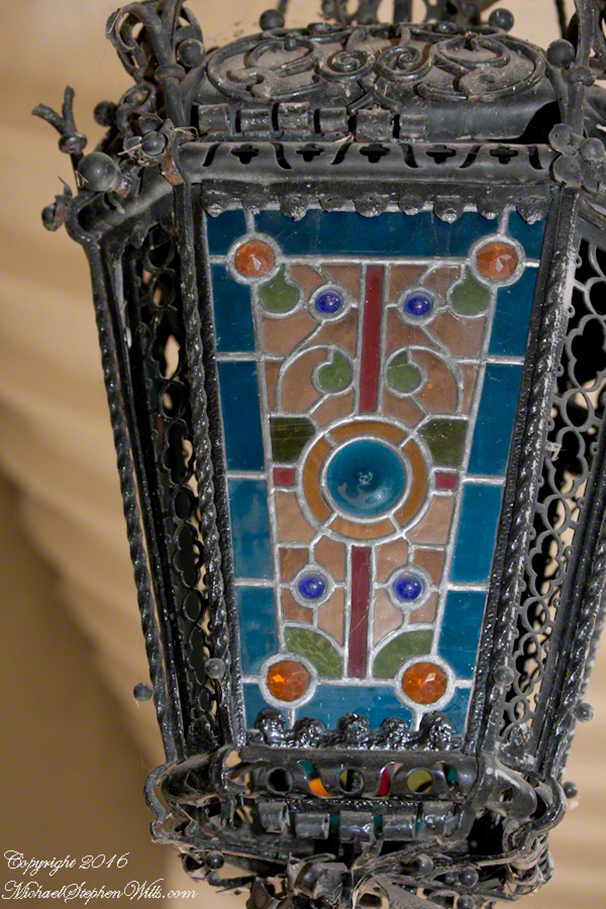
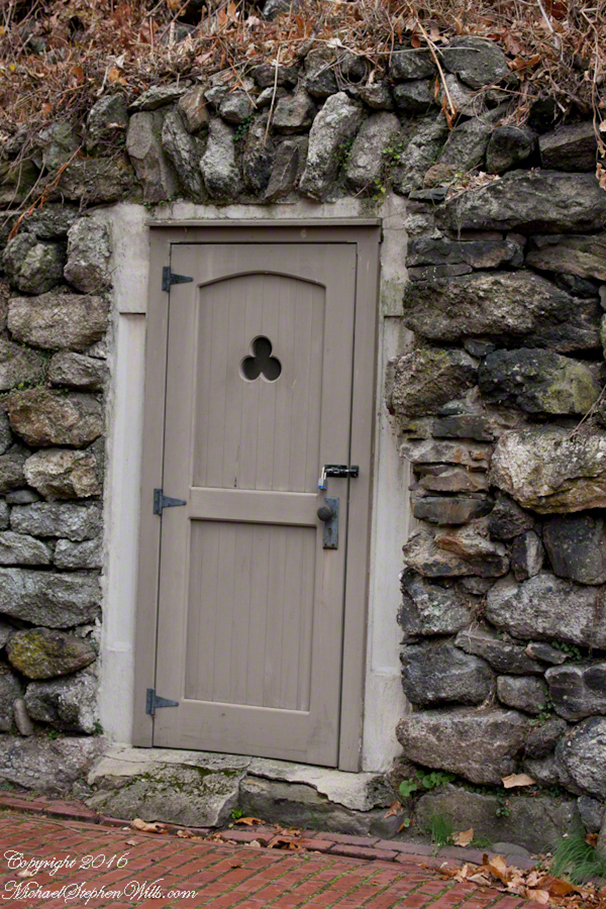
For me, the charm of these places are the details.  These pull the attentive visitor into the character of the owner and/or designer.  A simple storage room dug into the hillside, designed and crafted with love in the interest of the residents who experience it everyday.  Built for a lifetime and longer.  The door and fittings appear to be modern, “nice work.”

blackfridayjimthorpe-9608

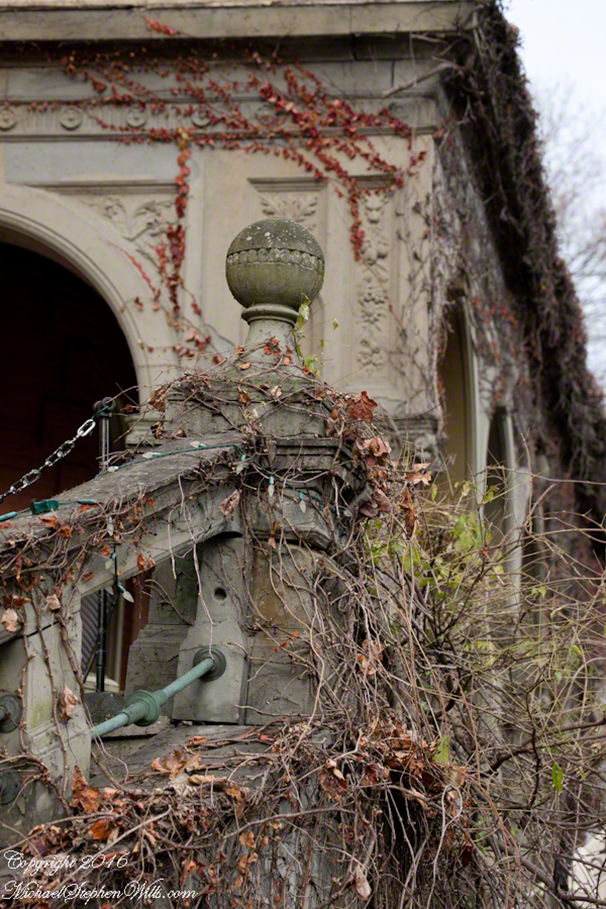
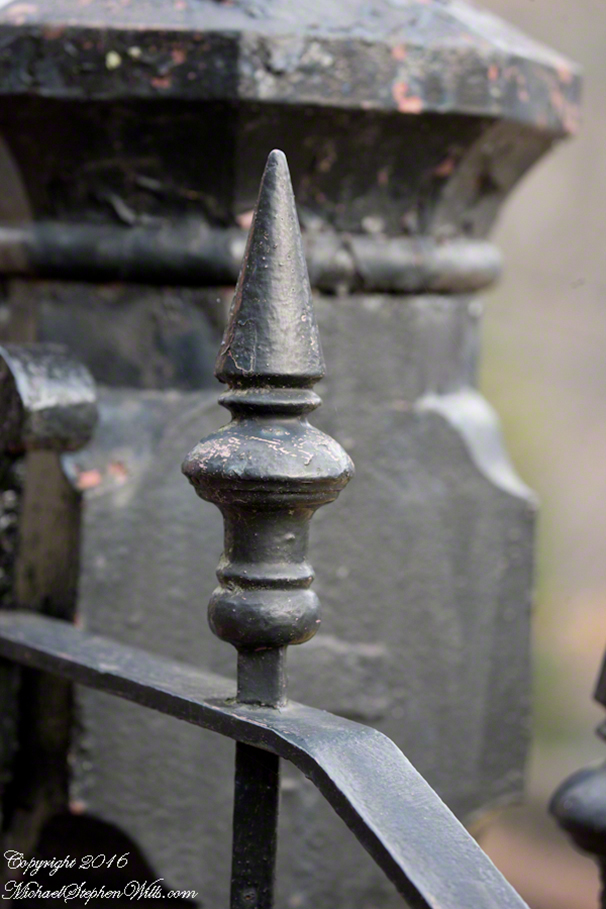
A substantial finial of a thick wrought iron fence rail.

blackfridayjimthorpe-9610

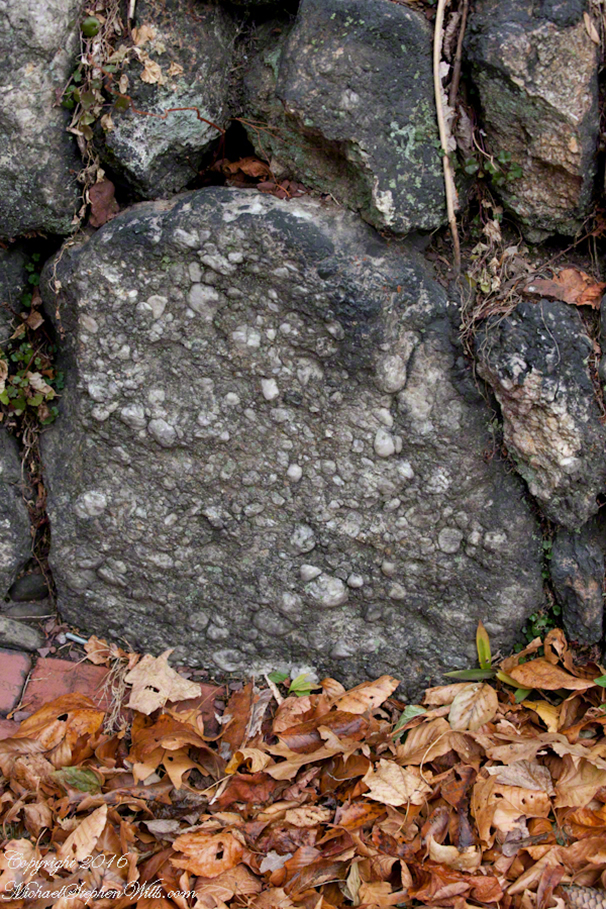
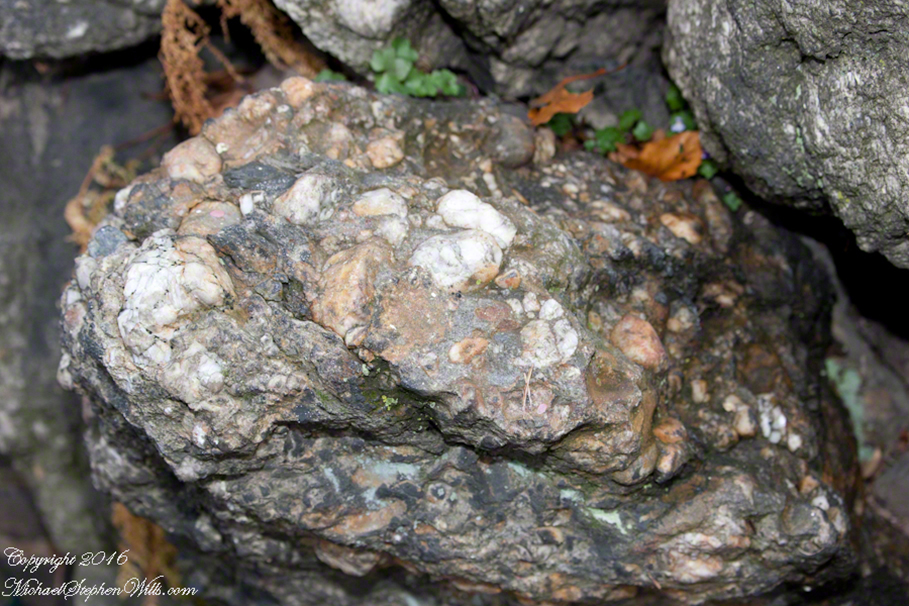
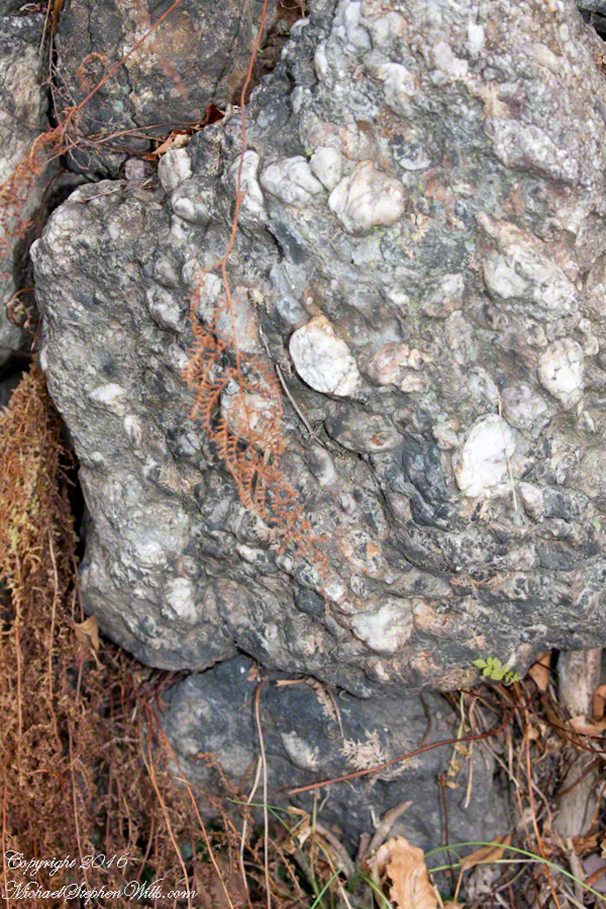
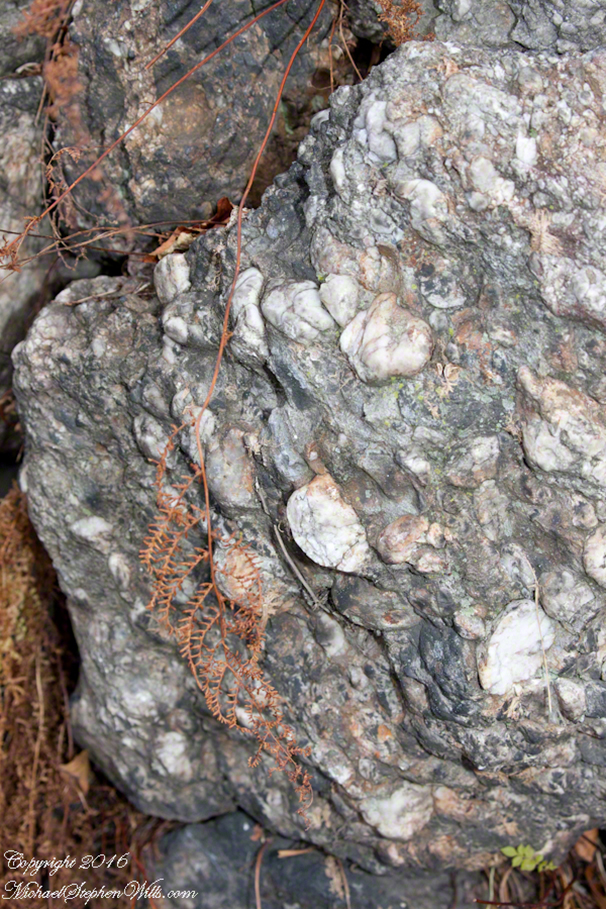
More so, the choice of building materials for retaining walls.  These were spotted in the countryside, quarry or wherever by someone with an eye for unusual beauty…or a rock hounds.  The boulders are carefully dressed conglomerate specimens with interesting clasts and matrix.

blackfridayjimthorpe-9609
blackfridayjimthorpe-9624
blackfridayjimthorpe-9623
blackfridayjimthorpe-9622

The museum is a place to enjoy the gathering night.  Take note of the thick groves of rhododendron, native to this area: a reason to return springtime.
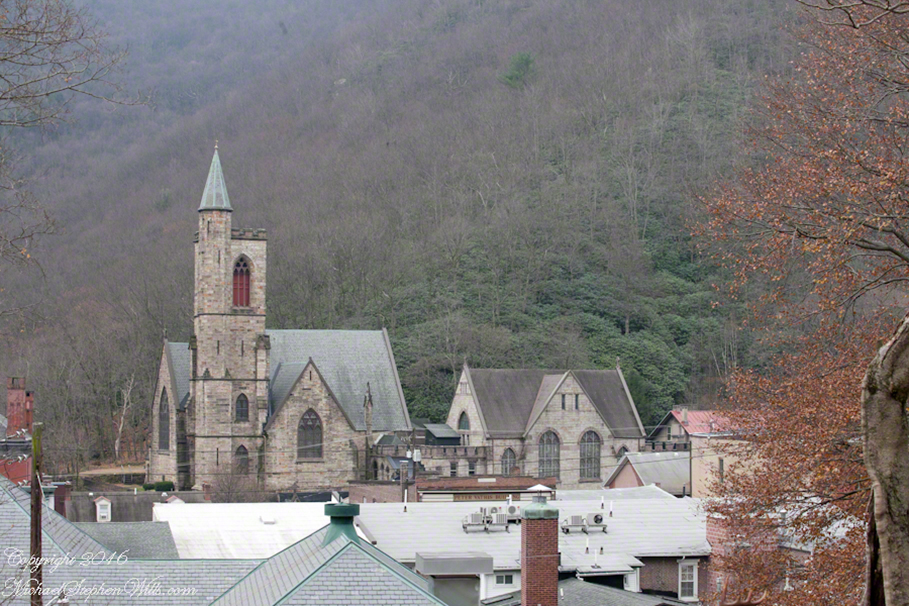
The surrounding hills, locally called mountains, increase the charm of the setting.

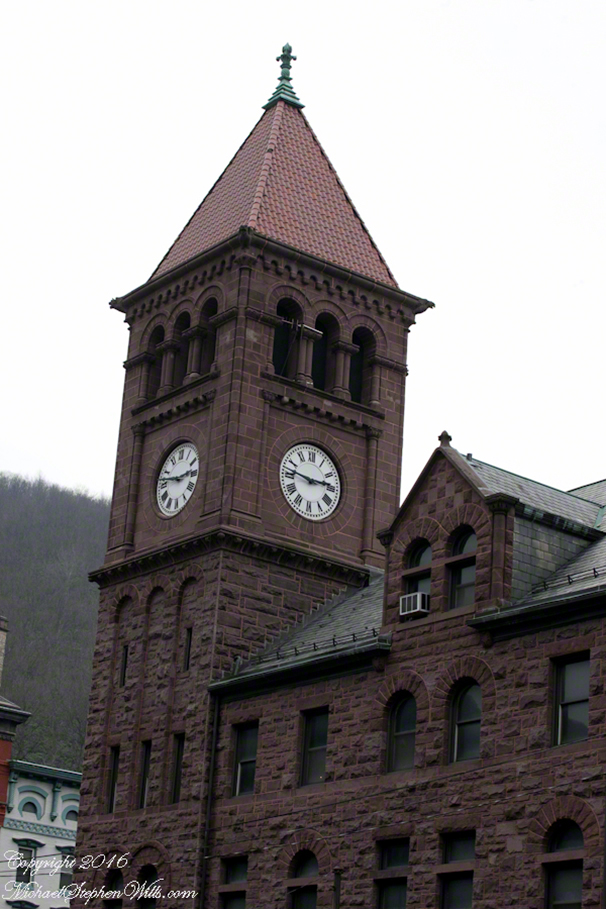
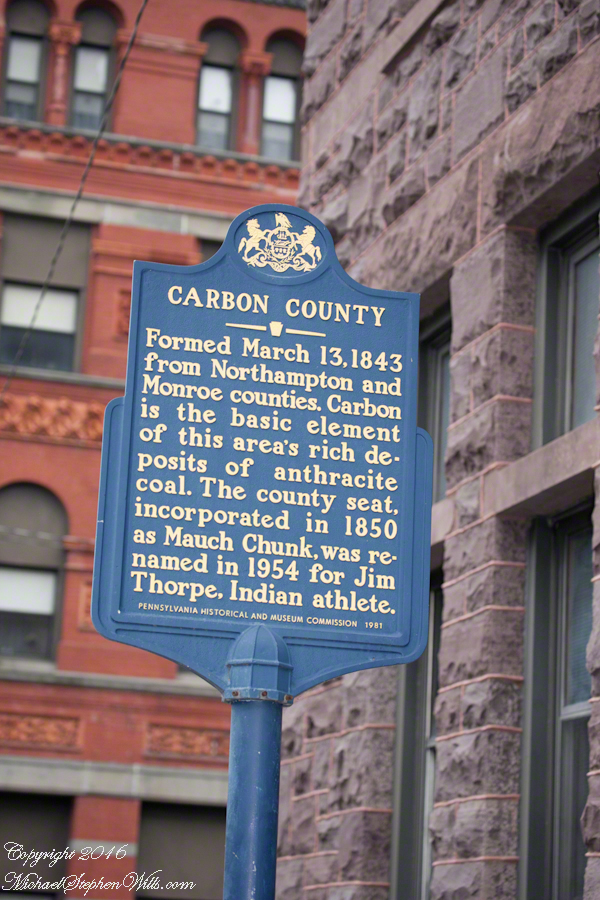
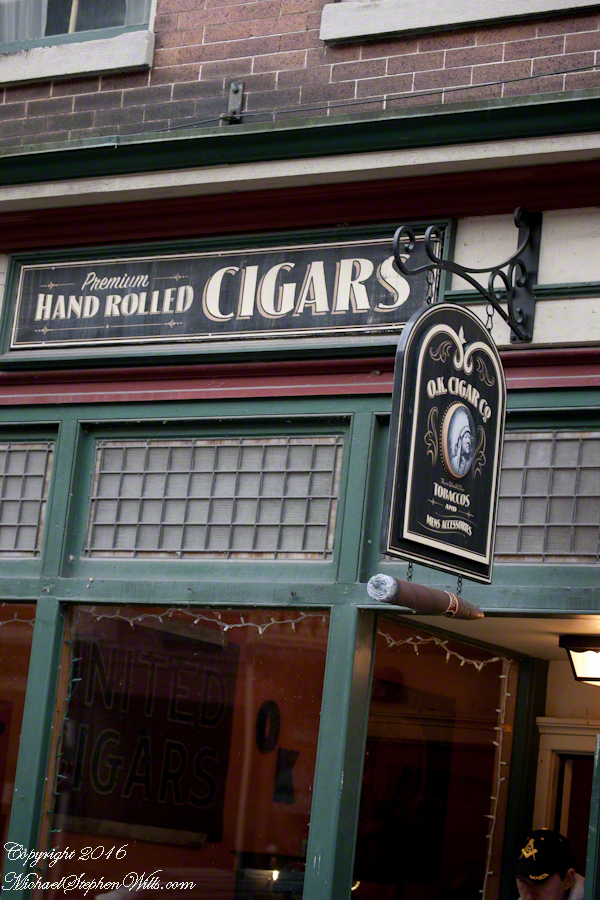
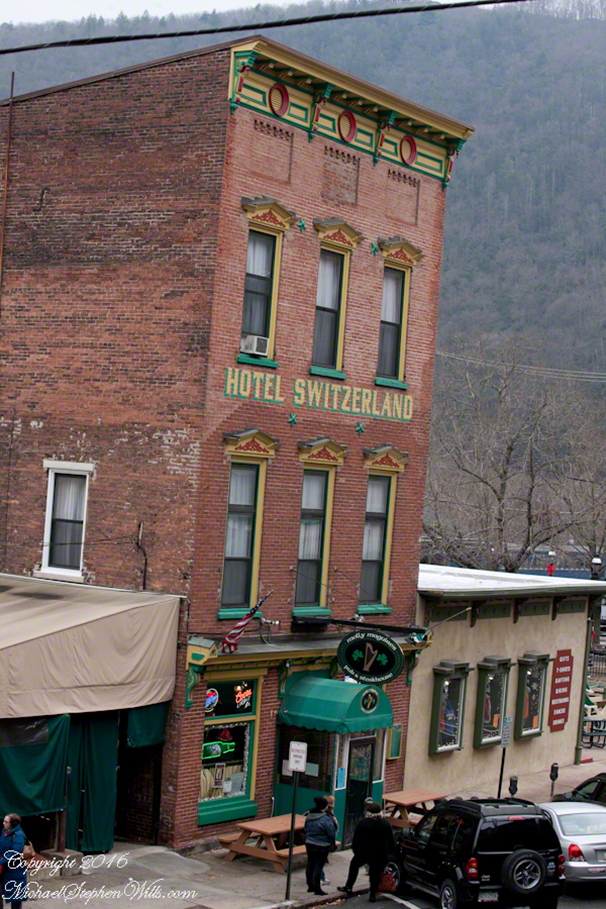
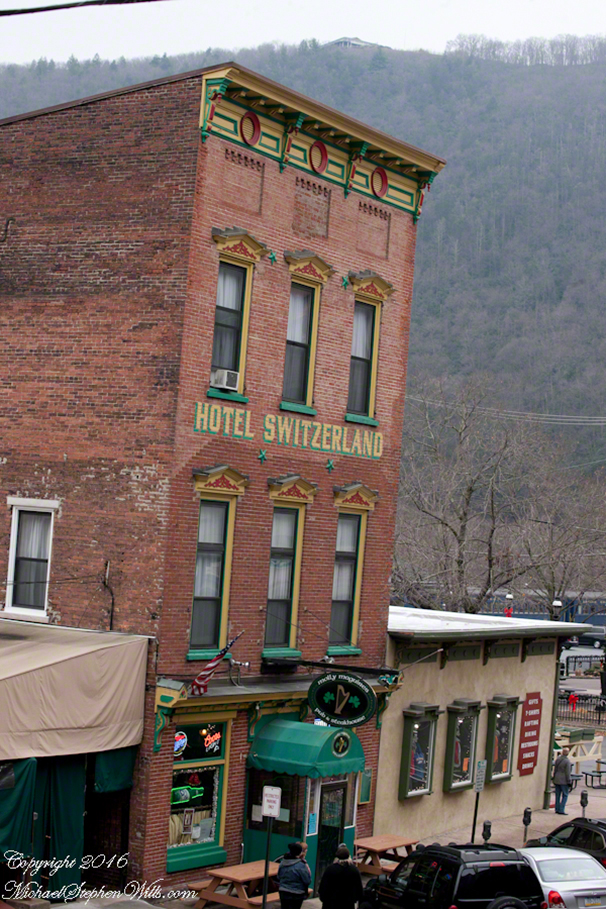
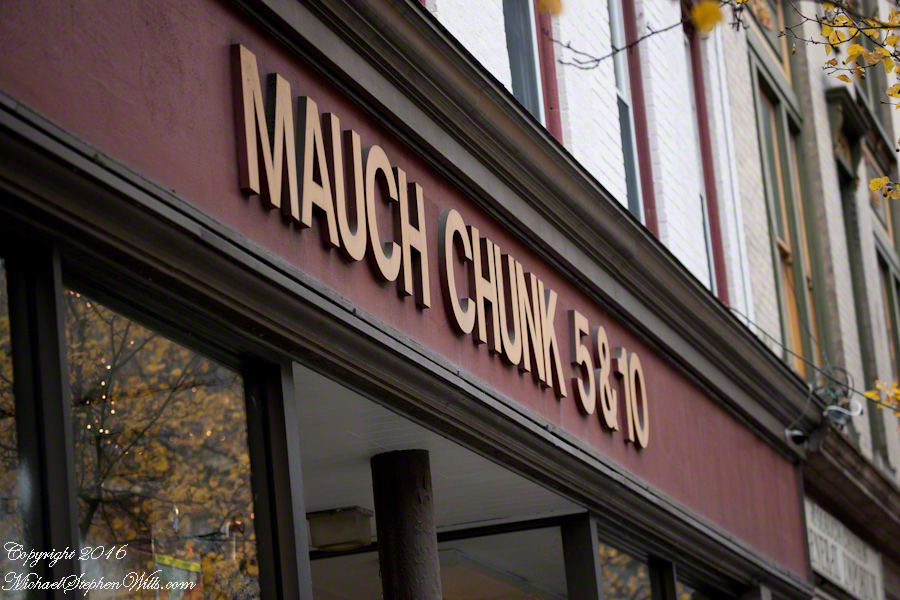
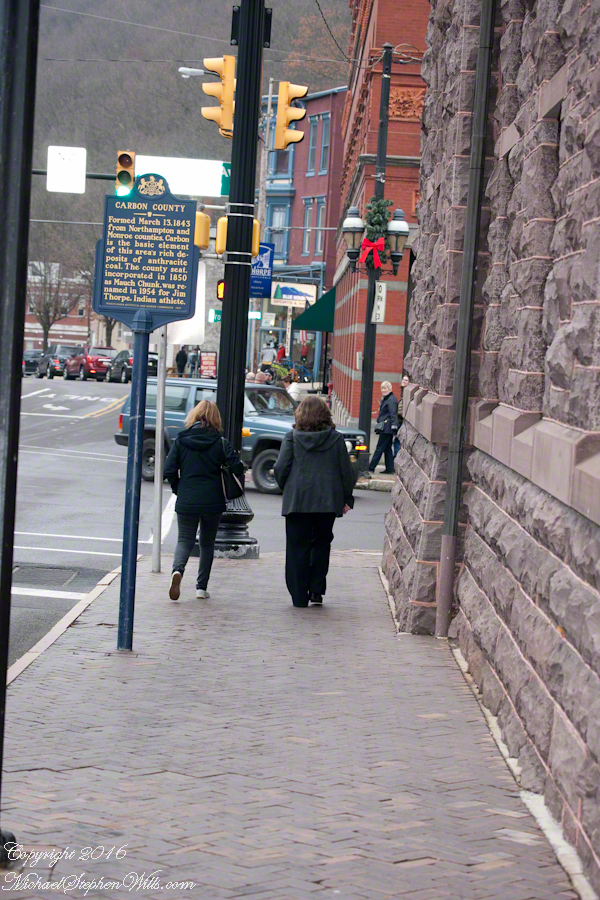
We descended into town for shopping, dinner at Molly Maquire’s and a show in the Mauch Chunk Opera house. The village was named Mauch Chunk previously until the town fathers decided to rename it to Jim Thorpe, the notable native American sports star, in a then failed effort to encourage tourism. The last decade business has improved.

Molly Maguire’s Irish Pub is a fine place for a companionable meal. Pam and I enjoyed the New York Strip steak with, of course, potatoes. A baked potato for me. Pam had the red skinned garlic mashed potatoes.

The pub is located near the train station.

If you don’t know about the Molly Macguires…google ’em.

A few more notable details.

blackfridayjimthorpe-9636
blackfridayjimthorpe-9641
blackfridayjimthorpe-9640
blackfridayjimthorpe-9646
blackfridayjimthorpe-9650

Ahhhh, nature….

blackfridayjimthorpe-9644
blackfridayjimthorpe-9647

If you like what is here…click this link for my online gallery.  Thank You

Cascadilla Gorge Walks: Scenic Views and History

An 84-degree October walk up Cascadilla Gorge—quiet paths, bluestone porches, fresh paint on the bridge—waiting for the footbridge to catch the last, warm evening sunlight.

Every fall I make a point of walking Cascadilla Gorge at least once. On an 84-degree October 9 afternoon, Pam was tied up with chores, so I parked downtown and stopped to see the grandchildren. They were with their mom. Two were “too tired” after school to do anything. The youngest, at the age of four, was not yet in school and he floated the idea of the skateboard park; for me, that wasn’t in the cards. So I set off on foot up Court Street, past the residence of Buddhist monks at the gorge entrance.

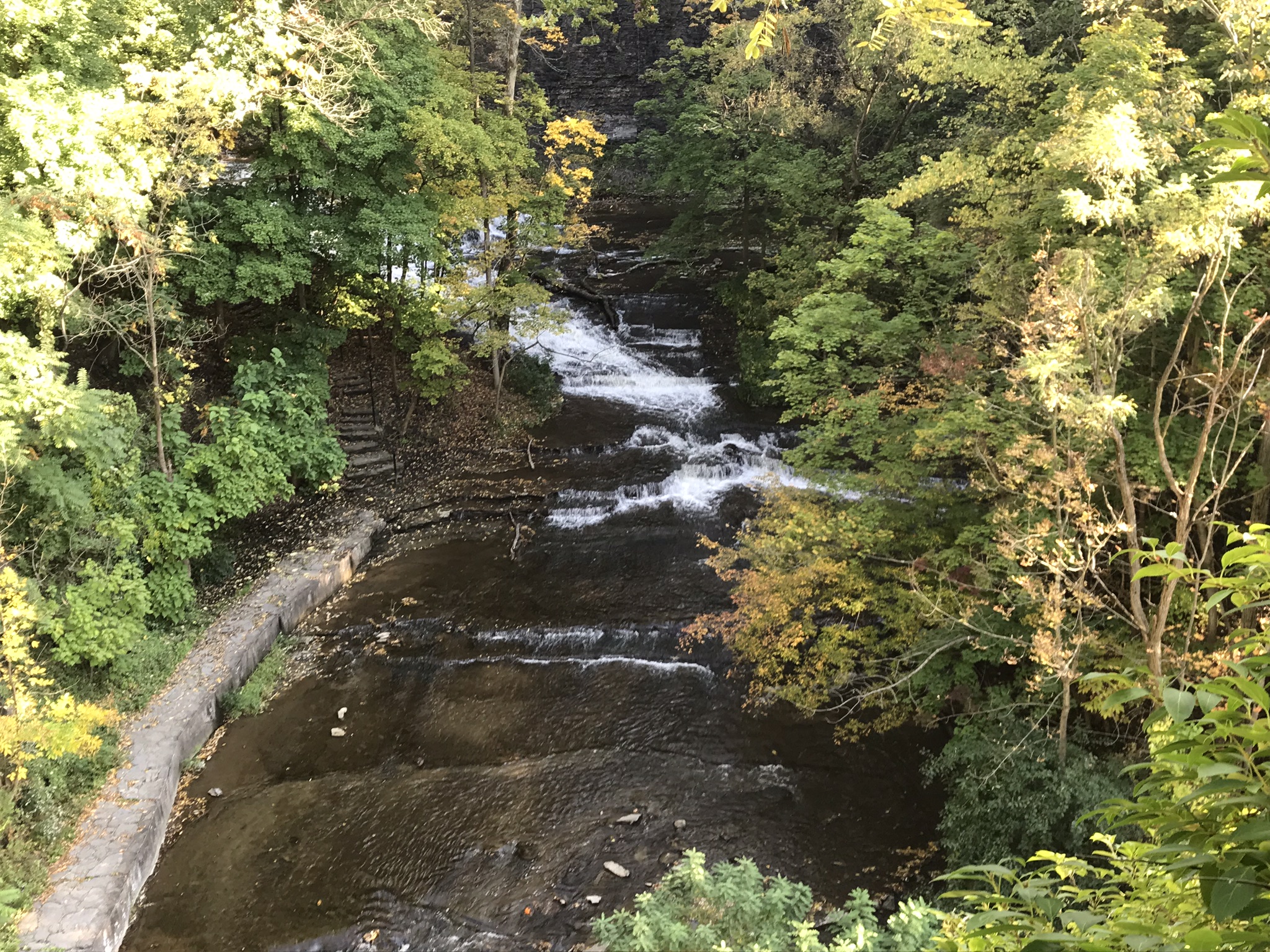
Cascadilla Gorge is part of Cornell Botanic Gardens (formerly the Plantations), the university unit that stewards natural areas and gardens across campus. Foot traffic was light. A sign explained why: the lower trail was closed at Stewart Avenue, where the bridge spans the ravine. I crossed to the north side by the Christian Science church and wound up Cascadilla Park Road to the rim trail that climbs East Hill toward campus.

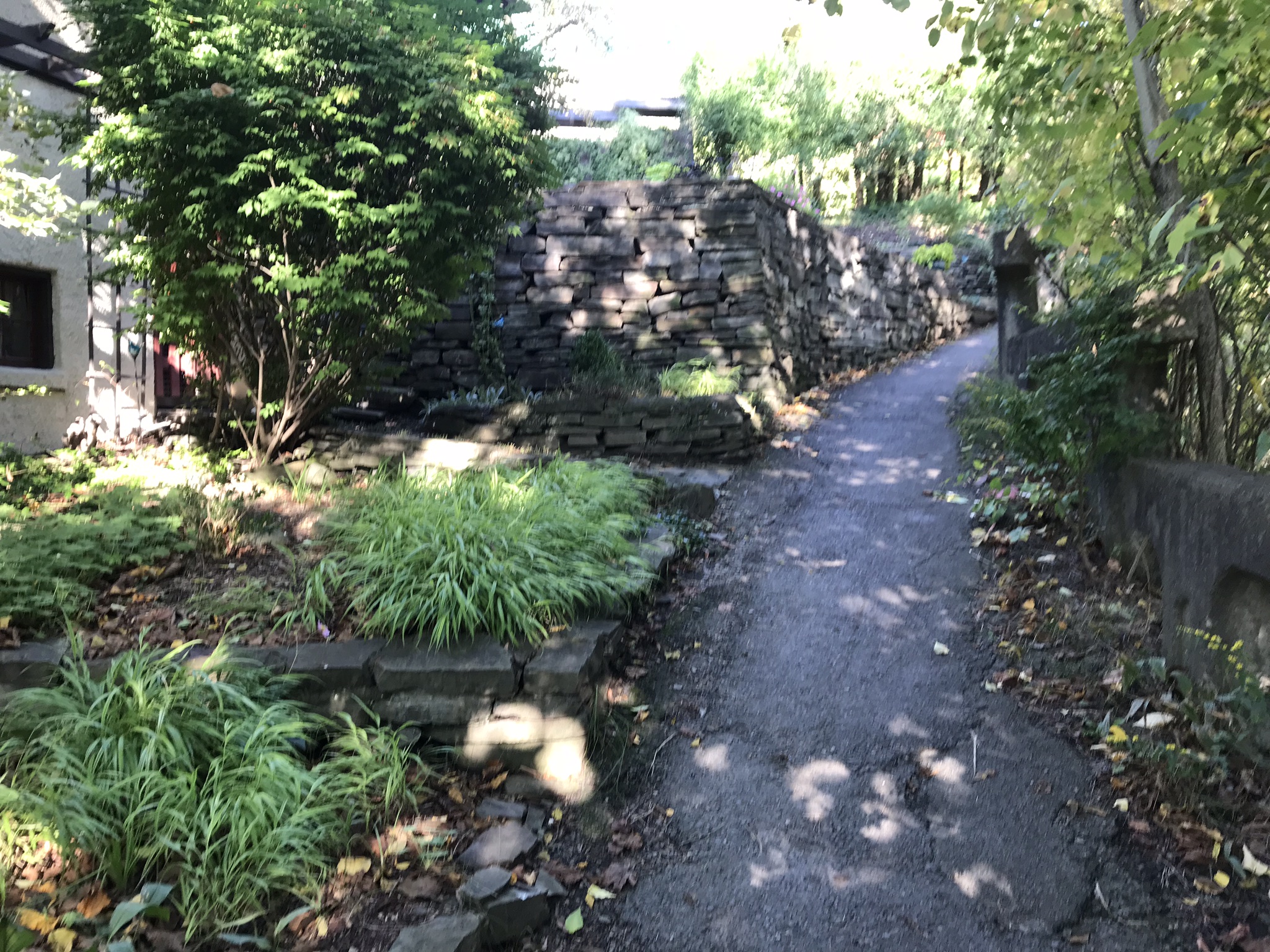
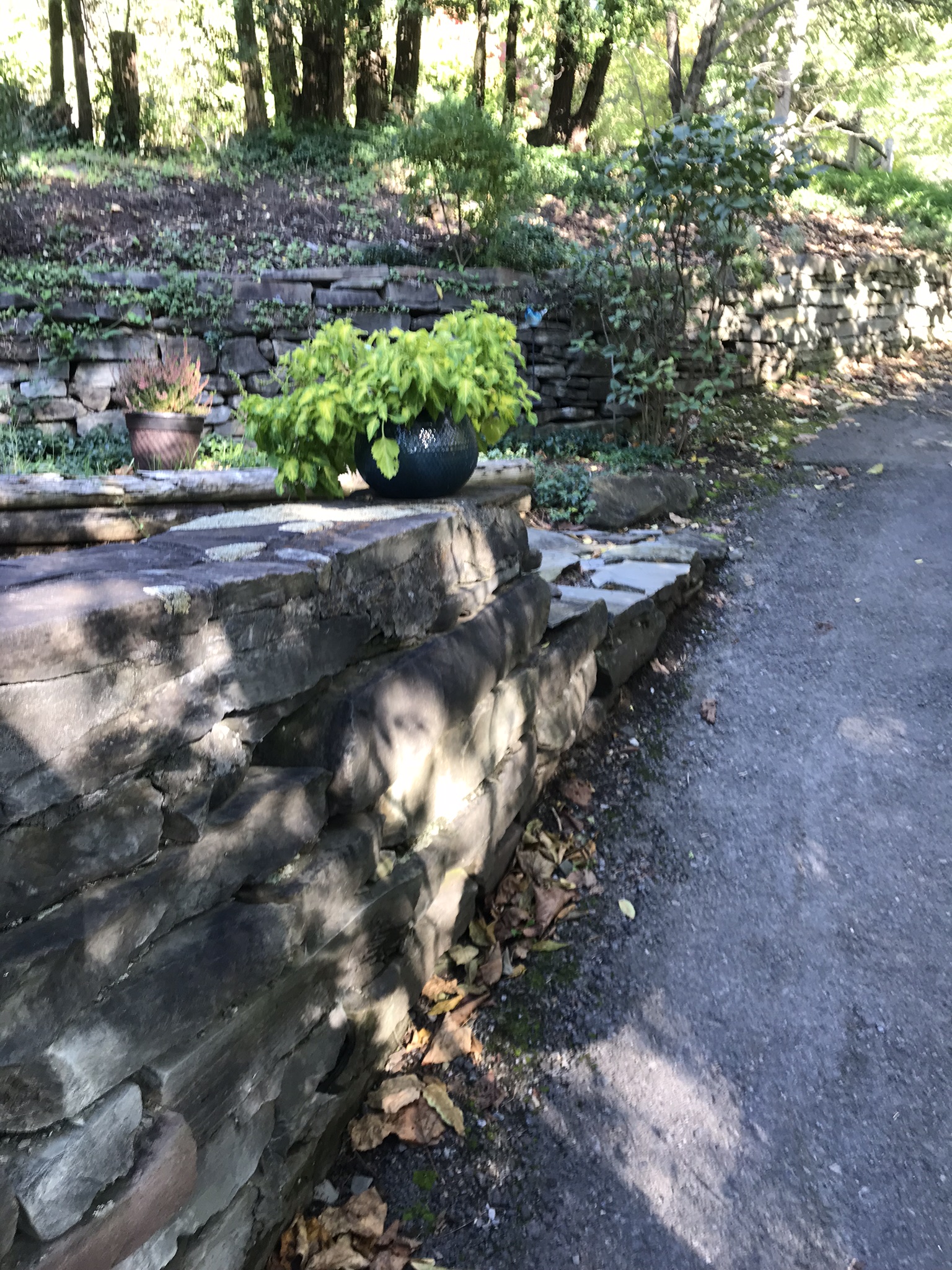
Homes line this stretch, porches facing the gorge where the constant music of creek and falls carries up. Not feeling ambitious, I made a few phone snapshots. Here the path squeezes past a porch built of local “bluestone,” a feldspathic sandstone native to the region—around town it’s sometimes called “Llenroc,” Cornell in reverse.

That pot you see in the previous photo gets a closer look here, with more of the same weathered bluestone.

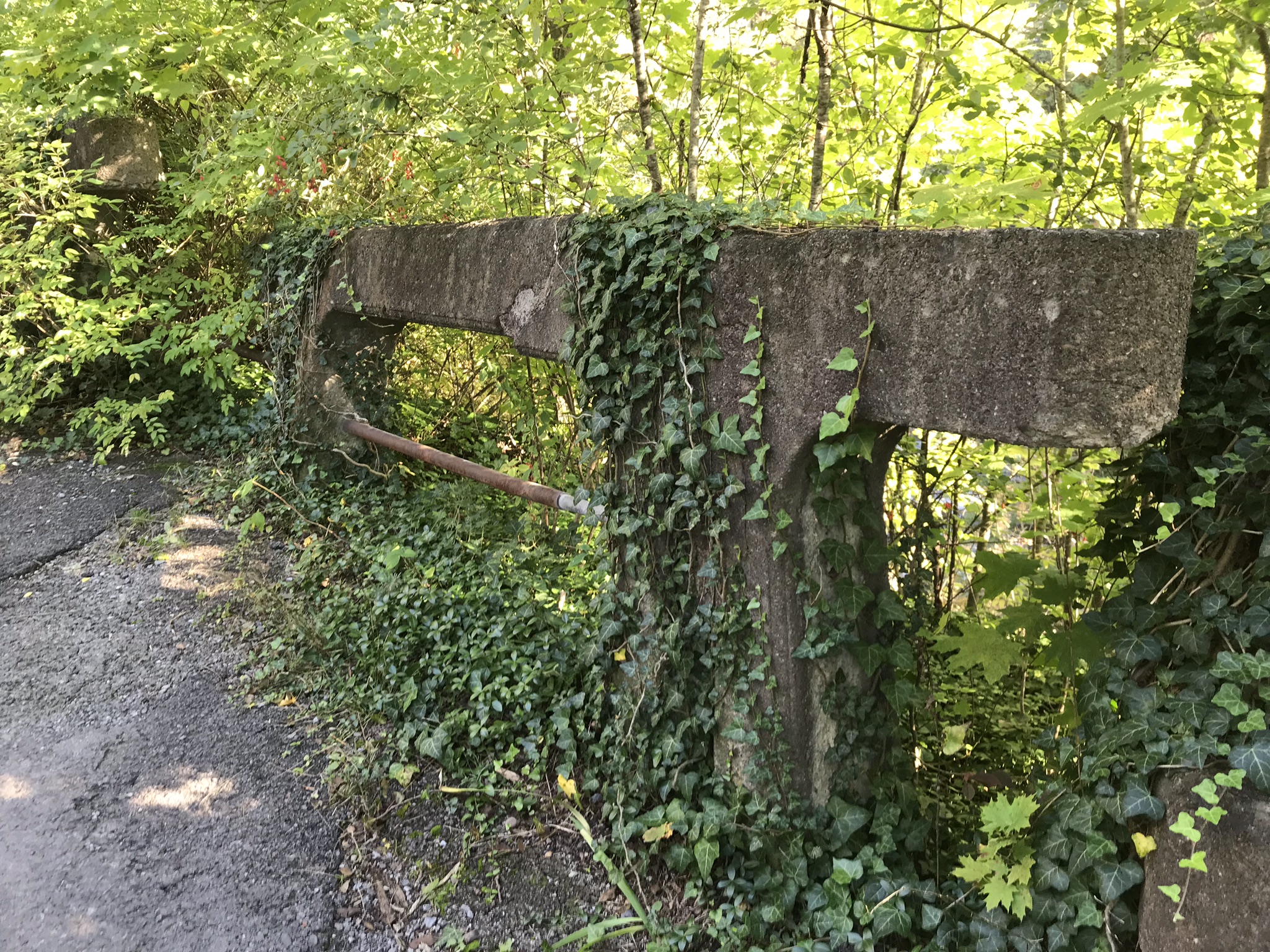
The drop to the gorge floor is steep, sheer in places. The barrier fence looks stout in some sections and thins to almost nothing in others. A few years ago, a recent Cornell graduate walking home late along this path fell to his death. I continued to the fork for the Ithaca City Cemetery, climbed to Stewart Avenue, turned right to cross the Cascadilla bridge, then right again onto the Gorge Rim Trail back toward town. At the bridge I noticed part of the closure work: fresh paint on the bridge and on the suicide-prevention netting beneath. On September 24—just fifteen days earlier—a Cornell senior had jumped; the net caught him, and the fire department brought him to safety.

From the concrete barrier in that photo you can peer into the gorge: a beautiful view, the steady voice of water rising from below. I try to leave the darker stories where they belong—at least until the sight of fresh paint pulls them back to mind.

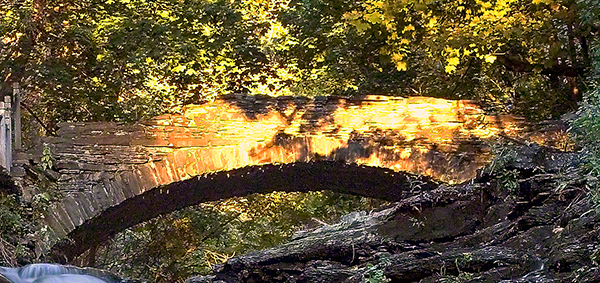
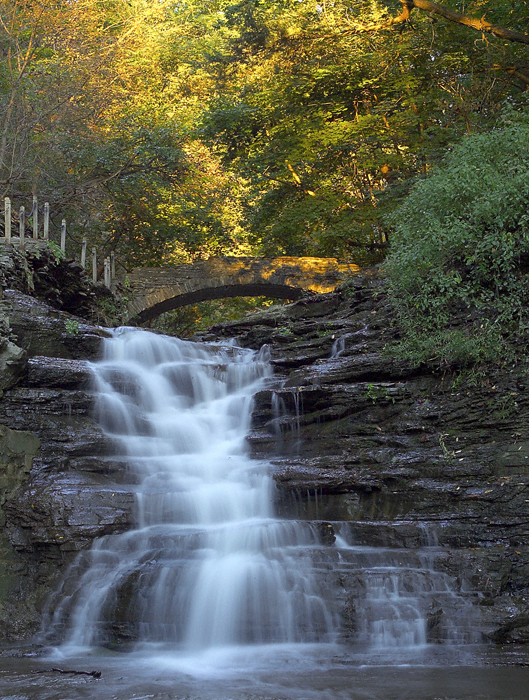
I took the following photograph in 2005, the September before my previous post, “Autumn Stroll in Sapsucker Woods” with the Kodak DSC pro slr-c, an ND filter, 50 mm lens and a tripod. It was a planned session, I work waterproof boots and was able to stand in the creek after a series of rain-free days. At this time of the year the gorge opens to the setting sun. I waited, taking a series of photographs for the perfect amount of light on the footbridge. The feature photograph (the header to this posting) is a detail from a shot with the bridge more fully lit.

The header image for this post comes from a planned session in September 2005, just before the photograph of my “Autumn Stroll in Sapsucker Woods” post. I used a Kodak DCS Pro SLR/c with an ND filter, a 50 mm lens, and a tripod. After several rain-free days I wore waterproof boots and stood mid-creek. In autumn the gorge opens to the setting sun; I waited and shot a sequence until the light laid perfectly across the footbridge. The banner image is a detail from a frame where the bridge is more fully lit.

We have a framed print of that photograph at home. I mounted it as a gift to Pam on our first Valentine’s Day.

“September Sunset in Cascadilla Gorge”

If you’ve walked Cascadilla Gorge in autumn, I’d love to hear your favorite vantage points—porches along the rim, the lower stone steps, or the footbridge at golden hour. Do you know any stories about Llenroc bluestone on these houses, or remember the Stewart Avenue Bridge before its safety upgrades? Photographers: what helps you balance deep shade and bright water from the designated trails? Share a tip or a memory in the comments.

Enter your email to receive notification of future postings. I will not sell or share your email address.