Woodland Goldenrods

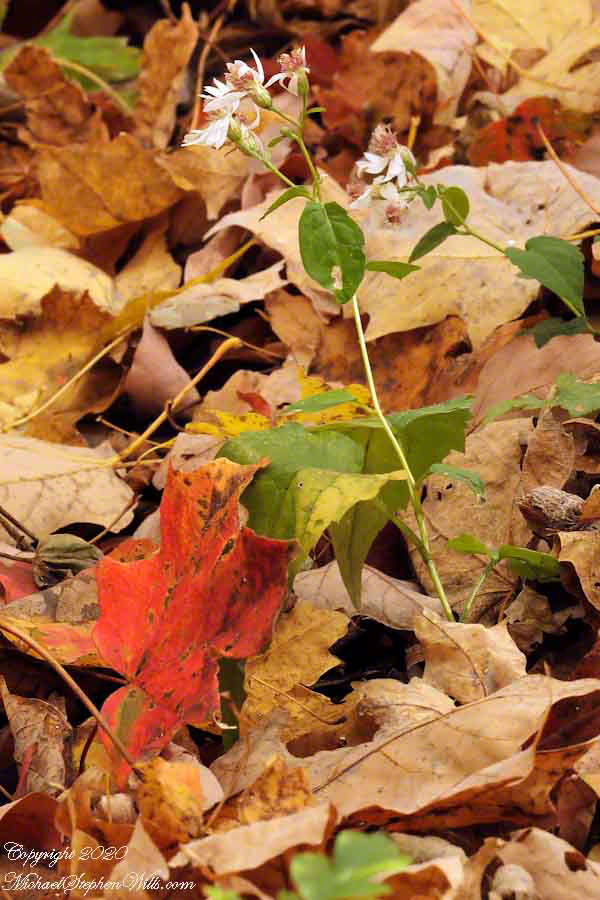
Woodland goldenrods in the Finger Lakes Region contribute to ecosystem biodiversity and resilience.

In the Finger Lakes Region of Central New York State, a tapestry of flora unfurls across the landscape, marked by the vibrant yellows of woodland goldenrods. These wildflowers are not just a visual spectacle; they are integral to the ecosystem, contributing to its biodiversity and offering a feast for pollinators.

Woodland goldenrods (Solidago species) are part of a larger genus that encompasses over 100 species, many of which thrive in the varied habitats of the Finger Lakes. This region, with its rich soils, ample rainfall, and diverse topography, hosts an array of goldenrod species, each adapted to specific niches within the woodland understory.

Hint: click image for larger view. Ctrl/+ to enlarge / Ctrl/- to reduce
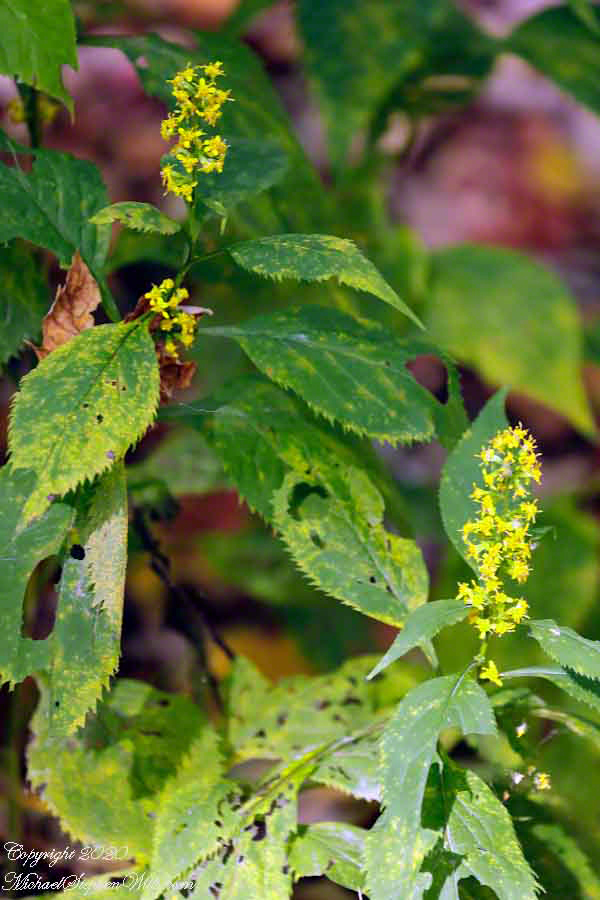
Solidago caesia, commonly known as blue-stemmed or wreath goldenrod, is one species that graces these woods. Unlike the typical roadside goldenrods, this species thrives in the dappled shade, its delicate arching stems culminating in small bursts of yellow flowers that appear like beaded necklaces draped over the greenery.

Another species, Solidago flexicaulis, or zigzag goldenrod, earns its name from the characteristic bending pattern of its stem, which zigzags between leaf nodes. Its flowers are more clustered, favoring the shade and moist conditions of the forest floor. Its presence is often a sign of a healthy, undisturbed woodland.

Solidago odora, or anise-scented goldenrod, brings a sensory delight to the mix with leaves that emit a licorice-like fragrance when crushed. This goldenrod favors the edges of woodlands and clearings, where sunlight can reach its clusters of tiny, bright yellow flowers.

The downy goldenrod, Solidago puberula, is yet another species that decorates the region’s woodlands. It prefers dry, sandy soils, often found on the slopes and ridges that contour the Finger Lakes. Its name comes from the fine hairs that cover its stems and leaves, a characteristic that distinguishes it from its kin.
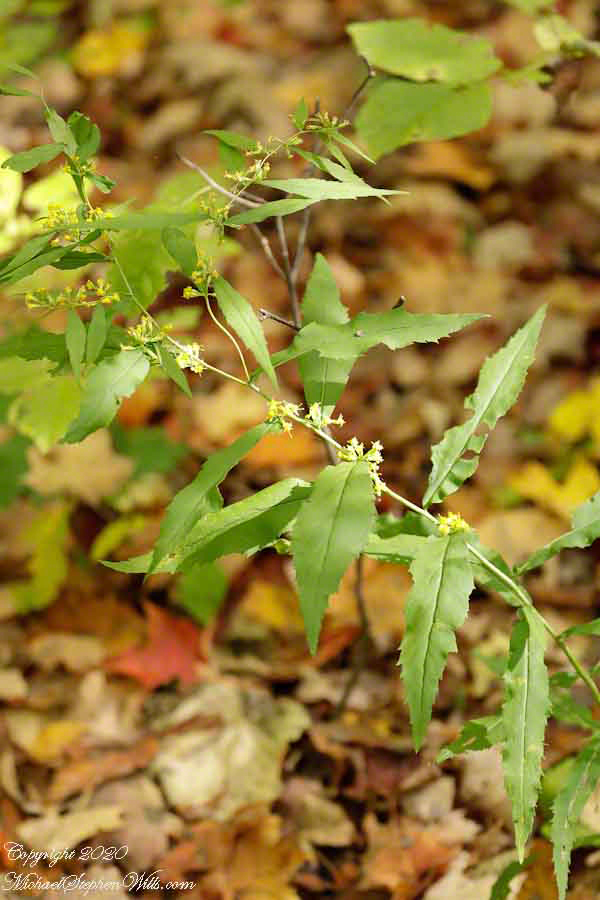
Each of these goldenrods plays a role in the woodland ecosystem. Their flowers provide nectar and pollen for a variety of insects, from bees and butterflies to beetles and flies. The seeds are a food source for birds, and the plants themselves offer habitat to numerous woodland creatures.

The presence of woodland goldenrods also indicates the health of the region’s forests. These plants are often pioneers in disturbed areas, contributing to soil stabilization and the natural succession process. They are resilient and adaptable, capable of surviving in a range of conditions from full sun to dense shade, though each species has its preference.

In the Finger Lakes Region, the goldenrods bloom from late summer into the fall, their golden hues a prelude to the coming autumnal display. They stand as a testament to the beauty and complexity of these woodlands, their very existence a reminder of the delicate balance within these ecosystems.
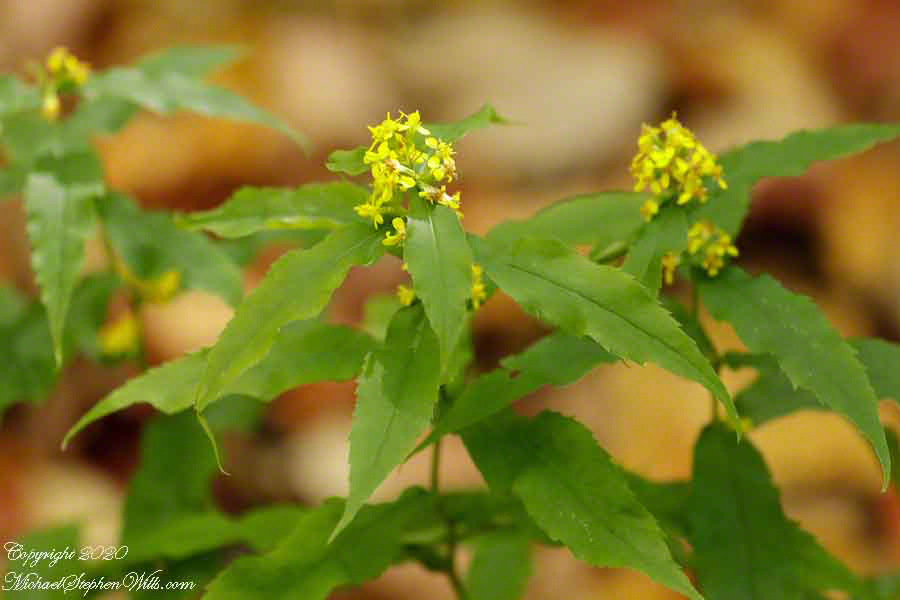
In conclusion, the woodland goldenrods of the Finger Lakes are more than just a splash of color in the verdant forests. They are a vital part of the ecological tapestry, contributing to the biodiversity and resilience of the region. Each species, with its unique adaptations and preferences, adds to the rich natural heritage of Central New York State, reminding us of the intricate web of life that thrives in these woodlands.

Click Me to view my photographs on Getty.

Copyright 2023 Michael Stephen Wills All Rights Reserved http://www.MichaelStephenWills.com

Among Fallen Leaves

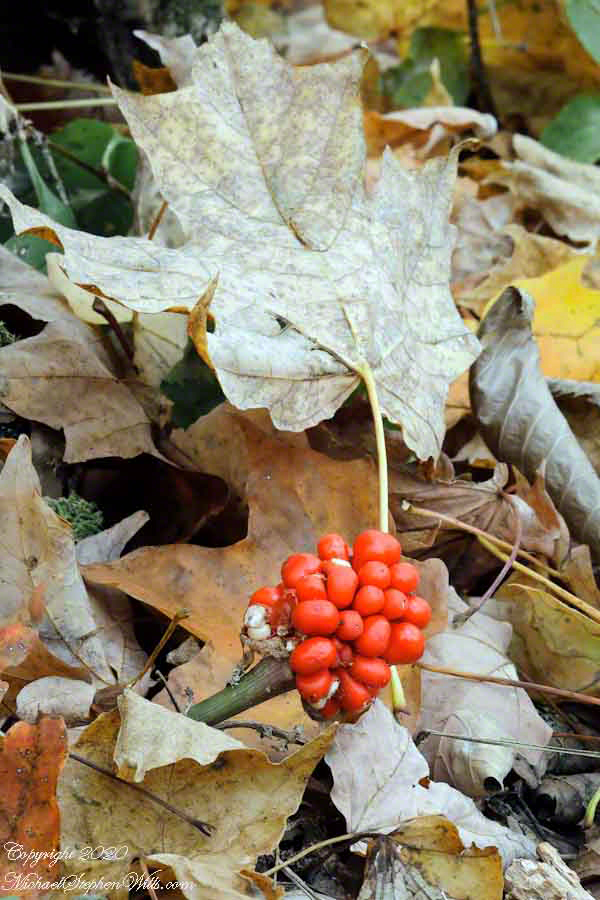
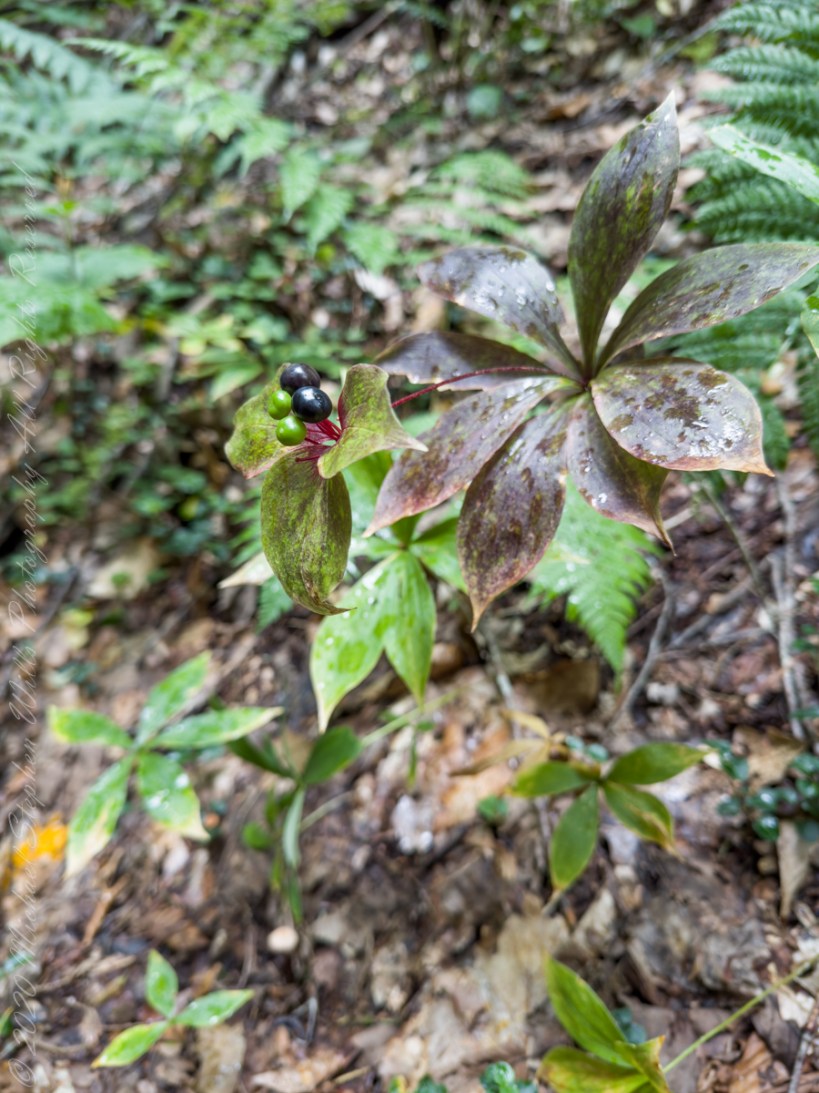
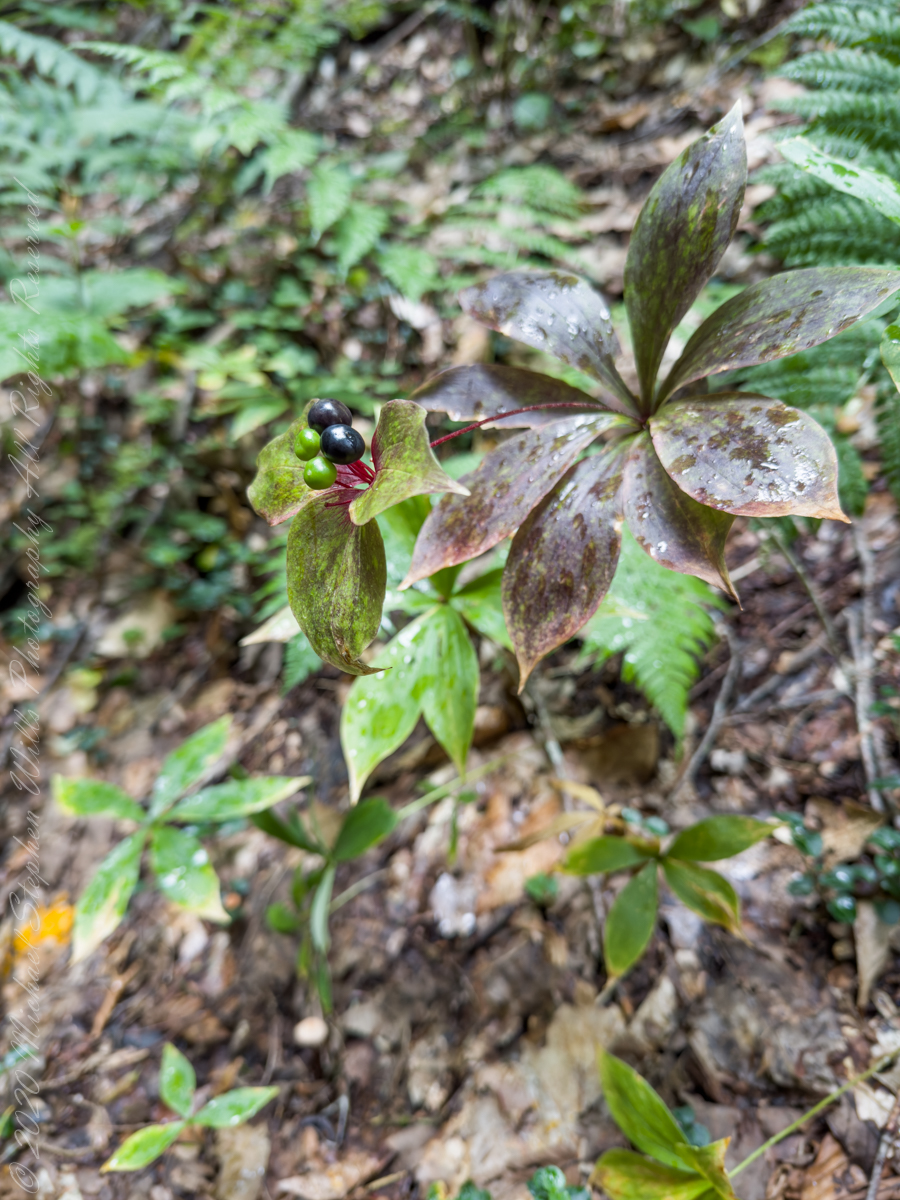
The red berries of the Jack-in-the-Pulpit plant play a key role in seed dispersion, wildlife sustenance, and fueling its energy storage organ, the corm.

As the crisp air of autumn settles in and the leaves begin their spectacular transformation into hues of red, orange, and yellow, the forest floor comes alive with a myriad of hidden wonders. Among these wonders, the Jack-in-the-Pulpit (Arisaema triphyllum) stands out for its striking red berries and the role they play in the fall glory of the woodland ecosystem. In this essay, we will explore the beauty and significance of these red berries and how they are intrinsically linked to the plant’s corm.

The Jack-in-the-Pulpit, a native perennial herbaceous plant of North America, is known for its distinctive appearance, featuring a hood-like structure known as the spathe and a tall, slender stalk called the spadix. It is during the fall season that the plant’s fascinating red berries make their appearance, contrasting vividly against the backdrop of autumn’s colors. These berries are the result of a process that begins in the spring, when the plant first emerges from its underground corm.

Throughout the growing season, the Jack-in-the-Pulpit devotes its energy to producing these striking red berries, which serve several important ecological functions. The red berries are not only visually appealing but also function as a means of reproduction for the plant. They contain seeds that, once mature, can be dispersed to establish new Jack-in-the-Pulpit plants. These seeds are often transported by animals that consume the berries, such as birds and rodents, which then disperse them in their droppings, contributing to the plant’s spread throughout the forest.

The bright red color of the berries is a key feature that attracts birds, making them an essential food source during the fall and early winter months. Birds like thrushes, cardinals, and robins are known to feed on the Jack-in-the-Pulpit berries, aiding in seed dispersal while benefiting from the nutrient-rich fruits. This mutualistic relationship between the plant and its avian dispersers showcases the interconnectedness of the forest ecosystem, where each species relies on the other for survival and propagation.

The significance of the Jack-in-the-Pulpit’s red berries extends to the corm beneath the surface. The corm serves as an energy storage organ for the plant, helping it survive through the harsh winter months when the above-ground parts of the plant wither and die. During the fall, as the plant directs its energy toward producing berries, it also transfers nutrients to the corm, ensuring its vitality and readiness for the following spring.

Furthermore, the corm itself can serve as an energy reserve for the production of future berries and the growth of new shoots. As the plant enters dormancy, it relies on the stored energy in the corm to fuel its growth when conditions become favorable in the next growing season. In this way, the corm and the red berries are intricately linked, with the berries representing the culmination of a year-long process of energy accumulation and reproduction.

In conclusion, the red berries of the Jack-in-the-Pulpit are a captivating and vital component of the fall glory that graces our woodlands. Their vibrant color and ecological role in seed dispersal highlight the plant’s contribution to the forest ecosystem’s richness and diversity. Moreover, these berries are a testament to the interconnectedness of nature, as they are not only visually stunning but also an essential food source for wildlife. As we marvel at the beauty of fall and explore the wonders of the natural world, let us take a moment to appreciate the significance of the red berries of the Jack-in-the-Pulpit and their role in the intricate web of life that surrounds us.
Copyright 2023 Michael Stephen Wills All Right Reserved MichaelStephenWills.com

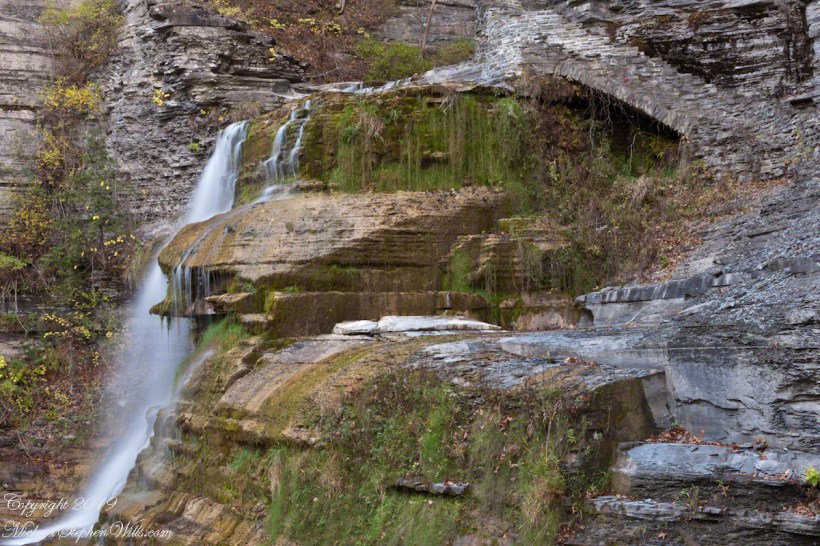
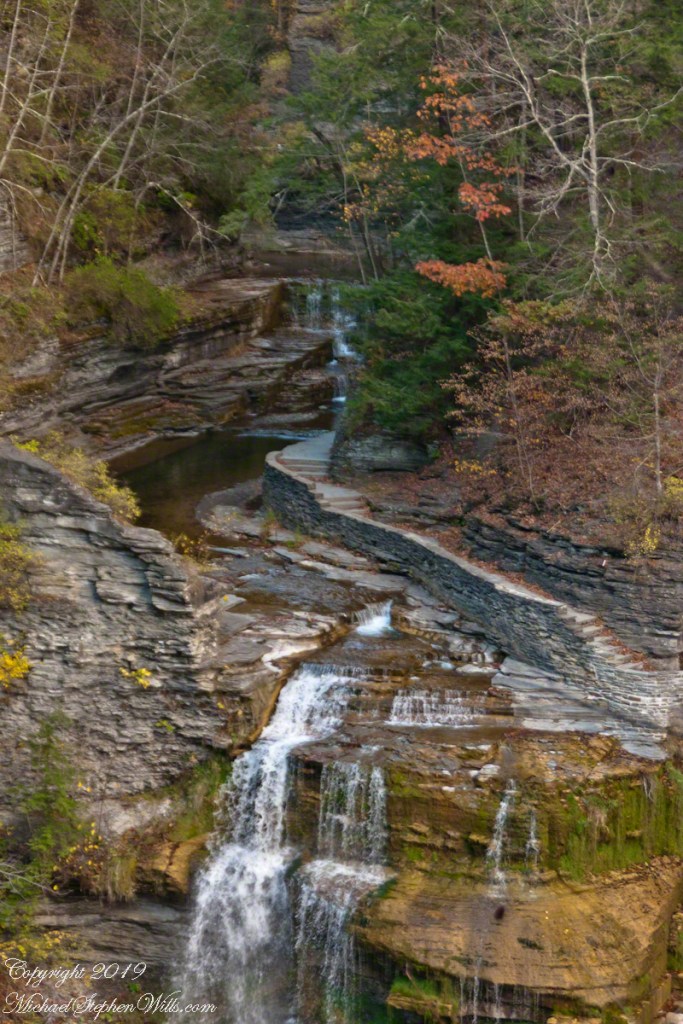
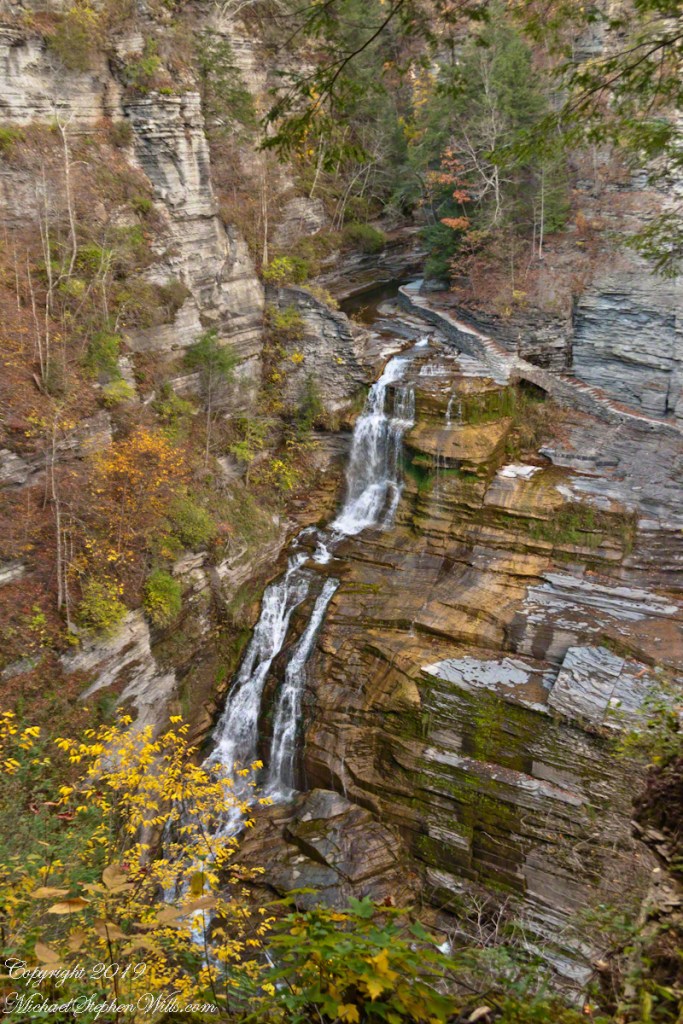
Lucifer Falls Slide Show

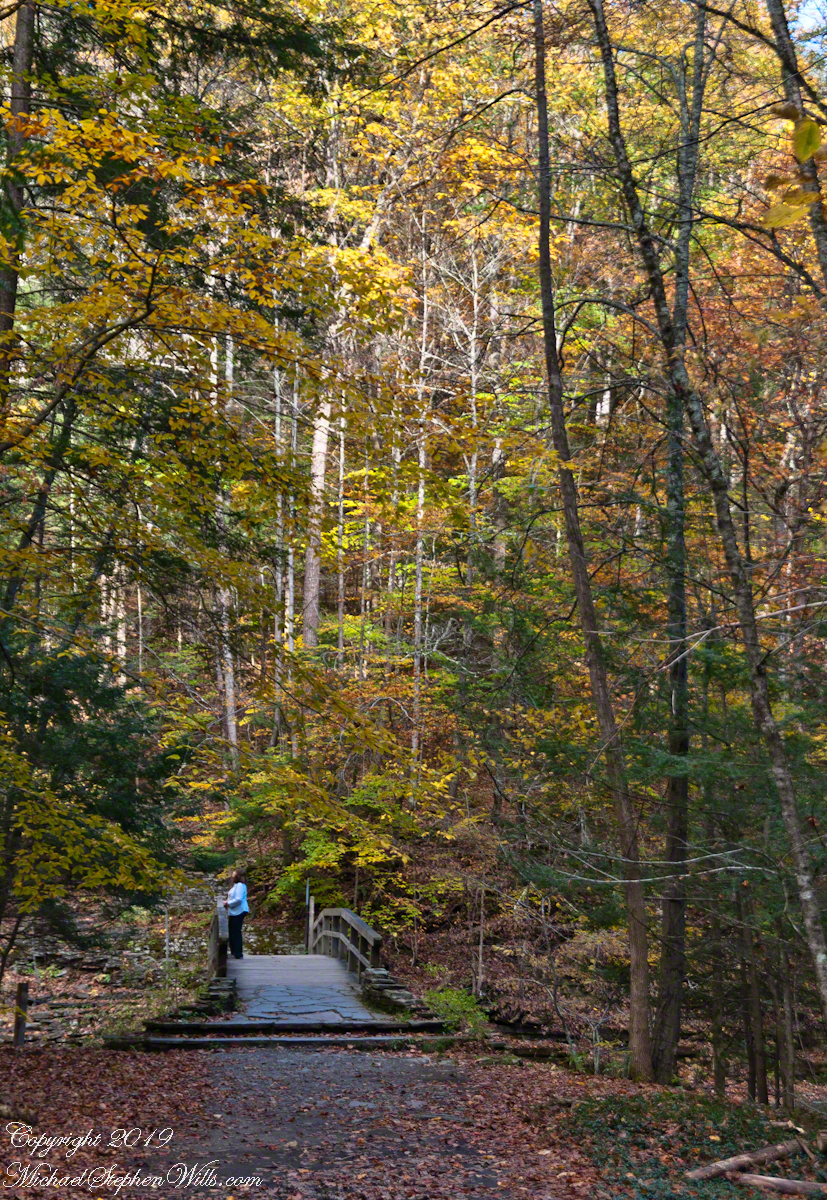
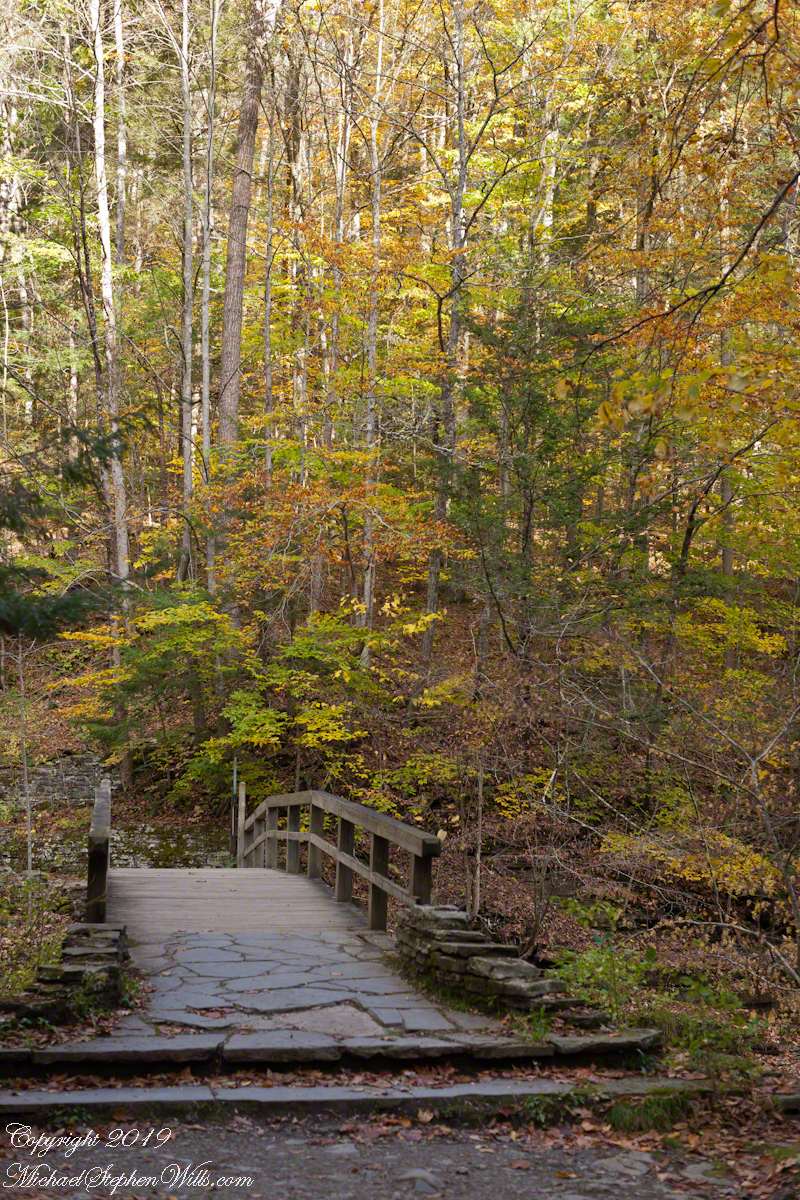
Autumn at Treman Park

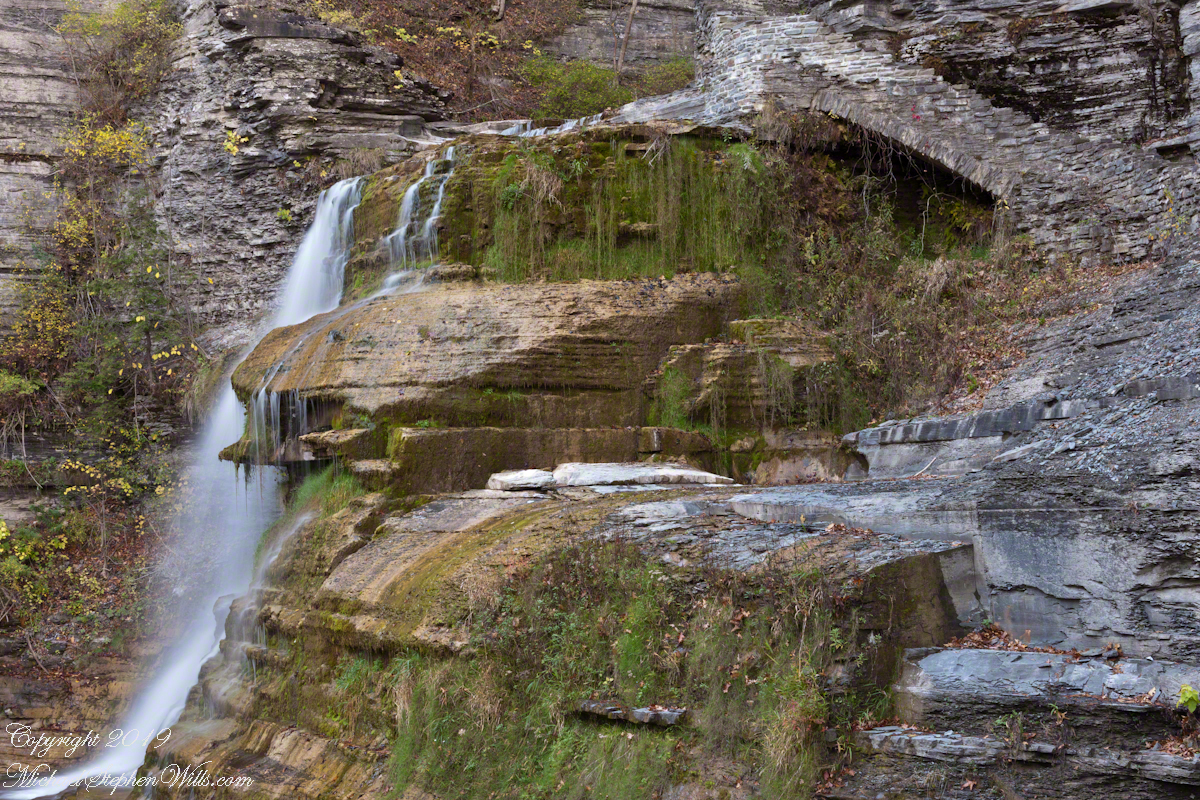
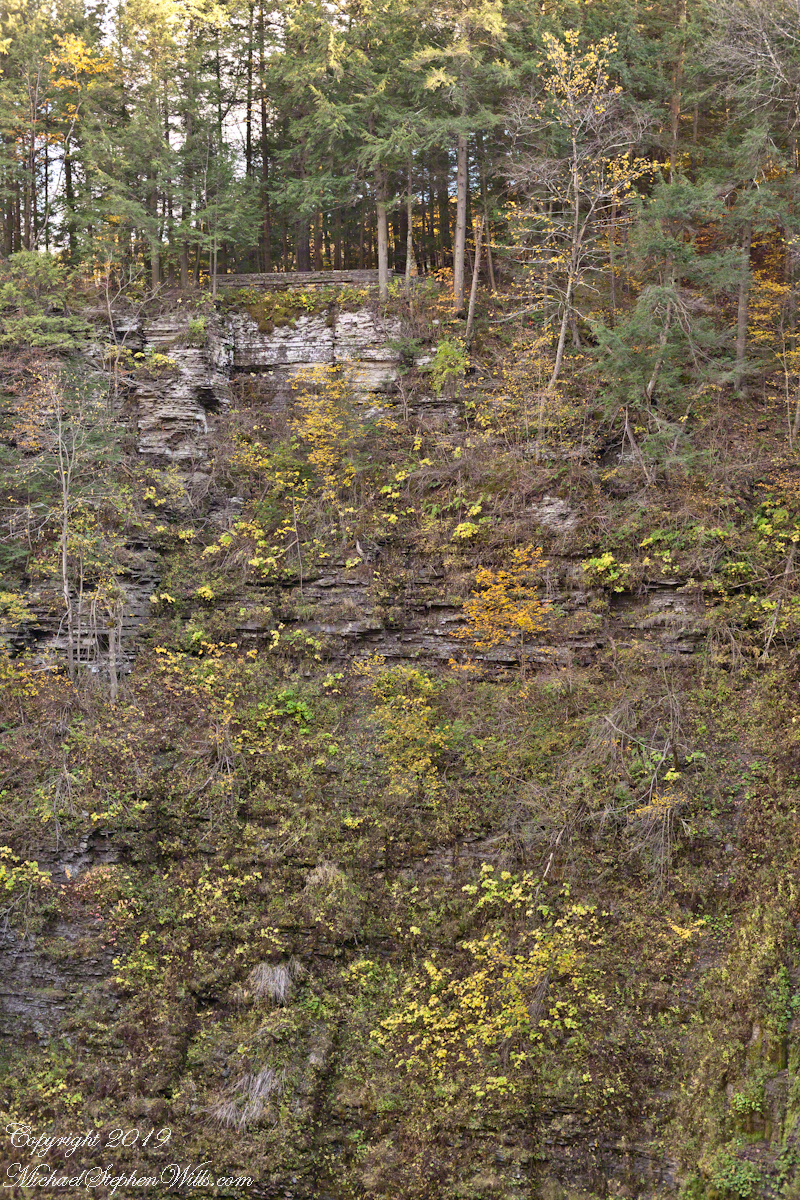
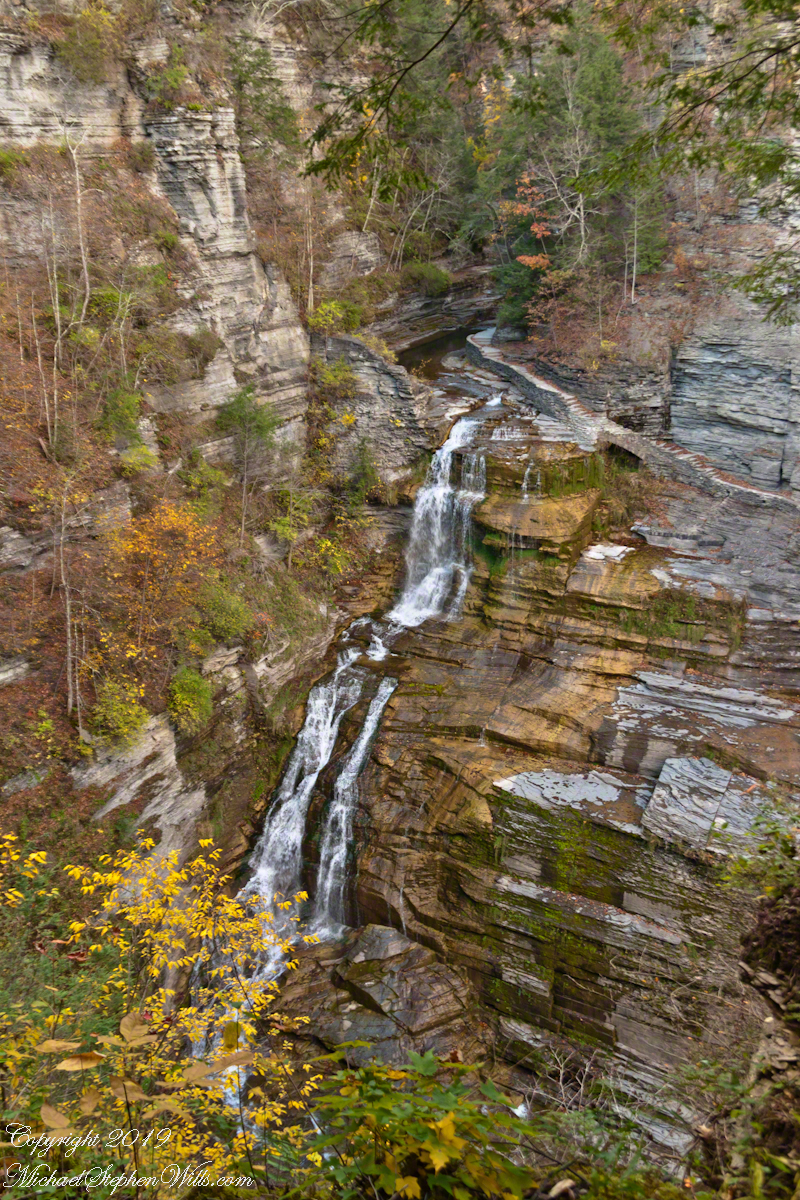
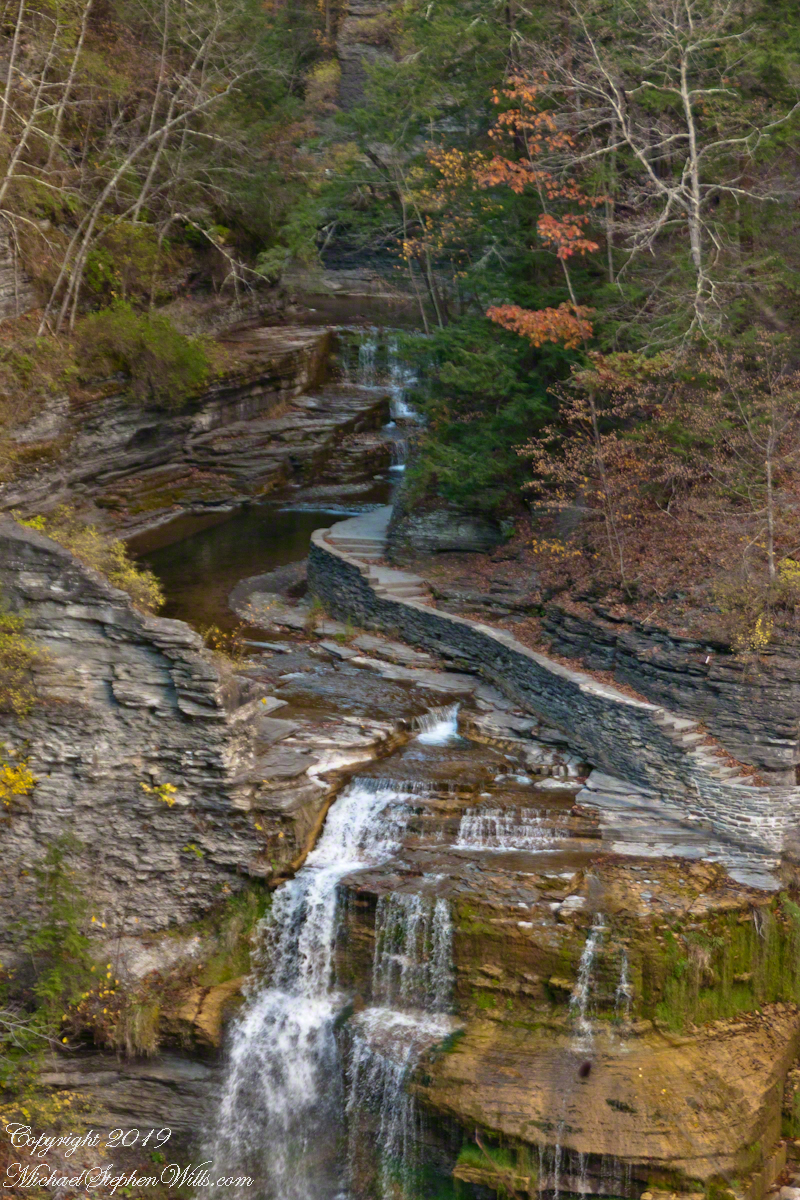
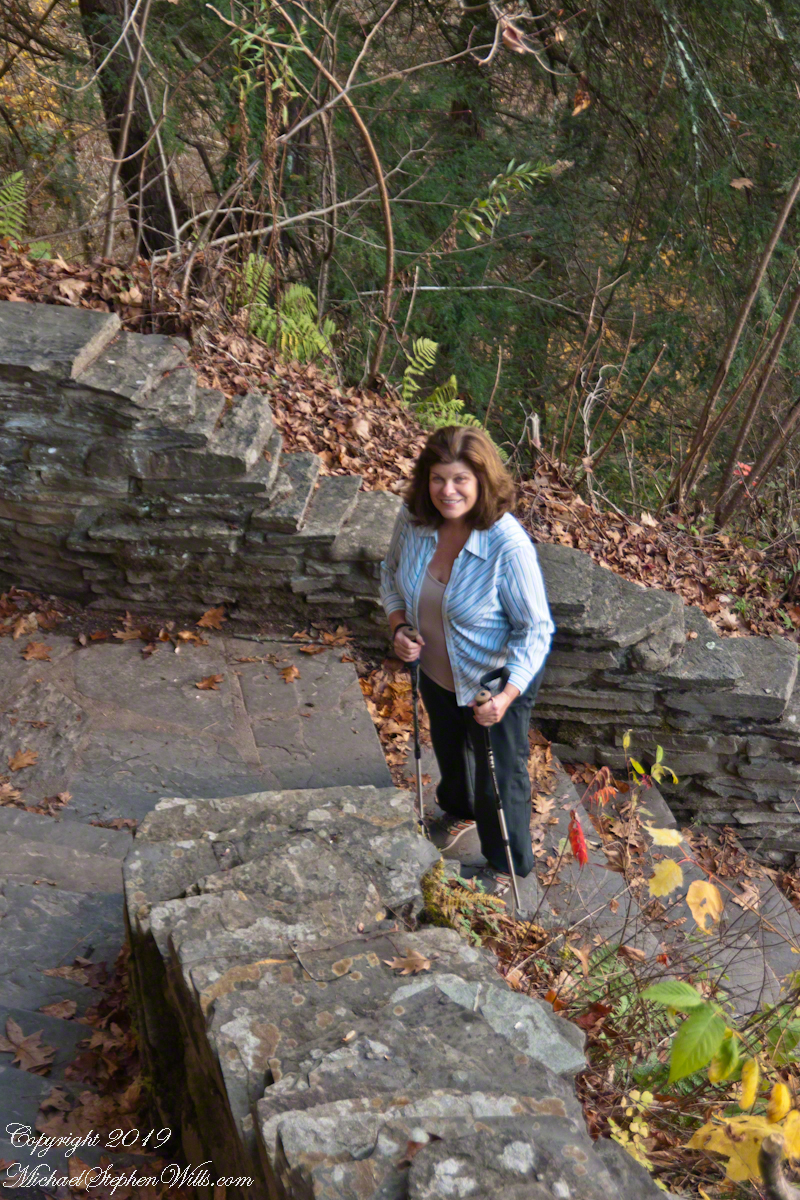
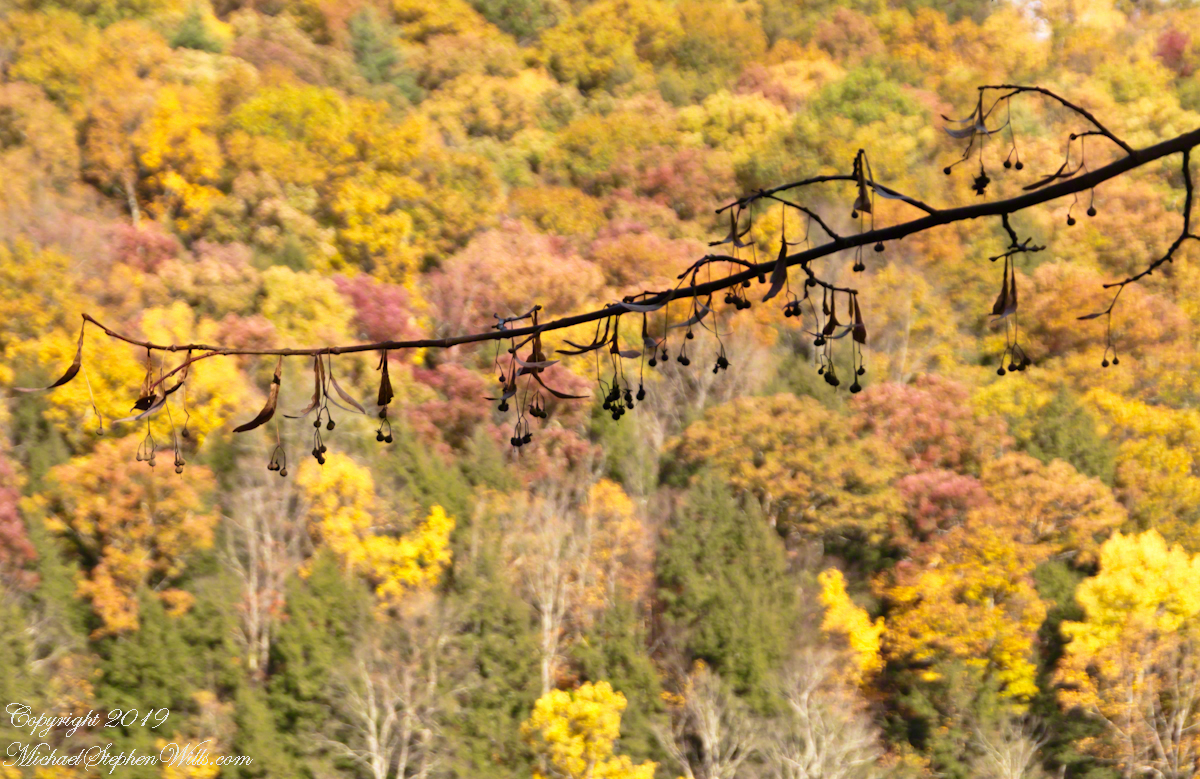
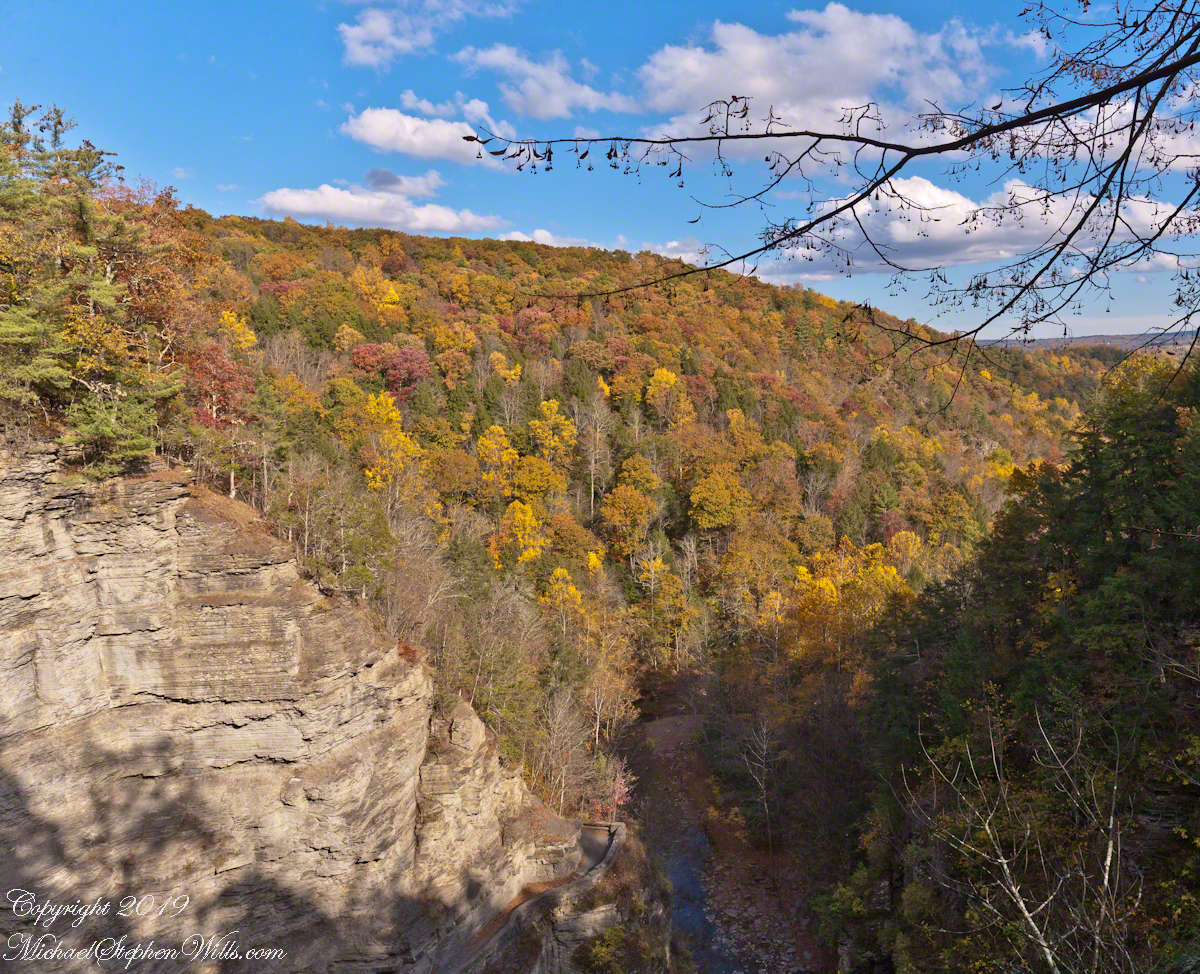
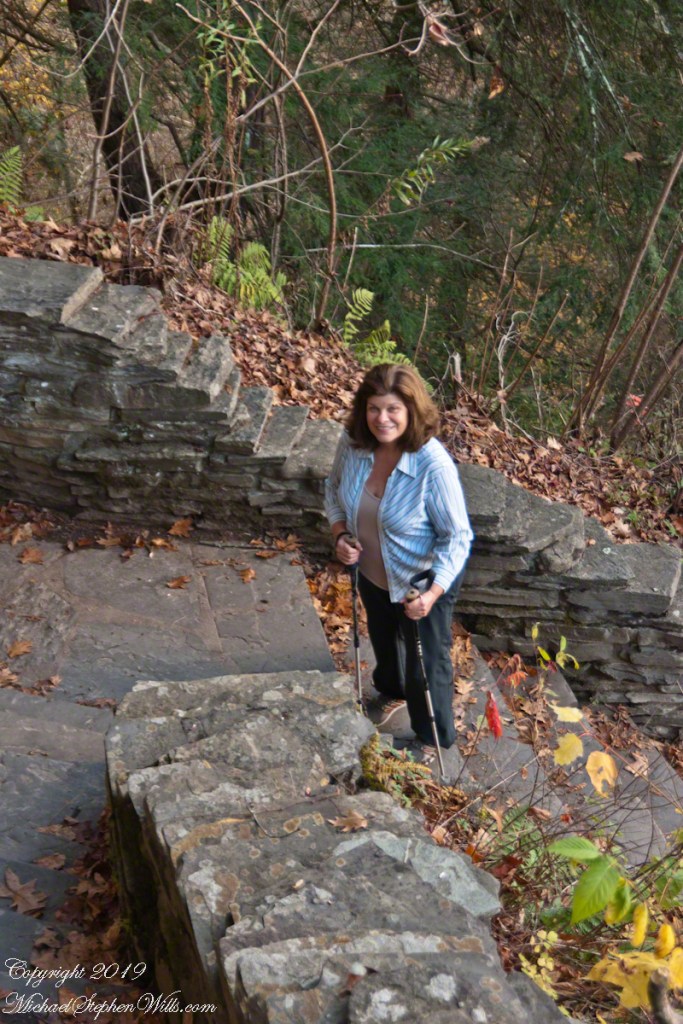
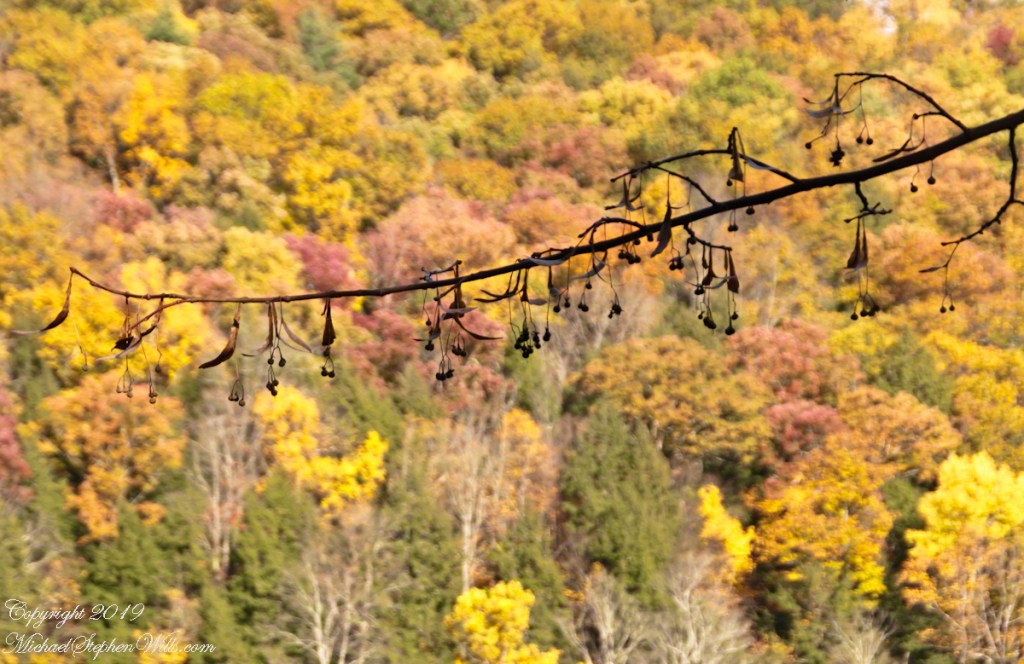
Pam and I visited Treman for our last visit of 2017. It was a bright, warm October afternoon. Here is a slide show of our experience, the details shared in recent postings. Enjoy!!

Click photograph for a larger view. To do this from WordPress Reader, you need to first click the title of this post to open a new page.

In November the gorge is closed for the winter due to dangerous conditions under the steep, crumbling walls. Robert H. Treman New York State Park.

Copyright 2019 All Rights Reserved Michael Stephen Wills

Treman Early Autumn Walk XII

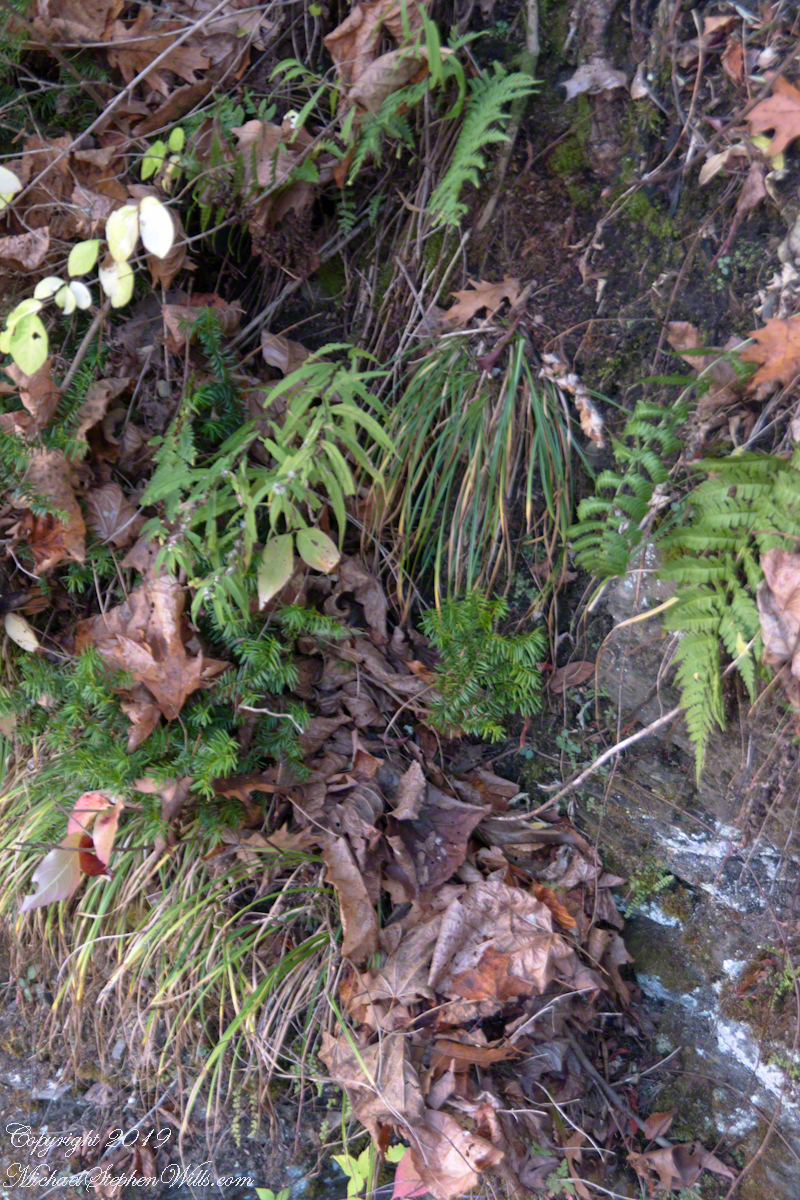
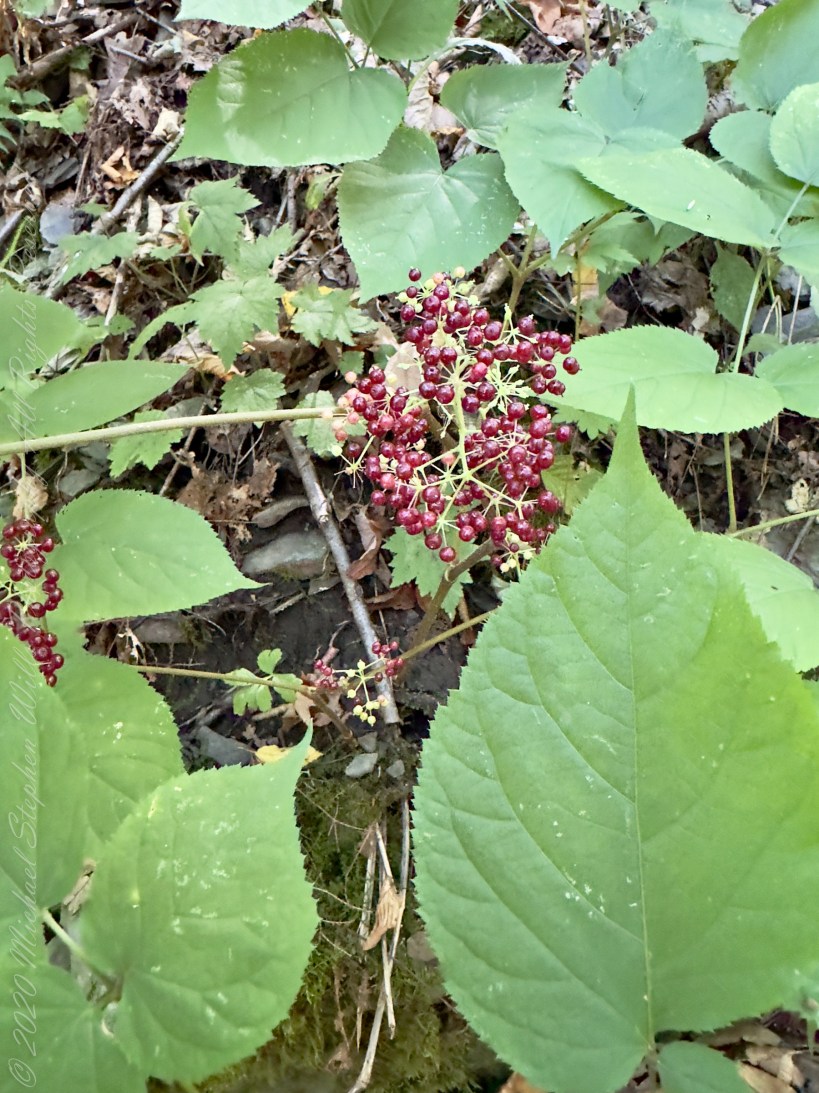
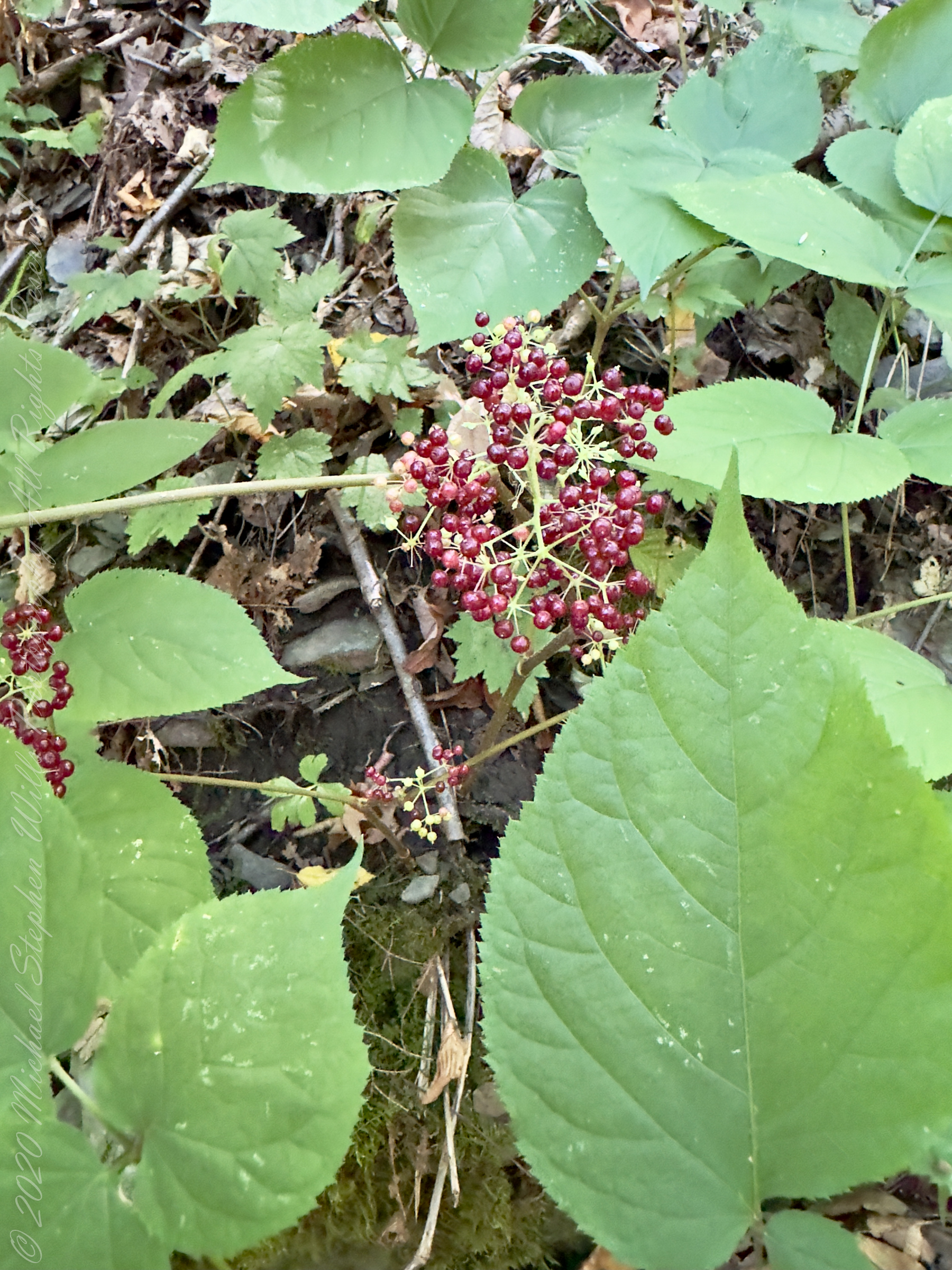
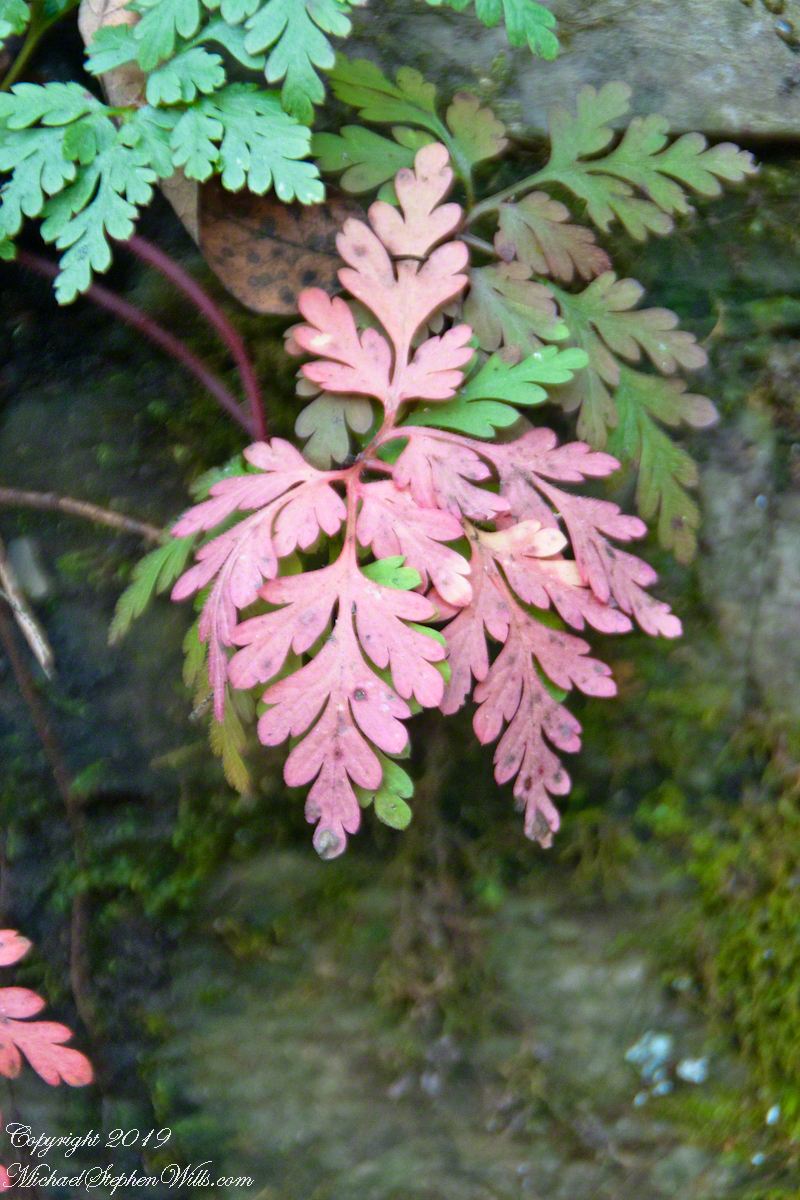
Assistance sought for identification of a plant discovered in Robert H. Treman park, Enfield Gorge.

Can anyone identify this plant found growing on the south rim of Enfield Gorge within the Robert H. Treman park?

Click Me for the first post in this series.

Copyright 2023 All Rights Reserved Michael Stephen Wills

Fruit of the Starflower

A member of the primrose family

These dark blue berries at the end of a slender naked stalk that arises from the leaf joint at the top of the plant were encountered on a late August day in Fillmore Glen, Moravia, Cayuga County, New York State.  Lysimachia borealis is a perennial wildflower commonly known as Starflower.  After blooming in the spring, as a member of the primrose family these are some of the first flowers to appear, the fertilized flowers develop into this round purple fruit.  To confuse identification, the plant is also known as Trientalis borealis.

“Lysimachia species are used as food plants by the larvae of some butterflies and moths, including the dot moth, grey pug, lime-speck pug, small angle shades, and v-pug.”   Chipmunks eat these fruits as a minor portion of their diet.

“Bees of the genus Macropis are specialized to pollinate oil-producing Lysimachia plants. These bees use exclusively Lysimachia floral oils for building their nests and provisioning cells. Lysimachia floral-specific chemicals are strong attractors for Macropis nuda and Macropis fulvipes bees that are seldom found in other plant genera.”

Do not confuse this with another “starflower,” Borago officinalis, from which an oil is produced commercially.
Reference: text in italics and quotes is from the Wikipedia, “Lysimachia.”

Copyright 2023 Michael Stephen Wills All Rights Reserved

Cliff Stairs IV

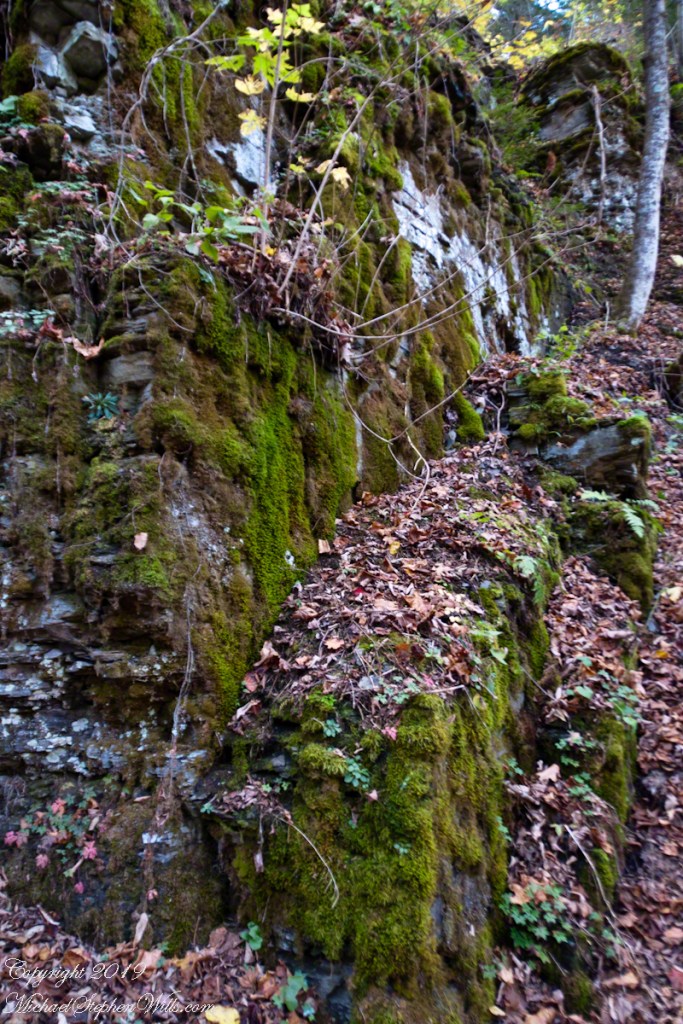
A Wall with Moss Padding

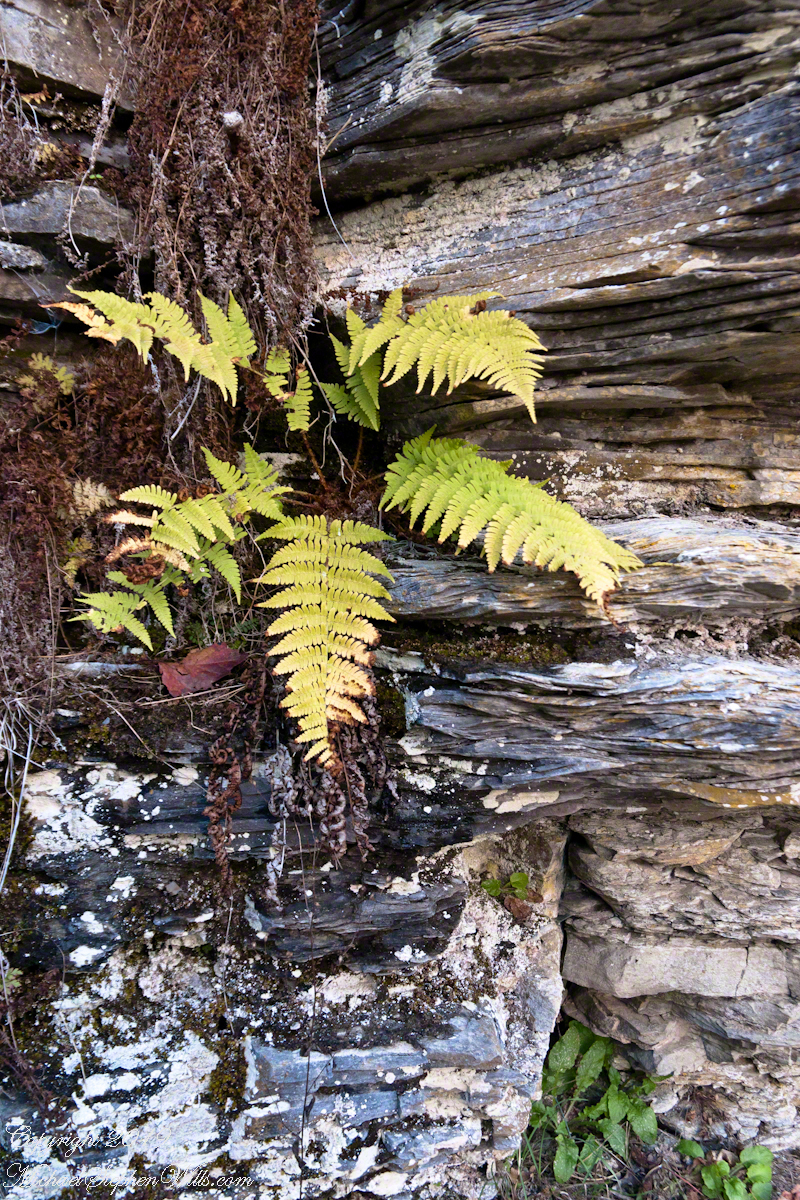
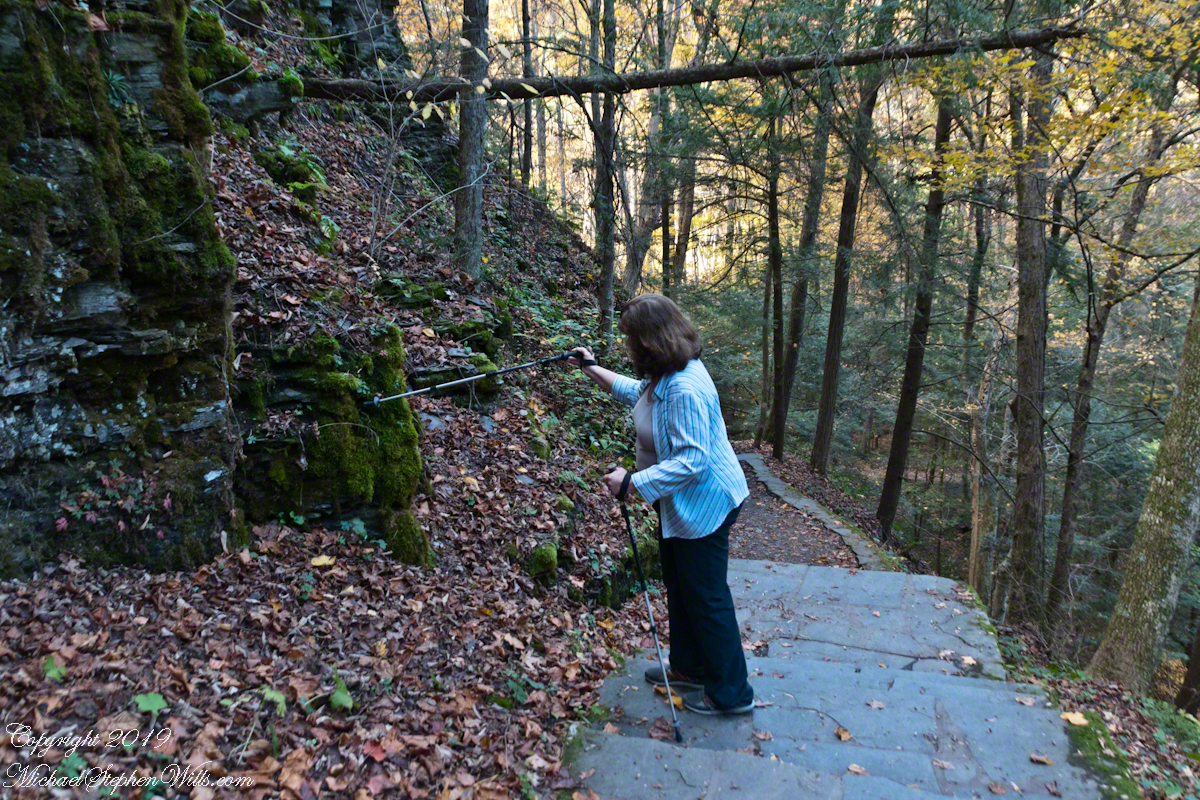
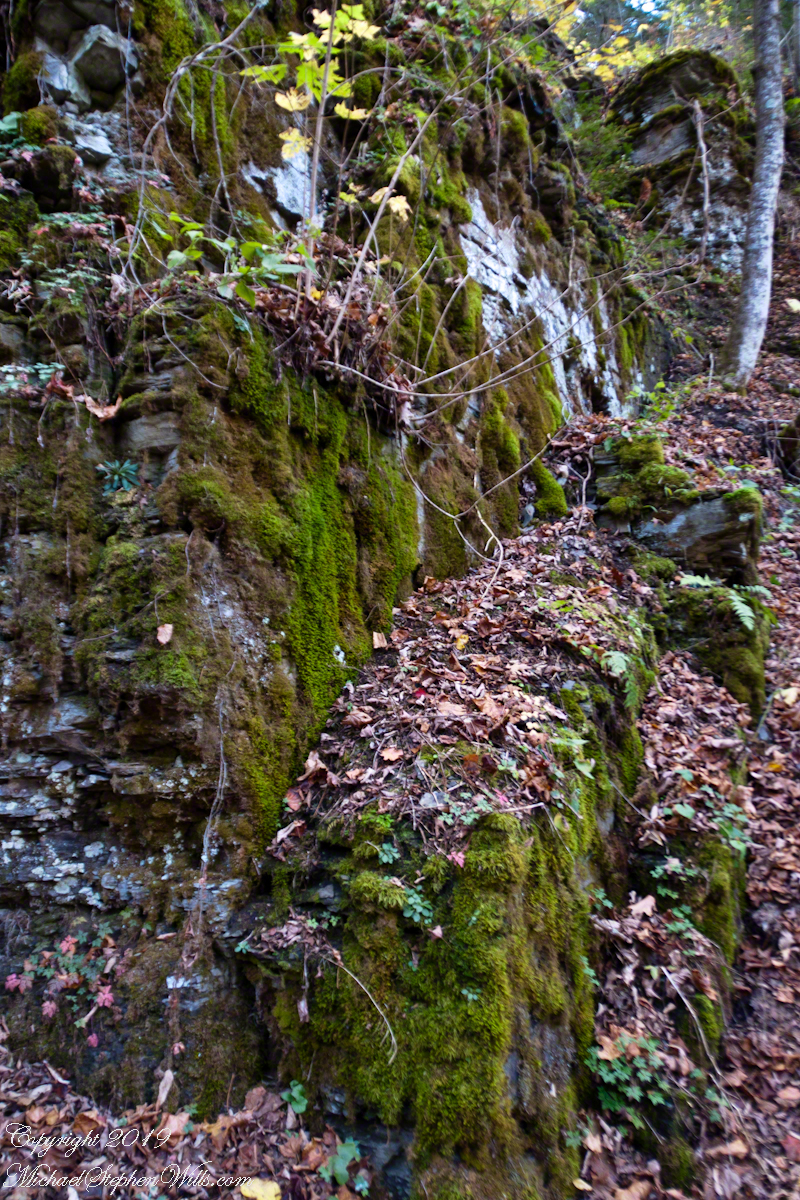
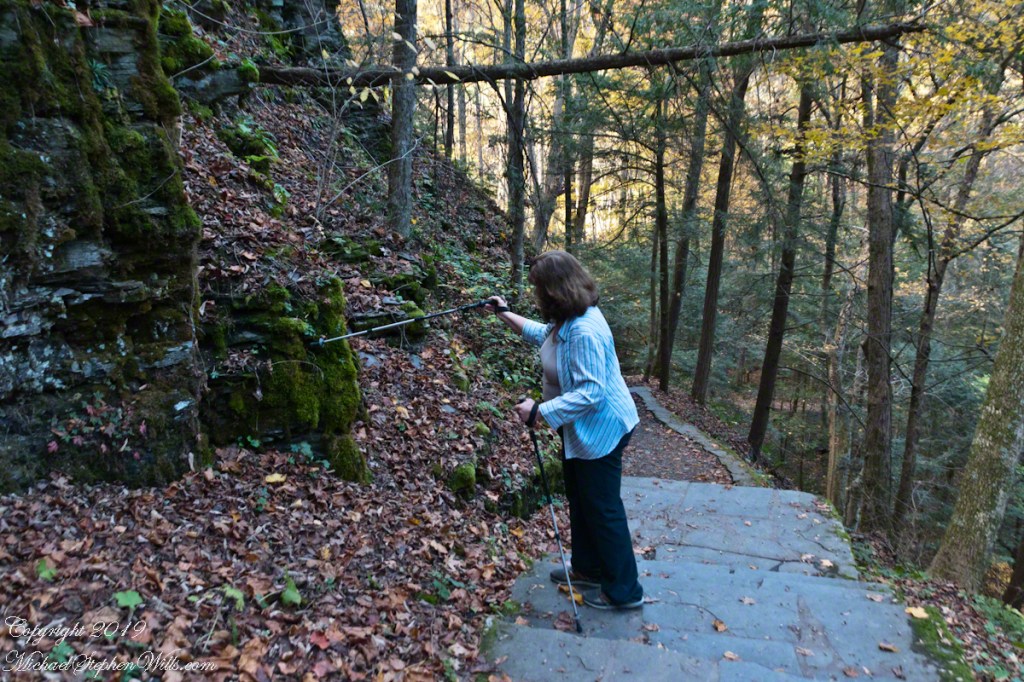
Pam examining thick moss growth on the sedimentary rock of Treman gorge. These layers of shale, sandstone, siltstone formed at the bottom of a broad, shallow sea over 380 million years ago.
Click photograph for a larger view. To do this from WordPress Reader, you need to first click the title of this post to open a new page.

Towards the bottom of the 223 Cliff Stair steps moss takes over the Devonian shale of the cliff wall surface. Here, the cliff shelters the wall from sunlight 365 days a year.

Robert H. Treman New York State Park.

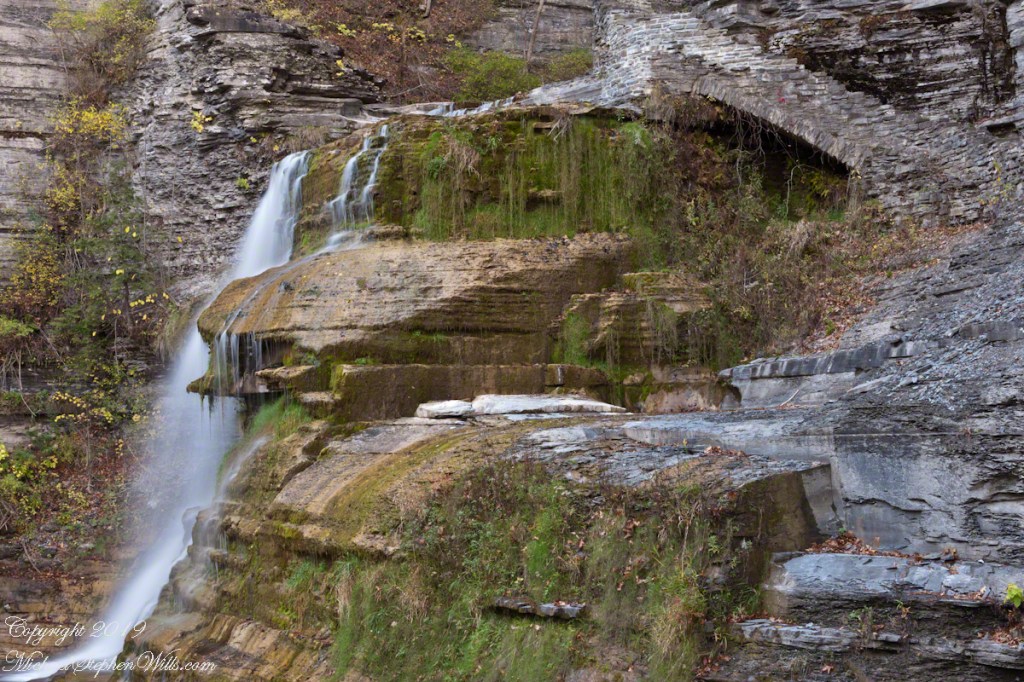
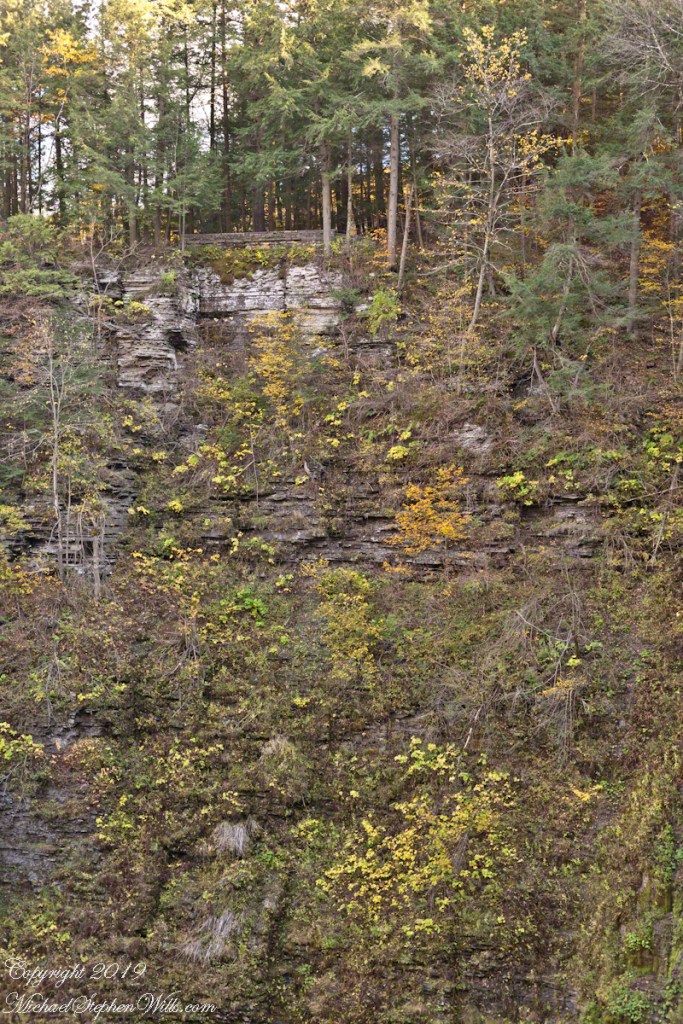
Click for a slideshow of this sequence Lucifer Falls and Cliff Stair Views
Copyright 2023 All Rights Reserved Michael Stephen Wills

Cliff Stairs III

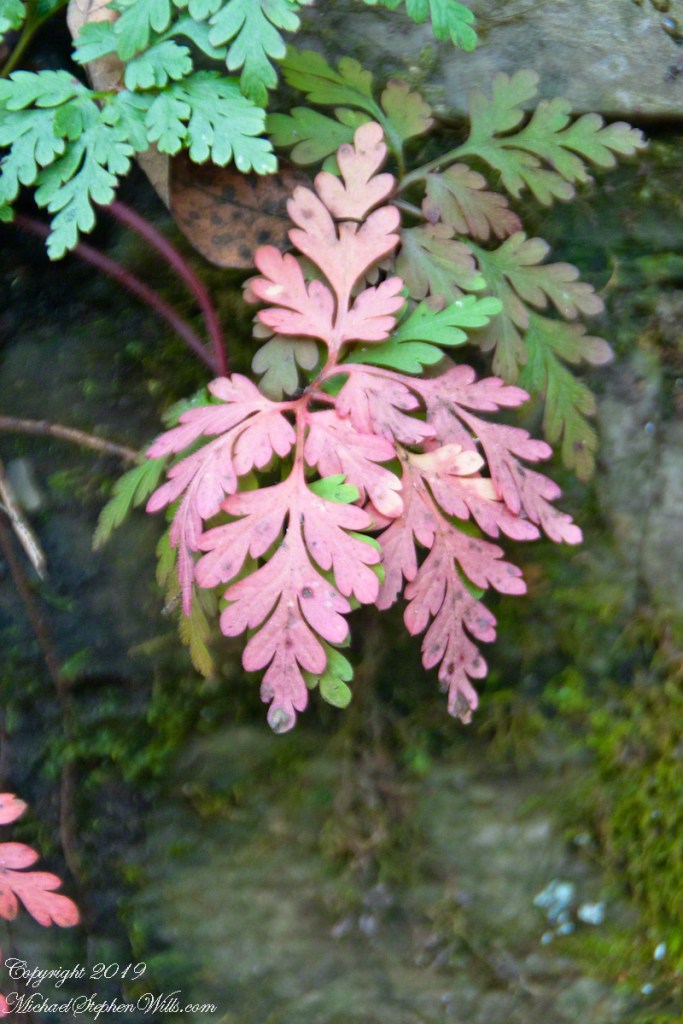
“Red-shanks”

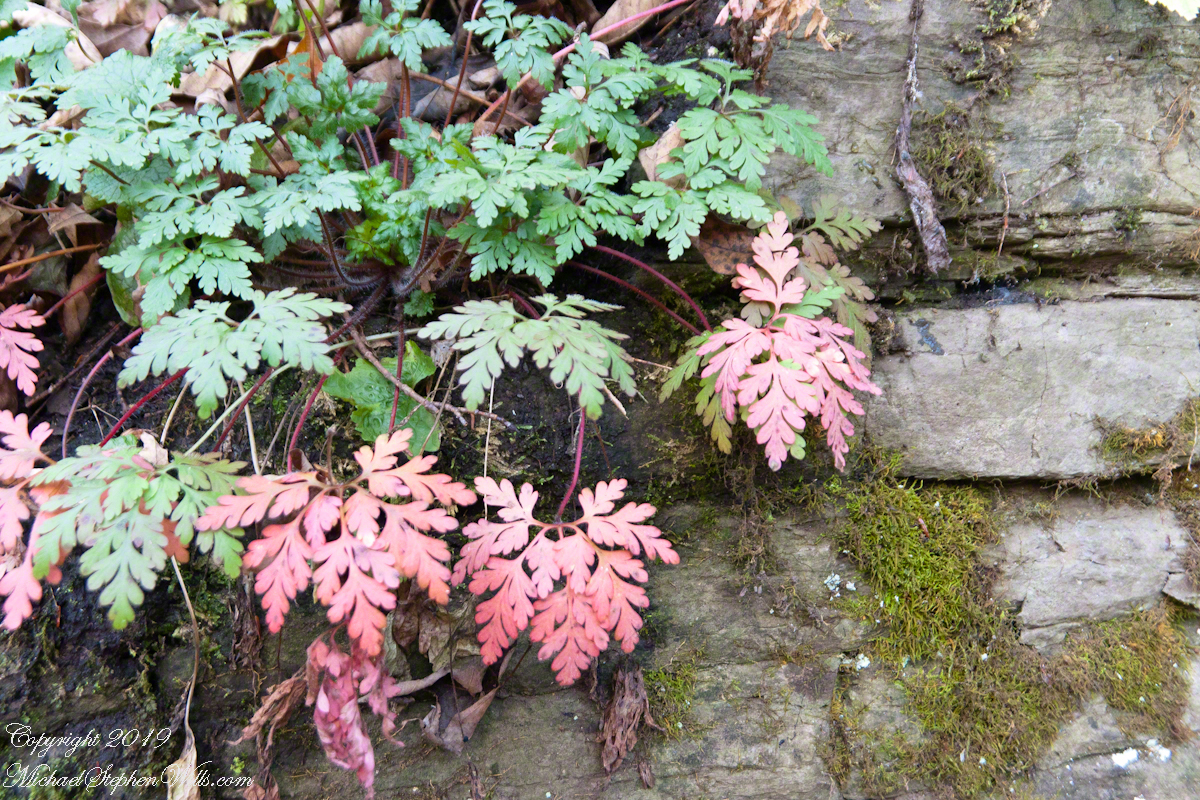
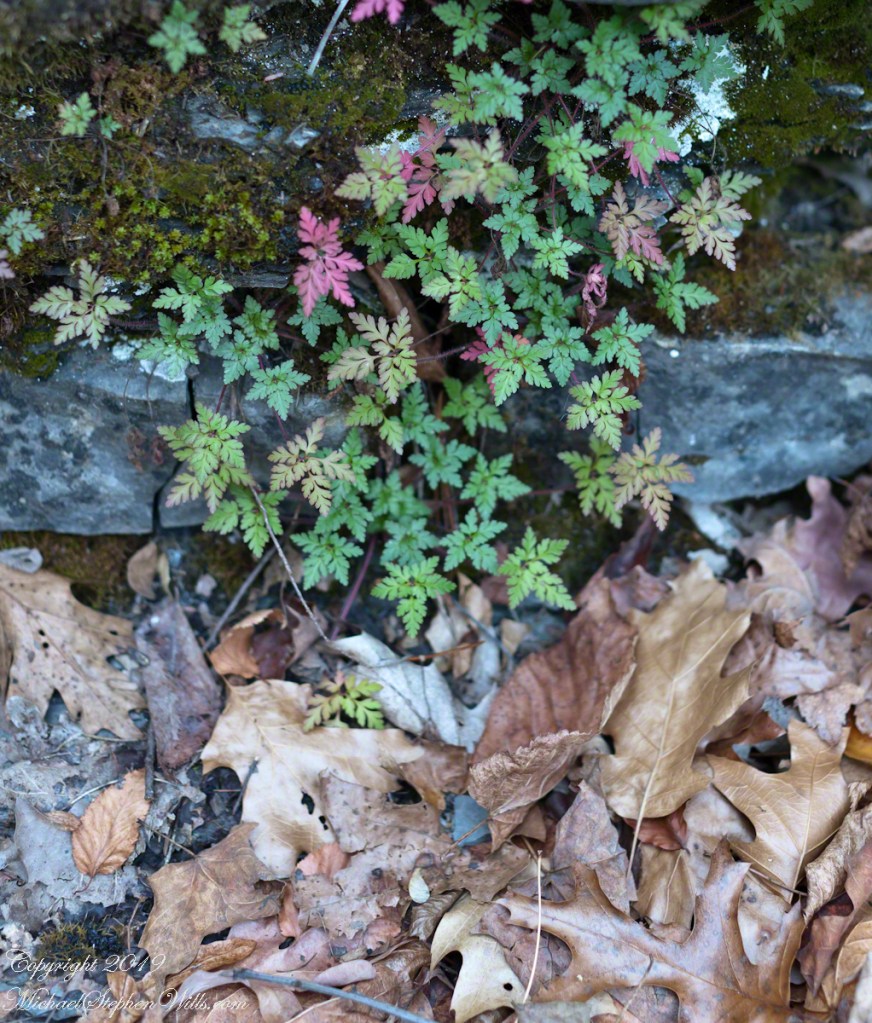
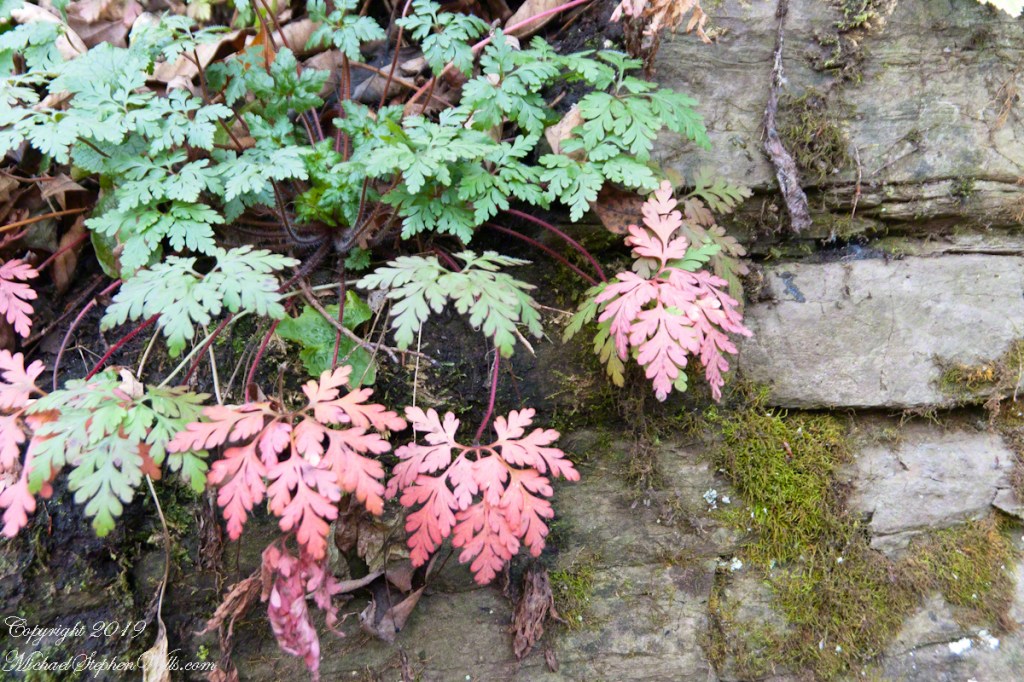
This geranium species (scientific name Geranium robertianum) are also called “Herb-Robert” for a reputed ability to ward off disease.

Click photograph for a larger view. To do this from WordPress Reader, you need to first click the title of this post to open a new page.

Scottish Highlands residents call these wild geraniums “red-shanks” for the deep red color of the stalks, seen in both photographs.

Robert H. Treman New York State Park.

Source, “How to Know the Wildflowers” by Mrs. William Star Dana, 1989, Houghton Mifflin, Boston.

Click for a slideshow of this sequence Cliff Stair Views
Copyright 2023 All Rights Reserved Michael Stephen Wills

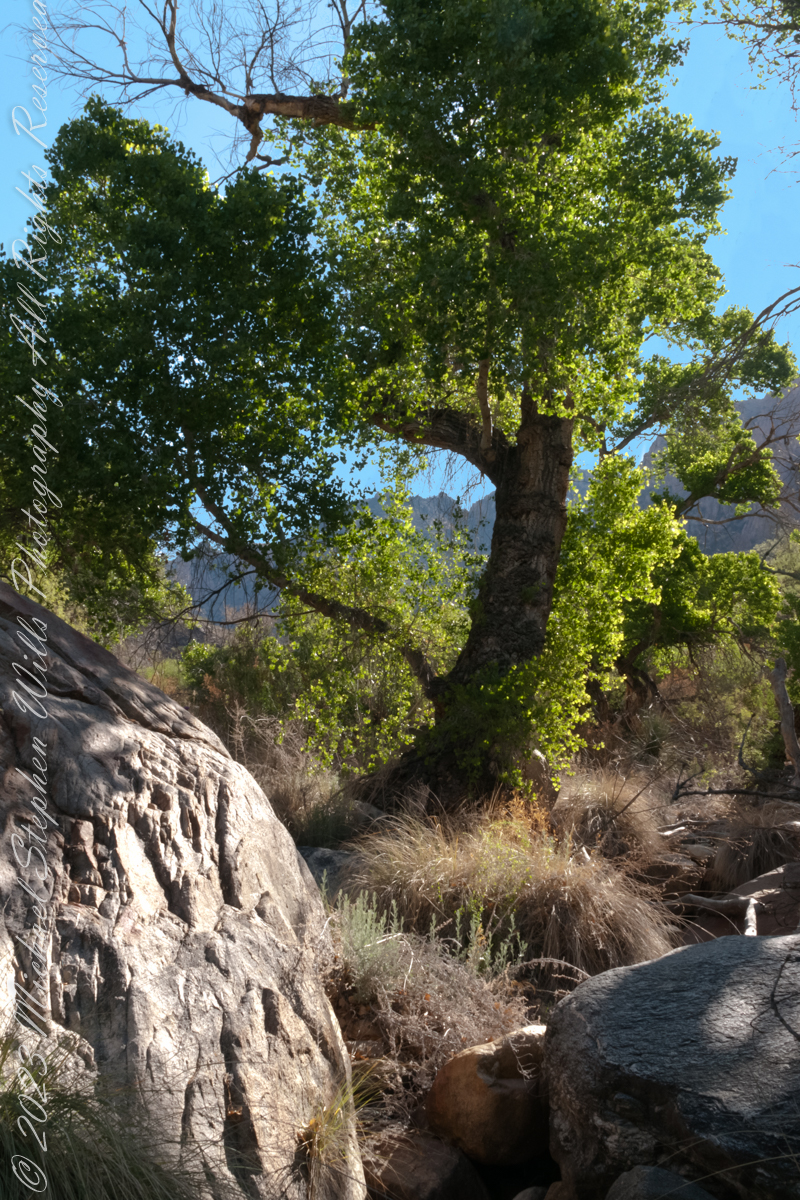
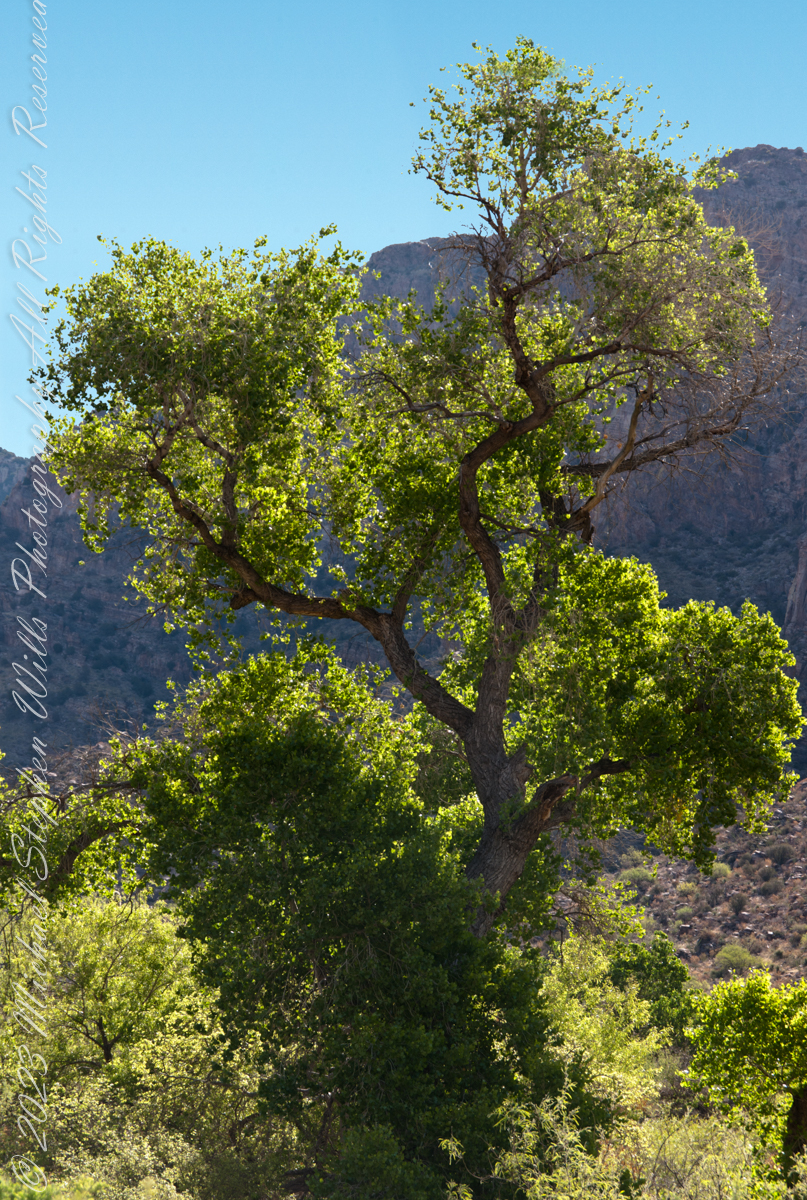
Cottonwood Shade in Pima Canyon

The cottonwood’s deep roots draw water from a mountain stream.

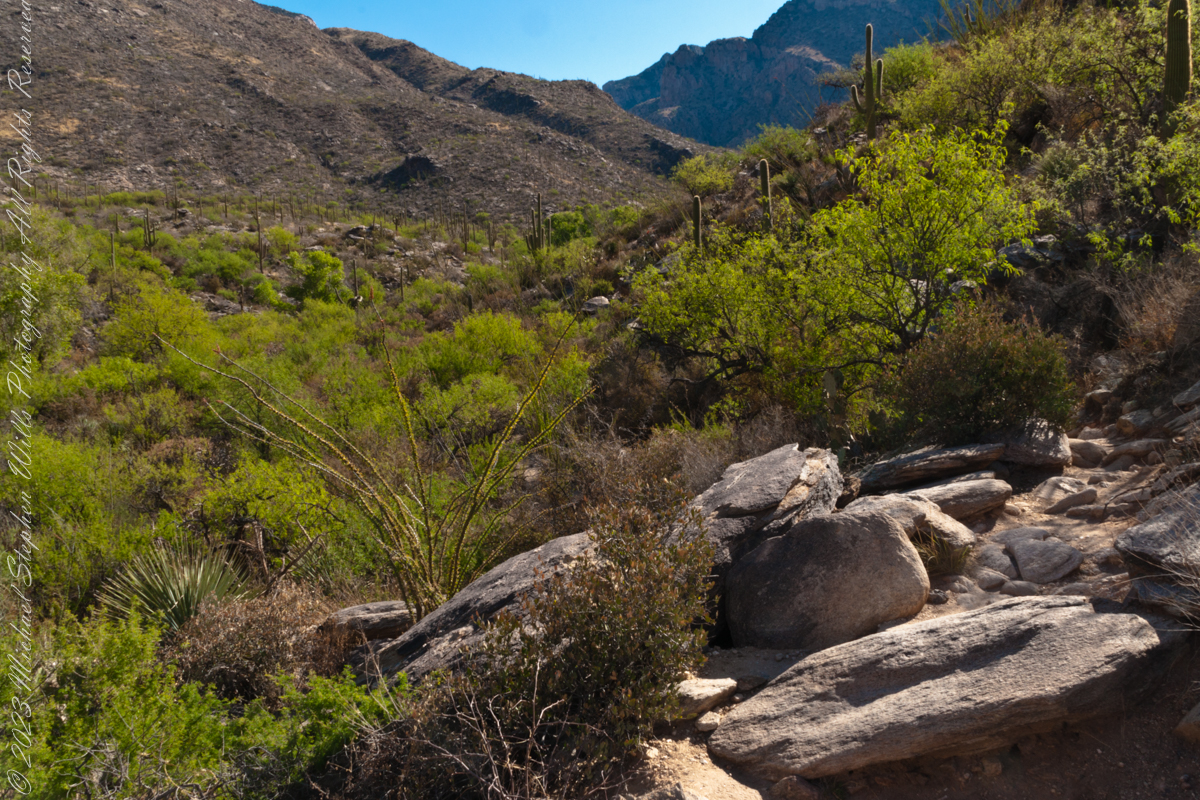
Looking back down Pima Canyon on a spring morning plenty of green under the unrelenting sun.

Click me for more Arizona photographs from my online gallery

A large Fremont’s Cottonwood Offers shade and protection along the Pima Canyon Trail.

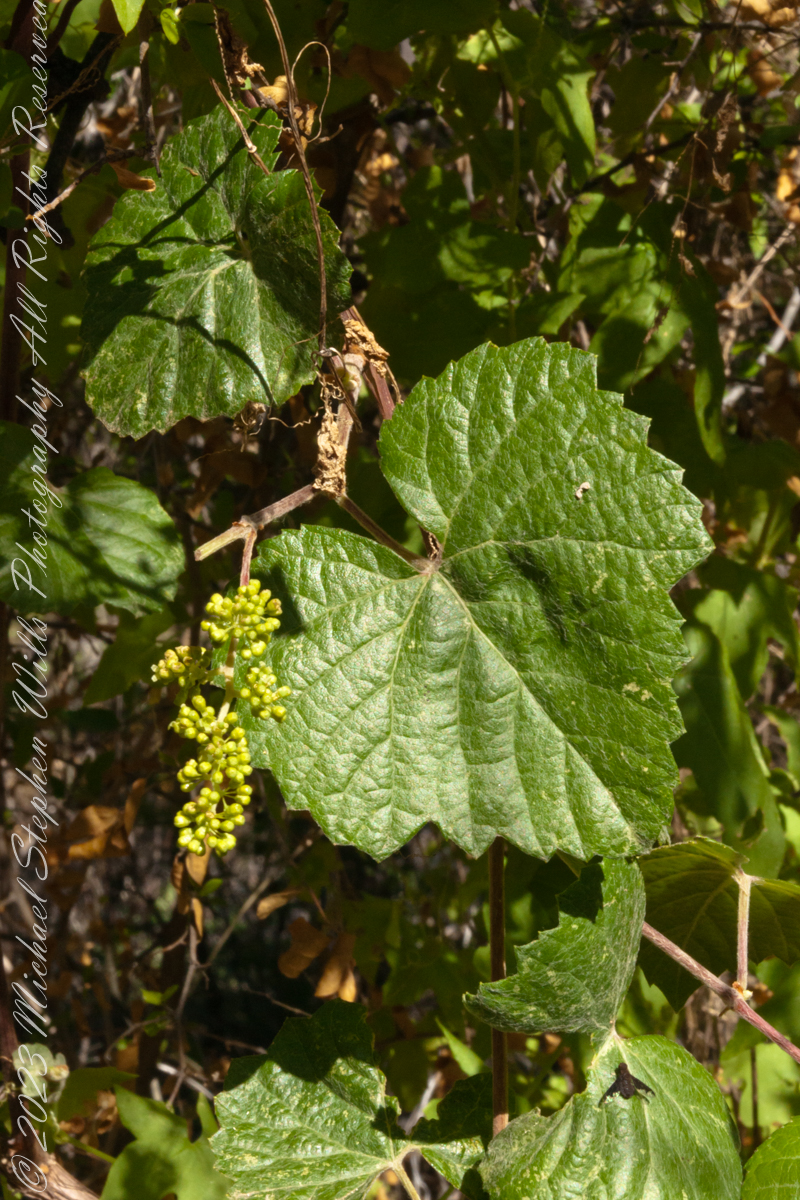
In the shade, a grapevine, offers a vain promise of grapes.

The cottonwood’s deep roots draw water from a mountain stream.

Native Americans in the Western United States and Mexico used parts of Frémont’s cottonwood variously for a medicine, in basket weaving, for tool making, and for musical instruments. The inner bark of Frémont’s cottonwood contains vitamin C and was chewed as an antiscorbutic – treatment for vitamin C deficiency. The bark and leaves could be used to make poultices to reduce inflammation or to treat wounds.

The Pima people of southern Arizona and northern Mexico lived along Sonoran Desert watercourses and used twigs from the tree in the fine and intricate baskets they wove. The Cahuilla people of southern California used the tree’s wood for tool making, the Pueblo peoples for drums, and the Lower Colorado River Quechan people in ritual cremations. The Hopi of Northeastern Arizona carve the root of the cottonwood to create kachina dolls.

Reference: Wikipedia “Fremont’s Cottonwood.”

Copyright 2023 Michael Stephen Wills

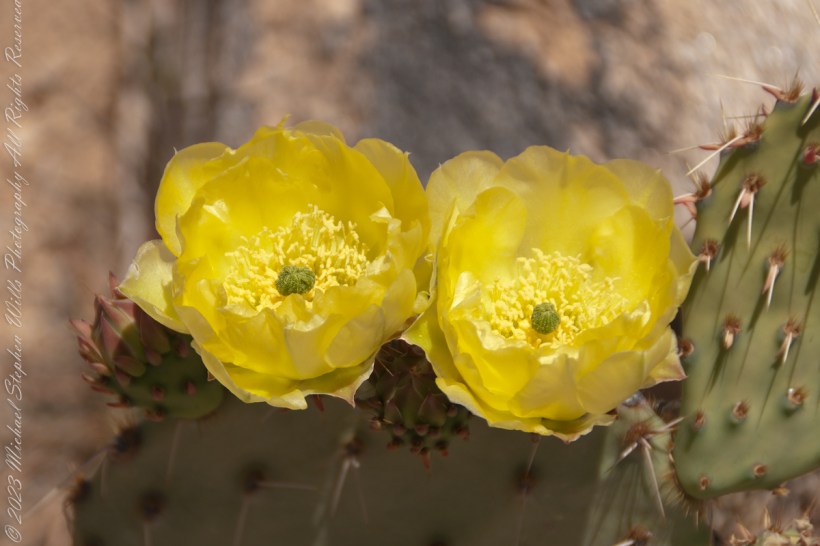
Cactus Blossoms in Pima Canyon

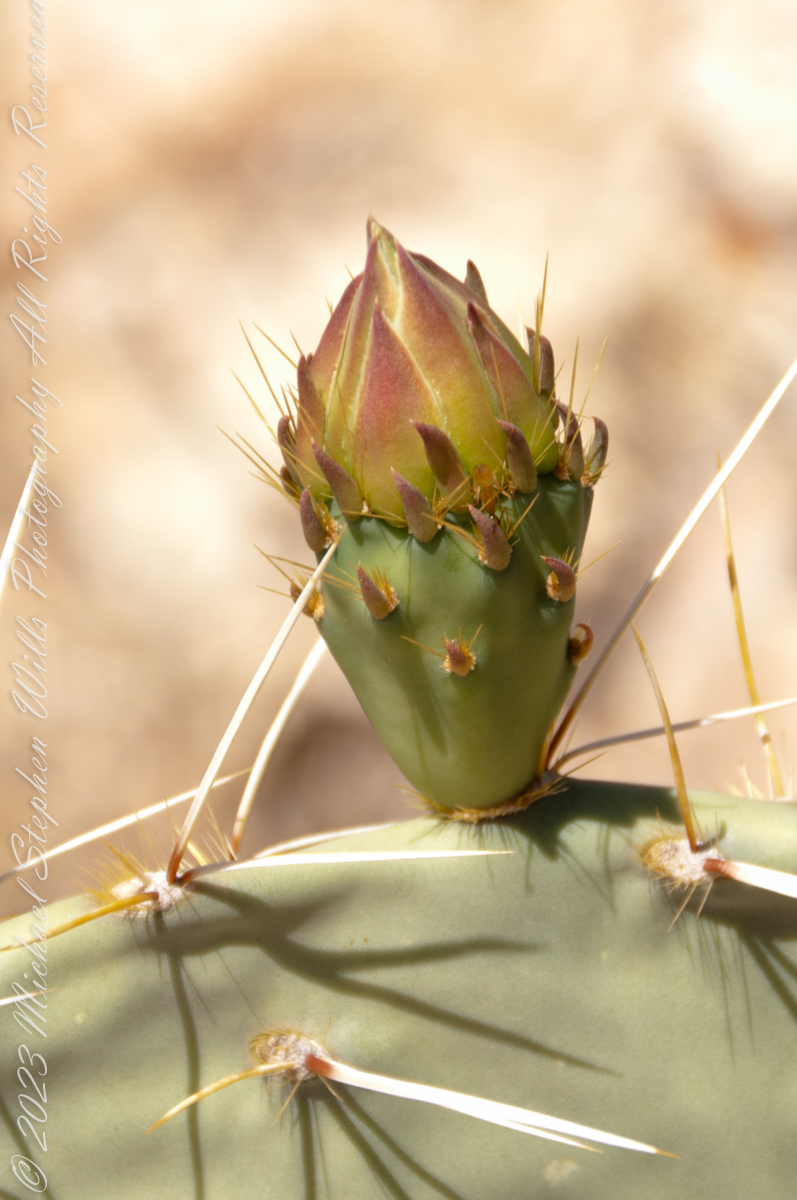
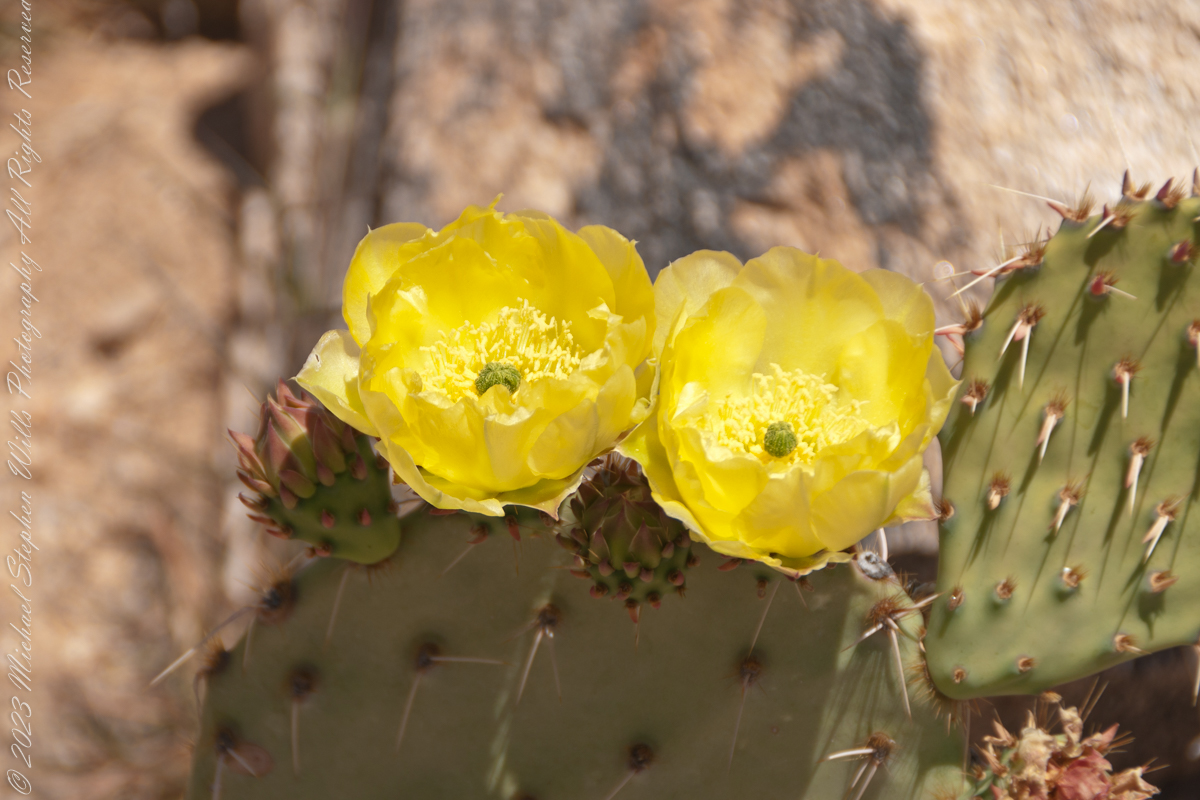
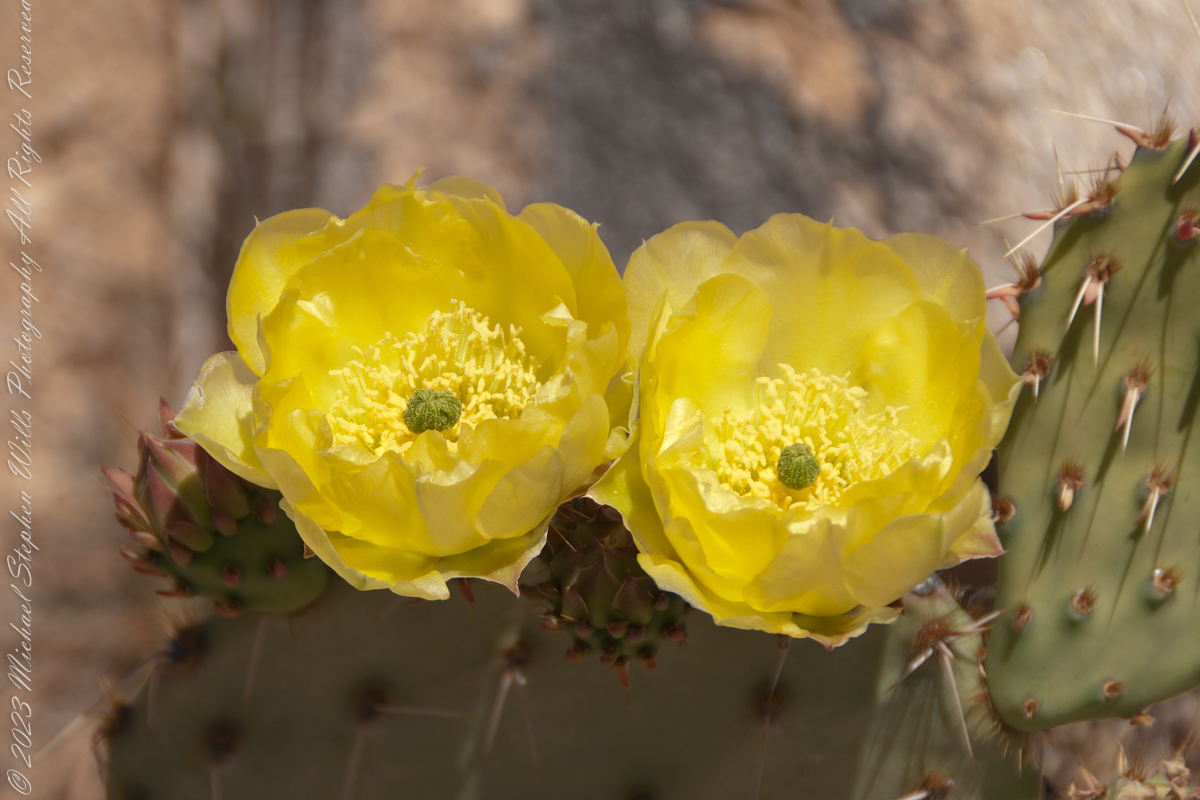
Delicate buds develop into a flower, and then, into a cactus tuna

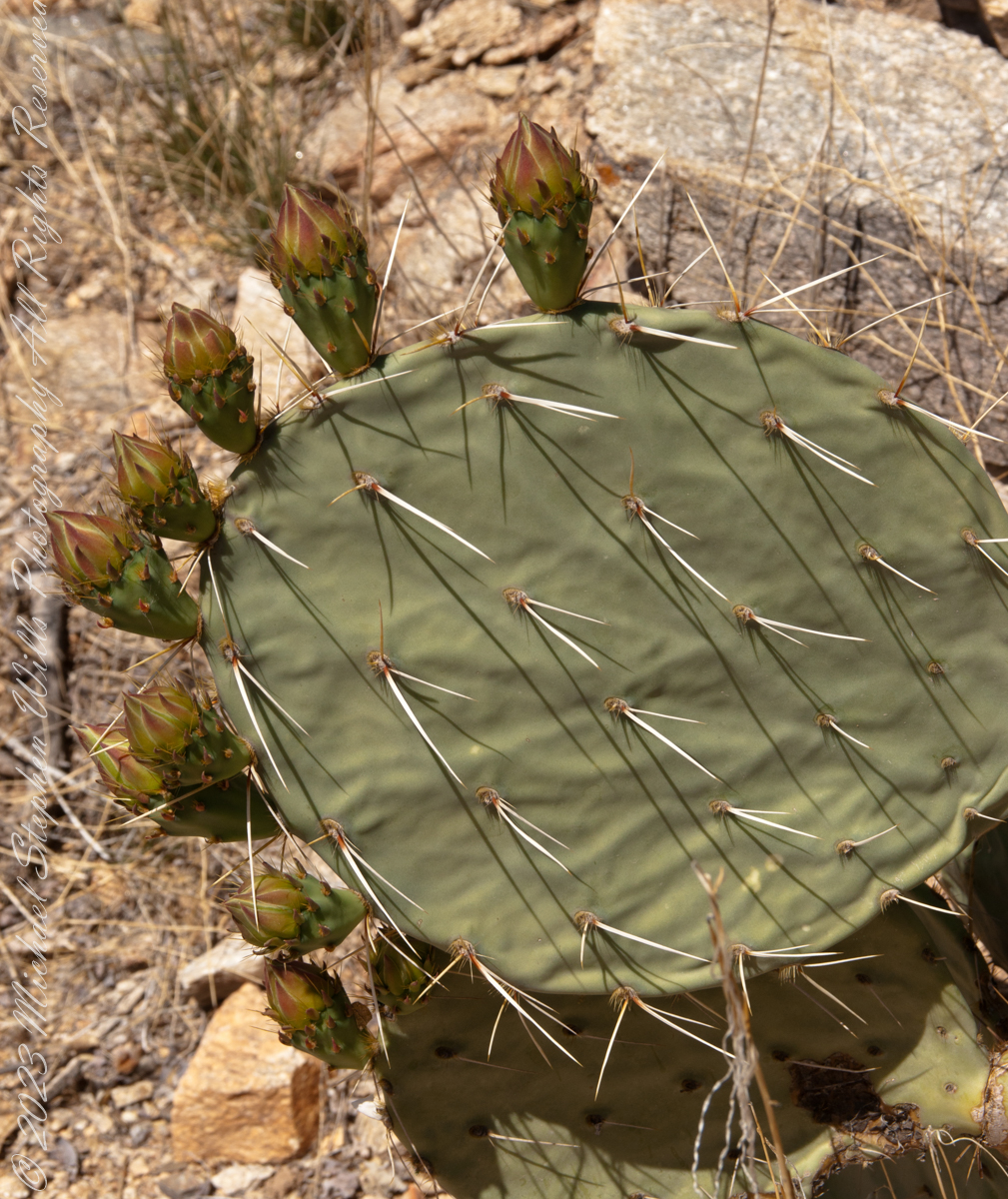
A set of photographs of buds and blossoms of the Prickly Pear Cactus taken in Pima Canyon of the Pusch Ridge Wilderness of the Catalina Mountains.

Click Me for more information from my Online Galleries.

Eight New  Blossoms

Here are 8 flower bud growing from one cladode (pad).  There is a 9th bud on a second cladode.  What is interesting about these pads are the needle shadows.  Although thin, each provides some protection from the sun.

Cactus Closeup

This delicate bud will develop into a flower and, then, into a cactus fruit (in spanish, tuna).  The fruit retains those tiny spines, called glochids, which detach on the smallest contact.  The pads are also covered with them.

Prickly pears are known for growing into thickets.  The Cuban government created a “cactus curtain” of prickly pears around the Guantanamo naval base in the 1960’s, to prevent Cubans from escaping to refuge in the United States.

Cactus Flowers

Look closely at the anthers of these flowers.  Each curls over when touched, depositing its pollen.  The habit of prickly pears to grow together in thickets mean there are clusters of blossoms in springtime.

Copyright 2023 Michael Stephen Wills

Abstracts: desert light and water

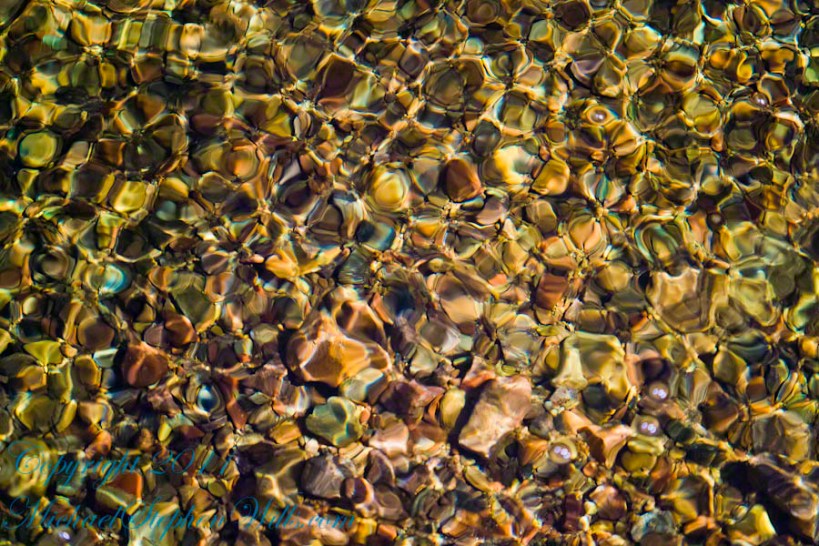
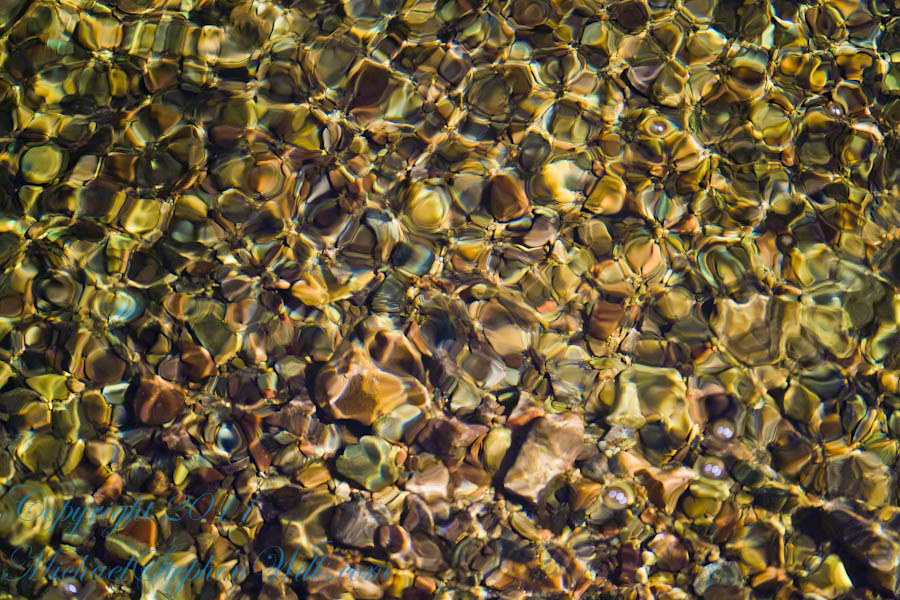
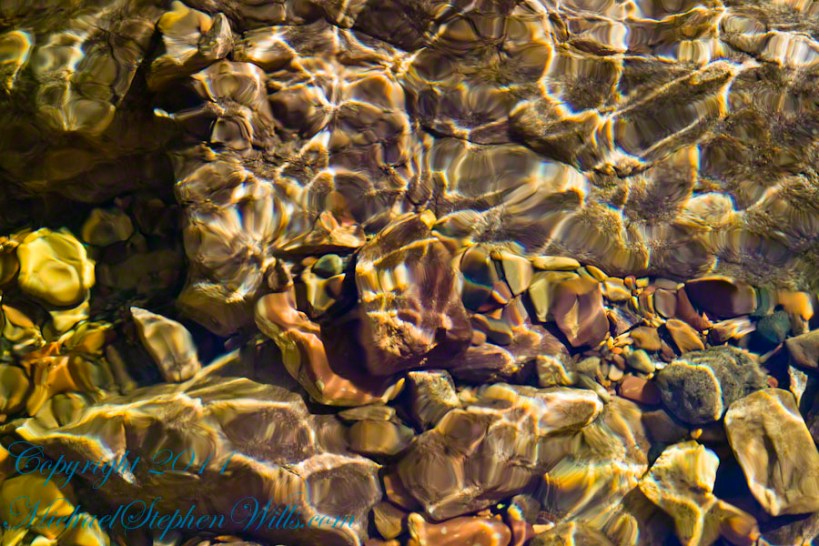
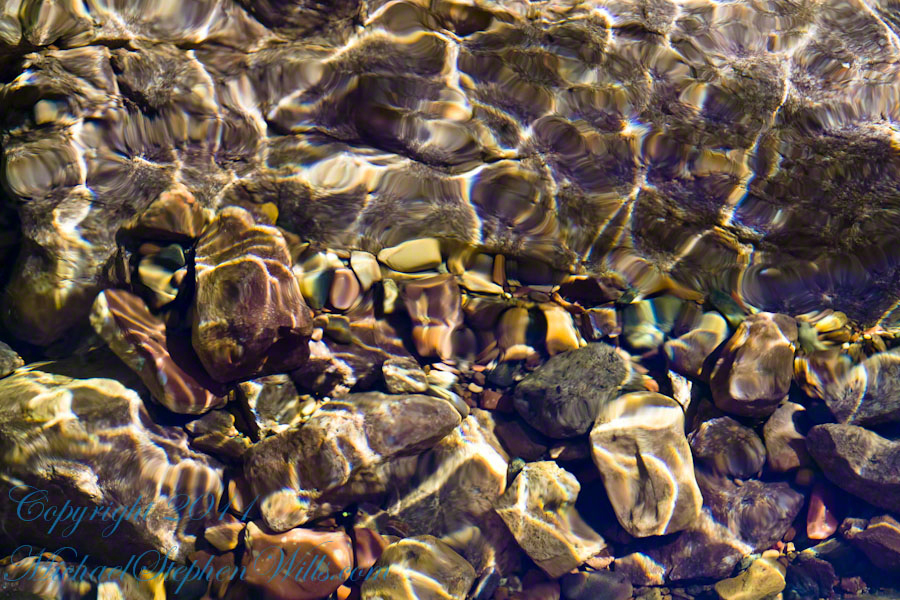
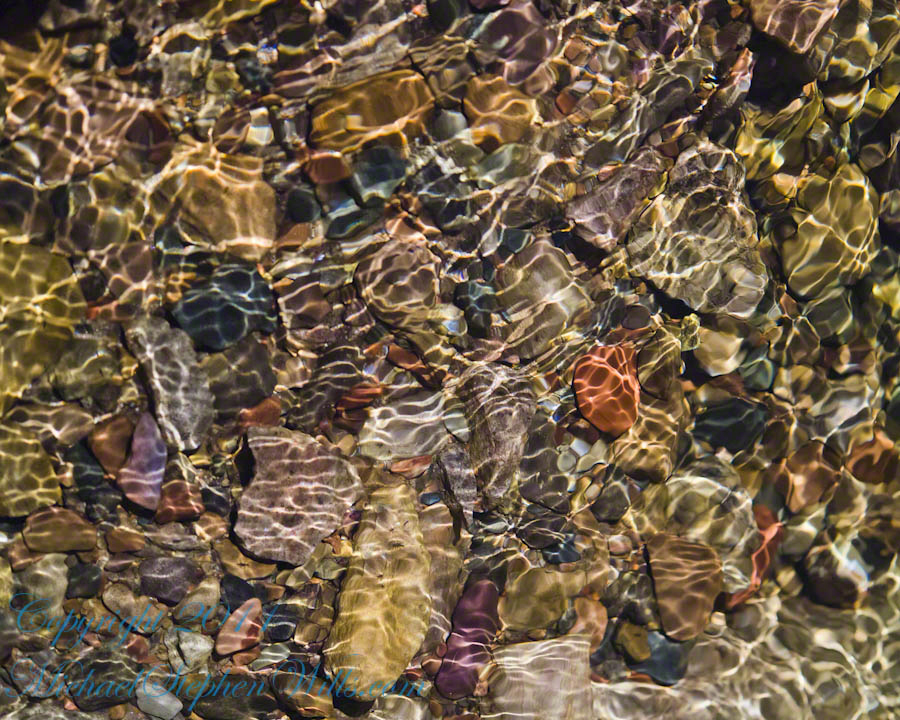
A Series of Nature Abstracts, macros of Reavis Creek below the falls

These four shots are of afternoon desert light playing on limpid water flowing over colorful rocks.

All are macro shots of the falls taken with a Canon 100mm f/2.8L lens.

From my solo expedition to this location in the remote eastern Superstition Wilderness of Arizona.

CLICK ME to learn more about my work and to purchase prints.

I chose portions of Reavis Creek stream bed carefully

The time of day was essential. This was late afternoon and before the sun disappeared behind the canyon walls.

Not all sections of the stream bed were suitable. I chose elements of strong compositions.

Variation between the shots is essential for holding the viewers attention.

Click Me to visit my previous post, “Canyoneering to Reavis Falls” for more of this story.

Copyright 2023 Michael Stephen Wills All Rights Reserved