Nature’s First Green….

…is gold, / her hardest hue to hold, / her early leaf’s a flower; / but only so an hour… Robert Frost

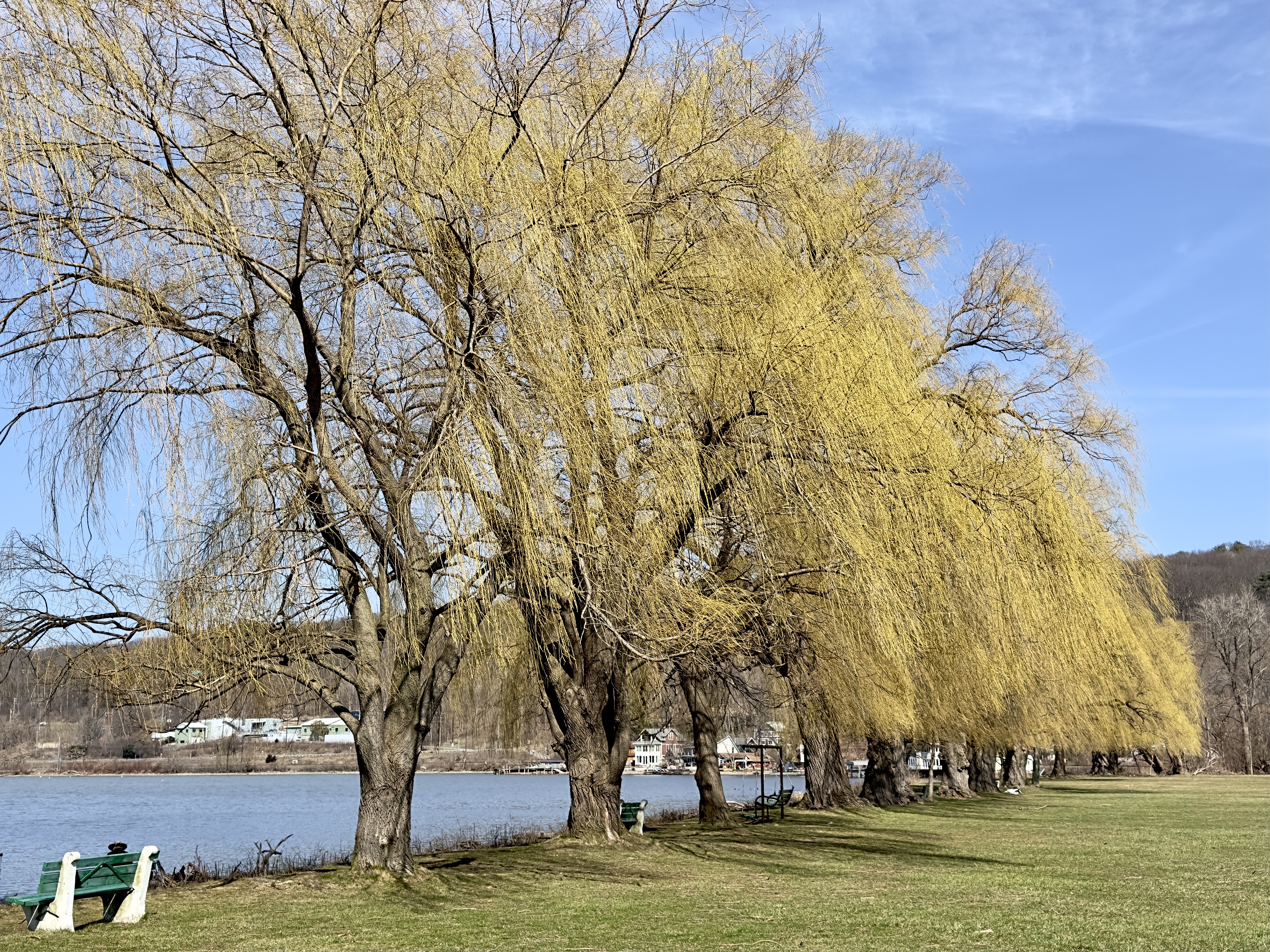
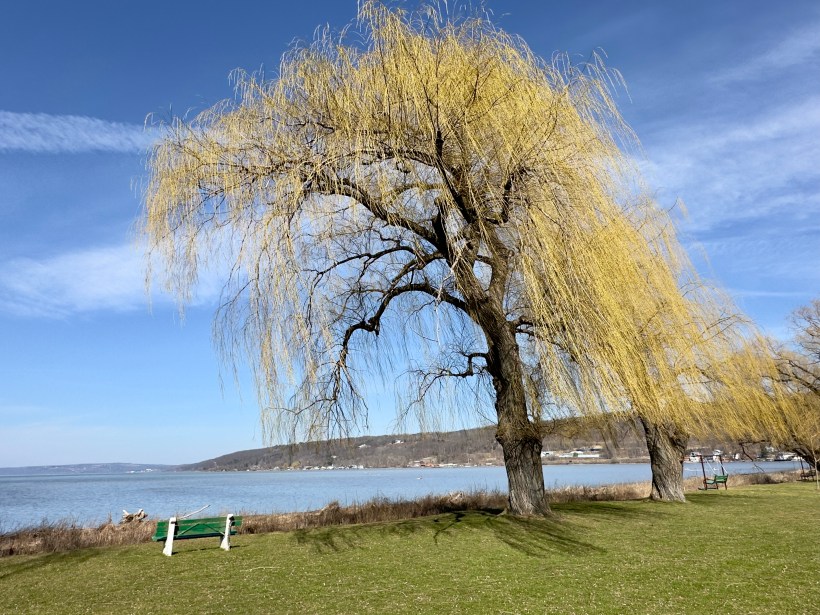
You walk alone by the waters of Cayuga Lake in Stewart Park, nestled in the heart of Ithaca’s Finger Lakes, where Salix alba, the white willow, stands proudly along the shoreline. You’re immediately drawn to the flurry of yellow flowers, a stark contrast to the still chilly early March air.

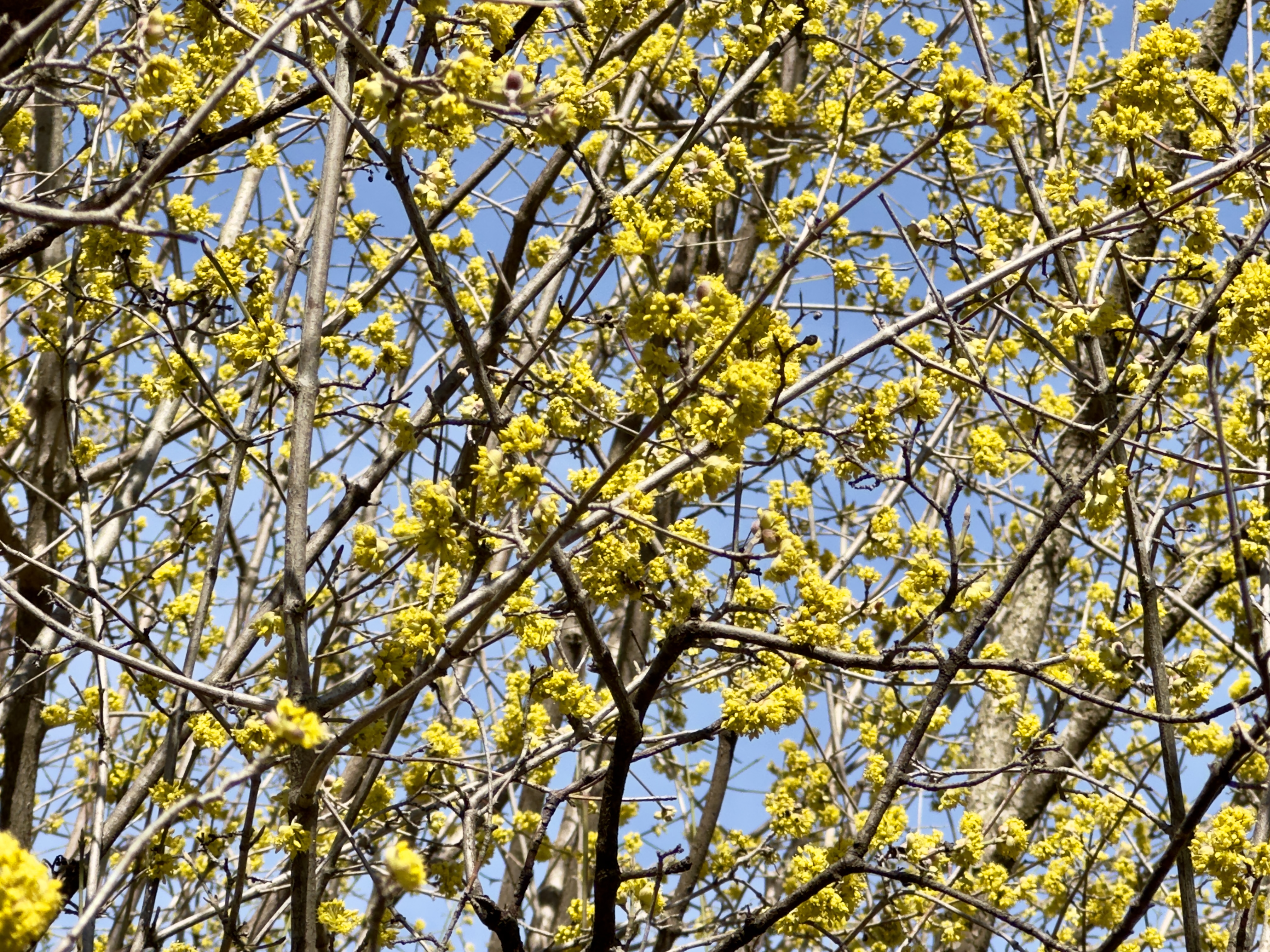
The white willow (Salix alba), with its rough, gray bark, is beginning to dress in its spring finery, its branches teeming with tiny, starburst-like flowers. Each one is a miniature sun, casting a glow against the intricate lattice of branches. These aren’t the soft catkins of the pussy willow but the yellow inflorescences that are characteristic of the white willow’s early bloom, a signpost that winter’s grip is loosening.

These trees, you learn, are dioecious, with separate male and female trees. The blossoms you see are likely the male flowers, their stamens dusting your fingers with pollen as you brush against them. It’s this pollen that will soon beckon the bees, urging them to emerge from their hives and begin the work that sustains the ecosystem. You can almost hear the faint buzz, a prelude to the symphony of life that summer will bring. Return in midsummer to find the female catkins comprise numerous small (4 mm) capsules, each containing numerous minute seeds embedded in silky white hairs, which aids wind dispersal.

As you wander further, you note the presence of the white willow’s kin, other deciduous companions some still bare and stretching into the sky and others leafing out. You stand there, at the cusp of seasonal change, where the slumbering trees are on the verge of awakening, and you feel a kinship with them. Like these trees, you have weathered the cold, dark months, and now you stand poised to greet the renewal that comes with spring.

The stark, knotted forms of the white willow branches against the clear sky speak to you of endurance and resilience. These trees have weathered storms and droughts; they have been companions to the lake, mirrors to its moods, and now they are beginning to celebrate the cycle of rebirth and growth.

You take a seat on a bench, the cool wood through your clothes a reminder of the lingering winter. You gaze out across the lake, the water reflecting the brilliance of the sun like a vast, rippling mirror, framed by the elegant silhouettes of the white willows. You feel the peace of the park seep into you, the slow, rhythmic lapping of the water syncing with your breath.

This is a moment of transition, from the sleeping to the awakening world. You think about the Salix alba, how its presence here is a testament to nature’s adaptability, thriving in the moist soil by the lake, offering shade in summer and shelter in winter, its branches a playground for the winds.

As you leave Stewart Park, you take with you the memory of the white willows in early March, the quiet guardians of Cayuga Lake. They remind you of the enduring beauty of nature, the seamless flow from one season to the next, and the quiet joy of standing witness to the first whispers of spring on the shores of the Finger Lakes.

Copyright 2024 Michael Stephen Wills All Rights Reserved

Rough Surf

beyond belief

Waves built from onshore wind, fast, steady overnight, through the day from early morning until sunset. Pam and I adapted with a revisit to the Sands Space History Museum, Cape Canaveral just outside the Air Force Station. Click this link for a previous posting, “Cape Canaveral Lighthouse,” first of a series. This post header is a vintage gumball machine from the lobby.
By sunset the waves were roaring. Viewing from the safe distance of our condo porch we spied two surfers incredibly among the waves, taking rides. Waiting and attempting a ride. You can see for yourselves the two tiny dots of humanity, appearing and hidden among the waves. I spot them first and Pam does not believe me, I do not blame her. It is beyond my comprehension people are out there. I cannot recommend the quality of the video from my IPhone, our comments are humorous.
It is difficult, Pam is astounded when they come into view.

He rises briefly only to wipe out in this brief video.

One surfer emerges as his partner persists.

Click this link to visit “Cocoa Beach Kite Skating” on my blog.

Copyright 2024 All Right Reserved Michael Stephen Wills Photography

Pelicans Skimming Waves

Wave Play

Brown Pelicans (Pelecanus occidentalis) fly as linear flocks of a few individuals, at altitude over the shore, and low over the surf line as seen here. Taken January 27, 2020 with the IPhone 8, there is a the insertion of the modern world as a cruise ship comes into view. The ship departs Cape Canaveral Cruise port for parts unknown.

Pelicans, when skimming the waves solo, fly even closer, and do wipe-out when a wingtip hits the water. This bird successfully negotiates a path through the surf.

Click this link to visit “Queen Victoria Arrival” on my blog.

Copyright 2024 All Right Reserved Michael Stephen Wills Photography

Hatch, Birth, Good Luck!

If you ever feel like you’re struggling with independence, just remember these creatures who start life with the ultimate “figure it out yourself” kit.

Introducing the “Self-Service Buffet” of the animal kingdom, where the motto is “Hatch, Birth, Good Luck!” These creatures don’t stick around for cuddles or parenting classes:

Sea Turtles – The Ultimate Sand Sprinters: These little guys burst from their eggs and make a mad dash for the ocean, dodging seagulls and crabs. It’s like the world’s most stressful obstacle course, where the prize is simply survival.

Salmon – Swimmers on a Solo Mission: After hatching, young salmon are on their own, navigating the perilous waters without a GPS or even a pep talk. They’ve got more instinct in their little fins than most of us have in our entire body!

Praying Mantises – The Loner Ninjas: These insects hatch ready to rumble, with no parental guidance on how to be the ultimate predator. It’s a tough world where your siblings might just see you as their first meal. Talk about family drama!

Kangaroo Rats – Desert Hoppers Inc.: Born in the harsh desert, these tiny rodents are all about the solo journey from the get-go. No room service or guided tours here; just a lot of hopping and hoping.

Octopuses – The Brainy Solitaires: Octopus moms are the epitome of “do it yourself,” laying their eggs and then, well, signing off. The babies hatch fully equipped with all the smarts and skills they need, making them the envy of every overbooked parent.

Komodo Dragons – The Scaly Independents: These formidable lizards hatch ready to take on the world, with a fierce look in their eye that says, “I didn’t choose the dragon life, the dragon life chose me.”

Butterflies – The Winged Wanderers: From caterpillar to chrysalis, and then to butterfly, these creatures do it all on their own. If butterflies had social media, their status would perpetually be “Just transformed. Who dis?”

So, if you ever feel like you’re struggling with independence, just remember these creatures who start life with the ultimate “figure it out yourself” kit. They might just inspire you to tackle your own obstacles – though hopefully, with fewer predators involved.

Copyright 2024 Michael Stephen Wills All Rights Reserved

Passing…..

…remembering our time on the cusp of the pandemic

After 2 pm check in we interrupted unpacking for a sundown beach walk, IPhones and Sony Alpha 700 camera in hand on the last evening of 2019. There is a business on A1A, the main road through town, advertising “beach weddings” and “elopements.” Here, using the 18 – 200 mm f3.5-6.2 lens, I spied this grouping of a mature couple holding hands, minister in attendance, for a wedding ceremony witnessed by young adult children on the right, parents (?) left. The groom’s shorts contrast with the bride’s white gown.

Sunlight, low in the western sky, was perfect for mirror-like reflections in the retreating surf.

A given of the Atlantic beach is the late afternoon light, best for capturing figures against the ocean.

Written below the high tide mark, a message inscribed, impermanent in spite of the deep cuts.

I have practice framing sunsets against beach development. Cannot complain as we enjoy our beach side condo.

A slide show of these images.

Copyright 2024 All Rights Reserved Michael Stephen Wills

Behind the Scenes of the Final Frontier: Our Tour with NASA’s “Launch Director” – 5

Ever wondered about the iconic robotic arms that gracefully danced in space, tethered to the Space Shuttle? Meet Canadarm, a marvel of engineering that transformed space missions. Born from a NASA invitation to Canada in 1969, this robotic arm did more than just move payloads; it became a symbol of international collaboration in space exploration. After the Columbia disaster, its role expanded, ensuring the safety of astronauts with critical inspections. Dive into the captivating journey of Canadarm, where technology meets the stars. Click to discover how a Canadian innovation became a pivotal part of space history.

The Canadarm

The Canadarm is here extended in the foreground and docked in background

The Canadarm, or Canadarm1, officially known as the Shuttle Remote Manipulator System (SRMS) and sometimes referred to as the SSRMS, represents a series of robotic arms utilized aboard the Space Shuttle orbiters. These arms were instrumental in deploying, manipulating, and retrieving payloads. Following the tragic Space Shuttle Columbia disaster, the use of Canadarm became invariably linked with the Orbiter Boom Sensor System (OBSS). The OBSS played a crucial role in examining the shuttle’s exterior for any damages to its thermal protection system, enhancing the safety of subsequent missions.

The genesis of Canada’s involvement in the Space Shuttle program dates back to 1969 when the National Aeronautics and Space Administration (NASA) extended an invitation to Canada. At the outset, the specifics of Canada’s role were unclear, though the need for a manipulator system was immediately recognized as vital. The Canadian firm DSMA ATCON had previously made strides in robotics with the development of a robot designed to load fuel into CANDU nuclear reactors, capturing NASA’s interest. By 1975, a formal agreement was reached between NASA and the Canadian National Research Council (NRC), under which Canada would undertake the development and construction of the Canadarm.

The NRC subsequently awarded the contract for the manipulator to Spar Aerospace (currently known as MDA), under which three distinct systems were to be developed: an engineering model to aid in design and testing, a qualification model for environmental testing to ensure the design’s suitability for space, and a flight unit destined for use in missions. This collaborative effort marked a significant milestone in the use of robotics in space exploration, showcasing international cooperation in advancing space technology.

Copyright 2024 Michael Stephen Wills All Rights Reserved

Behind the Scenes of the Final Frontier: Our Tour with NASA’s “Launch Director” – 4

Imagine yourself floating in the vast cargo bay of the Space Shuttle Atlantis, surrounded by the essentials of space exploration. Here, in this dynamic space, the dreams of astronauts and scientists converge, where each mission reshapes our understanding of the universe. Curious? Discover more inside.

Atlantis Cargo Bay


The cargo bay of the Space Shuttle Atlantis was an extensive, empty compartment located at the shuttle’s aft end, acting as the main storage area for mission payloads. A significant portion of the cargo was housed within a sizable cylindrical module named Raffaello, which contained a year’s supply of necessities—food, clothing, water, replacement parts, and scientific gear.


The dimensions of the payload area were roughly 4.6 meters (15 feet) in width and 18 meters (60 feet) in length. This spacious area enabled the shuttle to transport a diverse array of payloads, ranging from satellites to complex scientific experiments.

Exploring the Cargo Bay


Envision yourself drifting through the cargo bay of Atlantis, encircled by a maze of wires, equipment, and neatly arranged payloads. Astronauts, tethered securely and clad in their voluminous space suits, would navigate this area, ensuring the payloads were fastened correctly for either launch or retrieval operations.


The cargo bay’s configuration was highly adaptable, tailored to meet the specific needs of each mission. It played a pivotal role in the deployment of satellites, execution of repairs, or the transportation of scientific apparatus, adapting its setup as necessary.

The Hubble Servicing Mission


One of the most notable missions involving Atlantis was the Hubble Space Telescope Servicing Mission 4 (SM4). For this mission, Atlantis was loaded with essential items for the Hubble, including new instruments, batteries, and gyroscopes, all carefully organized within the cargo bay for safe transport to and into orbit.

Legacy

The cargo bay of Atlantis bore witness to a myriad of significant events: the release of satellites, the construction of the International Space Station, and numerous scientific investigations. Its design and flexibility were instrumental to the Space Shuttle program’s achievements.

Copyright 2024 Michael Stephen Wills All Rights Reserved

Saint Patrick’s Return to the Hill of Tara

The year 2000 AD return of Saint Patrick to the Hill of Tara. Happy Saint Patrick’s Day

To continue my posting “Climb Hill of Tara” my first submission of three Hill of Tara photographs to Getty Istock had two of the photographs returned for revision.

A statue of Saint Patrick fittingly welcomes visitors to the Hill of Tara, County Meath, Ireland. This statue of cast concrete was an existing statue donated by the Sisters of Charity, moved from an existing installation to the Hill of Tara in the year 2000 AD. The creator is anonymous, the is no plaque or other attribution on or around the statue.

The original statue was erected on the summit of the Hill of Tara shortly after Catholic emancipation in 1829, commemorated the events of 433AD when St. Patrick lit a bonfire on the nearby hill of Slane on the eve of Easter Sunday.

Lighting such a fire was contrary to the pagan laws of the time which dictated that the first fire lit that night be in Tara. Observing St. Patrick’s bonfire from afar, the chief druid of the ancient Gaelic capital predicted that if the flame were not extinguished that night, Christianity would never be extinguished in Ireland.
The saint’s bonfire continued burning and the next morning, Easter Sunday, St. Patrick entered Tara to convert the king and his followers to Christianity.

For the fenced statue of Saint Patrick the revieweR wrote:

Please provide a full description for the work of art featured in this image. Include the artist, date of creation, location, etc. Works of art created by someone other than yourself must be free of copyright protection to be considered. If this work of art is indeed under copyright protection, a property release signed by the copyright holder will need to be provided.

Hmmmm….What I do while capturing a photograph of a statue is take photos of any plaque, sign, whatever to acquire the name of the creator, how it came to be there, community connections. There was nothing around the statue nor the very informative Office of Public Works placards at the entrance.  I was proud to submit the statue photograph, as it turned out so well, and hoped for the best.

Last week, I put in a query to Ireland’s Office of Public Works (OPW), the agency responsible for the Hill of Tara, and did not receive a response when, for other queries, they were helpful.  This Saturday and Monday mornings, several hours of internet research revealed this history.

The original statue was placed on Tara sometime after the 1829 Catholic emancipation.  It was molded concrete, created by Thomas Curry of Navan at his own expense to honor the connection of Saint Patrick to Tara.

The OPW removed Curry’s statue 1992 for repair of a century of wear.  During the removal the statue was damaged beyond repair and, afterwards, was further damaged by vandals who decapitated and used it for target practice.

Initially, the OWP decided not to replace Saint Patrick citing the “pagan” nature of the place. After an angry meeting of local people at the Skryne Parish Hall.  In this meeting the local Rathfeigh Historical Society formed the “Committee to Restore St. Patrick to Tara.”  In turn, pressure was put on Michael D. Higgins, Minister for Arts, Culture and the Gaeltacht (and the OPW). It was decided a new statue was to be created, based on a competition, and instead of it former place at the hill summit (called Rath na Rí), it was to be near the entrance, outside the Interpretative Center, to offer a Céad Míle Fáilte to visitors and be seen on departure.

The outcome was the competition winner was rejected by locals.  The winning entry, by sculptor Annette Hennessy, did not follow competition rules that specified the statue incorporate traditional features to include shamrocks, harp, miter, a crozier and, perhaps, fleeing snakes. Hennessy’s design was of a shaven headed teenage boy in a short (“mini-skirt”) kilt, a handbag-shaped bell in hand.  She agreed hers was “not a traditional style statue” saying it “acknowledges our Pagan Celtic history.”

The rejection included a statement from Dr. Leo Curran, chairman of the Rathfeigh Historical Society, “We agreed that most of the monuments in Tara are from the pre-Christian era, but St. Patrick should be at the uppermost layer, representing Christian tradition extinguishing paganism.”

By this time, a new government and minister were in place.  The decision was made to search Ireland to find a suitable, existing, replacement statue.  By 2000 the present statue, donated by the Sisters of Charity, was in place at the Hill of Tara entrance.

At the end of this post I provide the two references from my internet research and from which many facts and all the quotes were used here.  I concluded the statue author was anonymous without copyright protection and submitted a revised image description, attaching a copy of my research.

What happened to my IStock photograph of Saint Patrick on the Hill of Tara? Getty accepted my application, published the photo and it is one of my top downloads, and earners.

Please browse my reasonably priced stock photography.  License a photograph, download and use it for your website or blog.  Click this link to browse all my Getty IStock Photography offerings.

Or click this link or any photograph or this link to select a print with custom framing from my “Ireland” Fine Art Gallery.

References :
“Should St Patrick stand again on Tara?” Independent, Dublin, Ireland March 17, 1999.
“Statue of Saint Patrick”, Meath Roots web site. The page includes photograph of the Thomas Curry statue.

Copyright 2024 Michael Stephen Wills All Rights Reserved

Sea Turtle Portrait

Portrait of a Sea Turtle with fish, sea floor and a rocket launch. 541 Washington Ave, Cape Canaveral, FL 32920 Near Cheri Down Park, Brevard County, Florida

Portrait of a Sea Turtle with fish, sea floor and a rocket launch. 541 Washington Ave, Cape Canaveral, FL 32920 Near Cheri Down Park, Brevard County, Florida

Along the bottom margin is the artist’s signature, “David Roth 2022.”

Copyright 2024 Michael Stephen Wills All Rights Reserved

Behind the Scenes of the Final Frontier: Our Tour with NASA’s “Launch Director” – 3

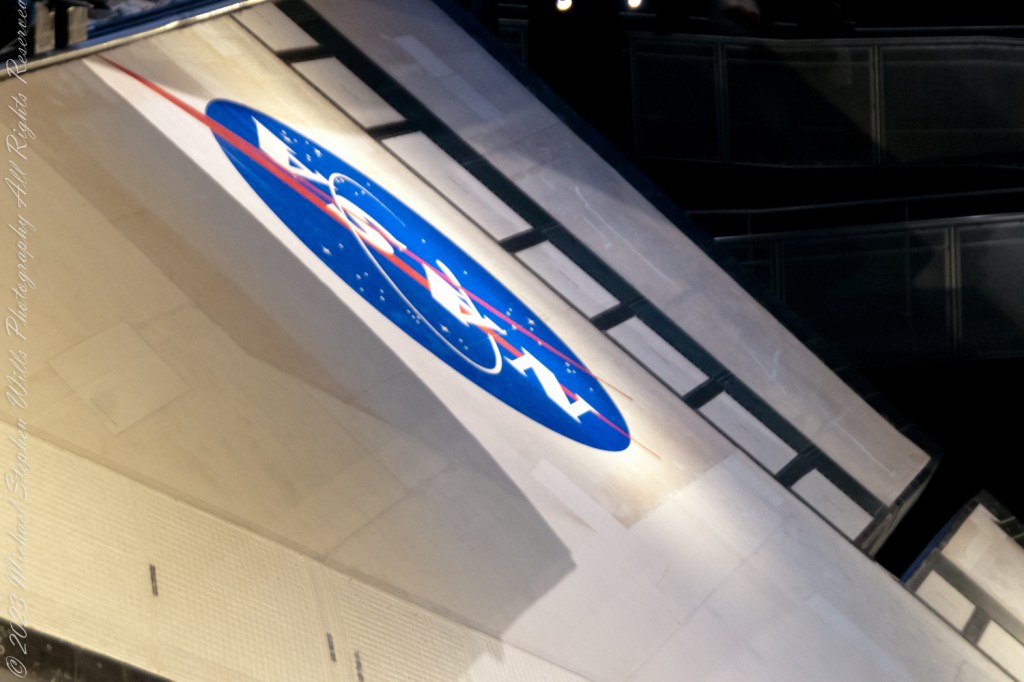
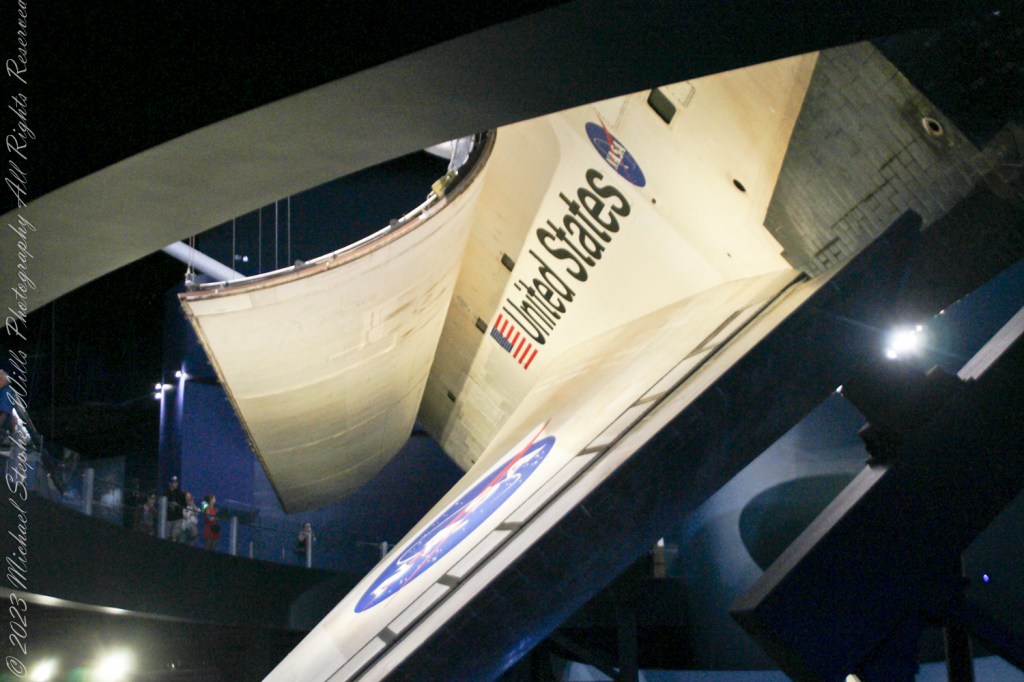
Step beyond Earth’s bounds and glimpse the astounding intricacies of the Space Shuttle’s journey. Discover the engineering marvels that propelled humanity into orbit and back, navigating the cosmos with precision. Unveil the secrets of the stars now.

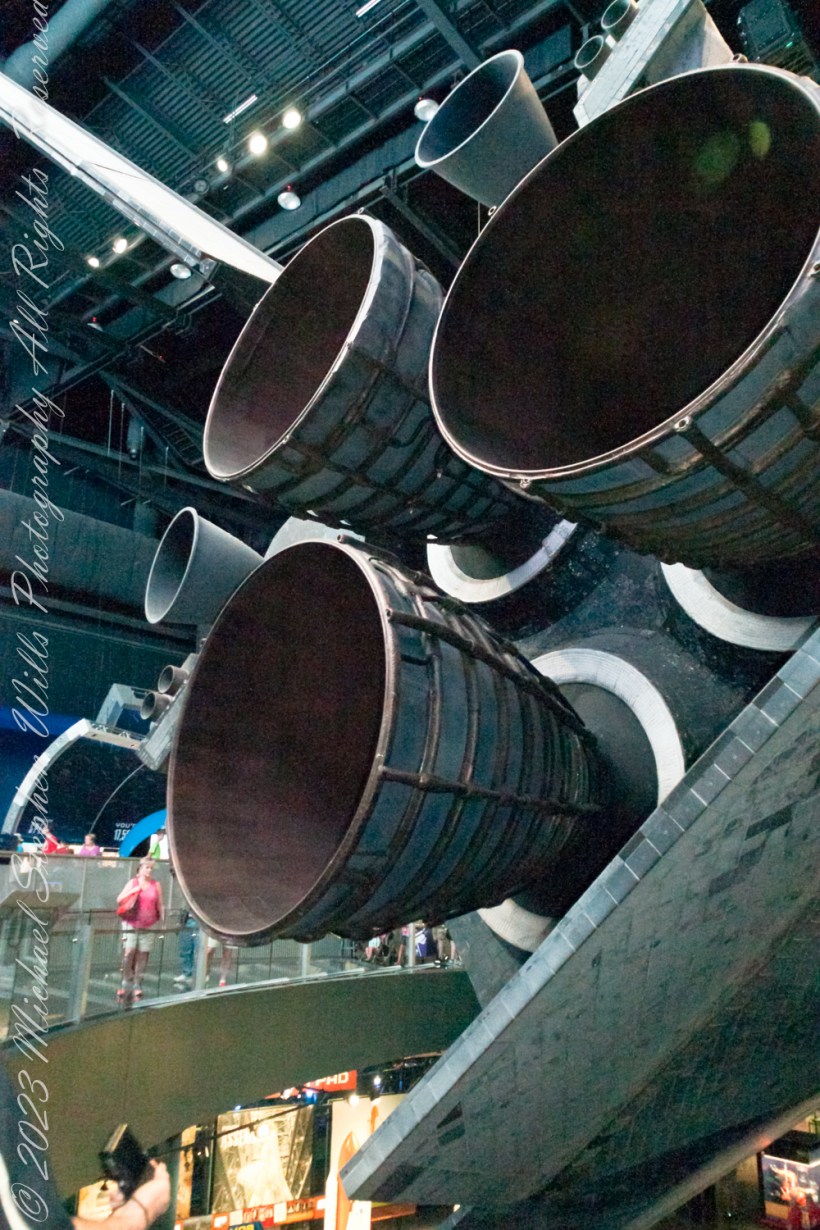
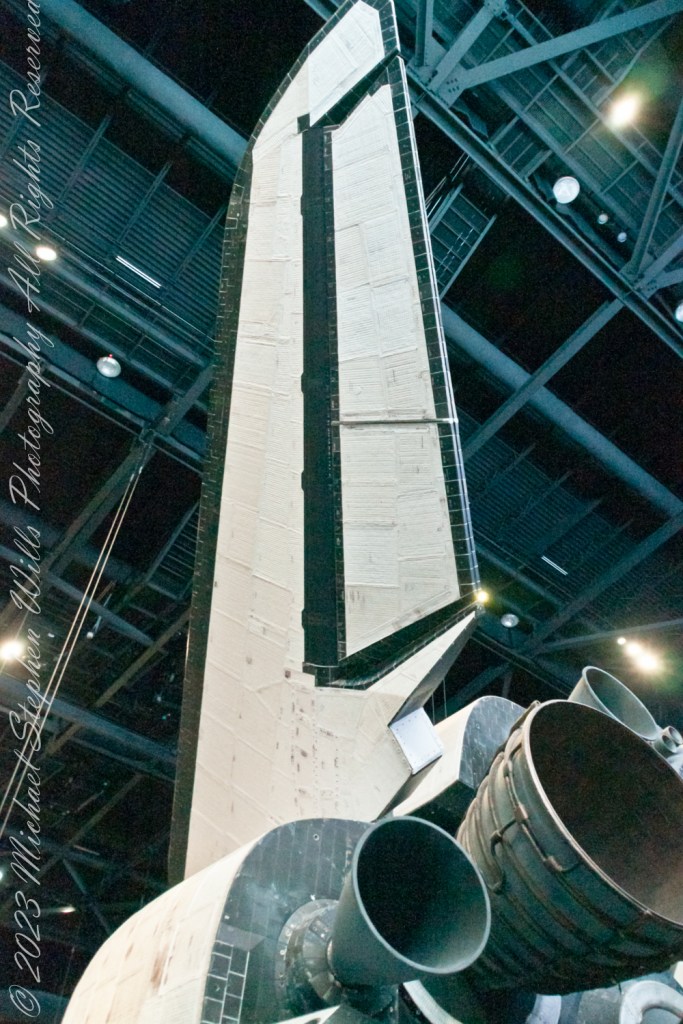
The Space Shuttle, officially known as the Space Transportation System (STS), was an iconic spacecraft operated by NASA from 1981 to 2011. It consisted of an orbiter with wings for landing like an airplane, external fuel tanks, and solid rocket boosters. With its multiple missions ranging from satellite deployment to the construction of the International Space Station, the Space Shuttle was a symbol of human ingenuity in space exploration. Central to the Shuttle’s success was its navigational system, which combined state-of-the-art technology of its time with human expertise.

The navigation of the Space Shuttle was a complex orchestration involving both internal and external elements designed to work in the harsh environment of space. The photographs attached illustrate some of the external navigational elements.

External Navigational Elements

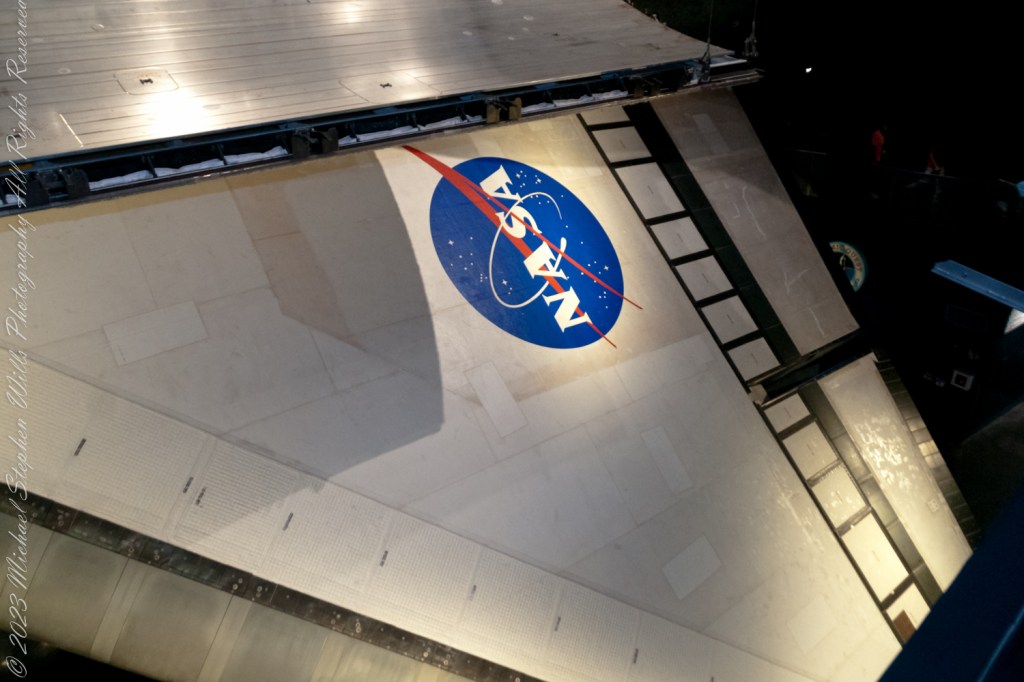
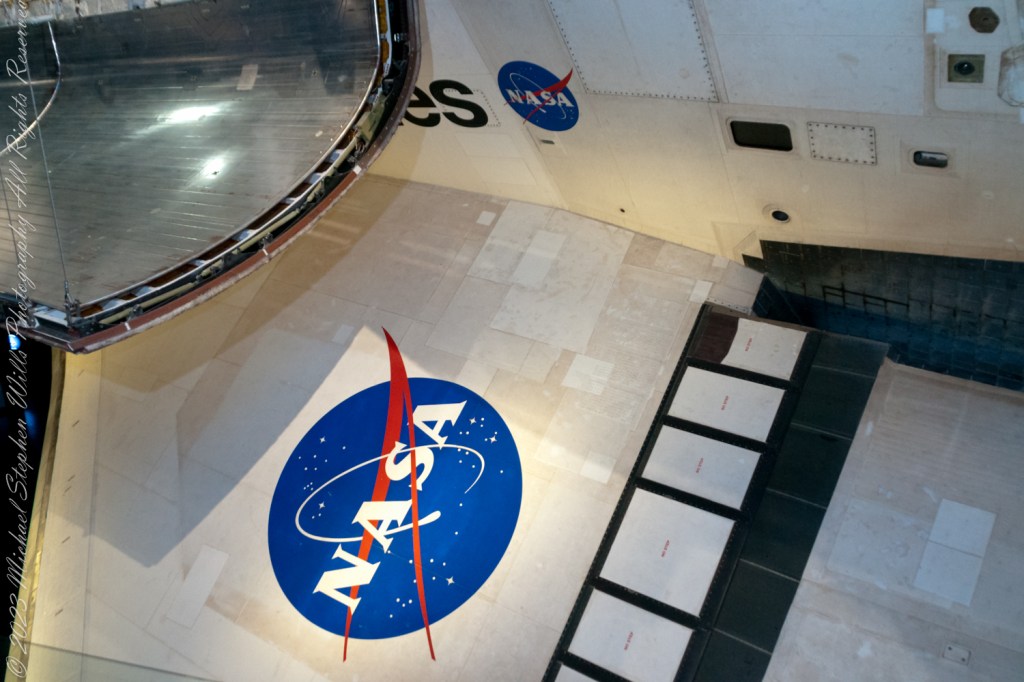
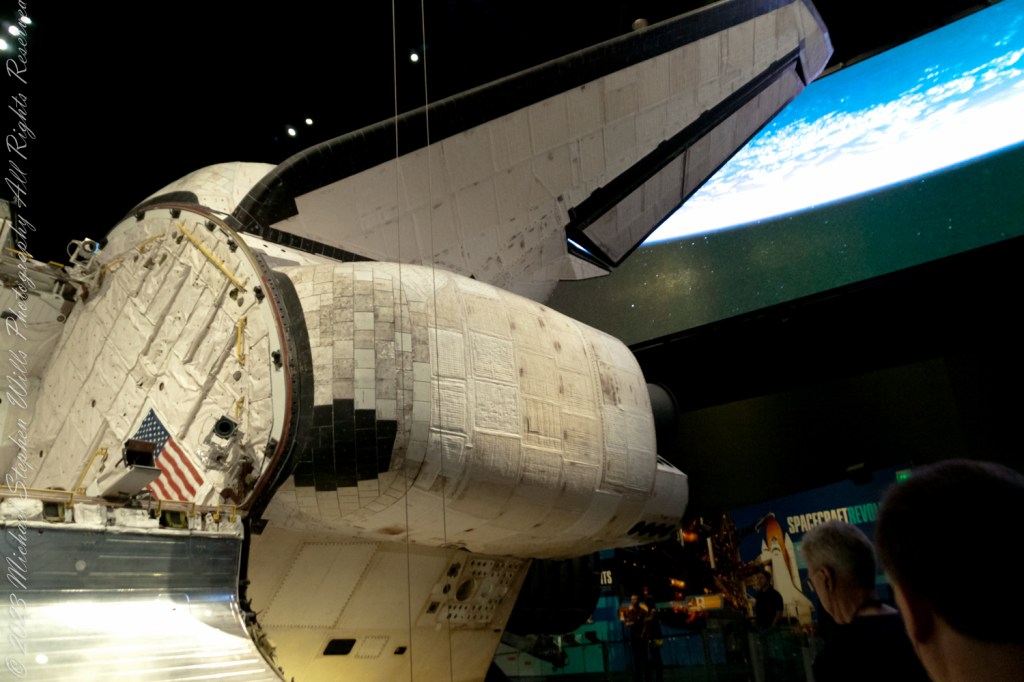
The external surface of the Space Shuttle, as seen in the following images, was covered with thousands of thermal protection system tiles. These tiles were crucial not only for protecting the Shuttle from the extreme temperatures experienced during re-entry into Earth’s atmosphere but also housed the critical sensors for navigation.

Reaction Control System (RCS)

One of the key external navigational features was the Reaction Control System (RCS), seen as clusters of small circular ports below the cockpit windows. The RCS was composed of small thrusters that could fire in short bursts to adjust the Shuttle’s orientation or speed in space. This system was vital during the maneuvers in orbit, such as satellite deployment, docking with the International Space Station, and repositioning for re-entry into Earth’s atmosphere.

Internal Navigational Elements

Internally, the Space Shuttle featured a complex avionics system. The following image depicts part of the orbiter’s internal structure with an array of docking mechanisms and sensor housings. The round port, surrounded by a ring of bolts, is likely an interface for the Orbiter Docking System, used for rendezvous and docking with the International Space Station.

The following image shows a close-up of one of the orbiter’s windows, surrounded by reinforced panels. Each window was crucial for manual navigation, allowing astronauts to visually confirm their orientation and position relative to celestial objects and the Earth. The windows were also essential during landing, which was conducted manually by the Shuttle’s commander.

Navigational Avionics

The Shuttle’s navigation was supported by an avionics system that included inertial measurement units (IMUs), star trackers, and various other sensors. IMUs tracked the Shuttle’s position by measuring its velocity and direction, while star trackers used sightings of known star patterns to calibrate the Shuttle’s orientation in the vastness of space.

The navigational computers onboard processed data from these systems to maintain the trajectory and manage the Shuttle’s multiple systems. The computers were capable of autonomous operation, although astronauts were trained to take over manually if necessary.

Ground Support and Telemetry

In addition to onboard systems, navigation relied heavily on ground-based tracking and data relay satellites. The Shuttle communicated with NASA’s Mission Control Center, which monitored its position and trajectory, providing updates and corrections as needed. Telemetry data sent back to Earth included velocity, altitude, and engine performance metrics, which were crucial for ensuring the Shuttle’s safe passage in and out of orbit.

In Summary

The Space Shuttle’s navigational capabilities were a testament to the integration of technology and human skill. From the RCS ports on its tiled exterior to the sophisticated avionics inside, every component played a critical role in the Shuttle’s missions. This harmonious blend of internal mechanisms and external sensors, complemented by vigilant ground support, enabled the Space Shuttle to navigate the cosmos and return safely home, mission after mission.

Copyright 2024 Michael Stephen Wills All Rights Reserved