Exploring the Vision of Arcosanti

In the Arizona desert, structures harmonize with nature, embodying creativity and purpose while inviting reflection on balance and coexistence.

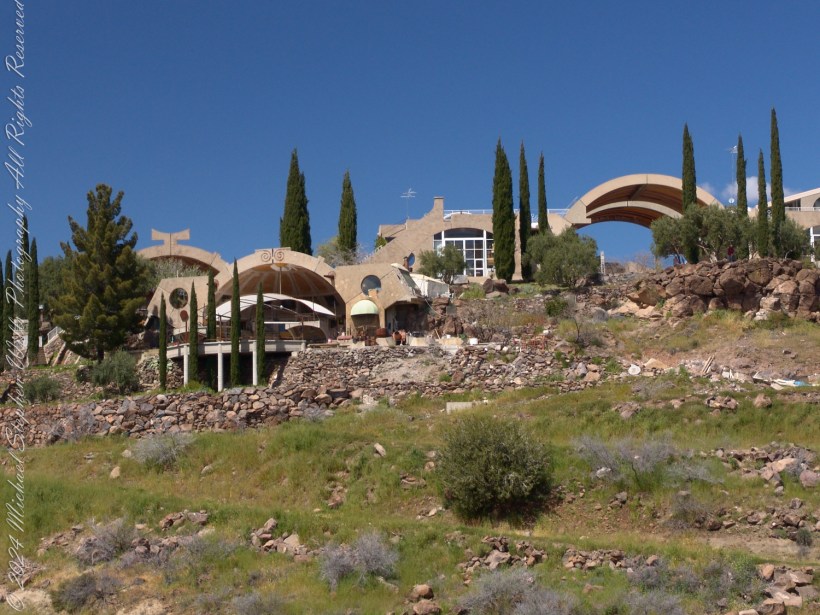
Approaching Arcosanti from afar, a cluster of forms rising from the Arizona desert like a mirage of human imagination. Against the cobalt sky, the buildings seemed to breathe with the land itself, their curves and edges echoing the undulations of the hillside. From this distance, the structures were both distant dream and solid reality, their symmetry a whispered promise of order amidst the chaos of the wild.
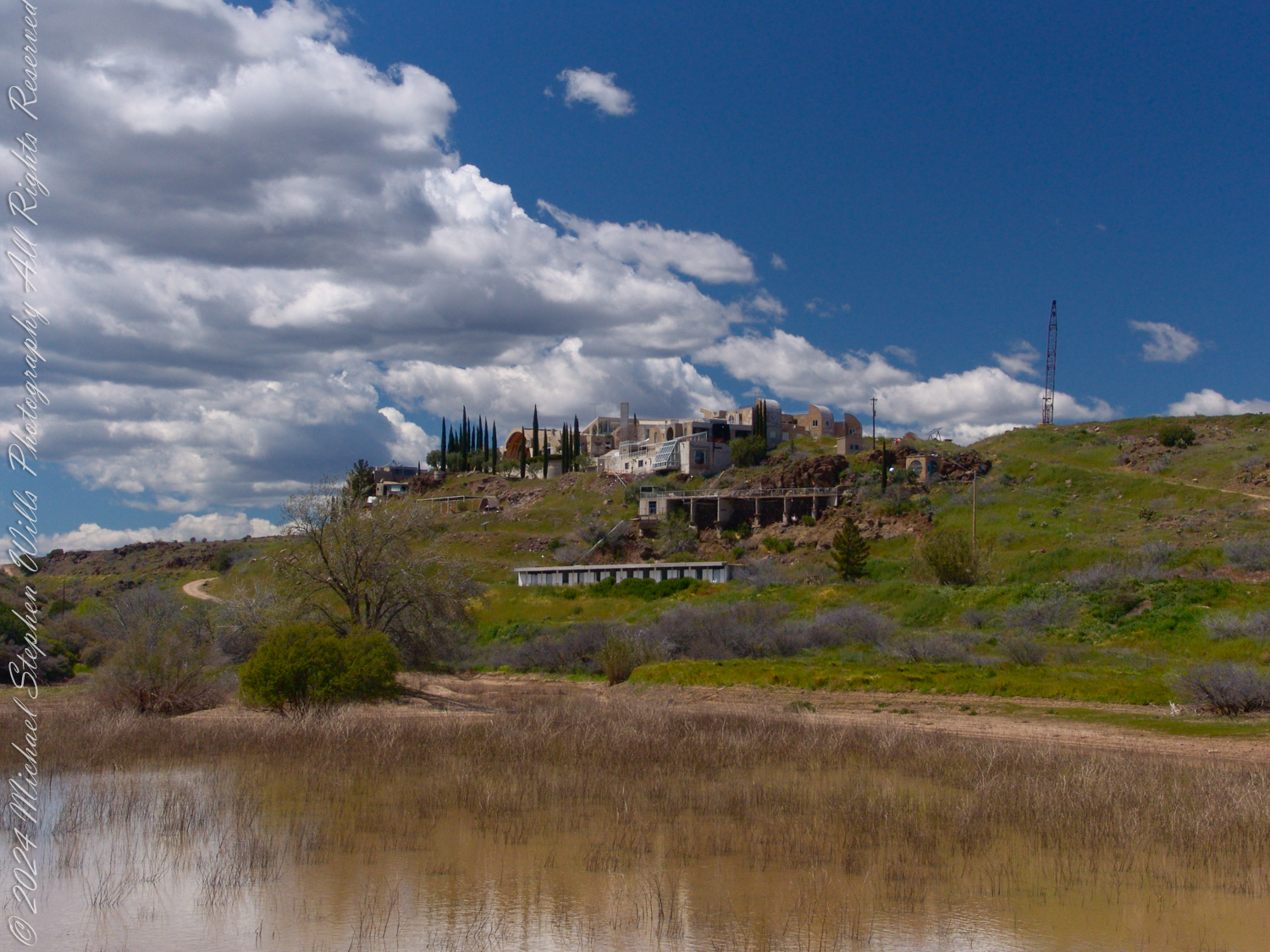
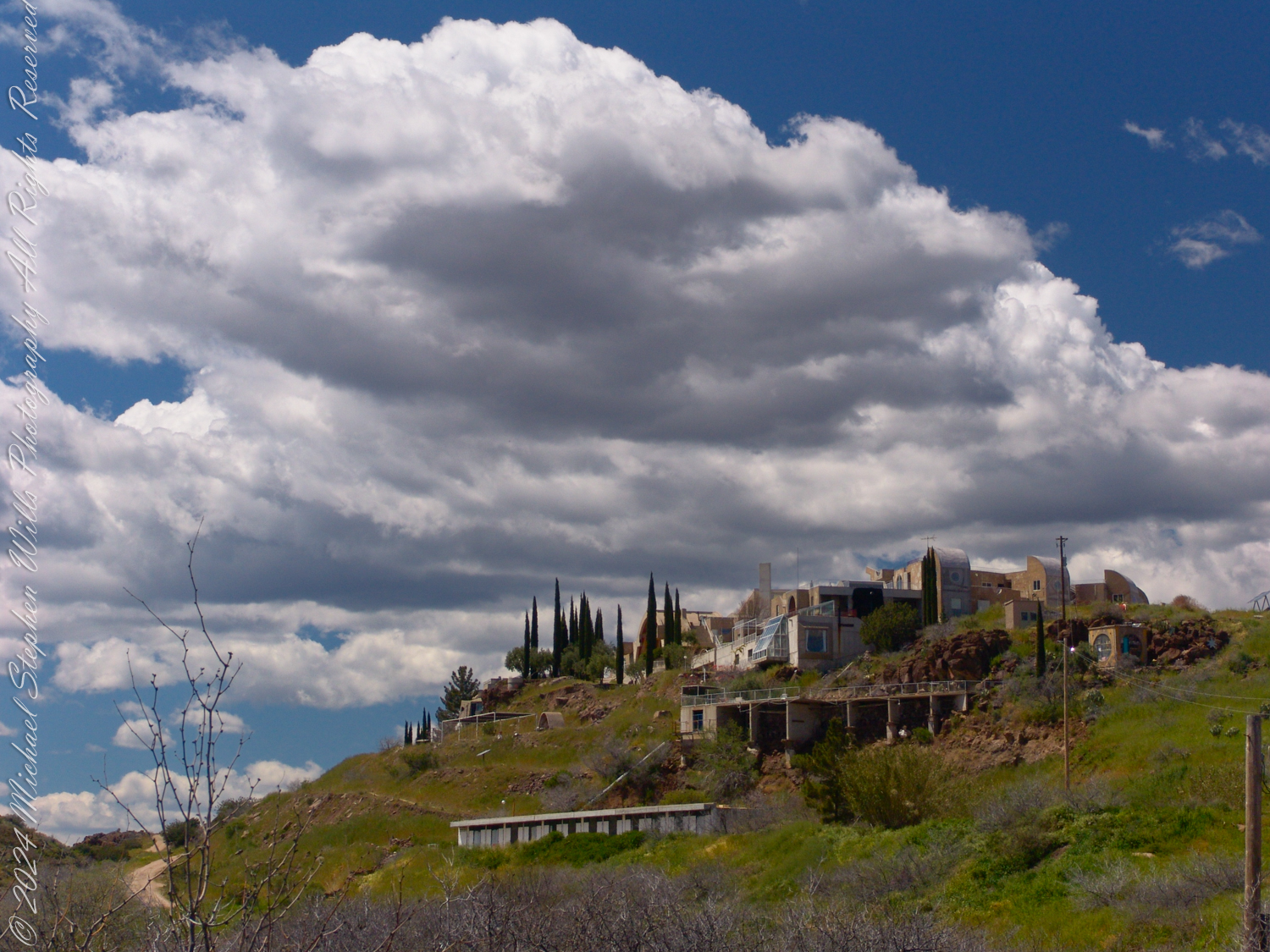
As I moved closer, the buildings revealed their intricate secrets. Circular windows stared like unblinking eyes, portals to a world shaped by creativity and purpose. Towers and cubes jutted confidently into space, their bold geometry softened by the earthen hues of concrete and weathered wood. These materials, neither foreign nor intrusive, seemed born of the very soil beneath my feet. There was an undeniable rhythm to the place—a harmony where art, function, and the timeless desert converged.
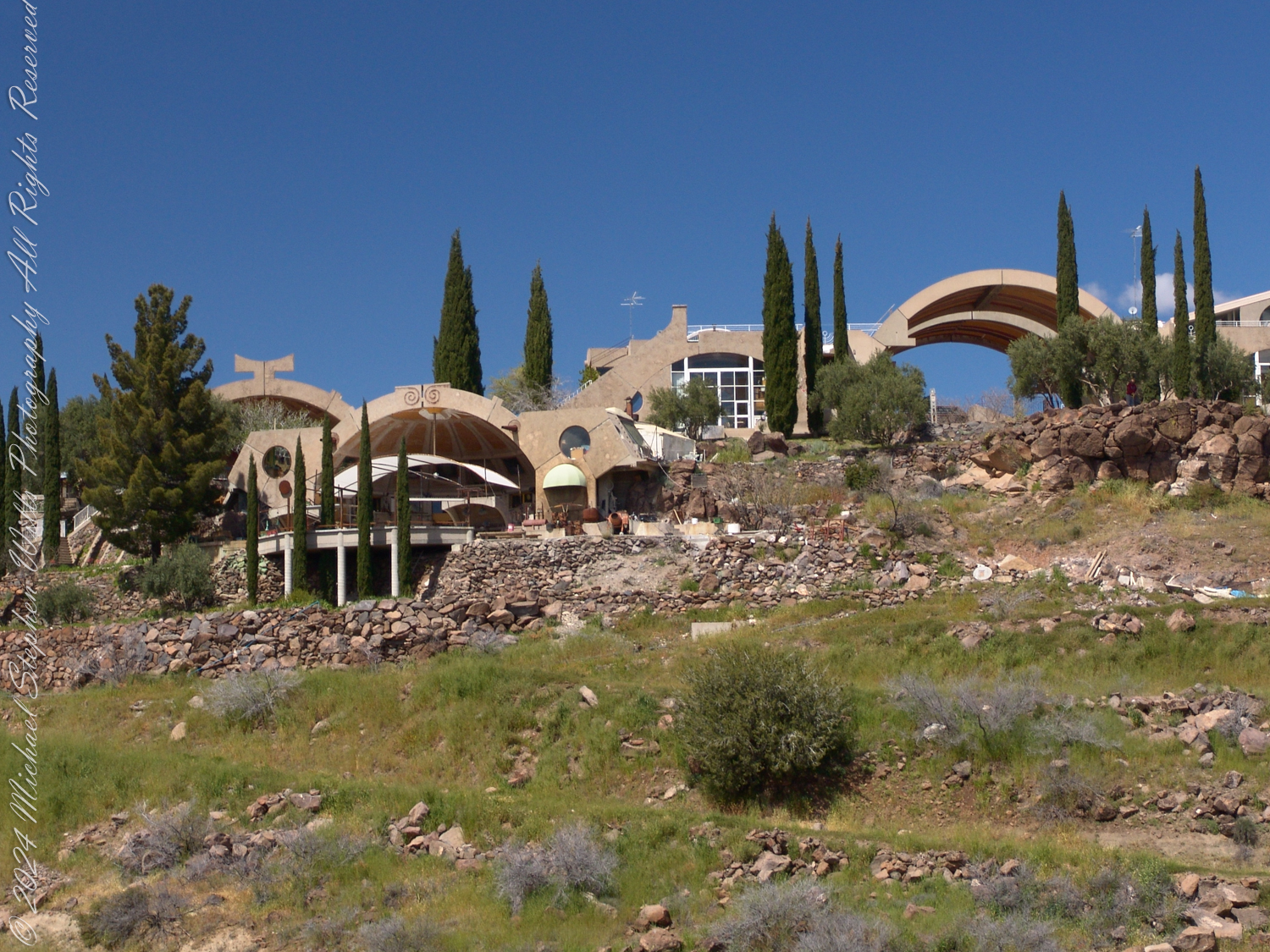
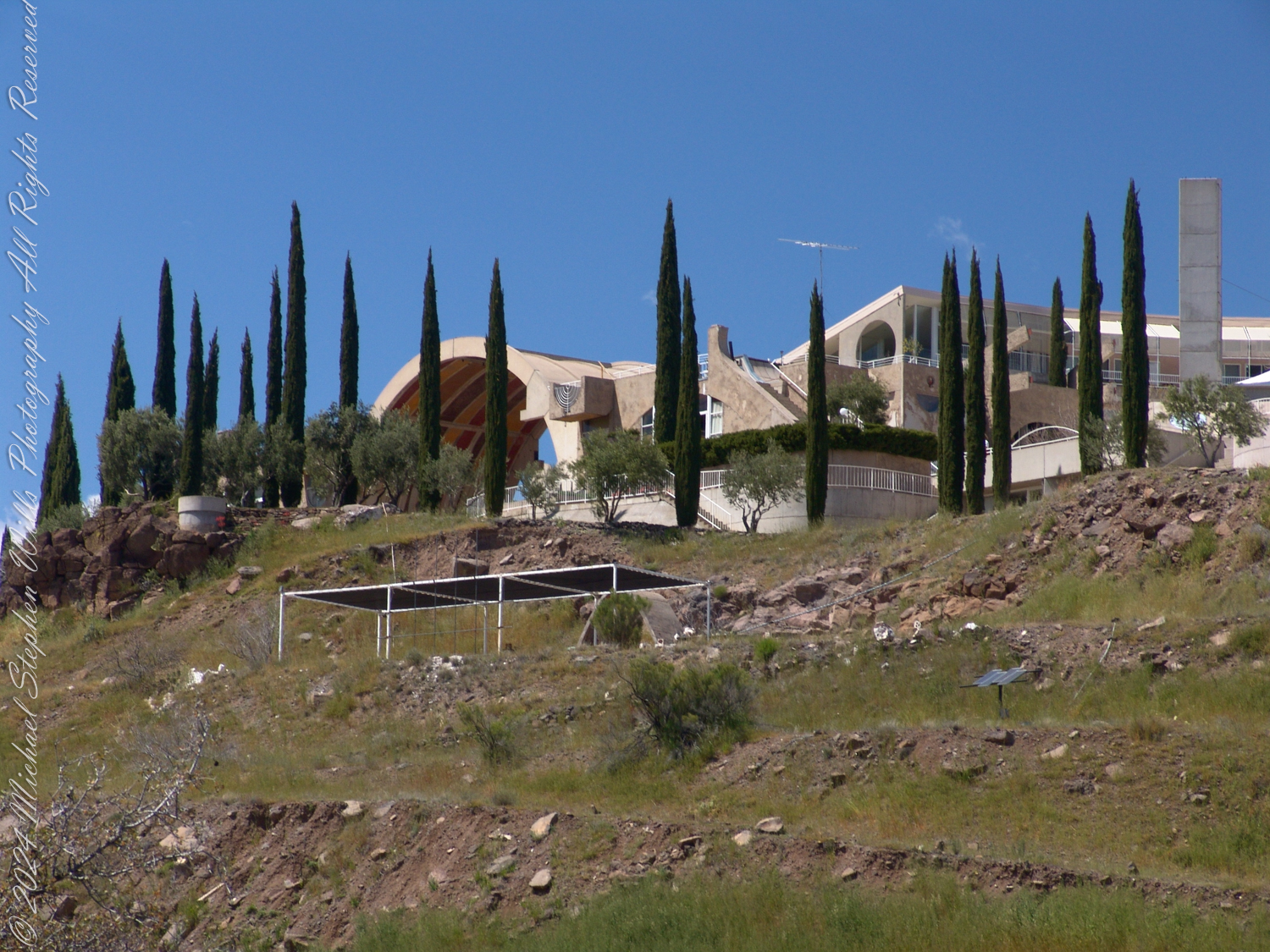
I walked among the structures, their forms towering above me like sentinels of some ancient philosophy reborn for a modern age. The elevated walkways beckoned with a quiet invitation, connecting one sanctuary of thought to another. Circular motifs repeated like a mantra, reminding me of the cycles of life, of the sun and the moon, of the unbroken circles that hold us together. Here, design was not merely a tool but a hymn, sung in concrete and glass.
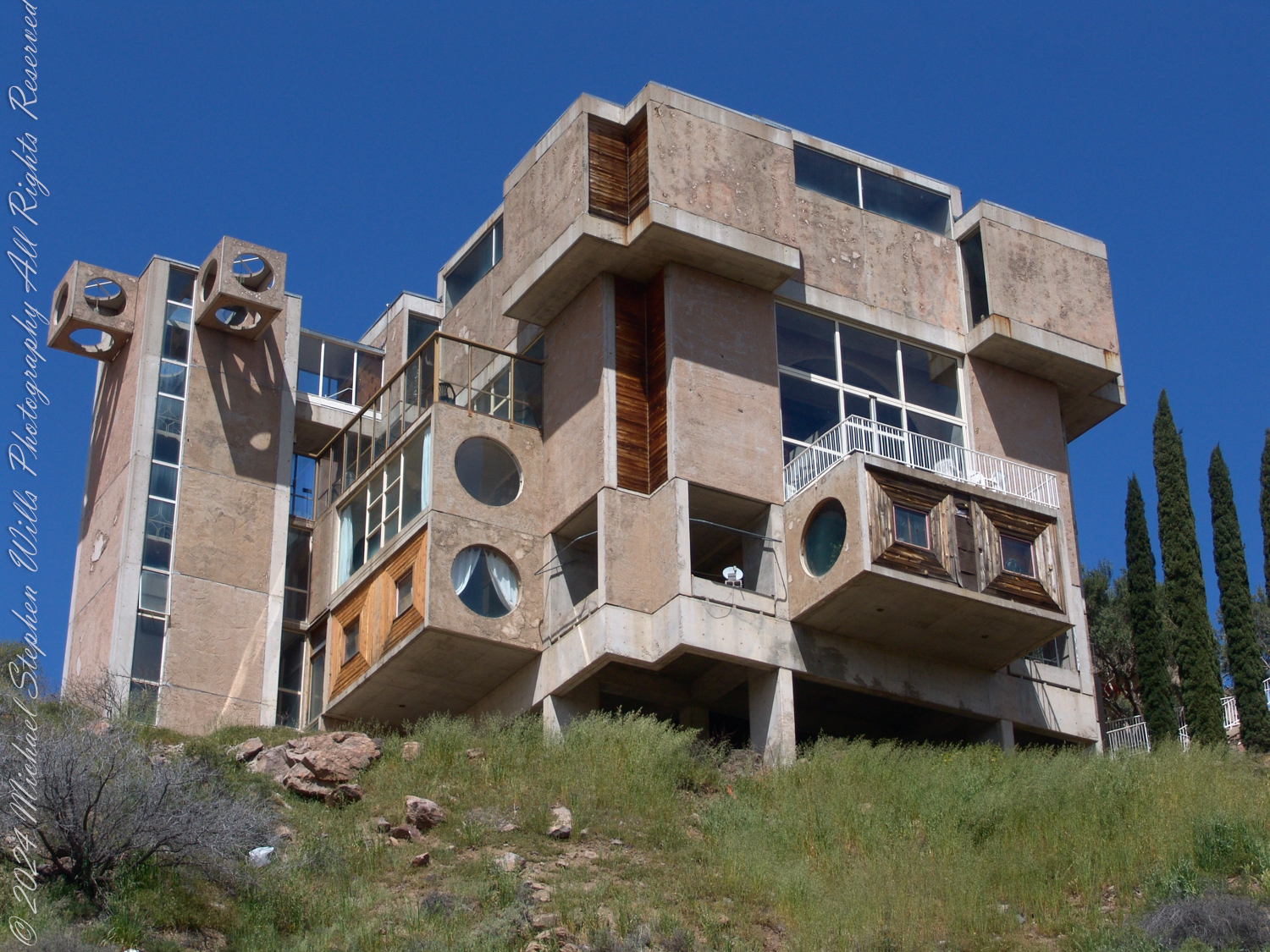
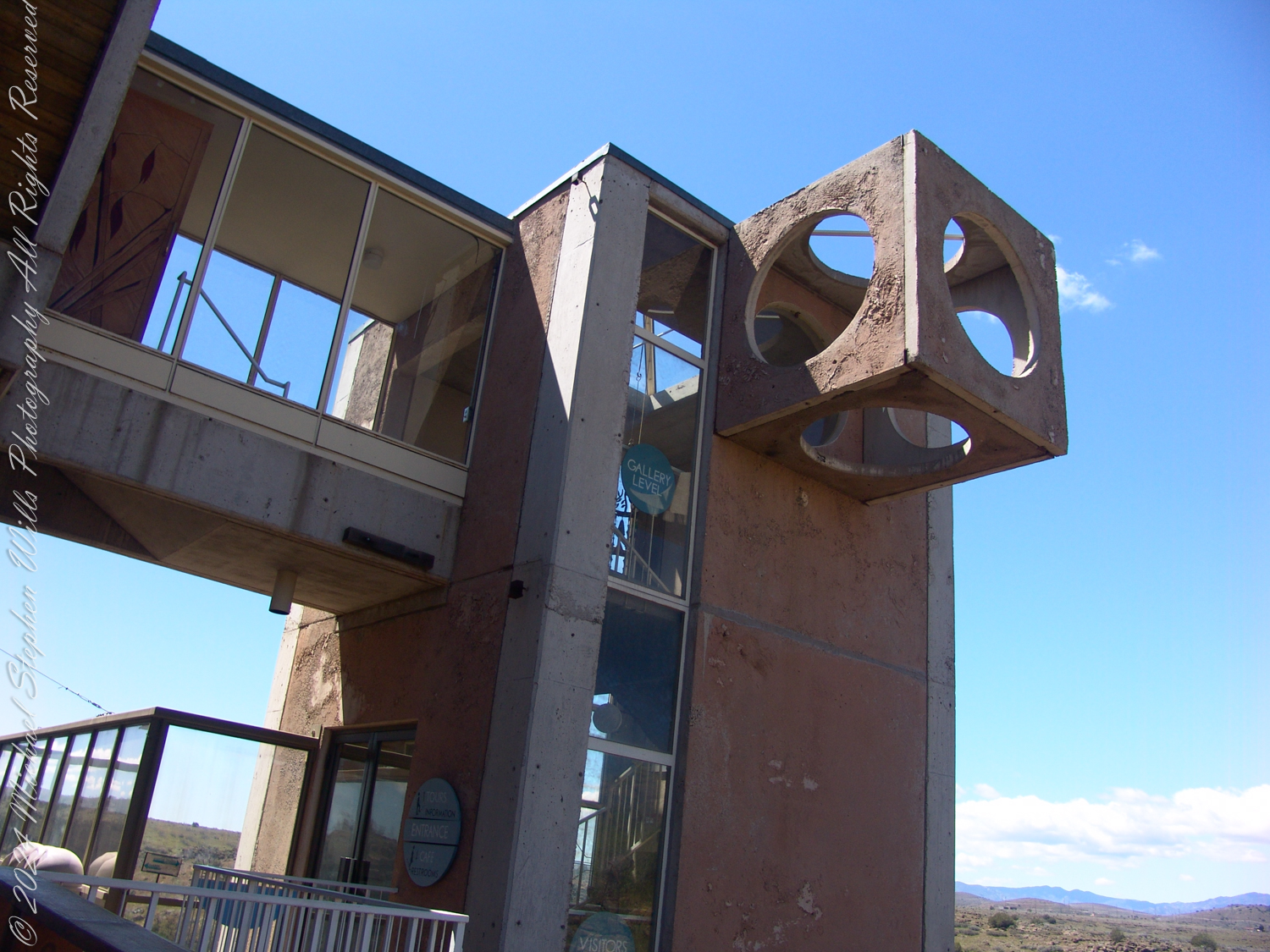
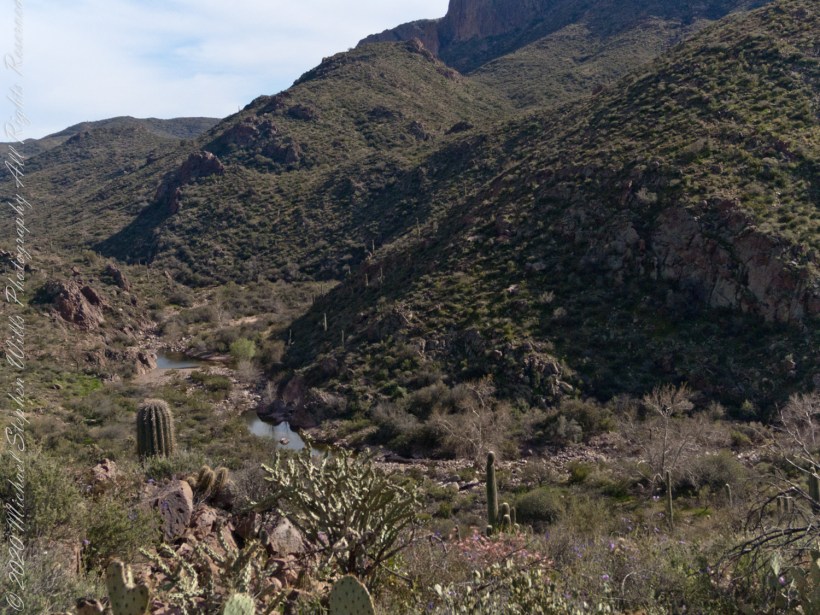
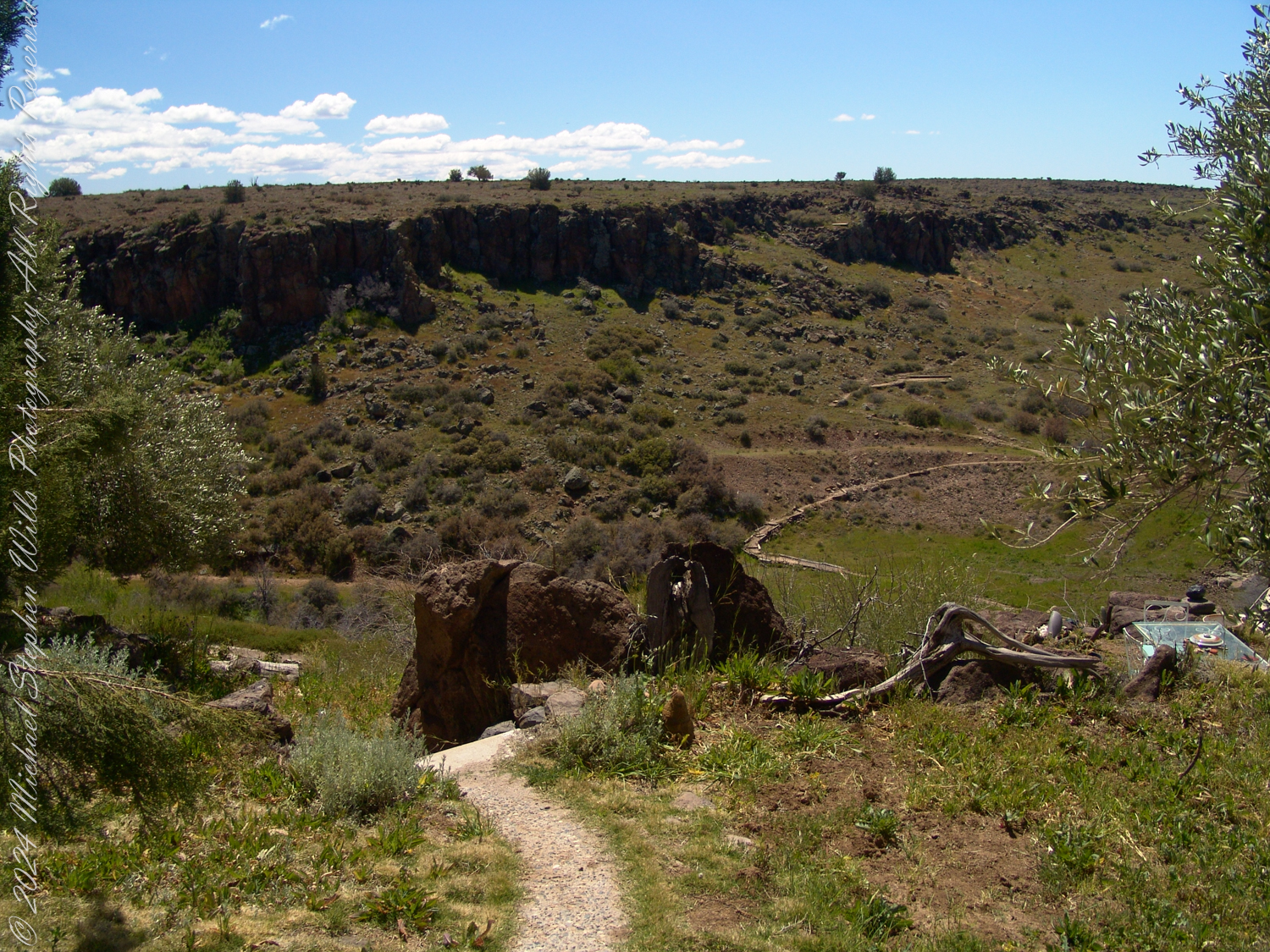
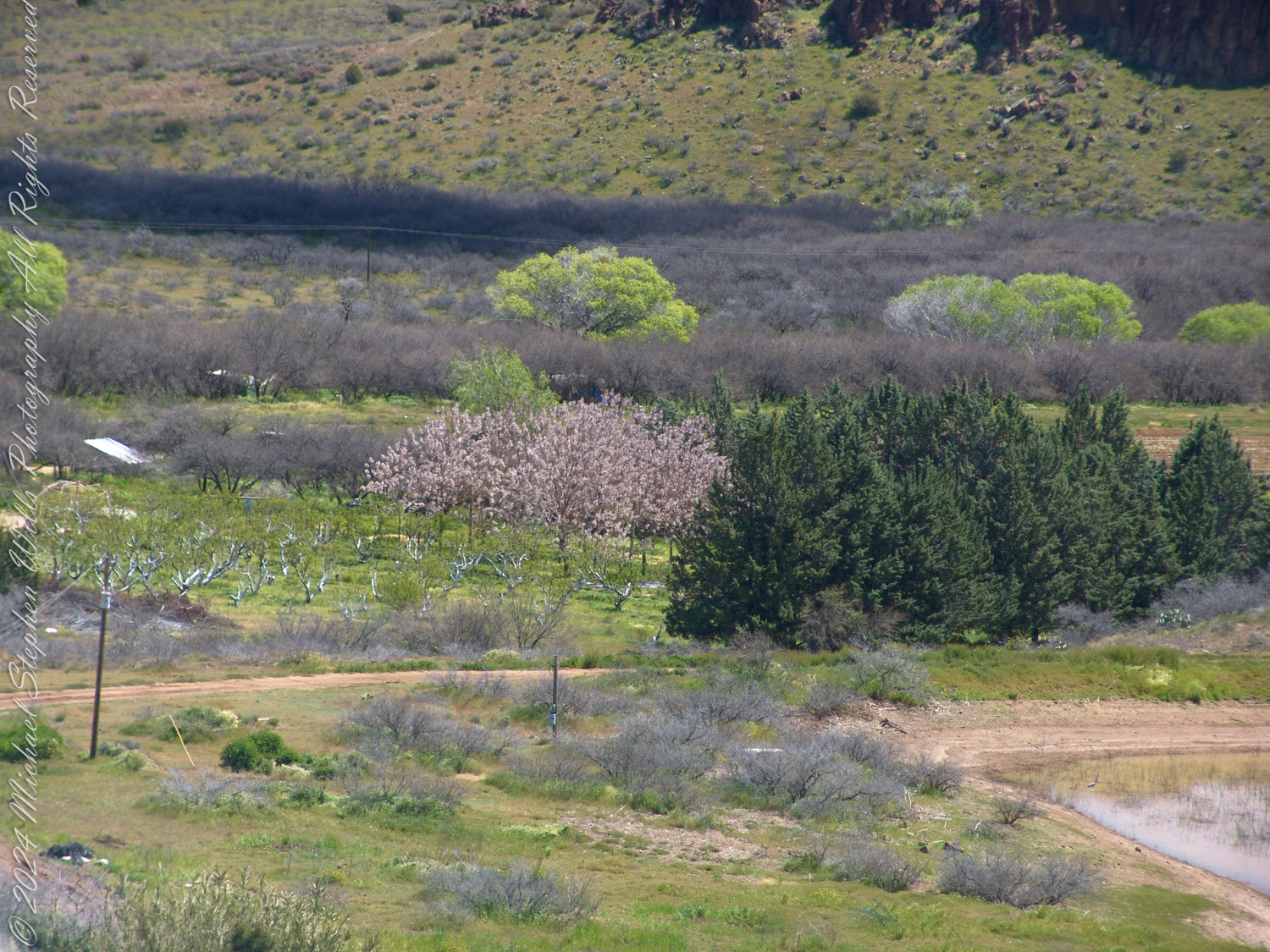
Then, I turned my gaze outward, to the land that cradled this creation. The desert was alive, though its voice was quiet and deliberate. Rocks, worn smooth by the patient hand of time, rested among tufts of sage and grasses that swayed in the breeze. The light played its own game, casting shadows that danced across the ground, a choreography as old as the sun. Paths meandered through this terrain, their curves a gentle suggestion rather than a command, inviting me to wander but not to conquer.
Arcosanti

The trees stood tall and still, their presence both steadfast and serene. The cypress trees, their slender forms reaching toward heaven, seemed like exclamation points on the landscape, their verdant green cutting through the sky’s azure expanse. Beside them, olive trees spread their silvered arms, their gnarled trunks telling stories of endurance and quiet strength. One cypress, in particular, caught my attention—so perfectly straight, so impossibly regal, as if it had been planted by the hand of a god.
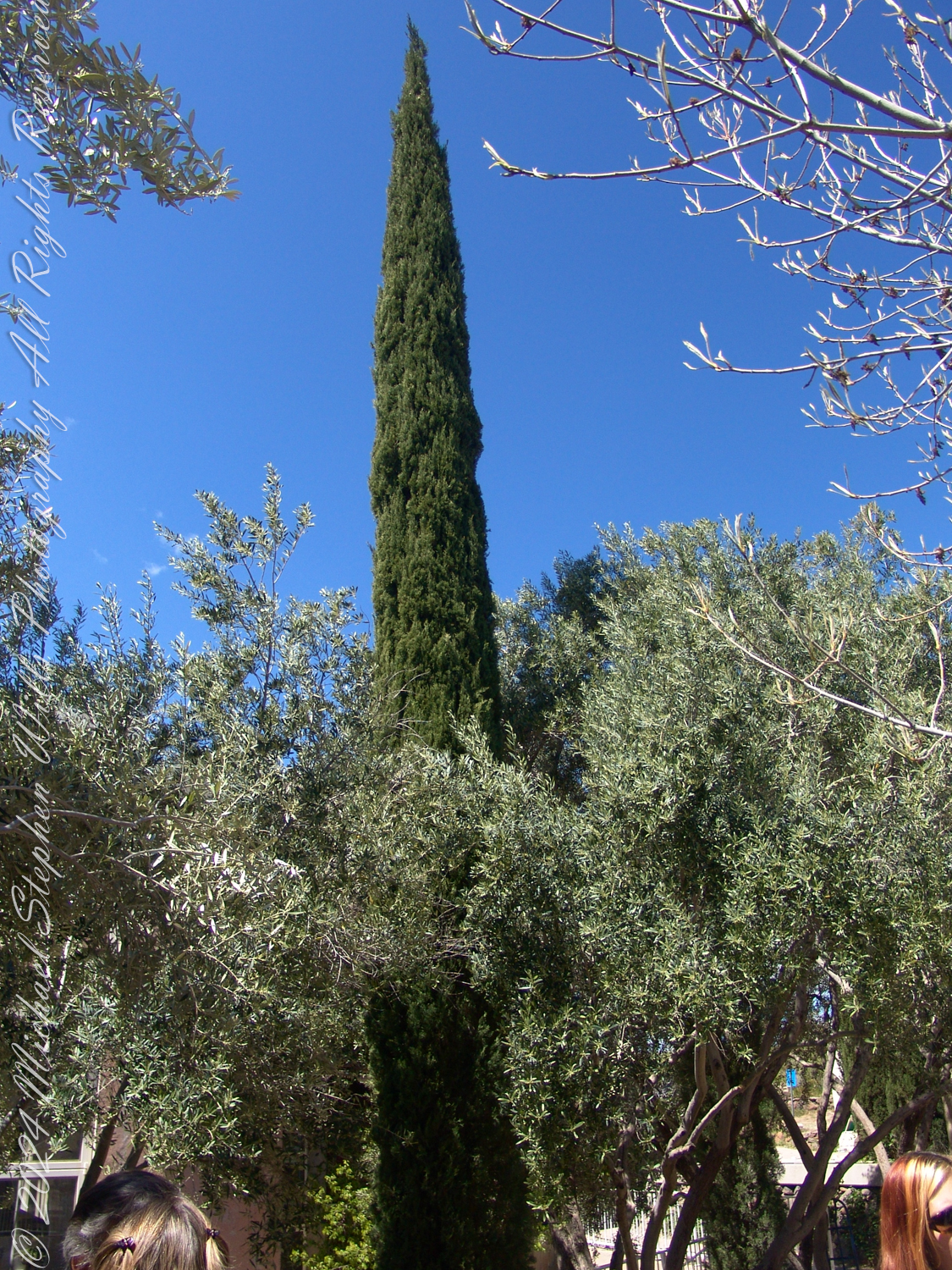
Beneath the olive trees, I paused, tracing my fingers along the bark’s intricate patterns. The sunlight filtered through the leaves in golden shards, dappling the earth beneath with shifting shapes. The air carried the scent of something ancient and vital—a blend of dry earth, sun-warmed bark, and the faintest hint of blooming life. It was a reminder that even in this place of human creation, nature reigned supreme.
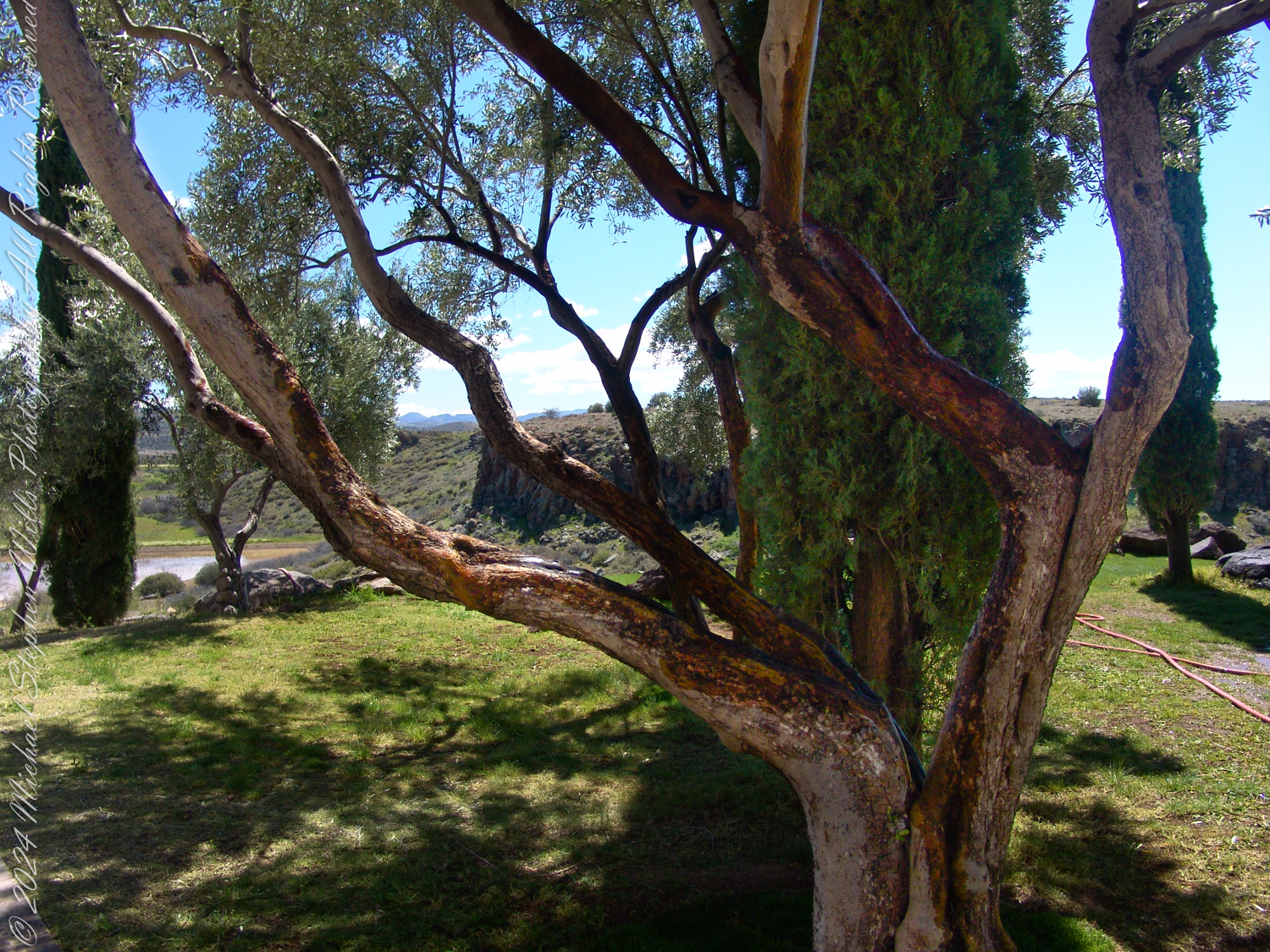
I wandered to the edge of a canyon, its rugged walls carved by time’s relentless flow. The raw power of the landscape stretched out before me, a tapestry of stone and shadow that humbled and awed. Here, the boundaries between human vision and natural grandeur blurred. The olive and cypress trees, so carefully placed, seemed less an intrusion and more a part of the desert’s rhythm. They were a bridge, a whispered conversation between what is made and what simply is.
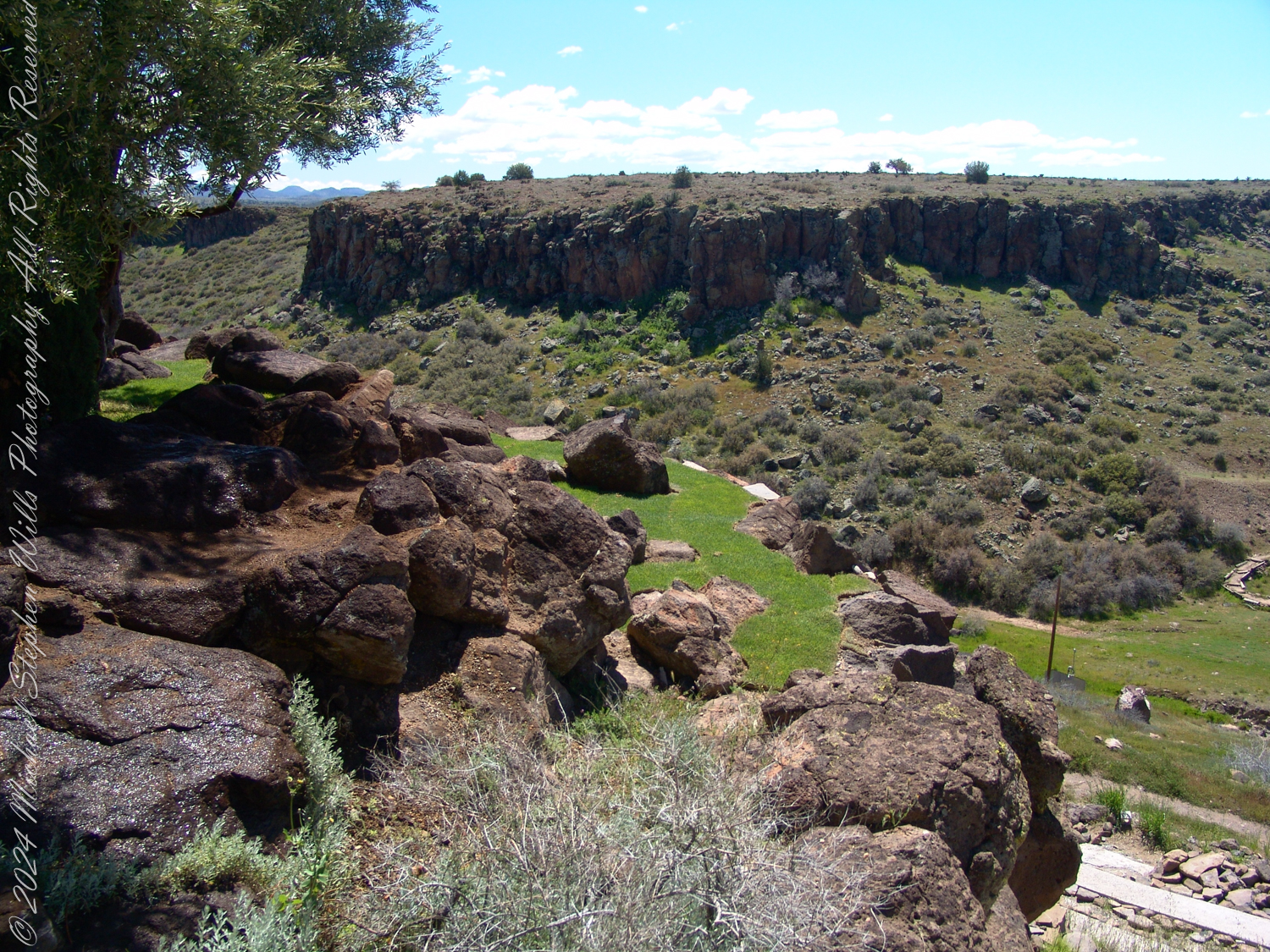
Finally, the paths called me back, their winding lines leading me deeper into reflection. Each step felt deliberate, as though I were tracing the lines of a poem etched into the earth. The trails curved gently, like the desert’s own breath, and I followed, not as an intruder but as a guest. The buildings now stood behind me, a testament to the balance we strive for—between the ephemeral dreams we build and the eternal landscape that cradles them.

This place is a meeting of stone and sky, a meditation: reminding us that, if we listen, the land will teach us how to live in harmony. Here, in the desert’s embrace, I found space to ask better questions, my heart as open and unbroken as the endless horizon before me.

Enter your email to receive notification of future postings. I will not sell or share your email address.

New Beginnings

Embark on a photographic journey with me, armed with a Canon EOS 5D Mark IV and a keen eye, as we navigate the challenges and beauty of Taughannock Falls. Experience the blending of history and art through my lens, capturing nature’s grandeur and the legacy of the land. Join me in this adventure.

Continue reading “New Beginnings”

Winter People Watching

Happy New Year’s Eve

Continue reading “Winter People Watching”

The Flatiron

Where is the ironing board?

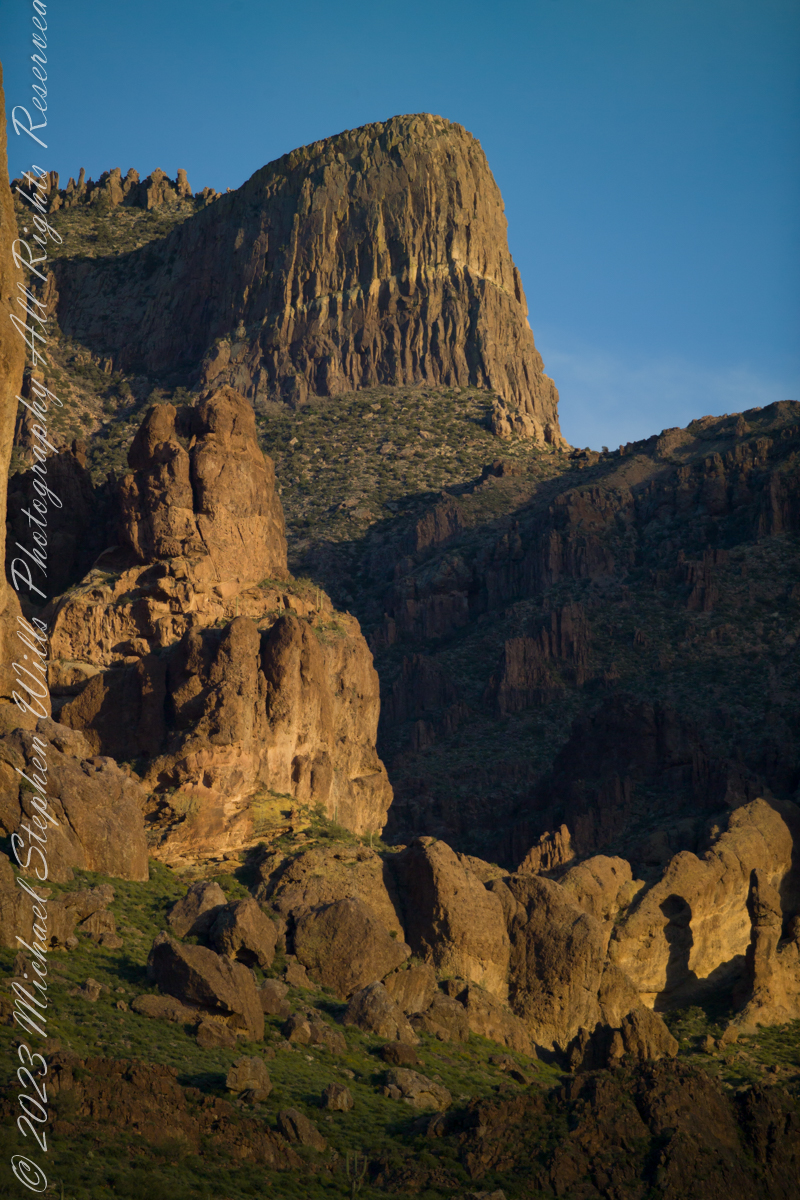
The setting sun’s glow on the end point of Upper Siphon Draw trail, The Flatiron.

Click Me for my Online Gallery

The mountain was formed by a series of volcanic eruptions between 20.5 and 18 million years ago. The west face of the mountain is composed of dacite lava and rhyolitic tuff. The overlying tuff was deposited during an eruption which created a collapse caldera bounded by faults. Dome resurgence reactivated these faults, causing uplift of the caldera floor which juxtaposed the softer tuff and more resistant dacite. Differential weathering caused the outer tuff to erode faster, leaving the dacite cliffs exposed and creating the prominent mountain visible today.

The Flatiron, the mesa-like projection above us in this view, is long solidified dacite lava. The word dacite comes from Dacia, a province of the Roman Empire which lay between the Danube River and Carpathian Mountains (now modern Romania and Moldova) where the rock was first described. Lost Dutchman State Park, Apache Junction, Maricopa County, Arizona

Reference: Wikipedia “Superstition Mountain” and “Dacite Lava.”

Copyright 2023 Michael Stephen Wills All Rights Reserved

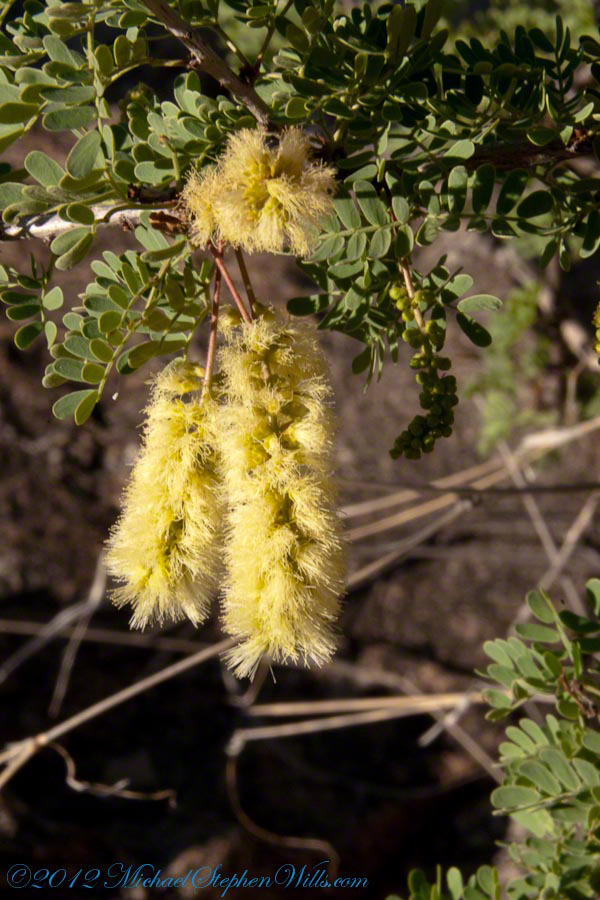
Mesquite Flowers and Seeds

desert survival

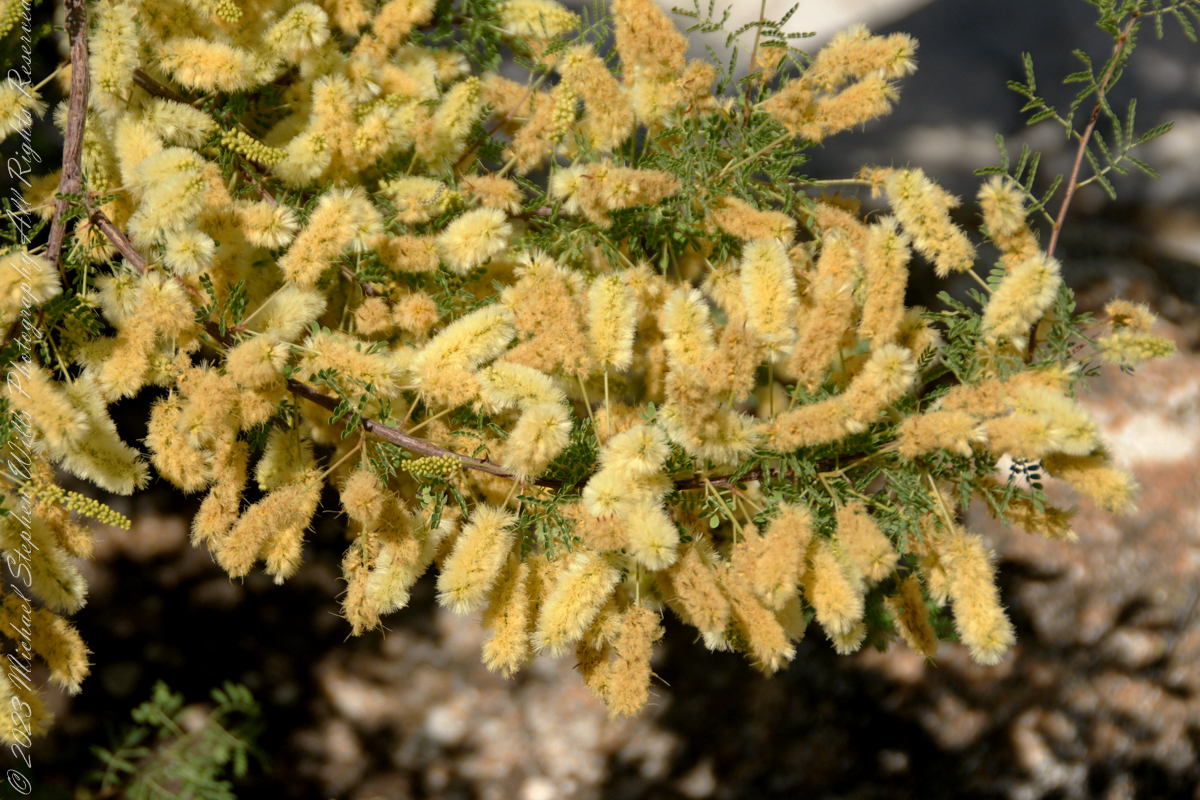
Mesquite is the Sonoran Desert smell carried by distant rain, omnipresent and humble, a survivor with tap root extending 190 feet down to draw on the water table.

Click Me for my Online Gallery

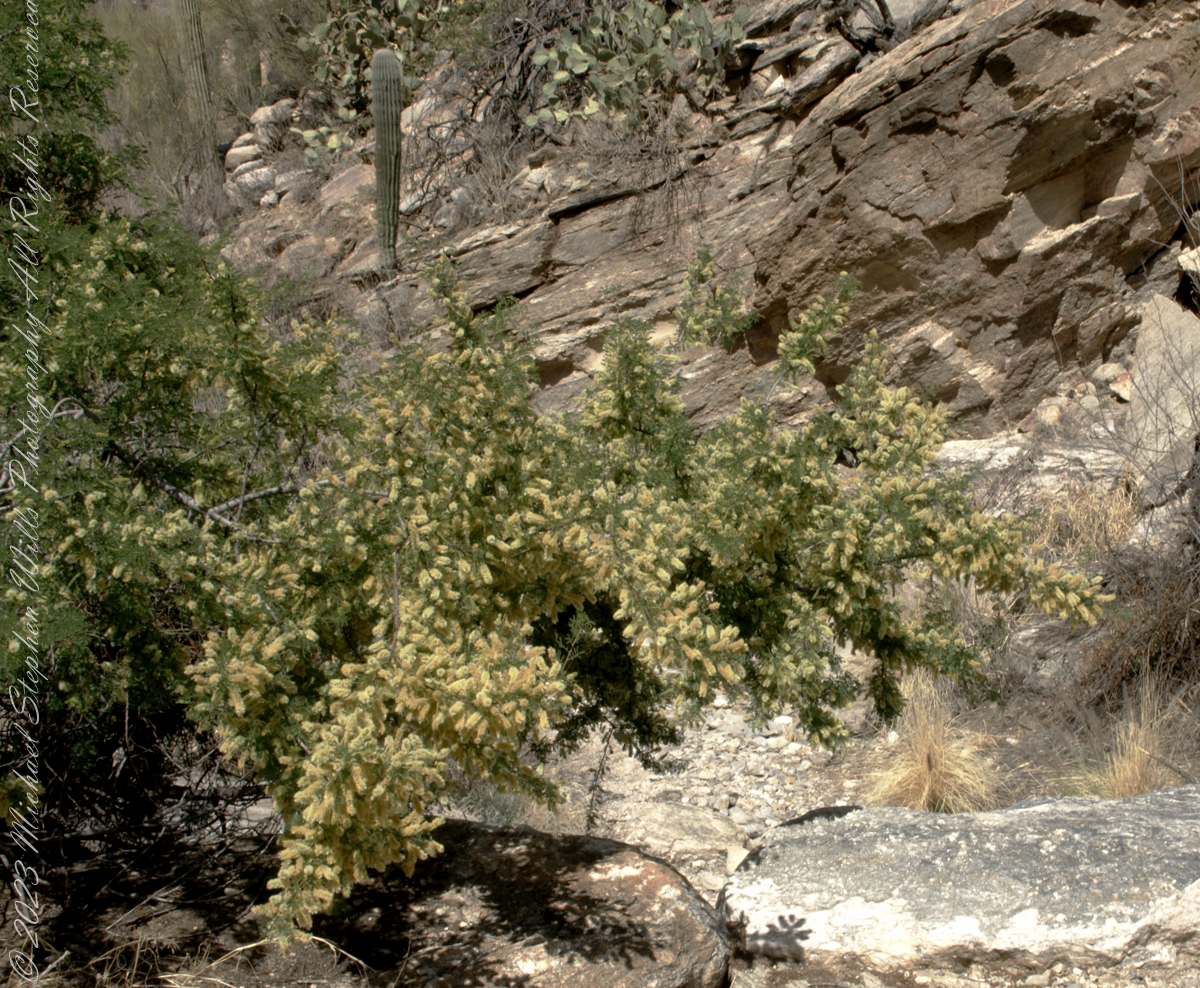
Prosopis is the scientific name for about 40 species of leguminous trees. Present in North America since the Pliocene era, mesquite wood has been dated to 1300 BC.

I found this flowering mesquite bush in Finger Rock Canyon of the Catalina Mountains outside Tucson, Arizona.

They are thought to have evolved with megafauna in the New World. The loss of North American megafauna at the end of the Pleistocene era gave way to one theory of how the Prosopis spp. were able to survive.

One theory is that the loss of the megafauna allowed Prosopis spp. to use their fruit pods to attract other organisms to spread their seeds; then, with the introduction of livestock, they were able to spread into grasslands.

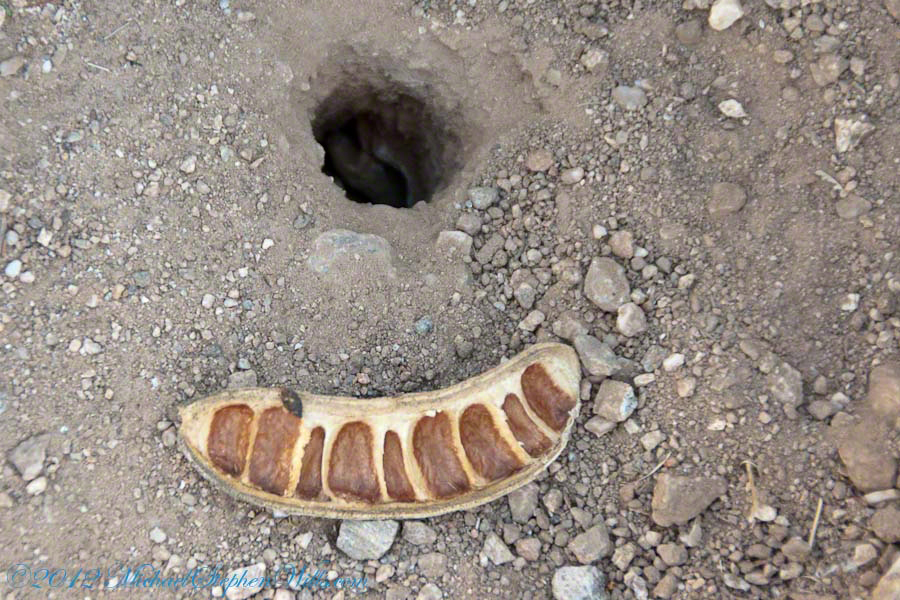
The plentiful legumes that develop from these flowers are edible when cooked. The shape and color of the seeds can be understood from this empty seed pod that happens to lie near a tarantula burrow.

Click me to read more about the uses of mesquite.

References:
“Mesquite,” Wikipedia

Copyright 2023 Michael Stephen Wills All Rights Reserved

World at our Feet

On Peter’s Mesa

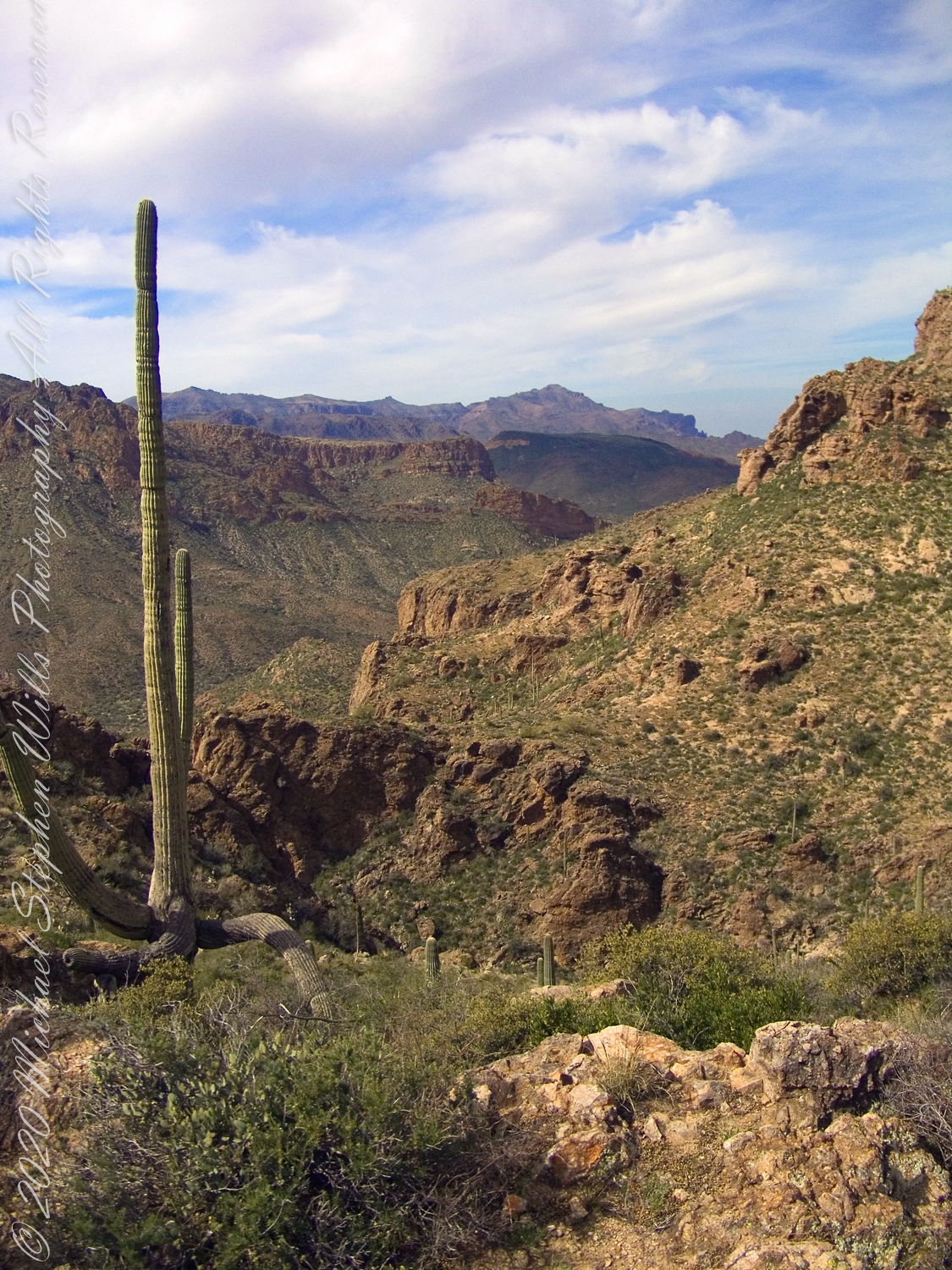
View North / Northwest from Peter’s Mesa. At our feet is a mature Saguaro Cactus towering over Charlebois Canyon, to the right Black Mountain. Bluff Spring Mountain, middle distance, then Black Top Mesa. Flatiron Peak, of the famed Superstition Mountain, is in distance. Photographed from Peter’s Trail on a March afternoon 2008. Superstition Wilderness, Tonto National Forest, Arizona

Bluff Spring Mountain, middle distance, then Black Top Mesa. Flatiron Peak, of the famed Superstition Mountain, is in distance. Photographed from Peter’s Trail on a March afternoon 2008. Superstition Wilderness, Tonto National Forest, Arizona

Click Me for the first post of this series, “Bluff Spring Mountain.

Copyright 2022 Michael Stephen Wills All Rights Reserved

Morning / Evening

Can you see the Needle’s Eye?

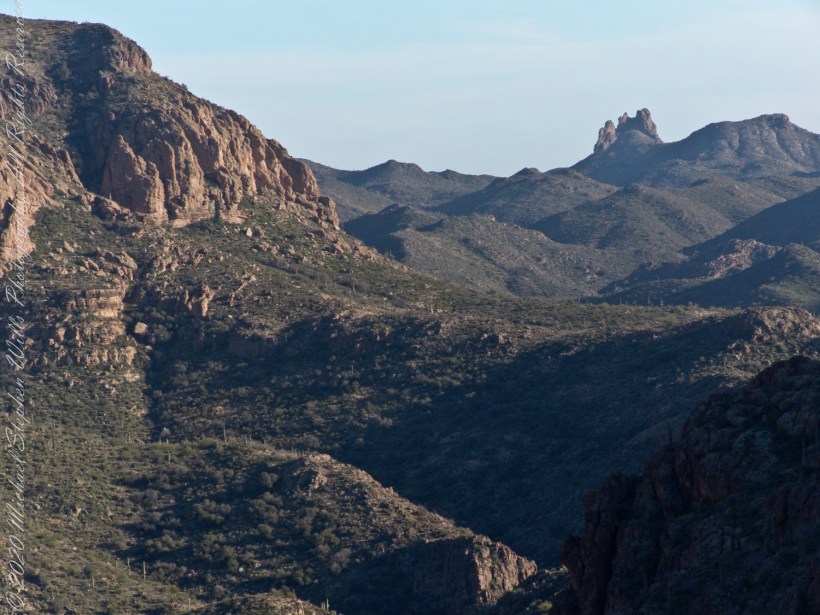
The eye of Miner’s Needle is clear in both these South / Southeast views from Peter’s Mesa looking across the Music Canyon.

Many wildflowers, sprinkled like stars through the foreground of the morning photograph with Prickly Pear, Cholla and Saguaro cactus. Beware of “Jumping Cholla”, named for its seeming ability to attack passers-by. Another name, “Hanging Chain Cholla”, is more appropriate. Each chain with many hooked barbs is lightly attached to the branch, ready to snag a ride from unwary hikers.

Light rakes across the landscape in the evening photograph, taken from another vantage point on Peter’s Mesa. Miner’s Needle is four (4) miles away “as the crow flies,” i.e., line of sight distance.

Click Me for the first post of this series, “Black Mountain.

Copyright 2022 Michael Stephen Wills All Rights Reserved

Panoramic

Superstition Glory

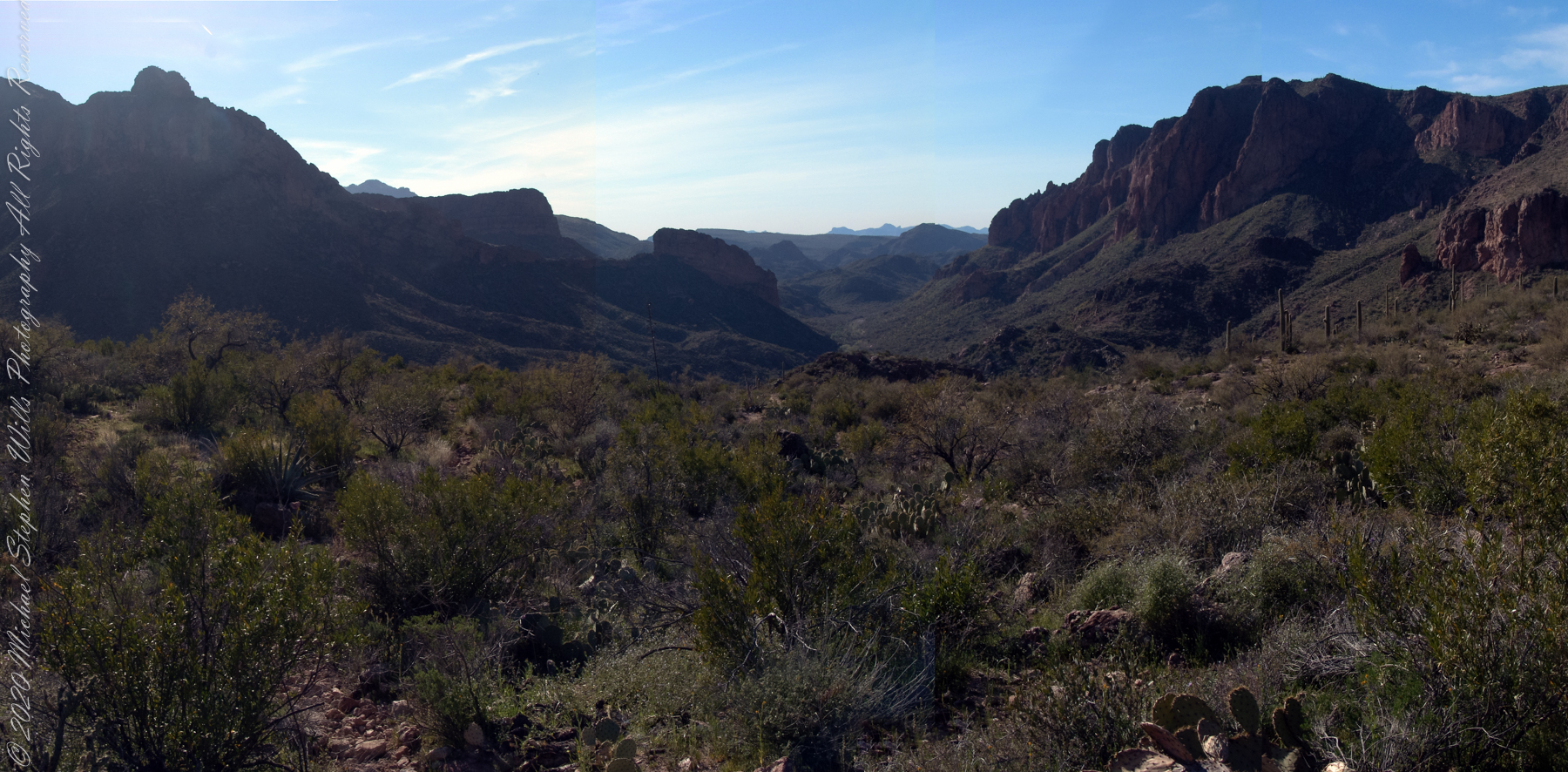
View North / Northwest from Peter’s Trail looking back the way we came. Black Mountain on right, Bluff Spring Mountain left with LaBarge Canyon running to the Red Hills center. On a March afternoon 2008.

Click Me for the first post of this series, “Black Mountain.

Copyright 2022 Michael Stephen Wills All Rights Reserved

Hear the Music

Roasted Yucca

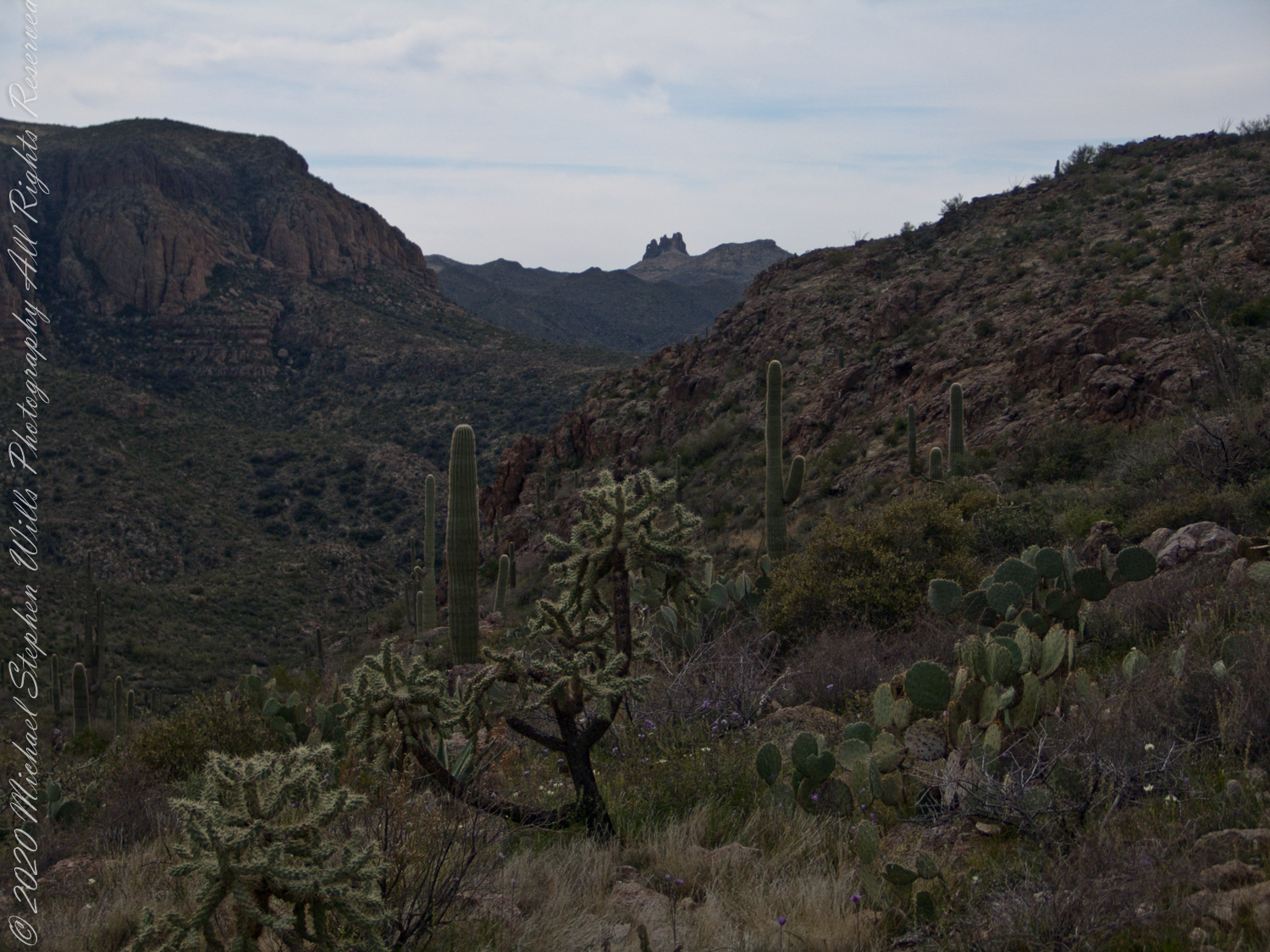
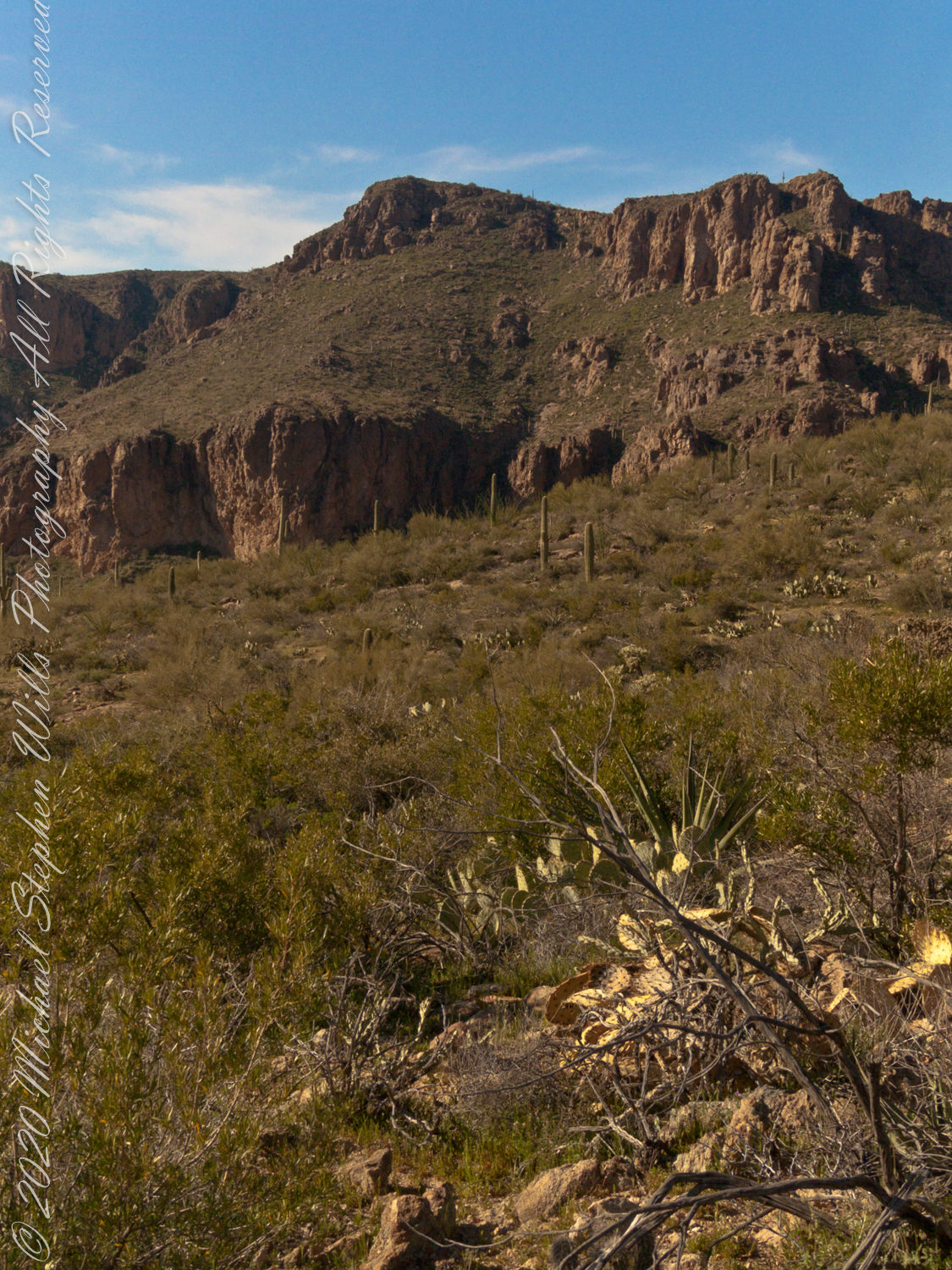
Here we are climbing Peters Trail to the eponymous mesa and facing East to Music Mountain. Scattered in the brush are desiccated and live Prickly Pear cactus. Poles of young saguaro cactus like randomly placed telephone poles poke up around the lower slopes.

The first published record of Music Mountain is by Ray C. Howland of Mesa Arizona who sent a letter to “Everybody’s Magazine” that appeared in a feature called “Everybody’s Meeting Place: Where writers, readers and the editor gather for informal discussion,” May 1928, Volume 58, Issue 5, page 173. I reproduce Howland’s letter here with minor editing:

“I am in the deserts and mountains of Arizona most of the time. I go into town once each month for mail and provisions. I meet many things as I ramble around, many strange things, things that are beyond my ability to comprehend. One particular was in my mind as I read your printed thought in the back of Everybody’s. Far in the Superstition Mountains of Arizona, in the deepest, most rugged canyon, there are three caves halfway up a great yellow bluff. In these caves are mud dwellings. There are not the cliff-dwelling as found in other parts of Arizona.

The mud walls of these dwellings were made by people with very small hands. The handprints of these ancient masons remain as though they were made yesterday. Just below these caves a beautiful pool of crystal-clear water lies between grassy banks. Tall ghostlike sycamores grow there in great numbers.
I have camped many times beneath those sycamores. It is a beautiful spot. Such a difference between there and the hot desert that lies fifteen miles to the south.! As one lies there, just at twilight, begins the most wonderful music one could imagine. I have never heard music that could compare to it, vague, elusive at times, then again of greater volume. It is my opinion that no living being could record it.

The music is, I believe, beyond description. It seems to take you out of your moral self and transport you back ages and ages, almost to the beginning of things. For the time being one feels as though he were in another world.
I have often tried to solve this little private mystery. I can’t explain it. I can’t even describe it intelligently.

You will probably say as you read this that is is the wind among the pinnacles, caves, trees, etc. that make this wonder phenomenon. It cannot be, for usually there is no breeze in the mountains at twilight. It is still as a tomb except for that music. Besides when the breeze is blowing at any other hours of the day there is no sound.”

Here is a copy of that issue for you to see for yourselves.

In my photographs the bluffs described by Howland are seen clearly in the distance. During our expedition we were never able to visit the caves, though Dave described the location, caves, and dwellings. On Peter’s Mesa are remains of pits where Apaches and Yavapais gathered hearts of agave to roast. We visited a small cave in the side of Peter’s Mesa showing signs of high heat and possibly used for roasting agave.

Click Me for the first post of this series, “Black Mountain.

Copyright 2022 Michael Stephen Wills All Rights Reserved

From Music Canyon

Down South

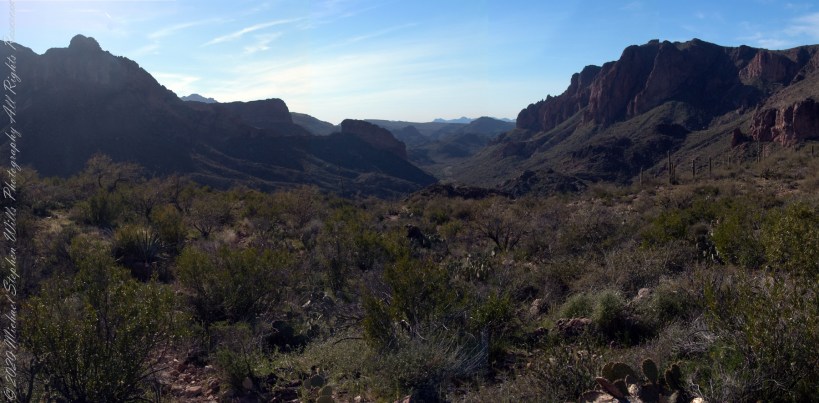
Dutchman Trail follows the outflow of two springs along the canyon floor: Music Canyon and LaBarge springs. Here we are climbing Peters Trail to the eponymous mesa and facing south / Southeast, looking down on Dutchman Trail.

This is rough country below Bluff Spring Mountain. Stag Horn Cholla cactus is lower right with Prickly Pear cactus scattered in the brush. Poles of young saguaro cactus are scattered around the lower slopes.

Click Me for the first post of this series, “Bluff Spring Mountain.

Copyright 2022 Michael Stephen Wills All Rights Reserved