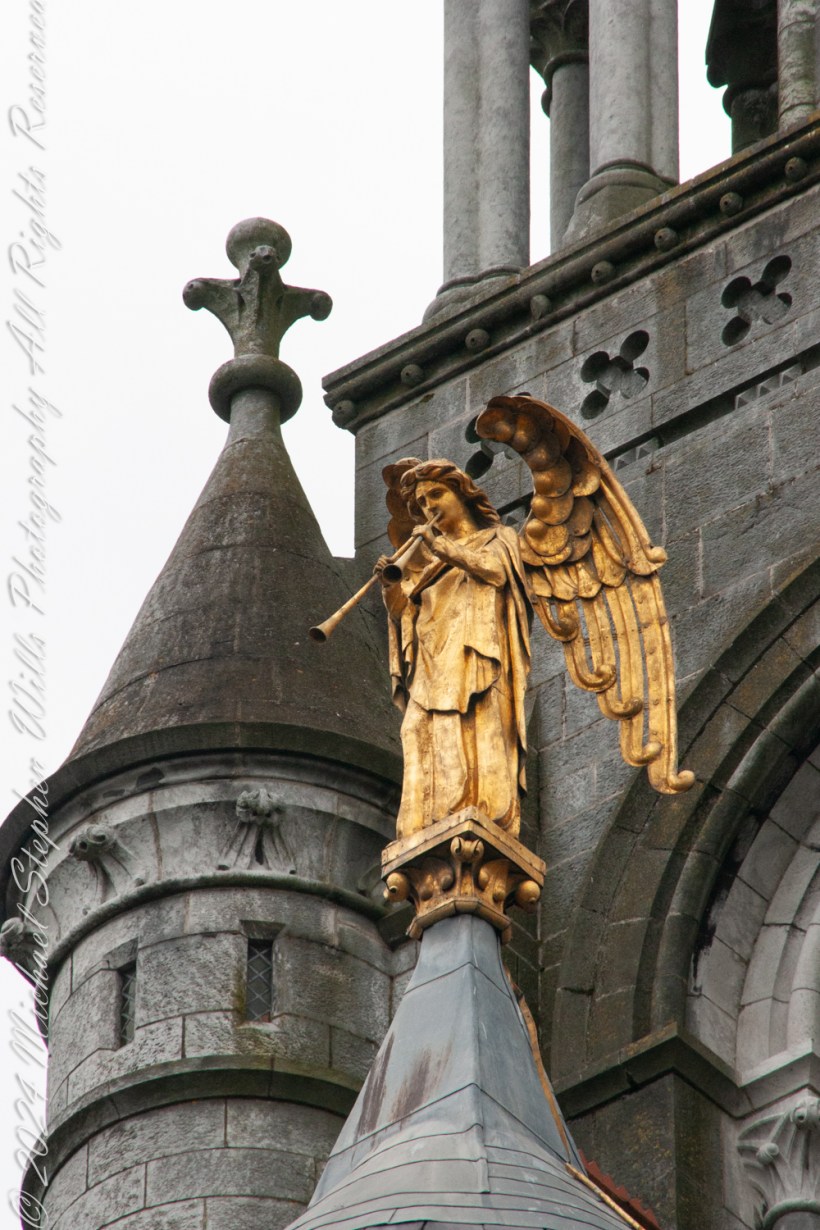
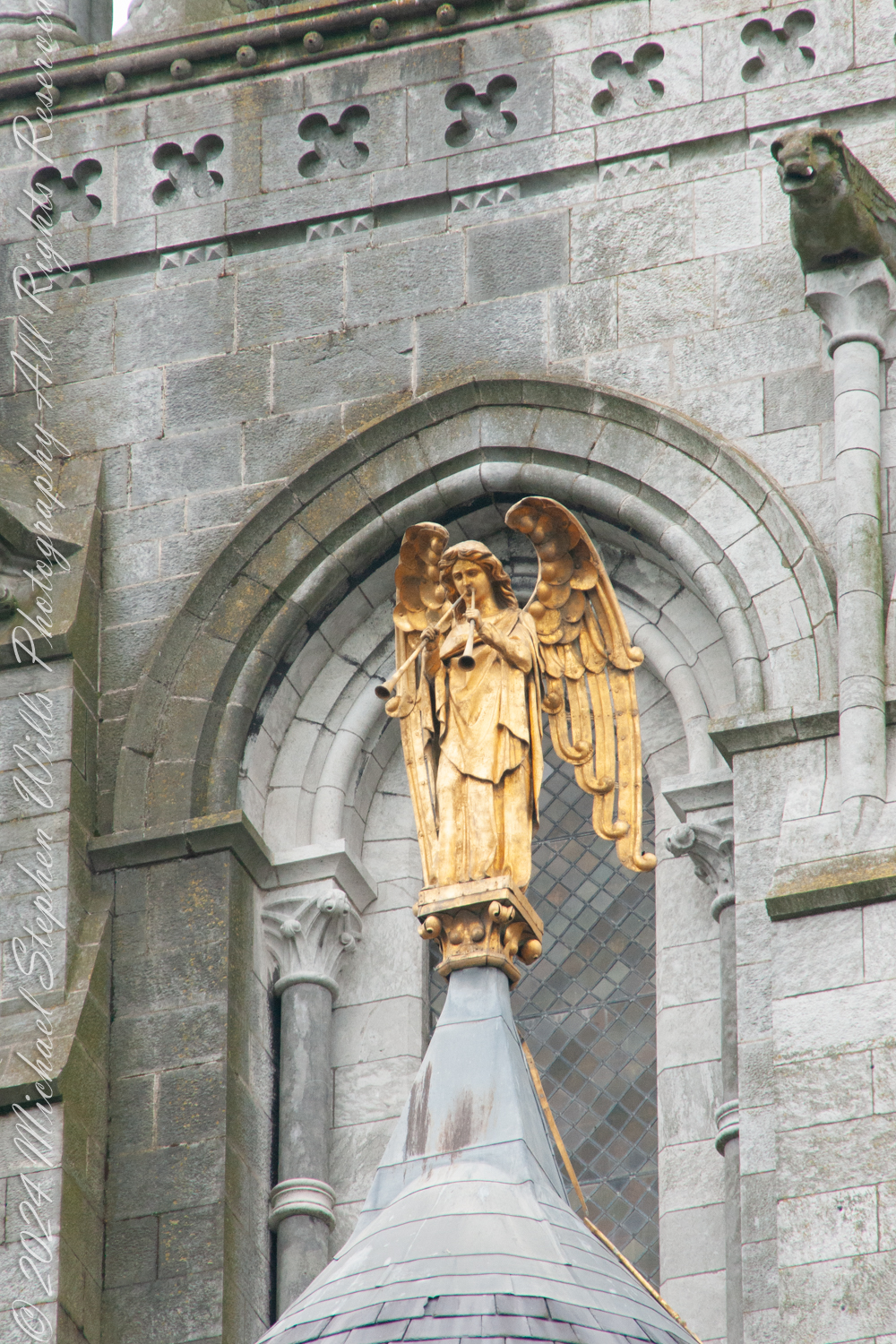
Standing on the east side of Saint Fin Barre’s Cathedral, I lift my gaze to the gilded angel high above the polygonal apse. Known as “The Resurrection Angel,” this radiant figure with its trumpet held aloft commands both awe and contemplation. As an enduring symbol of hope, renewal, and spiritual vigilance this angel carries a profound and dramatic promise: the sound of its trumpet will one day warn the people of Cork of the world’s imminent end, giving them the opportunity to be among the first to ascend to heaven.
The Resurrection Angel’s trumpet echoes the apocalyptic imagery of the Book of Revelation, particularly Revelation 11:15, where the seventh trumpet announces, “The kingdoms of this world have become the kingdoms of our Lord.” Yet in Cork, this celestial figure is imbued with a uniquely local significance. It stands as both guardian and guide, poised to fulfill its divine purpose when the end of days draws near. The legend elevates the angel’s presence beyond theology or art—it becomes a tangible connection between the celestial and the earthly, rooted in the lives of Cork’s citizens.
From an epistemological perspective, the Resurrection Angel poses fascinating questions about how we prepare for the unknown. What does it mean to live in the shadow of an angelic trumpet, one that might sound at any moment? Its silence is a paradox, a quiet yet profound proclamation of life’s transience. The legend suggests that the people of Cork, by virtue of the angel’s warning, are uniquely favored—a notion that intertwines faith with identity and imbues the city with a sense of divine guardianship.
The angel’s golden form shines brightly against the gray stone of the cathedral, a deliberate contrast that speaks to its otherworldly purpose. Gold, a symbol of purity and divine light, captures the eternal amid the temporal. The Resurrection Angel reflects the ambitions of the cathedral’s architect, William Burges, who intended every detail of Saint Fin Barre’s to serve as a testament to faith and artistry. This angel was the final piece installed, marking the cathedral’s completion and fulfilling Burges’ vision of a “perfect work.” According to lore, Burges himself declared that if the angel were ever to fall, it would signal the end of the world—a statement that deepens the mystique surrounding this celestial figure.
For Cork, the angel embodies the city’s resilience and collective spirit. Over centuries, Cork has weathered fires, floods, and rebellion, yet it has always risen anew. The angel, with its legend of warning and redemption, mirrors this cyclical journey of challenge and renewal. Its trumpet, silent but ever-present, reminds the people of Cork to stay vigilant, to hope, and to strive for goodness in the time they have.
As I stand beneath its watchful gaze, I feel the weight of the legend and its implications. If the angel’s trumpet were to sound today, would we be ready? It invites not fear but reflection—a challenge to live with purpose and awareness of the sacred in the everyday. And as I step away, the angel remains, steadfast and golden, a silent guardian over Cork, holding its promise and its warning aloft for generations to come.
Enter your email to receive notification of future postings. I will not sell or share your email address.
Copyright 2024 All Rights Reserved Michael Stephen Wills
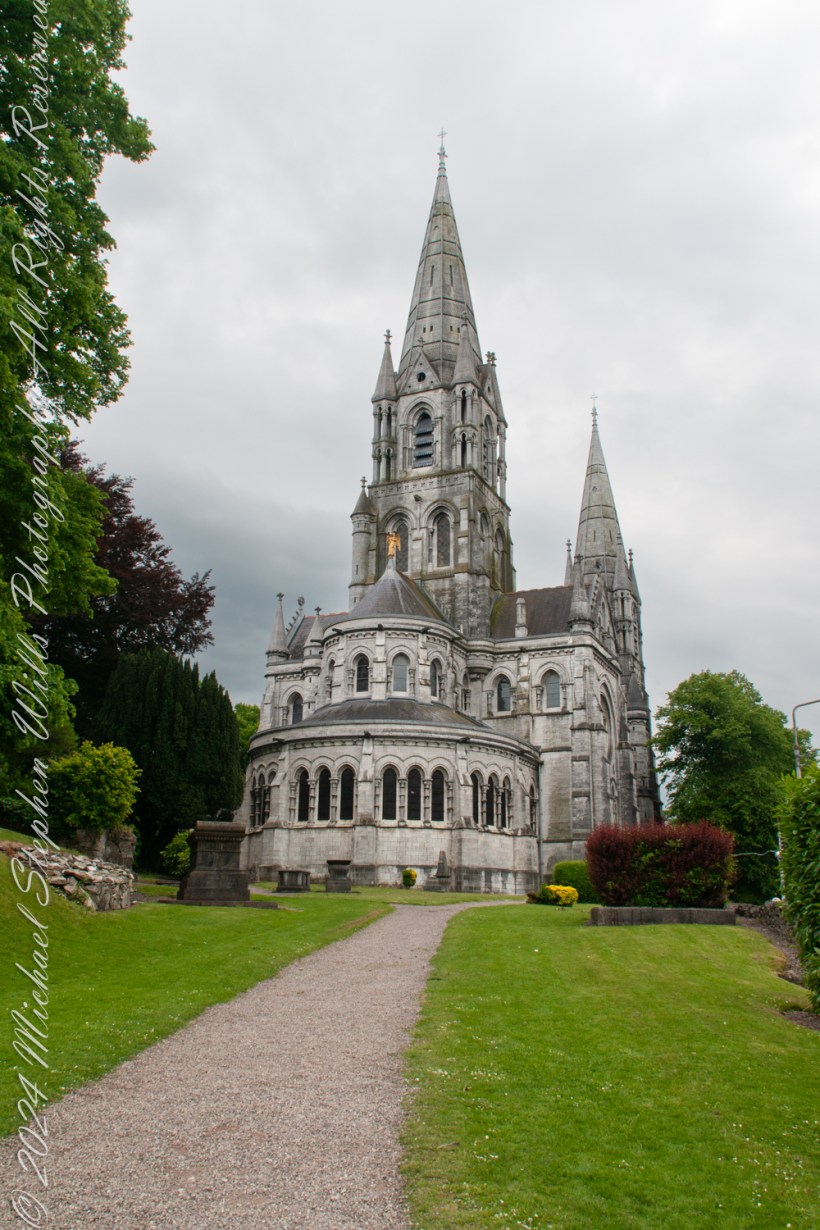
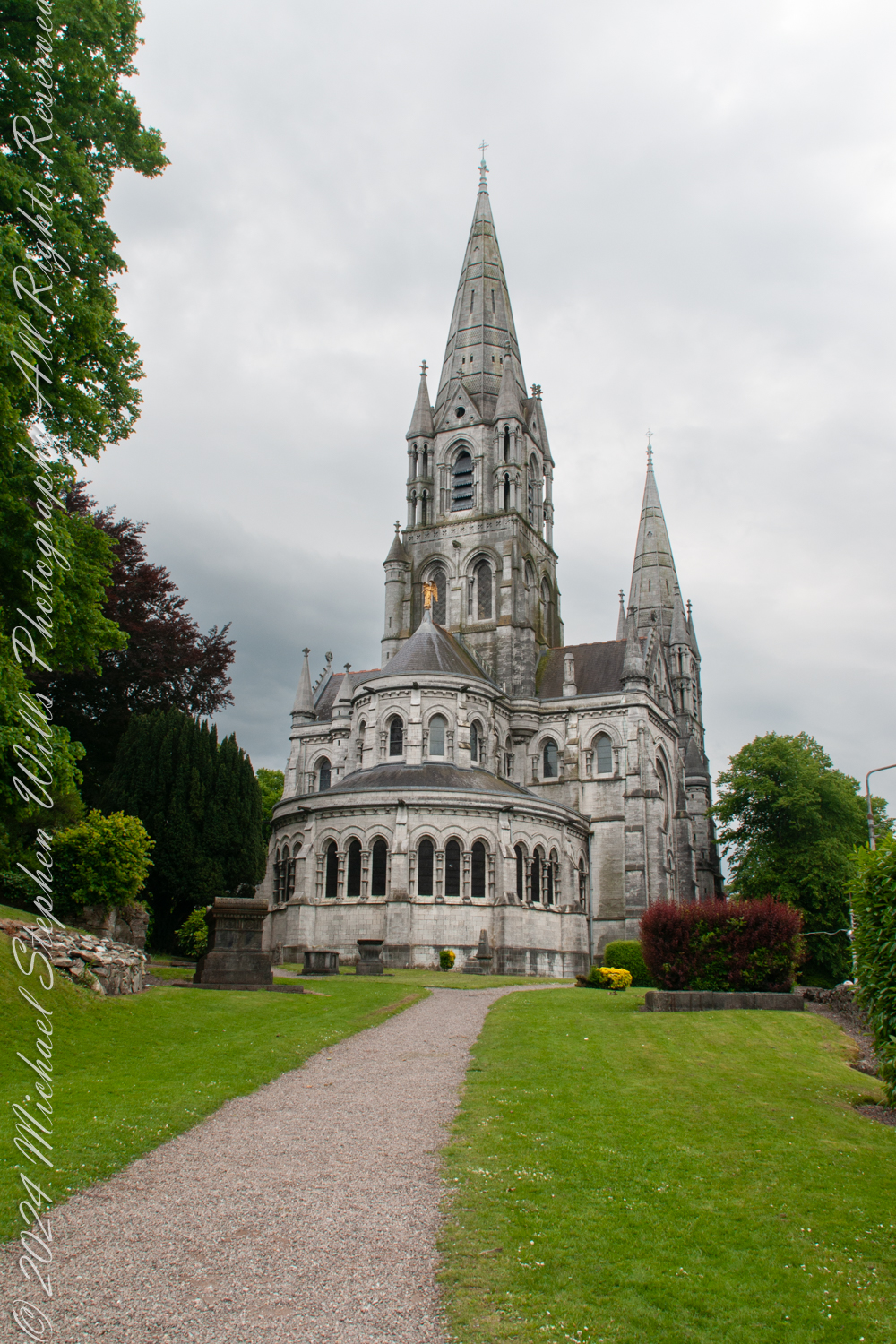
Approaching from the east, we see the polygonal apse at the eastern end houses the high altar and is a key liturgical and architectural feature. Each angular bay is delineated with tall lancet windows filled with stained glass, adding to the richness of the design. Saint Fin Barre’s Cathedral, a masterpiece of Gothic Revival architecture, stands as a beacon of faith and artistry in the heart of Cork, Ireland. Designed by the renowned Victorian architect William Burges, the cathedral is both a testament to the spiritual fervor of its time and a bold statement of artistic vision.
Approaching from the east, we see the polygonal apse at the eastern end houses the high altar and is a key liturgical and architectural feature
Commissioned in 1862, the cathedral replaced an earlier structure, marking a new chapter in Cork’s ecclesiastical history. William Burges, known for his theatrical approach to design, was the perfect choice for this ambitious project. His vision for Saint Fin Barre’s Cathedral blended medieval inspiration with Victorian ingenuity, creating a building that is as much a work of art as a place of worship.
Burges, a figure of eccentric brilliance, was deeply influenced by the principles of the Gothic Revival movement, which sought to recapture the grandeur of medieval European architecture. Drawing from this aesthetic, he designed the cathedral with meticulous attention to detail. Its three spires dominate the Cork skyline, with the central spire rising to an impressive height of 73 meters. These spires are not merely structural; they are symbolic, reaching heavenward in a gesture of devotion.
The exterior of the cathedral, constructed from Cork limestone and Bath stone, is adorned with intricate carvings and sculptures. These include depictions of biblical scenes, saints, and gargoyles, all painstakingly crafted under Burges’s watchful eye. Every detail reflects his belief that architecture should educate as well as inspire. Bishop Street, The Lough, Cork City, County Cork, Ireland
Enter your email to receive notification of future postings. I will not sell or share your email address.
Copyright 2024 All Rights Reserved Michael Stephen Wills
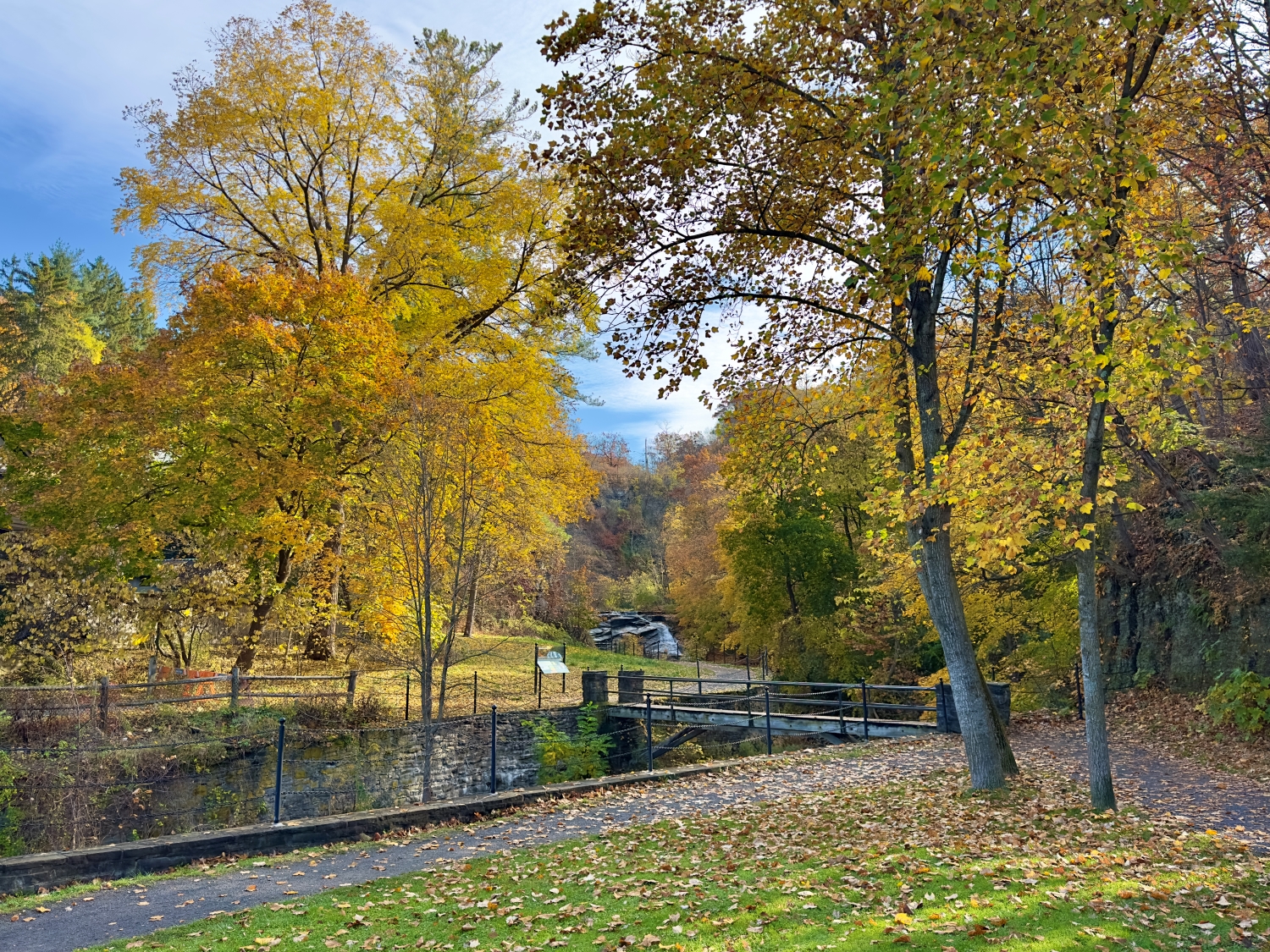
As I step into Cascadilla Gorge from the Linn Street entrance, I’m greeted by the soft rustling of leaves and the constant, soothing rush of water. The air this Halloween Day is warm, the autumn colors vibrant against the cool blue sky. I know Cascadilla Gorge is part of the Cornell Botanical Gardens, but the immediate beauty of this natural sanctuary makes it easy to forget I’m still within the city limits of Ithaca. The sounds of the gorge draw me in, as if whispering there’s more to see, more to explore. With a deep breath, I begin my journey up the trail, eager to discover what lies ahead.
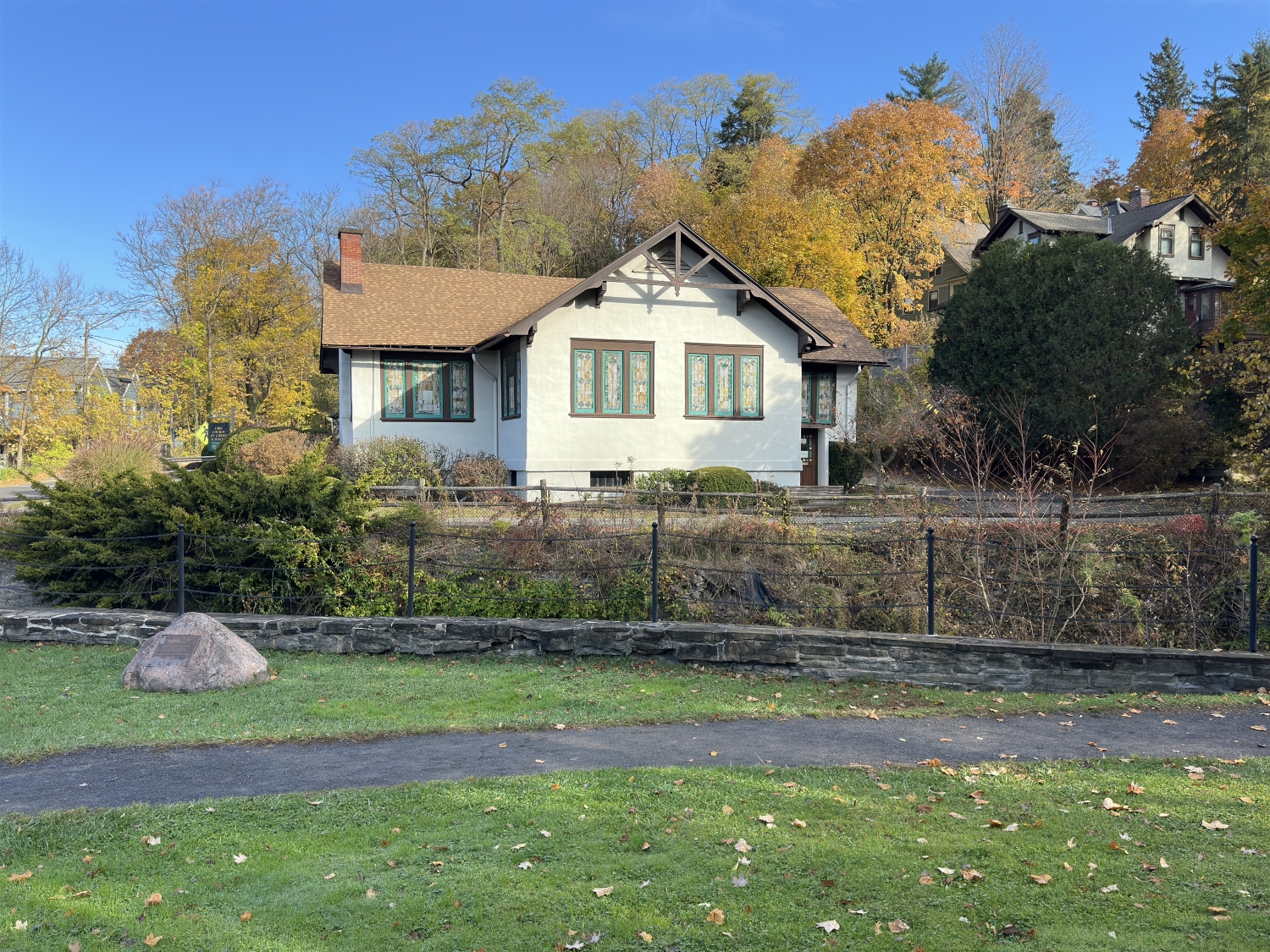
Just a short way in, I notice the First Church of Christ, Scientist perched on the corner of University Avenue and Cascadilla Park Road. The architecture of the church is both quaint and elegant, with its light-colored facade framed by dark trim and roof. Surrounded by foliage, it feels like the church belongs here, as much a part of the landscape as the trees and rocks. The sight of this historic building nestled so close to the gorge reminds me that this wild and ancient place is woven into the fabric of Ithaca’s community life.
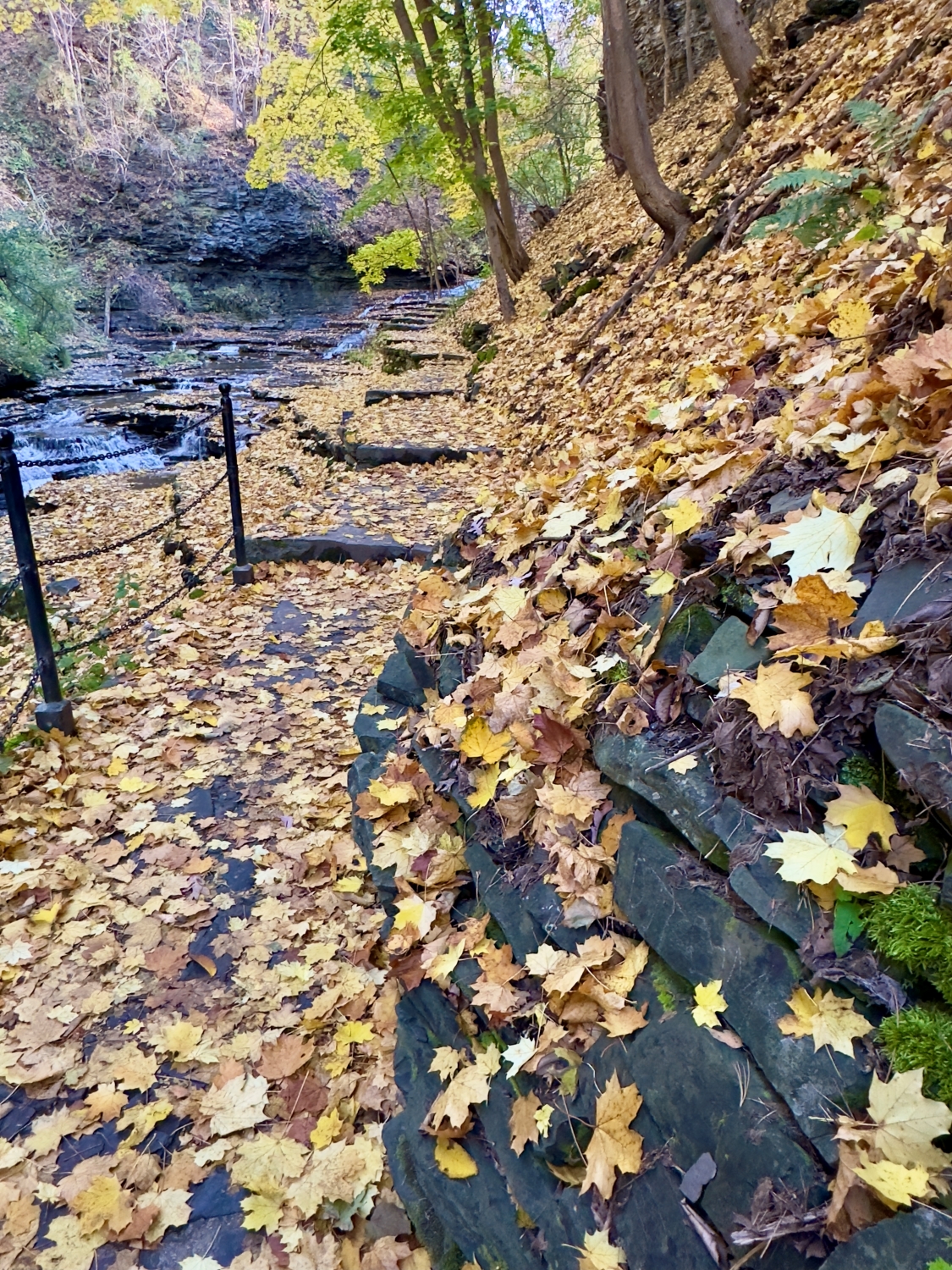
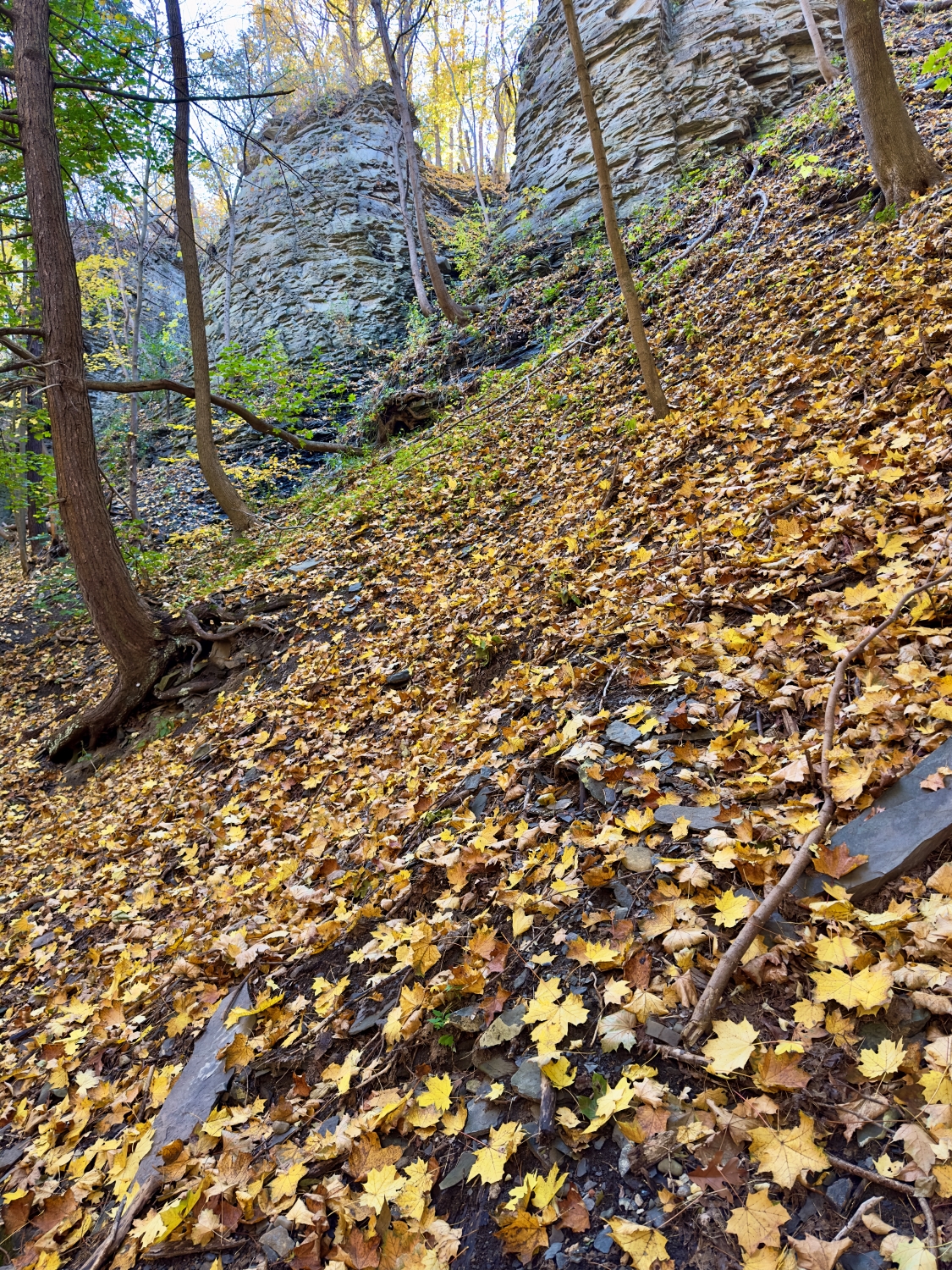
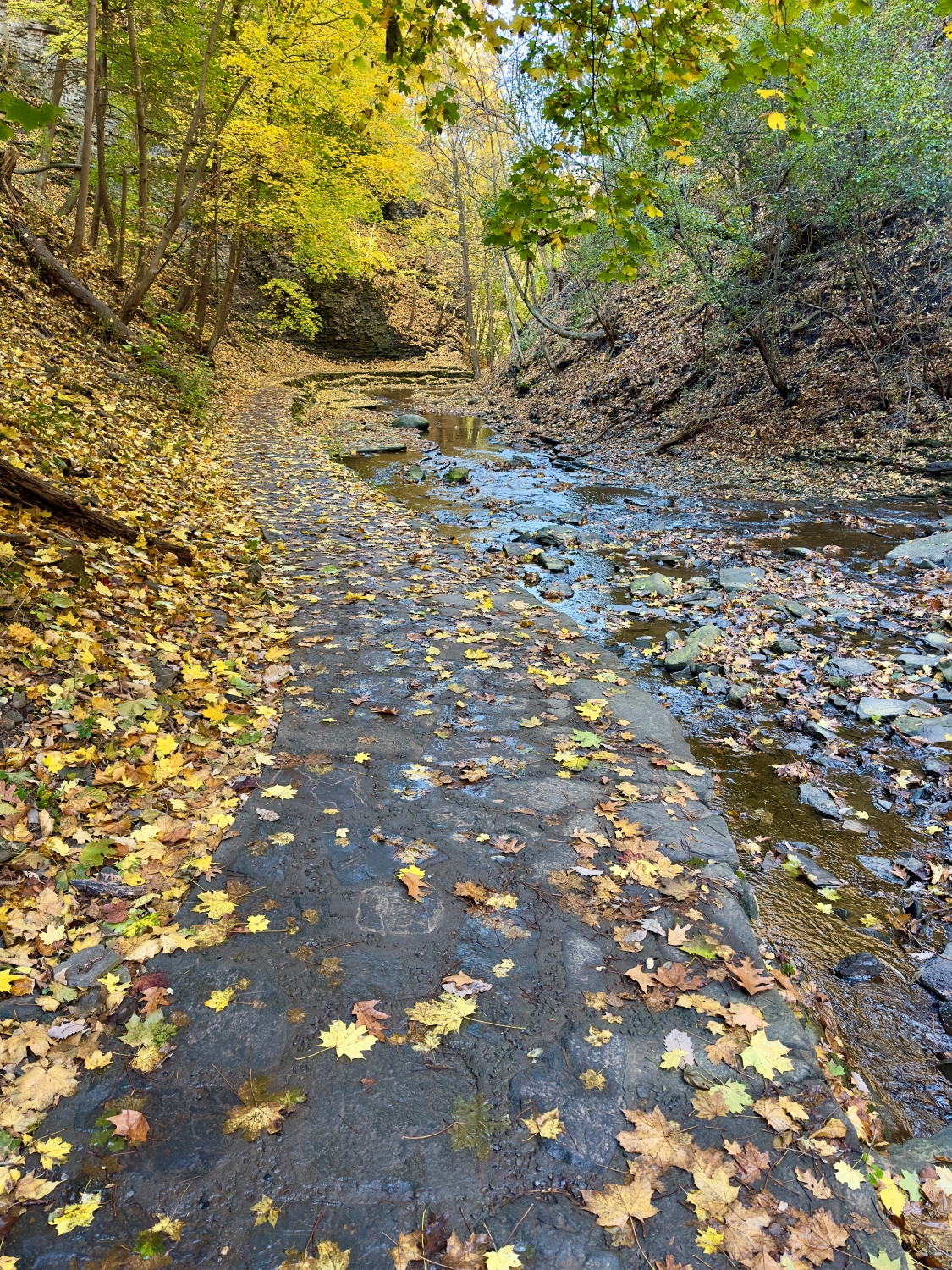
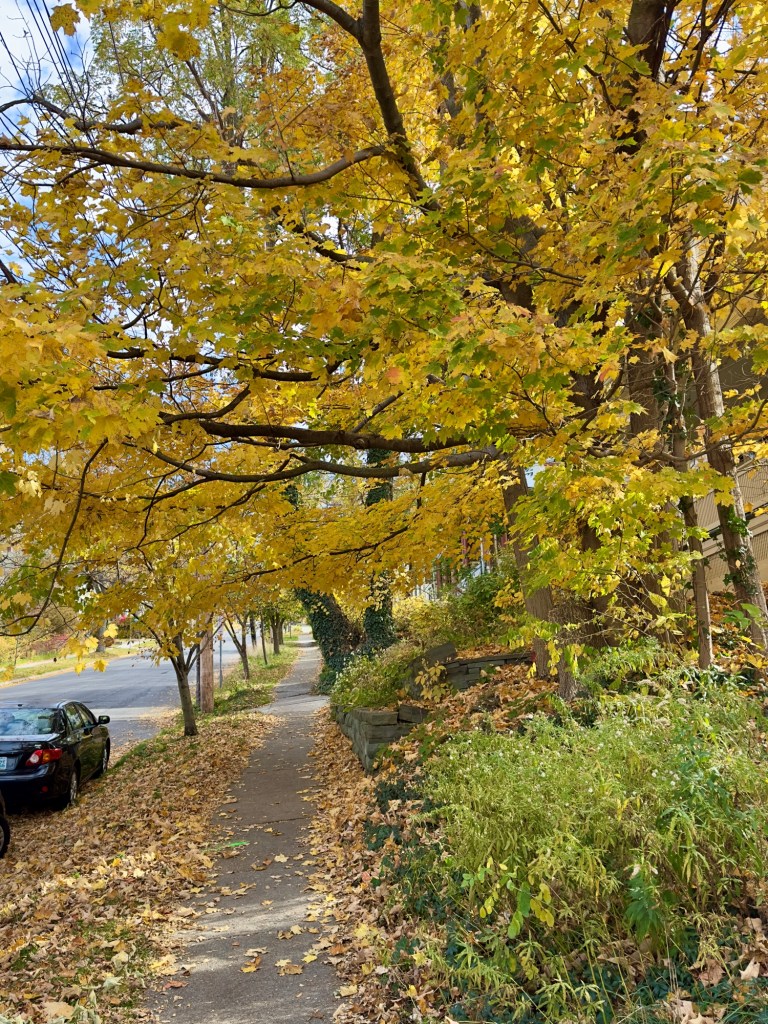
I move further along the trail, and the terrain begins to shift. Fallen leaves create a golden carpet along the path, their crisp shapes overlapping like nature’s confetti celebrating the season. Each step crunches underfoot, adding my own rhythm to the symphony of sounds. The trees overhead are a kaleidoscope of colors—deep golds, fiery oranges, and the occasional flash of red from Virginia Creeper vines (Parthenocissus quinquefolia). Together, the trees create a canopy that filters sunlight, casting dappled patterns on the gorge walls. It’s an ever-changing play of light and shadow, one moment bright and the next subdued, adding a layer of magic to the experience.
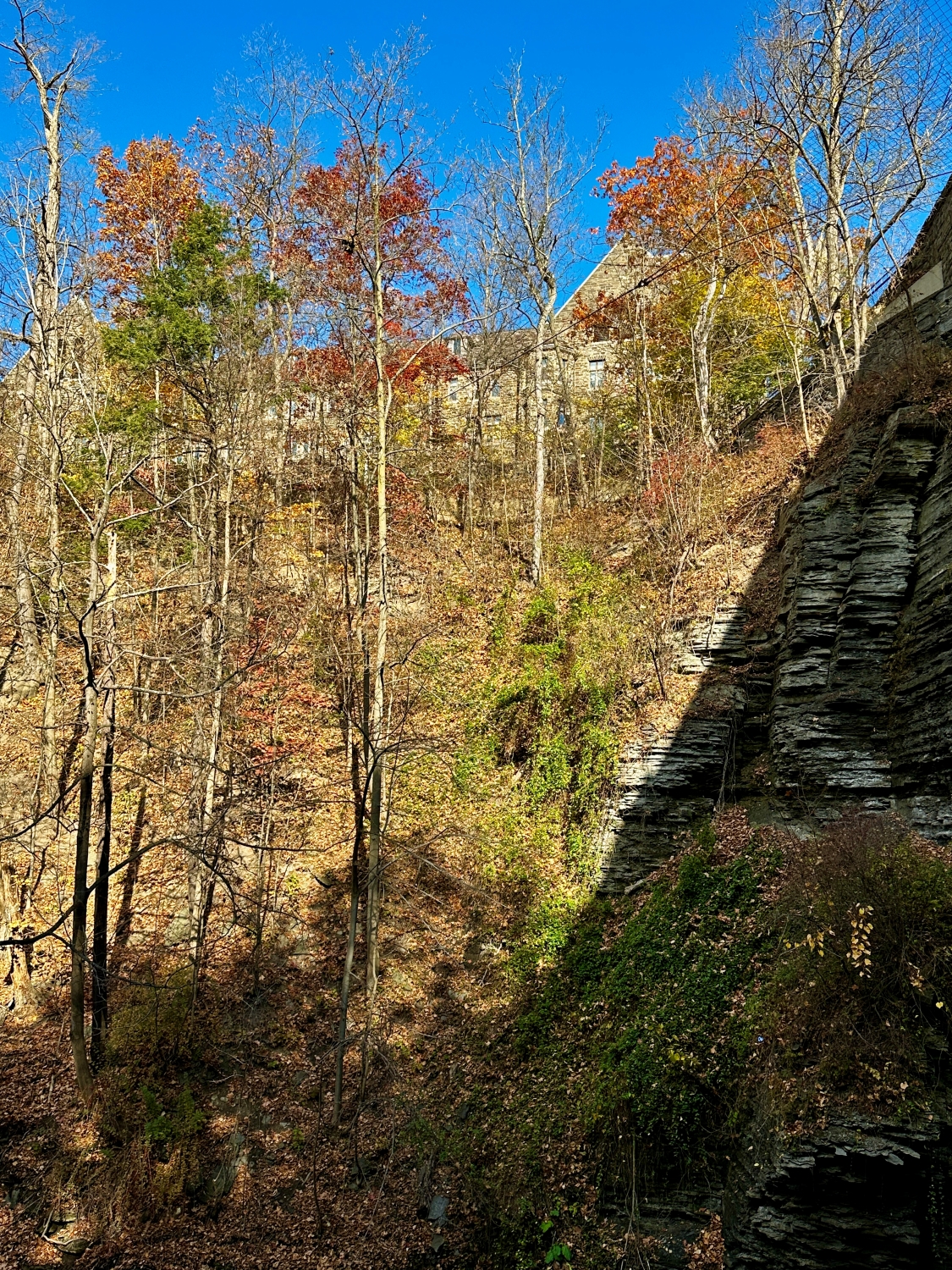
As I follow the trail upward, the gorge narrows, and I find myself surrounded by towering walls of rock. Here, layers of siltstone and shale formed more than 300 hundred million years ago are exposed, a testament to the forces of water and time that carved this place across mere millennia of recent geologic time. The rock formations are fascinating, with the water flowing over them in gentle cascades, finding every groove and crevice. There’s something humbling about standing in a place shaped by forces so much larger and older than myself. I pause, letting the rush of water and the stillness of stone fill my senses.
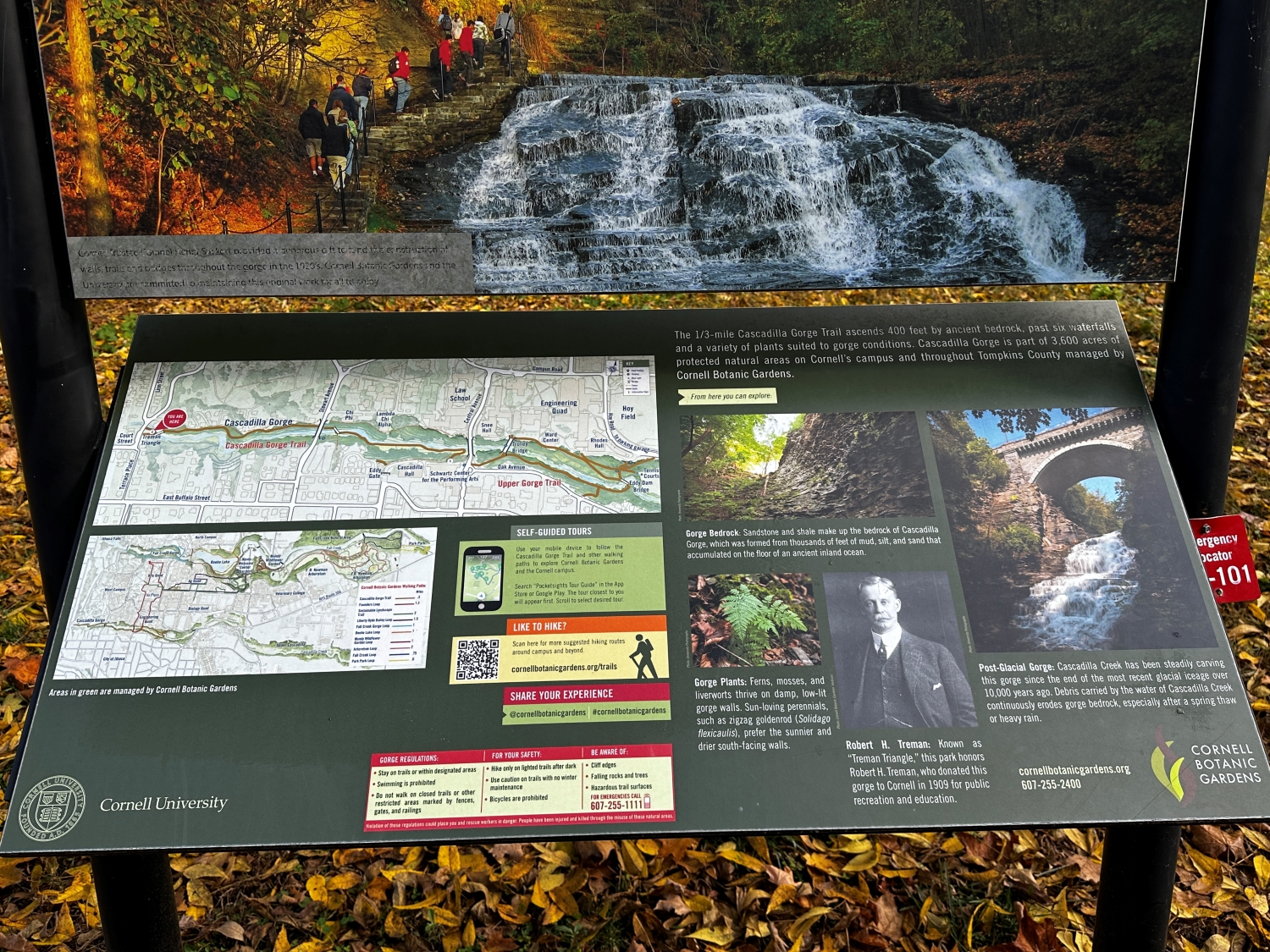
Along the way, I come across an interpretive sign provided by the Cornell Botanical Gardens. They tell the story of Cascadilla Gorge, how it was formed from the bedrock of sandstone and shale that eroded from mountains to the east, in the Devonian era when an ancient inland sea covered the region. The signs also introduce Robert H. Treman, a philanthropist who saw the beauty and educational value of the gorge. Thanks to him and the efforts of many, this natural wonder is preserved for all to experience. Knowing this adds depth to my walk; it’s a reminder that places like this exist not only by chance but because people cared enough to protect them.
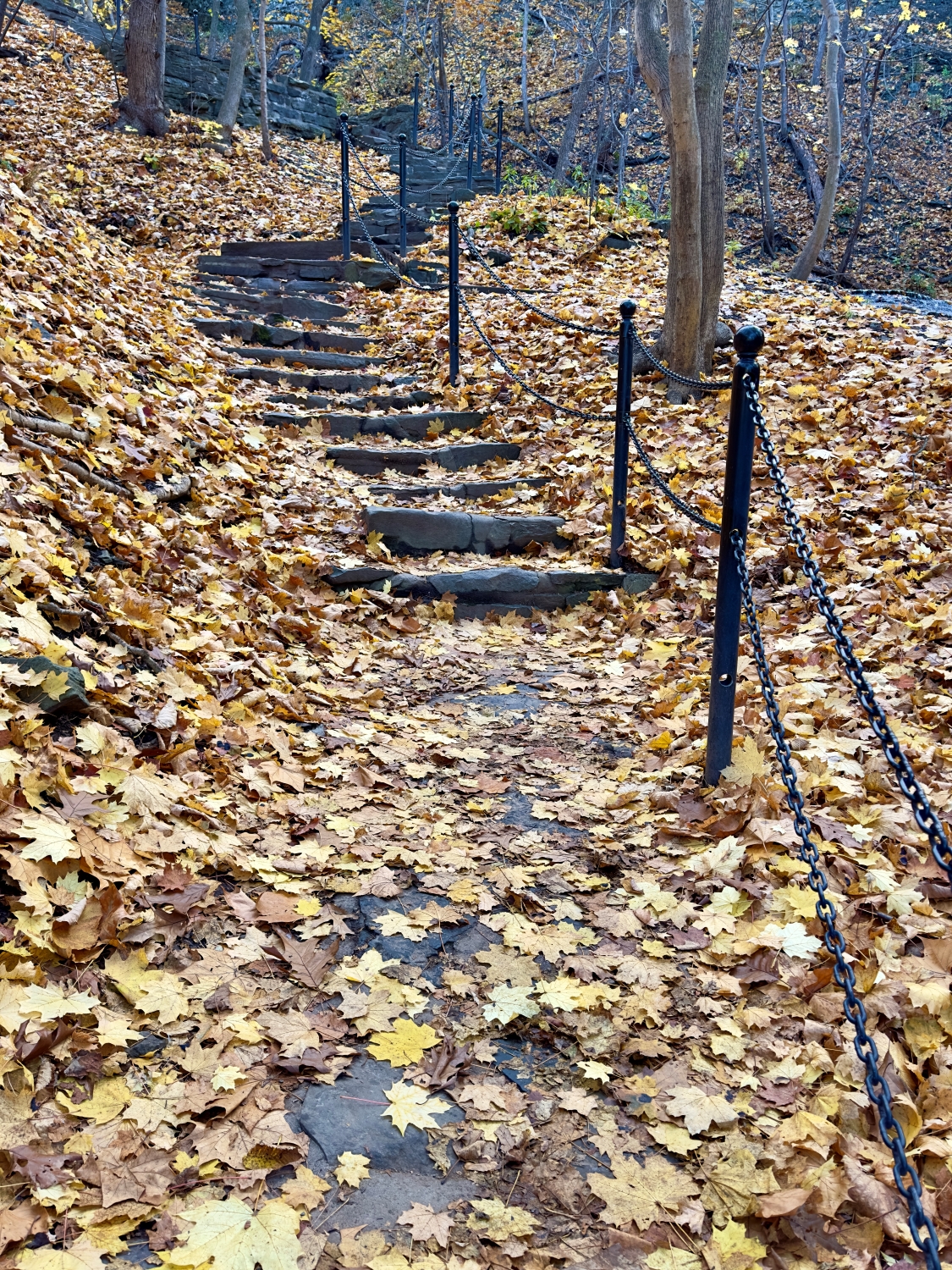
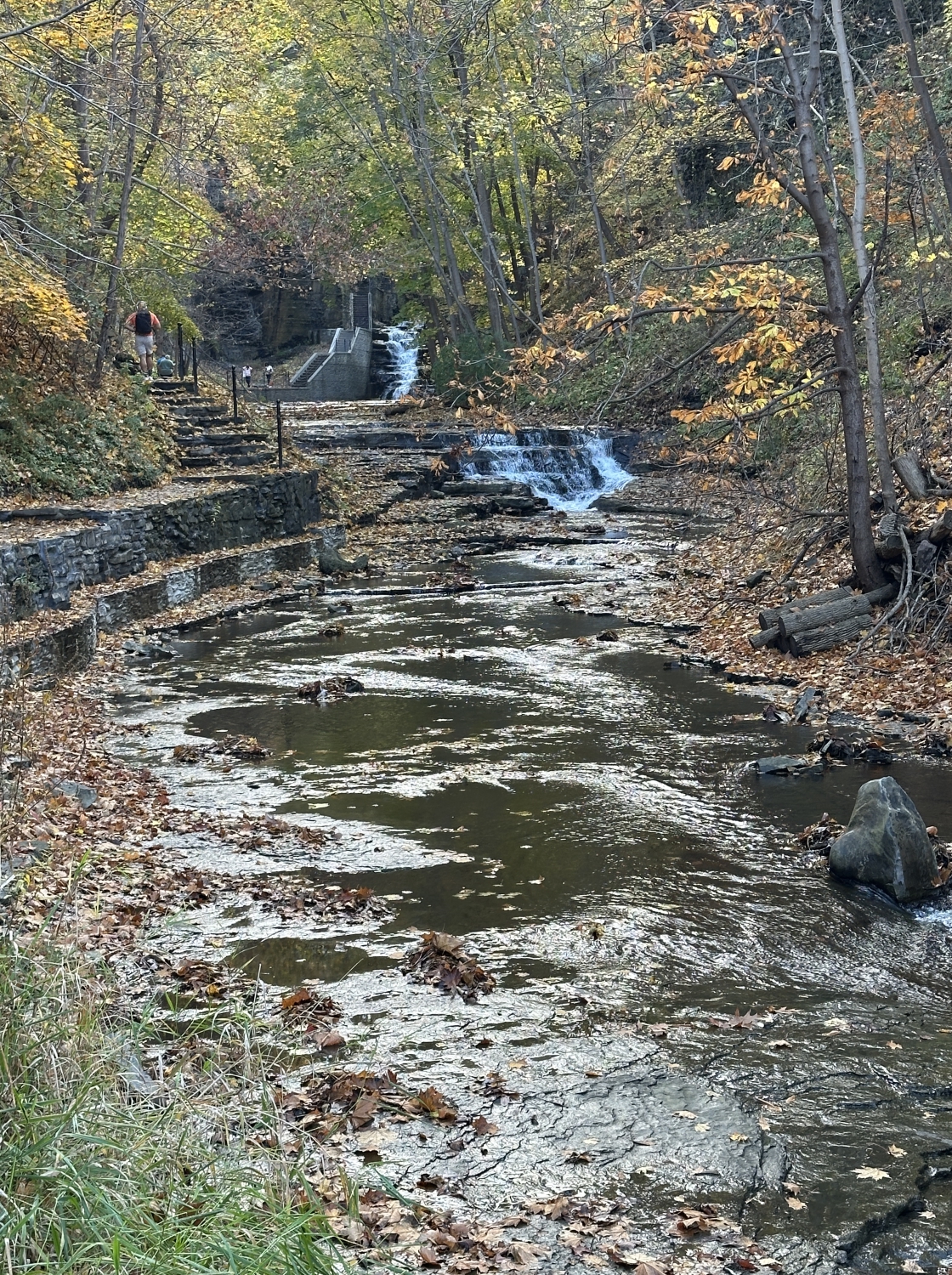
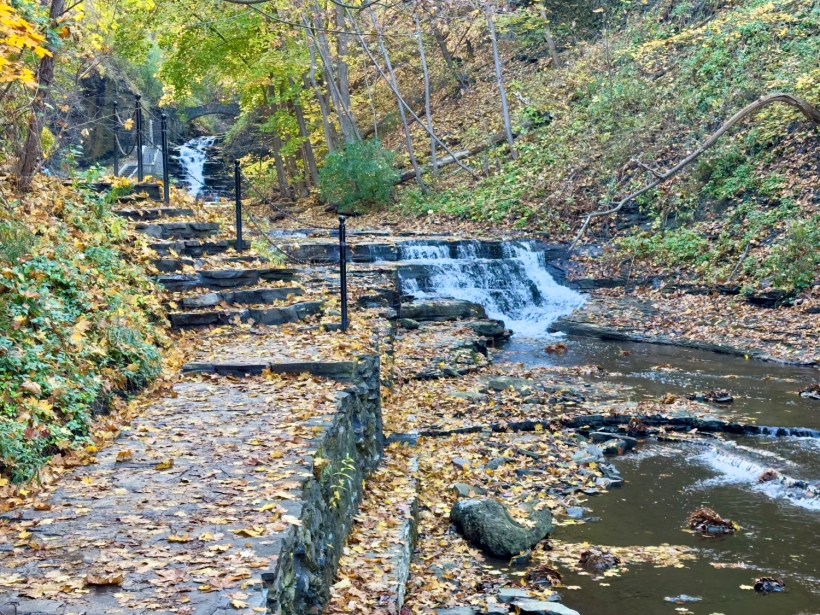
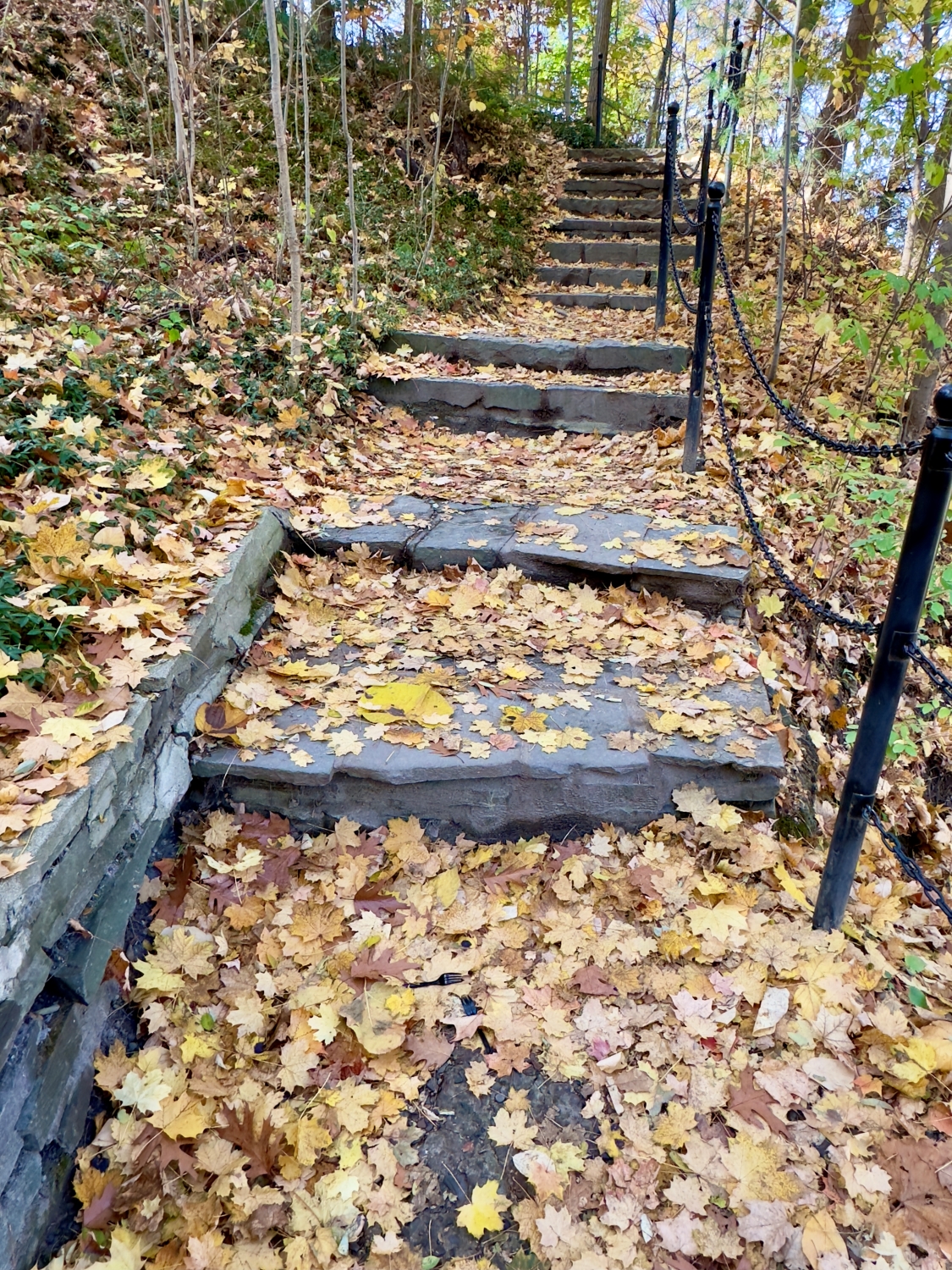
The sandstone staircases along the trail are a marvel in themselves. Some sections are steep, winding up the gorge in a series of steps that seem to have been placed with precision, blending seamlessly into the natural landscape. The steps are covered with leaves now, making each ascent feel a bit like climbing through a fairy-tale forest. The chains along the path provide a comforting grip, especially as I climb higher. I look back and see how far I’ve come, the creek below winding its way over rocks and around bends, each step a small journey of its own.
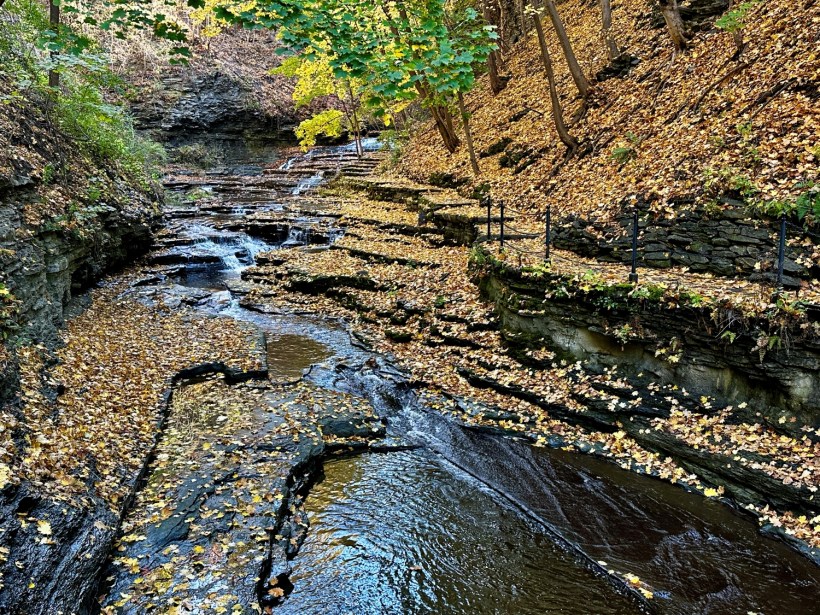
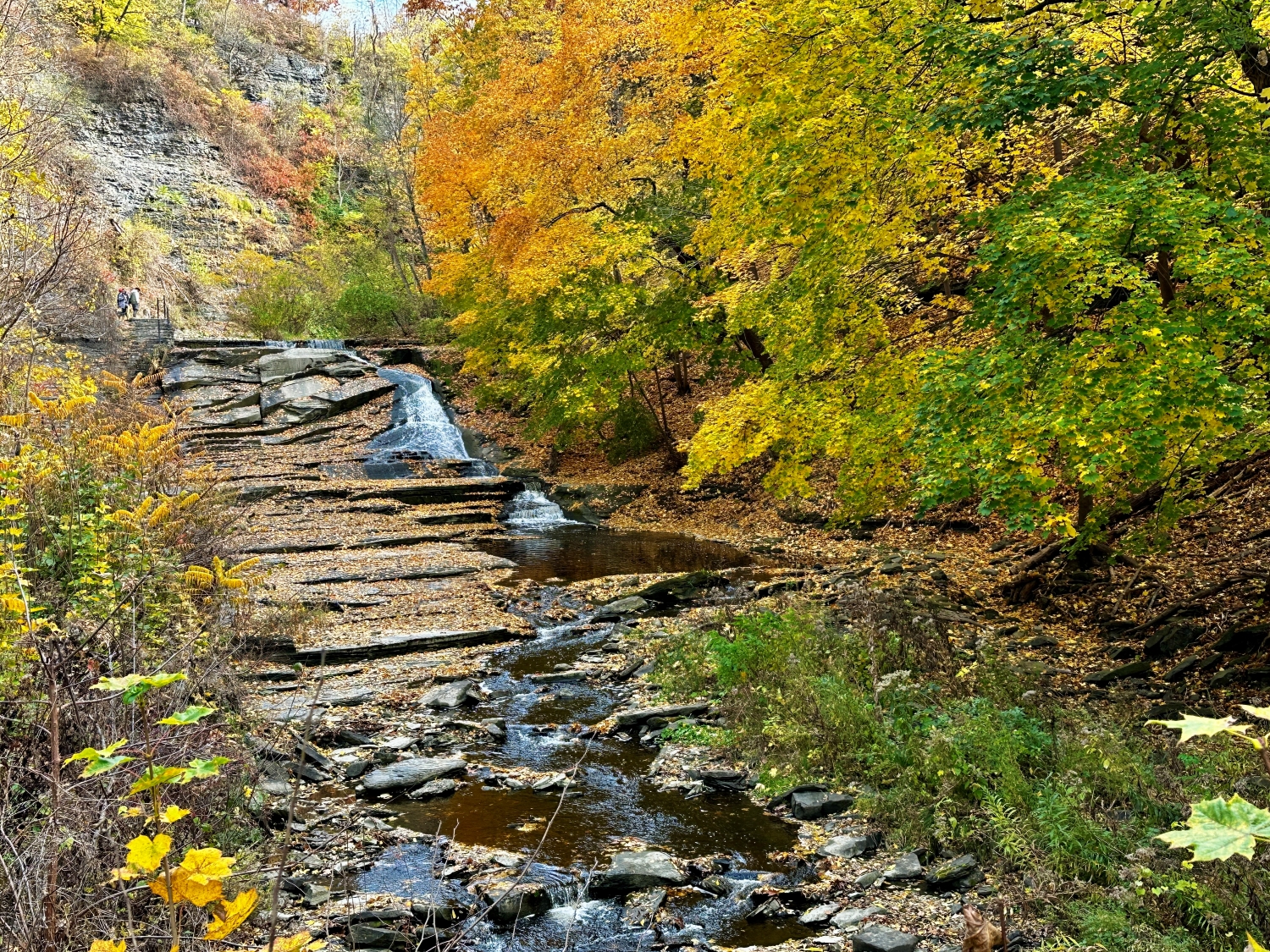
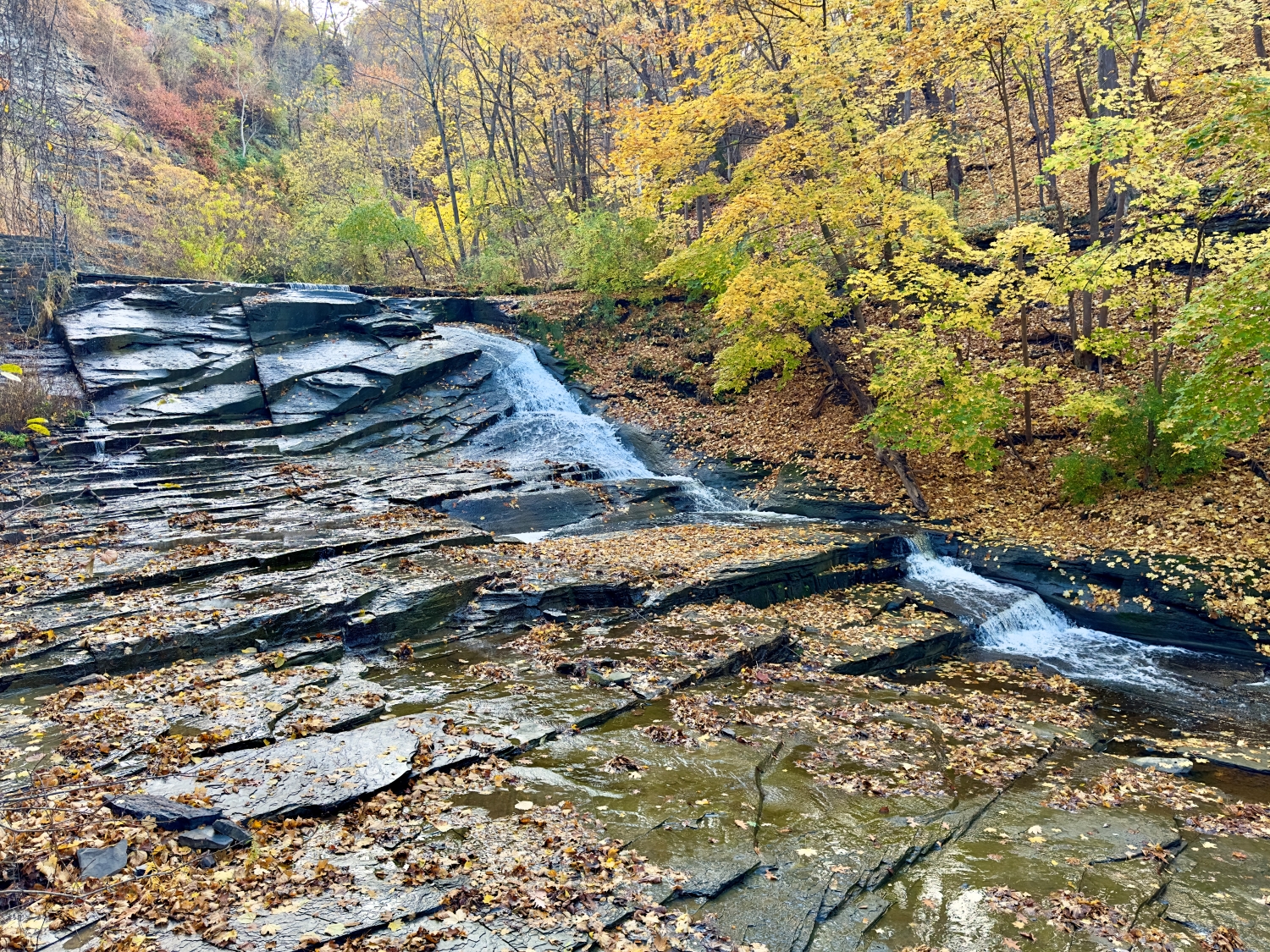
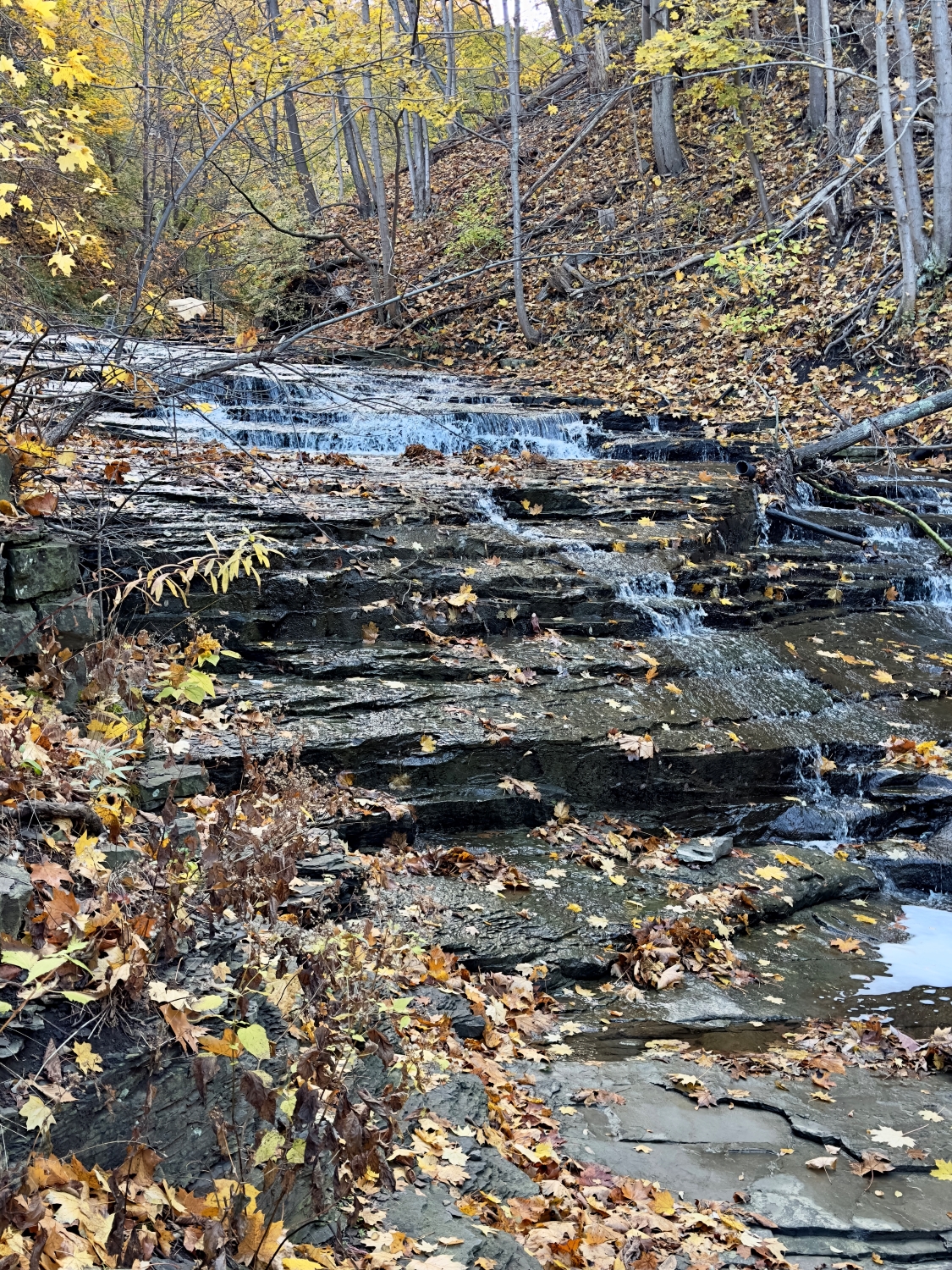
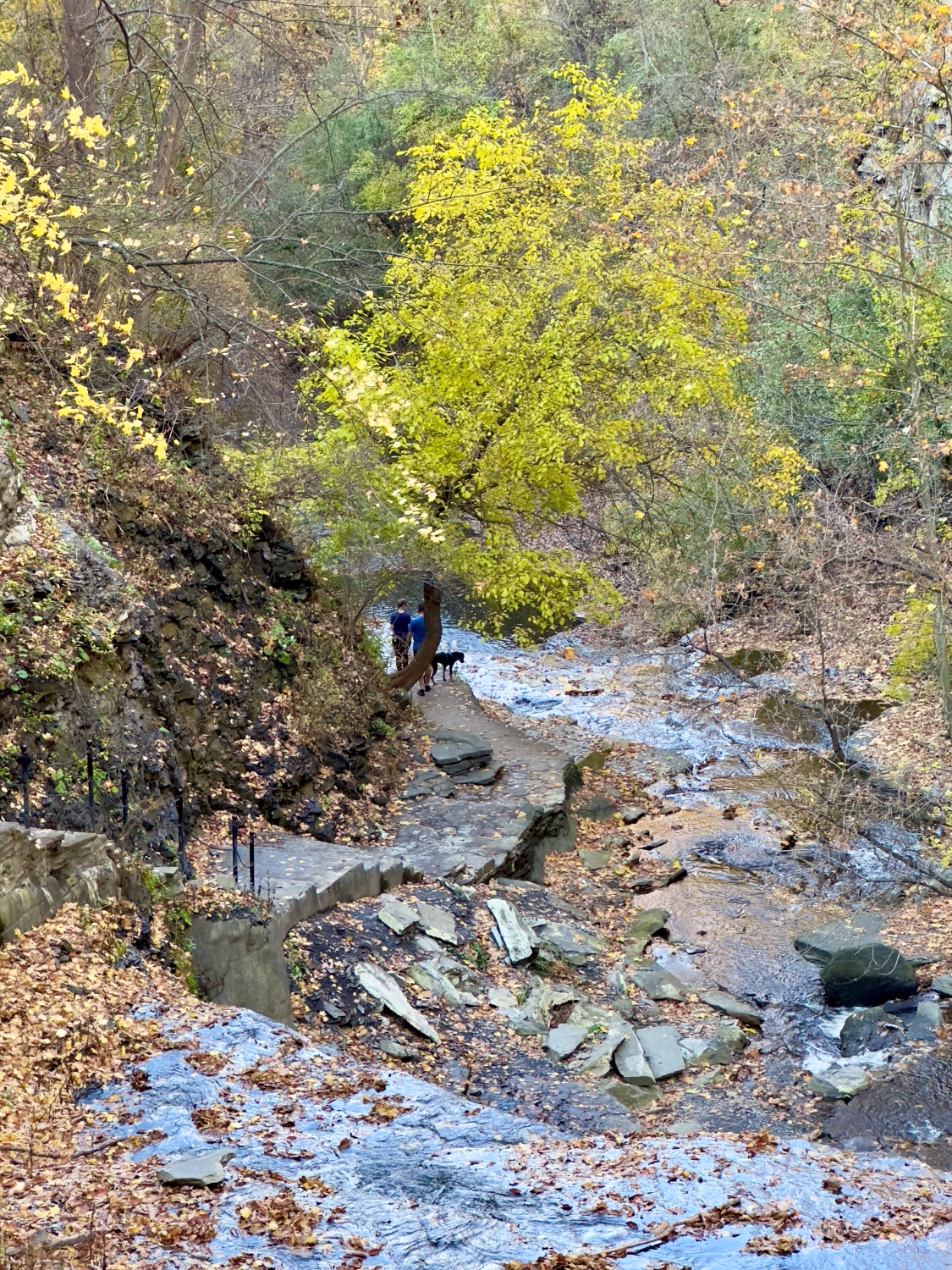
I pass several small waterfalls, each one unique in its character. Some are gentle trickles, while others pour over the rocks with more force, their sound reverberating off the gorge walls. I stop frequently, entranced by the way the water carves its path, eternally moving, adapting, wearing down even the hardest stone. Leaves float down from above, landing in the creek and swirling in miniature whirlpools before being carried downstream. It’s mesmerizing to watch nature at work in such a quiet, persistent way.
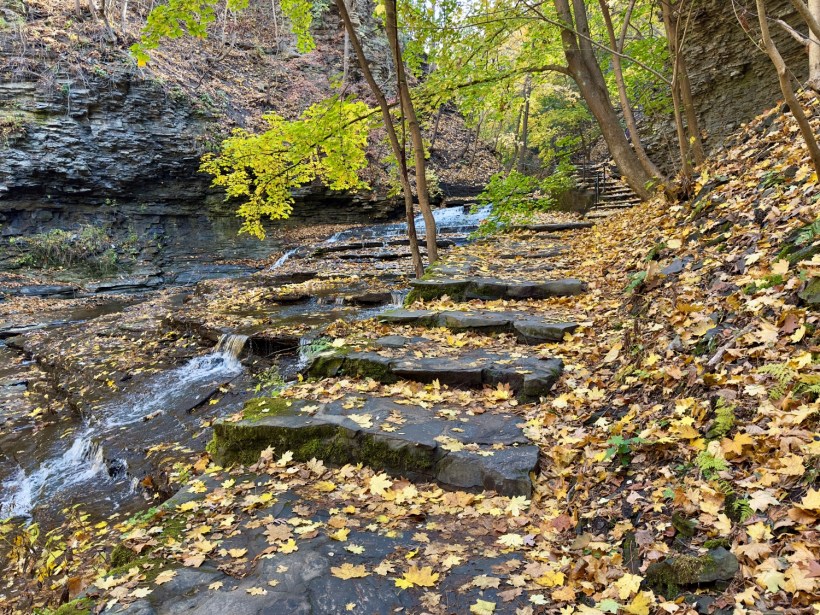
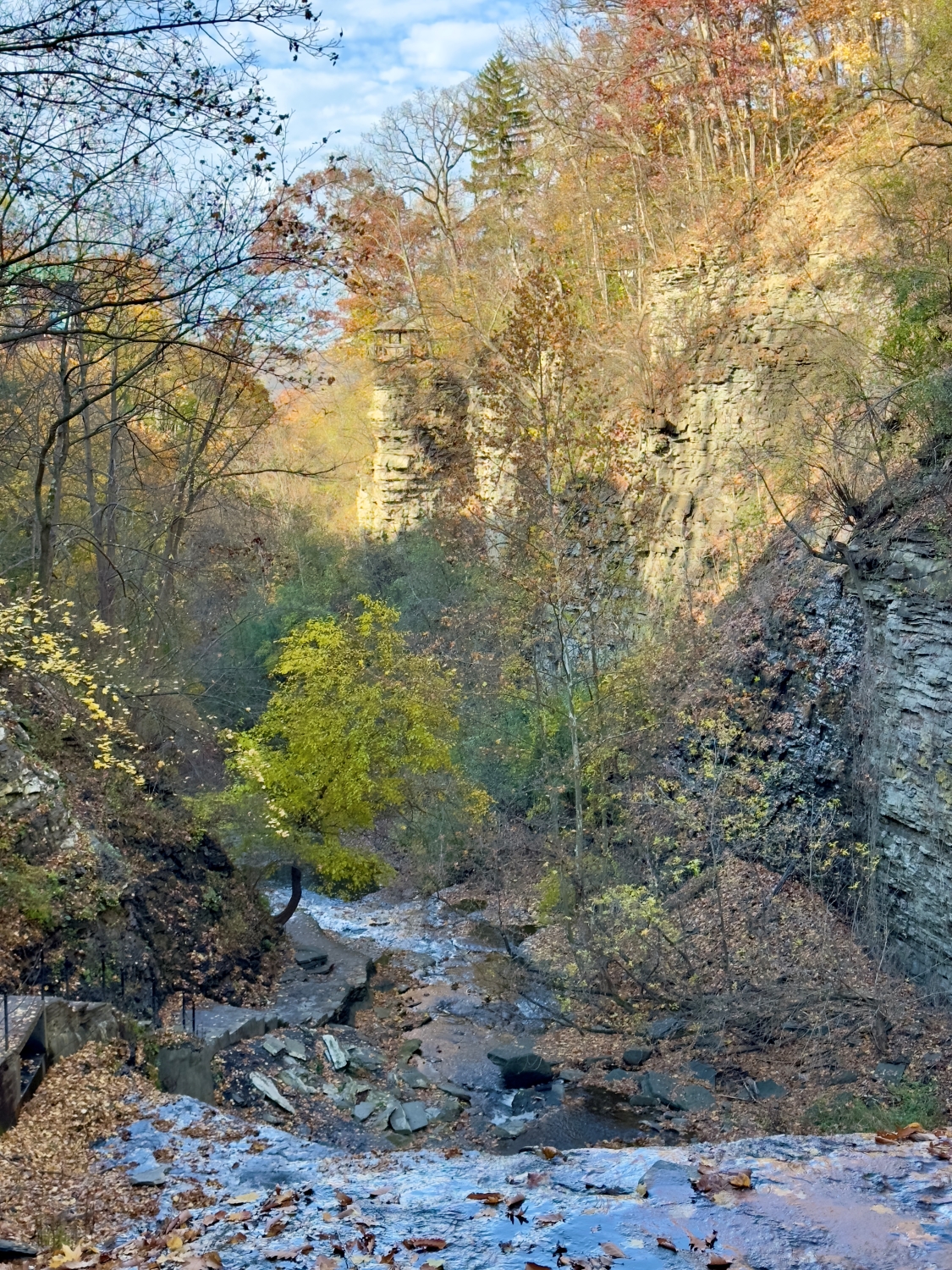
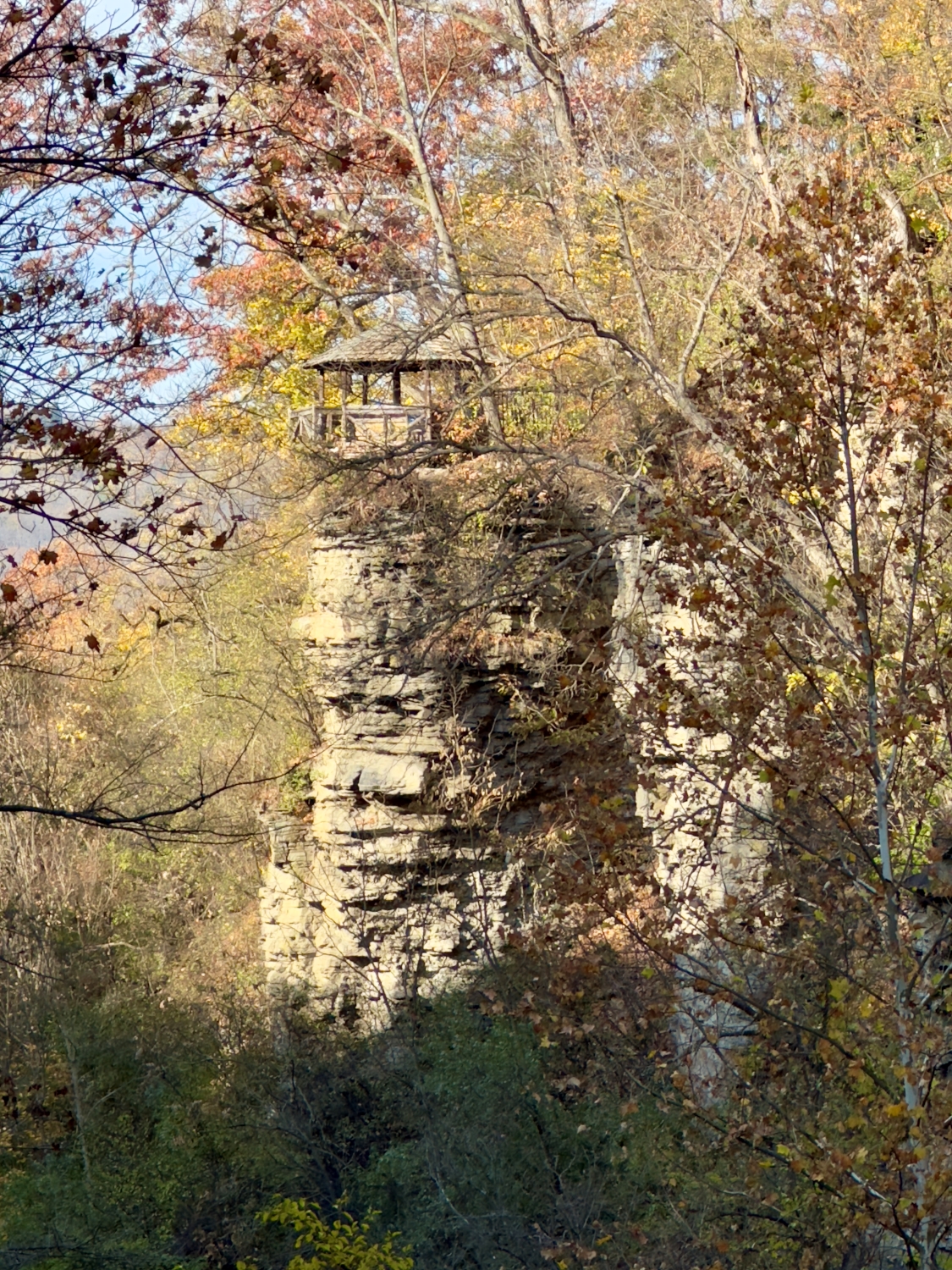
Further up the gorge, the views open up, and I can see the layers of rock descending in terraces, each level a little cascade of its own. I watch as the water flows across these steps, catching the light as it moves—a silvery ribbon winding through the golden autumn landscape. The tranquility of the scene is meditative. Around me, the trees stand as silent witnesses, their branches bare in places but still adorned with clusters of leaves clinging through the last days of fall.
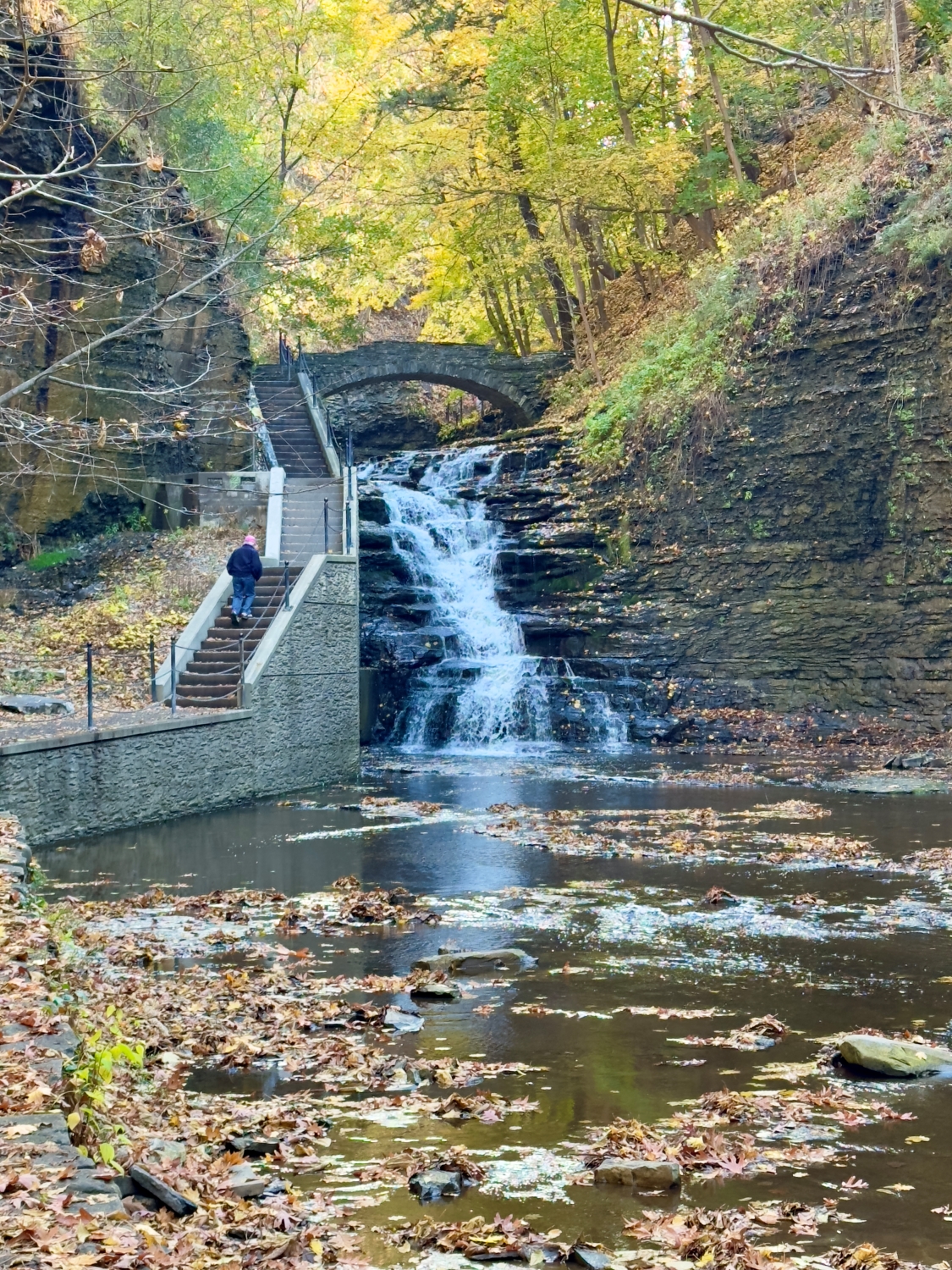
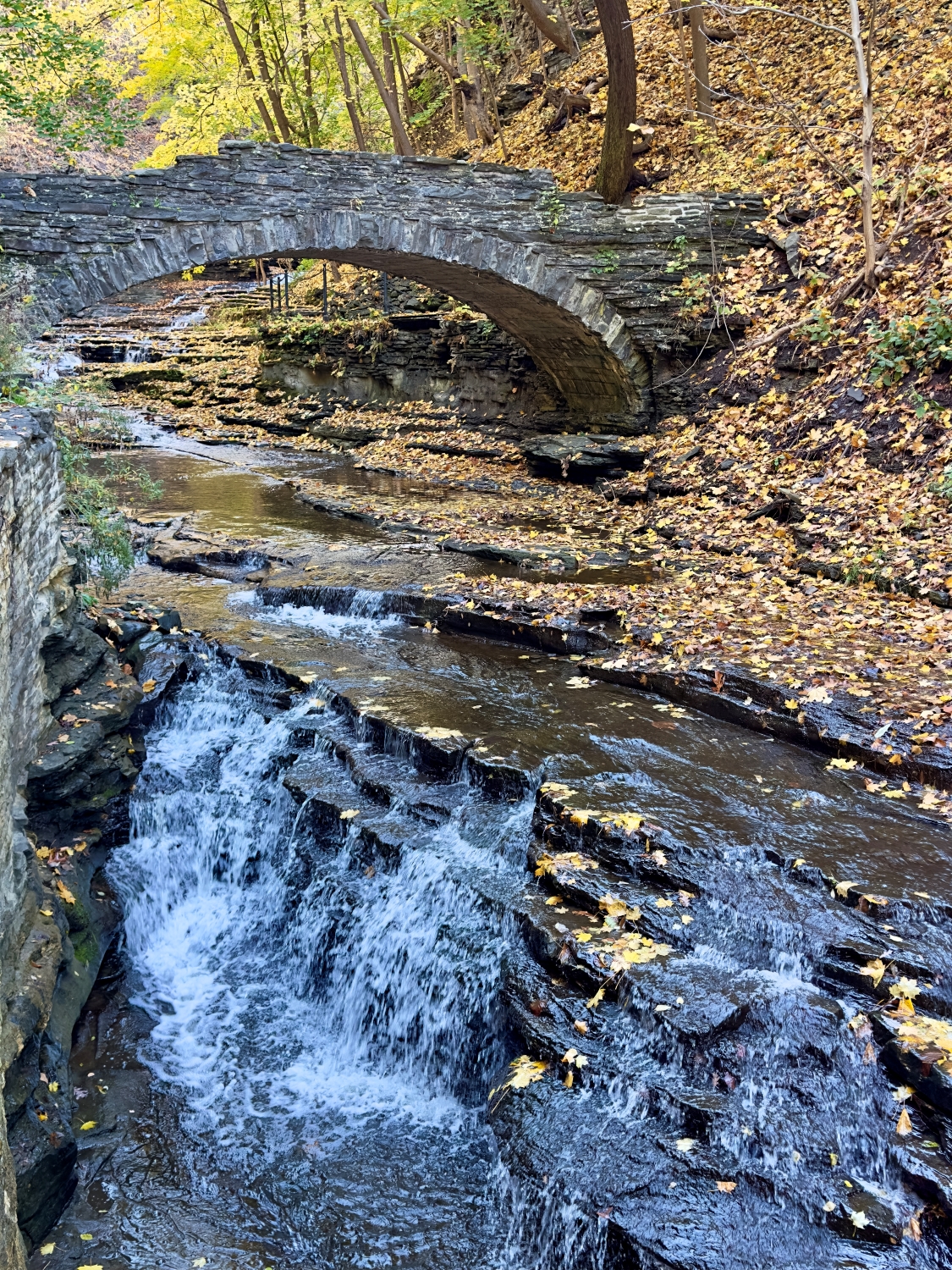
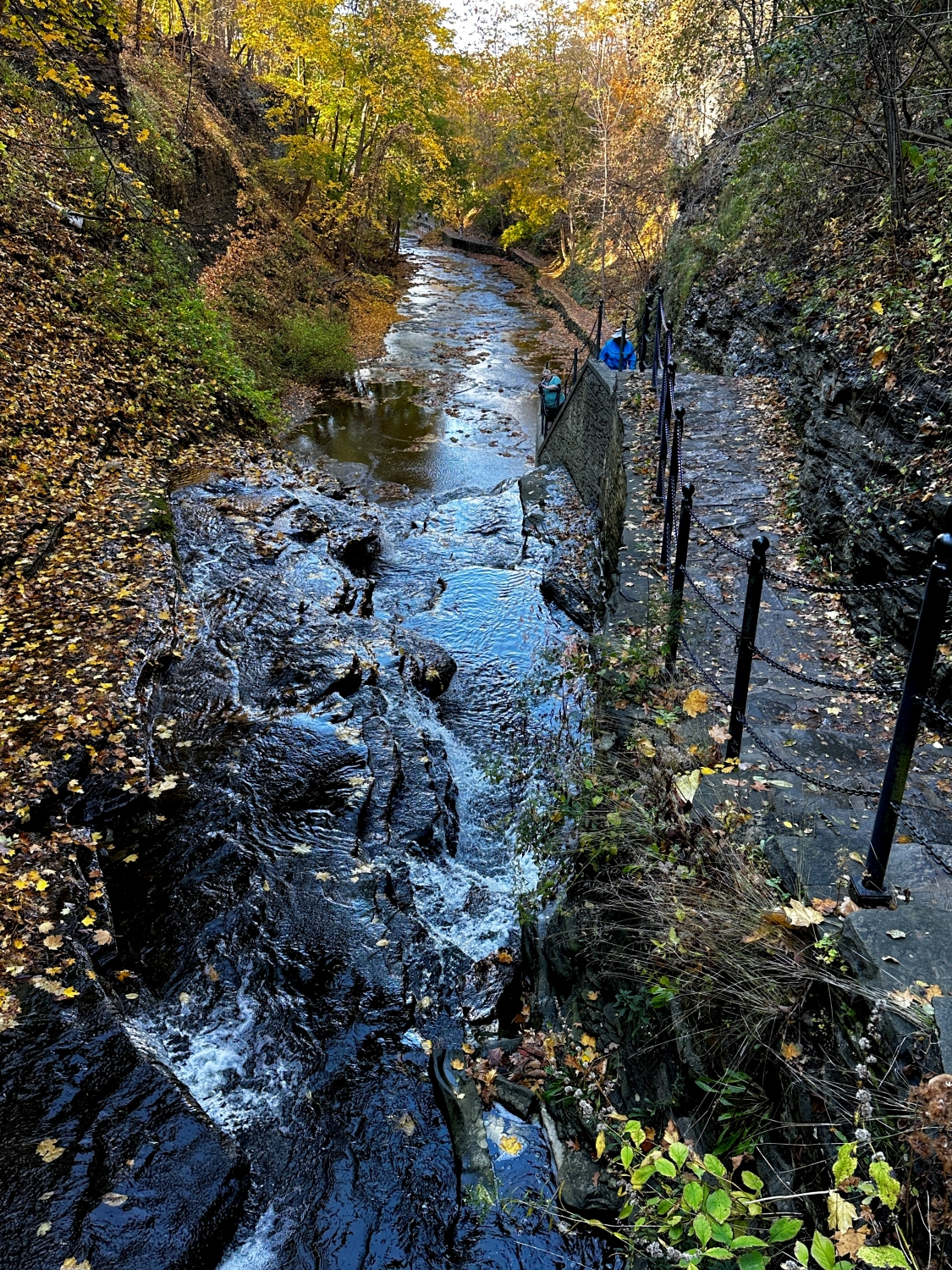
Finally, I reach one of the larger waterfalls, framed by a graceful stone arch bridge that crosses high above. The scene is something out of a painting. Water pours over the rocks, gathering in pools below before spilling onward. I pause on the bridge, looking down at the gorge below and the trail I’ve followed, grateful for the journey.
Along the way, artists are positioned along the path, each lost in the beauty of Cascadilla Gorge. They stand or sit in quiet reverie, brushes or pencils in hand, capturing the gorge’s unique character. Some focus on the play of light over the water’s surface, while others seem intent on the rugged details of the rock formations. Their presence adds a contemplative depth to the scene; it’s as if each artist has uncovered a hidden aspect of the gorge that I have overlooked in my journey upward.
I slow my pace to take it all in, appreciating how the artists interpret this natural wonder through their own eyes. Their canvases reveal layers of colors that shift as the sun filters through the leaves, casting vibrant golds and subtle greens on the cascading water. The scene feels almost collaborative—nature and human hand creating art together, each reflection of the gorge as unique as the individual capturing it. I’m tempted to pause beside them, to see how they choose to frame the towering walls, the stone bridge arching above the water, and the gentle curves of the creek as it meanders downstream. I can imagine each artist’s work holding a different piece of this place, like fragments of a memory.
Bridge View looking up Cascadilla CreekBridge View looking back the way I came
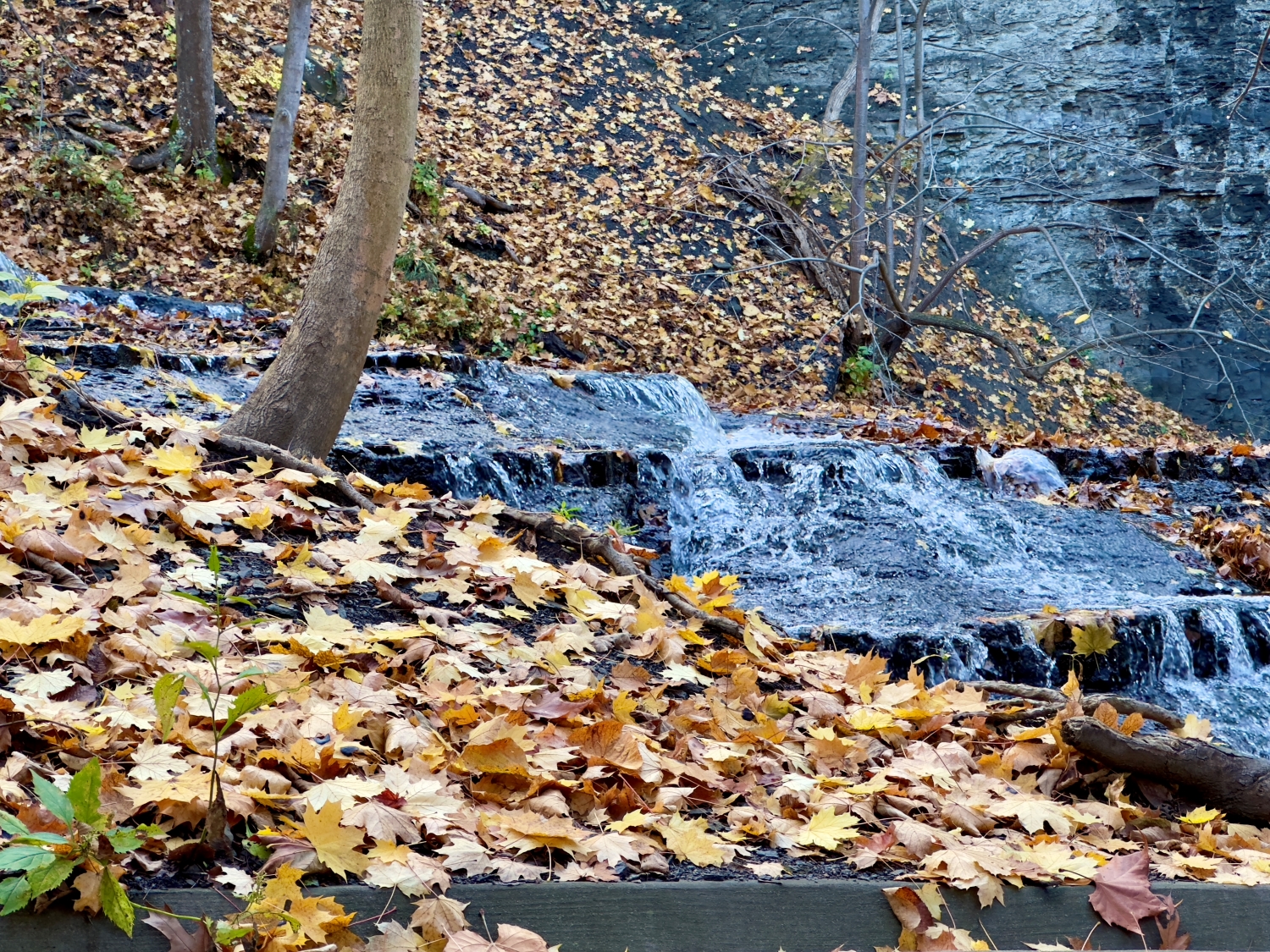
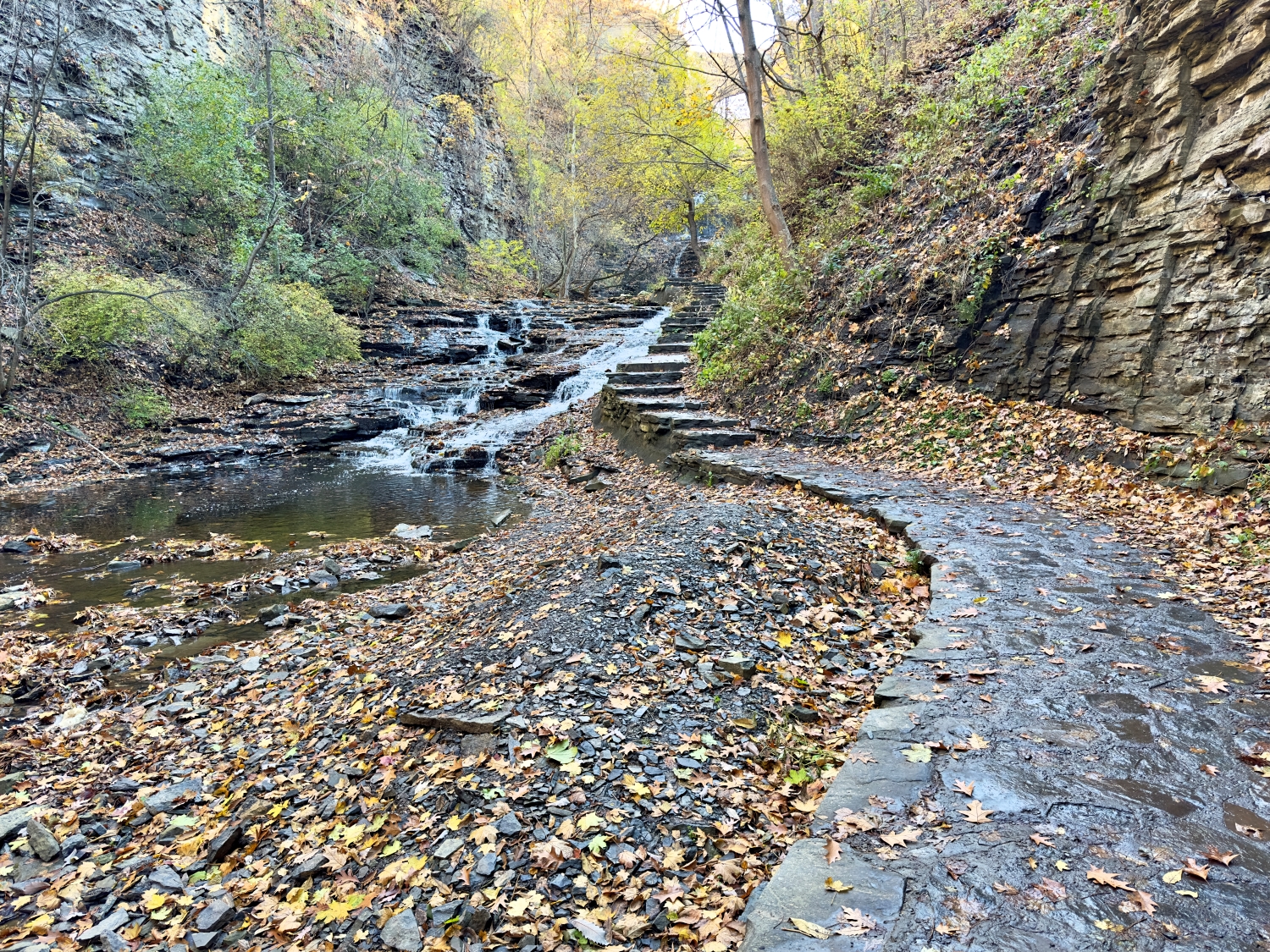
As I continue, the sound of rushing water grows louder, drawing me towards another cascade that tumbles in steps down the gorge. The rocks are layered in angular formations, giving the water a zigzagging path to follow. Leaves are scattered across the stones, their colors—yellows, browns, and the occasional splash of red—standing out against the dark, wet rock. There’s a timelessness here, a feeling that this scene has remained unchanged for centuries, save for the shifting leaves and the ever-present flow of the creek. The thought makes me feel like a small part of something much larger, a guest in an ancient place shaped by nature’s slow, steady hand.
The path narrows again, following the edge of the creek where the water has worn smooth channels into the stone.
Moving forward, the trail climbs steeply, and I find myself surrounded by tall rock faces on either side. The walls are layered and weathered, a geological history book open to the forces that shaped this land. It’s humbling to see how this place puts everything into perspective, how it reminds us of our place in the natural world.
Columns of sedimentary rock
Ahead, the path becomes more rugged, the air feels cooler here, shaded by the gorge’s high walls, and the sounds of the city are long gone, replaced by the steady rhythm of water and the drift of leaves. The layers of ancient limestone that form these towering walls give shape to our landscape and ecosystem. As rainwater falls and seeps through the porous rock, the limestone raises the pH of the water, neutralizing its natural acidity. This subtle alchemy nurtures the flora and fauna, fostering a unique biome that thrives in the gorge. The artists fade from view as I move further into the solitude of the trail, but their presence lingers in my mind. Each turn of the path reveals another scene worthy of capturing, another moment that seems to call out for remembrance.
Looking back toward the way I came
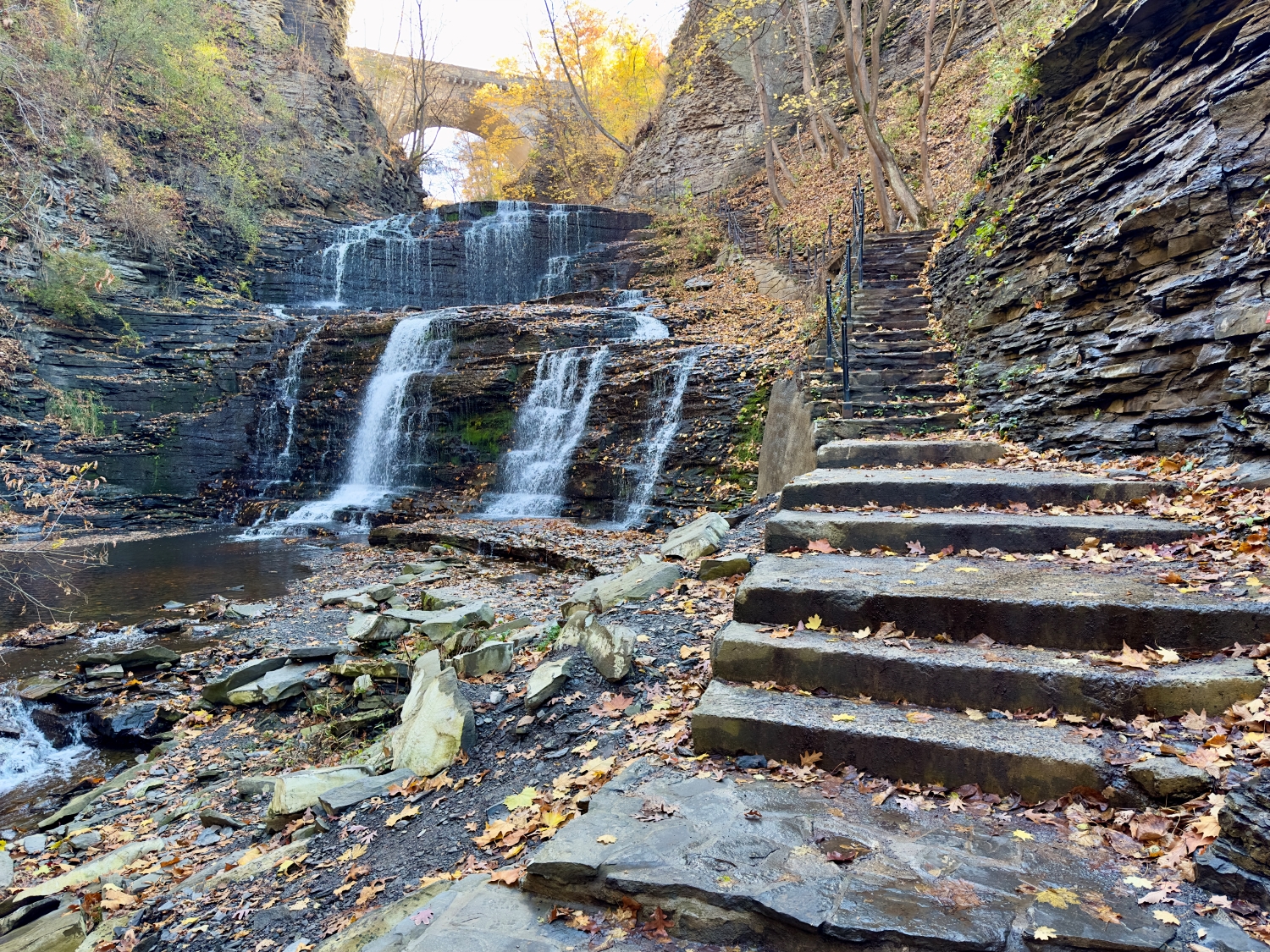
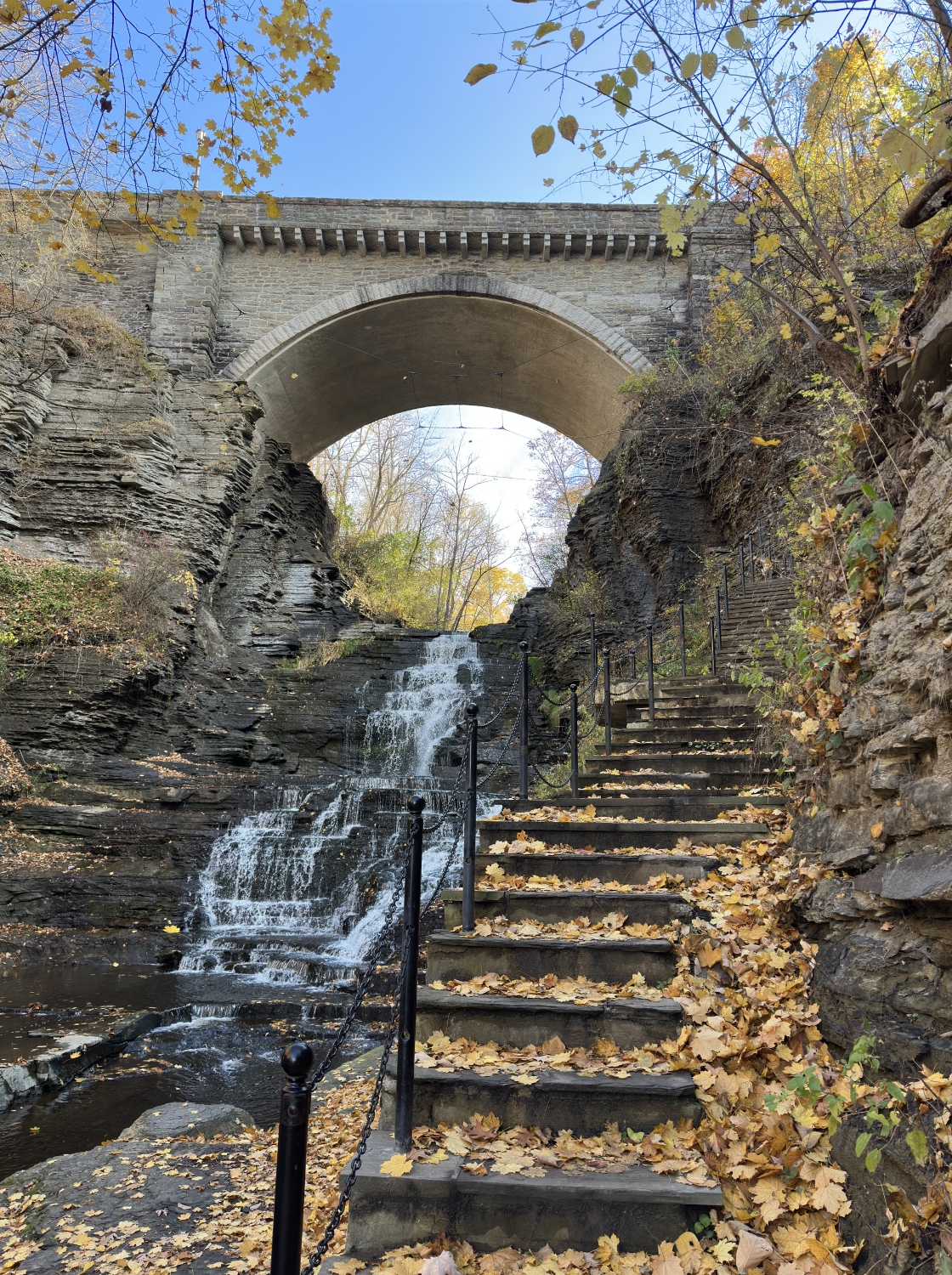
The trail steepens, and I press onward, the sound of the water intensifying as I near a grand waterfall framed by the impressive stone steps leading up to the College Avenue Stone Arch. Each step is littered with leaves, their colors vivid against the worn stone—golds, russets, and the occasional brilliant red, like embers scattered along my path. The waterfall beside me spills down in steady streams, each cascade creating rivulets that catch the light as they flow downward.
The gorge walls rise sharply on either side, embracing the path in rugged layers that tell stories of geological time. I feel as if I’m climbing a passage through history itself. These rocks, these trees, the very water carving its way through the stone—all have been here far longer than I can fathom, shaped by forces beyond my understanding. There’s a certain thrill in being among such enduring elements, a reminder of how small and fleeting we are in the face of nature’s grandeur.
Reaching the next tier of the trail, I pause to take in the sight of the massive stone arch spanning the gorge above. The bridge is a striking feature, its wide arch perfectly framing the sky and the last vibrant colors of autumn. It feels like a gateway, a fitting culmination to the journey. Standing beneath it, I’m struck by how well it harmonizes with the gorge, the careful craftsmanship of its stonework complementing the rough beauty of the surrounding cliffs.
The sunlight flows around the arch, illuminating the leaves that cling to the branches above, casting a warm glow over the scene. I feel a sense of reverence here, a quiet acknowledgment of both human artistry and the relentless beauty of nature.
I paused to capture this video of the moment.
Sights and Sounds of Autumn
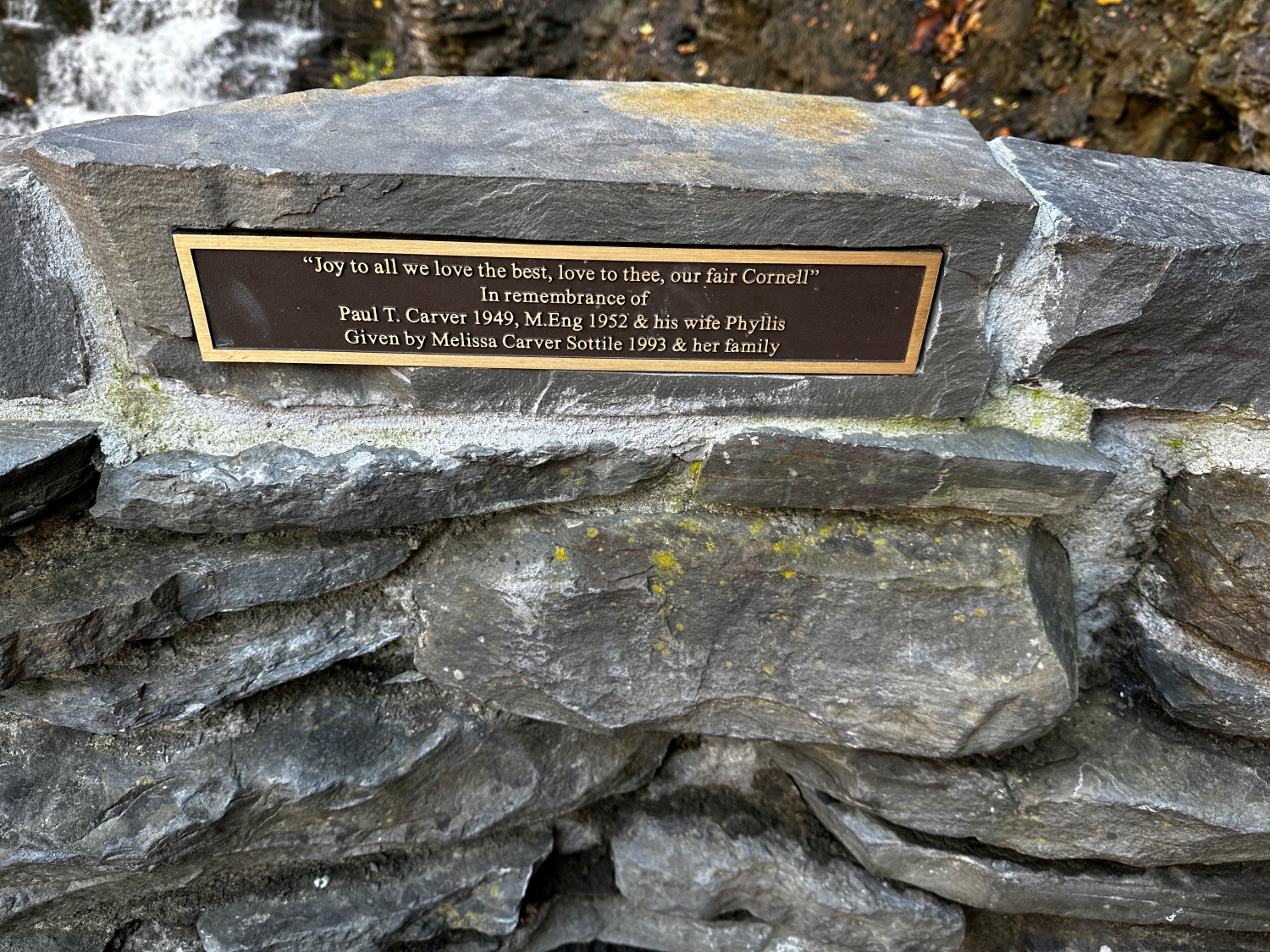
The final ascent is graced by a bench where a stone plaque catches my eye. It’s a tribute, etched with words that resonate in this place: “Joy to all we love the best, love to thee, our fair Cornell.” A gift from a family whose lives intertwined with Cornell, it serves as a reminder of the deep connections people have to this landscape, to the university, and to the memories rooted in these trails and gorges. I pause, reflecting on my own connection to this path, which has taken me through an ever-unfolding tapestry of nature and history.
The last stretch of steps is leaf blanketed, their shapes and colors a beautiful final mosaic before I emerge from the shaded coolness of the gorge. The sun filters down through the thinning trees, illuminating the stone buildings of the Cornell campus that peek through the branches ahead. With each step, I feel the transition, moving from the curated wildness of Cascadilla Gorge and its trail to the structured beauty of the university grounds.
Myron Taylor Hall, Cornell Law School from the gorge.
As I reach the top, the Schwartz Center for the Performing Arts comes into view, its modern architecture a contrast to the ancient rocks I’ve left behind. Here, in this space where art, education, and nature converge, I take a last look back into the gorge and a journey, a gem in the heart of the Finger Lakes, a place that holds stories, both old and new, and invites every visitor to become a part of them.
Enter your email to receive notification of future postings. I will not sell or share your email address.
Copyright 2024 All Rights Reserved Michael Stephen Wills
During my walk around the Cascadilla Gorge rim, I found myself drawn to small, intricate details of the city, details that tell stories of the town’s rich past and its lively present. Ithaca’s history felt close, touchable, woven into each corner and each unique encountered feature.
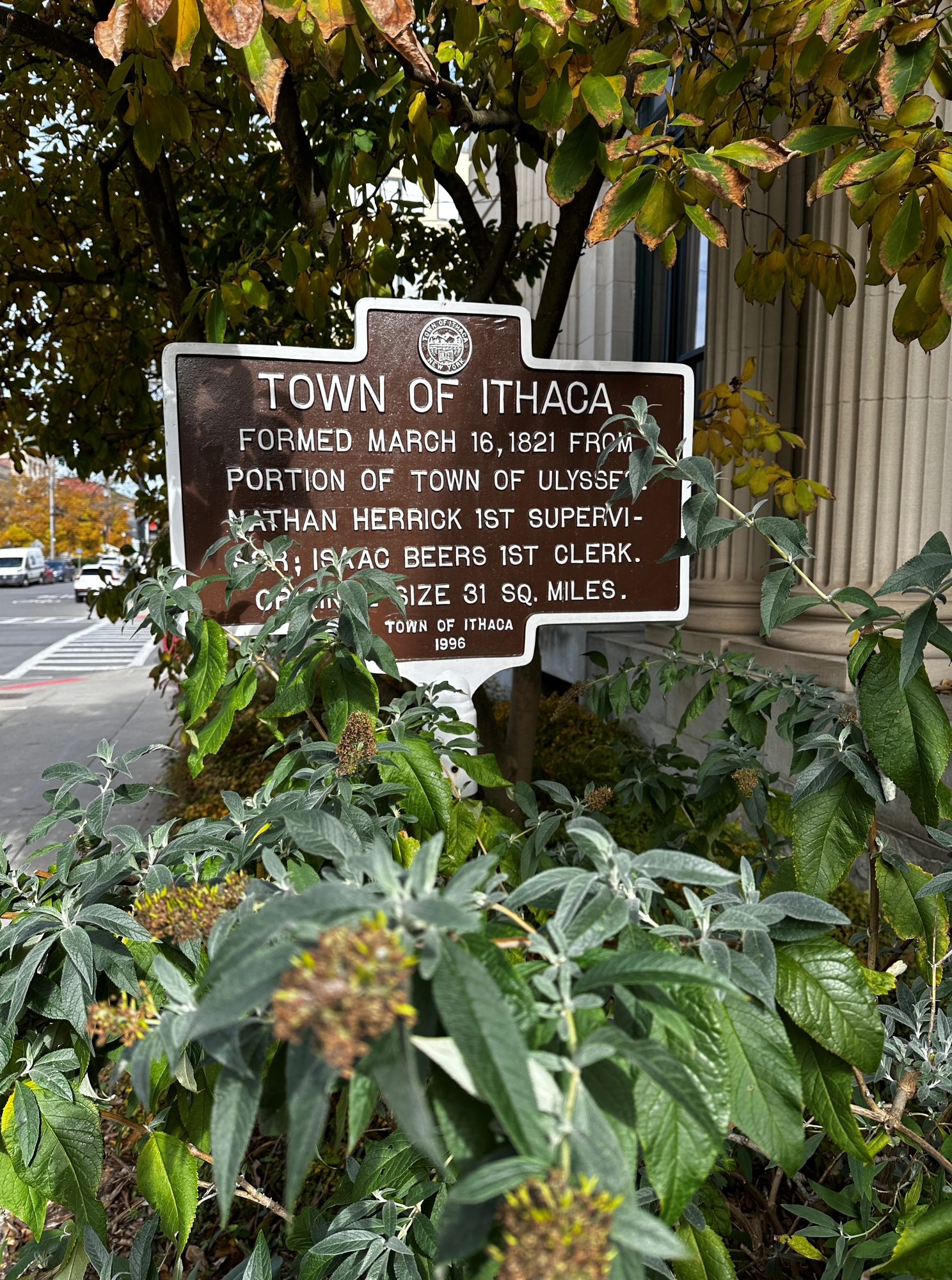
This sign in front of the former Post Office on Aurora Street marked the founding of the Town of Ithaca in 1821. Standing there, I imagined the early days of the town, its growth and change over the decades, all captured in a few lines on a sign beneath the green, now lightly browned leaves. The sign, a quiet guardian of Ithaca’s origins, holding a reminder of how the town started from the nearby Town of Ulysses and grew into the community it is today.
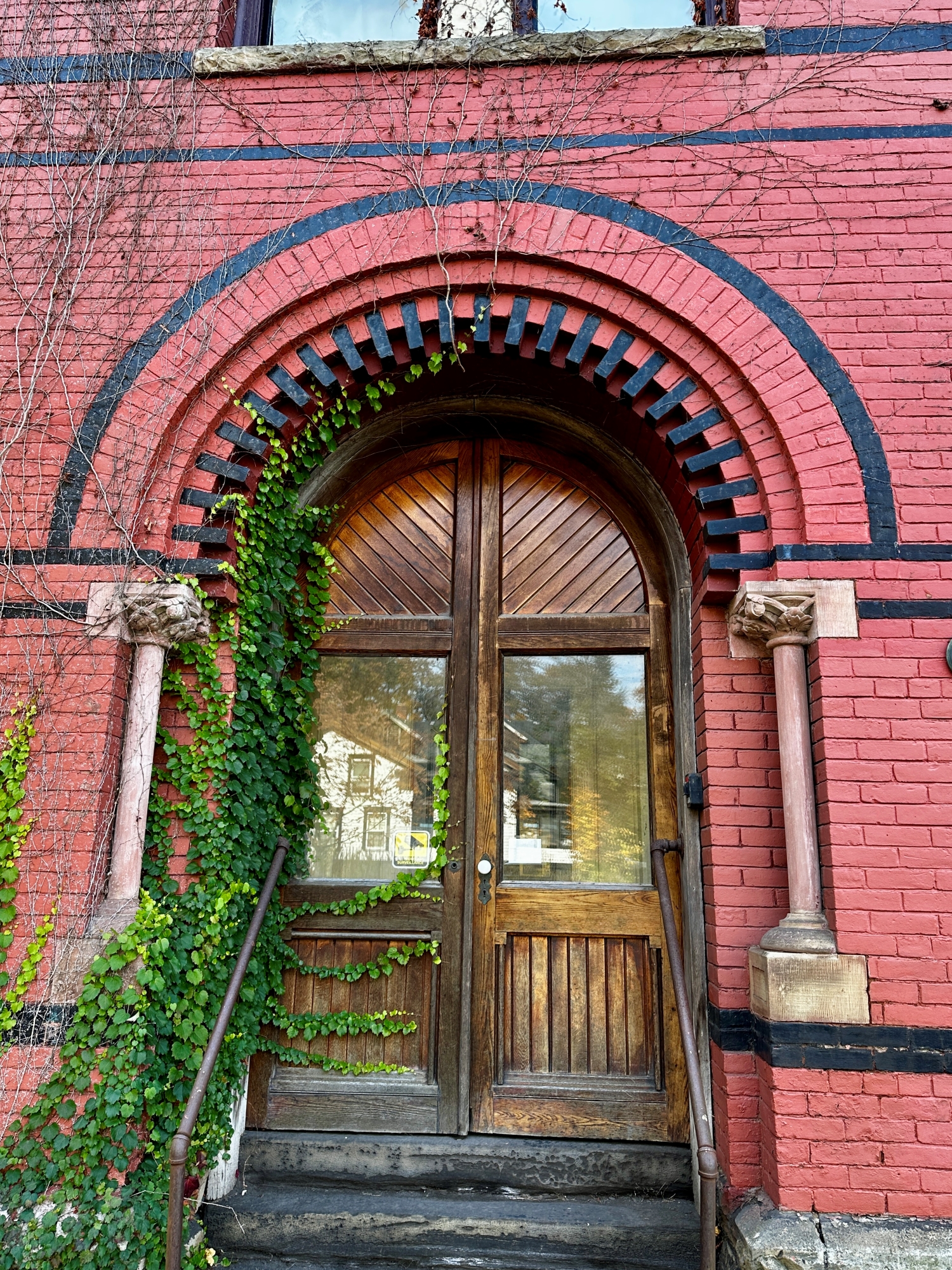
Climbing Buffalo Stret, above me was a brick doorway, framed by red ivy climbing toward the top. The arched doorway, with its rich wood and surrounding vines, as though it fell from a storybook. The dark bricks contrasted with the soft greens and reds of the foliage, giving the building a personality—stoic yet welcoming, suggesting secrets held within its walls. There was a warmth to the old architecture, a tangible connection to the hands that crafted it.
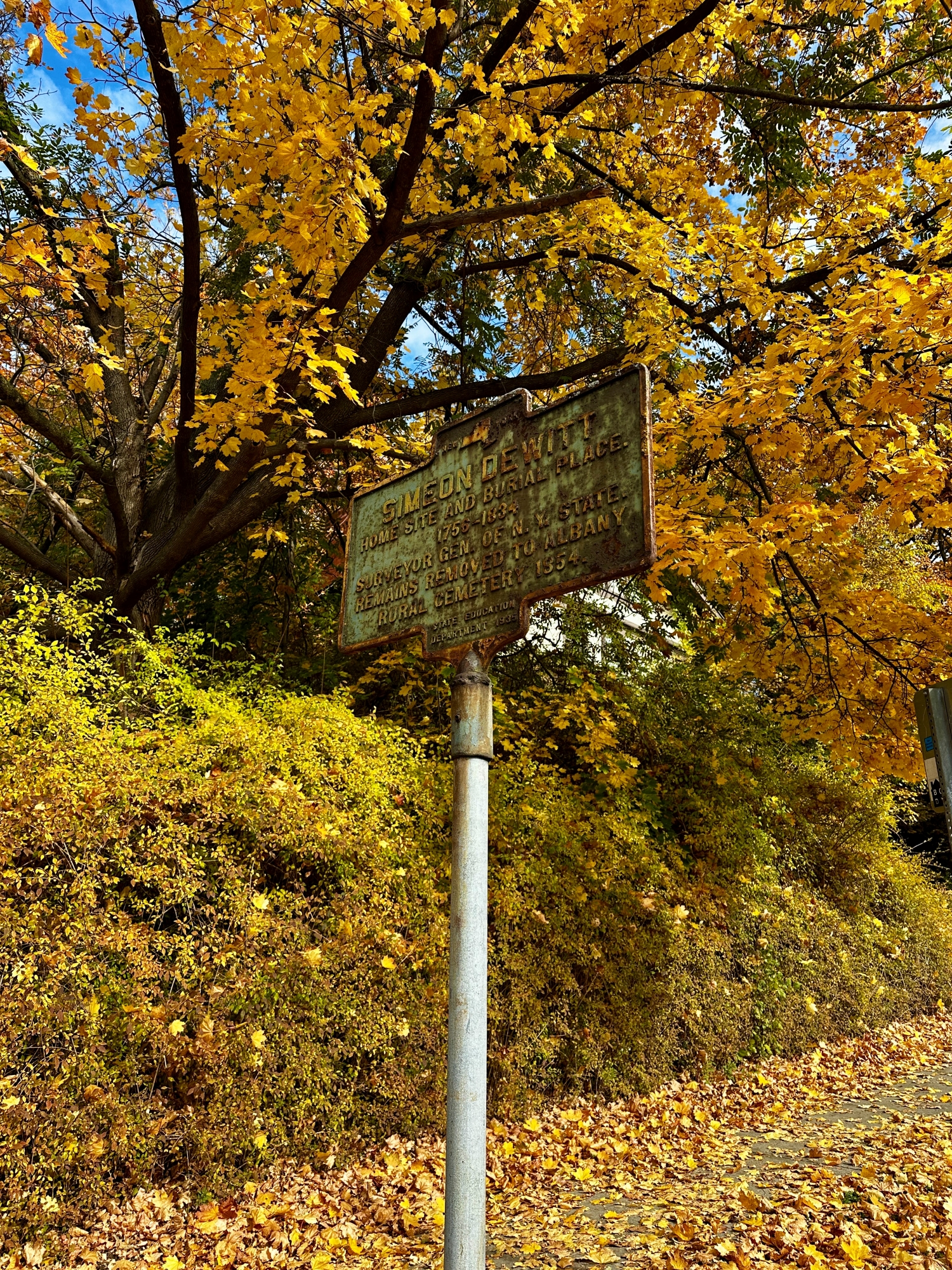
A metal plaque dedicated to Simeon De Witt, the surveyor-general, stood amidst the yellow autumn leaves. Weathered with age, the sign seemed to fade into the colors of the season. De Witt played a pivotal role in shaping both New York State and Ithaca itself; as the surveyor-general during and after the Revolutionary War, he was responsible for mapping much of New York, shaping towns, and setting the stage for westward expansion. A visionary in his own right, De Witt saw Ithaca’s potential as a town and became one of its founding figures. The juxtaposition of the modern-day hustle of the town with this nearly forgotten tribute spoke to the layers of history that live here, often unnoticed. Here was a reminder of a man who helped lay the literal groundwork for the state, his legacy now largely a quiet one, tucked among the turning leaves.
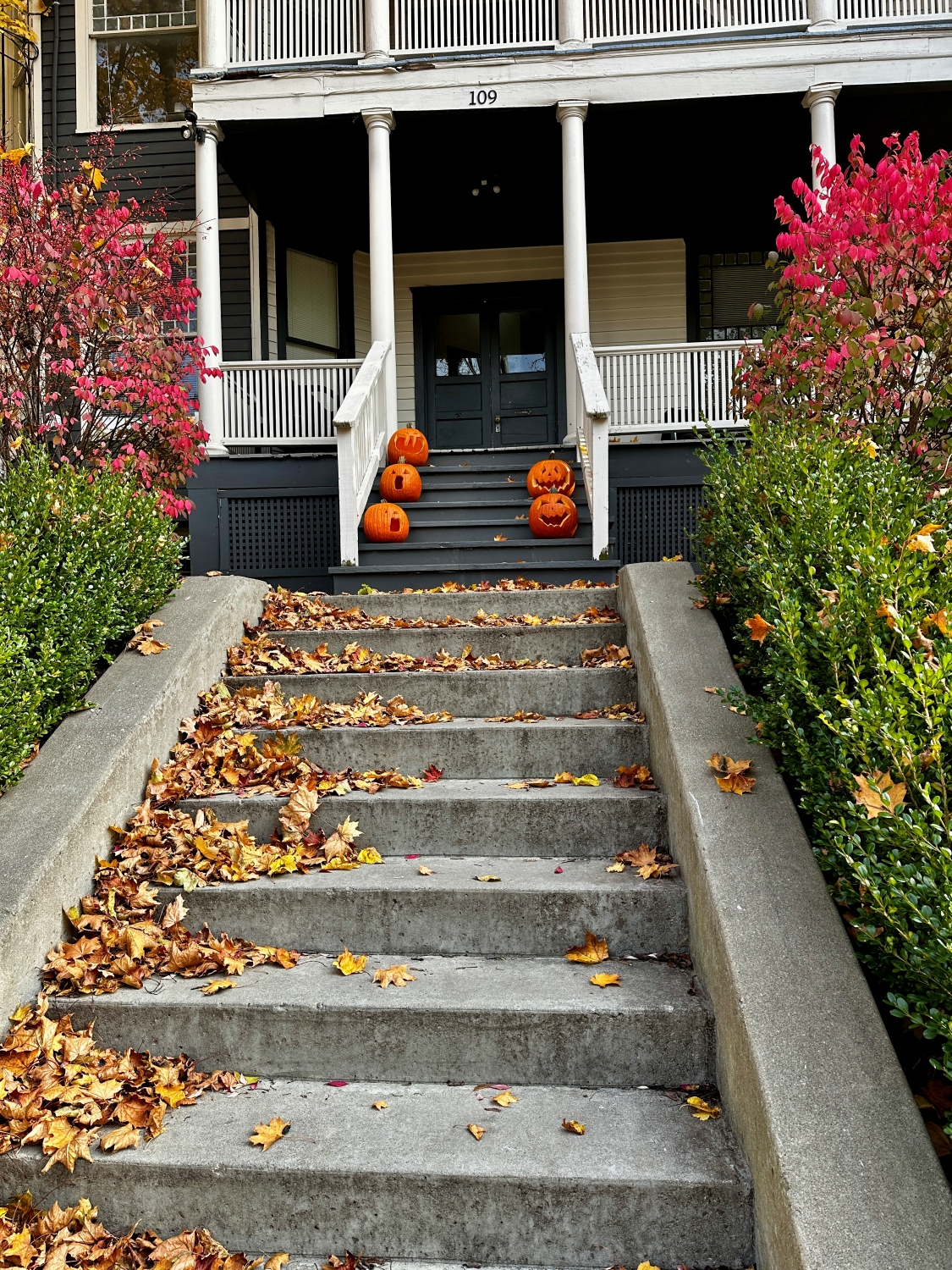
Exploring Dewitt Place, I came across a staircase leading up to a house, decorated for Halloween. Pumpkins with carved faces sat proudly on each step, their grins adding a playful spirit to the scene. Bright red shrubs framed the path, a bold contrast against the deep gray siding of the house. Here, past met present, with the timeless ritual of Halloween adding a touch of whimsy to the historic porch.
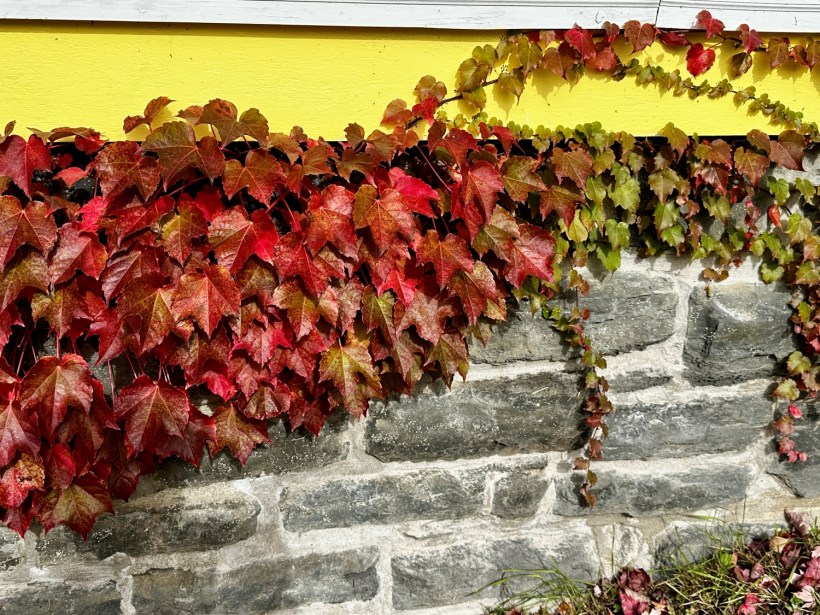
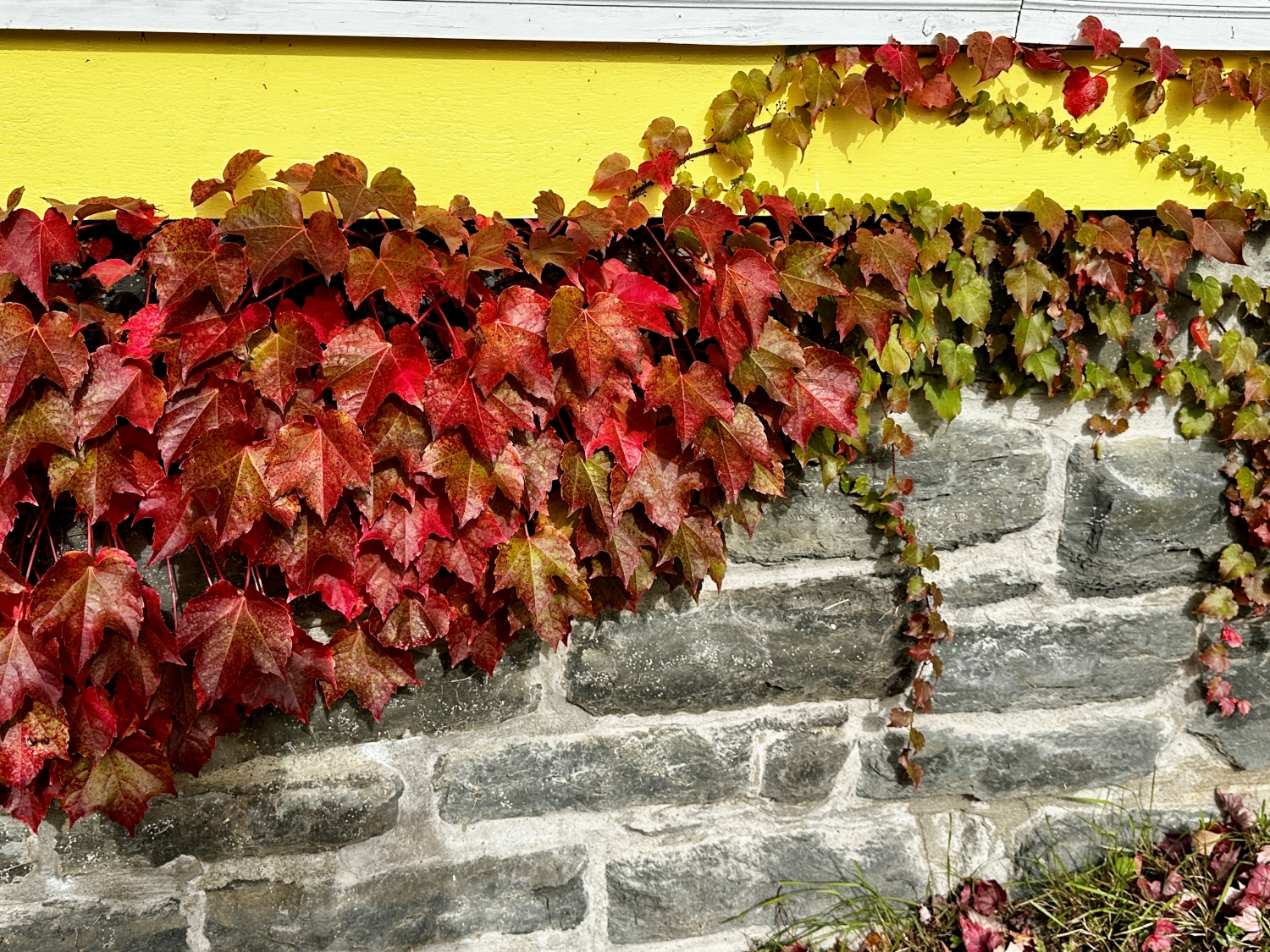
Nearby, I noticed a vine-covered wall where vibrant red leaves cascaded down toward the stone base. The color was striking—a reminder that, even as autumn wanes, nature’s palette reaches its most intense. The bright red vines against the textured gray stone created an almost painterly effect, as if nature itself had brushed the wall with strokes of crimson.
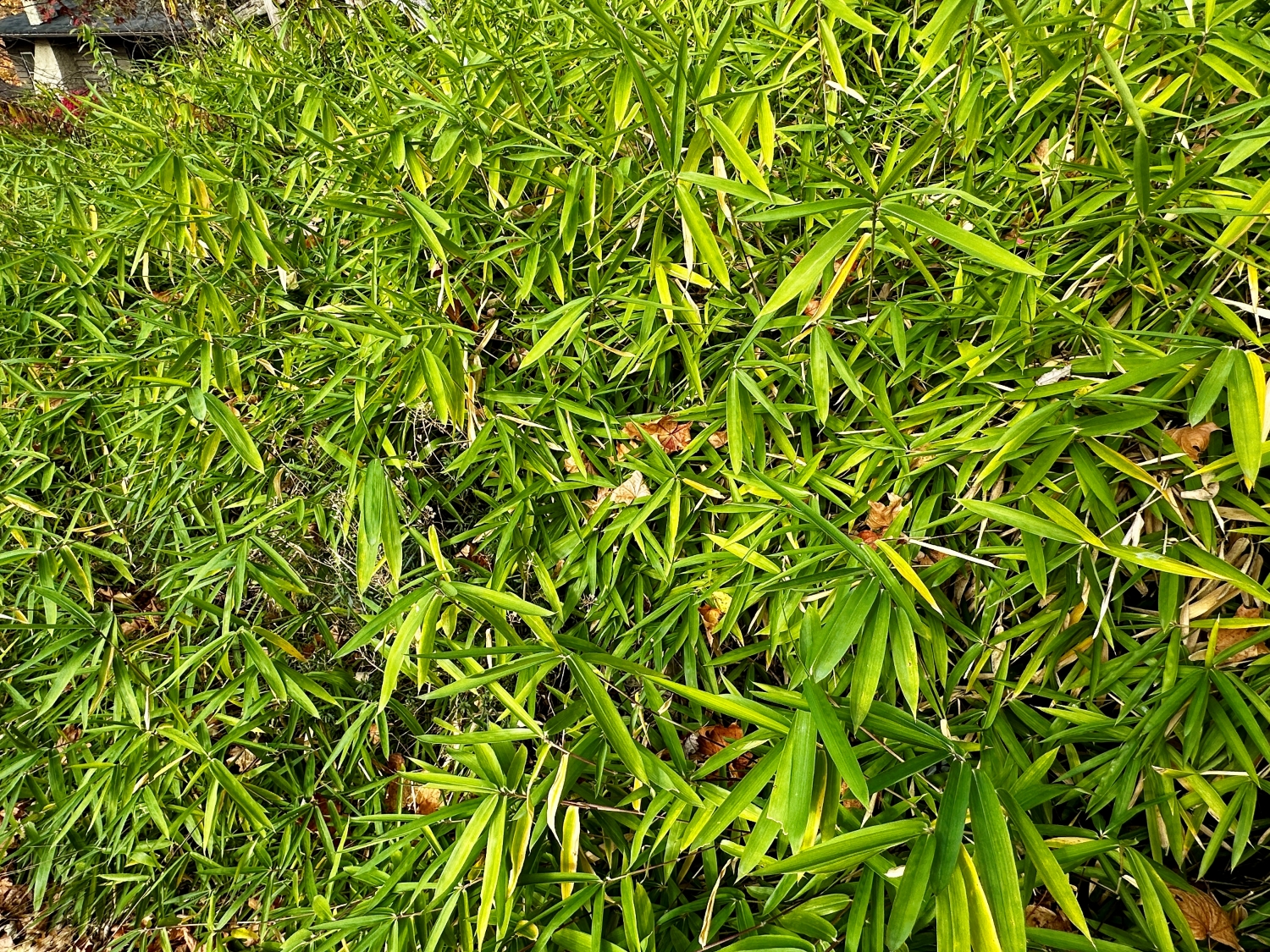
A lush patch of ornamental grass along Cascadilla Park Road caught my eye, standing out among the other plants with its vibrant green leaves. The grass retained a fresh, lively color, unfazed by the autumnal transition around it. Its dense, narrow blades added an unexpected texture to the scene, a unique counterpoint to the fiery fall foliage nearby. This little patch of green seemed to bring its own charm to the autumn landscape, a reminder of the botanical diversity that characterizes Ithaca.
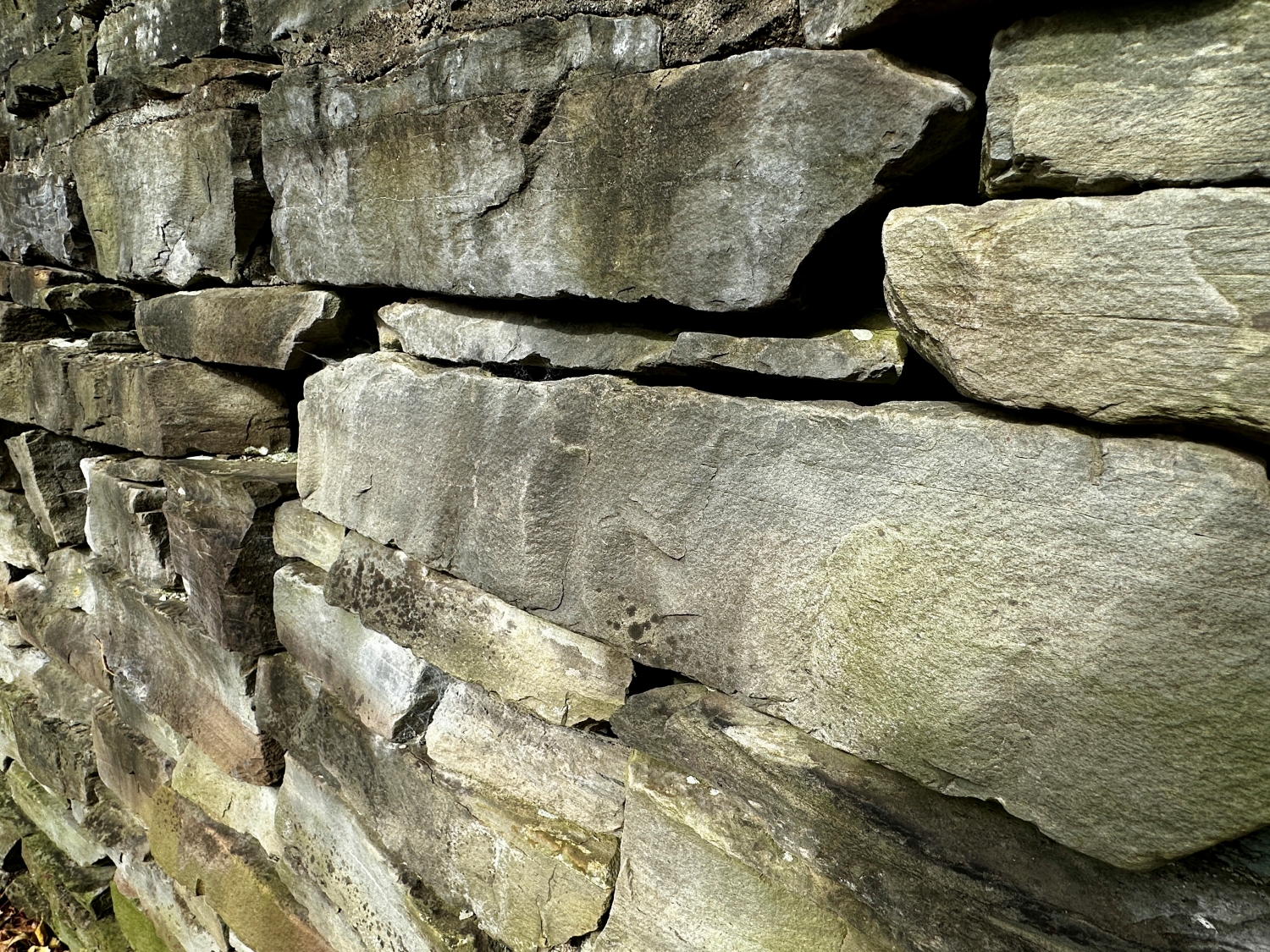
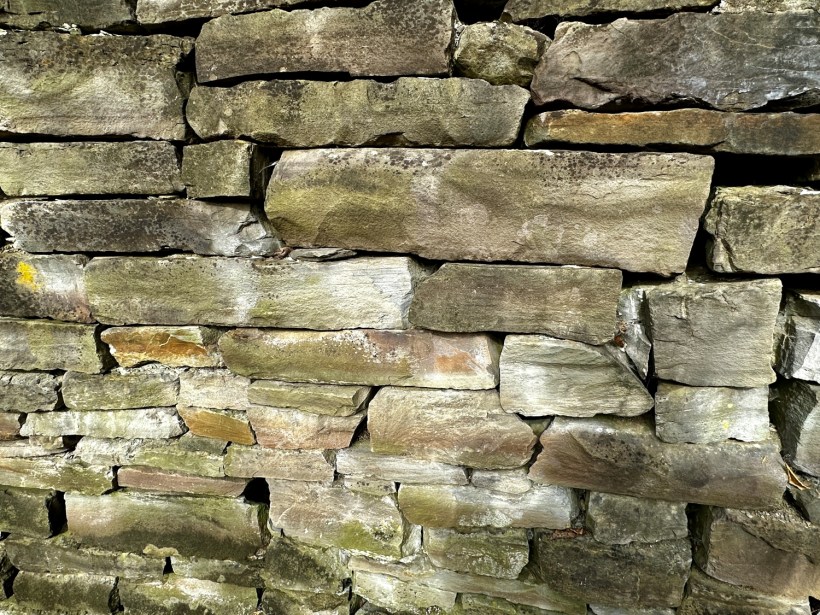
Lastly, I came across a carefully constructed stone wall. The stones were stacked with precision, weathered yet sturdy, each rock fitting neatly into the next. The craftsmanship spoke of a time when walls were built to last, their durability a testament to the hands that built them and the care given to each detail.
These small, unique details—signs, doorways, decorations, plants—combined to give a fuller picture of Ithaca. The town’s essence felt wrapped up in these seemingly simple features, each contributing a layer to Ithaca’s story, rich with history and imbued with a present-day warmth that invites exploration and appreciation.
Enter your email to receive notification of future postings. I will not sell or share your email address.
Copyright 2024 All Rights Reserved Michael Stephen Wills
As I waited during my wife’s physical therapy session, the connection between ancient healing traditions and modern medicine revealed a journey of resilience and hope.
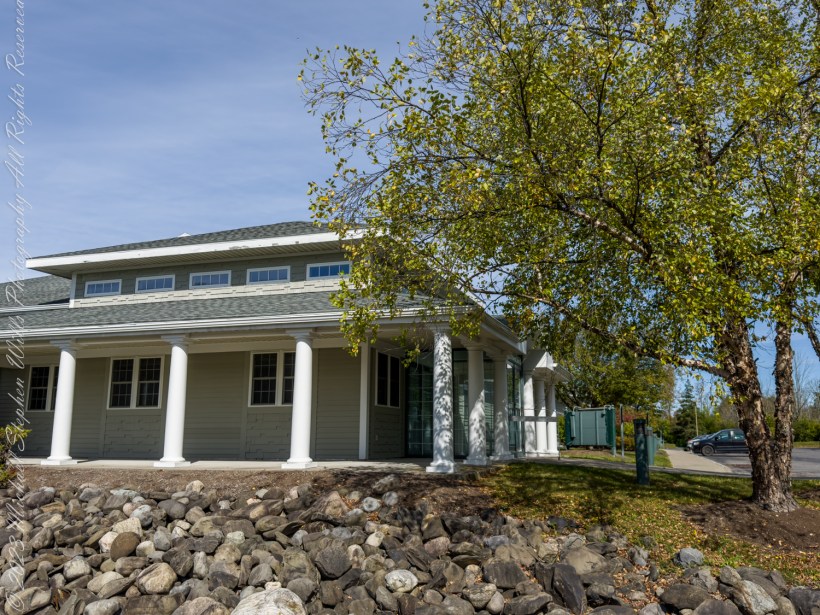
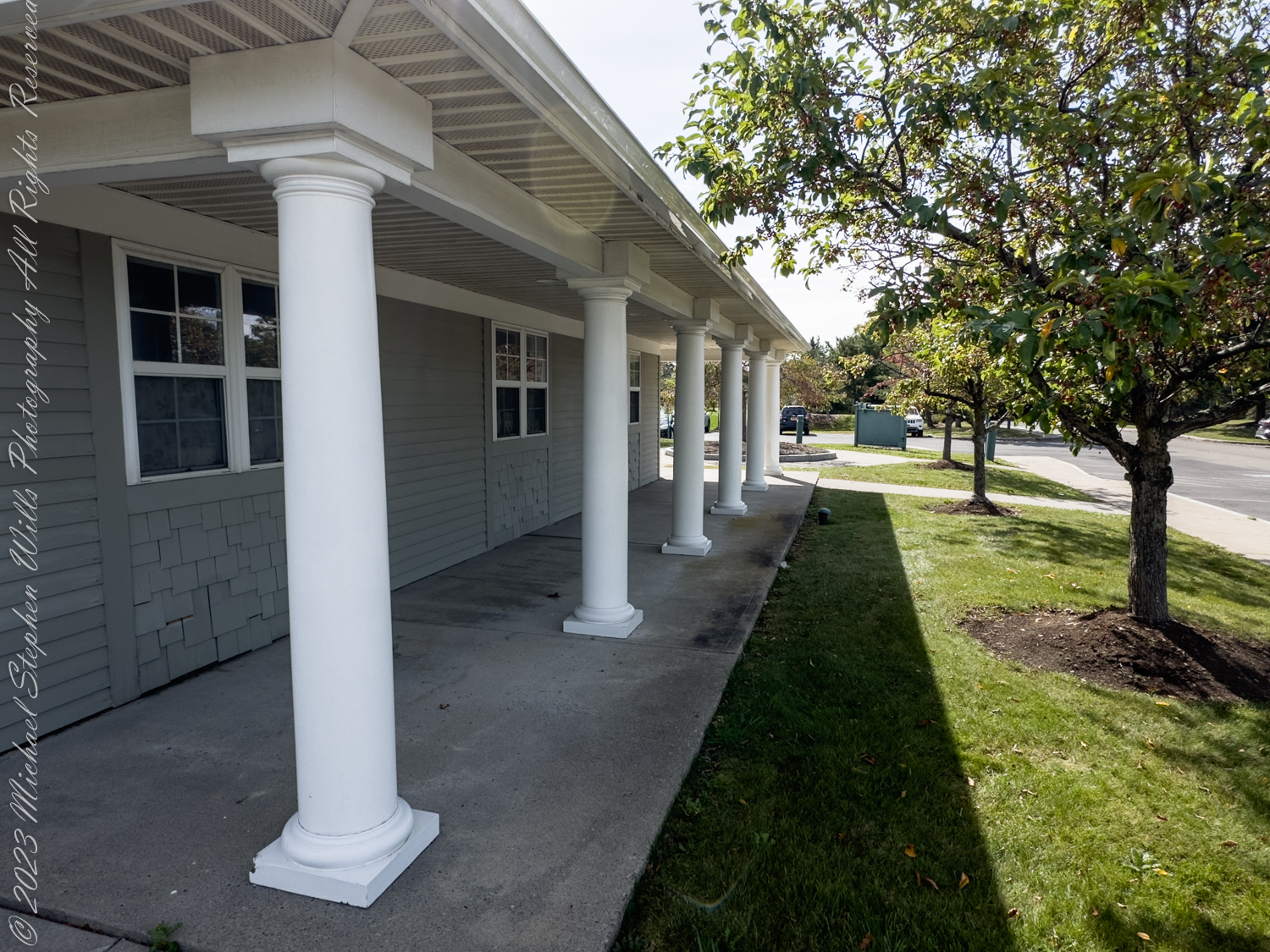
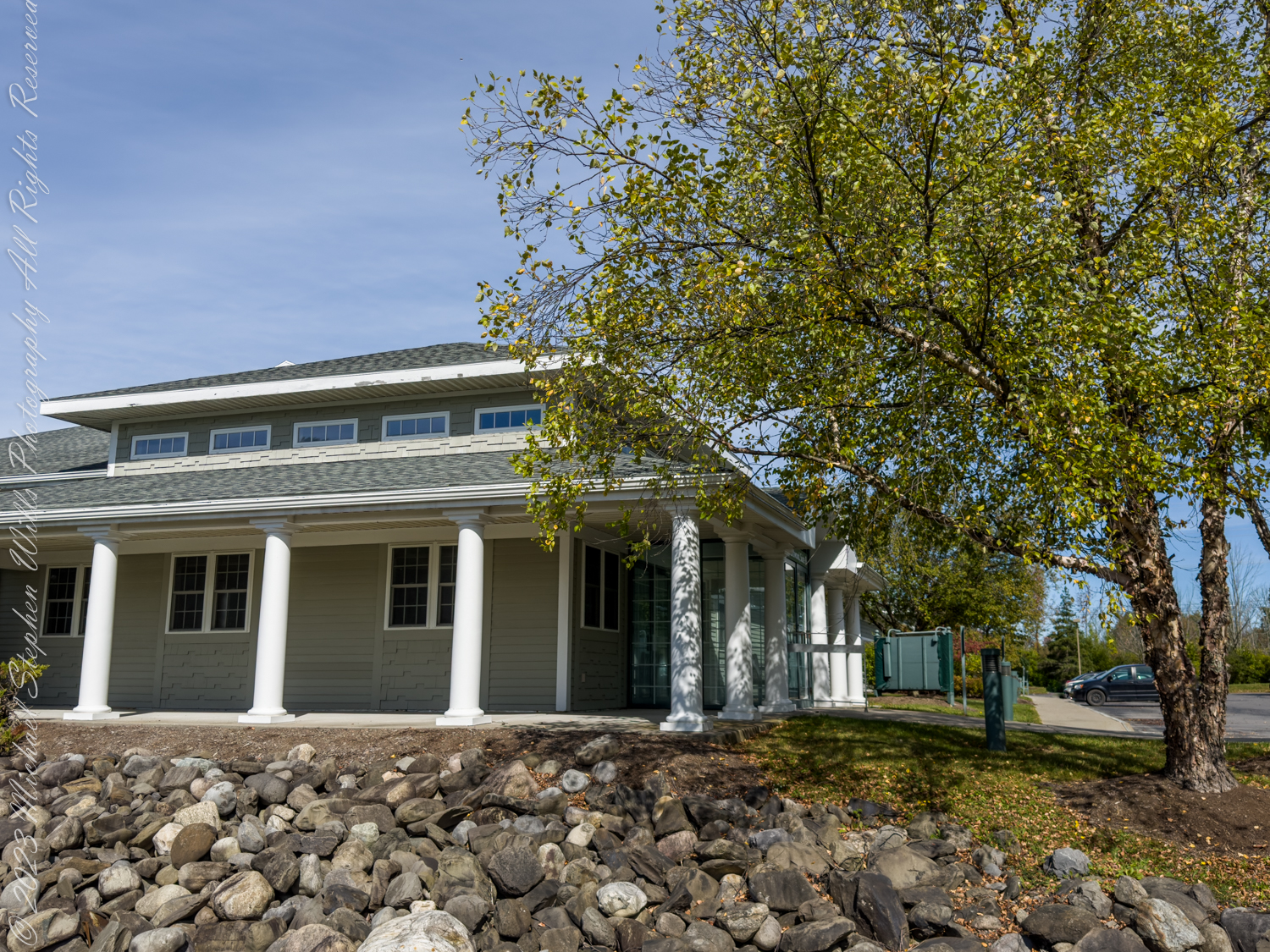
Standing in the cool autumn sunlight, I find myself pacing beneath the sturdy Doric columns of this medical campus in Northeast Ithaca, waiting as Pam undergoes another session of physical therapy. The simplicity of the columns strikes me—clean, white, and unadorned. They hold up the building with a kind of timeless grace, a quiet reflection of ancient design.
The architecture of the Medical Office Campus of northeast Ithaca is graced by doric columns arrayed in a row forming a portico colonnade. The original Greek Doric columns were fluted, and had no base, dropping straight into the platform on which the temple or other building stood. The capital was a simple circular form, with some mouldings, under a square cushion that is very wide in early versions, but later more restrained. Here the form of the capital is mirrored in the base. 20 Arrowwood Drive, Ithaca, Tompkins County, New York State
Doric columns are symbols of strength and stability. In this moment, they remind me of the quiet resilience I’ve seen in Pam throughout her recovery. Each column, solid and unwavering, reflects the foundational principles that underpin both architecture and the healing arts. Just as these columns have withstood the passage of centuries, modern medicine, too, stands tall on the legacy of ancient knowledge.
As I lean against one of these pillars, I think about the deep connections between ancient civilizations and the medicine we practice today. The origins of healing reach back to the Egyptians, who understood anatomy with remarkable precision. They would have been familiar with the use of medicinal plants. It’s remarkable to think that the surgeries performed back then, basic as they were, have evolved into the complex procedures of modern times, procedures like the one that replaced Pam’s hip with the efficiency of a machine through the care of skilled hands.
10 Brentwood Drive, Ithaca, Tompkins County, New York State
I look up at the sky, tracing the outline of the roof these columns support. The Greeks, with their reverence for observation, would have appreciated the rational design of this building. Hippocrates, the father of medicine, laid the groundwork for clinical observation, a method still used by the doctors caring for Pam. They probe, ask questions, and observe her movements, trying to decipher the hidden ailments within her body, much as the ancient physicians did centuries ago. It’s in this continuity that I find comfort—knowing that the doctors and physical therapists here are part of a long tradition, stretching back to Galen, who wrote about anatomy and physiology in ways that informed medical students for generations.
Modern medicine, like these columns, is a blend of the old and the new. Acupuncture, an ancient Chinese practice, is now commonly recommended for pain relief, a reminder that even today we rely on wisdom passed down through millennia. Pam’s therapists blend tradition with cutting-edge technology, using machines that track her progress and exercises that help her regain strength. Yet, at the heart of it, the human body heals the way it always has—with time, patience, and care.
As I walk the perimeter of the building, past patches of sunlight falling on the sidewalk, I’m struck by the parallels between the construction of this space and the body’s own repair. Both depend on a solid foundation. Roman innovations in public health, sanitation, and the idea of hospitals have shaped the spaces where we now seek healing. And here, in this modern medical facility, the connection to those roots feels tangible, much like the stones beneath my feet.
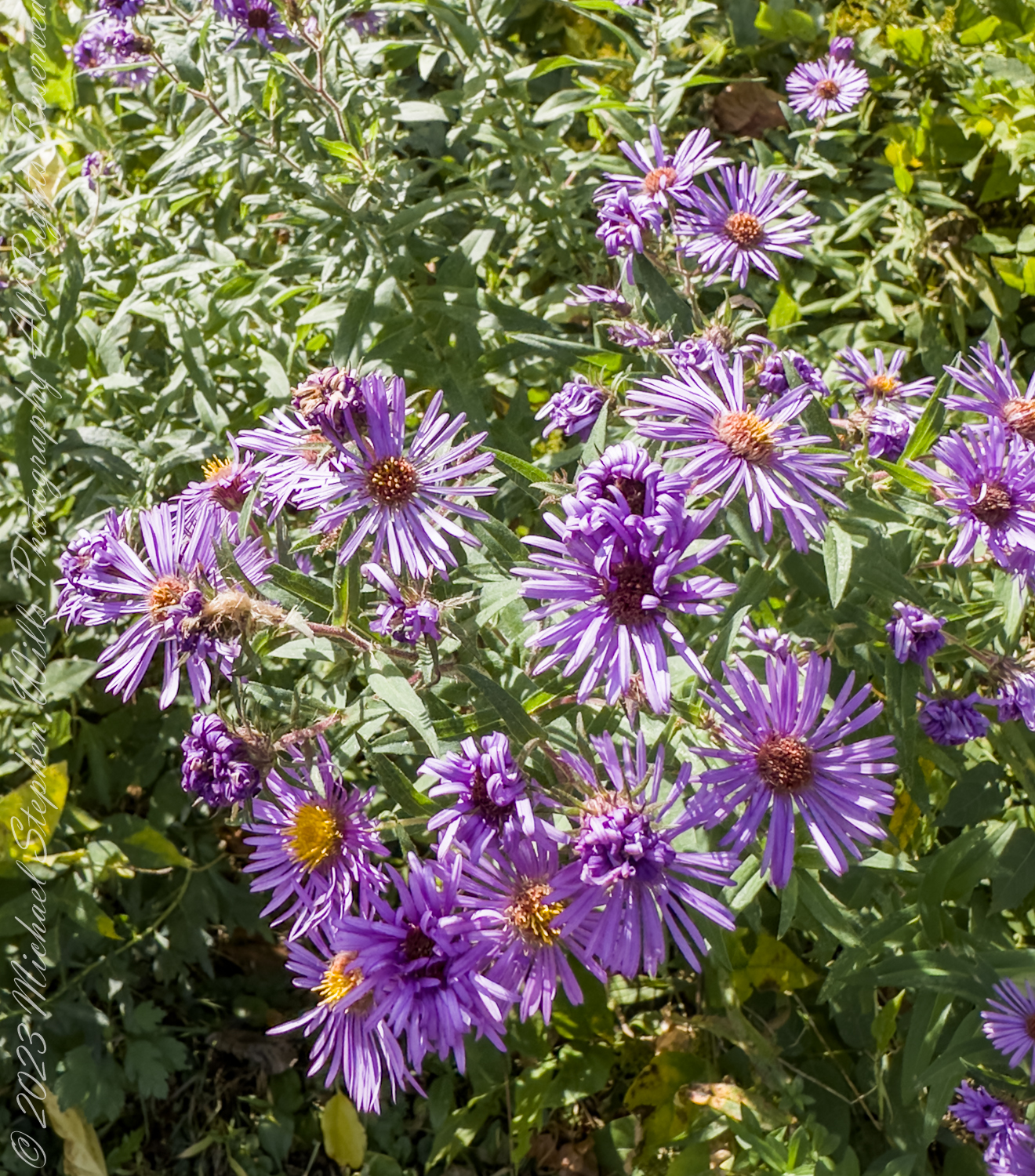
The name Aster comes from the Ancient Greek meaning “star”, referring to the shape of the flower head. ‘Aster’ species are used as food plants by the larvae of a number of Lepidoptera species. These asters grew wild on an otherwise landscaped medical campus. Found on an eaqrly autumn morning near 10 Brentwood Drive, Ithaca, Tompkins County, New York State
Asters, blooming nearby, sway gently in the breeze. They too are resilient, much like Pam. Their purple blossoms remind me of the hope that pervades our journey. The columns stand as sentinels of a kind of knowledge that is both ancient and ever-evolving—a blend of science, history, and faith in the power of the human spirit to endure.
Copyright 2024 Michael Stephen Wills All Rights Reserved
Join us on a captivating adventure at the Cayuga Nature Center’s Treetops Treehouse and the Finger Lakes Beekeepers Club Learning Apiary. Discover the wonders of the forest canopy, marvel at the intricate world of honeybees, and meet a tiny land snail that sparked the curiosity of two young explorers. Dive into a day filled with discovery, learning, and unforgettable moments in nature.
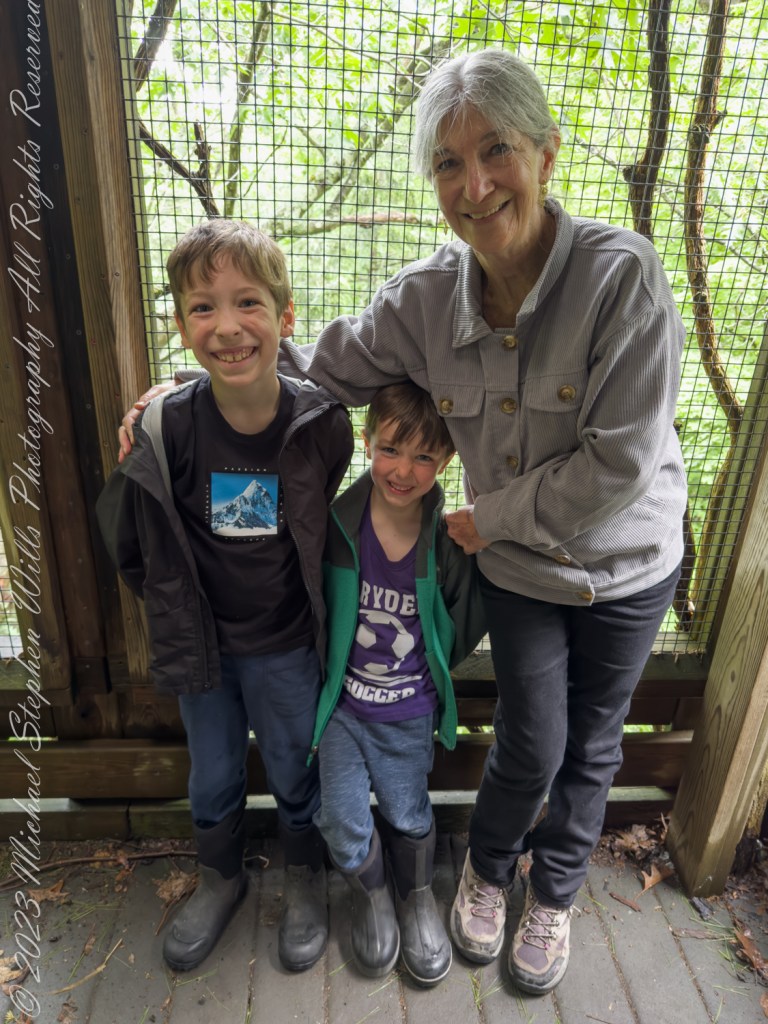
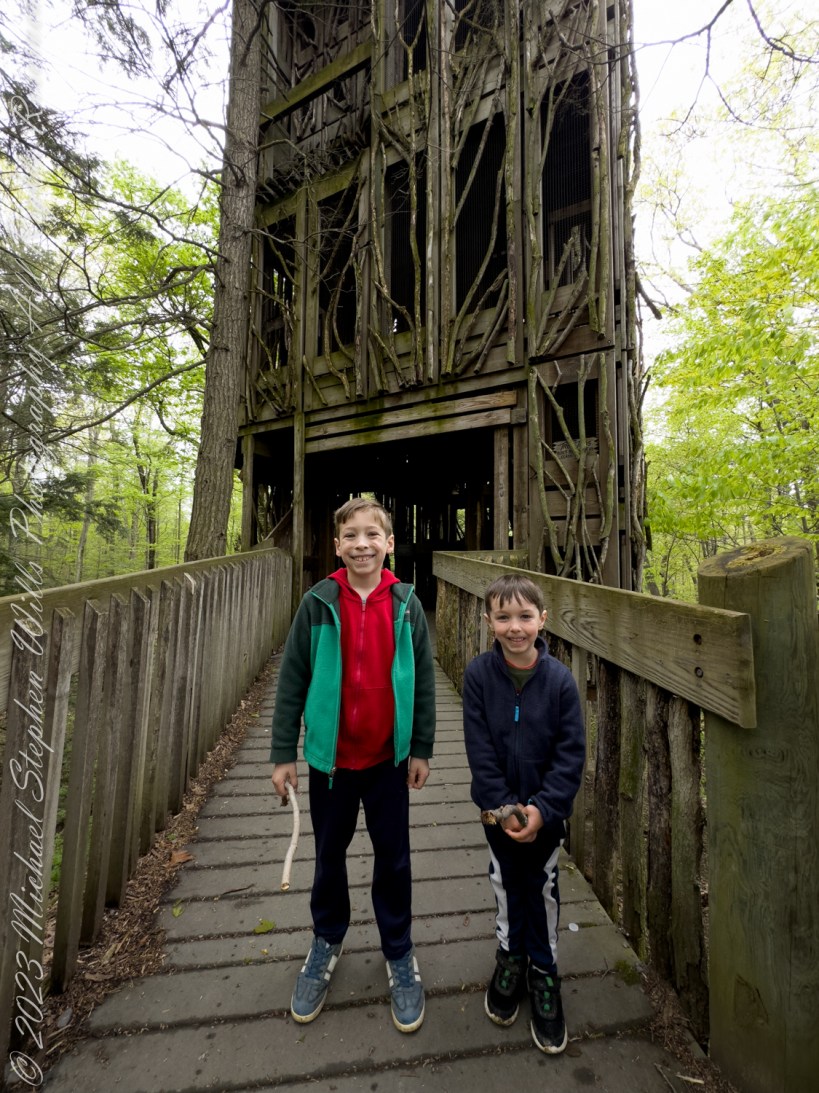
The morning air was crisp and filled with the promise of adventure as we set off for the Cayuga Nature Center, a hidden gem nestled in the heart of Ithaca. The destination: the Treetops Treehouse, a magical structure that promised an immersive experience in nature for me, my sister Diane and two grandsons, Sam and Rory.
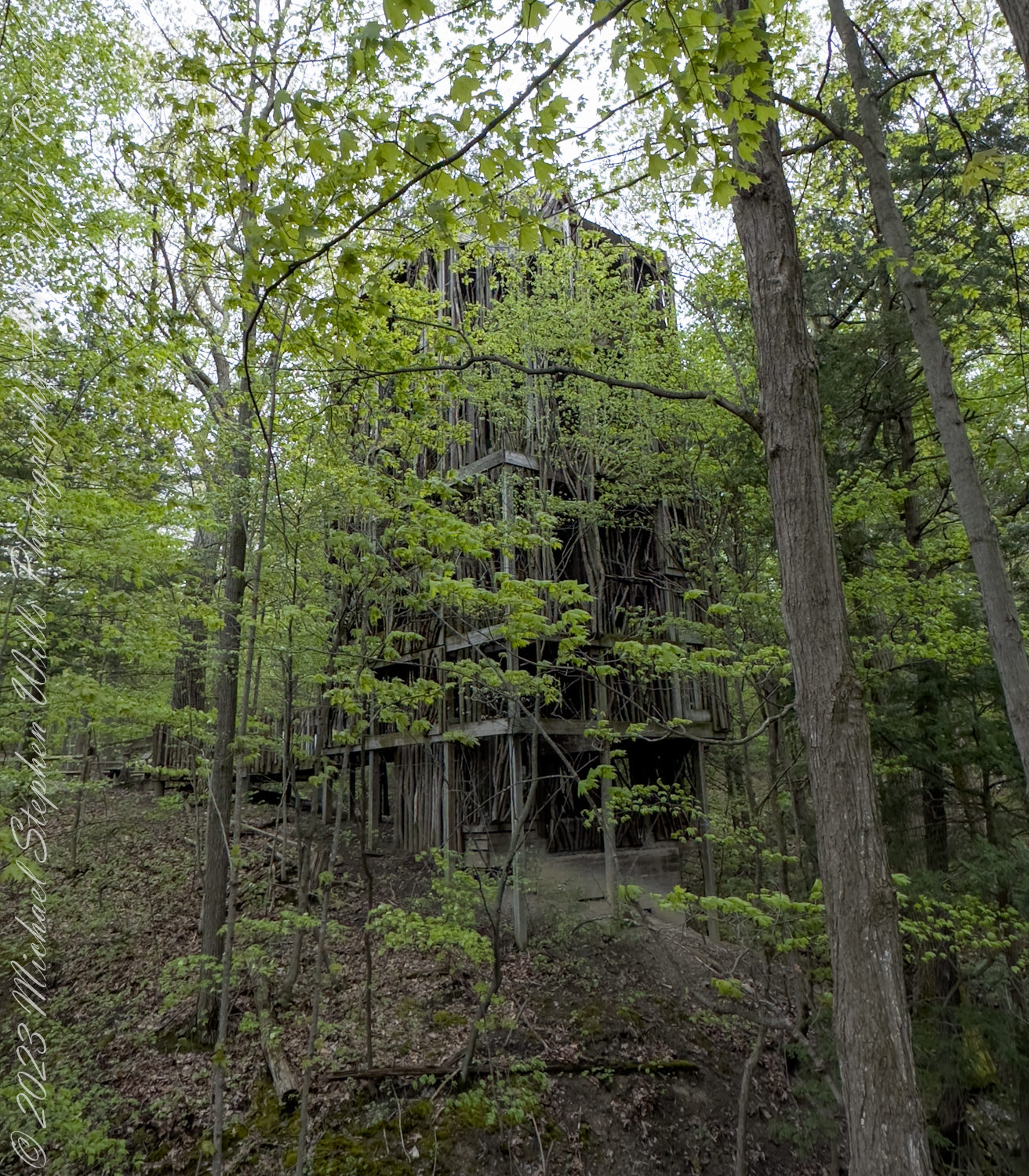
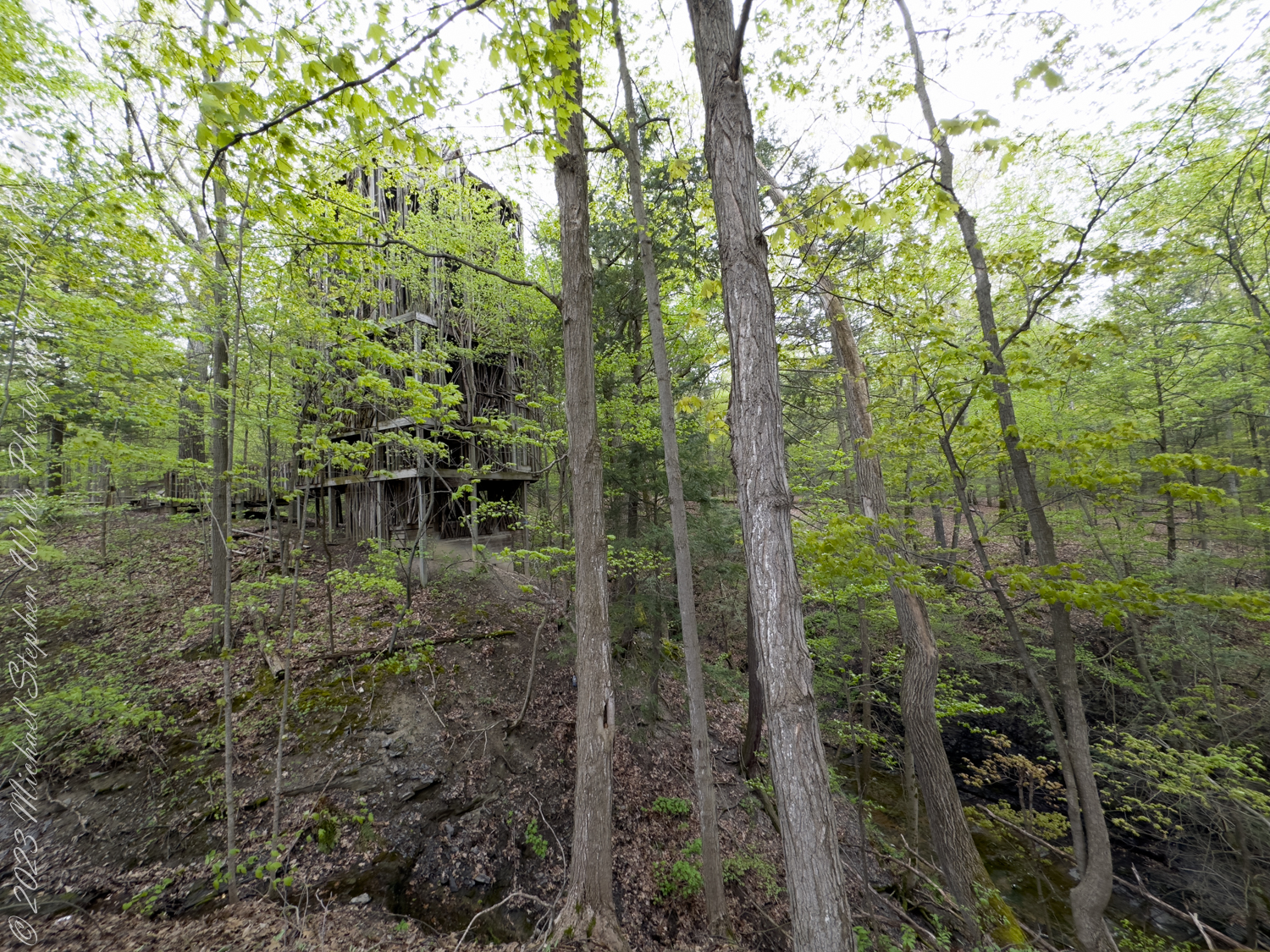
As we approached the treehouse, the boys’ excitement was palpable. The Treetops Treehouse is a marvel of rustic architecture, a multi-level structure that blends seamlessly with the surrounding forest. It was designed to give visitors a bird’s-eye view of the forest canopy, allowing for a unique perspective on the local flora and fauna.
Exploring the Treetops
Upon arrival, we were greeted by the gentle rustle of leaves and the chorus of bird songs. The boys raced ahead, eager to explore the winding pathways and hidden nooks of the treehouse. The structure is constructed entirely of wood, with sturdy railings and wide platforms that offer panoramic views of the forest.
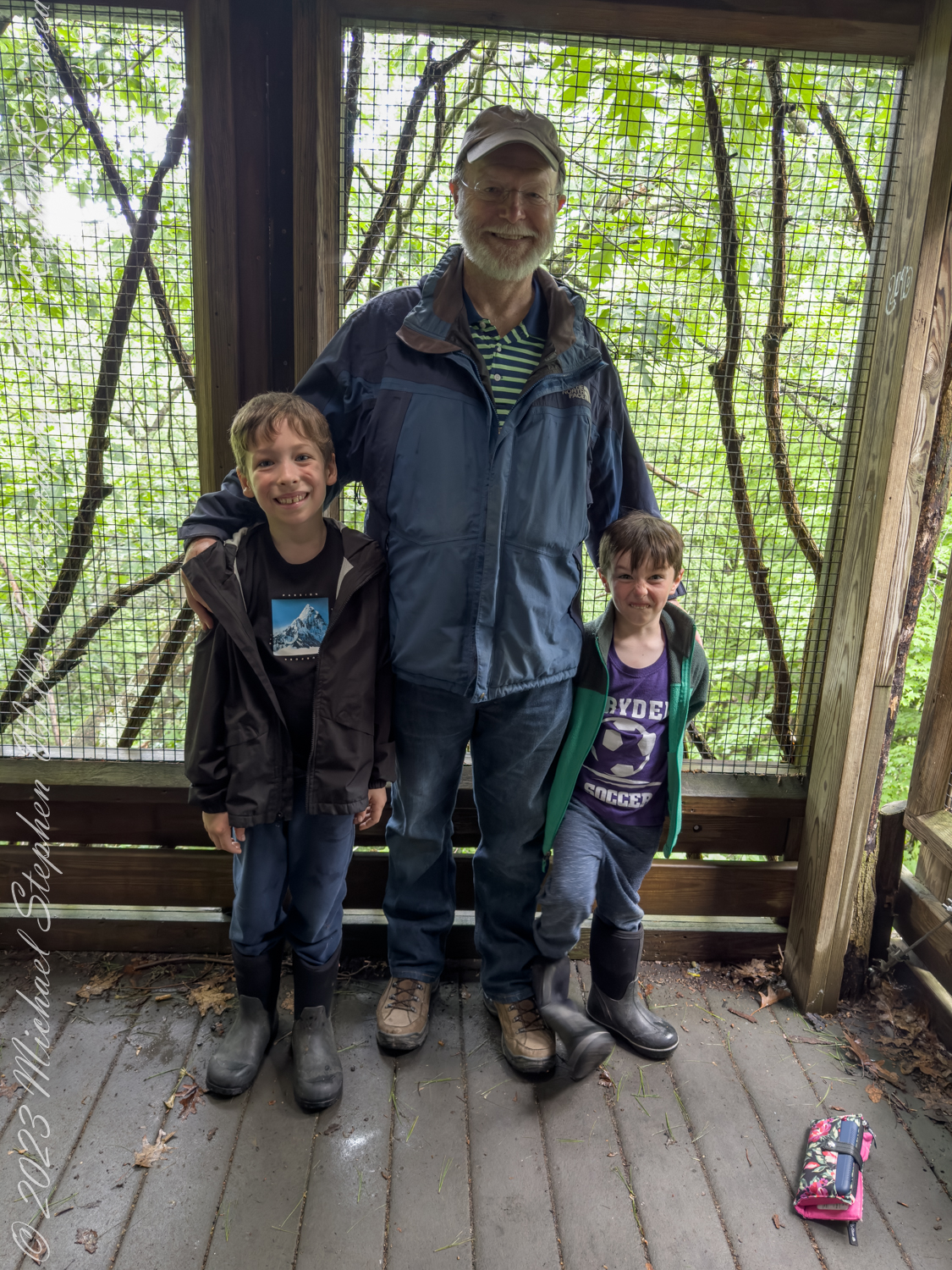
Capturing the moment inside Treetops
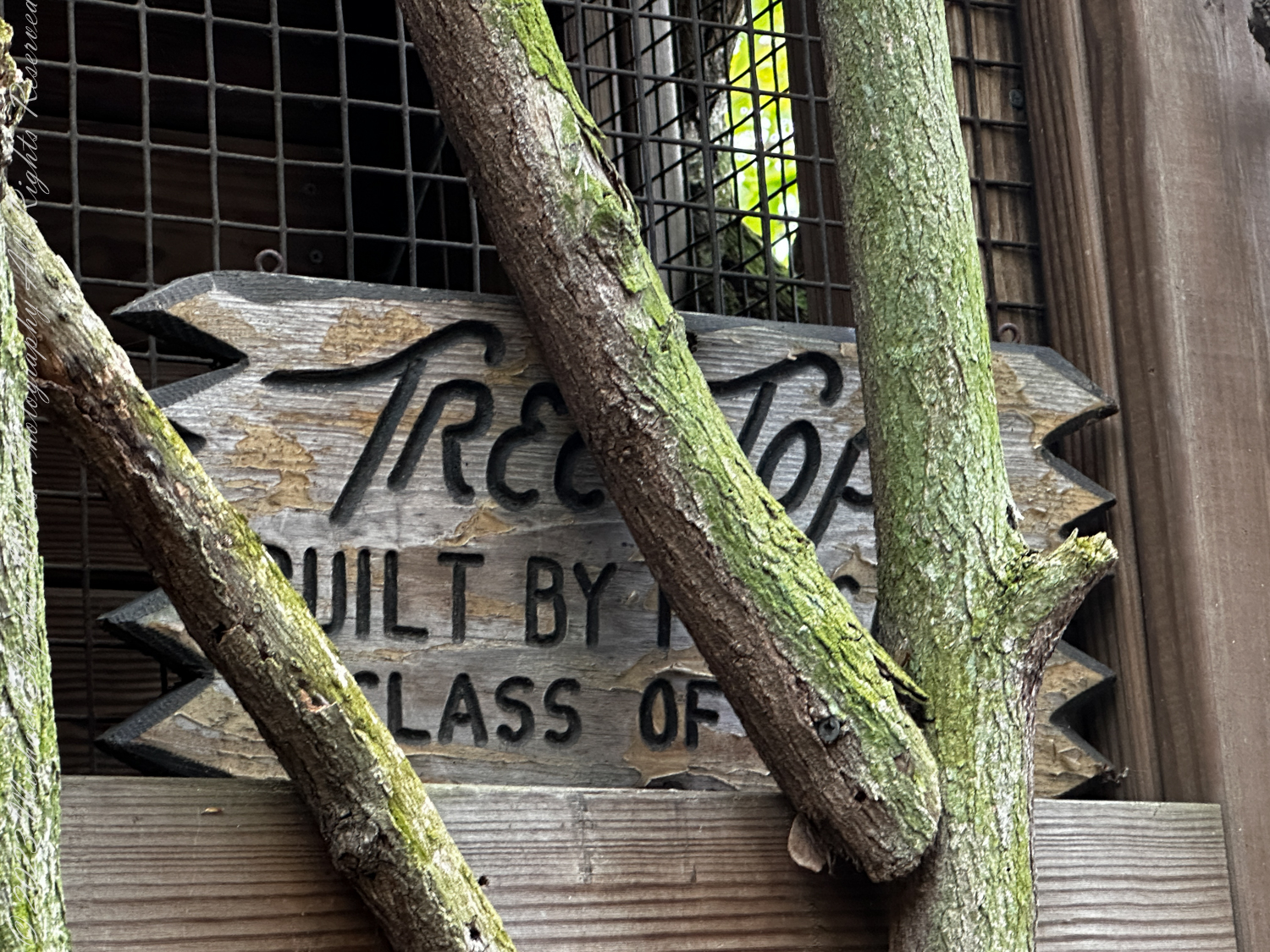
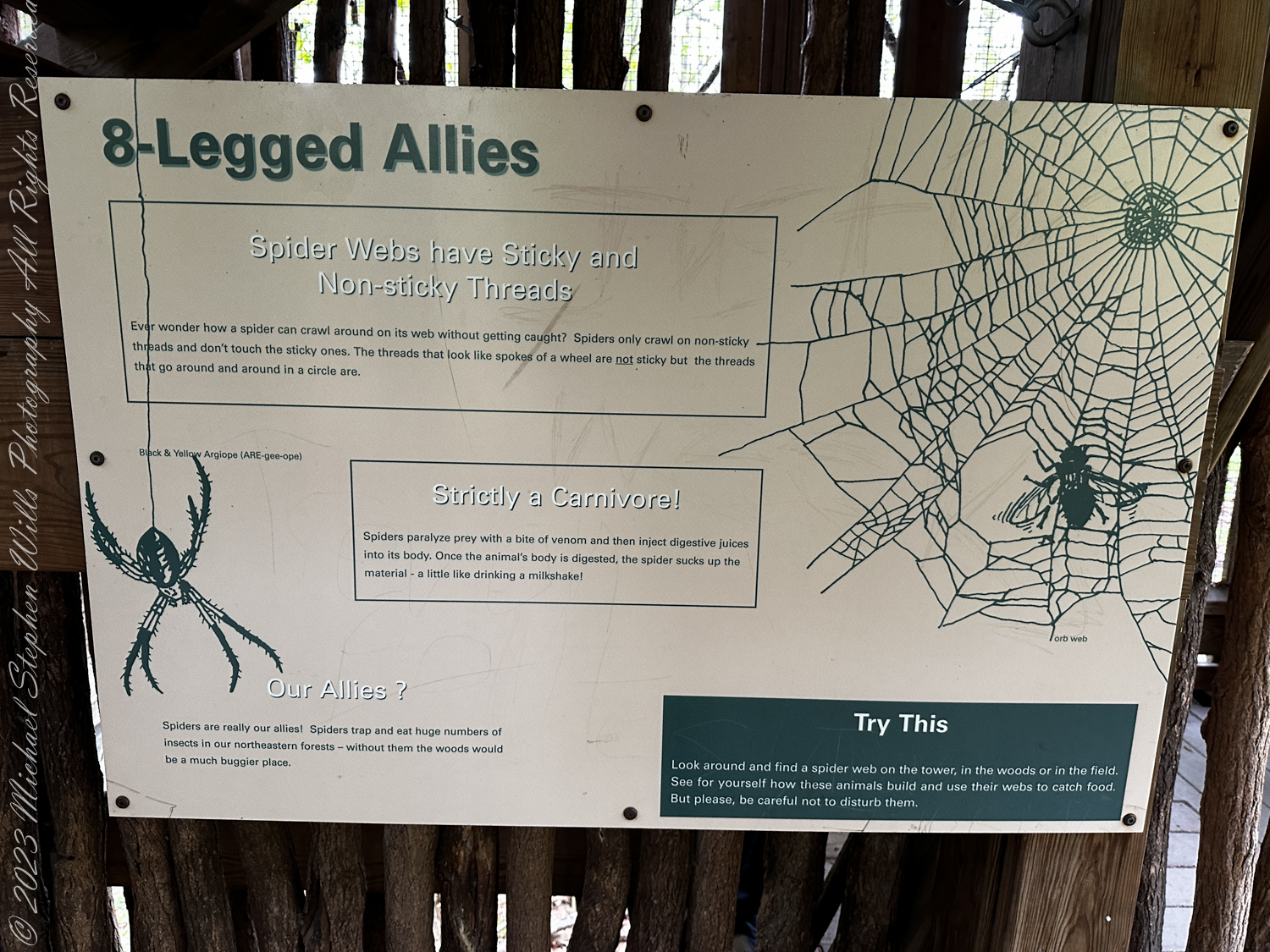
We were particularly fascinated by the various interpretive signs that explained the local ecosystem. We learned about the different species of trees, the birds that nested in the canopy, and the small mammals that scurried along the forest floor. It was a delight to sparked their curiosity of the natural world.
Discovering a Land Snail
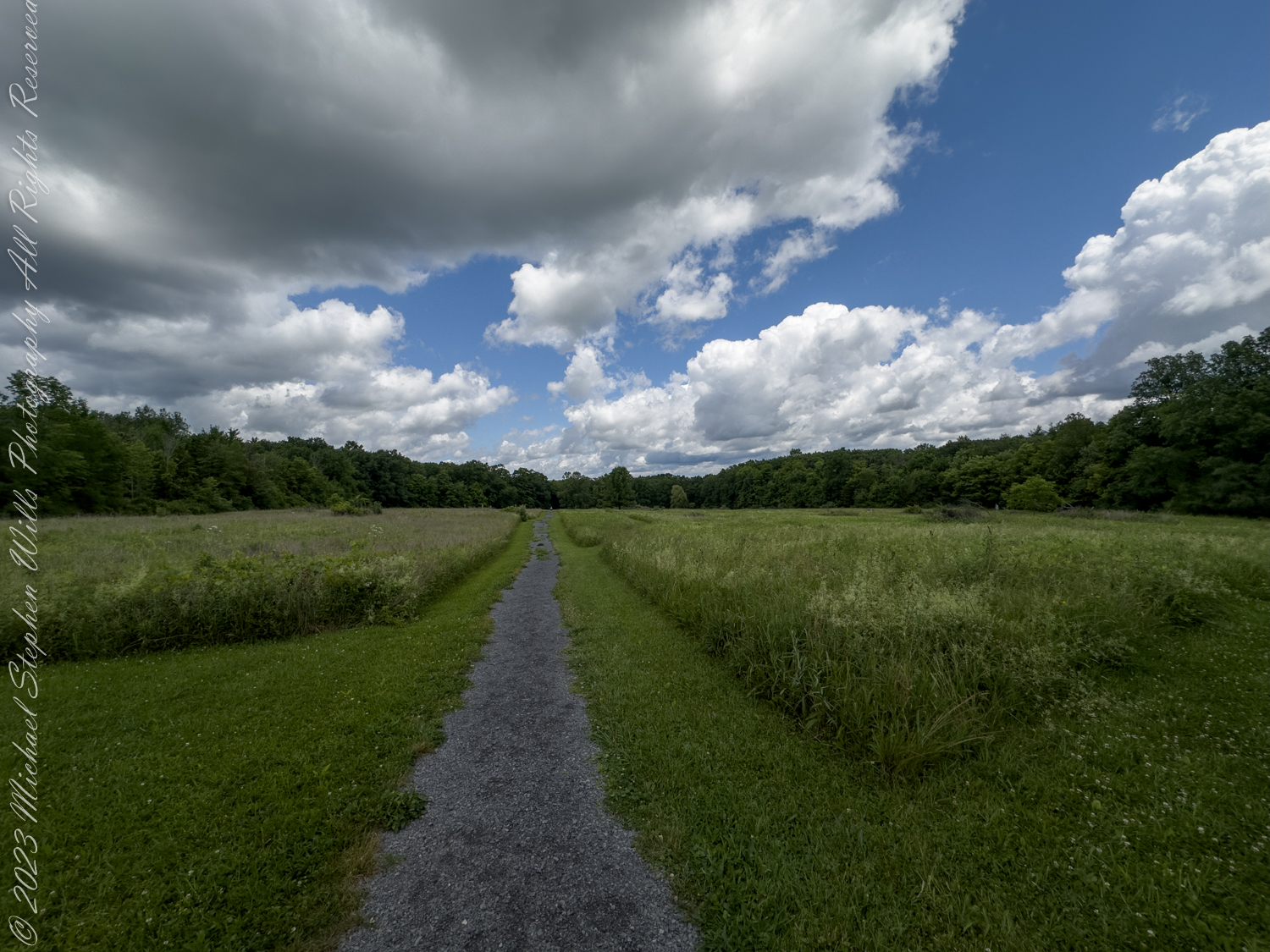
Meadow Trail
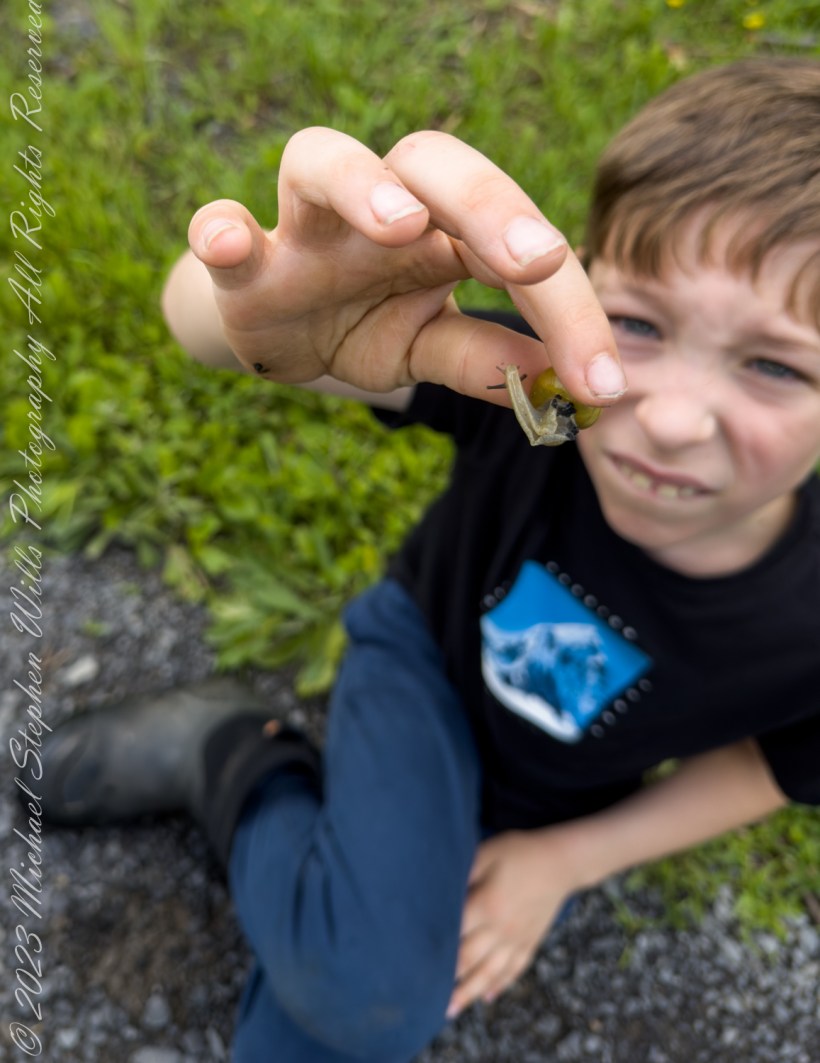
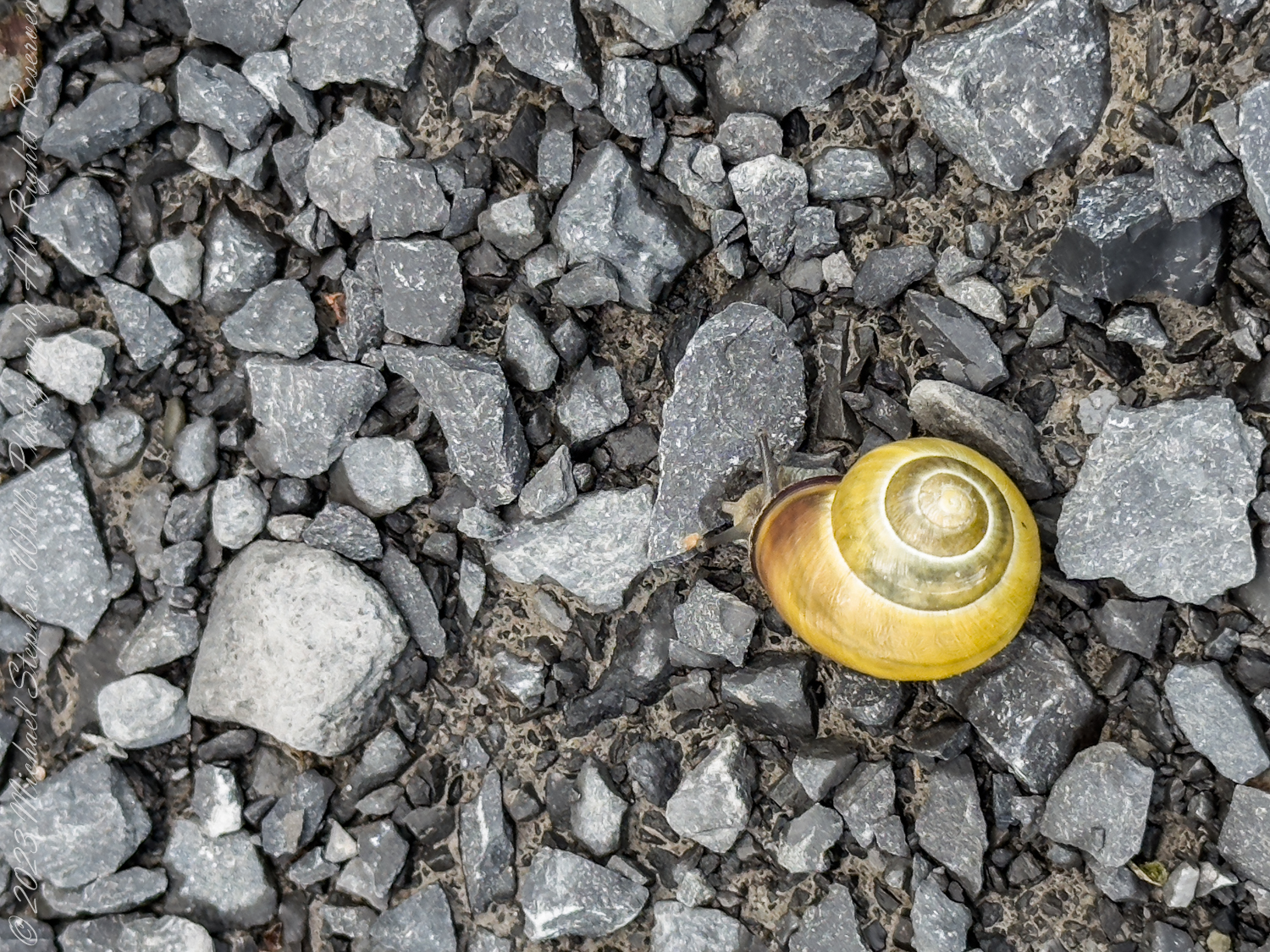
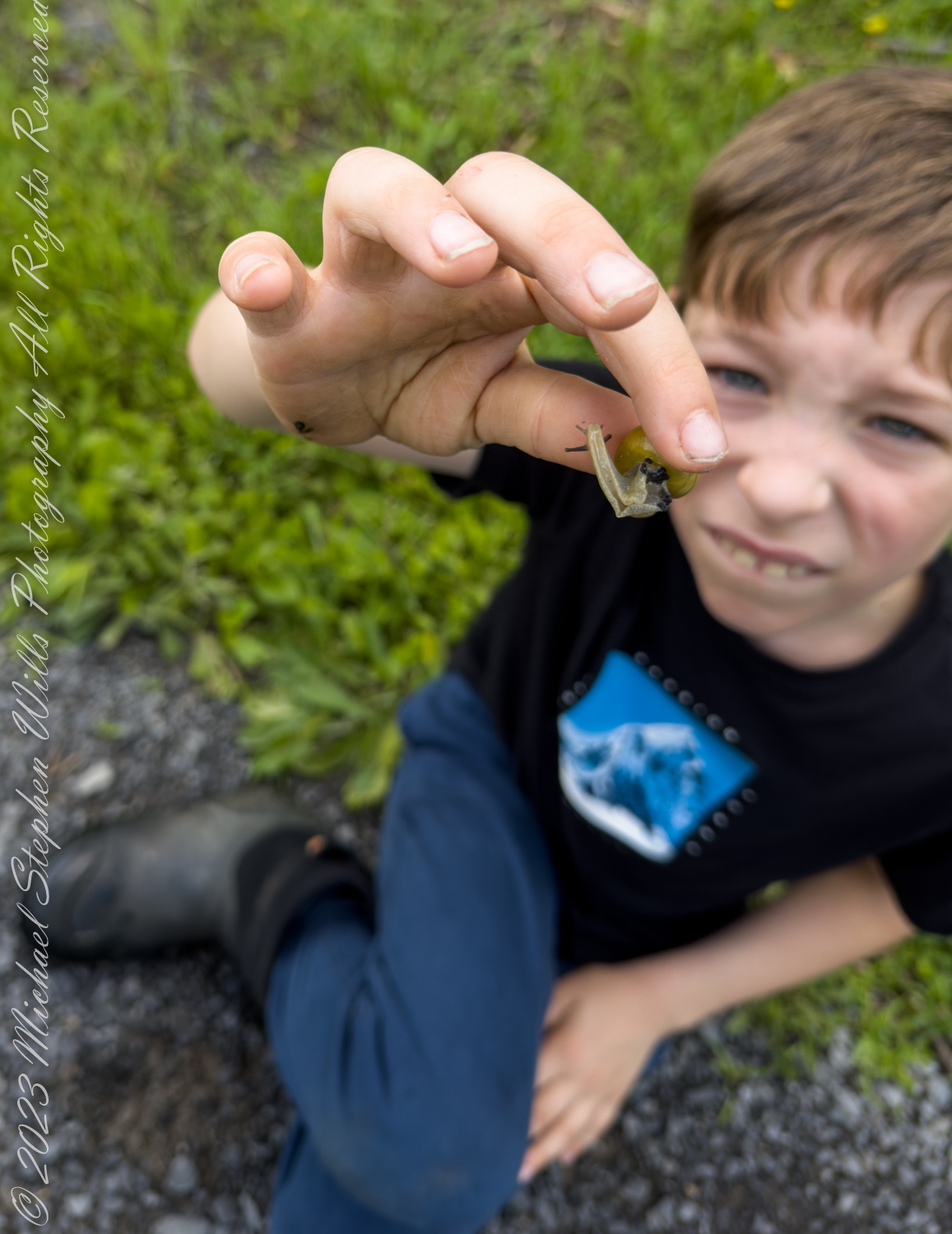
Afterwards, walking along a meadow trail, Rory’s keen eyes spotted something unusual on the ground. Nestled among the fallen leaves was a small land snail, its delicate shell glistening in the dappled sunlight. The boys and I gathered around to observe this tiny marvel of nature.
The snail appeared to be from the genus Triodopsis or Neohelix, possibly Triodopsis albolabris or Neohelix albolabris, known for their white-lipped shells. These snails are common in moist, forested environments and play a crucial role in the ecosystem as decomposers. They feed on decaying plant material, helping to recycle nutrients back into the soil.
The Learning Apiary
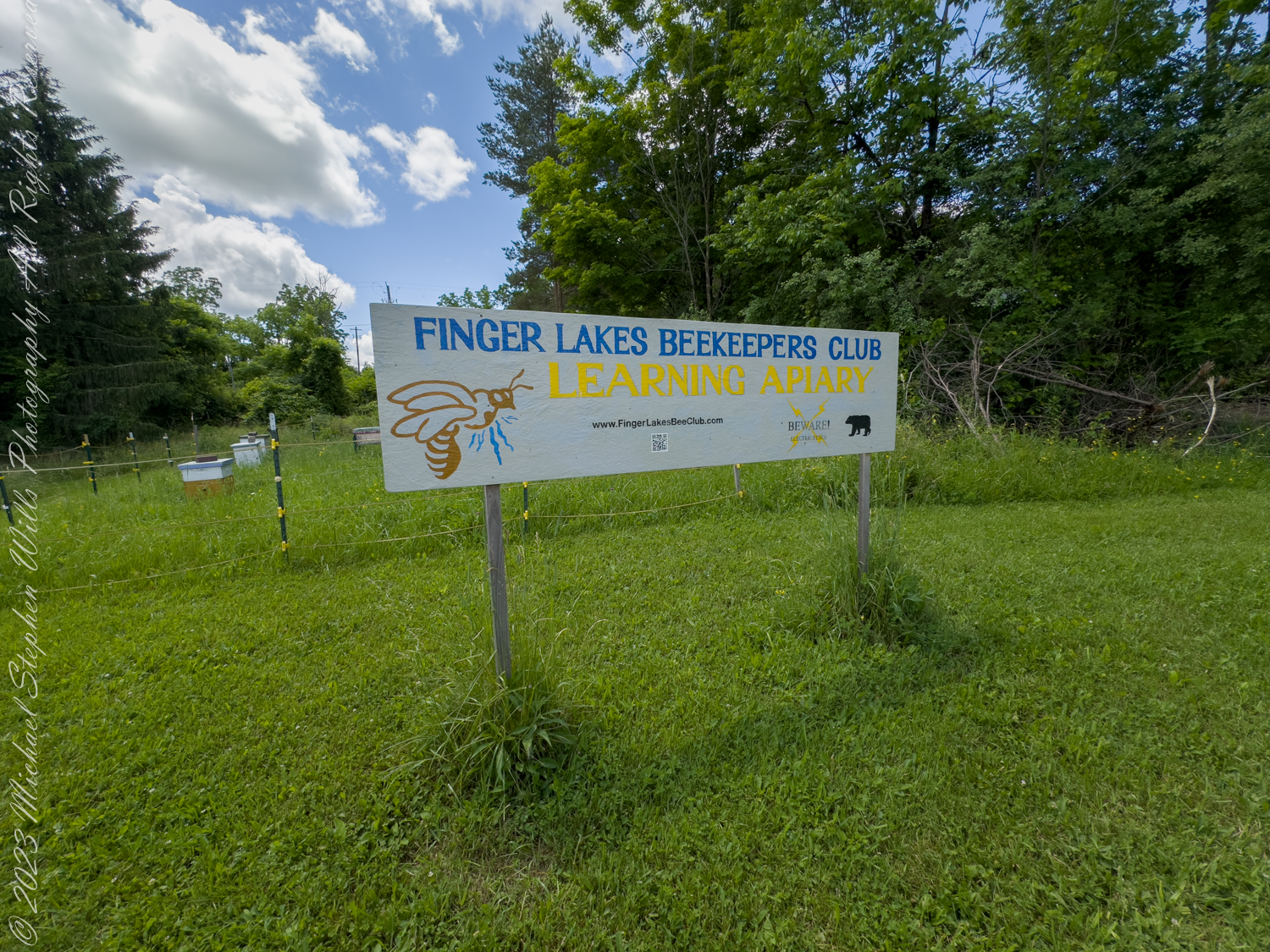
Further along the meadow trail, we made our way to the Finger Lakes Beekeepers Club Learning Apiary. The apiary is a place of learning and discovery, where visitors can gain insight into the fascinating world of honeybees and beekeeping.
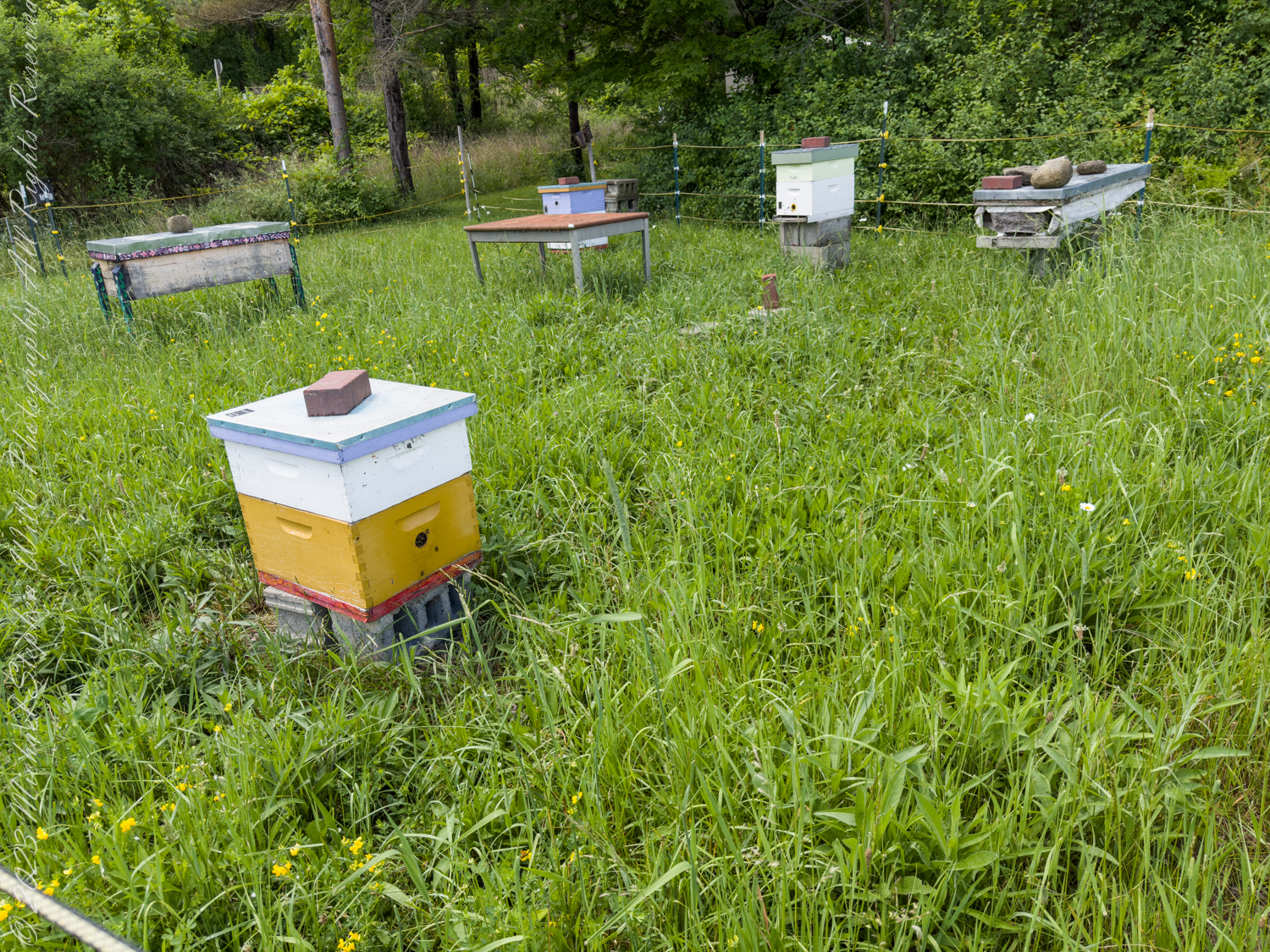
The apiary is composed of several beehives, each carefully maintained by members of the Beekeepers Club. We were careful to keep our distance from the electrified fence, protection against marauding bears and humans.
“ever-busy bees”
Wildflowers in Bloom
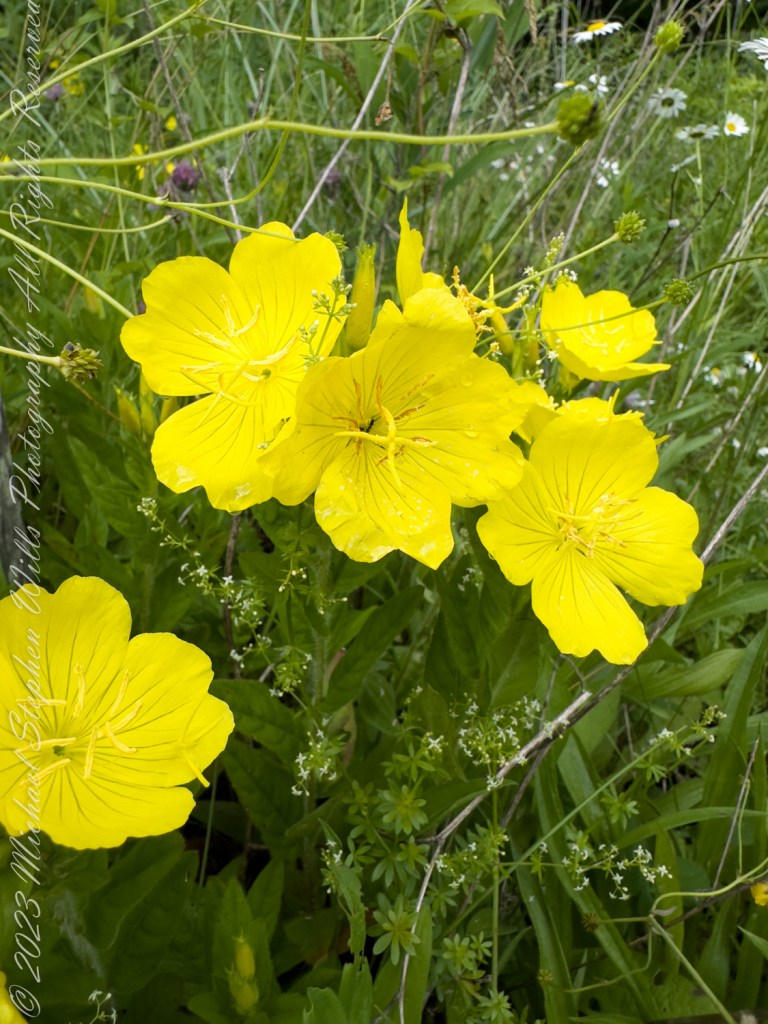
Narrow Leaved Sundrops
As we walked back from the apiary, the trail was lined with a vibrant display of wildflowers. The late spring bloom painted the landscape with splashes of color, from the golden yellows of evening primrose to the delicate whites of daisies.
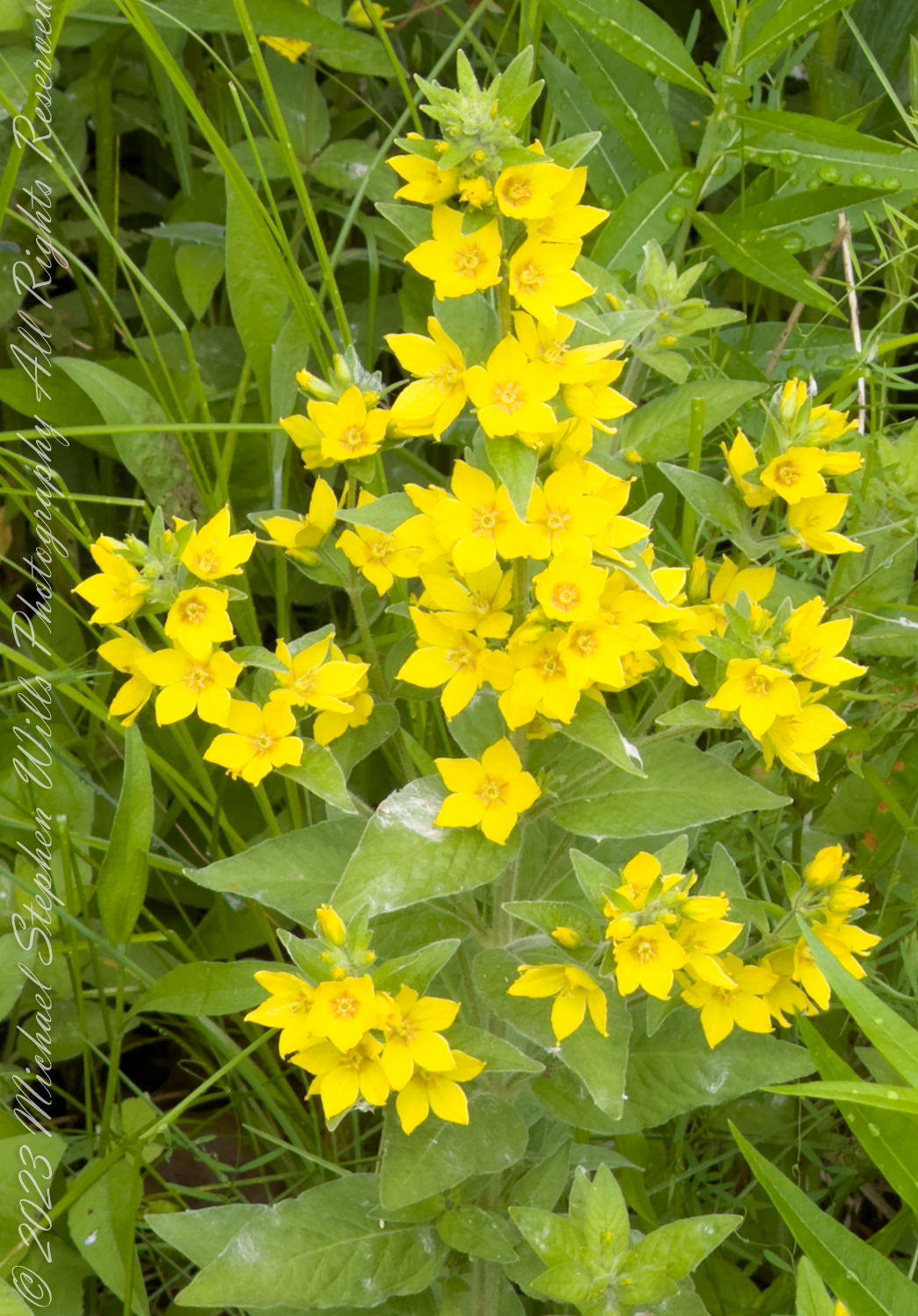
Large Yellow Loosestrife
One particular cluster of bright yellow flowers caught our attention. It was the Lysimachia punctata, commonly known as yellow loosestrife. These star-shaped flowers grow in dense clusters and are a favorite among pollinators. The boys marveled at the intricate patterns and vibrant colors, adding another layer of wonder to our day.
Reflections on a Memorable Day
As the day drew to a close, we found a quiet spot to sit and reflect on our adventures. The boys were bubbling with stories to tell their parents—of the towering treehouse, the tiny snail, the bustling beehives, and the fields of wildflowers. It was a day filled with discovery and learning, one that brought us closer to nature and to each other.
The Cayuga Nature Center and the Finger Lakes Beekeepers Club Learning Apiary provided a perfect setting for an outing that was both educational and exhilarating. The experiences we shared will undoubtedly leave a lasting impression on Sam and Rory, nurturing their love for the natural world and the myriad forms of life that inhabit it.
Meadow View
As we packed up and headed home, the boys already began planning our next adventure. The allure of the natural world, with its endless mysteries and wonders, had woven its spell, and we were eager to explore more of what it had to offer.
Copyright 2024 Michael Stephen Wills All Rights Reserved
Join us as we explore the enchanting “Treetops” treehouse at Cayuga Nature Center. Discover the joy of hide and seek, and the magic of nature, through the eyes of my grandsons on a serene Sunday morning.
The air was crisp and cool as I strolled hand in hand with my grandsons, Sam and Rory, through the vibrant greens of the Cayuga Nature Center. The leaves rustled gently in the Sunday morning breeze, their whispers the only company we had. It was a quiet, serene moment, with no one else around, and the boys’ excitement was palpable as they chattered about their previous visits.
“Grandpa, do you remember this place?” Sam asked, his eyes twinkling with anticipation. Rory, not to be outdone, chimed in, “We have to show you the treehouse! It’s the best part!”
Their enthusiasm was infectious, and I found myself eager to see this magical place they spoke of. We followed a winding path, each step bringing us deeper into the lush woodland, until at last, the imposing structure of the “Treetops” treehouse came into view. It stood tall and mysterious; an intricate wooden edifice cloaked in the verdant embrace of the forest.
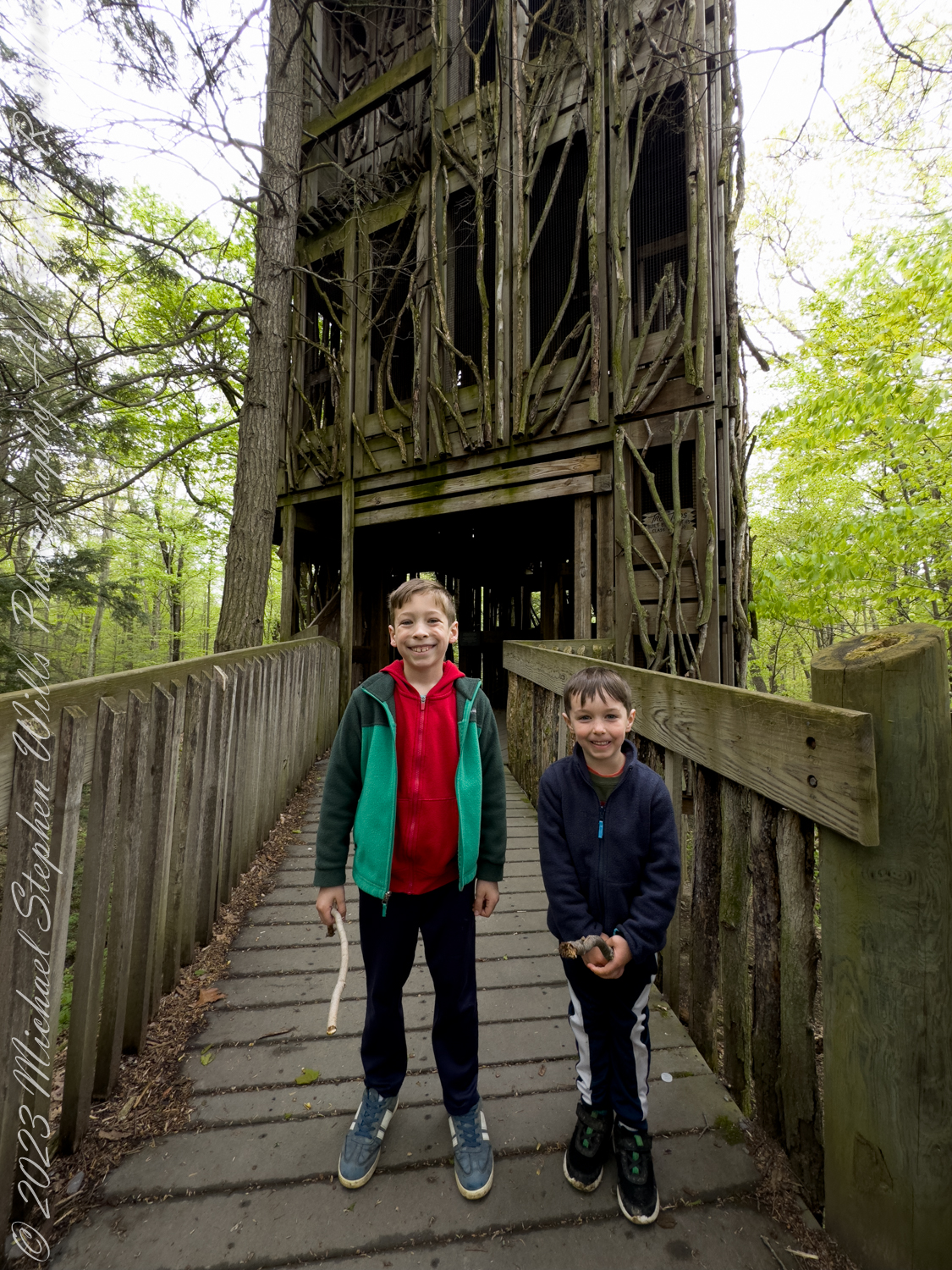
The treehouse was a marvel, its towering form constructed of twisted branches and sturdy planks, blending seamlessly with the natural surroundings. A wooden bridge led up to the entrance, and as we approached, the boys’ pace quickened.
“Let’s play hide and seek!” Rory suggested, his voice echoing with excitement. Sam nodded vigorously, already darting towards the treehouse entrance. “You count, Grandpa!” he called over his shoulder.
I began counting aloud, my voice mingling with the sounds of nature—the chirping of birds, the gentle rustle of leaves. When I reached twenty, I opened my eyes to find the boys had disappeared into the labyrinth of the treehouse. I stepped inside, the cool shade a welcome respite from the sun’s gentle warmth.
The interior was a maze of hidden nooks and winding staircases, each turn revealing a new secret. I could hear the faint giggles of the boys as they tried to stifle their laughter. The treehouse was alive with the echoes of their joy, each sound bouncing off the wooden walls like a symphony of childhood exuberance.
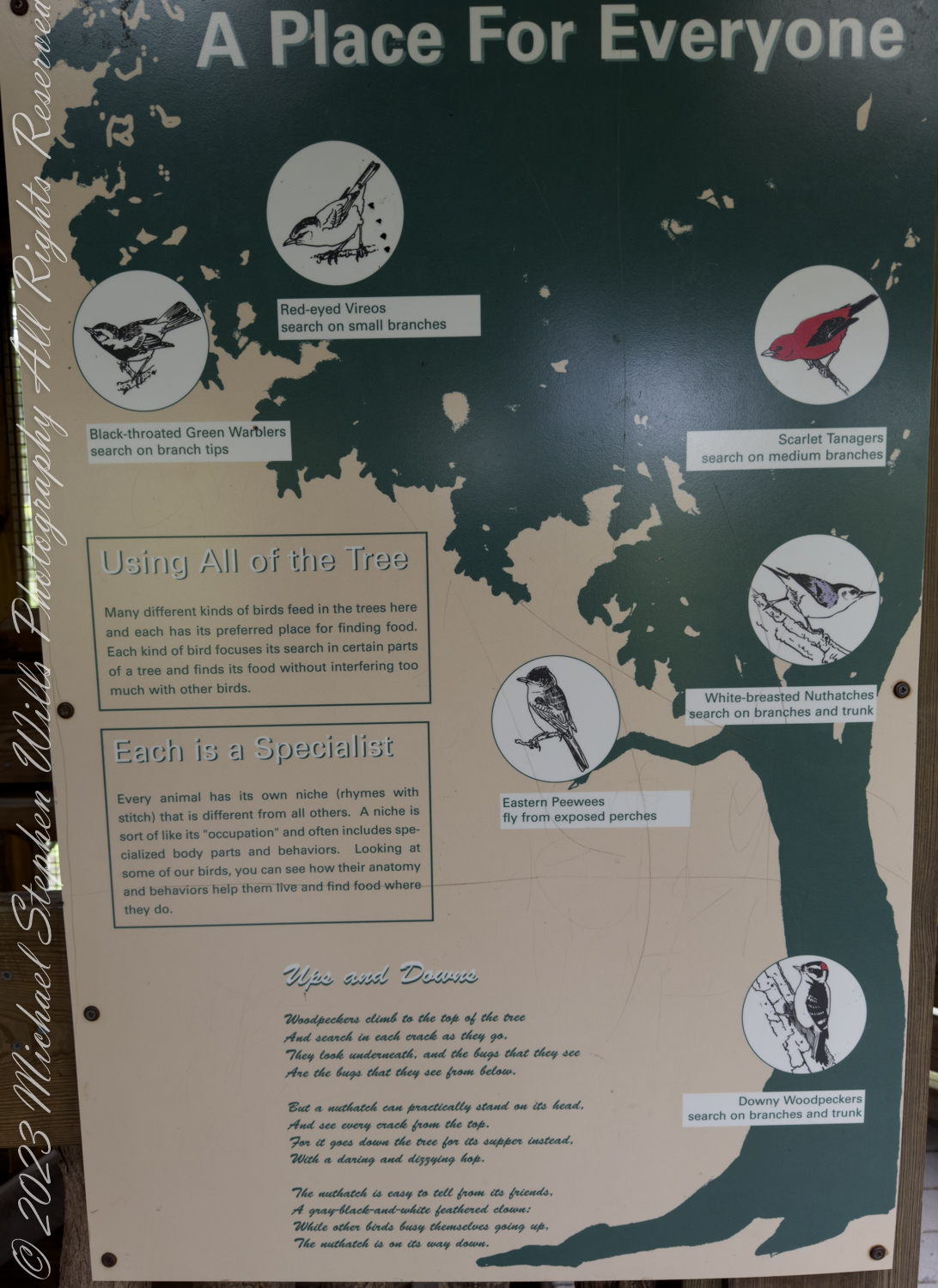
As I navigated the winding paths, I couldn’t help but marvel at the intricate details of the structure. The signs scattered throughout added an educational touch, detailing the lives of the birds and spiders that called this place home. One sign, titled “A Place For Everyone,” explained how each bird species had its niche, much like the boys had found their hiding spots.
“Found you!” I called out, spotting Sam’s bright red shirt from behind a wooden beam. He laughed and dashed off, his footsteps a rhythmic drumbeat on the wooden floor. Rory was next, his giggles giving away his hiding spot behind a thick cluster of branches.
We continued our game, the treehouse transforming into a magical playground where time seemed to stand still. The boys’ laughter filled the air, mingling with the natural symphony of the forest. We explored every corner, from the highest platform with its breathtaking view of the surrounding forest to the dark, cozy nooks perfect for hiding.
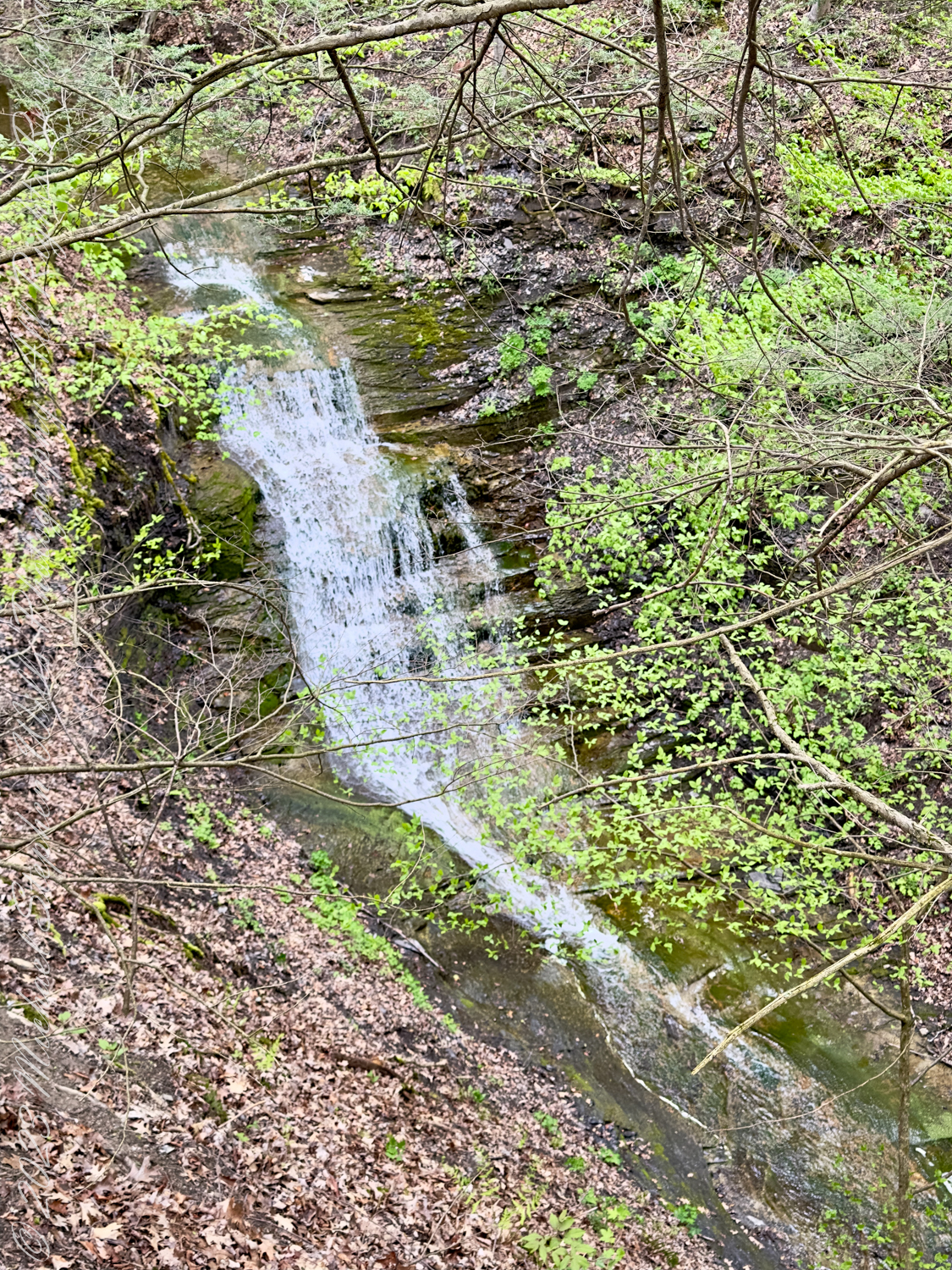
Phillips Falls is a picturesque waterfall located on Comstock Creek in view of the Treetops treehouse within the Cayuga Nature Center in Ithaca, New York. The falls are a highlight of the Nature Center, offering visitors a scenic and tranquil spot to enjoy the natural beauty of the area. The waterfall is accessible via the nature trails that wind through the Center’s diverse landscapes, including forests and meadows.
Here are a few key points about Phillips Falls:
Scenic Beauty: Phillips Falls is known for its serene and beautiful setting, making it a popular spot for nature enthusiasts, hikers, and photographers.
Hiking Trails: The falls can be reached by hiking trails within the Cayuga Nature Center. The trails vary in difficulty, providing options for different levels of hikers.
Educational Programs: The Cayuga Nature Center often includes Phillips Falls in its educational programs and guided tours, focusing on the ecology and geology of the area.
Wildlife Habitat: The area around Phillips Falls is home to a variety of wildlife, making it a great spot for birdwatching and observing other animals in their natural habitat.
Seasonal Changes: The appearance and flow of the waterfall can change with the seasons, offering a different experience for visitors throughout the year.
Overall, Phillips Falls is a cherished natural feature of the Cayuga Nature Center, providing both a peaceful retreat and an educational experience for visitors.
After our game, we stood on the bridge, looking out over the creek below. The water sparkled in the sunlight, a serene contrast to our playful morning. “This place is amazing,” I said, turning to the boys. They nodded, their faces flushed with happiness.
“We love coming here,” Sam said. “It’s like a secret world.”
Rory nodded in agreement. “And now you know our secret too, Grandpa.”
As we made our way back down the path, I felt a deep sense of gratitude for this moment, for the chance to share in the boys’ joy and to see the world through their eyes. The “Treetops” treehouse had not only been a place of play but also a bridge between generations, a testament to the simple, timeless pleasures of exploring nature together.
Phillips Falls on Comstock Creek, seen from Treetops
Copyright 2024 Michael Stephen Wills All Rights Reserved
Join me on a serene Christmas Eve stroll around Beebee Lake, where winter’s bite and the stillness of nature blend into a captivating scene. Through the simple lens of my iPhone 7, witness the frozen beauty of the lake, the historic backdrop of Cornell University, and the timeless dance of nature and history. Experience the quiet awe of this winter day.
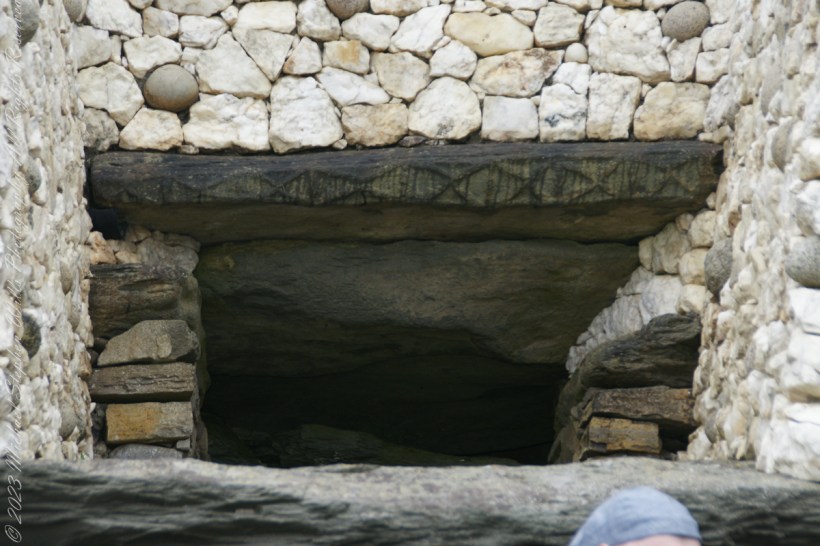
Step into the ancient world of Neolithic monuments and discover the astounding astronomical knowledge of our ancestors. Explore the Newgrange Lightbox in Ireland and similar marvels across Europe, revealing a deep connection between ancient peoples and the cosmos. Join me in unveiling these architectural wonders.
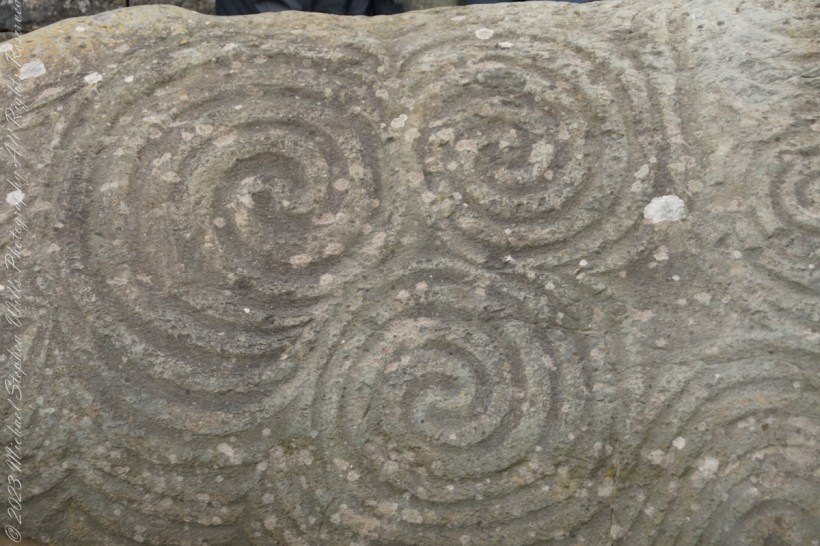
Discover the mysteries of the Newgrange monument’s Entrance Stone, a showcase of exquisite Neolithic rock art. Explore spirals, lozenges, and geometric designs that define European megalithic art and delve into their potential meanings and cultural significance. Join me in uncovering the secrets of this ancient Irish wonder.



 Michael Stephen Wills Photography