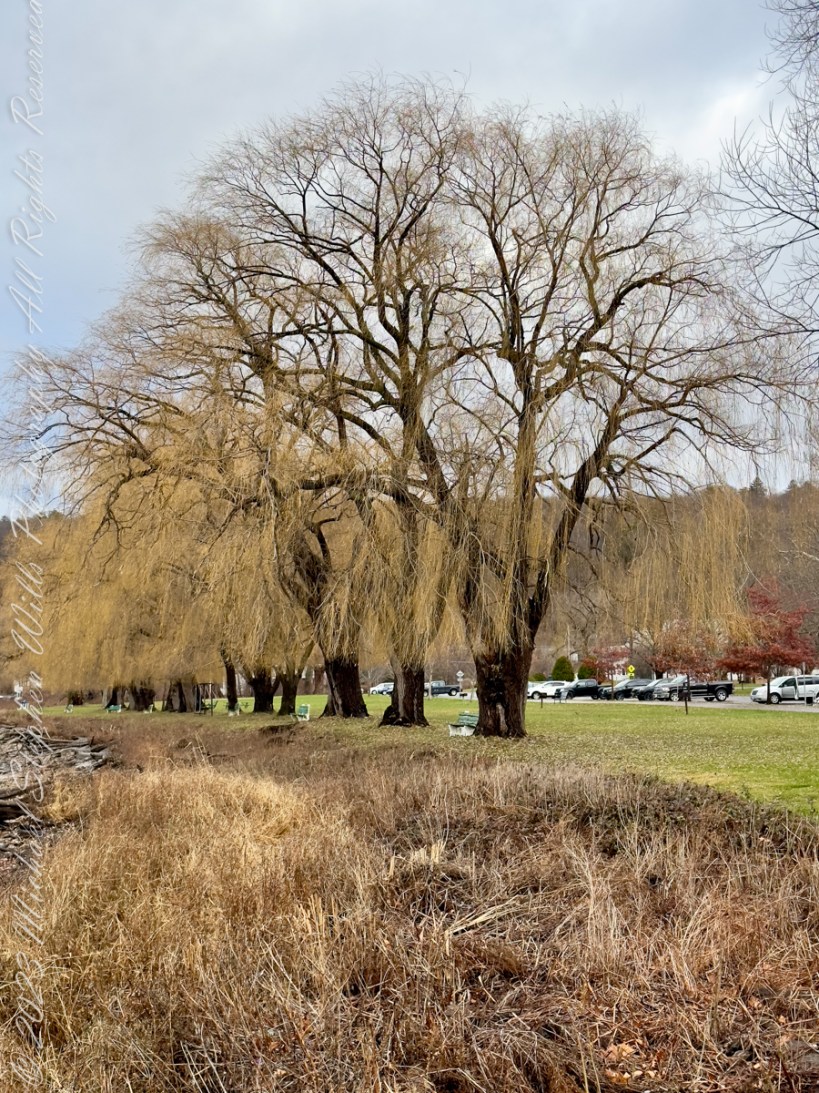
Lighthouse Details
Dive into our captivating photo series for a closer look at Cape Canaveral’s lighthouse daymark—your visual gateway to a beacon of history and humanity’s reach for the stars.

Step into a snapshot of history with the first of a series on early space flight at Cape Canaveral, where the lighthouse stands as a silent guardian over tales of sea and sky.
Explore the enchanting Lick Brook in the Finger Lakes region, where the Land Trust’s conservation efforts preserve nature’s beauty. Join me to uncover this hidden gem and its ecological wonders.
Join me in the mesmerizing world of photography as we capture the ethereal beauty of a frosty January morning, where history meets nature’s artistry. Explore more on our blog.
Come in and experience how humans are dwarfed by the eons
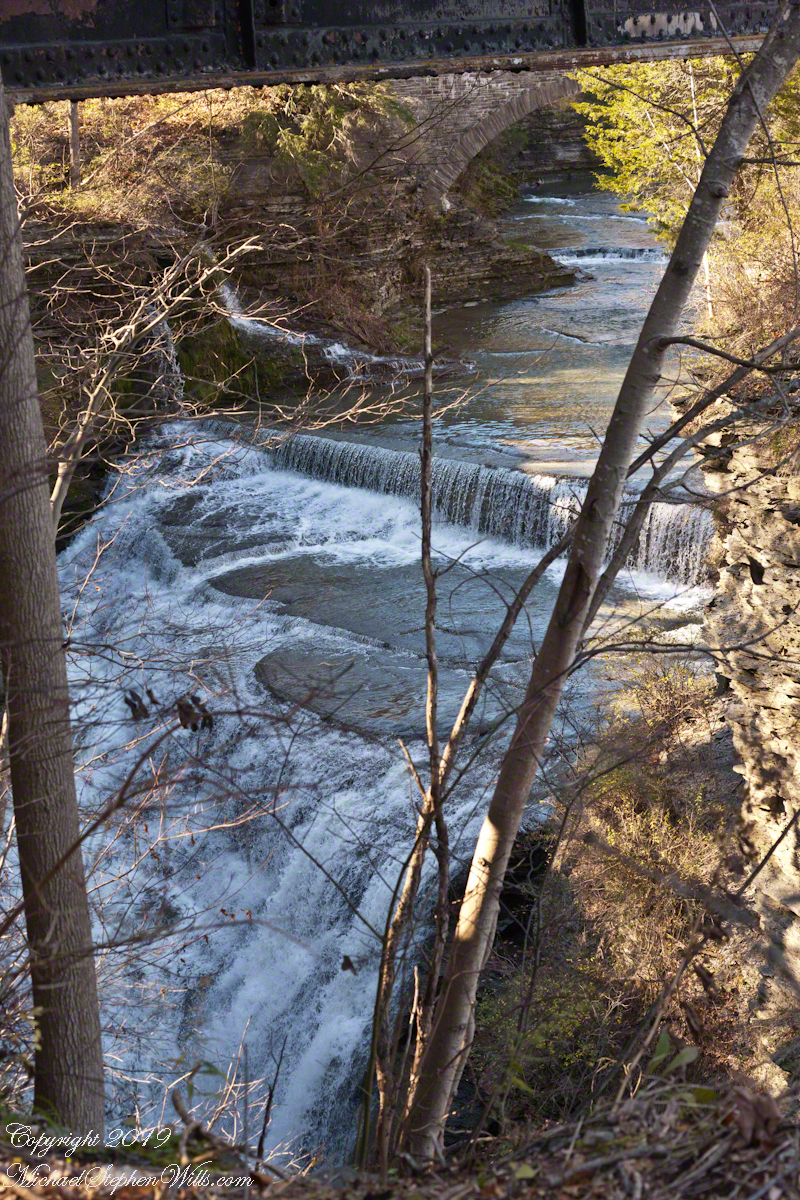
Experience here the frozen beauty of Taughannock Falls in winter, the verdant revival of spring, the lush warmth of summer, and autumn’s fiery transformation. The falls symbolize the unending cycle of seasons.
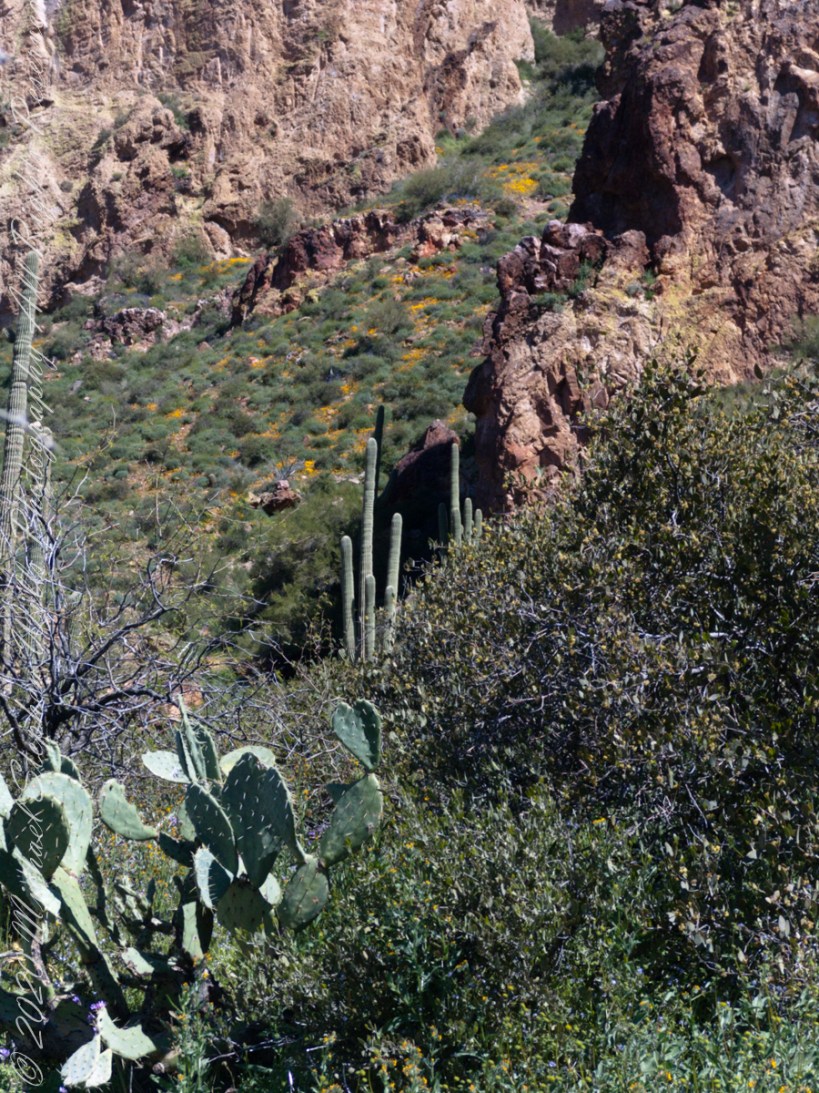
Step into the heart of the Sonoran Desert with me, where the saguaro cactus stands as a timeless giant, a symbol of resilience and beauty. This majestic sentinel of the Southwest is not just a plant; it’s a vibrant ecosystem and a cultural icon, embodying the spirit of endurance. Let’s explore its centuries-long journey, its role as a haven for desert wildlife, and its deep significance to the indigenous peoples. Join me in celebrating the saguaro’s enduring legacy, a narrative of survival and the profound beauty of life in the harshest conditions.
Michael Stephen Wills’ photos depict the vibrant nature of the Finger Lakes.
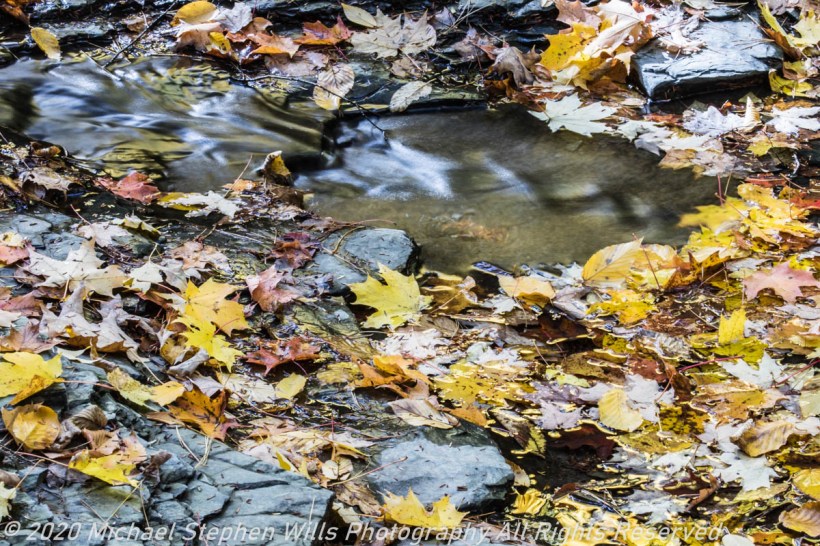
In the Thayer Preserve during a dry autumn, Lick Creek forms still pools that act like nature’s mirrors, capturing the autumnal scenery in a breathtaking display of reflection. Scattered maple leaves add depth, disrupting yet enhancing the scene’s tranquility. These pools offer a unique perspective of nature’s beauty, sketching a vivid picture of changing seasons. As the dry season progresses, the mirror-like pools shrink, encapsulating the fleeting beauty of autumn.
In Thayer Preserve, where Lick Creek meanders, a unique spectacle unfolds during a dry autumn. Here, still pools form along the creek, transforming into natural mirrors. These pools capture a moment in time, reflecting an autumnal world above.
The scene is breathtaking. A bright sky, painted in shades of blue, stretches endlessly above. Trees, adorned in brilliant yellow, stand tall, their leaves like nature’s own gold. In these pools, their reflections are so clear, so vivid, it’s as if another world lies just beneath the surface. This is nature’s artistry at its finest, a canvas where the sky meets the earth in a tranquil embrace.
But there’s a twist in this serene tableau. Maple leaves, scattered across the water’s surface, disrupt the mirror-like stillness. They are like brushstrokes on a masterpiece, adding texture and depth. These leaves, once part of the lofty canopy, now rest on the water, each one a reminder of the fleeting nature of beauty. They break the illusion, yet somehow enhance it, adding a touch of reality to this dreamlike scene.
This is a place of contrasts. The still pools contrasts with the dynamic life of the forest. The unbroken reflections contrast with the scattered leaves. It’s as if nature is playing a game of hide and seek with reality, teasing the observer with glimpses of both the real and the reflected world.
In Thayer Preserve, the story of autumn is told not just in the changing leaves but in the waters of Lick Creek. These pools are like nature’s mirrors, reflecting the season’s palette. They offer a different perspective, a view from below, where the sky and trees trade places with their watery twins.

As one walks along Lick Creek, the beauty of Thayer Preserve unfolds in these reflective pools. Each step brings a new image, a new blend of sky, tree, and water. It’s like walking through a gallery where nature is the artist, and each pool is a frame capturing a moment of autumnal splendor.
These pools are more than just a feature of the landscape. They are storytellers. They tell of a season of change, of a time when the world dresses in its most vibrant colors before the quiet of winter. They speak of the cycle of life, of leaves that fall to rise again in the reflections.
As autumn progresses and the dry season deepens, these pools will shrink, their reflections fading away. But for now, they are here, holding within them a world of brilliant yellows and blues, a world where the sky lies beneath your feet, and the trees grow upside-down.
This is the magic of Thayer Preserve in autumn. It’s a place where nature plays with perceptions, where reflections create a world as real as it is illusory. Here, on the banks of Lick Creek, the still pools are not just bodies of water. They are windows into another world, a world where nature’s beauty is doubled, and the ordinary becomes extraordinary.
Ithaca’s bedrock, formed 370 million years ago, deeply influences its landscape, neutralizes rainwater’s acidity, and carries a story of Earth’s resilience and transformation.
In Ithaca, New York, the story of the land is deeply rooted in its geology. Beneath the vibrant autumn leaves and along the path of Lick Creek lies a bedrock formed 370 million years ago. This ancient foundation, once the sediment of a vast inland sea, now forms the solid base upon which the city stands.
The bedrock here is a silent witness to Earth’s long history. Originating in the Devonian period, it marks a time when vast seas covered much of the Earth’s surface. Within these ancient waters, life flourished, leaving behind sediments that, over eons, transformed into the layered rock beneath Ithaca.
These layers are more than just historical records; they actively shape the landscape. The bedrock influences soil composition, affects plant growth, and directs the flow of streams. Lick Creek, with its clear waters, is one such stream that interacts intimately with this bedrock.
In autumn, the beauty of this interaction is vividly displayed. The red and yellow maple leaves create a striking contrast against the grey-blue backdrop of the bedrock, a blend of the vibrant present with the ancient past. These fallen leaves, over time, decompose and enrich the soil, continuing a cycle of life that this bedrock has supported for millions of years.
This bedrock also plays a crucial role in water chemistry. As acidic rainwater percolates through it, a remarkable transformation occurs. The bedrock naturally neutralizes the acidity of the rainwater. By the time the water emerges as streams, it is buffered to a neutral pH. This process is vital for maintaining the ecological balance of the area. The streams that flow out, including Lick Creek, support diverse ecosystems thanks to this natural filtration process.

The neutral pH water is crucial for the flora and fauna of Ithaca. It sustains the forests, the wildlife, and the natural beauty that defines the region. This water, once acid rain, purified by the ancient bedrock, now nurtures life in its journey.
In Ithaca, the bedrock is a testament to the enduring nature of our planet. It reminds us of the continuous cycle of transformation that defines the Earth. The contrast of the autumn leaves against the bedrock is not just a scene of ephemeral beauty; it symbolizes the dynamic interplay between the living and the geological, between the present and the deep past.
The bedrock of Ithaca, with its ability to neutralize acidic water, highlights the interconnectedness of natural processes. It shows how the Earth self-regulates and sustains life in intricate ways. As the buffered, neutral pH water of Lick Creek flows over this bedrock, it carries with it the story of a planet that is constantly renewing and sustaining itself.
In this landscape, the past is not just a memory; it is an active participant in the present. The bedrock, the autumn leaves, and the flowing streams tell a story of resilience, continuity, and the beauty of nature’s balance. This is the legacy of Ithaca’s bedrock, a legacy of endurance, transformation, and life.