Fens, Bogs, and Flowing Water of Malloryville Preserve of Freeville, New York

Discover Malloryville Preserve in Freeville, New York—a hidden Finger Lakes wetland of fens, bogs, and flowing water where glacial history and rare plants meet.

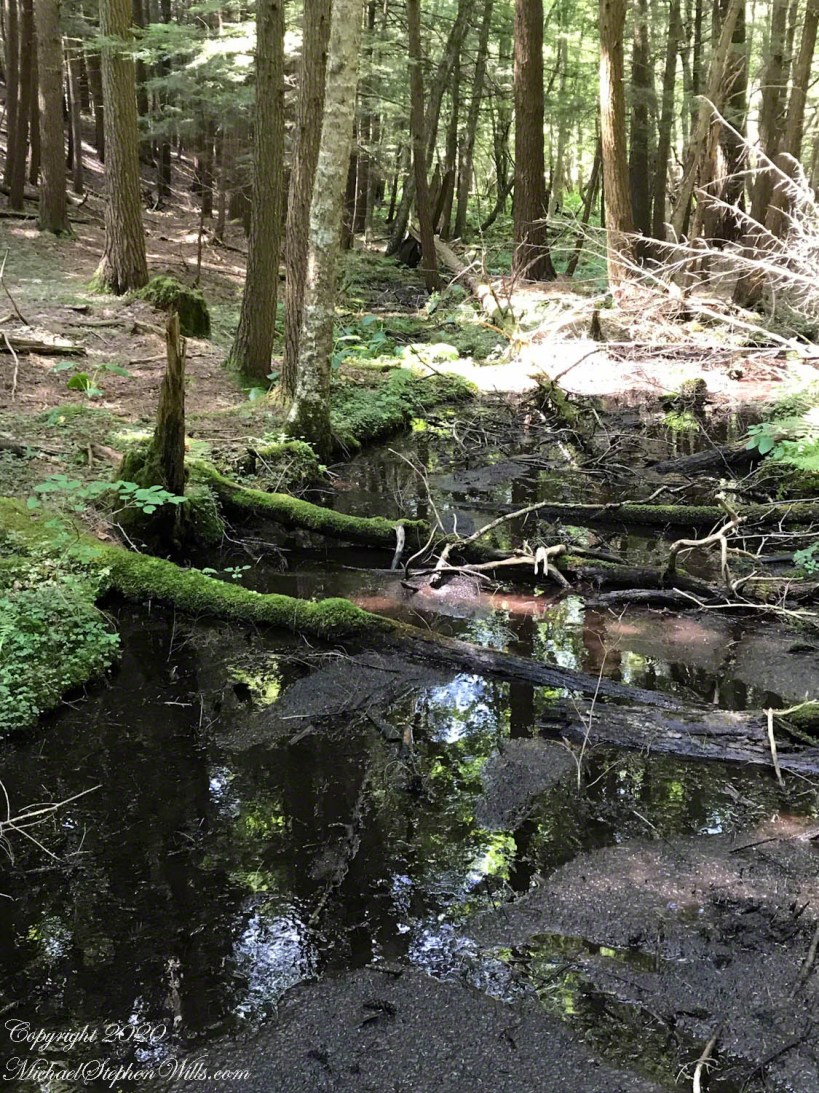
Water defines the O.D. von Engeln Preserve at Malloryville long before we see or hear it. At first, it is only a dampness in the air, a coolness at ankle level, a dark sheen between sedge tussocks. In the space of a half-hour walk, we pass through fen, bog, marsh, and swamp, each distinct, yet bound together by the same slow, persistent flow.
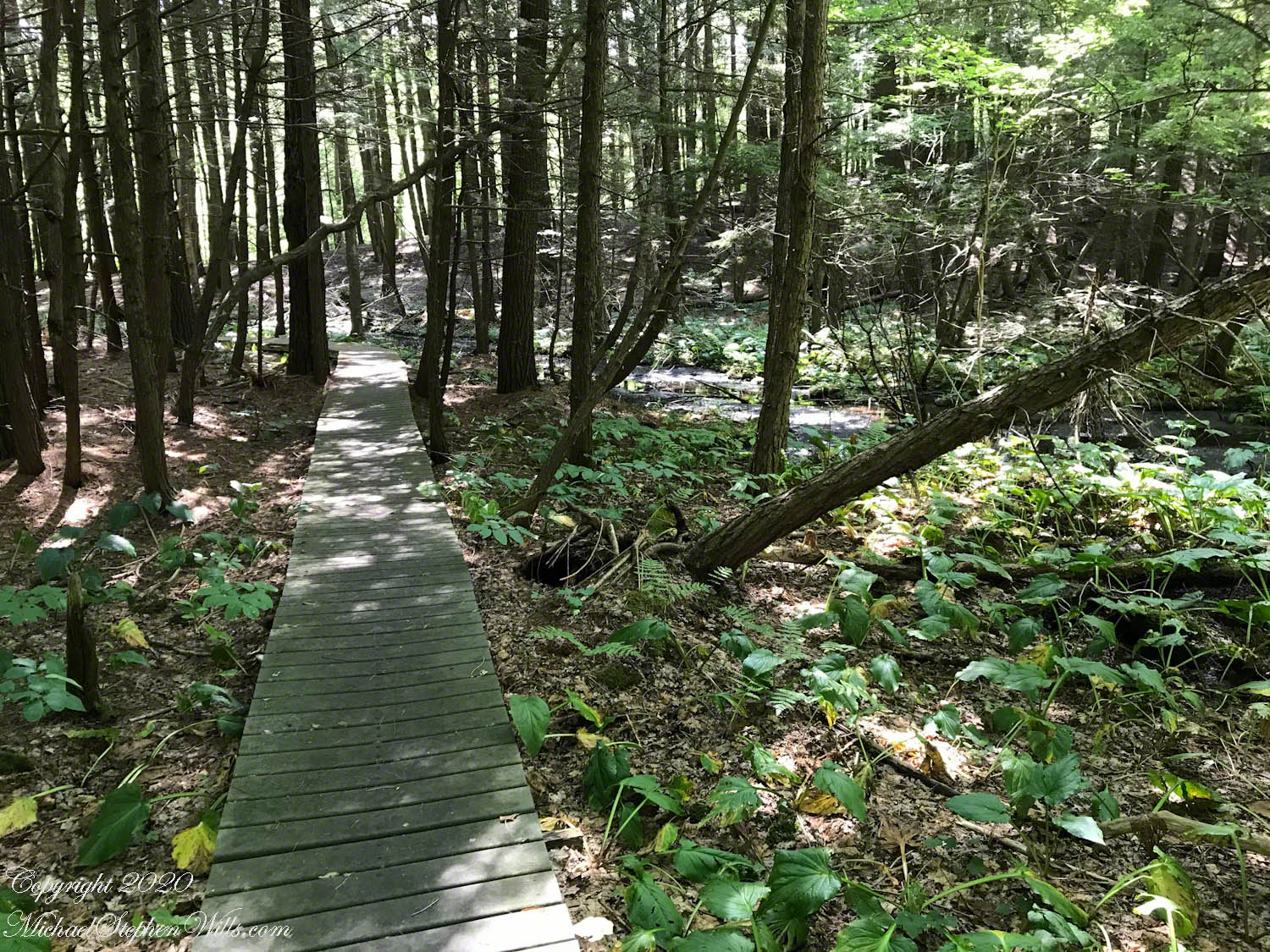
Here we are traversing a swamp, our steps buoyed along on planking made from recycled plastic. The boardwalk floats visually above pools the color of tea, edged with moss and skunk cabbage. It’s easy to imagine what this crossing would have been like before the planks were laid—boots sinking, knees splashed, delicate plants crushed. The modern walkway is a quiet compromise: we may enter this saturated world without trampling it, a human gesture that matches the preserve’s ethos of protection and restraint.

The Malloryville wetlands lie in a low pocket along Fall Creek, a landscape shaped by the last ice age. As the glacier that once covered this region melted, torrents of water tunneled through the ice, depositing braided ridges of sand and gravel known as eskers. Today, more than a mile of these ancient riverbeds winds through the preserve, narrow wooded spines rising above the surrounding wetlands. From an esker crest, the pattern of water reveals itself: dark channels of open flow, pale pools rimmed with sedge, patches of sphagnum floating like cushions, and, farther off, the straight silver of Fall Creek.
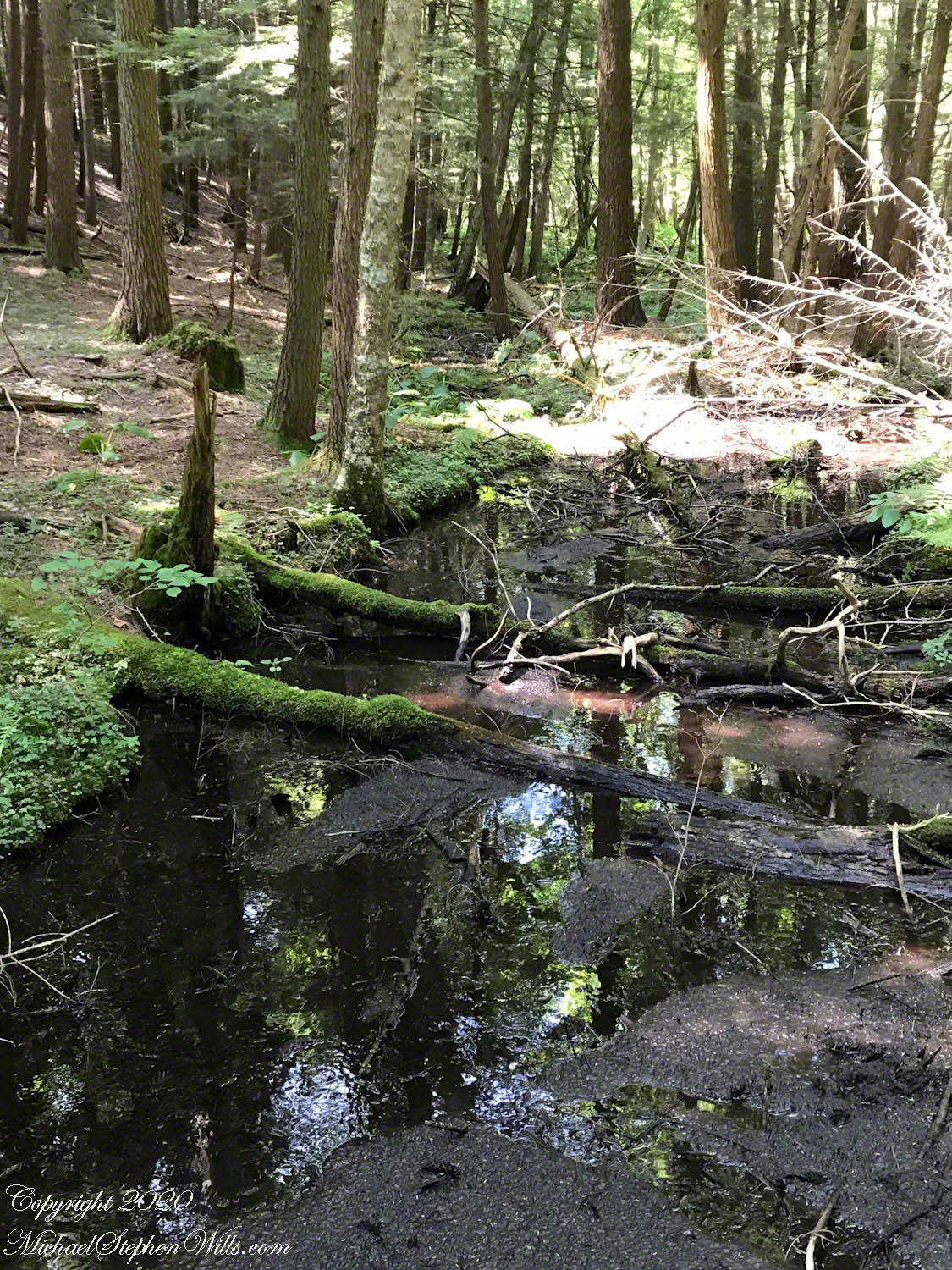
But the story of Malloryville’s water begins far from these pools. Rain falls on the uplands as cool, slightly acidic water. It sinks through glacial till—a jumble left by the ice—and begins a long, blind journey underground. As it moves, the water reacts with the minerals it encounters. Where it brushes limestone or other carbonate-rich layers, it is slowly neutralized and picks up dissolved calcium and magnesium. By the time it resurfaces in low spots, it may be transformed from sour, soft rain to mineral-rich groundwater.
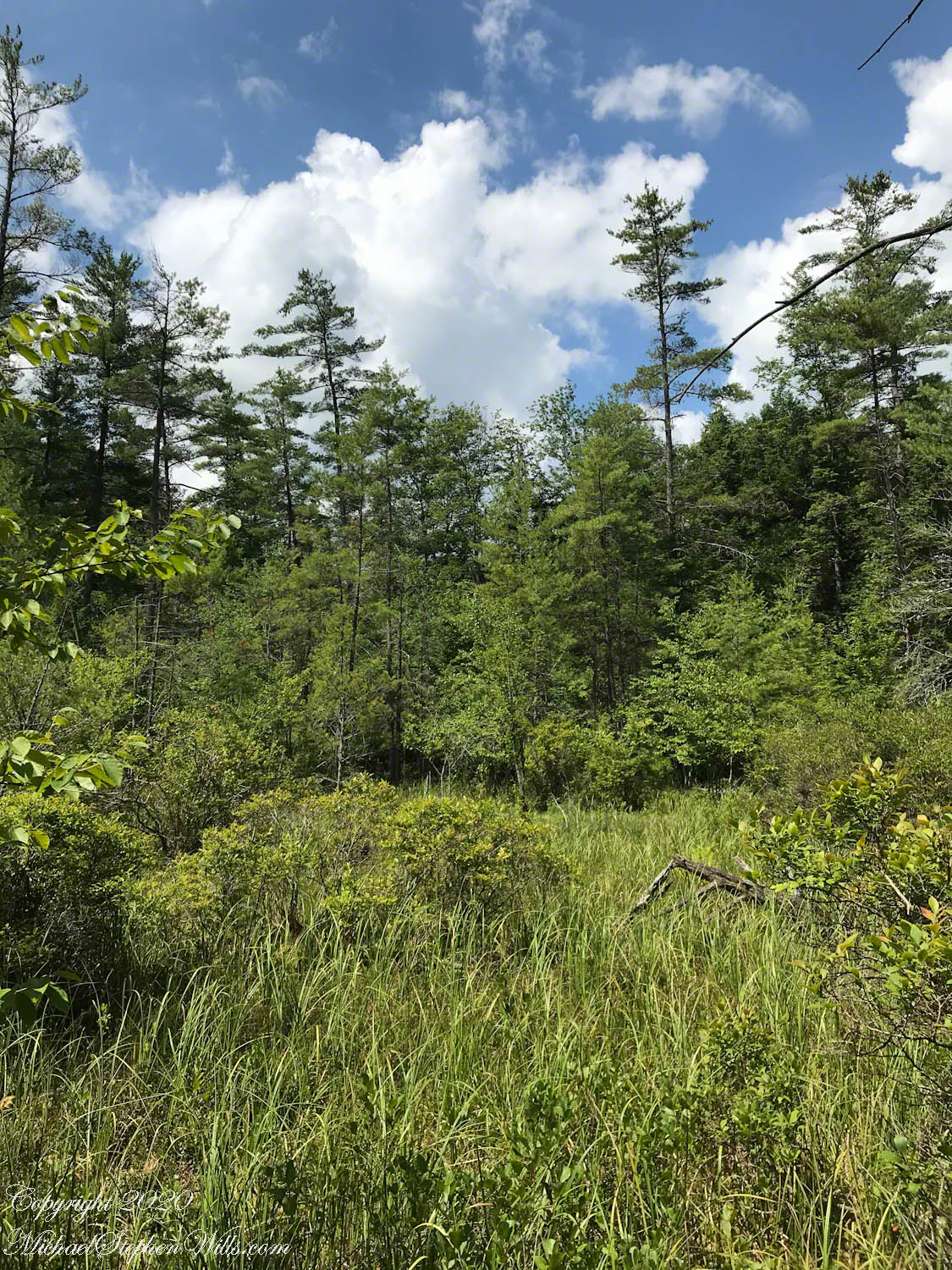
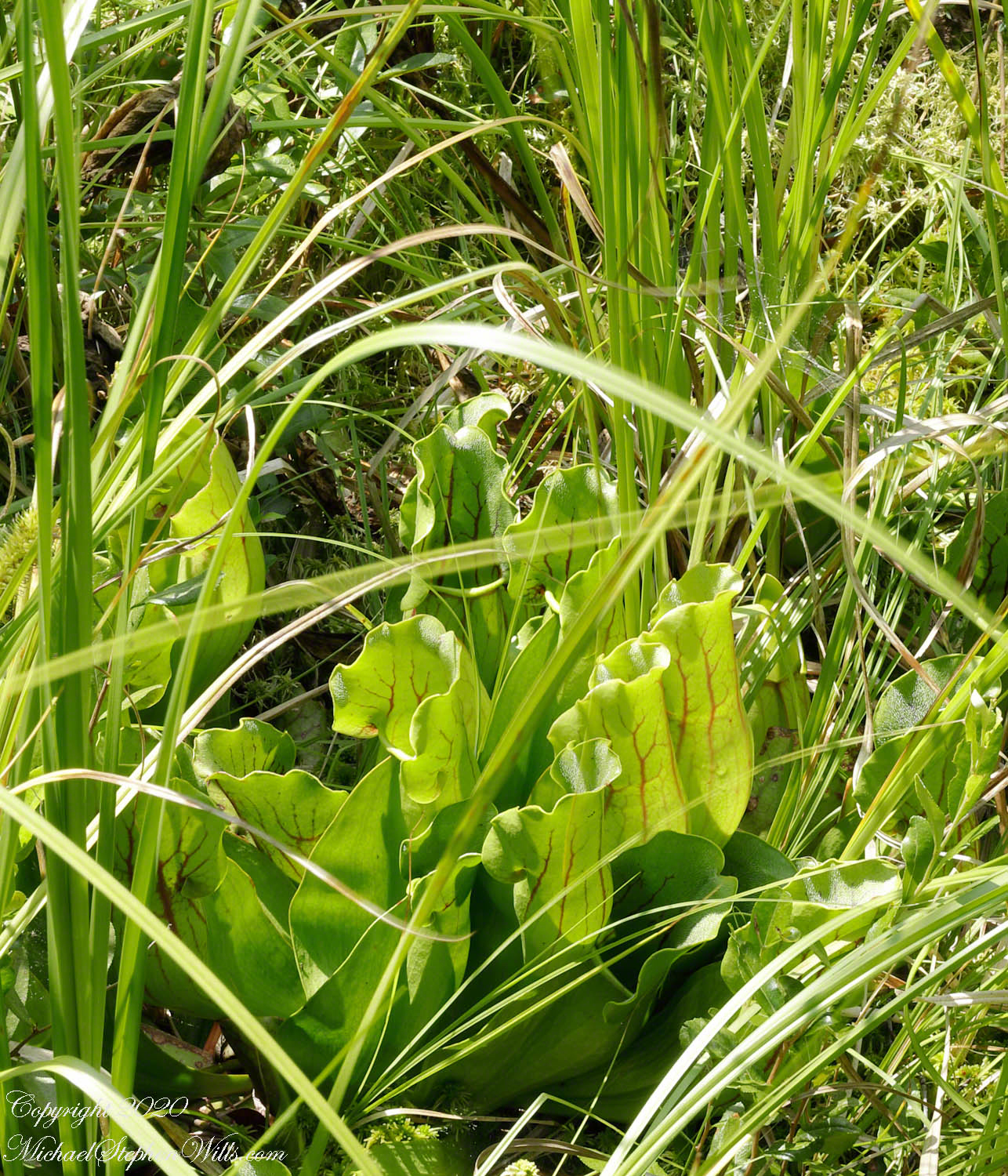
Those subtle chemical shifts are written onto the land. In some hollows, where water still mainly reflects its origin as rain, the environment becomes a bog—cold, acidic, nutrient-poor. Here, sphagnum moss knits a floating carpet, and only specialists such as leatherleaf and cranberries can endure. In other pockets, where groundwater welling up from below brings minerals, we find fens: lush, lime-touched wetlands offering niches for orchids, sedges, and the carnivorous pitcher plant. Marshes and swamps round out the spectrum, their standing water and wooded shade forming still more microhabitats.
In this small preserve, all these wetland types coexist side by side, threaded by water that often moves so slowly it appears not to move at all. The stillness is deceptive. A slight difference in elevation—barely the height of your boot—can determine whether water spreads and stagnates, seeps outward in a fan, or concentrates into a narrow, unseen channel. Hydrologists studying the area have shown that a water-table mound of only a few inches can redirect the underground flow and, over time, steer the evolution from open fen to peat-filled bog.

Human history here is entwined with that quiet power. The founders of the preserve, themselves from a dairy farming family, came to understand that the springs, seeps, and wetlands feeding Fall Creek were vulnerable. Gravel pits on nearby land had already bitten into the valley; another such excavation on this side would have severed the veins of water that sustain the fen and bog. Their years-long effort to protect the property culminated in a Nature Conservancy preserve whose very purpose is to safeguard water and the uncommon communities it supports.
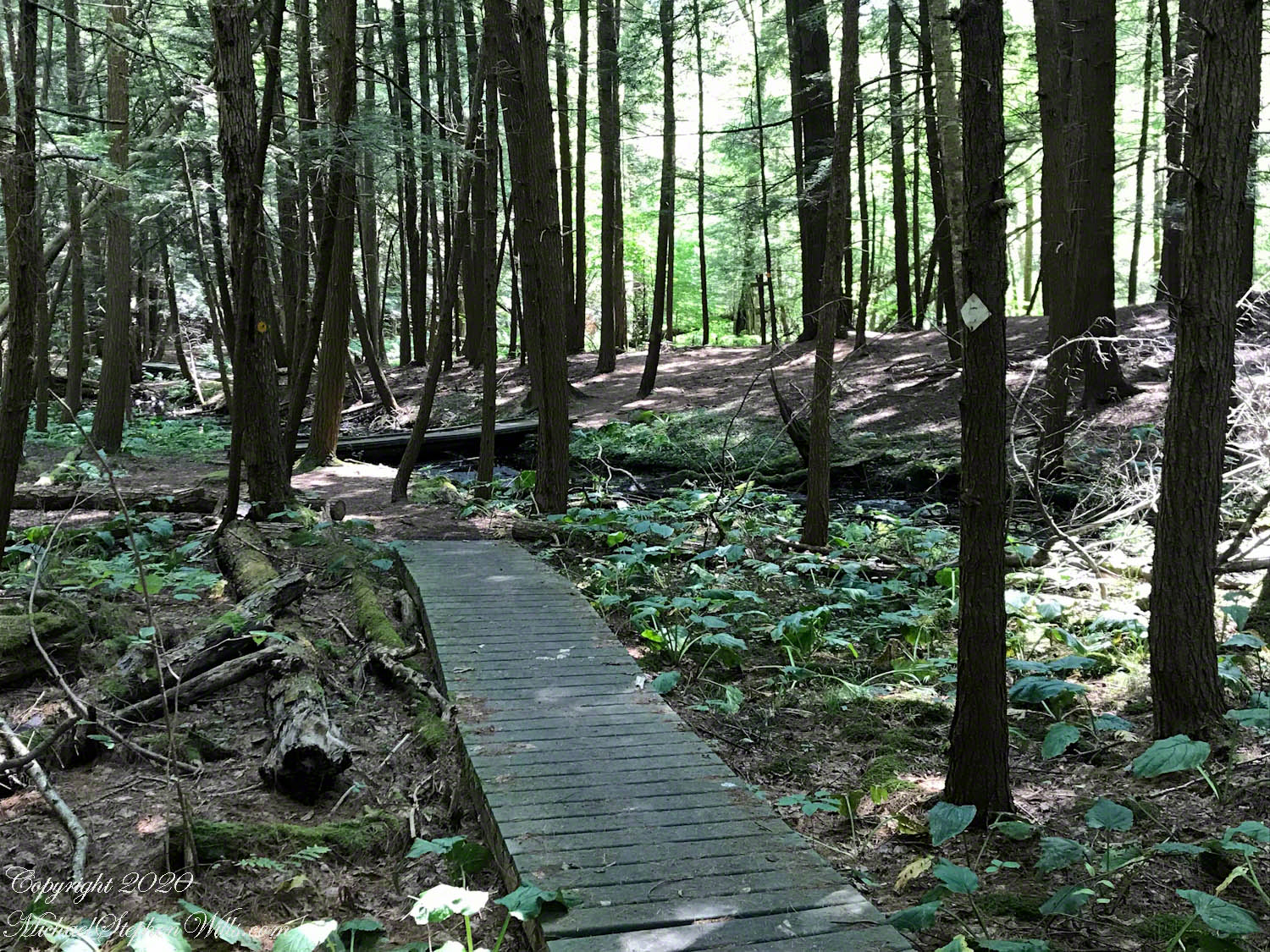
The boardwalk under our feet is part of that story. Its recycled-plastic planks do not rot in constant dampness, and their smooth, slightly hollow sound reminds us with each step that we are guests in a place where soil never truly dries. At the edges of the walkway, tamarack and red maple lift their trunks from hummocks, their roots anchored in peat built grain by grain from centuries of water-logged plant remains. In the open patches, we can seek out pitcher plants, their flaring, water-filled leaves digesting unwary insects to make up for the nutrient-poor conditions.

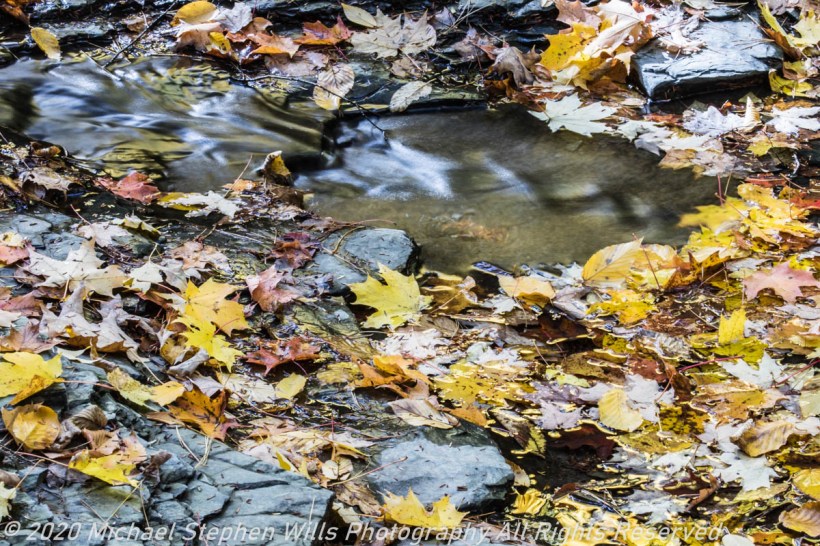
Everywhere, water moves almost invisibly. It rises as a cold trickle at the base of the esker, fans through the moss as a thin sheet, and gathers again in dark, tannin-stained channels. It rarely speaks aloud; only in spring flood or after hard rain does it murmur against roots or tap lightly at the plastic planks. Yet its influence is written in every texture and color—emerald moss, rusty sedge, the silvery bark of birch leaning over a pool.
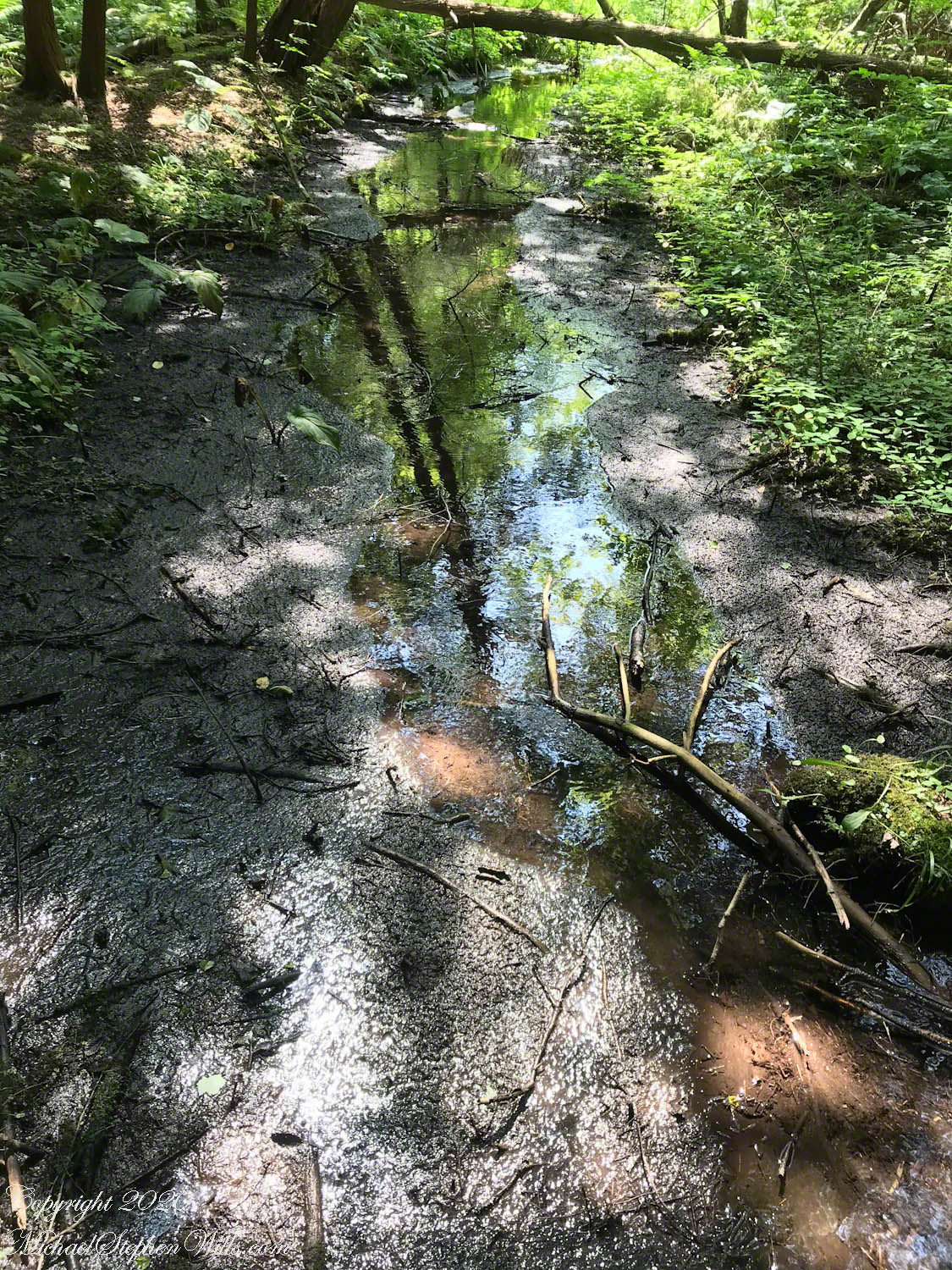
To walk in Malloryville is to learn to read this subtle handwriting. We begin by noticing the obvious: the wetness, the boardwalk, the glimpses of standing water. By the end of the walk, we are tracing gradients—how the plants shift with elevation, how the ground feels underfoot, how the air cools or warms by a degree or two. We sense the long journey of water from sky to stone to peatland to creek, and onward to Cayuga Lake and the wider world beyond.

Water, flowing quietly, almost soundlessly, with powerful effect: Malloryville Preserve, that power is persistence. It is the power to carve a valley, to build a peatland one stem at a time, to sustain rare communities of plants and animals in a modest corner of New York. To honor such water is to move carefully, speak softly, and remember that our presence, like our boardwalk, should allow the flow beneath to continue its ancient work.
Enter your email to receive notification of future postings. I will not sell or share your email address.

Glacial Echoes: Dryden Lake Park’s Mirror-Calm Morning in Upstate New York

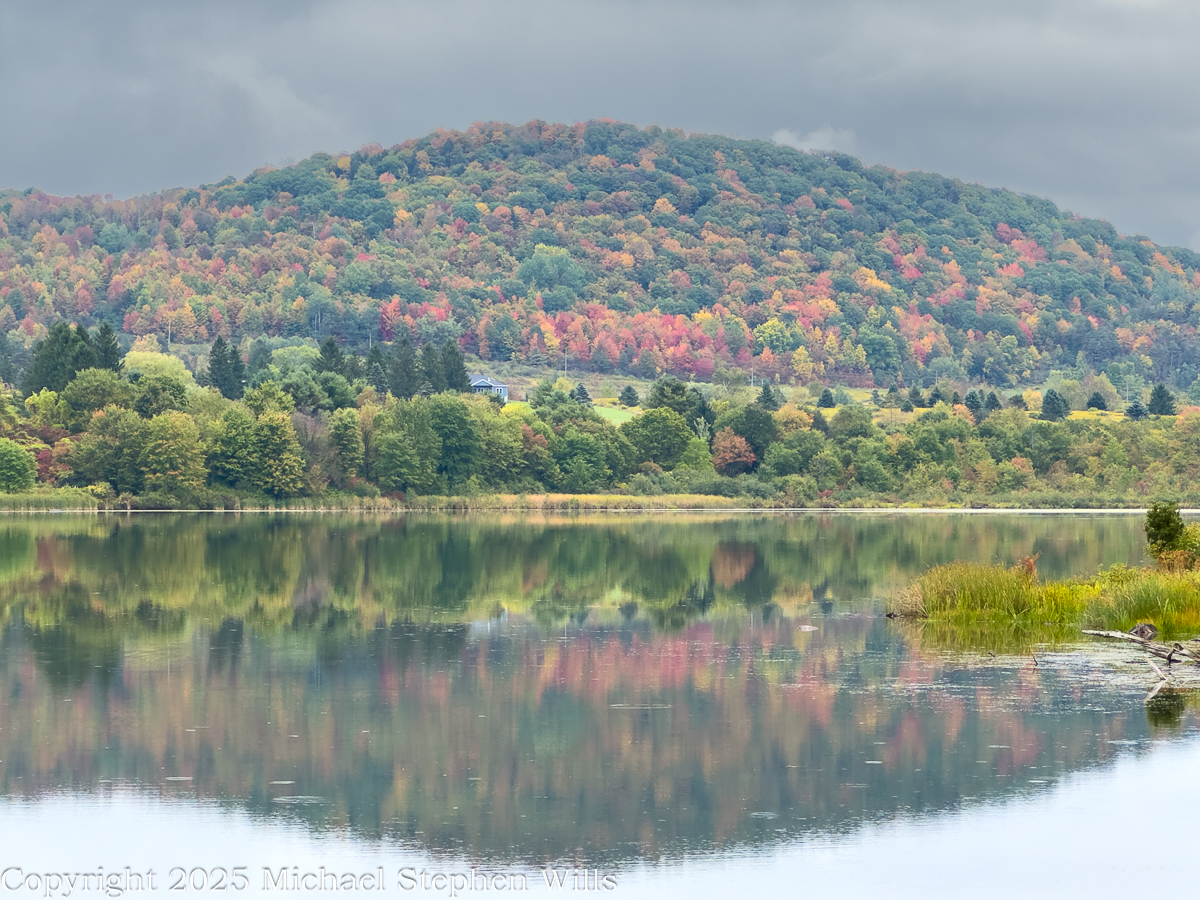
Morning clouds hang over Dryden Lake as hills kindle first color; reflections hold breath while a lone walker reads the valley’s glacial and human-written past.

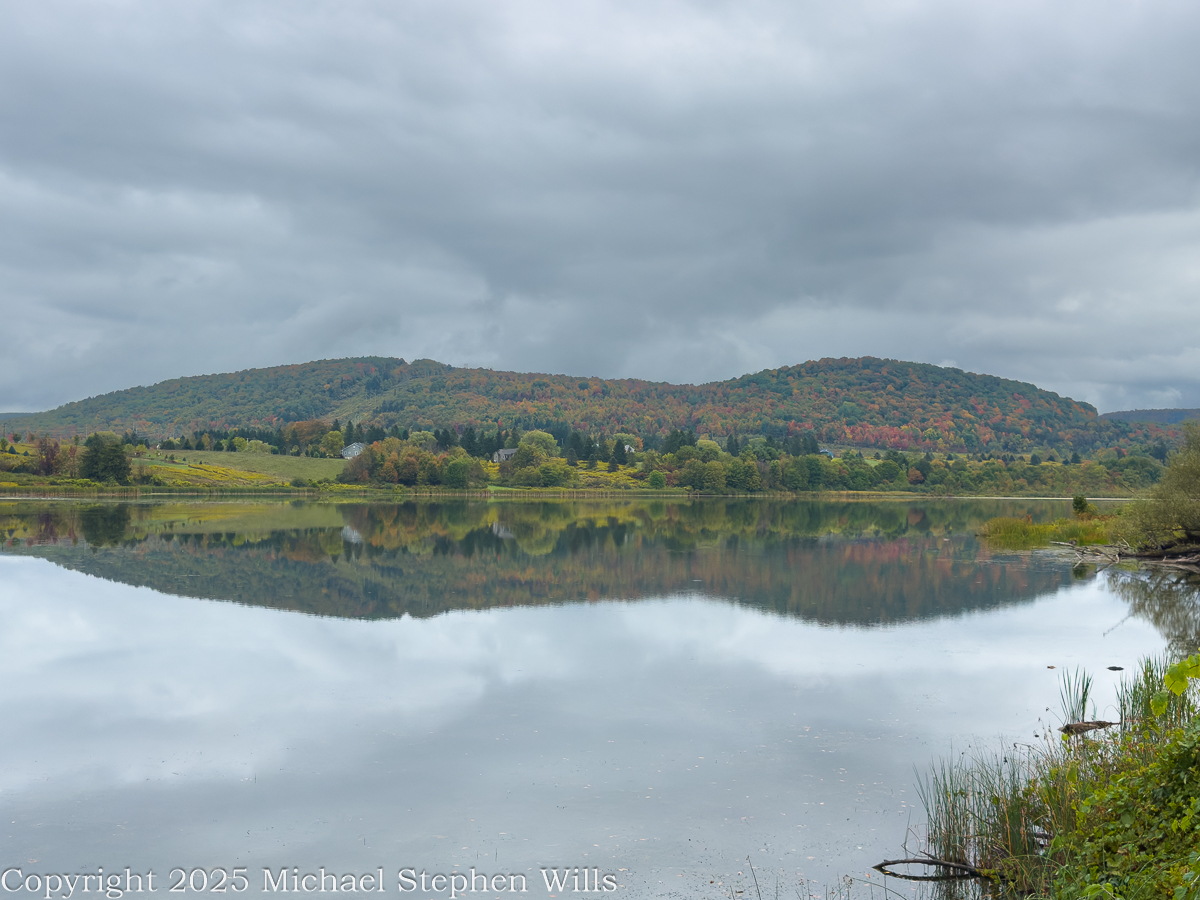
He came to the water before the people woke, the road a still ribbon of cold tar snaking beneath the low hills. Mattocks of cloud hung over the valley and the lake took in the sky like a mirror dropped yet not broken. The trees were beginning to color. A patient fire working from within the leaves. He parked where the grass ran down to the shore and stood a long while without moving. Birds made small sounds in the reeds. Somewhere a single truck labored up the grade and was gone. The surface held the hills with a steadiness the hills themselves could not keep. He thought how the quiet of a place can be the loudest thing it owns.

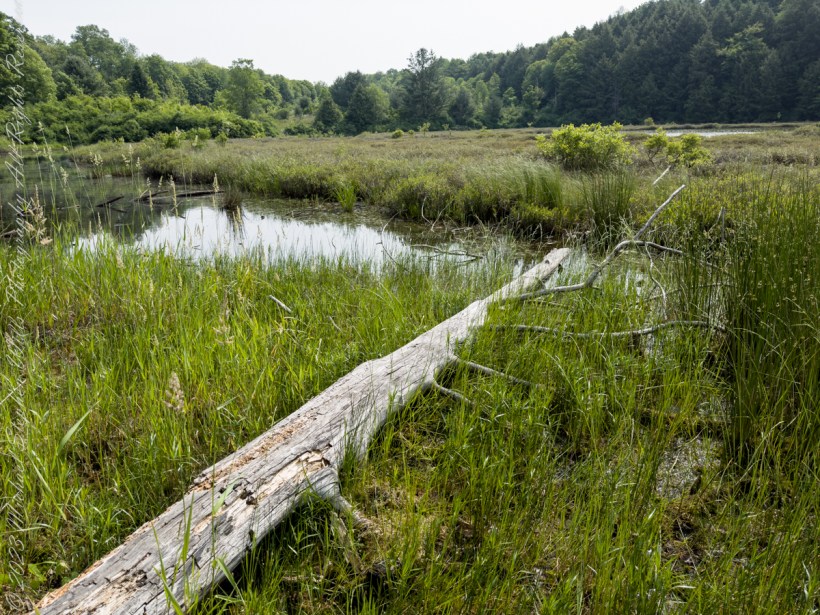
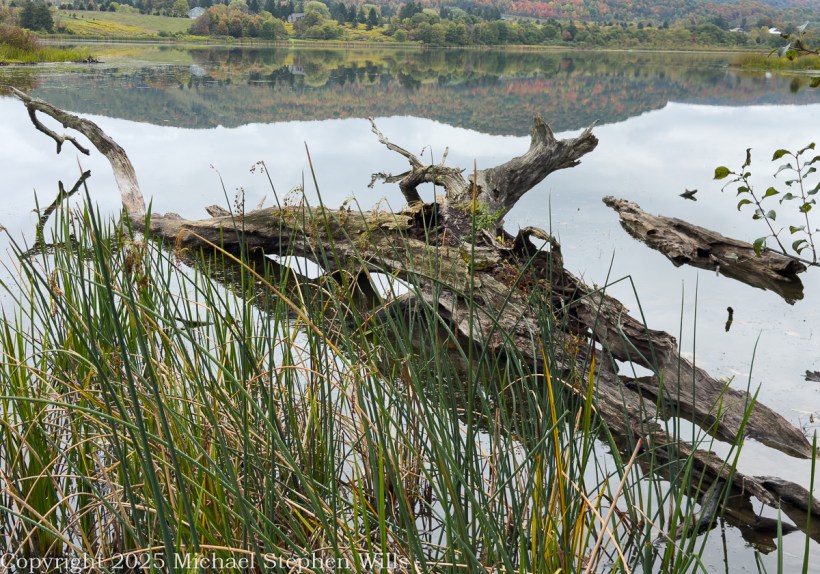
He went along the margin along the damp sedges where old drift lay silvered and light as bones. A drowned trunk angled from the shallows. The lake was old in the way of things made by ice and time. A kettle in the outwash of the last glacier, some men said, a bowl left when the buried ice eased away. He pictured the ice receding into the valley heads, the meltwaters choked with gravel, a hand larger than memory scribing the floor of this country. The earth never told it plain but the lay of it was witness enough. Across later centuries men cribbed a dam across the outlet and drew the water to a shape that pleased them and served their work.

A trail ran the length of the water on the old rail bed. The ties were long gone and the iron and cinders buried under years of leaf fall and gravel. He had walked it as a boy beside his father and now he walked it alone. Benches stood at half-mile intervals like waystations in a country of small pilgrimages. The signs told what once was here and what remains. They had renamed the path for a townman who argued it into being after the railroad had passed from the world and the right-of-way grew up with sumac and rumor. It was an easy trail and he carried nothing. His hands hung at his sides as if the day might place something in them when it was ready.

In another era the lake was a workshop. Men whipsawed timber in the wet air and fed small mills with the grove’s dark boards. Winter flowed over the flats, and they built icehouses and set the blocks within like blue stone, an industry that died when cold could be called from a switch. The hills have learned to forget the noise of it, though on certain mornings the fog takes a shape and you could believe rising from the ponded sawdust and the lading of sleds. He thought of the labor of those gone hands and of how work is a scripture every place keeps in its own tongue.

Before any of that, the ground here was a summer camp. People came with the season and went with it, laying their fires in the lee of the knoll and taking fish where the cattails thin. He could feel them in the open places, not as ghosts but as the first understanding the land ever had of itself. The words used for them now are museum words, yet the wind still crosses the water as it did and empties the same smell of iron and leaf into the lungs of whoever stands to breathe.

The town took its name from a poet long dead, a scholar’s choosing in the years after the war for independence when this tract of country was parceled out to soldiers of that same war. Virgil lay to the east as if they were shelving Latin across a map. The creek that bears that name threads the villages and finds Fall Creek at Freeville, and the combined waters go their own slow way toward Cayuga where the glacial hand scooped deeper yet. He said these names under his breath and they tasted of chalk and river stone.

A kingfisher rattled across the cove. The fish rose in rings that spread and vanished like time seen from above. Out on the water an old man pushed a skiff with an electric motor that hummed like a trapped bee, for the lake allows no gas engines now. The wildlife area ran around the shore in a ragged collar of field and wetland and alder, near two hundred acres under the state’s keeping, and the lake itself a little over a hundred. He watched the man aim for the lily line and thought how rules arise from the wish that a thing endure, though nothing does. Still we make the rules and we keep them as if the earth were listening.

Wind came down the slope with a smell of rain. He turned back and the hills lay again in the water, entire, and for a moment he could not tell which world had claim to the other. He thought of the rails pulled up and the mills gone to weeds and of the icehouses fallen into their own shadows and he thought of the people before all that and of the long winter pressing its thumb into the land and lifting it away. He thought of his father walking the rail bed beside him a lifetime ago and saying nothing. There are places where the past crowds close and will not be argued with. He stood until the first drops dimpled the surface and the reflection shattered and reformed. A train no longer runs here. The only sound was the soft percussion of rain on water and the slow turning of the earth beneath both. He put his hand to the damp trunk of a fallen tree and felt the grain and the coolness and the old patient labor of rot. Then he went up from the reeds, his pockets full of acorns, and out to the road where his truck waited and the day, austere and sufficient, came along with him.

References

Geological History and Glacial Formation of the Finger Lakes

Jim Schug Trail

The Dryden Lake area in the 19th century

Indian Campsite on west side of Dryden Lake

Dryden New York (wikipedia)

Dryden Lake (New York State DEC)

Geohydrology, Water Quality, and Simulation of Groundwater Flow in the Stratified-Drift Aquifer System in Virgil Creek and Dryden Lake Valleys, Town of Dryden, Tompkins County, New York

Enter your email to receive notification of future postings. I will not sell or share your email address.

Exploring Rincon Peak: Hiking Adventures in Arizona

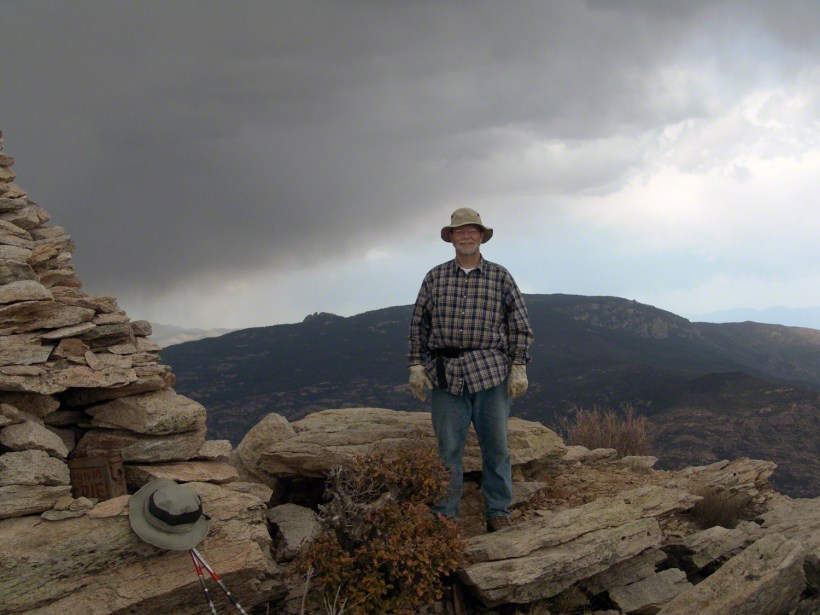
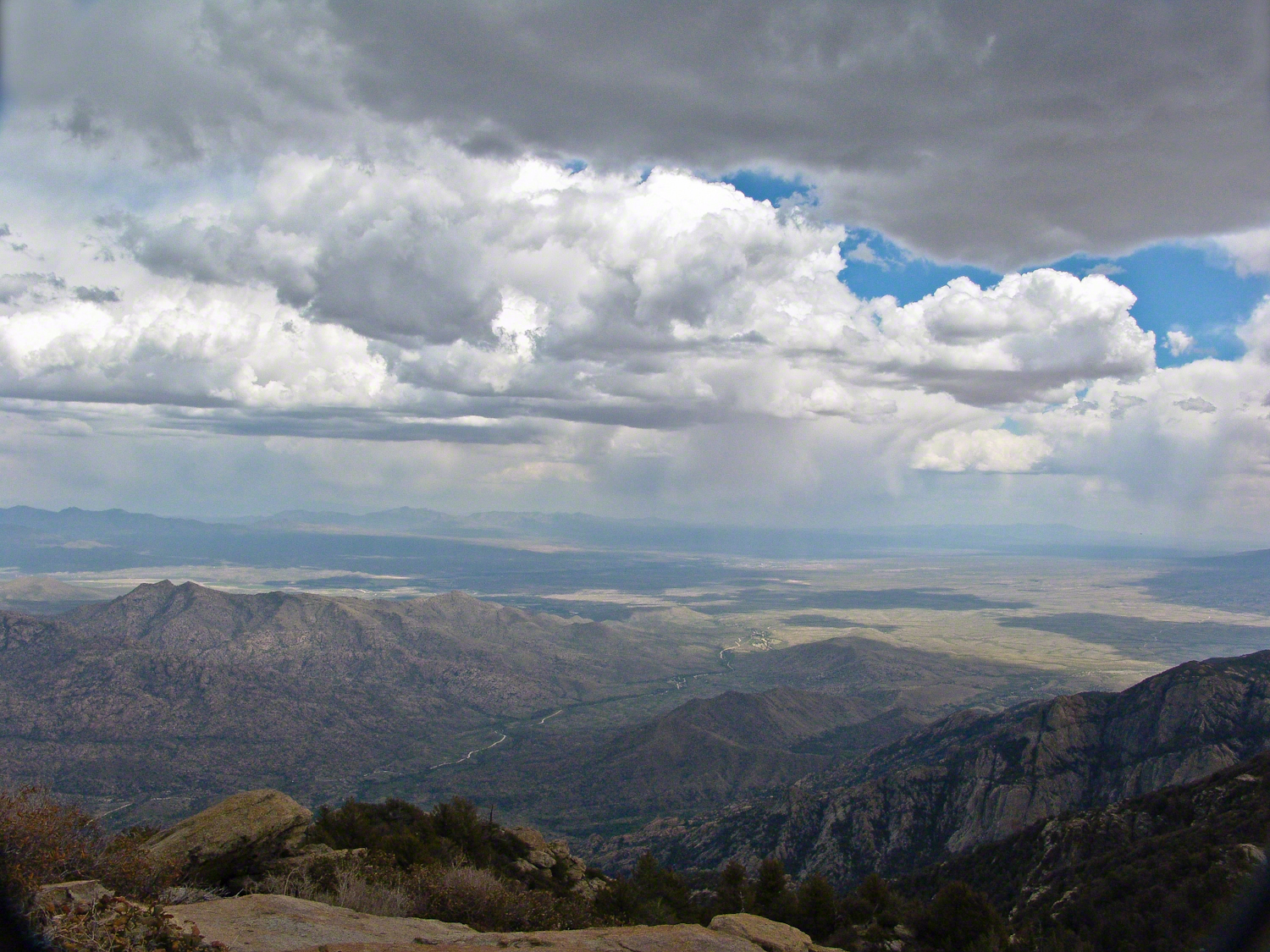
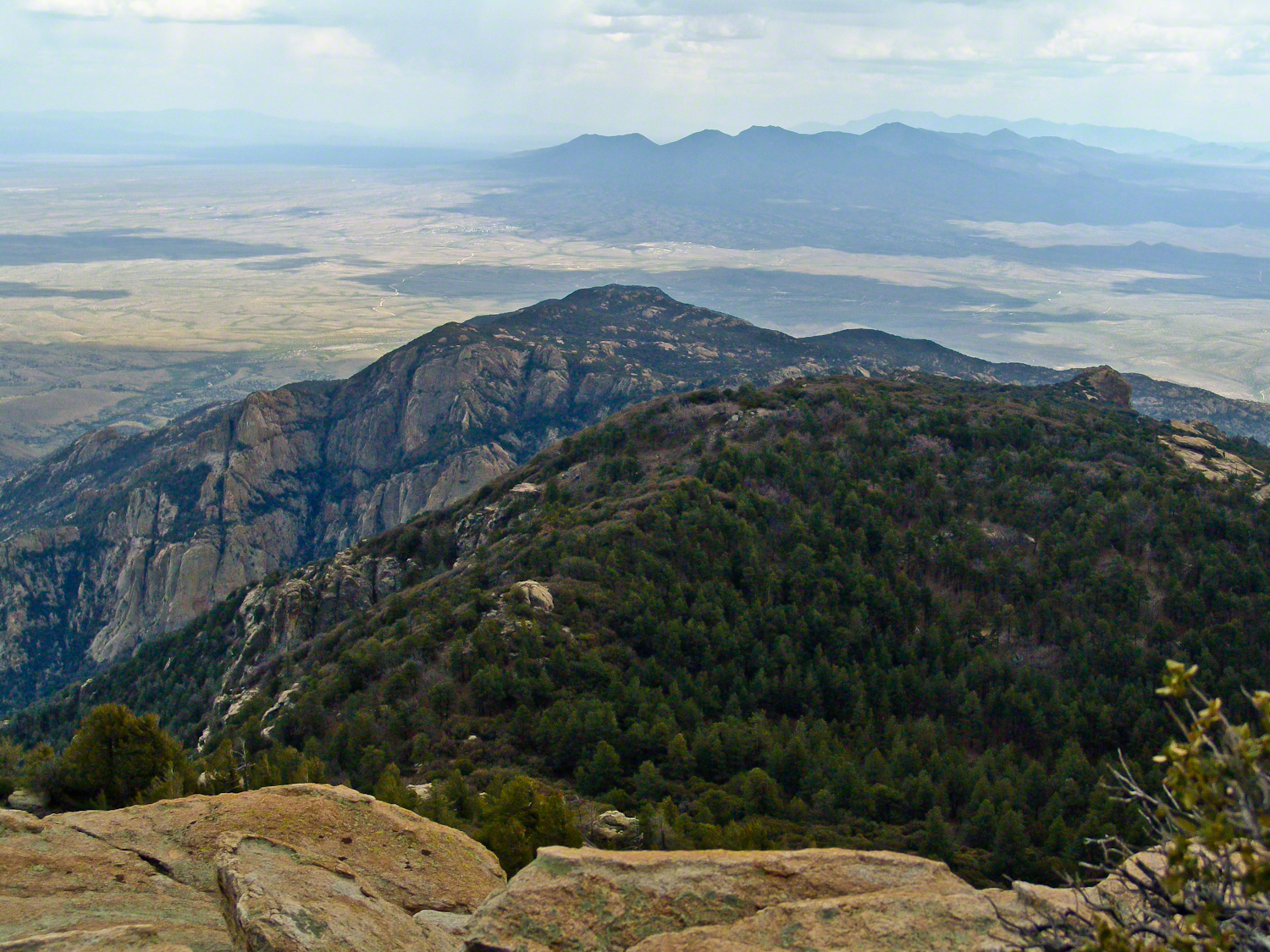
As we stood atop Rincon Peak, the sky darkened with the approach of a sudden thunderstorm. Below us, the San Pedro River valley sprawled, with the Mae West Peaks to the left and the legendary Dragoon Mountains straight ahead. This photograph captures that exhilarating moment—standing on the summit with the world at our feet and the wild Arizona sky closing in. Curious about how we got there and our race against nature’s fury? Join me on the blog to delve into the full adventure and explore more stunning images from the heart of the Rincon Wilderness.

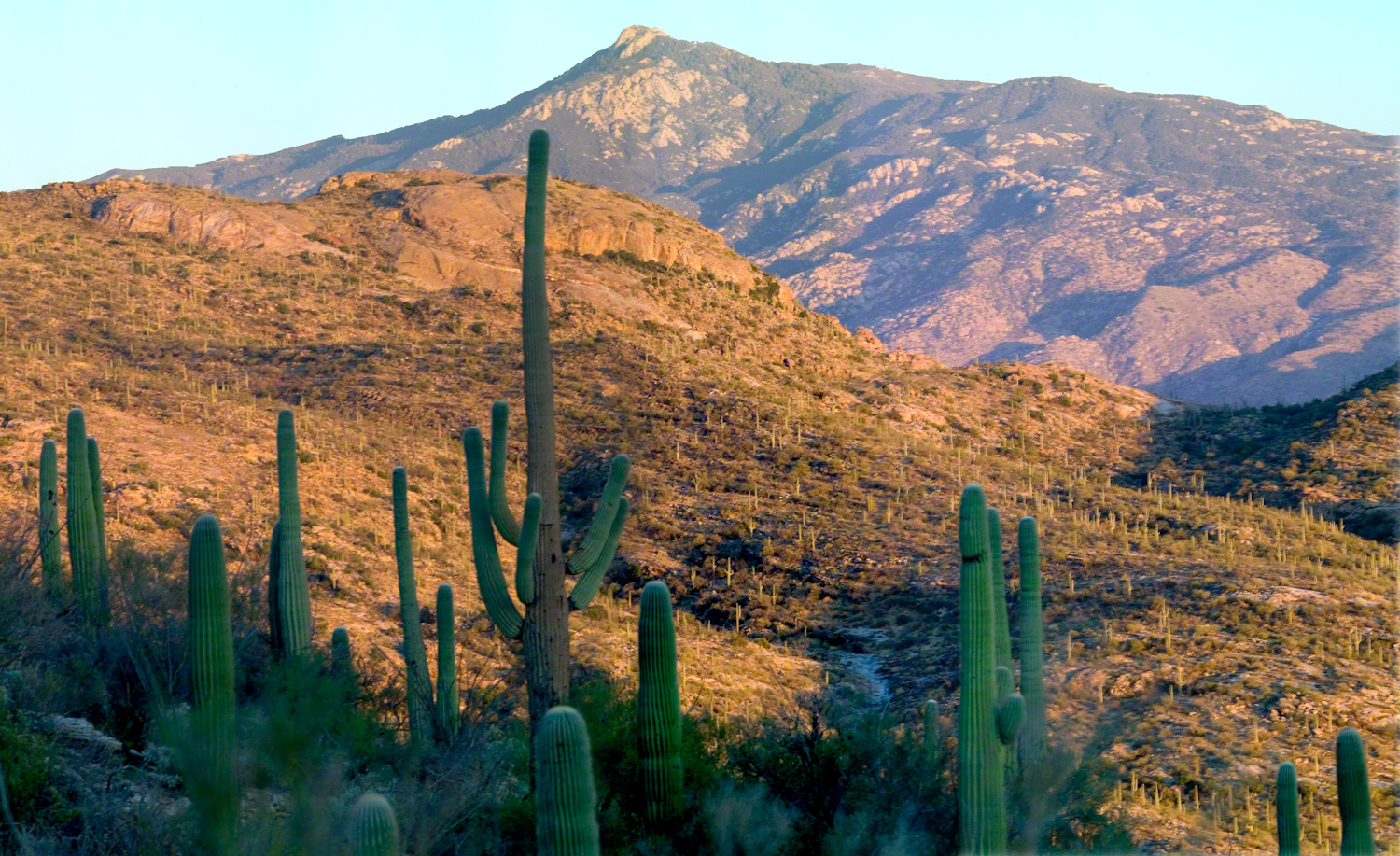
The Rincons are one of 42 Sky Island mountains isolated from each other due to gradual warming and drying climate changes since the last ice age, 10,000 years ago. While this marvelous environment of oak and pine forests is accessible only on foot and with significant effort, it is visible from every point of the Tucson valley, home to a million inhabitants.

The name ‘Rincon,’ Spanish for ‘corner,’ reflects the mountains’ shape as they enclose a space on the west and northwest. This area, formerly used for ranching, is now being developed for tract housing. In contrast, the mountains themselves are preserved as wilderness, with parts designated within the Saguaro National Park and the Coronado National Forest.

In the past 51 years, I have been lucky enough to visit the Rincon Wilderness interior four times, shouldering different style backpacks onto the mountain and walking in different boots. My first trip was during college in the 1970s, when a party of six of us left from the end of Speedway, heading up the Douglas Springs trail. The climb was an exercise in desert survival that several friendships did not survive, replaced by new friends met on Mica Mountain. I have no photographs from that experience, only memories and the backpack.
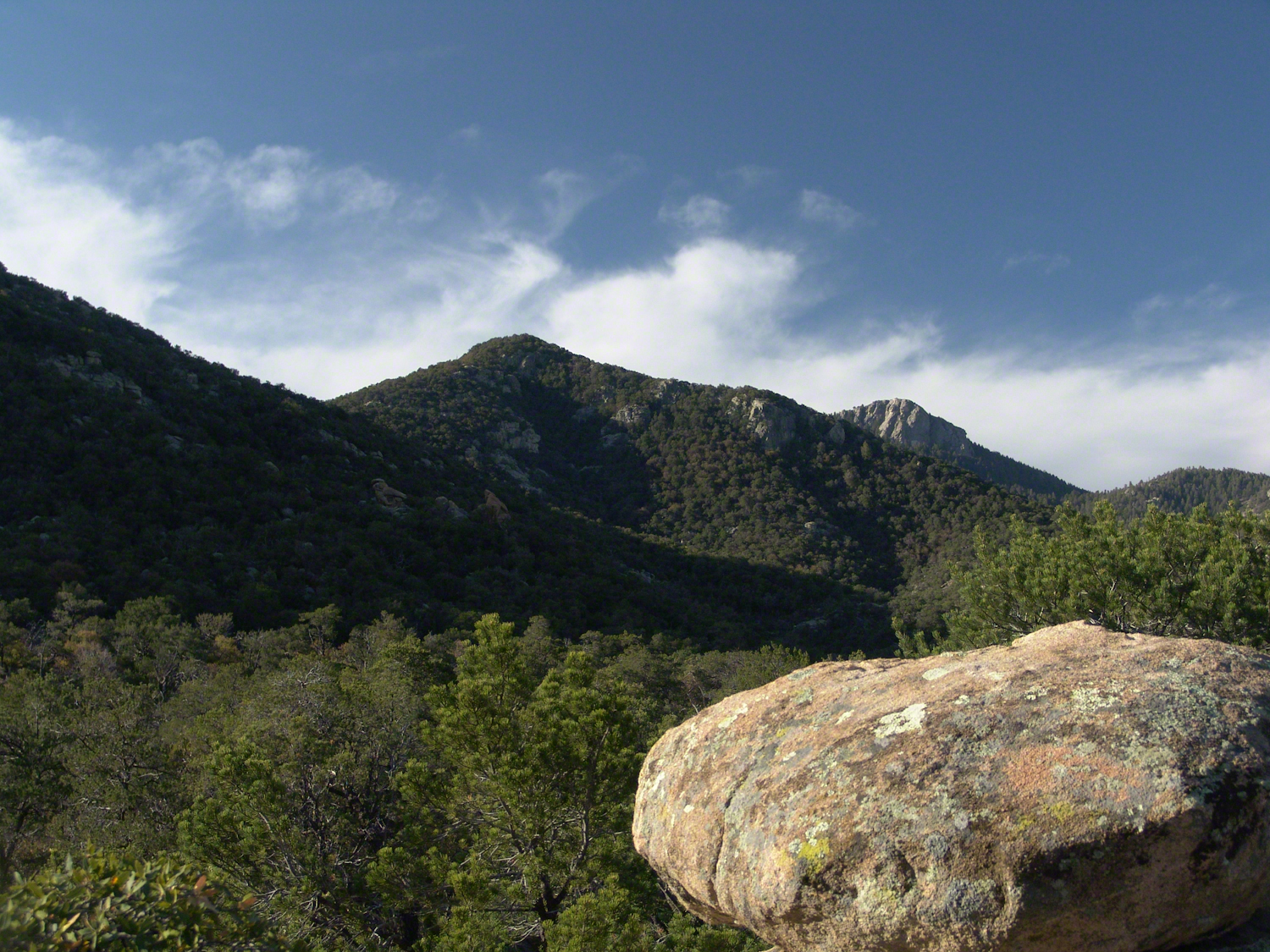
Decades later, reconnecting with Arizona in 2004—thirty-one years after that first experience—I took no chances. This time, my attempt on Rincon Peak was a success. I reduced risk and effort, though not eliminating them, by hiring a guide for the four-day trip. We reached Rincon Peak via the Turkey Creek Trail out of Happy Valley, climbing a mountain buttress with views that widened and lengthened with every step.

Capturing these moments, I took several photographs during that experience. Two years later I added a landscape of the peak at sunset.

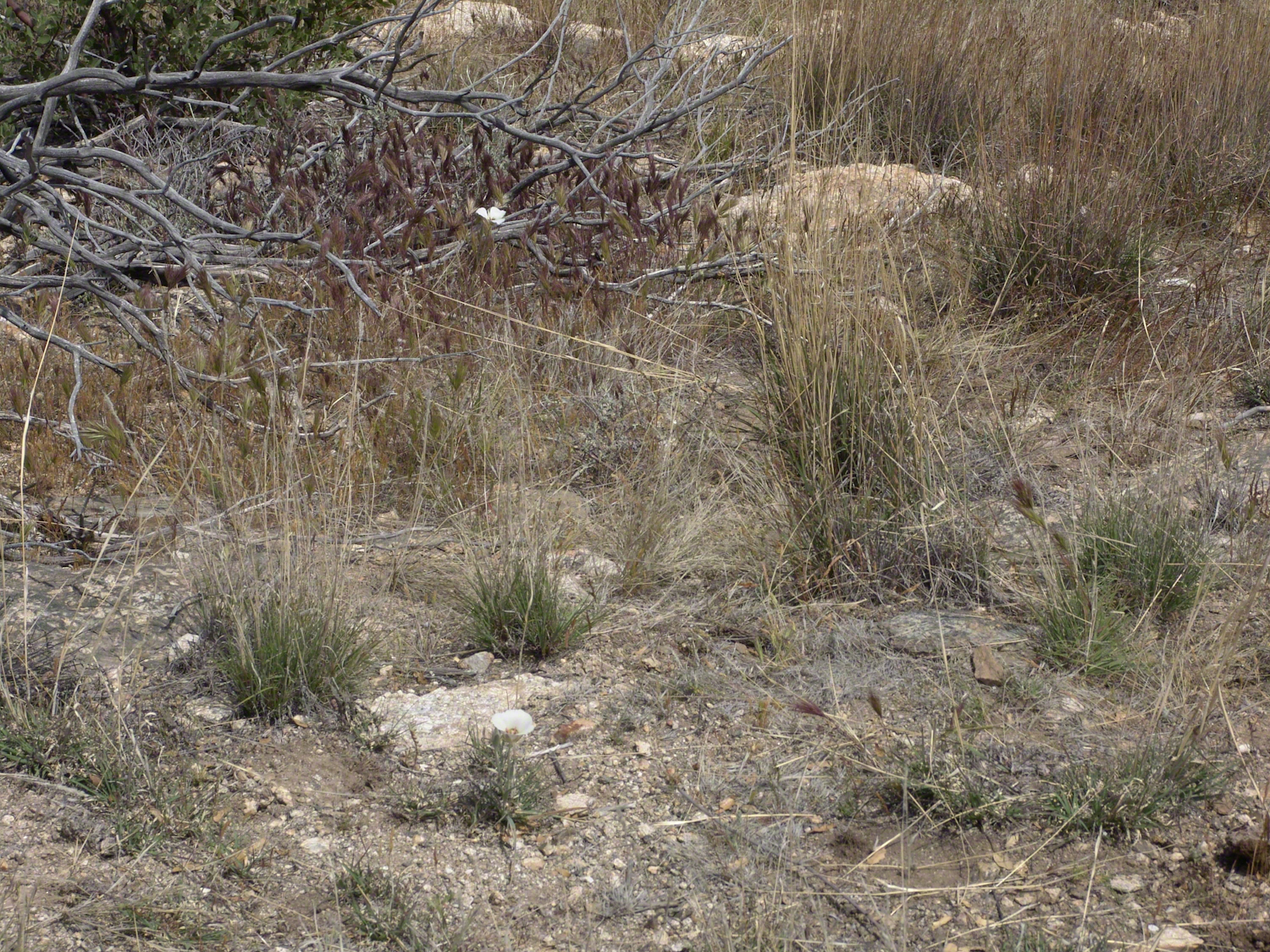
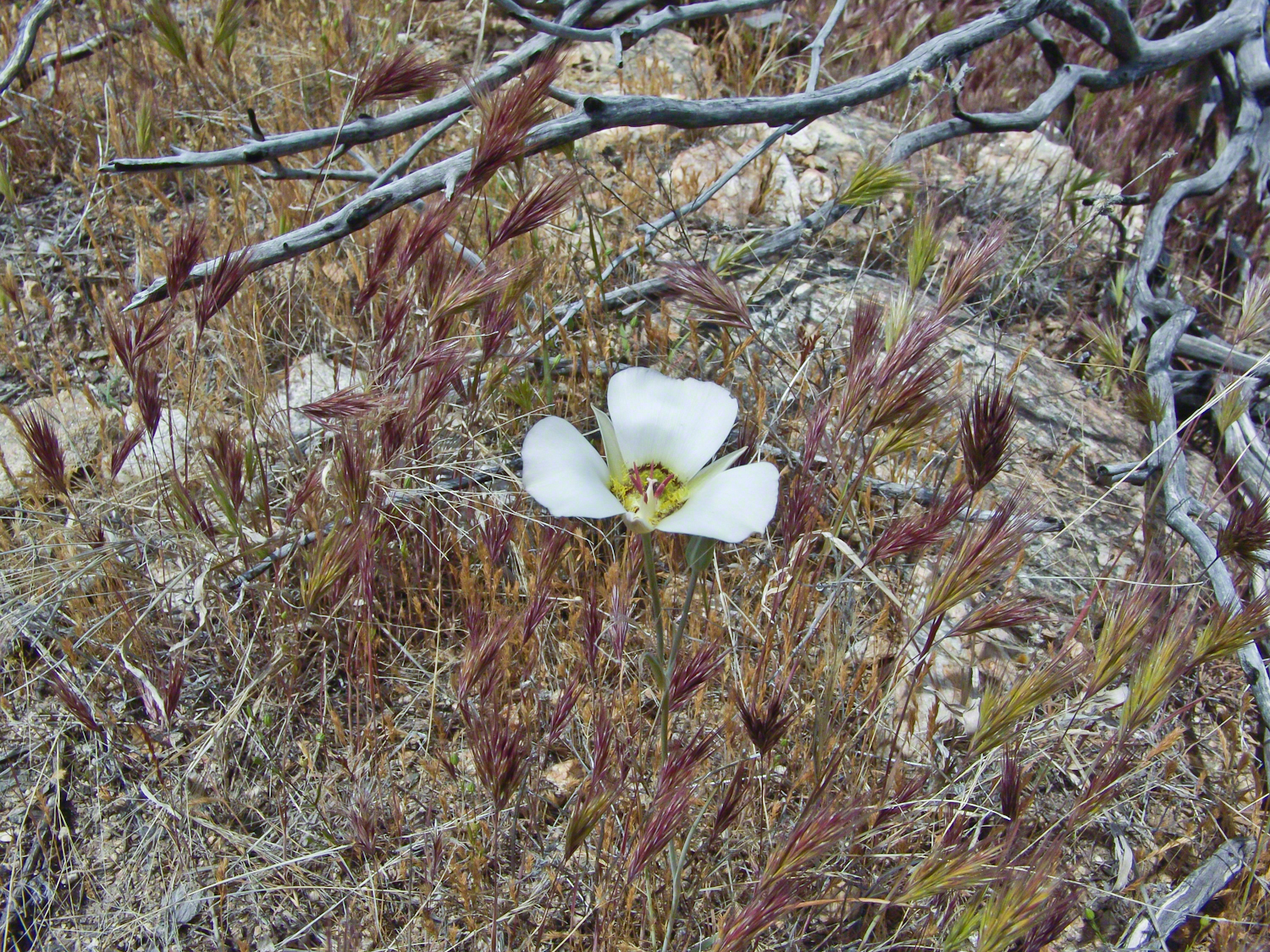
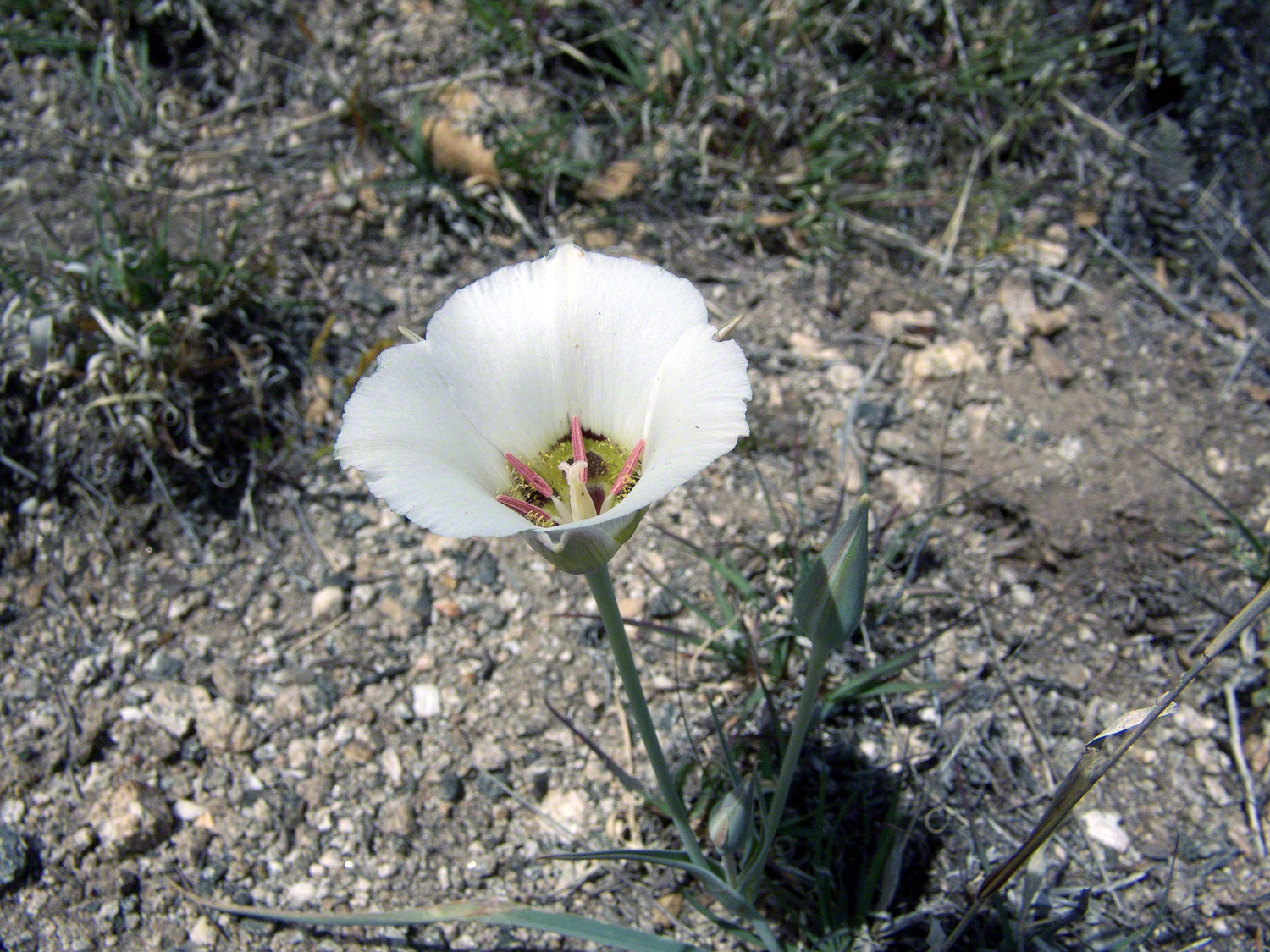
Along the Turkey Creek trail, Sego Lilies bloomed among a stricken oak and drying grasses, offering a vivid glimpse into the region’s delicate ecosystem. It is the winter rains that trigger such a bloom.

Sego Lilies -- CLICK ME!!!!

Enthralled by their beauty, we paused while I unpacked my gear to photograph the Sego Lilies growing along the trail.

Sego Lilies -- CLICK ME!!!!

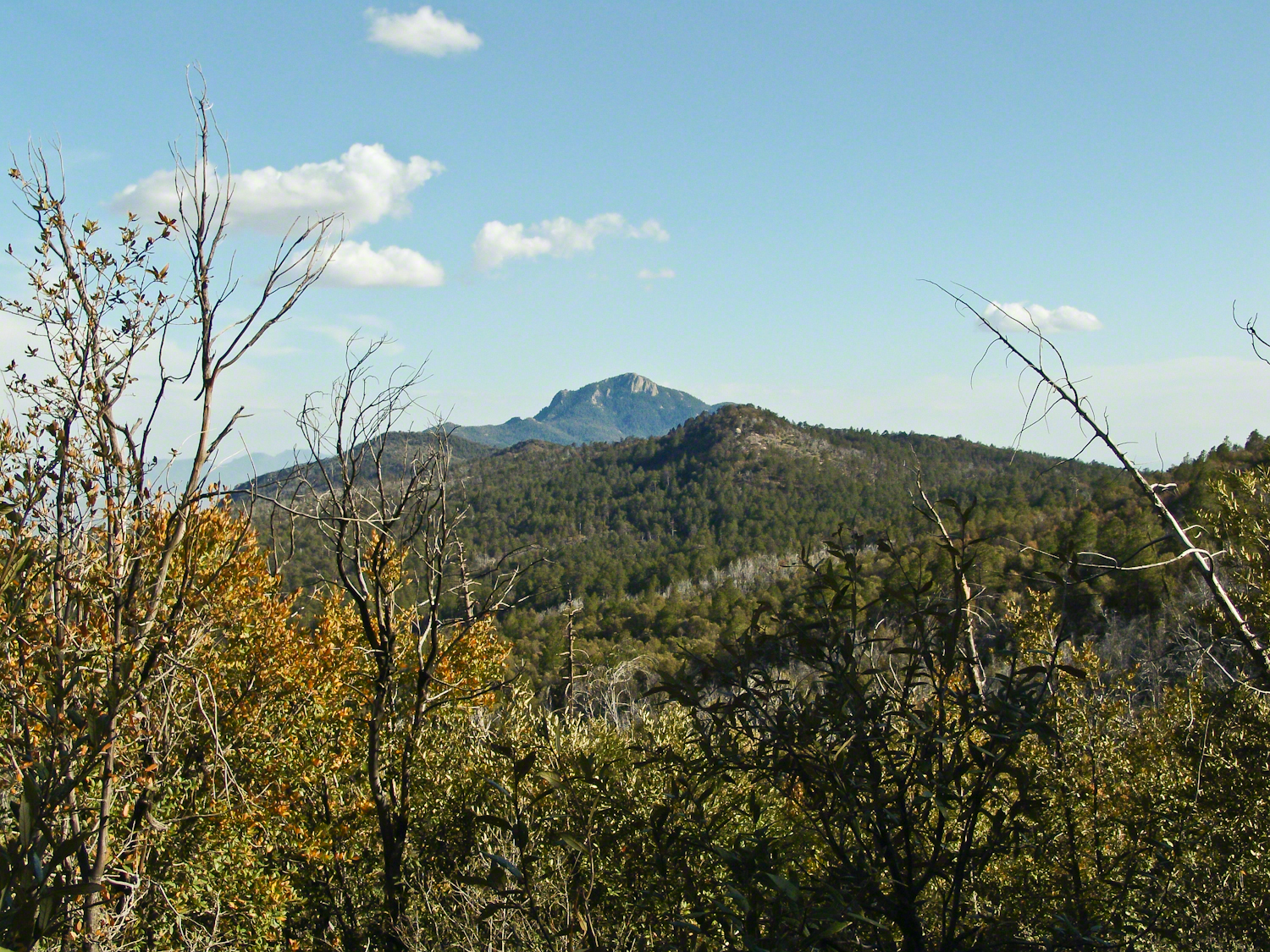
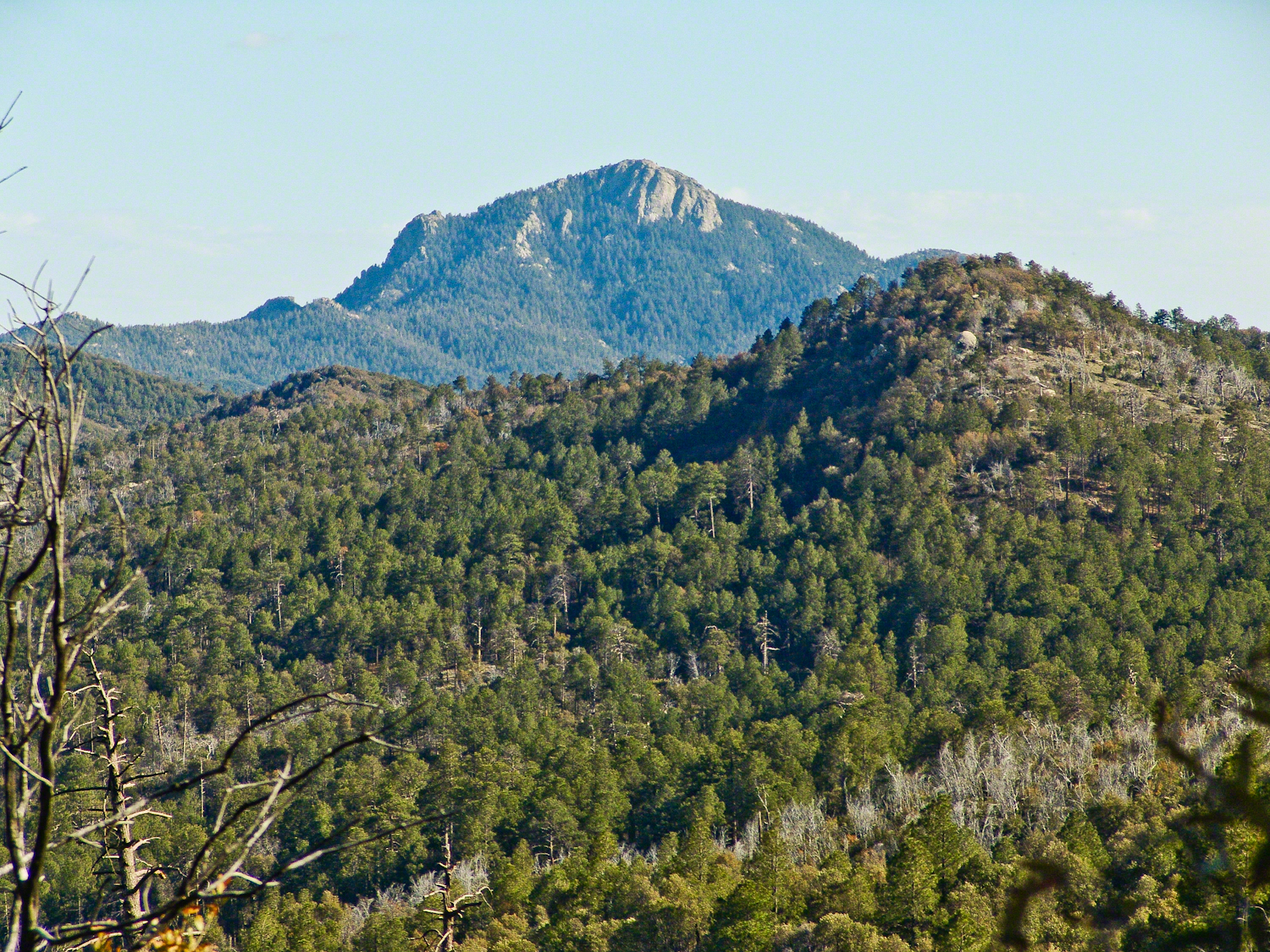
When we reached Deer Head Spring at the top of Turkey Creek Trail on April 27, 2004, it was a moist spot with no accessible water. With only about a gallon of water each remaining, we pressed ahead to Heartbreak Ridge and climbed into Happy Valley Saddle, where, thankfully, the creek—though low and full of algae—was usable. It was here that I caught my first glimpses of Rincon Peak, looking across the aptly named Heartbreak Ridge and Happy Valley Saddle.

Distant View of Rincon Peak-- CLICK ME!!!!
Telephoto view of Rincon Peak -- CLICK ME!!!!

From Rincon Peak, the view to the south was breathtaking. The white rocks at the lower right formed the Valley of the Moon wall. Below lay the San Pedro River valley, with the Mae West Peaks at the left margin and the Dragoon Mountains with Cochise Stronghold at the center. I took this photograph around 12:30 PM on April 28, 2004, just as a thunderstorm was approaching.

View from Rincon Peak -- CLICK ME!!!!

Rotating the camera to the south-southwest, the view stretched over the Valley of the Moon to the eastern Tucson Valley and the Sky Islands of the Whetstone Mountains (Apache Peak), with the Santa Ritas behind them. In this vast landscape, the works of man are overpowered by sky, rock, and distance.

View from Rincon Peak -- CLICK ME!!!!

We made a hasty departure ahead of the thunderstorm. Attempting the peak that day had been a touch-and-go decision, but we reached the summit with moments to spare.

On the morning of April 29, 2004, the day after reaching Rincon Peak, I set up my tripod near our Happy Valley Saddle camp. In the serene early morning sunlight, I captured images of Rincon Peak, reflecting on the previous day’s ascent.

Rincon Peak from Happy Valley Saddle, dawn -- CLICK ME!!!!

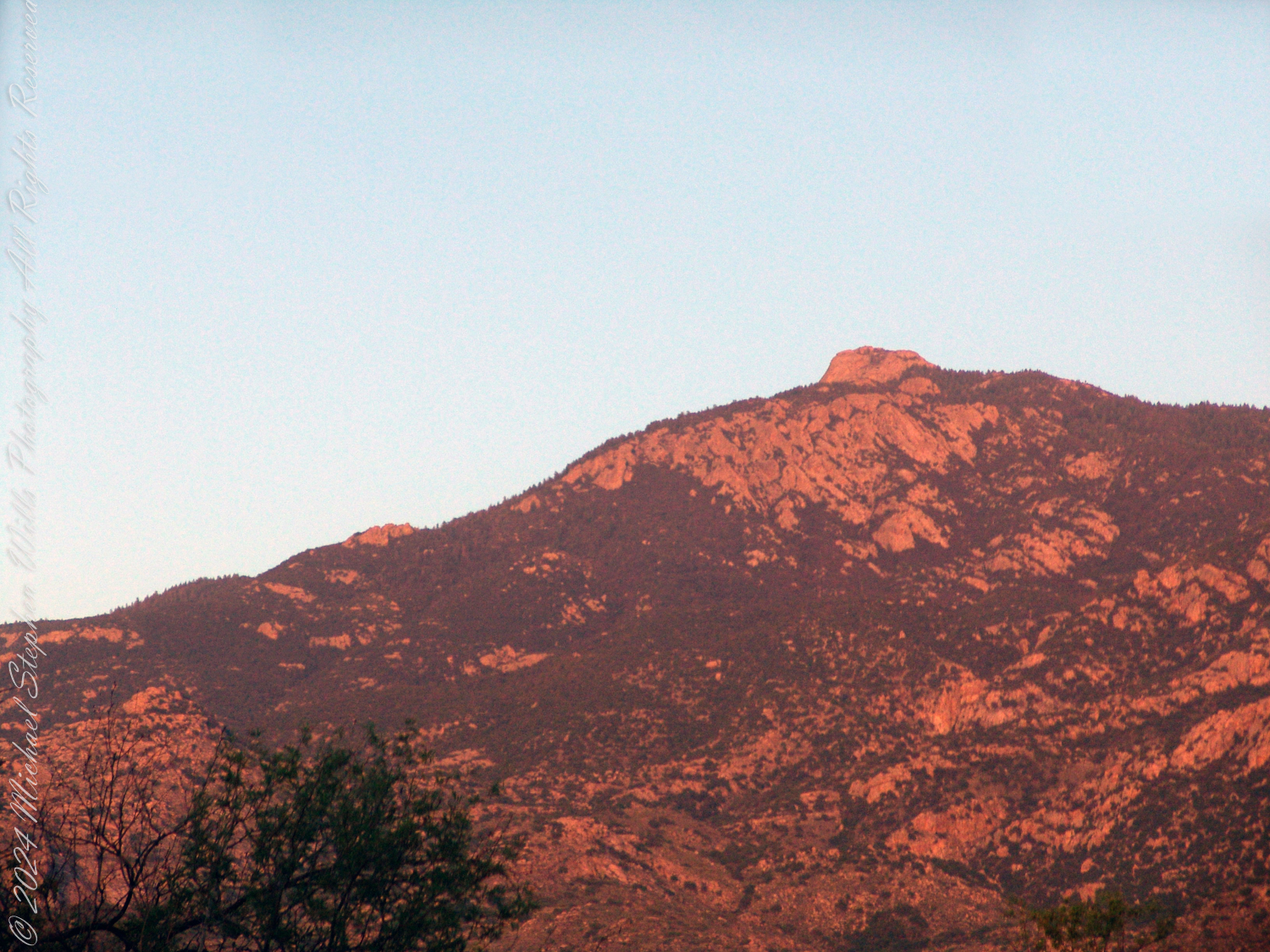
On the day we descended to the X9 Ranch via the Rincon Creek trail, we were granted a unique opportunity. My guide’s grandfather had a homestead at the X9, and his access to the trailhead through private lands opened this ro ute for us. That evening, I took a photograph of the sunset on Rincon Peak from the X9 Ranch, looking east from the ‘Rincon’—the corner formed by the massifs of Rincon Peak, Mica Mountain, and Tanque Verde Ridge.

The X9 ranch sits in the Rincon (spanish for corner) made by the massifs Rincon Peak, Mica Mountain and Tanque Verde ridge.

Two years later, on the evening of November 2, 2006, I climbed the Tanque Verde trail in Saguaro National Park East for about 30 minutes to reach a vantage point of Rincon Peak. Intending to capture the peak bathed in golden light, I waited until just before the sun set behind the Tucson Mountain. Afterwards, I raced the sun hiked back to the car. In my hurry, I tripped on a stepped turn and dove headfirst into a large prickly pear cactus. It was a very painful experience. Large spines pierced my face, while tiny, pesky spines covered my chest and back. The large spines, not being barbed, came out easily, but I needed to visit a physician to remove the rest.

Click me for a framed version of this photograph
Rincon Peak from the X9 Ranch-- CLICK ME!!!!

Enter your email to receive notification of future postings. I will not sell or share your email address.

Exploring Lime Hollow: Nature Walks with My Grandsons

Enjoy a memorable visit to Lime Hollow Nature Preserve by a grandfather and his grandsons, exploring nature, observing wildlife, and connecting through shared experiences, fostering curiosity and appreciation for the environment.

The October sunlight was gentle as we entered Lime Hollow Nature Preserve from Gracie Road, my grandsons, Sam and Rory, bursting with excitement beside me. Sam, the eldest, took the lead, confidently striding ahead along the Sunset Trail while Rory, his younger brother, stayed close to my side, his eyes wide with wonder at the forest around us.

Descent to the Pond


The trail wound through the woods, dappled with the golds and reds of early autumn. Sam spotted a squirrel darting between trees, and Rory pointed to the sky, “Look, Grandpa, a woodpecker!” I smiled at their enthusiasm, feeling grateful for these moments of connection to nature and family.

We descended toward the pond via the Pond View Trail, the sound of trickling water drawing us closer. As we approached, the landscape opened up, revealing the calm, reflective surface of the water, bordered by reeds swaying in the light breeze. I remembered bringing the boys here last spring, how different the pond looked then—brimming with life as frogs leapt from the banks and dragonflies zipped across the water’s surface. Today, the scene was quieter, but no less magical.

Rory, ever the adventurer, crouched by the pond’s edge, watching for frogs. Sam, too, paused to observe but soon grew restless, his curiosity pushing him onward. “Come on, Grandpa! Let’s see what’s next!” His voice echoed through the trees as he darted back onto the trail, Rory quick to follow.

Encounter with the Giant Fungus


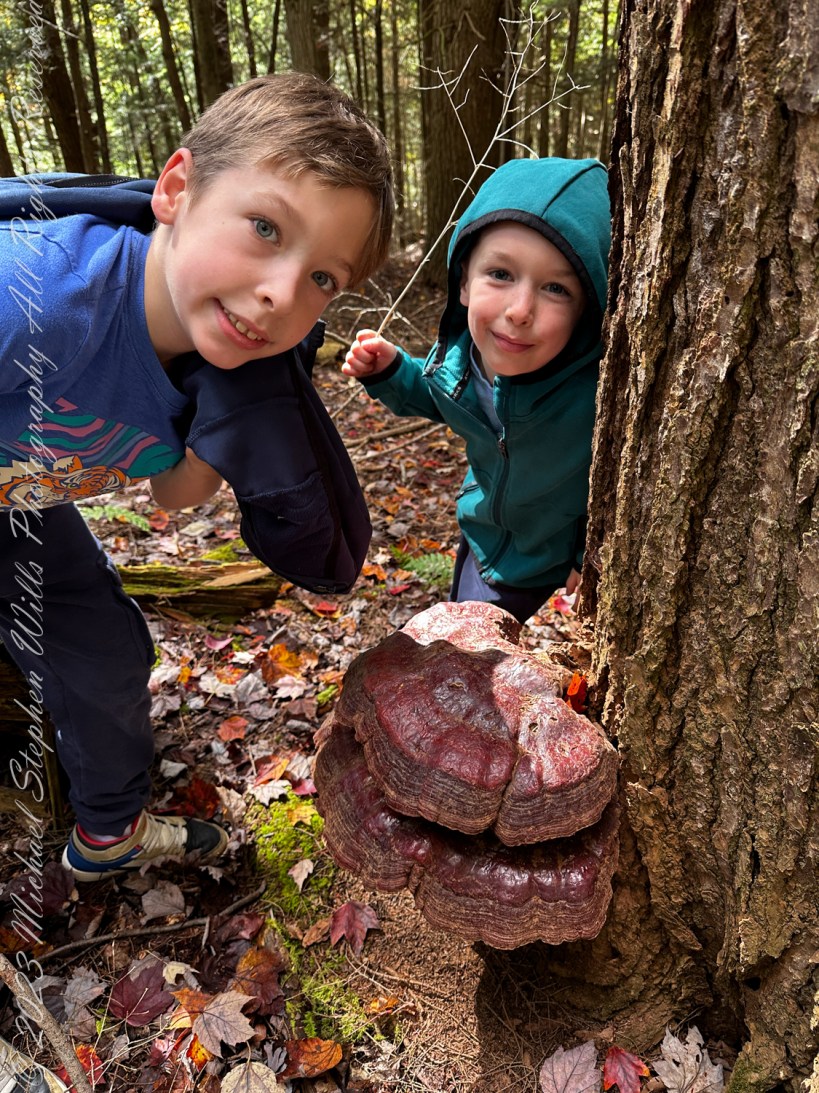
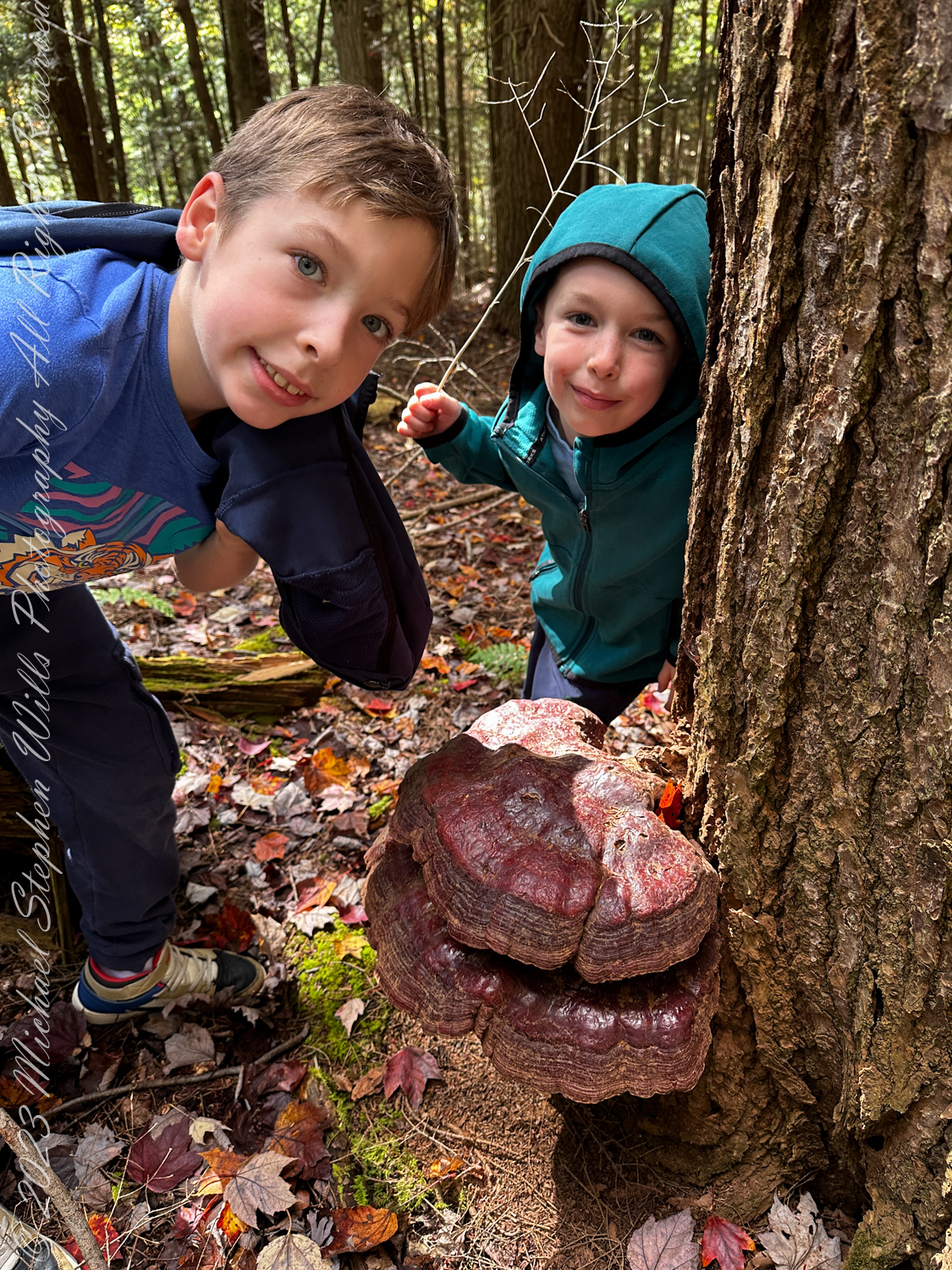
The path led us deeper into the forest, and soon we turned onto the Brookside Trail, which merged with the High Ridge Trail. Here, the air grew cooler under the dense canopy of trees, and the forest floor softened beneath our feet with layers of leaves. It was then that we stumbled upon the most magnificent sight of the day: an enormous bracket fungus, its wide, layered shelves clinging to the trunk a hoary snag.

Rory gasped in delight, running over to inspect it more closely. “Look how big it is!” he exclaimed, his small hands hovering just above its ridged surface. Sam, never one to be outdone, knelt beside it, carefully touching the spongy layers. “It’s a staircase for squirrels,” he said, grinning up at me.

Turkey Tail bracket fungus (Trametes versicolor) is a common wood decay fungus found on dead and decaying hardwoods. Named for its concentric, colorful bands resembling a turkey’s tail, it plays a vital role in forest ecosystems by breaking down lignin, facilitating nutrient recycling. It’s also valued for its medicinal properties. Lime Hollow Nature Center, Cortland, Cortland County, New York State. Finger Lakes Regions

As I watched them, I couldn’t help but think back to all the times I had wandered these trails alone before they were born. Now, these woods had become a classroom for them—full of discoveries that sparked their curiosity and wonder. It was a beautiful moment of generational connection, this passing on of my love for the natural world to Sam and Rory.

Fascinating Beech Tree Roots


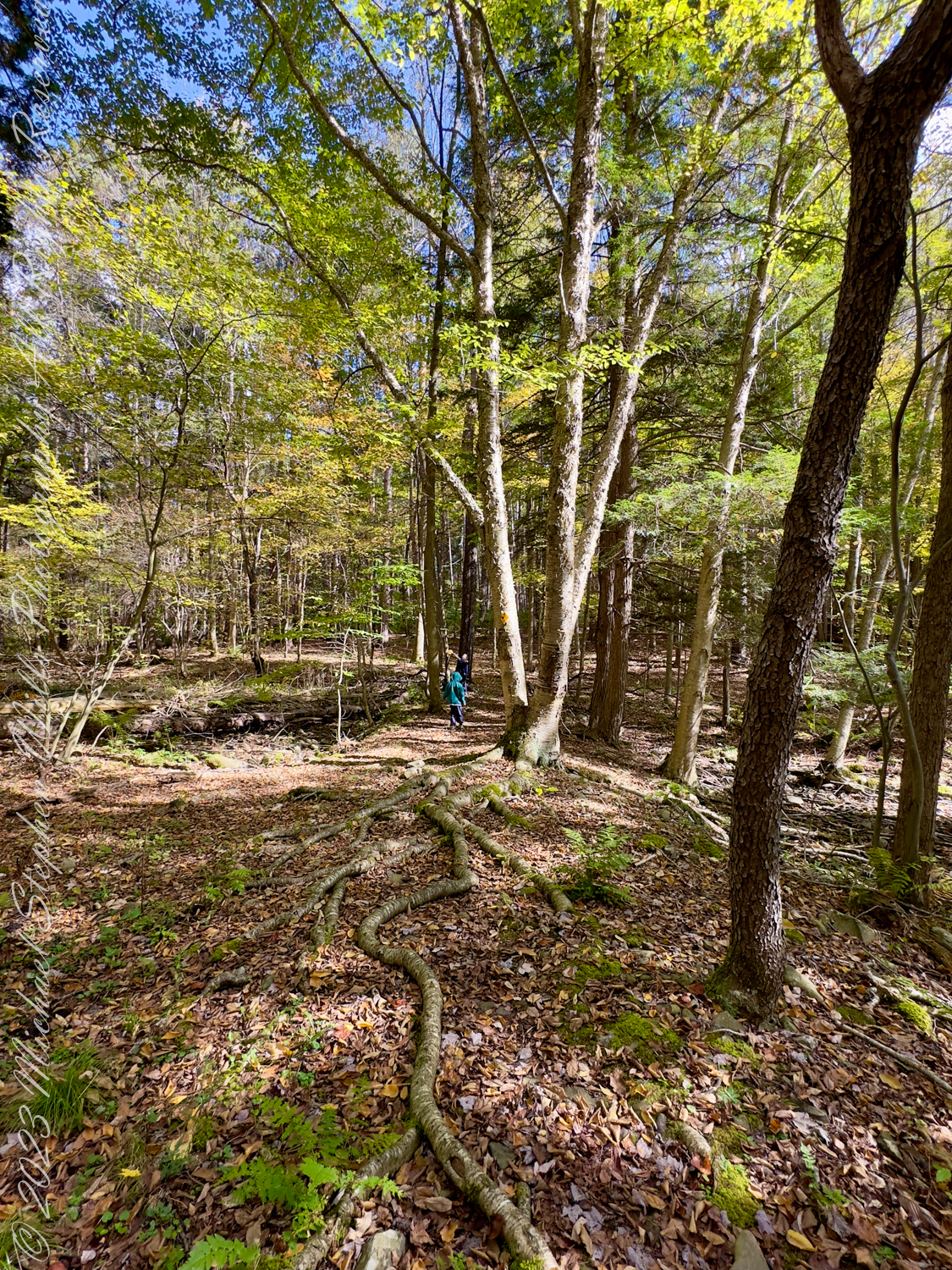
On the way out, we took the Brookside / Pond View / Sunset trails once again, but this time, this intricate network of roots from a massive beech tree fascinated us. The roots twisted and coiled across the path like veins, in our imaginations the gnarled shapes snagged our feet. Sam, ever the explorer, stepped cautiously along the roots, balancing himself as if walking a tightrope. Rory followed suit, his giggles filling the air.

An American beech (Fagus grandifolia). These trees are quite common in northeastern forests.
The beech tree is known for its smooth smooth, gray bark, which can become marked with scars or etchings as the tree ages. Additionally, its leaves are typically dark green, with serrated edges, and turn yellow to bronze in the fall, often staying on the tree through winter. Lime Hollow Nature Center, Cortland, New York State

“These roots are older than us,” I told them. “Beech trees can live for hundreds of years. Just think, this tree has seen many more seasons than we ever will.”

Sam’s eyes widened at the thought, while Rory gave the tree a gentle pat, as if to thank it for its wisdom. I marveled at how something as simple as a root system could captivate their imaginations and bring the lesson of time and growth to life.

Reminiscing on the Chicago Bog

In the 1830’s there was a village named Chicago along Gracie Road, which gives it the name we have today. The Chicago Bog is home to many carnivorous plants, including sundew, the pitcher plant, and more. The deepest depth of the bog is about 7.2 ft. The bog is along the Phillips Memorial Trail, which can be found on Gracie Road. Lime Hollow Nature Center, Cortland, New York


As we walked, my mind wandered back to a visit we had made to the Chicago Bog just a year before. I remembered the day clearly—how we had trekked through the wetland on a warm June afternoon, the ground soft beneath our feet, alive with the buzzing of insects and the vibrant green of new growth.

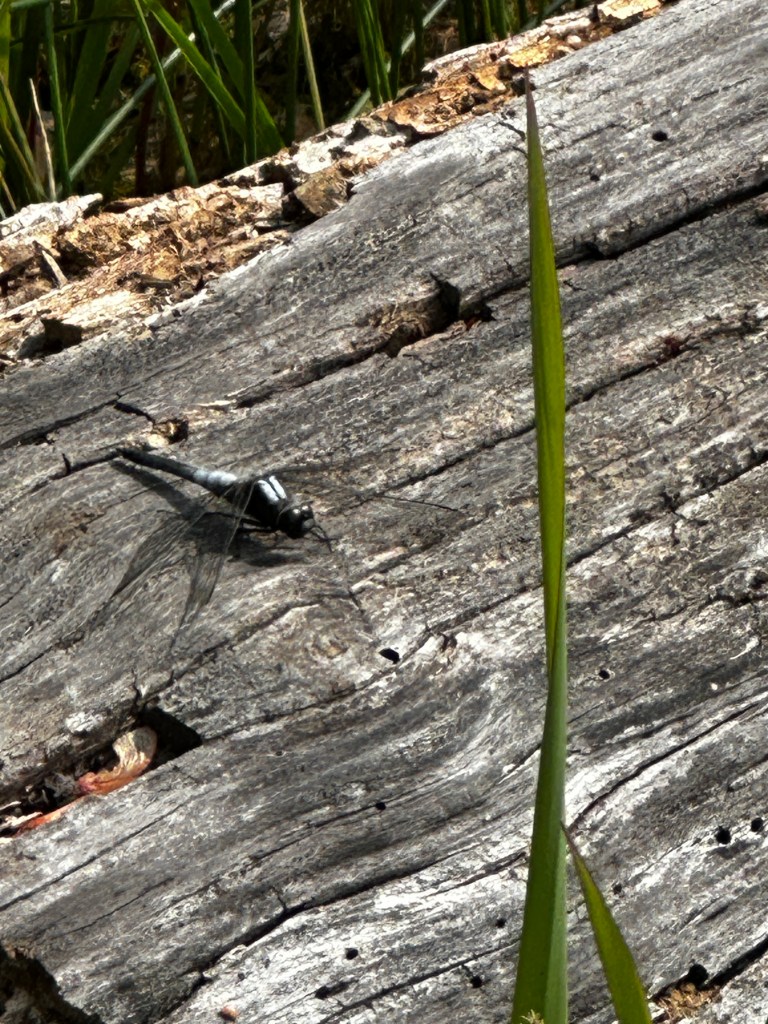
The chalk-fronted corporal (Ladona julia) is a skimmer dragonfly found in the northern United States and southern Canada.
Juveniles of both sexes are light reddish brown, with white shoulder stripes and a black stripe down the middle of the abdomen. As they mature, males develop a white pruinescence on the top of the thorax and at the base of the abdomen, while the rest of the abdomen turns black. Females become almost uniformly dark brown, with a dusting of gray pruinescence near the base of the abdomen; a few develop the same color pattern as the males.
Chalk-fronted corporals often perch horizontally on the ground or on floating objects in the water, flying up to take prey from the air. They are gregarious for dragonflies, and are commonly seen perching in groups. They readily approach humans to feed on the mosquitoes and biting flies that humans attract.

It was there, by the edge of the bog, that we had encountered a dragonfly, a Chalk-fronted Corporal, resting on a fallen log. Its dark, iridescent wings shimmered in the sunlight, and Sam had been mesmerized by its delicate beauty. He had asked so many questions that day—about how dragonflies flew, what they ate, and where they lived. I had done my best to answer, but truth be told, I learned as much as he did in that moment.

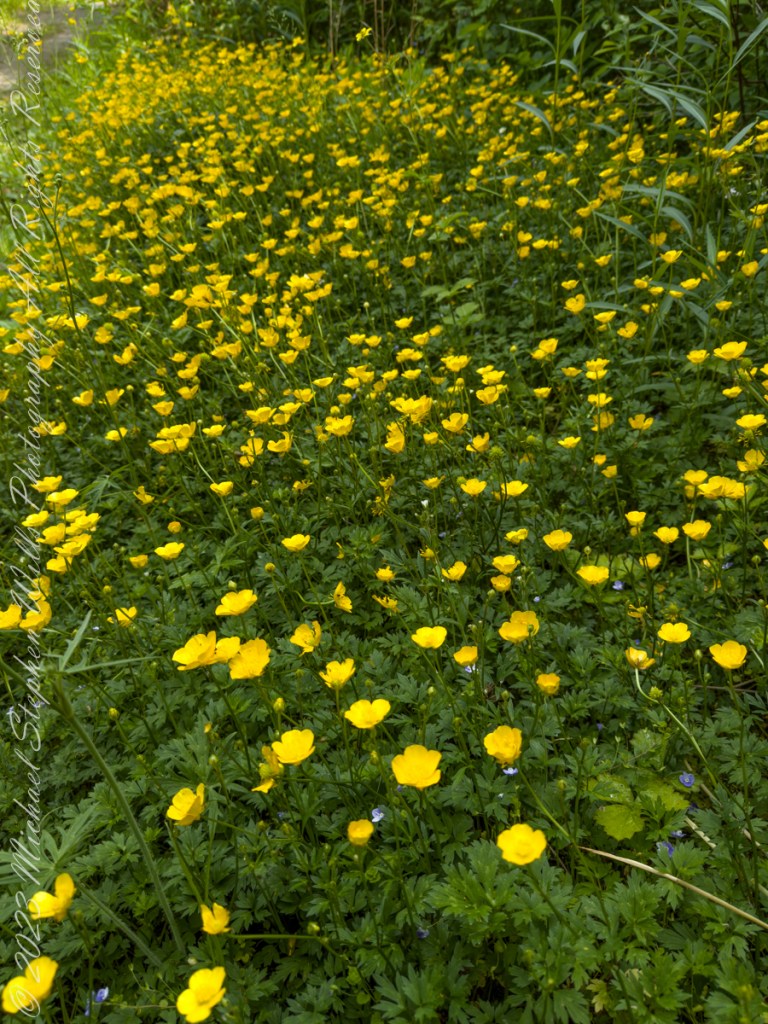
Nearby, a meadow of buttercups had stretched out before us, their yellow blooms dancing in the breeze. Rory had run through them, his laughter ringing out as he tried to catch a butterfly that flitted between the flowers. The memory of that field of gold still brought a smile to my face as we made our way through Lime Hollow today.

A Day to Remember


As we neared the end of our hike, the afternoon light filtering through the trees, I couldn’t help but feel a sense of contentment. These outings with Sam and Rory had become more than just walks in the woods—they were opportunities to share, to learn, and to make memories that I knew would last a lifetime.

“Grandpa, can we come back?” Rory asked, his face flushed with excitement.

“Of course,” I said, smiling. “We’ll always have time for another adventure.”

Forest Gems – The Natural History and Lore of Hepatica

Join us on a journey through the enchanting forests of the Finger Lakes as we explore the fascinating world of Hepatica nobilis. Discover the lore, natural history, and beauty of these early spring bloomers. Dive into the magic of the wild!

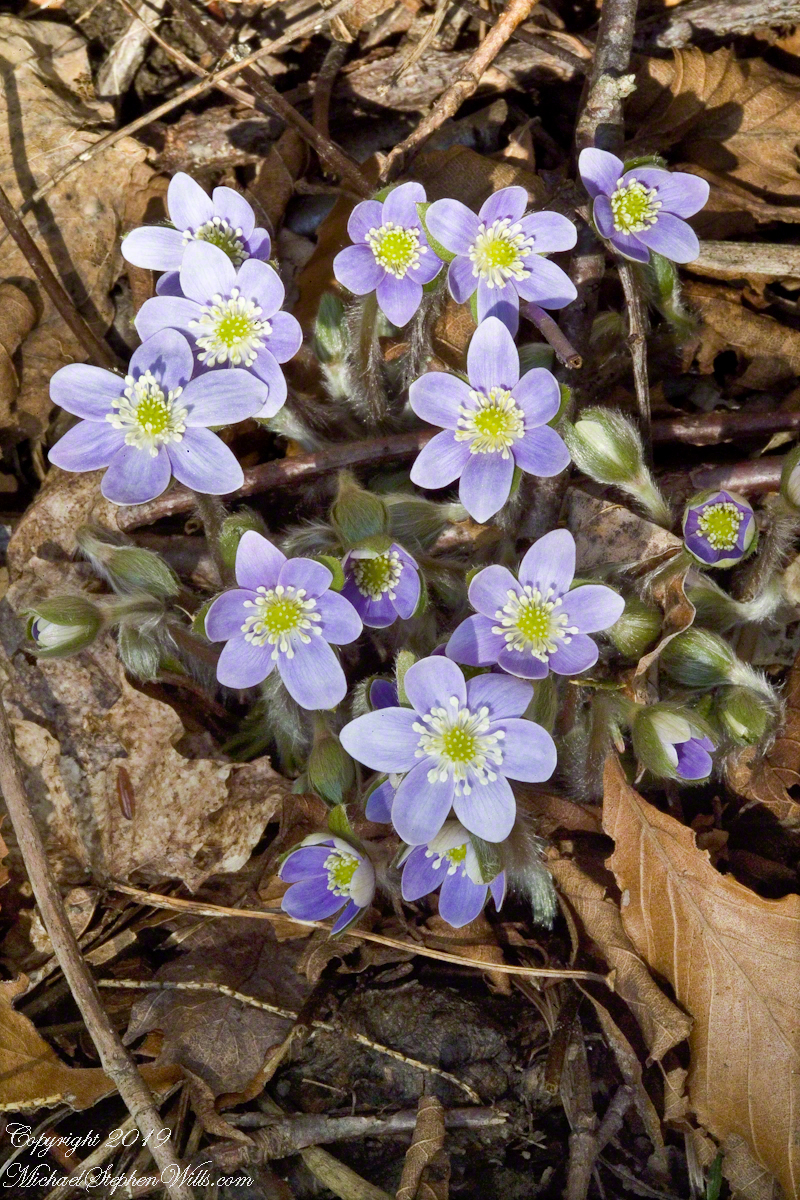
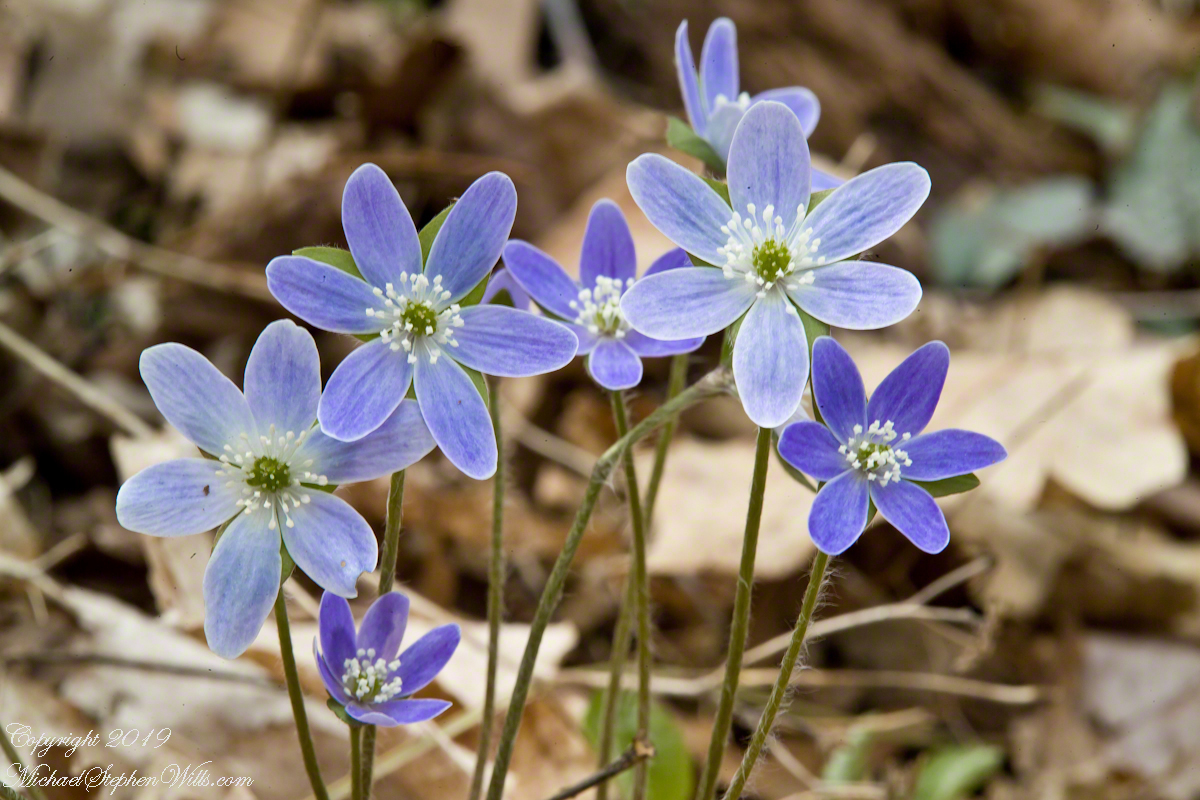
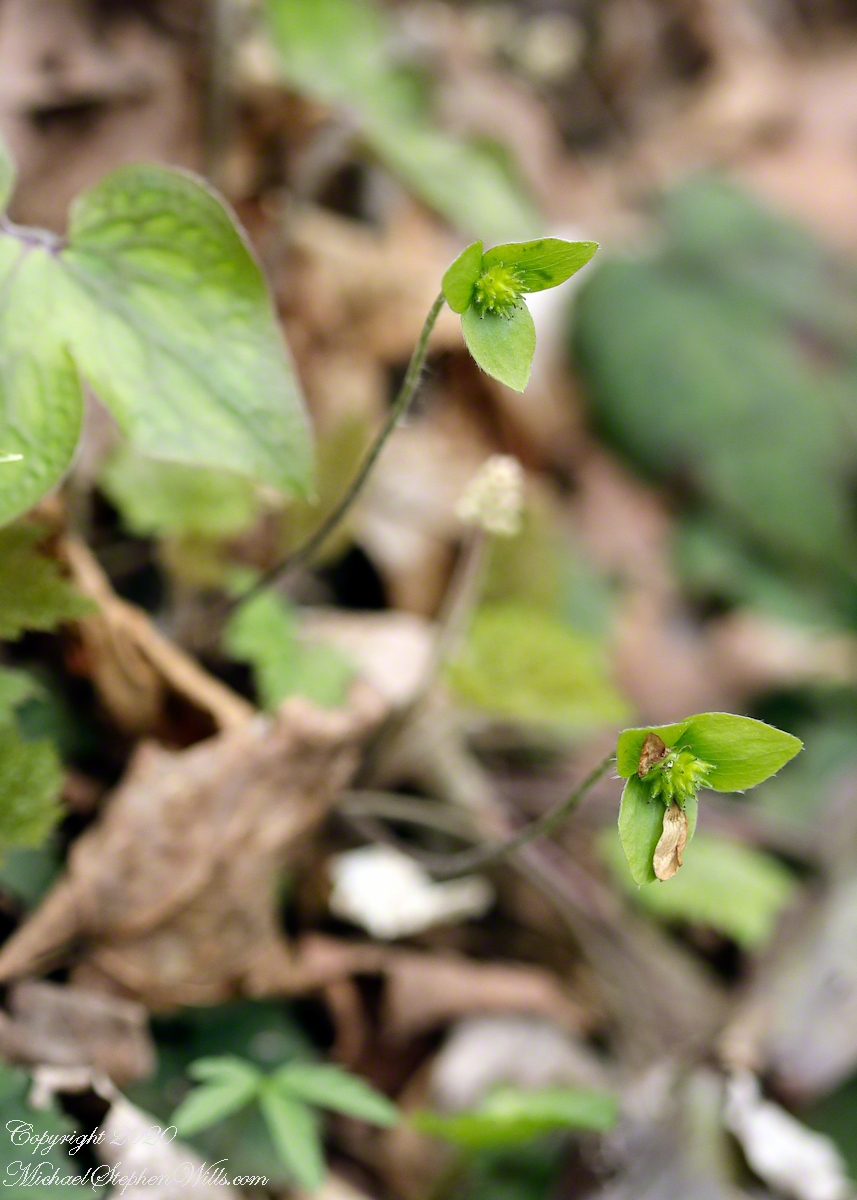
As I ventured along the Gorge Trail of Robert H. Treman New York State Park, I stumbled upon a captivating sight. Amidst the rich leaf litter and emerging greenery, clusters of Hepatica plants caught my eye. Although the flowers had already gone to seed, their distinctive leaves and stems told a story of early spring beauty in the heart of the Finger Lakes Region, Tompkins County. Using my Apple iPhone 14 ProMax, I documented these charming plants, eager to delve deeper into their fascinating world.

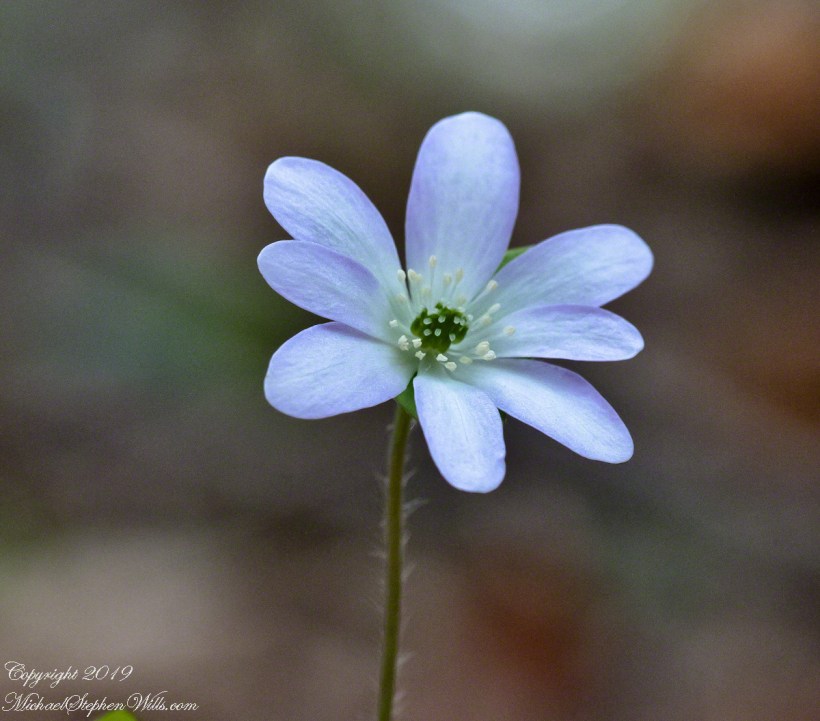
Hepatica, scientifically known as Hepatica nobilis, also goes by several common names including Liverleaf, Liverwort, and Kidneywort. The genus name “Hepatica” comes from the Greek word “hepar,” meaning liver, due to the shape and color of its leaves, which resemble the lobes of a human liver. This resemblance led to the plant being used historically in herbal medicine to treat liver ailments, in line with the Doctrine of Signatures—a belief that plants resembling body parts could cure ailments of those parts.

Fillmore Glen New York State Park, Moravia, New York on an April afternoon.

The common names of Hepatica reflect its historical medicinal uses. “Liverleaf” and “Liverwort” both reference its liver-shaped leaves, while “Kidneywort” likely arose from the kidney-like appearance of its seeds. These names have endured through centuries, reflecting the plant’s significant role in both folklore and herbal medicine.

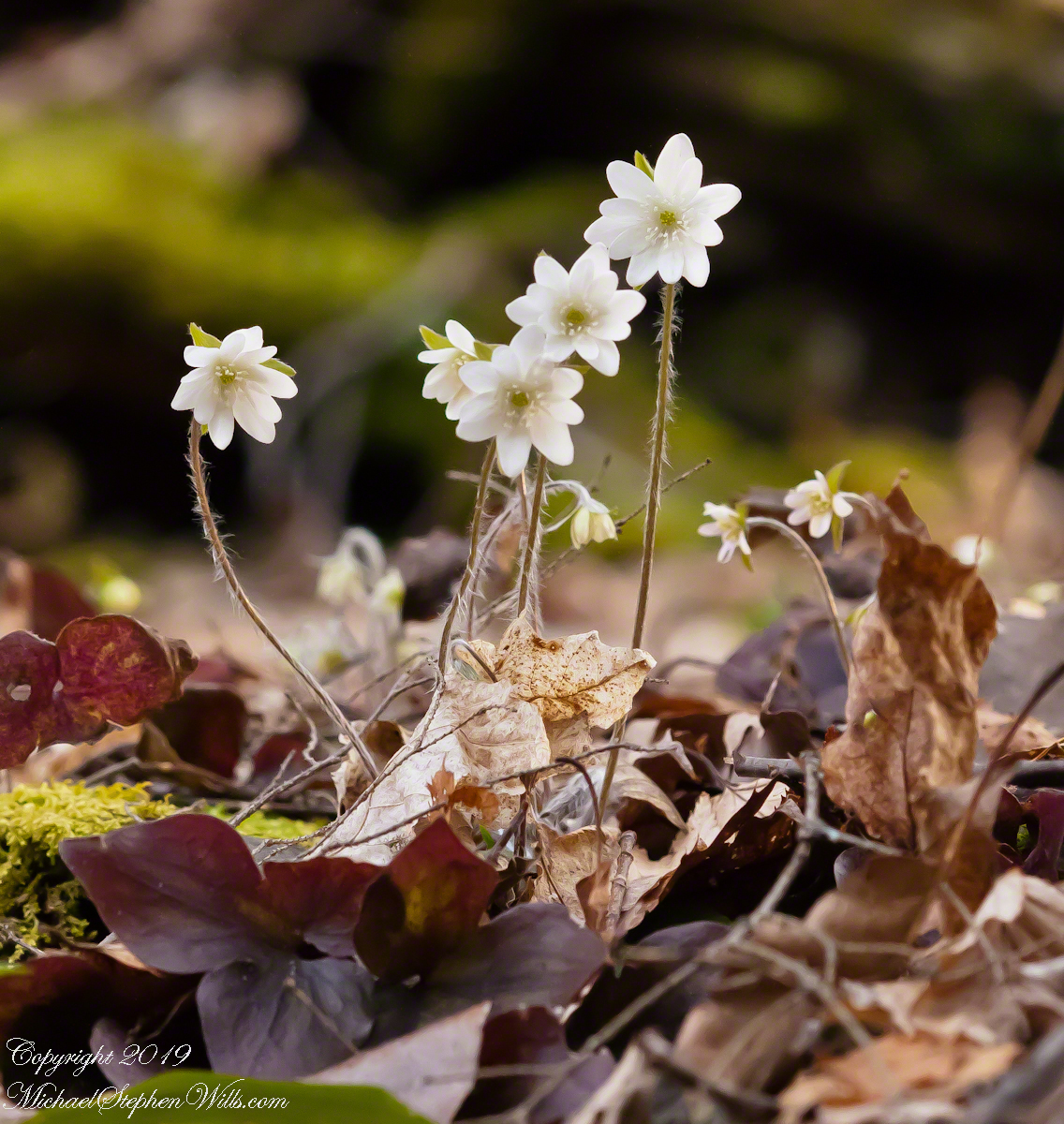
Hepatica is a perennial plant in the buttercup family, Ranunculaceae. It thrives in deciduous forests, often found in shaded areas with rich, well-drained soil. The plant is one of the first to bloom in early spring, producing delicate flowers in shades of white, pink, blue, or purple. By the time I encountered them on my hike, the flowers had already transitioned to seed, but the distinctive lobed leaves remained vibrant and lush.

Fillmore Glen New York State Park, Moravia, New York on an April afternoon.

Reproduction in Hepatica is primarily through seed, though the plant can also propagate vegetatively. The flowers are insect-pollinated, attracting early-season pollinators such as bees and flies. Once pollinated, the flowers produce seeds encased in small, fuzzy fruits. These seeds are often dispersed by ants, a process known as myrmecochory, which helps ensure the plant’s spread throughout the forest floor.

Native American tribes, including the Iroquois, valued Hepatica for its medicinal properties. They used the leaves to brew teas believed to treat liver disorders, digestive issues, and skin ailments. European settlers adopted similar practices, incorporating Hepatica into their own herbal remedies.

In European folklore, Hepatica was often associated with healing and protection. The plant was believed to ward off evil spirits and protect against various maladies. In the language of flowers, Hepatica symbolizes confidence and bravery, reflecting its early emergence in the harsh conditions of early spring.

Fillmore Glen New York State Park, Moravia, New York on an April afternoon.

Today, Hepatica continues to enchant nature enthusiasts and hikers with its early blooms and lush foliage. It plays a crucial role in the ecosystem, providing a vital source of nectar for early pollinators and contributing to the biodiversity of deciduous forests.

Walking through the gorge, I felt a deep connection to the natural history and cultural significance of Hepatica. The plant’s resilience and beauty, even in its seeding stage, served as a reminder of the enduring cycles of nature and the intricate relationships between plants, animals, and humans.

In conclusion, Hepatica nobilis, or Liverleaf, is a plant of remarkable beauty and historical significance. Its early spring blooms and distinctive leaves make it a cherished sight in the forests of the Finger Lakes. As I continued my hike, I felt a profound appreciation for the rich tapestry of life that Hepatica represents, a testament to the enduring wonders of nature.

Copyright 2024 Michael Stephen Wills All Rights Reserved

The Enchanting Sweet White Violets of Treman Gorge

Discover the enchanting Sweet White Violets (Viola blanda) in Treman Gorge. Join us as we explore their natural history, lore, and beauty in the heart of the Finger Lakes. Dive into the magic of spring time blooms!

As I walked the Gorge Trail of Robert H. Treman New York State Park, my attention was captivated by a lush carpet of delicate white flowers nestled among the vibrant green foliage. These enchanting blooms, known as Viola blanda or Sweet White Violets, were a delightful sight against the backdrop of the rugged terrain of the Finger Lakes Region in Tompkins County. Armed with my trusty Apple iPhone 14 ProMax, I couldn’t resist capturing the moment.

Viola blanda, also known as Sweet White Violet or Pale Violet, derives its scientific name from Latin. “Viola” is the classical Latin name for violets, while “blanda” means charming or pleasant, an apt description for these delightful little plants. The name “Sweet White Violet” alludes to the delicate and sweet fragrance of its flowers, a scent that is often subtle but unmistakably pleasant when noticed.

Sweet White Violets are perennial plants, part of the Violaceae family, and are typically found in moist, wooded areas. They are one of the first wildflowers to bloom in spring, their pure white petals standing out amidst the fresh green growth of the forest floor. The leaves are heart-shaped with finely serrated edges, and they form a dense mat that can cover the ground in a verdant blanket.

The reproduction of Viola blanda is fascinating. These plants produce both cleistogamous and chasmogamous flowers. The chasmogamous flowers, which are the ones most of us are familiar with, are the showy, white blooms that open fully and are pollinated by insects. Cleistogamous flowers, on the other hand, do not open and are self-pollinating. This dual strategy ensures that the plant can reproduce even in the absence of pollinators, securing its presence in the ecosystem year after year.

Native Americans, particularly the Iroquois tribes whose region this included, held violets in high regard. They used the plant medicinally to treat colds, coughs, and headaches. The leaves were often brewed into a tea, believed to have soothing properties. European settlers, too, were fond of the violet. They would often use the leaves and flowers in salads and as a garnish, taking advantage of both its nutritional value and pleasant taste.

Interestingly, in folklore, violets were associated with love and were often used in love potions. The ancient Greeks believed that violets could moderate anger and induce sleep. In the language of flowers, which was particularly popular during the Victorian era, violets symbolized modesty and faithfulness.

In modern times, the Sweet White Violet continues to charm nature enthusiasts and hikers alike. It plays a crucial role in the ecosystem, providing early spring nectar for pollinators such as bees and butterflies. The plant also serves as a host for certain butterfly species, which lay their eggs on the leaves. As the caterpillars hatch, they feed on the leaves, continuing the cycle of life.

Walking through the gorge, I felt a profound connection to the natural world. The Sweet White Violet, with its humble beauty and rich history, served as a reminder of the intricate web of life that thrives in these woods. Each step on the trail was a journey through the park and a walk through time, connecting me to the countless generations who have walked these paths before me, enchanted by the same delicate flowers.

In conclusion, the Viola blanda, or Sweet White Violet, is more than just a pretty face in the forest. It is a plant steeped in history, folklore, and ecological importance. As I continued my hike, I felt grateful for the opportunity to witness such beauty firsthand and to share in the timeless joy that these charming plants bring to the world.

Copyright 2024 Michael Stephen Wills All Rights Reserved

Thayer Preserve: Autumn Still Life 4

Explore the enchanting Lick Brook in the Finger Lakes region, where the Land Trust’s conservation efforts preserve nature’s beauty. Join me to uncover this hidden gem and its ecological wonders.

Continue reading “Thayer Preserve: Autumn Still Life 4”

White House Ruin

In 2003 and 2008, the author visited and photographed White House Ruin in Canyon de Chelly, observing changes in landscape.

In November 2003, my son Sean and I journeyed up Route 191 from Petrified Forest National Park, arriving in Chinle on a crisp autumn afternoon. My photography equipment at the time was modest: a Sony Point and Shoot 5 MP camera with filters, a purse-like over-the-shoulder bag, and a basic tripod from Kmart.

We reached the White House trailhead in Canyon de Chelly and began our hike. The trail was quiet, and as the sun set at 5:20 pm, we found ourselves virtually alone. A dense growth of Russian Olive trees dominated the wash at that time. In the dimming light, I captured a distant shot of the White House Ruin, whitewashed, set against the backdrop of autumn-hued Russian Olive foliage. Nearby, a grove of Cottonwoods, still green, stood near the canyon wall.

By the time Pam and I returned in July 2008, four years and nine months later, the landscape had changed. The invasive Russian Olives had been removed, and the White House Ruin was no longer painted white.

The same Route 191 that Sean and I had taken in 2003 led us through the Four Corners region of Northern Arizona. Pam and I had traveled from Colorado, arriving in the late afternoon. This time, the Navajo Reservation’s adherence to daylight savings time meant the sun wouldn’t set until 8:33 pm. My aim was to photograph the White House Ruin that I had missed years earlier.

That July day the sun set 8:33 pm as the Navajo Reservation observes daylight savings time. My goal was to photograph the White House Ruin I missed in 2003. We arrived at the trail head. My photography kit was expanded from 2003, now included a Kodak DSC Pro slr/C, the “C” meaning “Canon” lens mounting, a Sony 700 alpha slr (I only use a variable lens), Manfrotto tripod with hydrostatic ball head, and the backpack style Lowe camera case. With the tripod it is over 25 pounds.

With this on my back I was prepared to boogie down the trail. At the height of tourist season there were many more people at the trailhead. Pam, being a friendly person, started a conversation while I ploughed ahead along the flat canyon rim. It is solid red sandstone, beautiful, generally level with enough unevenness to require attention. When Pam saw how far ahead I was she tried to catch up, tripped, fell hard.

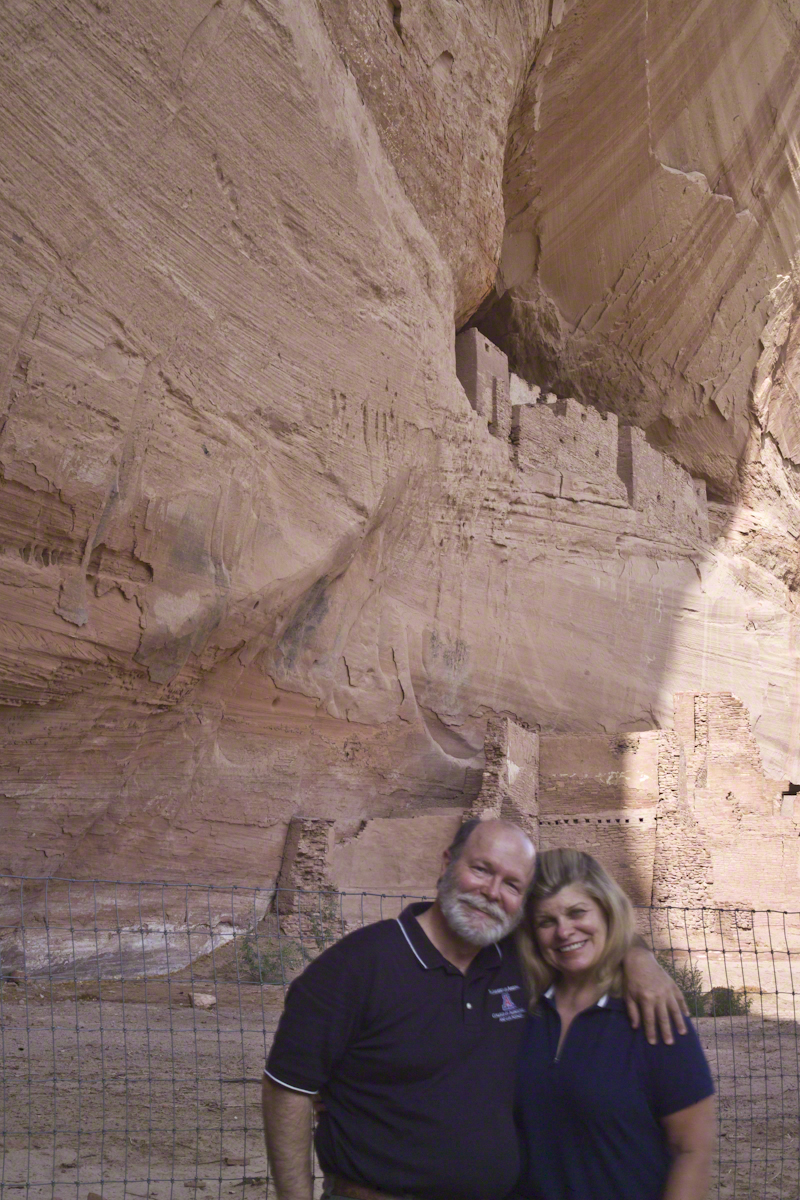
I backtracked to Pam and we decided what to do. She thought, maybe, the fall broke a rib. We decided to proceed and descended, slowly, together. Here we are in front of the ruin. The sun, low in the sky, is moving below the south canyon wall. This is a perfect time, and I used both cameras.

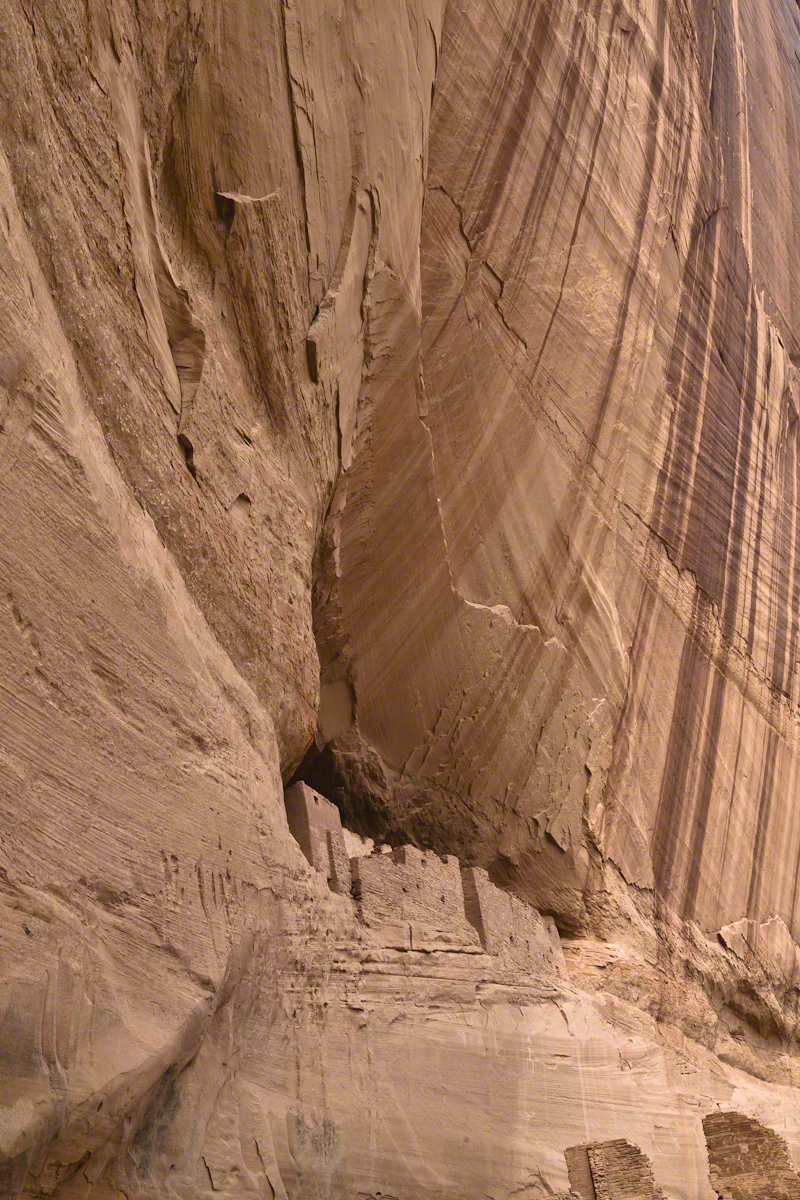
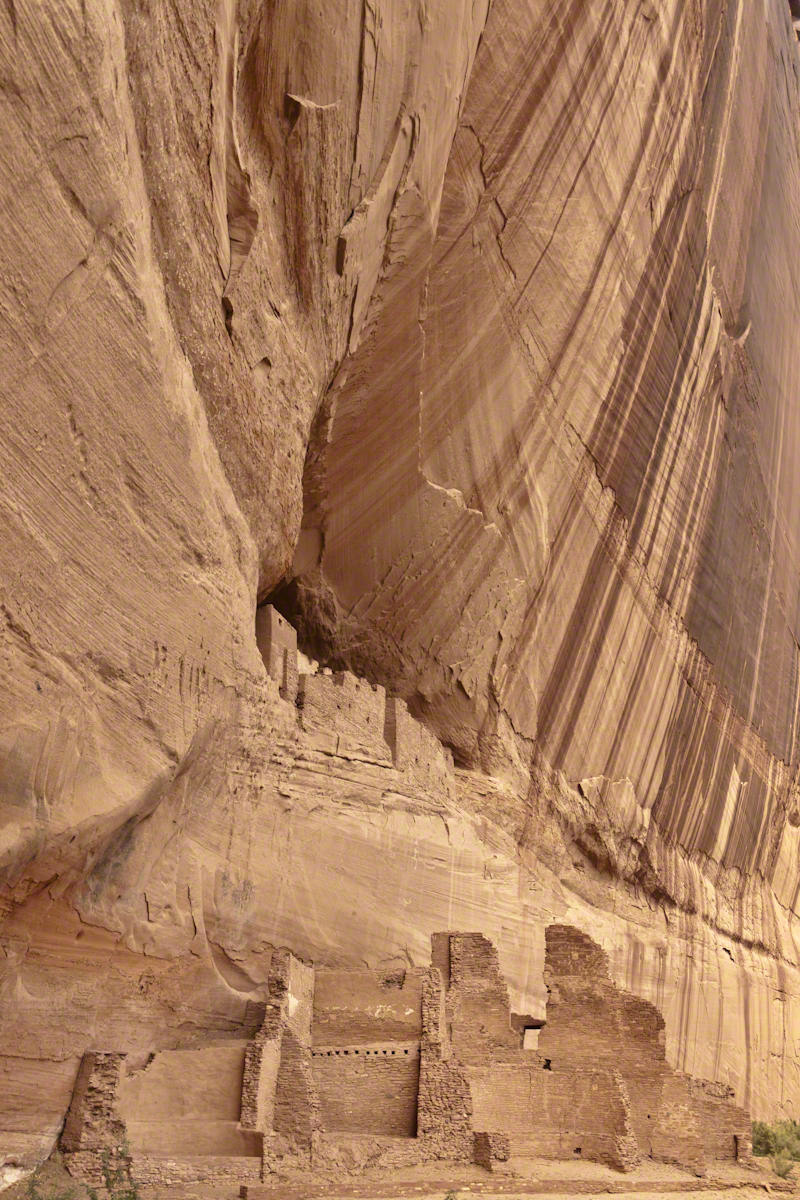
The sweep of cliff and desert varnish was my intent to capture. Here it is through the Canon 50 mm lens.

Click link for this White House photograph in my Online gallery.

I captured this version with the Sony Alpha 700 slr, the variable lens set to widest angle.

Click link for this White House photograph from my online gallery.

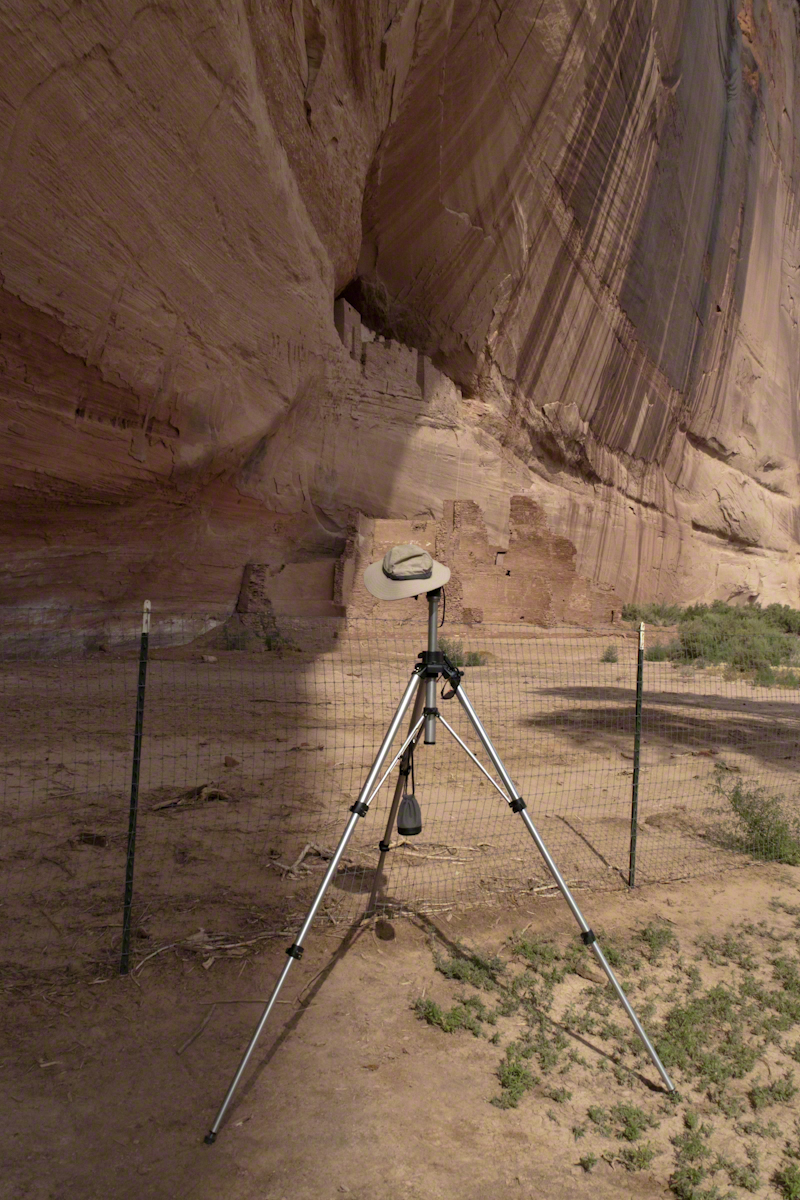
Here the camera setup waits out the sun…..

Click Me to view my photographs on Getty.

Copyright 2023 Michael Stephen Wills All Rights Reserved http://www.MichaelStephenWills.com