At Ashford Castle, swans glide on the Cong River’s glassy waters, weaving together myth, history, and cinema in a timeless reflection of Ireland’s enduring spirit.
Headed south from Cong Village, past the venerable Cong Abbey then Saint Mary’s Church of Ireland, the road bends into the Ashford Castle estate. Time seems to shift here. The stonework of the abbey lingers in memory, only to give way to manicured parkland, ancient trees, and the shimmer of water. The road itself, aptly named Ashford Castle, carries the traveler to a place where history, nature, and imagination meet.
I do not recall passing a guard box on my first visit, though one now stands firmly on the roadside, manned and proper, as though the estate were never meant to be entered without ceremony. In truth, Ashford Castle has always carried the air of a threshold—between village and wild, past and present, myth and reality.
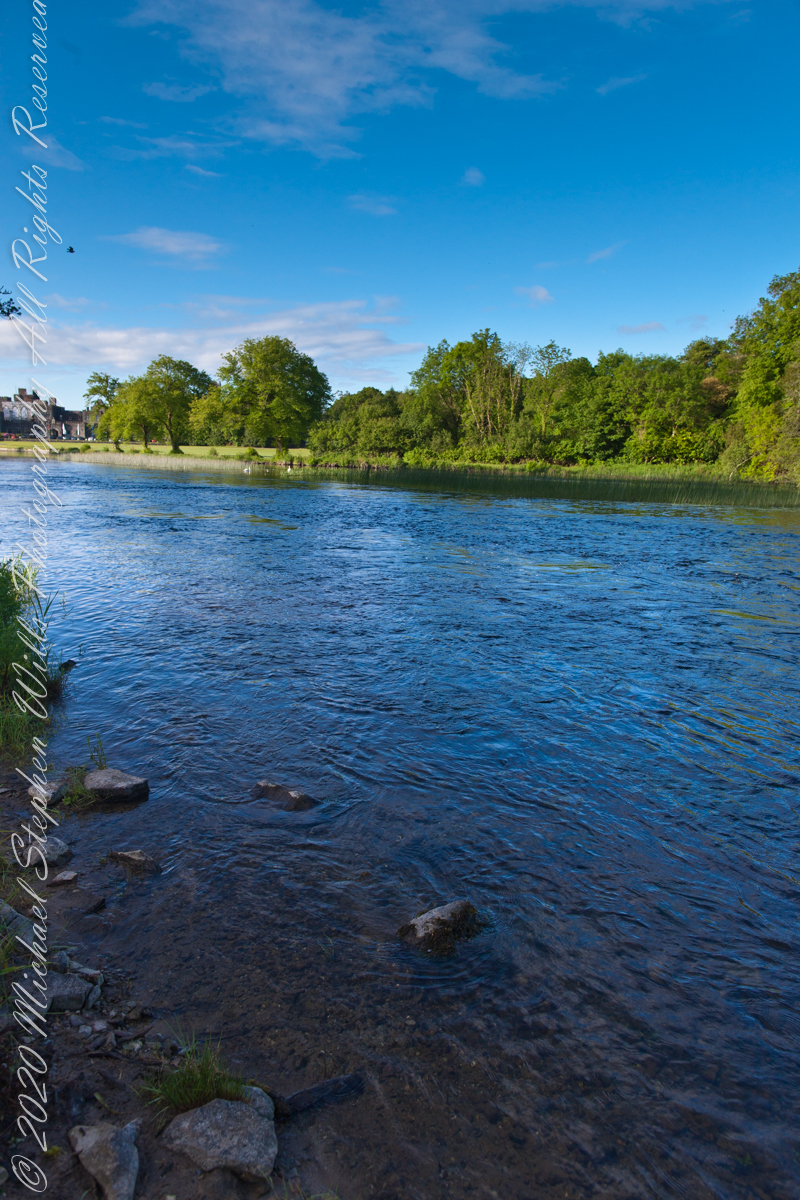
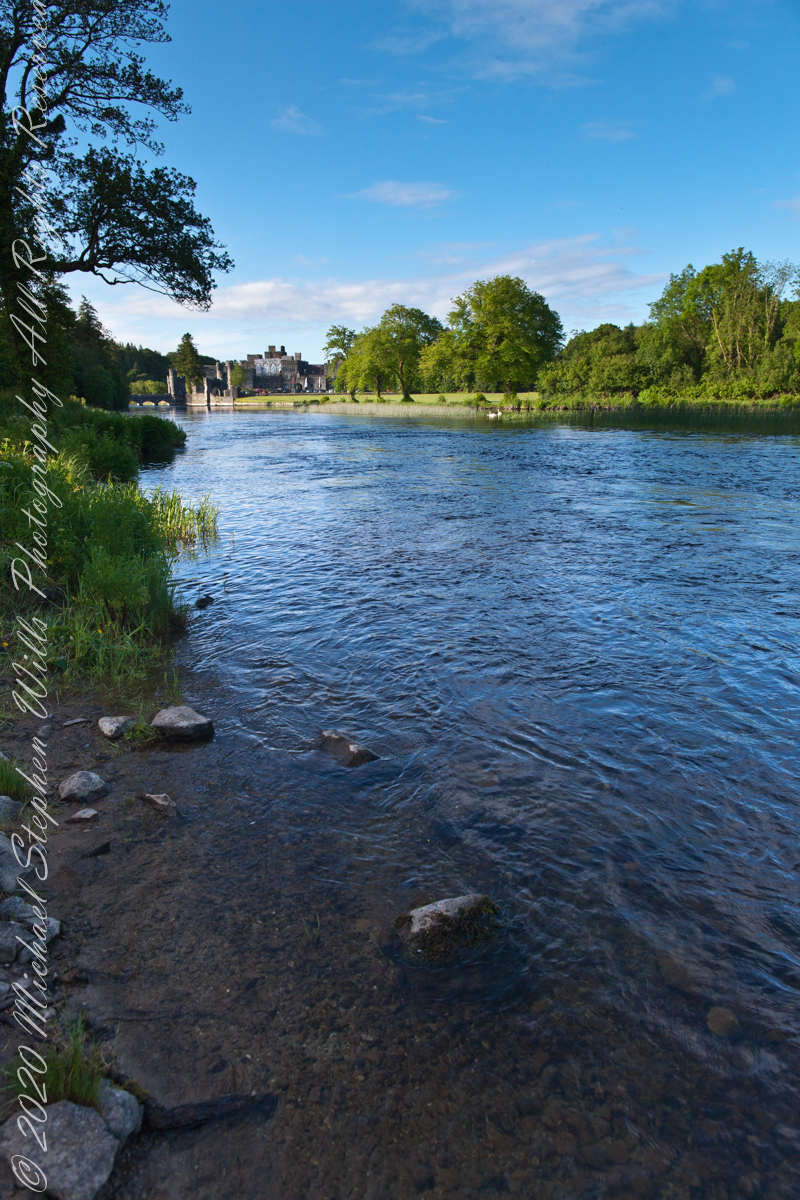
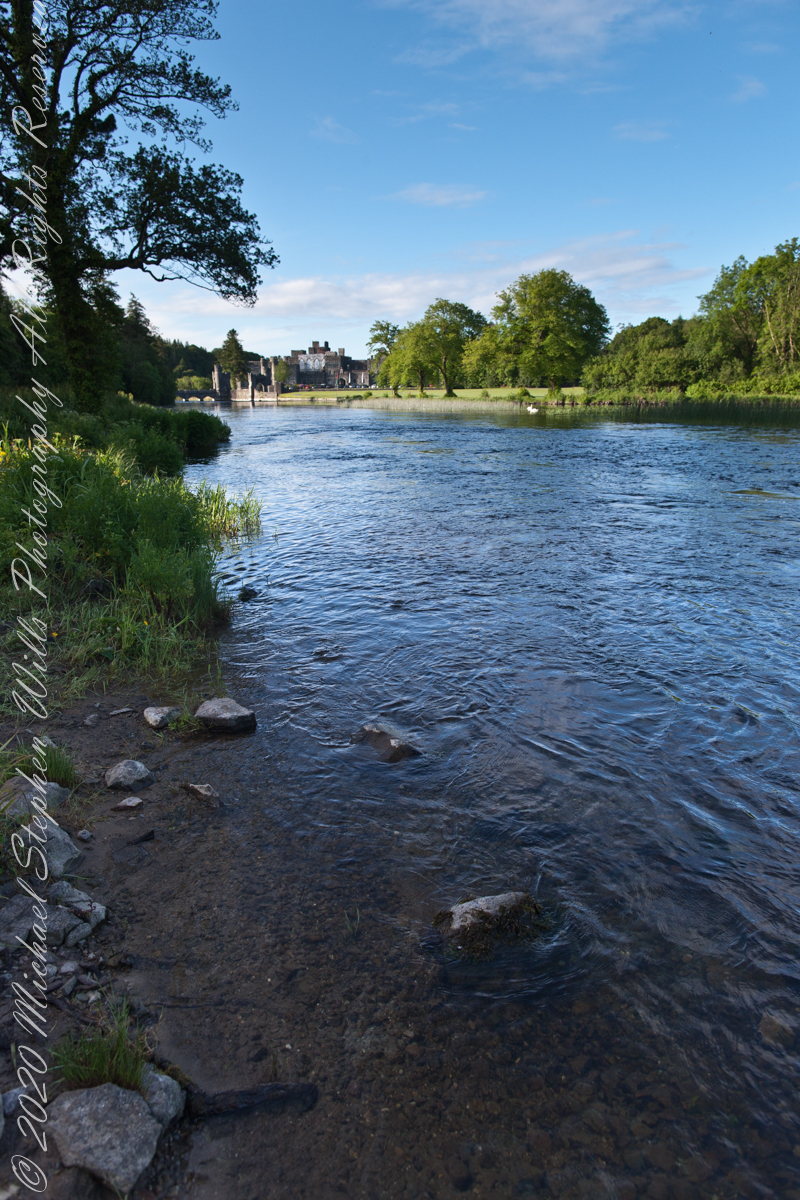
Soon the road brings one to the banks of the Cong River. Here the water widens, flowing calm and sure, and across it rises the battlemented silhouette of Ashford Castle itself. Its towers, turrets, and stony walls seem to grow from the riverbank like something inevitable, a fortress transformed into elegance. The castle’s mirrored reflection on the water doubles the grandeur, as though the real and imagined castle exist side by side.
It is no wonder filmmakers found inspiration here. Scenes from the classic 1952 film The Quiet Man—the tale of Sean Thornton, played by John Wayne, and the fiery Mary Kate Danaher, embodied by Maureen O’Hara—were shot on the far bank of this very river. To watch them walking by these waters is to see Ashford Castle woven into Hollywood’s Irish dreamscape, a backdrop both romantic and enduring.
Yet long before cinema, the river was already a stage. The Cong River is a natural marvel. It emerges from the same Carboniferous limestone that shapes the Burren of County Clare—an austere landscape of limestone pavements etched with fossils and caves, where rare alpine and Mediterranean plants thrive among ancient tombs. Through fissures in this ancient bedrock, the waters of Lough Mask find their way underground before rising again at Cong. This subterranean journey, through stone filters laid down some 350 million years ago, leaves the water clarified, luminous, and cold. By the time it slides past Ashford Castle, it has the purity of glass.
It is in this clarity while walking the opposite bank on a different morning I found a parent swan and its cygnet feeding. The adult glided, immaculate, its long neck bowed as drops of river fell from its beak. At its side, the cygnet paddled with earnest strokes, gray down still clinging, a fragile shadow of what it would one day become. Together they traced a quiet path across the water, ripples fanning behind them.
Few images so perfectly match their setting: a medieval castle, guardian of centuries, reflected in the same waters where these swans carried on their timeless rhythm of nurture and growth. It was as if the river itself composed the scene—a blending of stone, water, bird, and sky that belonged nowhere else but here.
The swan has long been a symbol in Irish lore. The Children of Lir, cursed to live as swans for nine hundred years, are among the most haunting figures of Celtic mythology. To see the white bird with its offspring before Ashford Castle was to glimpse that myth breathing still, alive on the Cong River.
Photographers know the difficulty of capturing water and stone without losing the life between them. On that morning, however, the river gave freely—its surface alternately smooth as glass and dappled with breeze. Stones at the water’s edge appeared like stepping-stones into history. Each frame revealed another face of the estate: the wide reach of the Cong, the castle framed by trees, the play of cloud shadows across the current.
The castle itself, though reshaped as a luxury retreat, still speaks of older times. Founded in the 13th century by the Anglo-Normans, Ashford passed through centuries of conquest and change before becoming, in the 19th century, a romantic Victorian pile. Today its battlements remain picturesque rather than defensive, but the sense of continuity—of lives unfolding along these banks—has not faded.
Standing there, camera in hand, I was struck by the layered meaning of this place. The Cong River flows from unseen caverns, purified by limestone older than memory. It nourishes swans, reeds, and trout alike. It reflects both a castle and a sky. Along its opposite bank, legends of cinema and Celtic lore alike find footing.
As the swan and cygnet drifted slowly downstream, I thought of them as part of the same enduring thread. Parent and child mirrored castle and village, past and future, permanence and change. The ripples they left widened until they touched both banks, an unbroken gesture across centuries.
From the commanding location of Dún Aonghasa, looking northeast across Inishmore, the logic of the ancients becomes clear. No better vantage could be found—land unfurling like a hand toward Galway Bay, cottages nestled in green folds, clouds billowing above like sails caught mid-journey. A place of presence. A place of permanence.
Perched high on the cliff’s edge, the fort behind, the Atlantic at the back, the wind carried stories—unwritten, unspoken, but felt in the bones. Below, stone walls divided the island into patterns of memory. Fields outlined in rock, laid long ago by hands familiar with hardship and patience. The sea’s pulse echoed faintly in the distance, as steady and unfathomable as time itself.
No words were needed in that moment. Just the hush of sky and stone. Cottages, bleached bright by limewash—kalsomine, the old name still whispered by some—stood resilient against the elements, each one a witness to generations. Each one seemed to carry a personal reverence, a tenderness carved into the landscape.
Paths led gently inland, where wind slowed and voices from distant homes rose faintly through the open air. Along those paths, the rhythm of island life could be read in hoof prints, scattered wool, and the sharp, clean edges of hand-cut stone. There, among the hedges of limestone and wild grass, the living and the lost felt close.
The cloud cover shifted constantly. Shadows passed like thoughts across the land. Toward the shore, the sky opened wide. A silence filled the lungs, as bracing and deep as the Atlantic itself. Time seemed to slow, the mind slipping into the rhythm of the land.
Limestone pavement, rough beneath the boots, told its own tale of erosion and survival. That the earth here could sustain even the most modest farming seemed improbable. Yet here it was: a testament to stubborn hope and quiet ingenuity. In that quiet, ancient energy rose—something older than the fort, older than language. A pulse shared with the rock and wind.
The fort eventually came back into view—perched as if grown from the cliff itself, curved walls enclosing nothing but air and sky. I perceived no defensive bluster, only presence. And what a view it commanded. On days like this, the clouds formed towering cathedrals overhead, white and gold in the sun. Below, the cottages and fields seemed miniature, perfect, enduring.
The wind played echoes of prayer, lullaby, and laughter mingled with the call of seabirds. The thought came that nothing here was ever truly lost—only layered. Generation upon generation, each leaving some trace: a stone placed just so, a wall mended one final time, a cottage roof patched for another winter.
Here, even the air speaks. It moves gently but insistently, brushing the cheeks and stirring something ancient within the chest. Beneath it, the island breathes: not loudly, not urgently, but with the slow, deep rhythm of the tides.
As the sun dipped slightly westward, light changed across the fields, cottages glowing warm against darkening green. The wind softened. The clouds drifted, still massive but no longer looming. Time to return. A glance back offered one last communion with sky, stone, and silence.
Inishmore, on that day had been absorbed. Understood not with the mind, but with something quieter. Something that listens without need for words.
On April 22, 2025, a wanderer discovers a trout lily, representing nature’s cycles, patience, and the interconnectedness of life through blooming, pollination, and nutrient cycling.
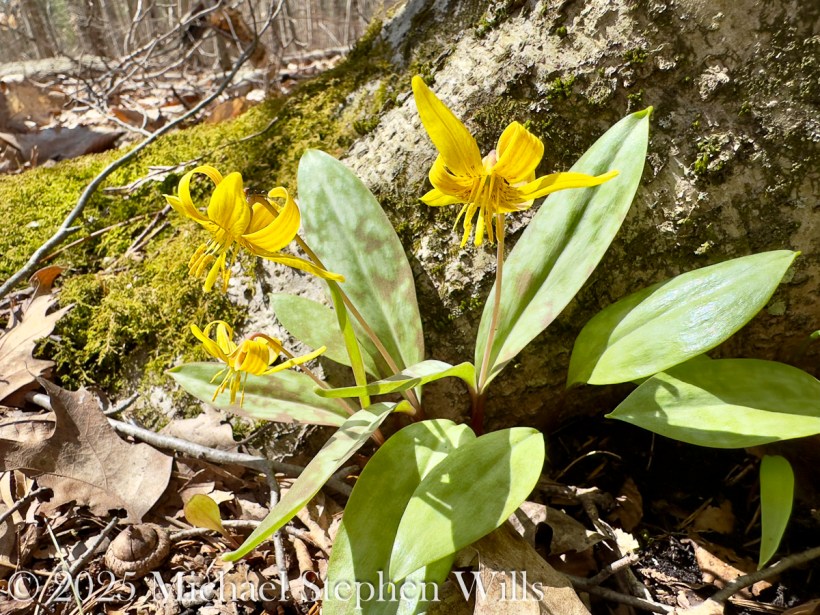
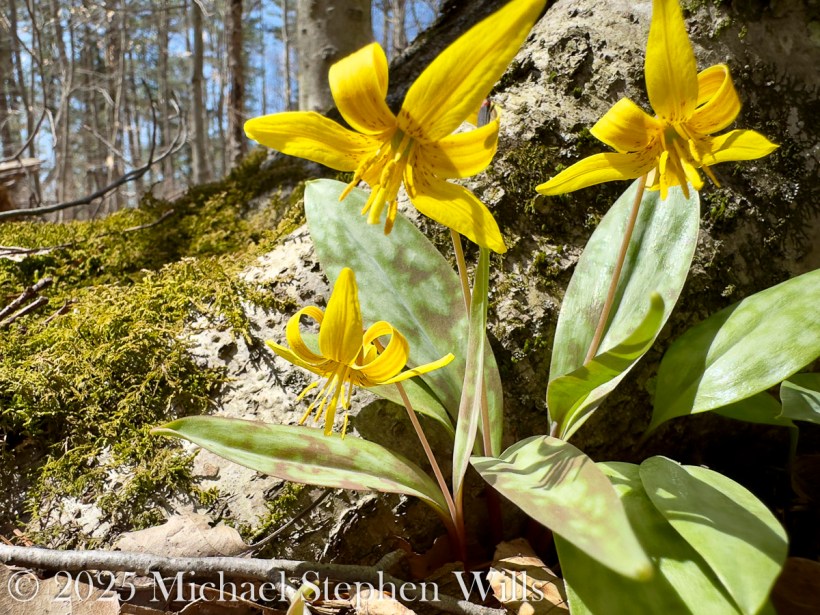
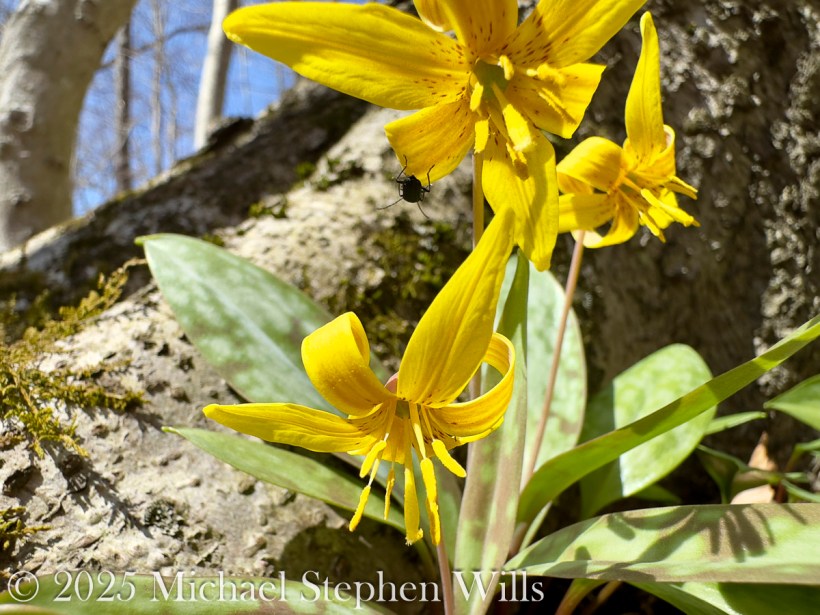
On the bright afternoon of April 22, 2025, I wander slowly through Sapsucker Woods, last year’s oak leaves soft underfoot and the smell of damp earth in the air. The trees stand bare, and somewhere a woodpecker drums as I search the ground for any sign of spring. A flash of gold catches my eye at the mossy base of a tree. Kneeling down, I find among the leaf litter a small wildflower glowing yellow. It is a trout lily – Erythronium americanum – a solitary, nodding bloom on a slender stem. Six delicate petals flare backward, golden with a few reddish freckles near the throat; long stamens dangle beneath. Two lance-shaped leaves hug the ground, green marbled with burgundy-brown. Their mottled pattern looks like a brook trout’s flank. This flower is known by many names: “trout lily” for its fish-like leaves, “dogtooth violet” for its pointed white bulb 1, and “adder’s tongue” for its tongue-shaped leaf tip.
Its formal name, Erythronium americanum, comes from the Greek for “red”2—odd for a yellow bloom until one remembers the purple dogtooth violets of Europe. Americanum simply marks it as native here. I soon realize these trout lilies are not alone – dozens of dappled leaves carpet the damp earth around me. Most show no blossom at all, only a single freckled leaf standing alone. Only the older plants with two leaves manage to lift a yellow flower. In fact, they often form extensive colonies on the forest floor. I’ve learned a trout lily may wait seven years to bloom its first time3. Seasons of patience pass unseen underground, and then one spring it earns the chance to unfurl a golden star. That slow, patient rhythm of growth fills me with wonder.
A tiny black bee—or maybe a fly—lands on the trout lily’s bloom, drawn by its promise of pollen. It disappears into the flower’s downturned bell, brushing against the dusting of pollen inside. In early spring, few other blossoms are open, so this little lily is a lifeline for hungry pollinators4. There is even a solitary “trout lily bee” that times its life to these flowers5. Flower and insect share an ancient pact: the lily feeds the visitor, and the visitor carries the lily’s pollen onward to another bloom.
Within a week, the trout lily’s golden star will wither. By the time the canopy closes overhead, the flower will have curled into a green seedpod that splits open by early summer, releasing its seeds6. Each seed carries a tiny parcel of food irresistible to ants7. Ants haul the seeds to their nest, eat the morsel, and abandon the seed in their tunnels—unwittingly planting the next generation. The name for this circular ecological dance is myrmecochory. Over time, the colony inches across the forest floor, guided by these tiny gardeners. During its short life above ground, this little lily helps the forest. Its roots soak up nutrients from the damp soil, keeping them from washing away in spring rains8. When the plant dies back, those nutrients return to the earth as the leaves decay, nourishing other life. In this way, a patch of trout lilies forms a quiet bridge between seasons—capturing nutrients in spring and returning them by summer’s end. I touch one cool leaf, feeling connected to this cycle.
I rise and take a final look at the little yellow lily. Its brief bloom reminds me that life’s most beautiful moments are fleeting yet return each year. This blossom will vanish in a few days, a blink of the season, but it will come back next spring as faithful as hope. In its patience and generosity, I sense kinship. Like the trout lily, we too have long periods of waiting and rare moments of blooming. We also rely on small kindnesses to help us thrive—like a friend in hard times or a community that carries our dreams to fertile ground. And we are part of a larger cycle, giving and receiving, leaving something of ourselves to nurture the future. As I continue down the trail, I carry the image of that humble flower with me—a gentle assurance that even the smallest life can leave a lasting impression, and that hope will always return with the spring.
Enter your email to receive notification of future postings. I will not sell or share your email address.
Copyright 2025 All Rights Reserved Michael Stephen Wills
Footnotes
wildadirondacks.org Trout lily’s common names: “Trout lily” refers to the trout-like mottling on its leaves, while “dogtooth violet” refers to the tooth-like shape of its underground bulb (despite not being a true violet). It is also sometimes called “adder’s tongue.” ↩
en.wikipedia.org The genus name Erythronium comes from the Greek erythros, meaning “red,” originally referring to the red-purple flowers of the European dogtooth violet (Erythronium dens-canis). The species name americanum denotes that it is native to America. ↩
peacevalleynaturecenter.org Trout lilies often grow in large colonies and most individuals in a colony are non-flowering. A plant typically needs about seven years of growth before it produces its first bloom. ↩
peacevalleynaturecenter.org Spring ephemeral wildflowers like the trout lily provide crucial early nectar and pollen for pollinators (bees, flies, butterflies) emerging in early spring. ↩
appalachianforestnha.org The trout lily miner bee (Andrena erythronii) is a solitary bee whose life cycle is closely tied to the trout lily; it forages primarily on trout lily flowers, making it a specialist pollinator of this species. ↩
wildadirondacks.org After pollination, trout lily flowers are replaced by seed capsules that ripen and split open to release the seeds in late spring. ↩
atozflowers.comErythronium americanum seeds have a small fleshy appendage called an elaiosome, which attracts ants. The ants carry the seeds to their nests, aiding in dispersal in exchange for the food reward, a mutualism known as myrmecochory. ↩
pubmed.ncbi.nlm.nih.gov By growing and taking up nutrients during the brief spring season, trout lily plants help retain important nutrients (like potassium and nitrogen) in the ecosystem. When the plants die back and decay, those nutrients return to the soil, contributing to the forest’s nutrient cycle. ↩
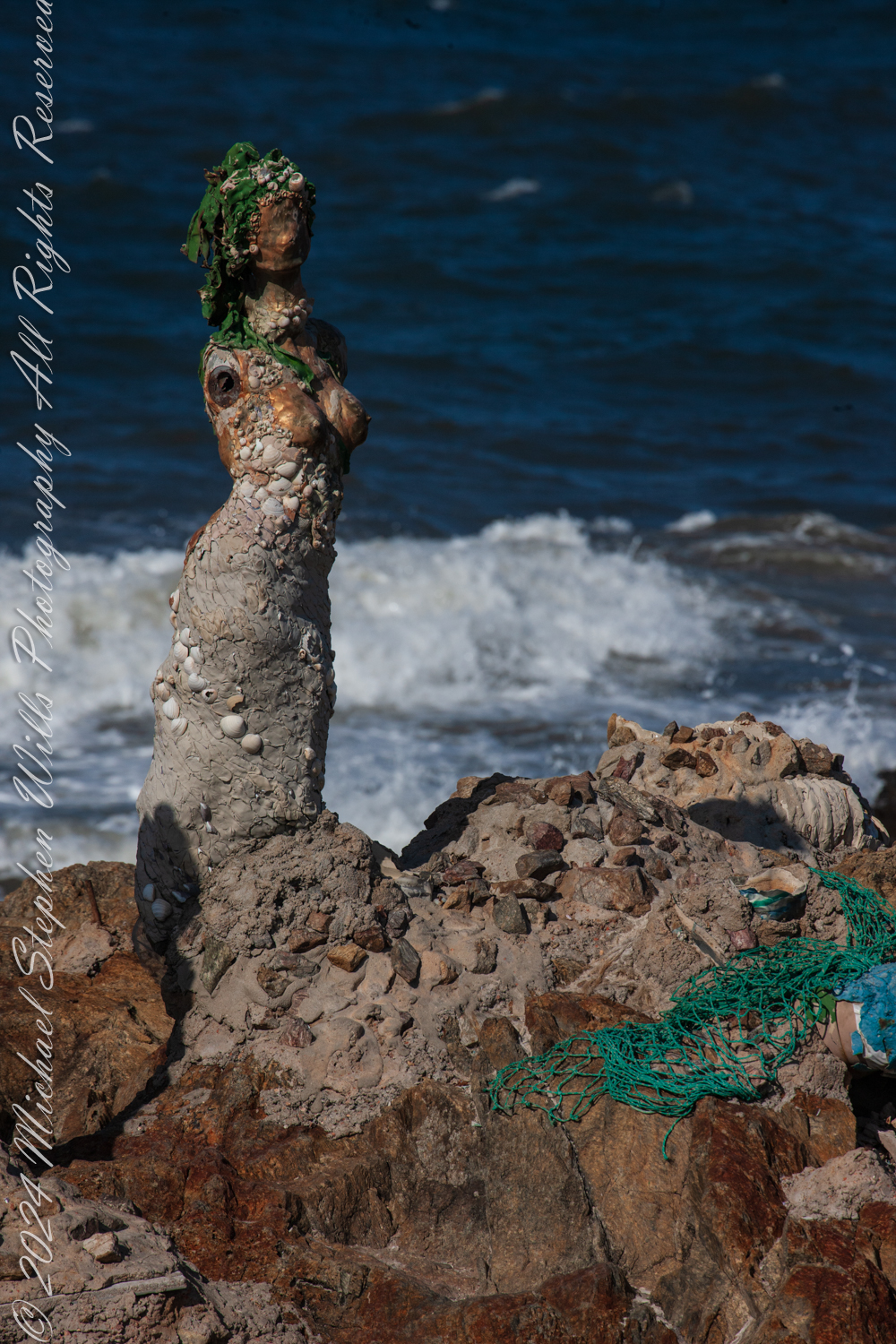
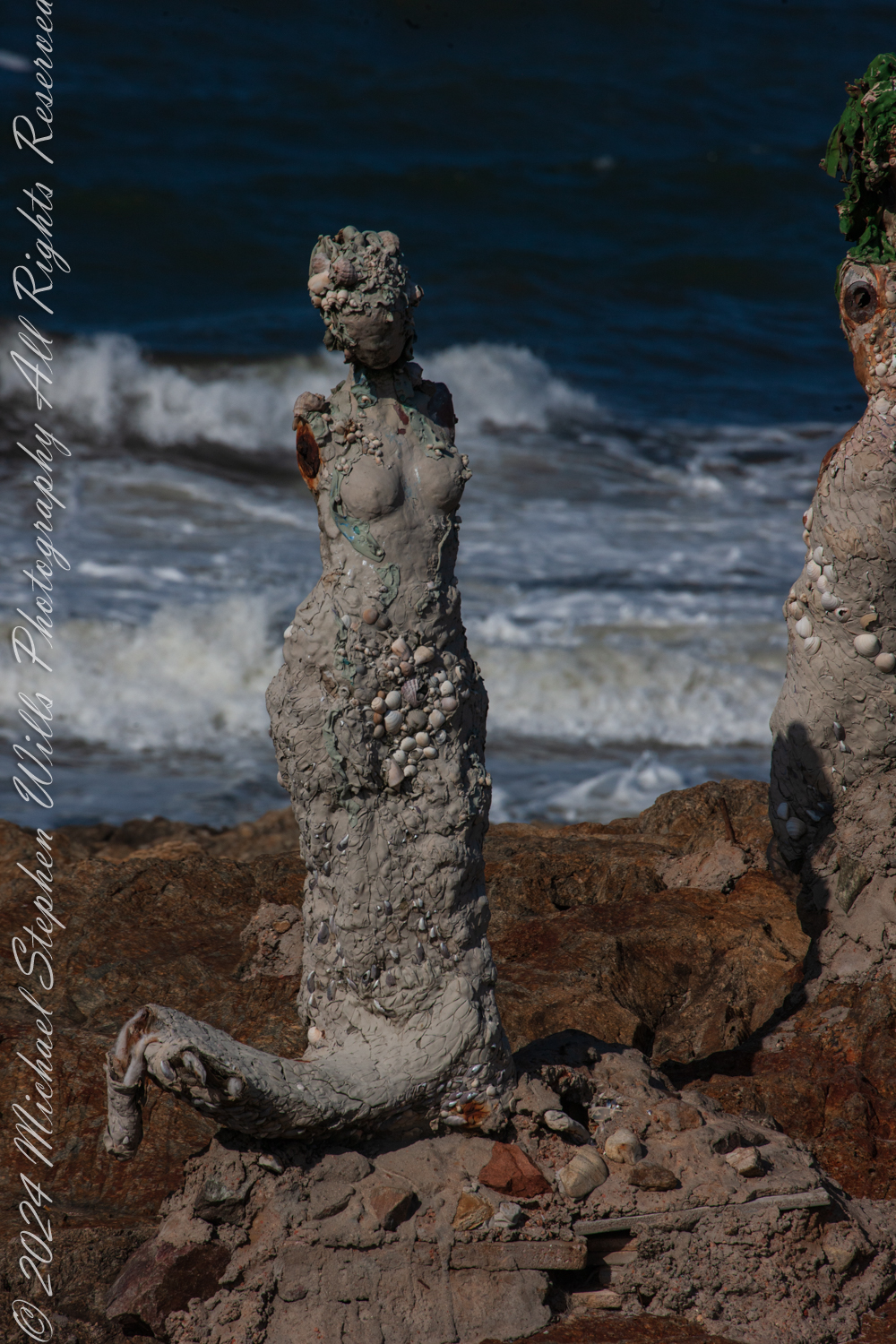
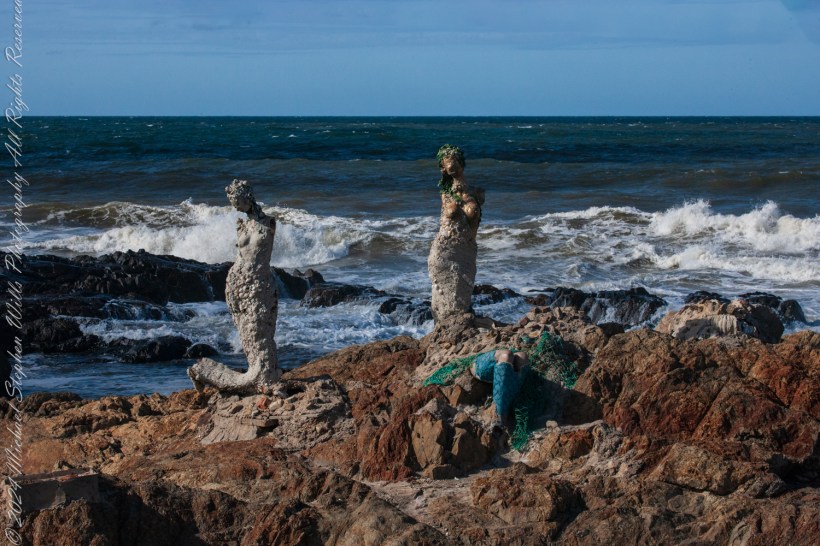
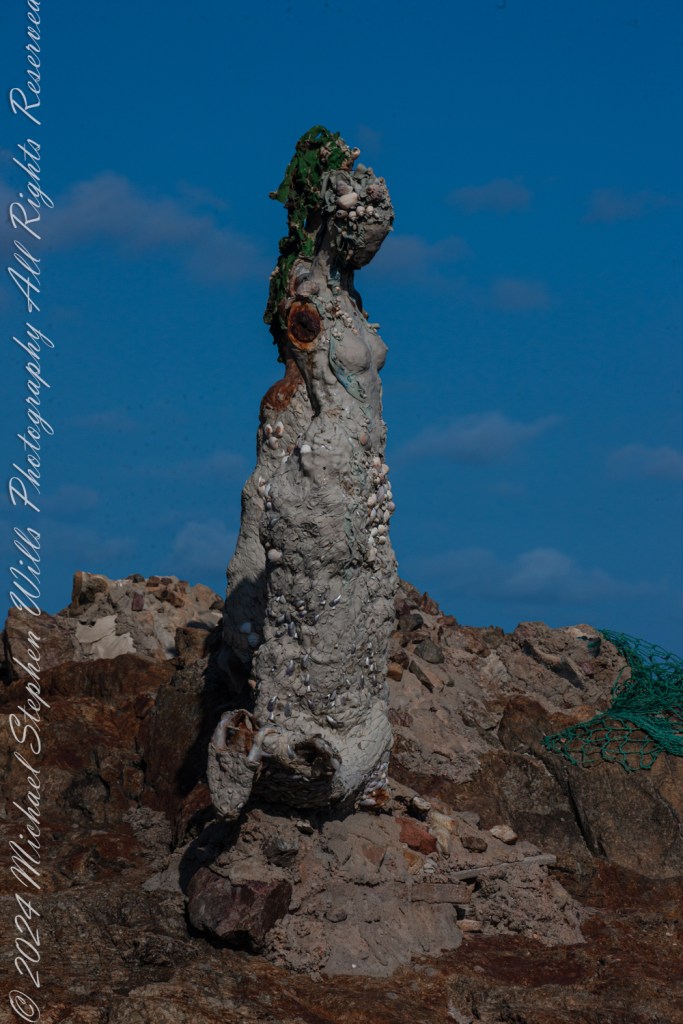
The wind carried the scent of the sea as we stood at Punta de las Salinas, the furthest tip of Punta del Este, Uruguay. This was a place of myth and mystery for us, where the Atlantic Ocean merged with the Río de la Plata, and where the rocks bore witness to the timeless interplay of water and stone. Here stood “El Canto de las Sirenas” (The Song of the Mermaids), an evocative art installation by Lily Perkins, first completed in 2012. The sculptures seemed perfectly at home here, their placement deeply intertwined with the mythology they evoked.
This is at Great Britain Square, Punta de las Salinas of Punta del Este. We are at the tip of the peninsula, the easternmost point of Uruguay. This is the art installation El Canto de las Sirenas” (The Song of the Mermaids) (2012) by the artist Lily Perkins. Punta del Este, Departamento de Maldonado, Uruguay
The sirens of ancient lore were said to dwell at perilous points where land met the untamed sea, luring sailors to their doom with haunting songs. These rocky outcrops, both a boundary and a threshold, have long held symbolic power as places where the natural world is at its most raw and elemental. Punta de las Salinas is such a place. Its jagged rocks and churning waves create an environment as beautiful as it is treacherous. It is easy to imagine mythical sirens choosing this very spot to weave their spellbinding melodies.
This is at Great Britain Square, Punta de las Salinas of Punta del Este. We are at the tip of the peninsula, the easternmost point of Uruguay. This is the art installation El Canto de las Sirenas” (The Song of the Mermaids) (2012) by the artist Lily Perkins. Punta del Este, Departamento de Maldonado, Uruguay
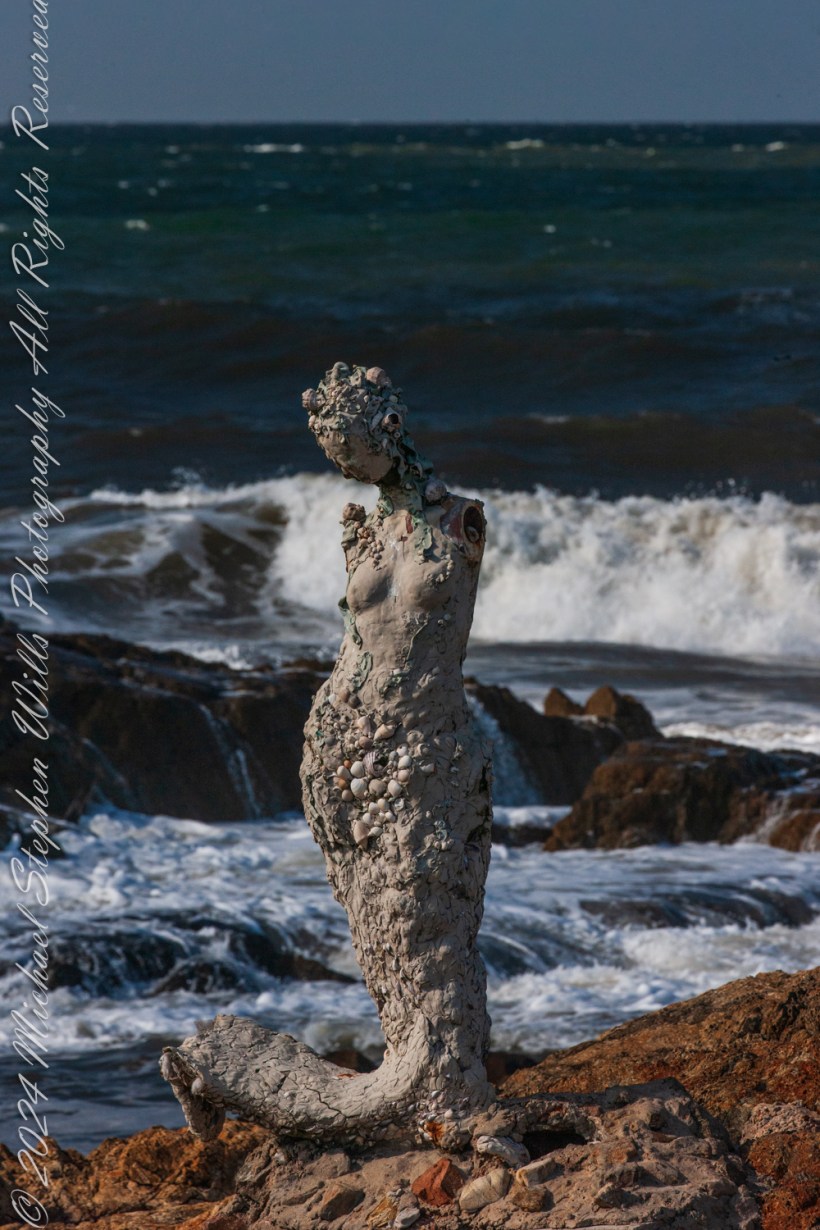
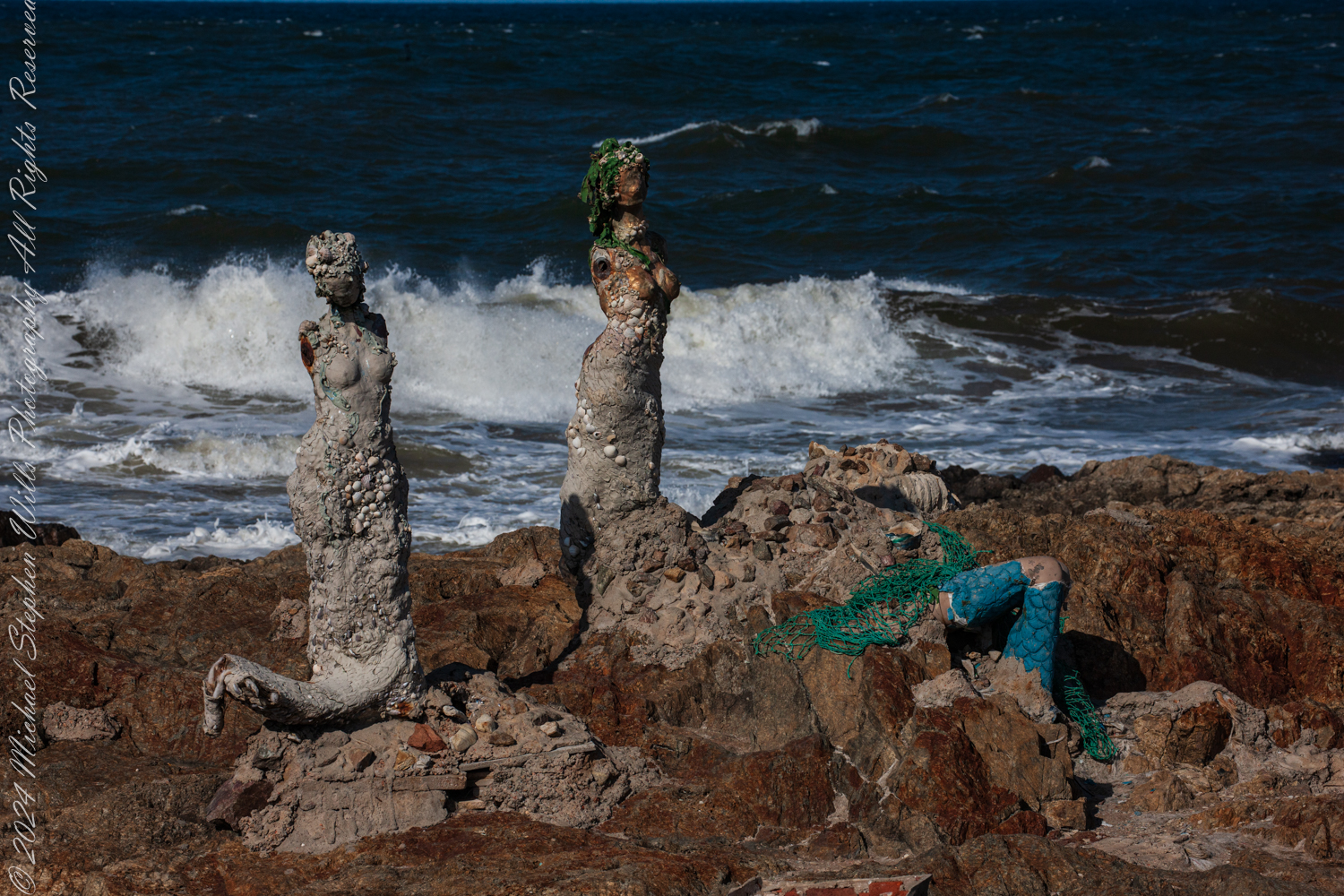
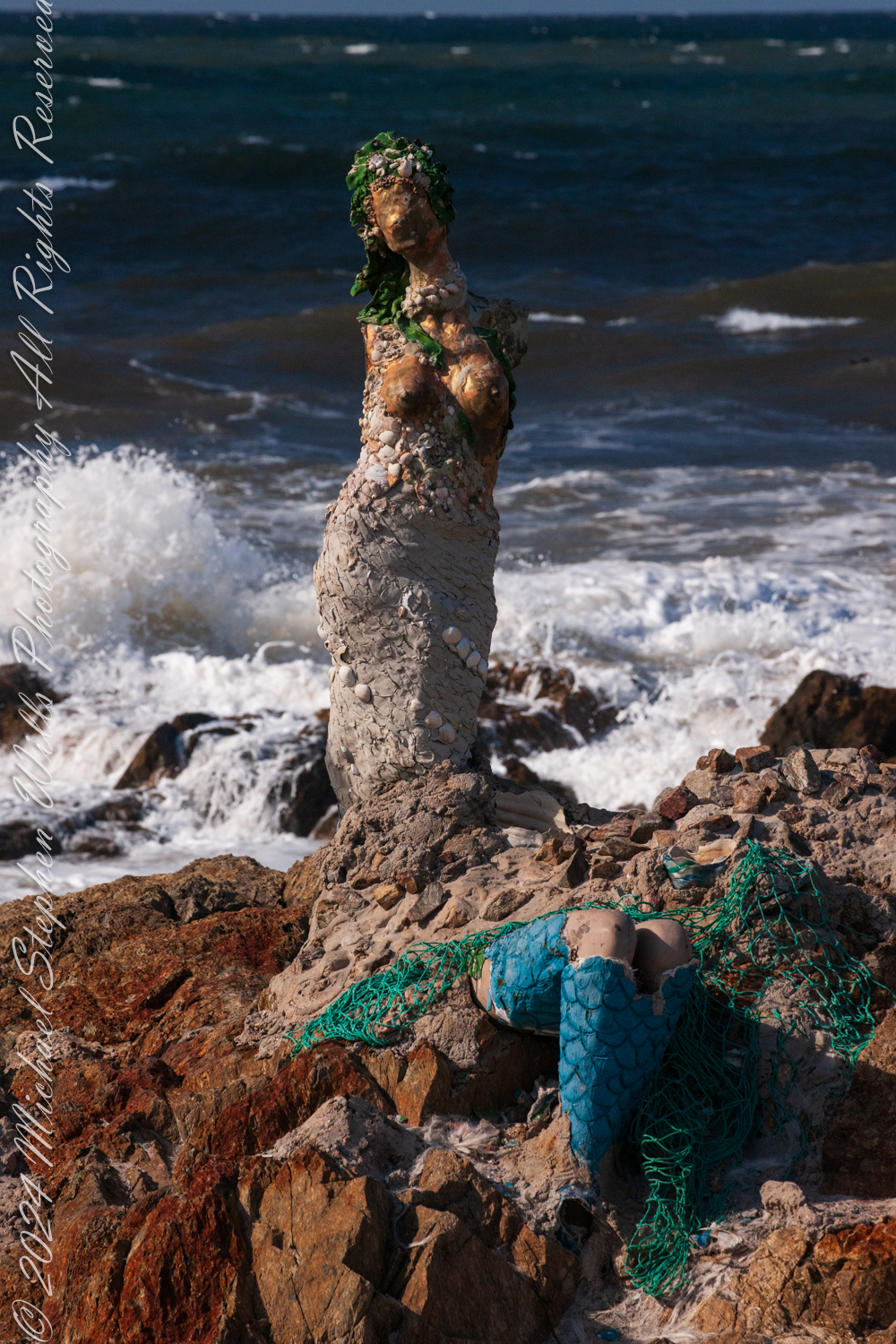
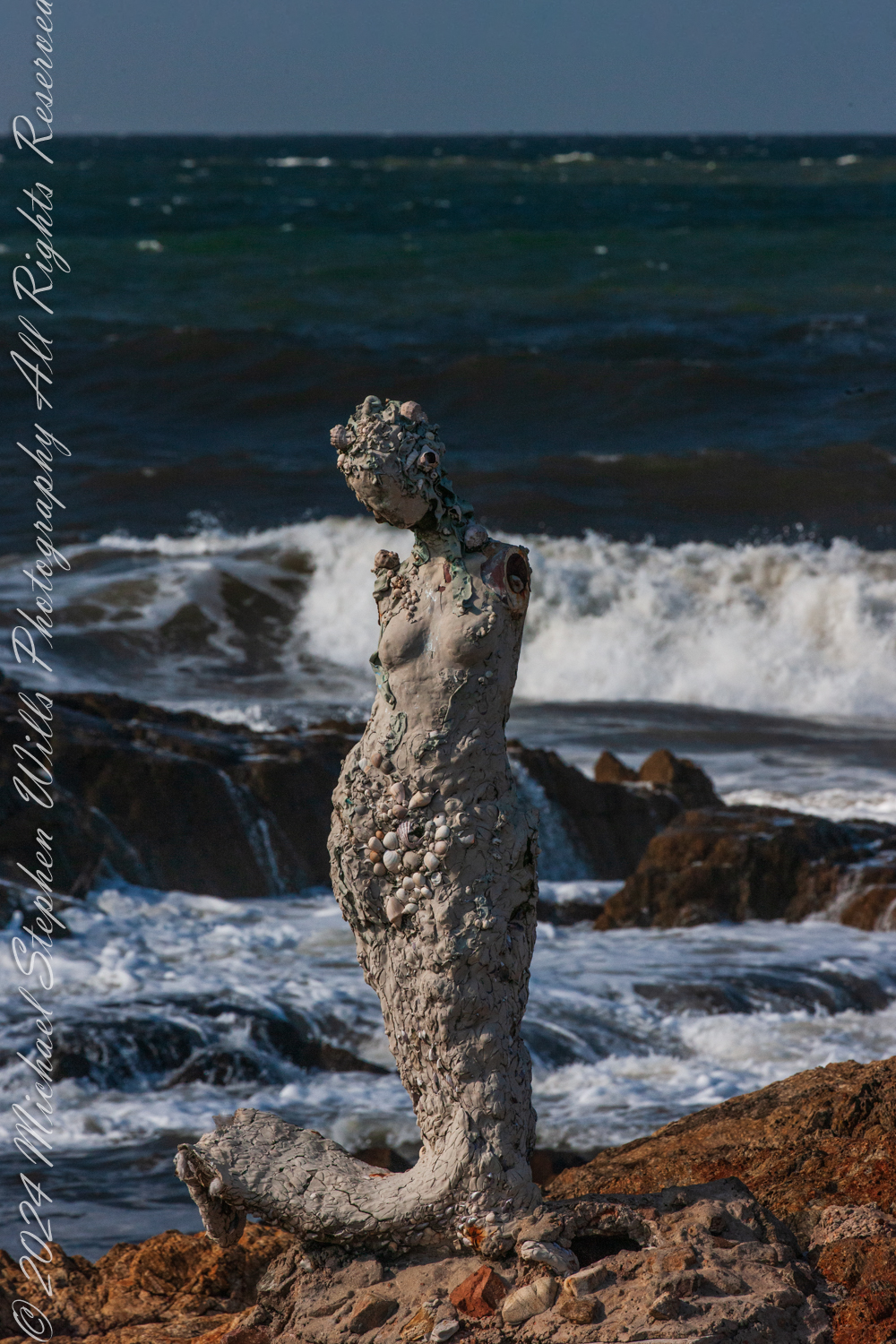
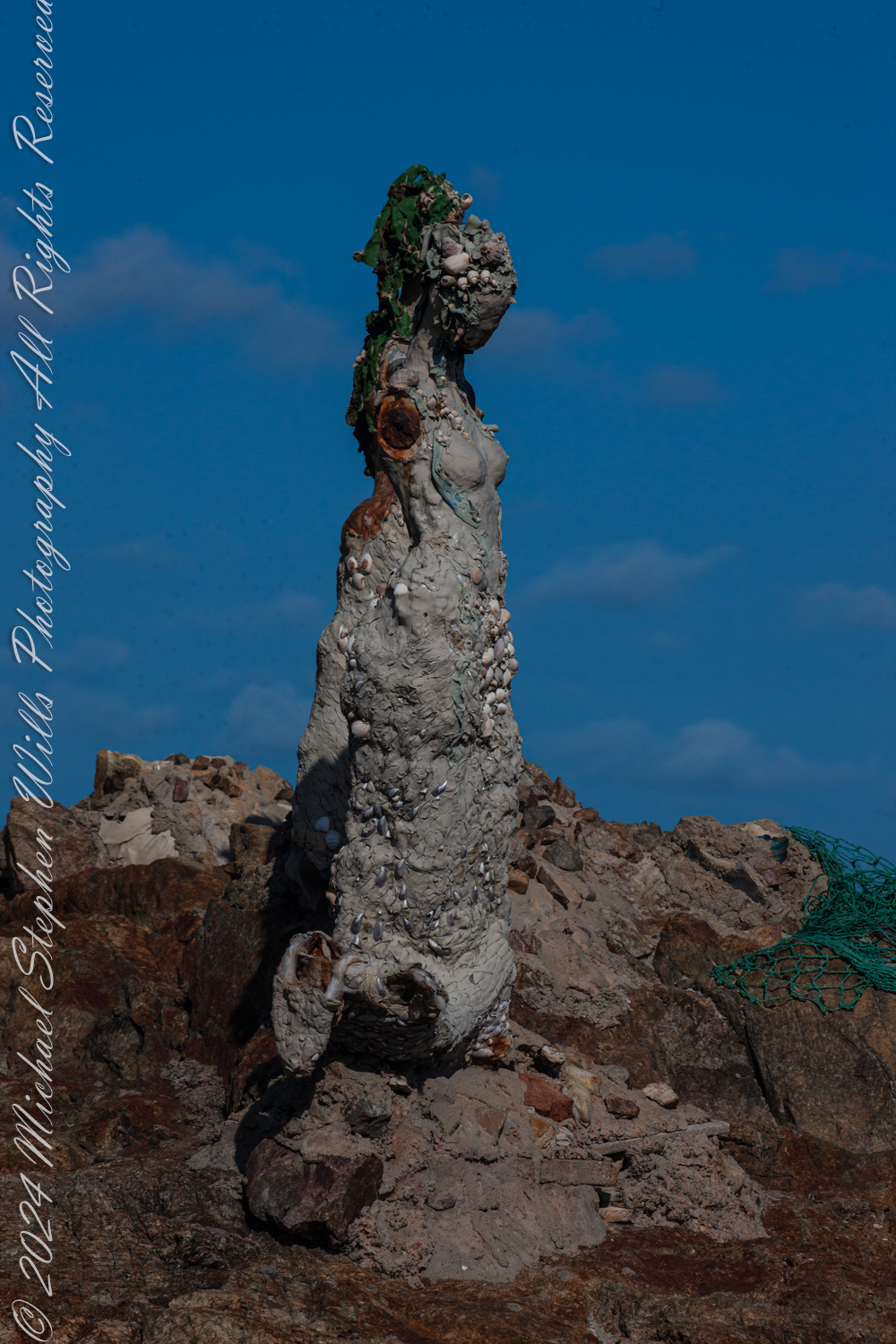
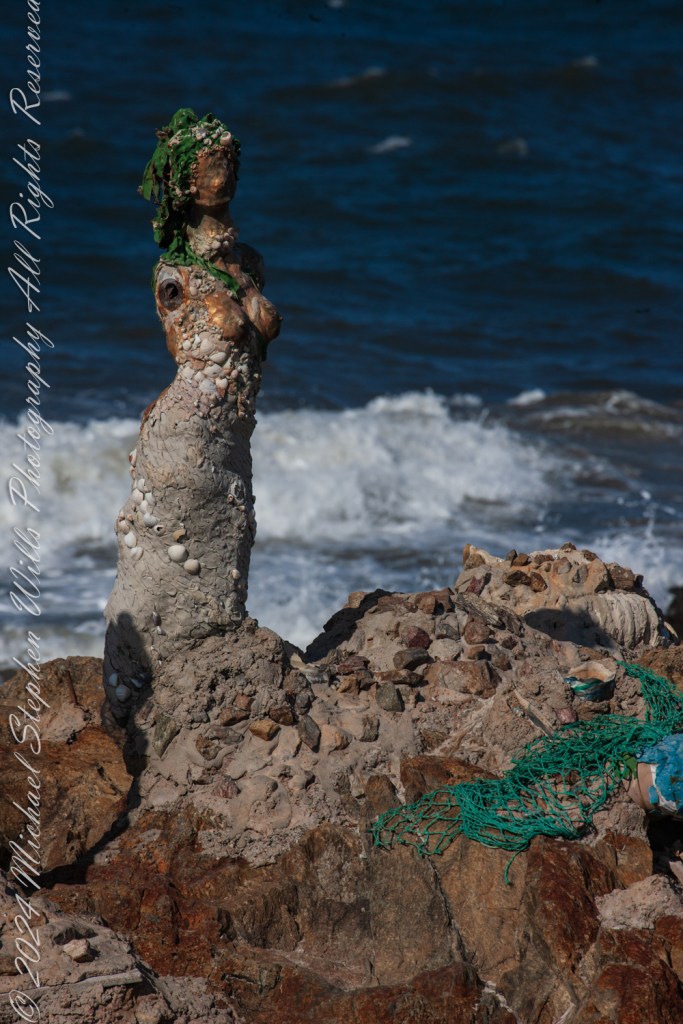
Lily Perkins’ installation captures this essence. The sculptures are not idealized depictions of mermaids; they are rugged and raw, encrusted with shells, stones, and marine debris. Their weathered forms mirror the harsh, untamed beauty of their surroundings. It is as if they have emerged from the ocean itself, born of the waves and the salt-laden air, to stand as sentinels at the edge of the world.
The central figure, with her face turned skyward, evokes the myth of the siren’s song—a melody so enchanting that it drove sailors to risk their lives against the rocks. Her posture suggests longing, perhaps for a connection beyond the horizon, or perhaps for the very mortals she is fated to ensnare. Nearby, a broken figure reclines against the rocks, her form partially encased in green netting and mosaic-like tiles. She seems more grounded, her siren’s call muted, as if weighed down by the realities of the modern world. The use of marine materials in her construction—a blend of natural and human-made debris—suggests an awareness of humanity’s impact on the seas.
The third figure, slightly apart, is the most enigmatic. Encrusted with barnacles and weathered by the elements, she seems lost in thought. Her gaze is directed not toward the sea but toward the land, as if contemplating her place at this meeting of worlds. In mythology, sirens were liminal creatures, existing between realms—the sea and the shore, the mortal and the divine. This figure embodies that in-between state, rooted in the rocks yet shaped by the sea.
The placement of these sculptures at Punta de las Salinas is no accident. This headland is the easternmost point of Uruguay, a natural boundary and a crossroads where two vast bodies of water meet. For centuries, sailors navigated these waters, their journeys fraught with danger. The rocks here are unforgiving, and the waves crash with relentless power. To stand at this point is to feel the raw energy of the ocean and to understand why myths of sirens arose in such places. The sirens symbolize both allure and peril, a reminder of the ocean’s capacity to inspire and to destroy.
As I walked among the sculptures, the mythology seemed to come alive. The sound of the waves crashing against the rocks could easily be imagined as the sirens’ song—a hypnotic rhythm that draws you in and holds you spellbound. The figures, though silent, seemed to hum with an energy that echoed the sea’s eternal motion.
I feld these sculptures were not merely placed at Punta de las Salinas; but had emerged from it, their forms shaped by the same forces that shaped the rocks beneath our feet. The shells and stones embedded in their surfaces tied them physically to the sea, while their mythical resonance tied them spiritually to the place.
The mythology of the sirens speaks to the duality of the sea—its beauty and its danger, its capacity to give and to take away. Standing at Punta de las Salinas, surrounded by Perkins’ sculptures, I felt that duality in a profound way. The ocean stretched endlessly before us, a vast, unknowable expanse, while behind us lay the solid ground of the peninsula—a place of safety, but also a place that ended here, at this edge.
Lily Perkins sculptures are restored…..
As we left, the figures seemed to watch us go, their silent song lingering in my mind. The sirens of Punta del Este are more than art; they are a dialogue between myth and reality, between the natural world and the human imagination. In their weathered beauty, they remind us of the stories the sea has always told, and of the enduring power of those who give those stories form.
Enter your email to receive notification of future postings. I will not sell or share your email address.
Copyright 2025 All Rights Reserved Michael Stephen Wills
Discover the delicate beauty of early meadow-rue (Thalictrum dioicum) along the Gorge Trail at Robert H. Treman State Park. Explore its unique spring blooms, cultural significance in Native American traditions, and the poetry of its quiet role in the woodland ecosystem.
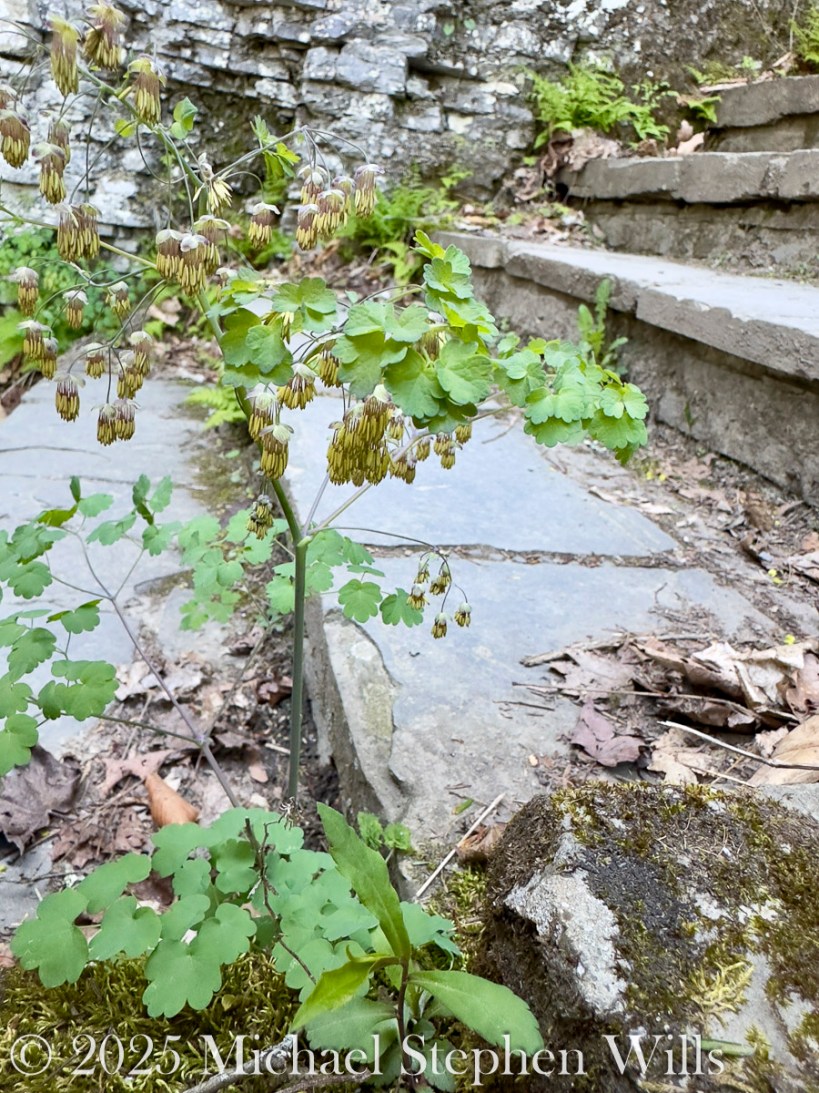
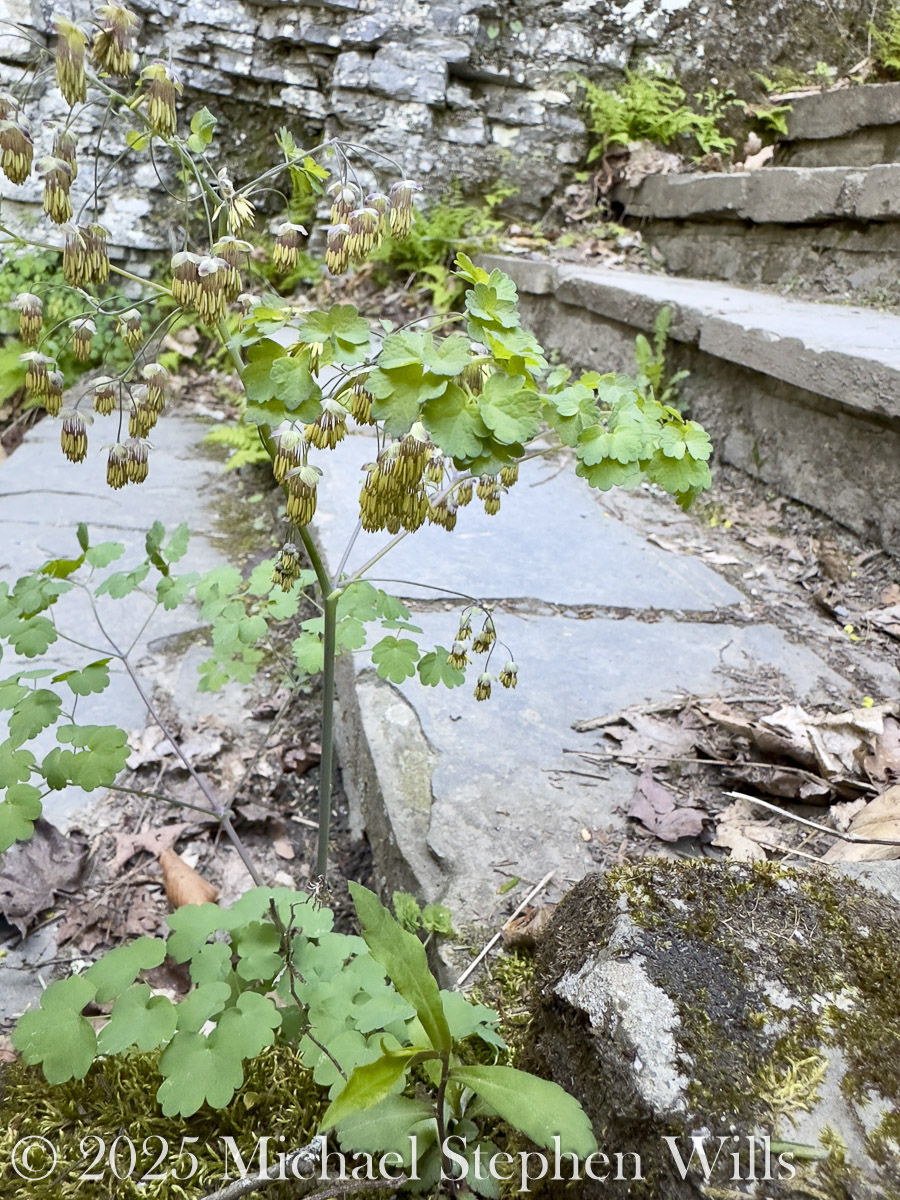
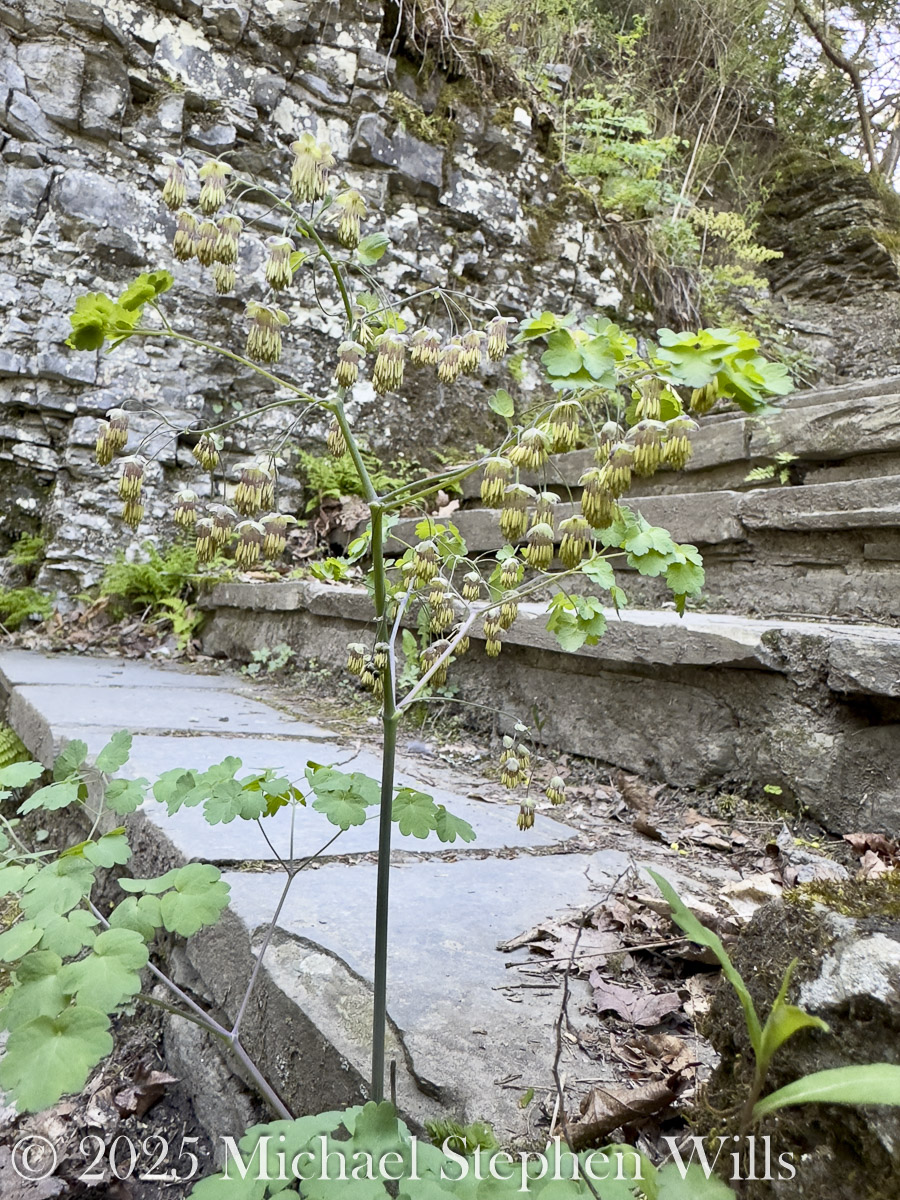
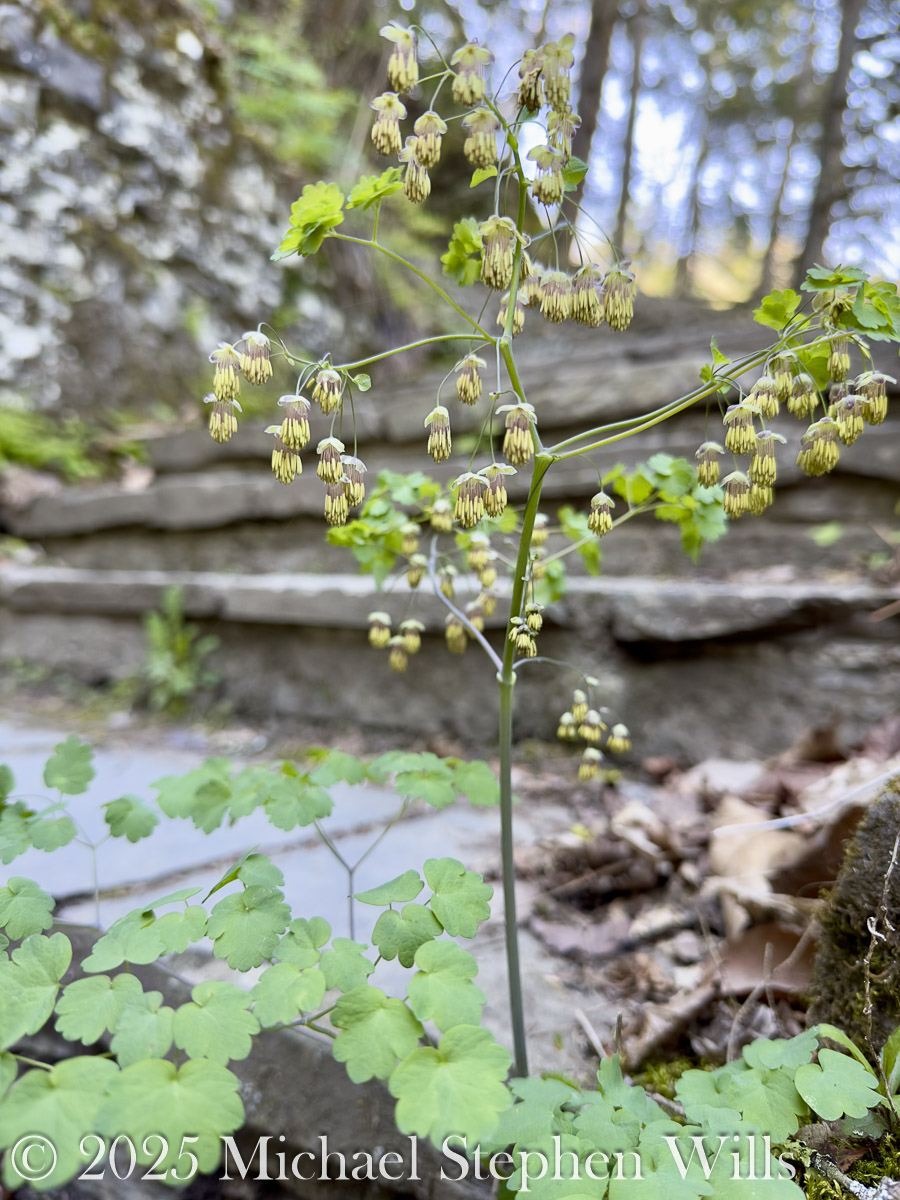
April 28, 2025 – Robert H. Treman State Park, Ithaca, NY. I step lightly along the damp stone stairs of the Gorge Trail, hemmed in by towering rock walls and the whisper of waterfalls. There, at a turn in the path, I encounter an unassuming woodland plant waving in the breeze. Its delicate green foliage could be mistaken for a young fern or columbine, but from its arching stems hang dozens of tiny yellow tassels, swaying like fairy lanterns. This is a male Thalictrum dioicum – commonly known as early meadow-rue, or more whimsically, quicksilver-weed. One of the earliest wildflowers to emerge in spring forests of the Northeast, it offers a subtle spectacle: golden anthers dangling in the cool April breeze, each tiny stamen a pendulum of pollen.
Delicate Botany of a Woodland Rue
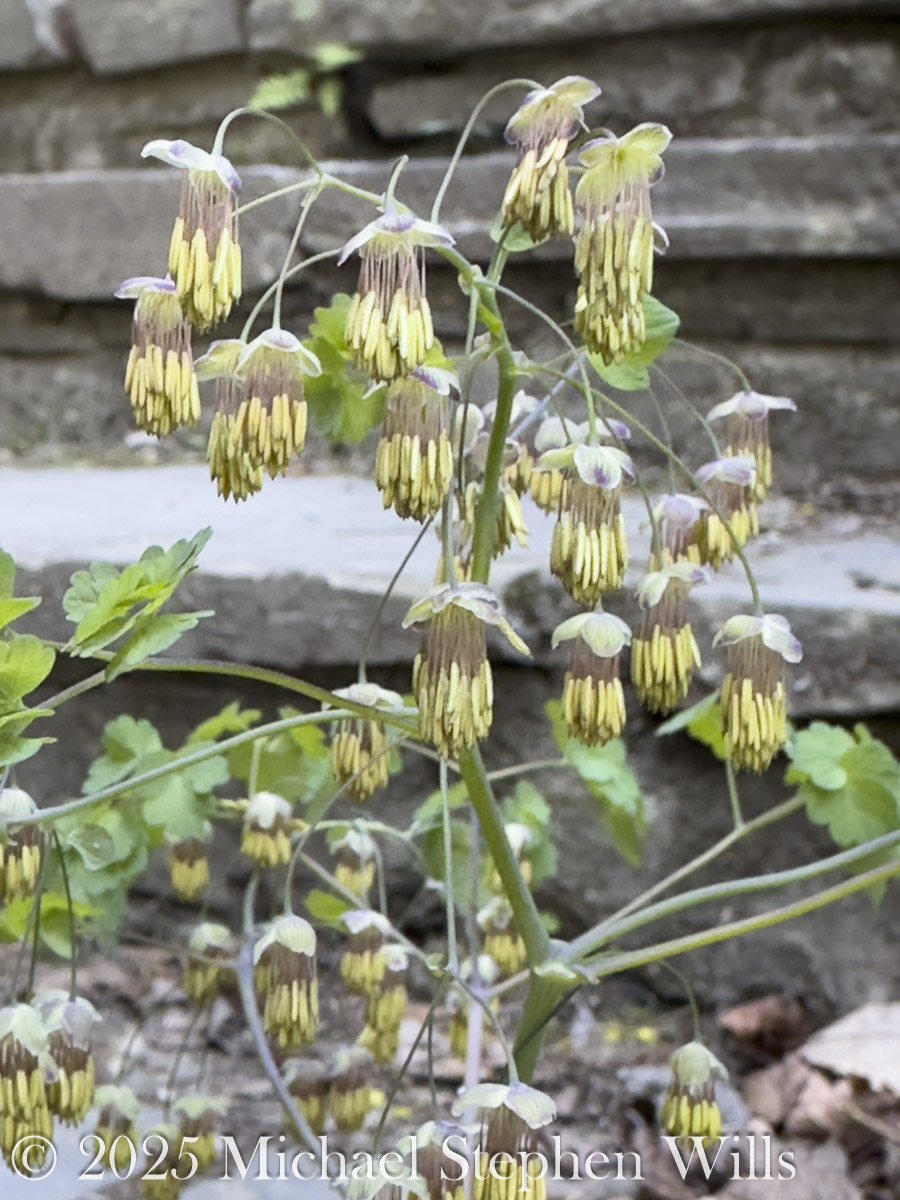
At a glance, Thalictrum dioicum might not shout for attention – standing barely one to two feet tall – yet a closer look reveals intricate beauty. Each male plant is a miniature chandelier of blossoms, the flowers having no petals at all but instead a simple fringe of sepals and a flurry of stamens. In fact, the male flowers are the showiest part of this species, with numerous slender, dangling yellow stamens that earn meadow-rue a second look. These dangles are the anthers – pollen-bearing organs – swinging freely to release golden dust on the wind. Female plants, on separate nearby stalks, are more reserved: their flowers hold up clusters of pale pistils like tiny green stars, which, if wind-blessed with pollen, will swell into achenes (dry fruits) later in the season. The separation of sexes in different “houses” is the trait that gives the species its name dioicum, meaning “of two households” in Greek. Early meadow-rue’s foliage is equally enchanting. The leaves are twice or thrice divided into lobed leaflets that resemble the herb rue (Ruta) – hence the common name “meadow-rue”. A misty green above and silvery underside, the leaflets have a rounded, almost columbine-like form with soft scalloped edges. As botanist Eloise Butler once noted, casual hikers often exclaim “what a pretty fern!” upon seeing the airy foliage before noticing any flowers. Indeed, the plant’s fern-like grace and early spring timing give the forest understory a verdant, lacy trim well before the summer plants take over.
What’s in a Name (Etymology and Lore)
Even the name of this humble wildflower carries poetry. The genus Thalictrum harkens back to the Greek word thaliktron, a term used by the ancient physician Dioscorides to describe plants with finely divided leaves. It’s a fitting nod to the meadow-rue’s delicate foliage. The species name dioicum, as mentioned, translates to “two houses,” nodding to its dioecious nature – male and female flowers on separate plants. As for “quicksilver-weed,” an old folk name, one can only imagine it arose from the plant’s ephemeral shimmer: appearing quickly in spring and perhaps glinting with dew like liquid silver. Early meadow-rue also earns its “early” title by being among the first woodland perennials to bloom as the snow melts – a true harbinger of spring in the eastern North American woods. The “rue” in meadow-rue is a bit of a misnomer botanically (meadow-rue is in the buttercup family, not related to true rue). However, the moniker stuck because of a shared appearance – those divided leaves echo the shape of true rue’s foliage. There’s no strong odor or bitterness here, though. Instead, Thalictrum dioicum is gentle in aspect and entirely non-toxic, making it a welcome companion in shady gardens and wild places alike. Gardeners sometimes cultivate it for its graceful foliage and dangling blooms, a little wild treasure in cultivated shade gardens.
A Quiet Role in the Forest Understory
In its native habitat, early meadow-rue lives a low-key life in the understory. It thrives on dappled woodland slopes, often on rich, rocky soils near streams – exactly the sort of place the Gorge Trail winds through. Preferring partial shade, it is comfortable in both moist and well-drained sites. As a spring ephemeral, it takes advantage of the window before the canopy fully leafs out, unfurling its leaves and flowers in April and May, then quietly dying back by midsummer to wait out the year’s end. This strategy allows it to catch the sunlight of early spring and avoid competition later on. Unlike showy wildflowers that beckon bees and butterflies, meadow-rue’s pollinator is the breeze. Being wind-pollinated (anemophilous), it has no need for bright petals or nectar rewards. Instead, those dangling stamens tremble with each gust, shedding pollen into the air – a dance of chance that some of it will drift over to a waiting female flower nearby. The light, swinging tassels are perfectly adapted to this purpose, increasing the odds of pollen dispersal with every sway. Even without offering nectar, early meadow-rue still contributes to its ecosystem. Its tender leaves provide an early snack for rabbits and deer venturing out after winter. A few specialized moth species also use it as a host plant in their caterpillar stage, nibbling on the foliage. By going dormant in summer, meadow-rue returns nutrients to the soil and opens space for later-emerging plants, maintaining the ebb and flow of diversity in the forest floor community. In autumn and winter, only its fibrous roots and a small caudex (rootstock) persist under the leaf litter, ready to send up new growth when spring returns.
Roots in Culture and Folklore
This demure wildflower has also found its way into human stories and herbal traditions. Native American communities, especially in the Northeast, knew and used early meadow-rue in subtle ways. Though not a superstar of indigenous medicine, it had its roles. Cherokee healers brewed tea from the roots to treat diarrhea and stomach troubles, and to ease vomiting. In Haudenosaunee (Iroquois) lore, a decoction of meadow-rue roots was used as a wash for sore, tired eyes, and even taken to steady a palpitating heart – perhaps the gentle plant lending calm through belief or mild effect. Beyond medicine, Thalictrum dioicum tiptoes into the realm of romance and harmony.
According to ethnobotanical notes, young Blackfoot women in the northern Plains would weave the pretty tassels or seed clusters into their hair, believing it would help them attract the attention of a desired young man – a bit of springtime love charm from the wilds. Among some eastern Woodlands tribes, such as the Ojibwa and Potawatomi, the seeds of meadow-rue were a secret tool for domestic peace: slipping a pinch of seeds into the food of a quarreling couple was thought to help dispel discord and restore harmony to the relationship. Whether through mild pharmacological effect or sheer faith, one imagines it brought a hopeful smile to those administering this folk remedy.
Early meadow-rue even made a brief appearance in early colonial folklore. In Canada, it’s said that some of the First Peoples used the crushed roots to treat venomous snake bites, likely as a poultice. The plant’s leaves were also dropped into spruce beer – the fermented drink made by settlers and Natives alike – perhaps as a flavoring or tonic ingredient. Interestingly, despite these uses, meadow-rue never became a staple in European-American herbal medicine. 19th-century herbal texts noted that American Thalictrums were largely ignored by formal medicine, overshadowed by their European cousins. This lends our Thalictrum dioicum an aura of a plant mostly known by those who dwell close to the land – a quiet ally in the forest, employed in pinch when needed and otherwise simply appreciated for its beauty and symbolism.
Reflections on a Spring Encounter
A close-up of Thalictrum dioicum male flowers, often called “quick-silver weed” for the way these golden tassels catch the light. The plant’s lack of petals is evident – instead, dozens of pollen-laden stamens dangle, ready for the wind’s call.
Encountering this early meadow-rue along the gorge felt like stumbling upon a small secret of the woods. In the waterfall haunted gorge, with slate-gray cliffs towering overhead, these frail yellow tassels swayed and twirled as if performing for an unseen audience. There was a breezy playfulness in that moment – the plant nodding in the wind, pollinating by dancing rather than by the busy work of bees.
I was struck by how ancient and new it all felt: this same species blooming every April for thousands of years, used by generations of indigenous peoples for healing and hope, yet to me on that day it was a delightful surprise, as fresh as the spring itself. As I crouched to take a closer look, I imagined the threads of history and myth that early meadow-rue carries. Its presence here is a sign of a healthy, layered woodland. It whispered of resilience – how something so delicate survives the torrents of spring rain and the deep freezes of winter underground, year after year. In the golden afternoon light of the gorge, those dangling blossoms were like drops of quicksilver sunlight, fleeting and brilliant.
I felt grateful to have noticed this little plant, to share a moment of connection across time and cultures. The next bend of the trail would lead me on, but the image of quicksilver weed in bloom stayed with me – a reminder that even the quietest corners of nature are filled with stories waiting to be noticed.
Enter your email to receive notification of future postings. I will not sell or share your email address.
Copyright 2025 All Rights Reserved Michael Stephen Wills
References
Thalictrum dioicum (Early Meadow-rue) – Wikipedia Friends of the Wild Flower Garden – Early Meadow-rue (Thalictrum dioicum) plant description and naming henriettes-herb.com Institute for American Indian Studies – Medicinal Monday: Early Meadow Rue, blog post (Jan 22, 2024) Henriette’s Herbal – Thalictrum dioicum excerpt from Drugs and Medicines of North America (1884-1887) henriettes-herb.com Friends of the Wild Flower Garden – Eloise Butler’s note on Early Meadow-rue (1911)
San Xavier del Bac in the Sonoran desert embodies a fusion of indigenous and Spanish symbolism, showcasing devotion through art and imagery that evokes faith, beauty, and spiritual connection.
In the Sonoran Desert near Tucson, Arizona, San Xavier del Bac rises like a vision out of time. Within its adobe walls and domed ceilings lie layers of symbolism—an indigenous inheritance and Spanish colonial fervor merged into a singular living devotion. The photographs presented here, saturated with morning light, guide us through a meditative journey into this mission’s spiritual and aesthetic soul.
The crucifix dominates the first image—the depiction of Christ crucified, emaciated, bruised, crowned with thorns. His suffering is not abstract but visceral, carved in every wound and strained muscle. This figure of Christ, so brutally human, is draped in a tattered loincloth, a humble covering amid divine sacrifice. At his feet rests an offering: a blue artificial flower, incongruent in its brightness yet perfectly placed, a modern votive that expresses both reverence and continuity. It reminds us that humble devotion endures.
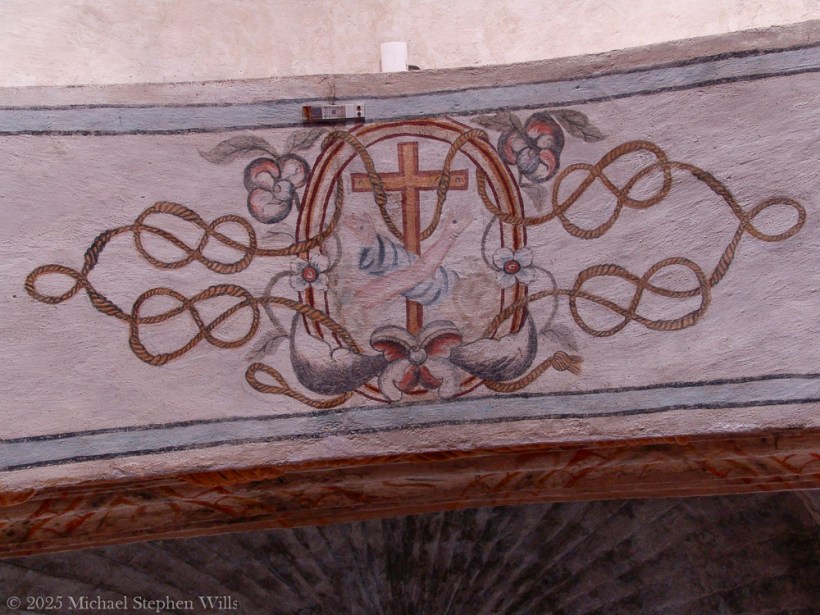
The fresco, with its cross flanked by stylized doves and roses, extends the Passion’s symbolism into sacred geometry. Doves—universal emblems of peace and the Holy Spirit—face one another in symmetrical grace, drawing the eye into the cross they flank. The single length of curling, intertwined golden ropes bind all elements in unity, perhaps reflecting divine infinity. The floral elements speak to rebirth and resurrection, a soft counterpoint to the harshness of the Crucifixion. Here, pain and peace coexist in a visual hymn.
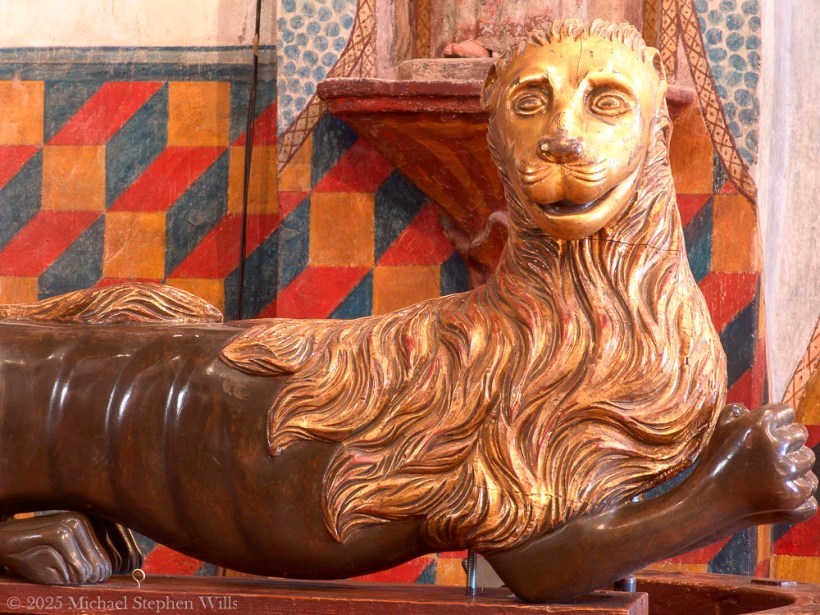
The lion sculpture, oddly cheerful in its golden face, seems at first a puzzle. Yet within Christian iconography, the lion often represents Saint Mark, the Evangelist, or the power and vigilance of God. This lion, rendered with stylized curls and a strong, reclining pose, guards the sanctuary. Its gilded mane mirrors the opulence of heaven, even in this humble desert mission. The lion’s curious gaze invites us to move past fear, toward the mysteries within.
We then meet a robed figure in red—another portrayal of Christ, this time during the Passion, perhaps as the Ecce Homo (“Behold the Man”). His upraised hands and expressive face embody pathos and divine forbearance. The red robe evokes both martyrdom and kingship. He does not plead; he offers. The backdrop is simple but speckled with blue floral motifs, creating a visual bridge to the Virgin’s image nearby.
The Virgin Mary appears in blue and white—colors of purity, serenity, and devotion. She stands among votive candles and gazes gently ahead, hands joined in prayer. Her dress flows around her, anchored by a rosary that loops downward like an anchor to the earth. Angels and cherubs flank her in painted stucco, echoing heaven’s embrace. This is not the triumphal Mary of high cathedrals but a deeply human one, a mother, accessible and protective. The candles flickering below affirm that faith is alive here, not simply preserved.
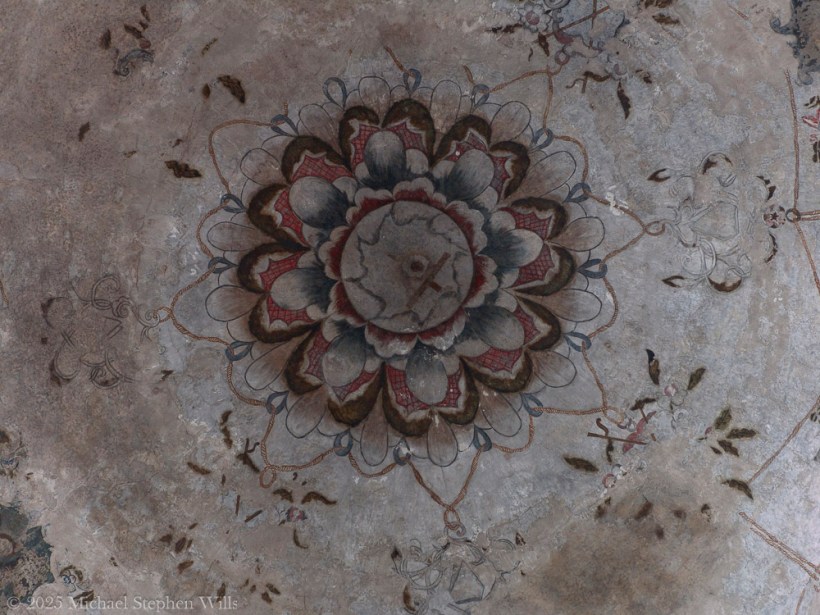
A ceiling medallion next draws us into a more abstract vision. A floral rosette centers on the cross and tools of Christ’s Passion—the nails, spear, and ladder arranged in contemplative symmetry. These instruments of torture are enclosed in beauty, as if the heavens themselves have sanctified the suffering. It is a paradox of faith, this transformation of pain into purpose, death into eternal life.
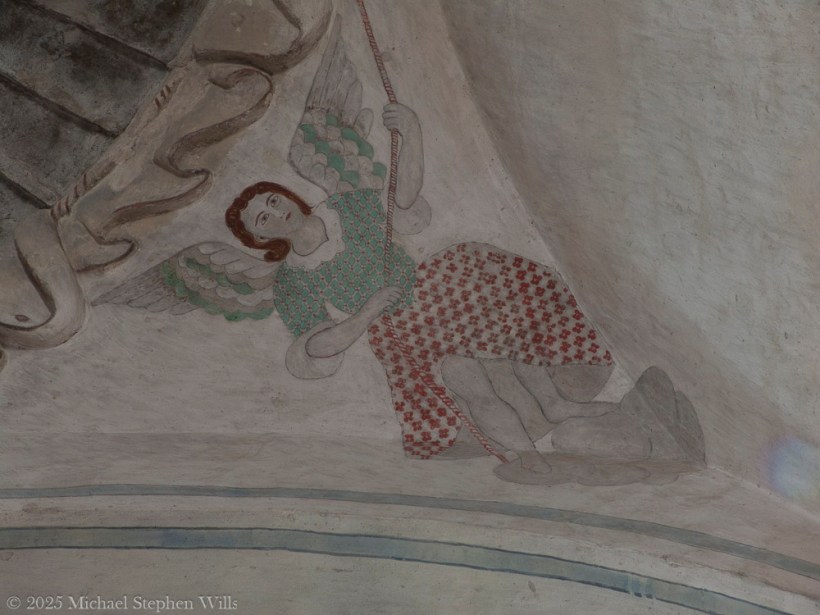
And in the arch’s corner, an angel descends—painted simply, yet with care. The figure pulls at a rope, perhaps to ring a bell or lift a curtain, a symbolic act of revelation or invitation. With wings green and soft, a skirt patterned in red flowers, suggesting femininity, grounding the divine in local textile tradition. The angel bridges the earthly with the divine, echoing the mission’s purpose: to guide and accompany.
Finally, a carved wood panel—plain, aged, and sacred in its wear. The texture of centuries rests in its grain, the indentations of faithful hands passing by. This is the tactile memory of San Xavier: not only what is seen, but what has been touched, prayed over, believed.
Taken together, these images form a tapestry of devotion, colonial artistry, indigenous fusion, and enduring reverence. San Xavier del Bac is a place where symbols still speak, where color and form do more than please the eye—they lift the spirit. In this space, belief is remembered to be continually reborn.
Enter your email to receive notification of future postings. I will not sell or share your email address.
Copyright 2025 All Rights Reserved Michael Stephen Wills
San Xavier del Bac, known as the “White Dove of the Desert,” embodies rich history and spirituality, blending Indigenous and Spanish influences, while remaining a vibrant community centerpiece today.
I remember how the rising sun washes the mission’s white adobe walls in soft gold. Mission San Xavier del Bac stands about 10 miles south of downtown Tucson, on the San Xavier Indian Reservation of the Tohono O’odham Nation.
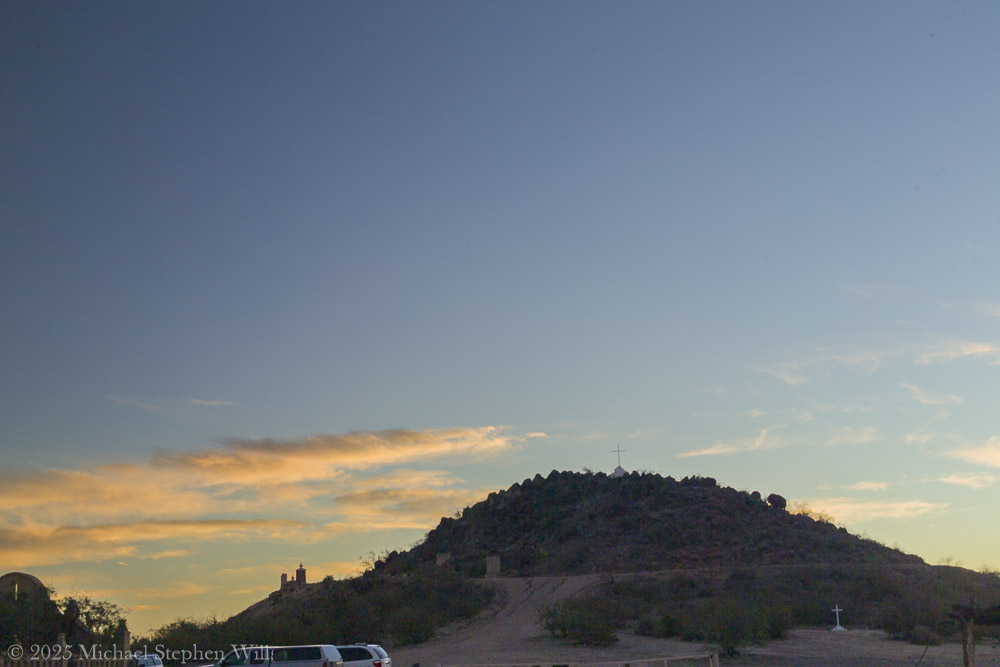
Before sunrise, I climb Grotto Hill, just east of the mission. A well-worn path and a few stone steps lead upward, passing stations of the cross and a humble grotto shrine nestled in the slope. As I ascend, the soft golden light gathers. Ocotillo stems and saguaros dot the hillside, their long shadows stretching over the desert floor. Reaching the top, I find a lone white cross planted firmly into the rocky soil. The cross is simple, yet it holds a quiet gravity – a silent witness to the prayers and hopes of those who have come here. I stand beside it to catch my breath. Below me spreads the mission complex, glowing white and rose in the gathering dawn. From this height, the scene is breathtaking: the desert expands in every direction, painted in brushstrokes of copper, violet, and gold. The distant Tucson mountains catch the first light. There is a profound peace up here. It’s easy to imagine Father Kino himself climbing a similar hill, surveying this “Water Place” and dreaming of a mission that would stand the test of time.
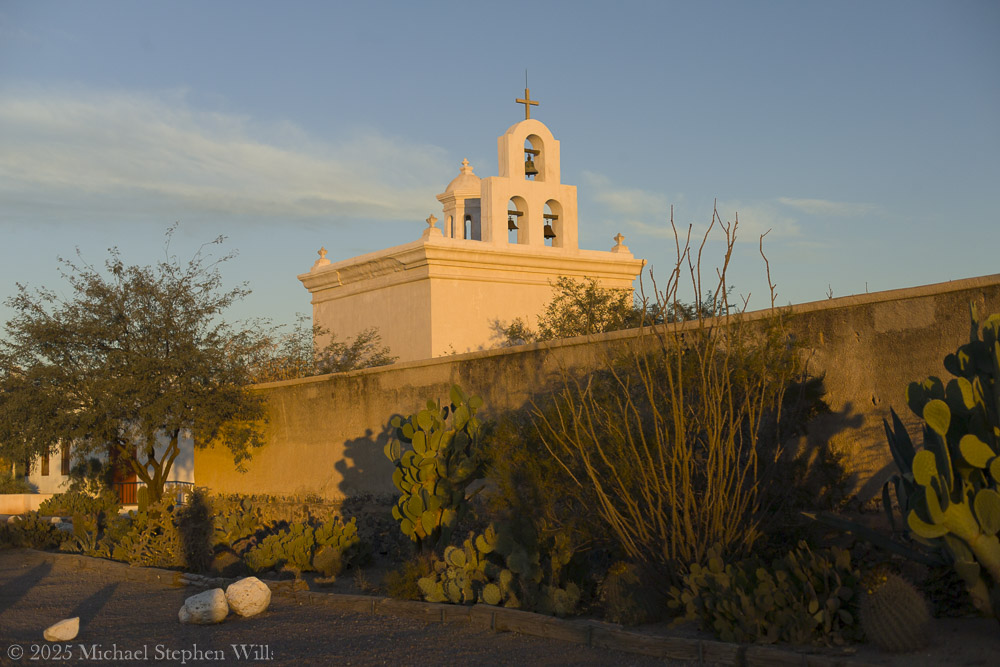
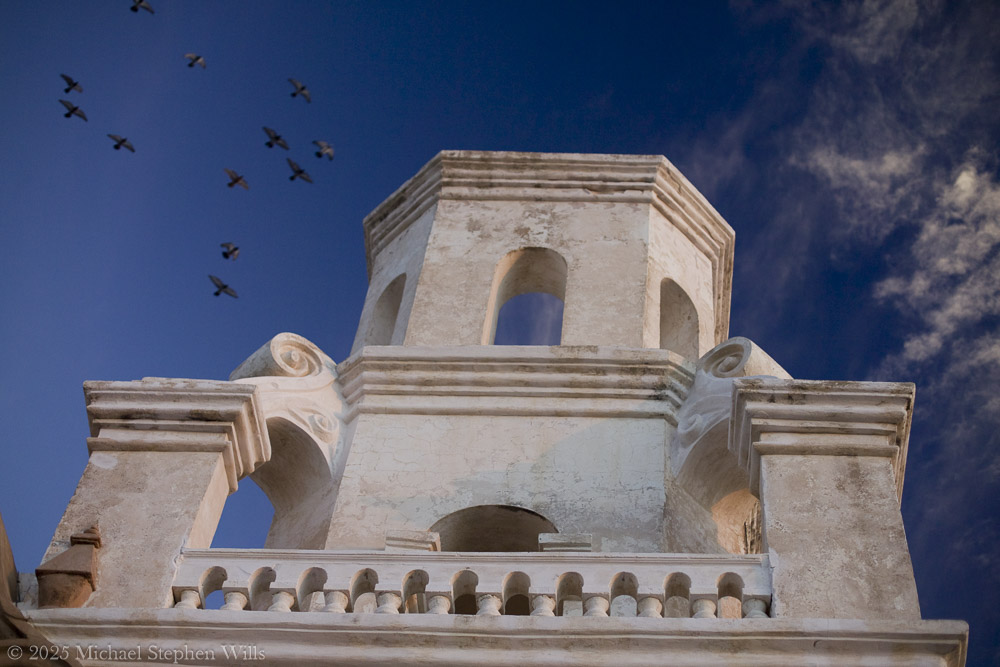
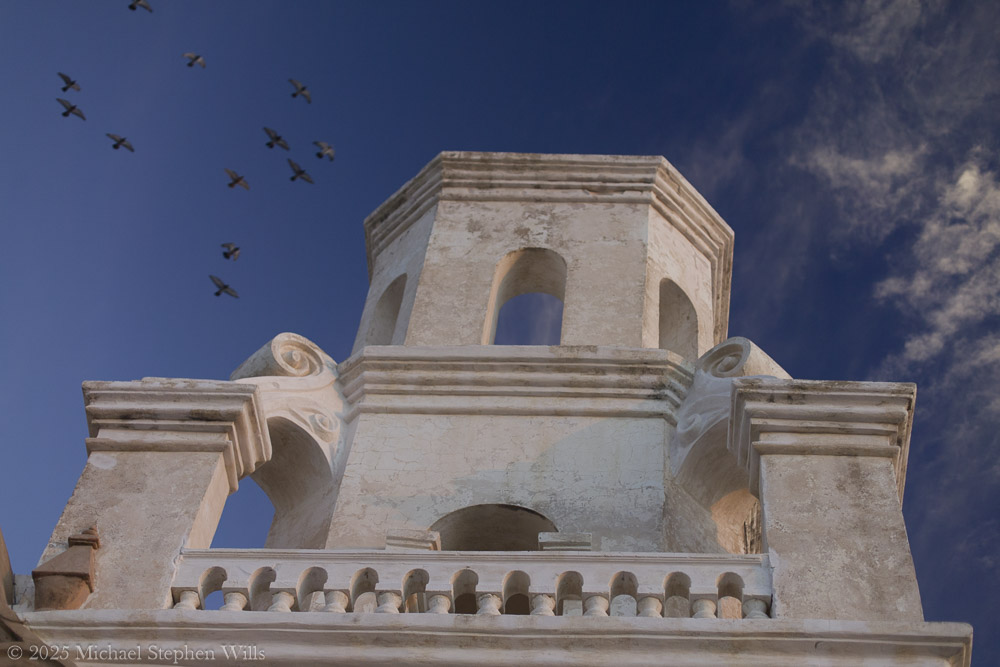
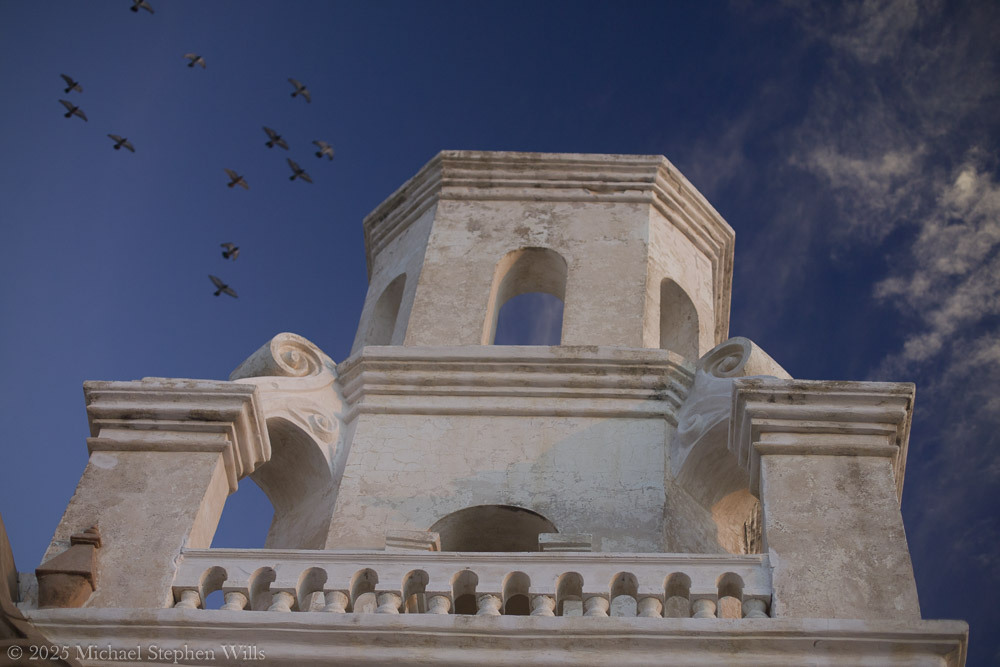
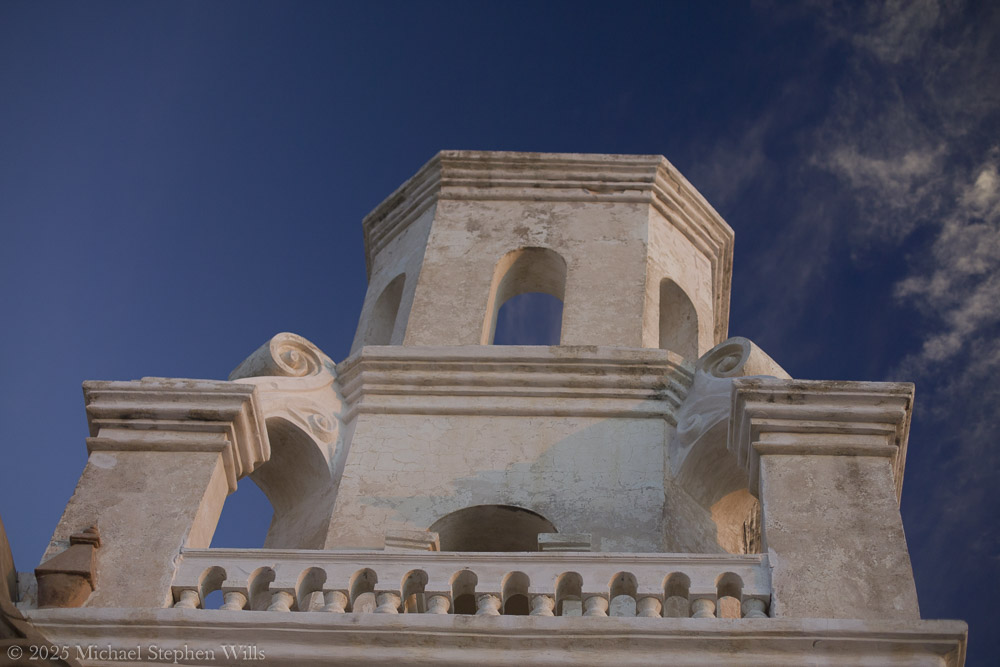
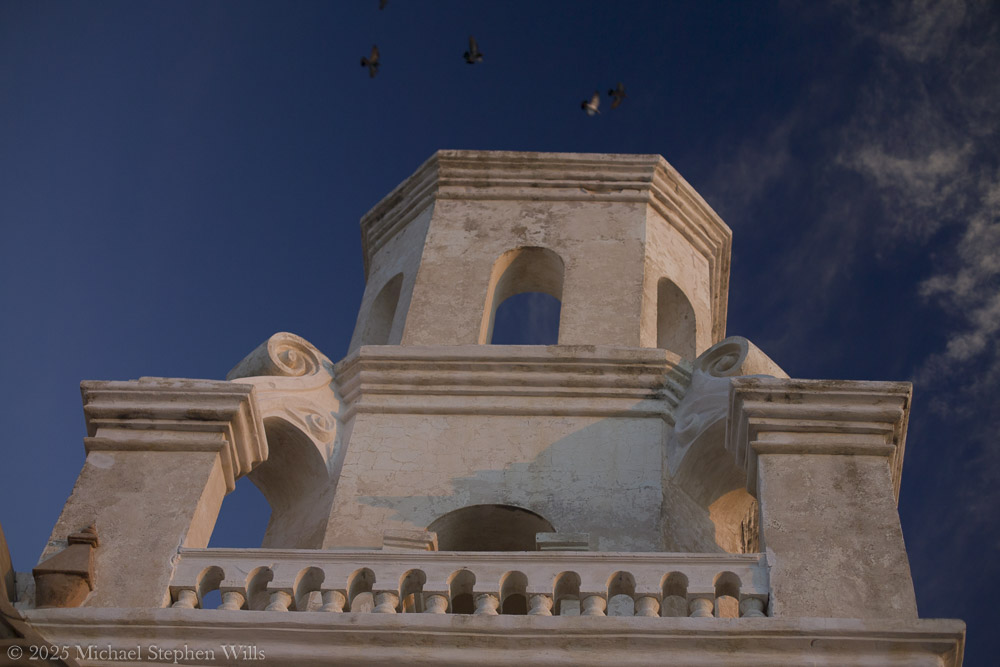
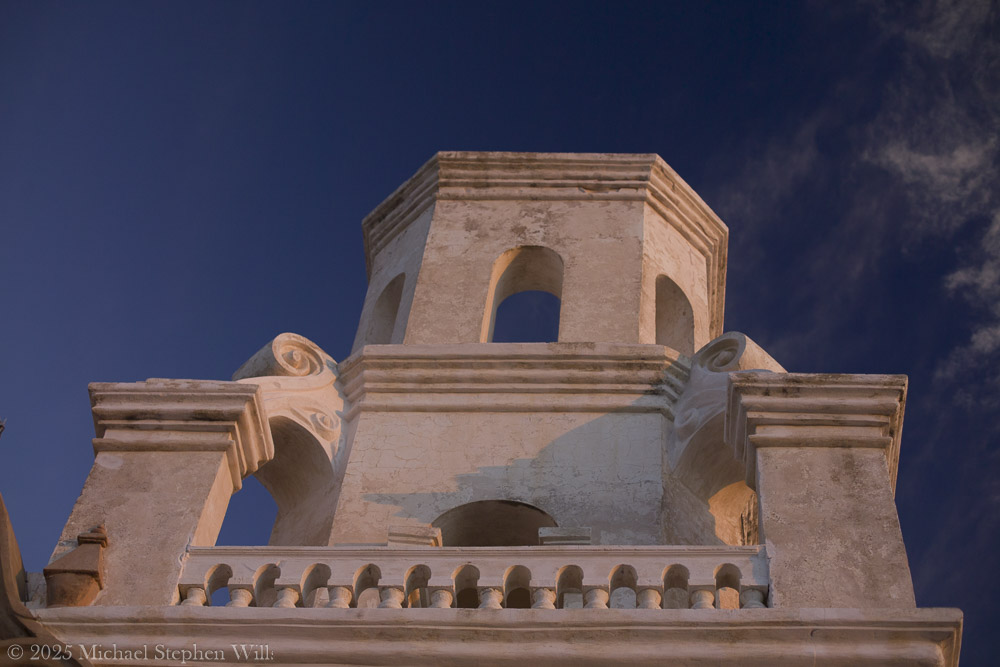
Often called the “White Dove of the Desert”the church gleams against the wide Sonoran sky, its twin bell towers and central dome radiant in the glow. In this moment, the 18th-century mission seems to hover between earth and heaven – a bright vision in the desert, tethered by history and faith.
I walk toward the old mission, feeling the crunch of desert sand beneath my feet and brushing past creosote bushes and prickly pear cacti. There is a hush here, broken only by a gentle breeze and the distant coo of a dove – as if nature itself respects the sanctity of this place. In my mind I rell that this mission was first founded in 1692 by the Jesuit missionary Father Eusebio Kino, who encountered the O’odham community living at this oasis they called Wa:k, meaning “Water Place”
The springs have long since gone dry, but the name lives on, a reminder that this now-arid land once nurtured life-giving water. The church before me isn’t the original Kino saw, but the one begun in 1783 under Spanish Franciscan friars who raised these walls with the help of O’odham artisans. I marvel that I am standing before a structure over two centuries old – the oldest European-built structure in Arizona– yet still alive with spirit.
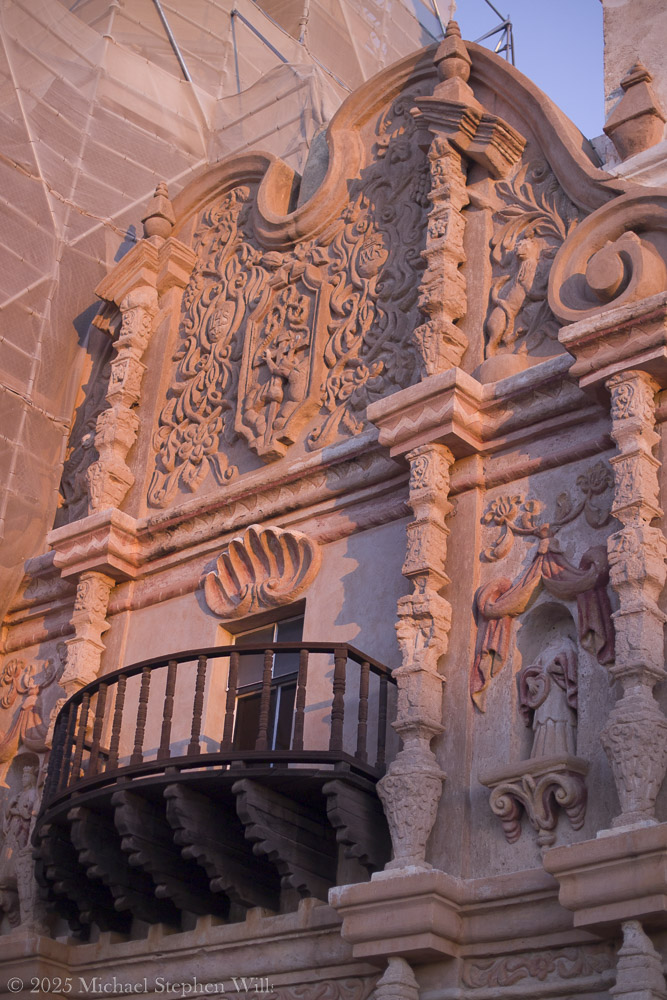
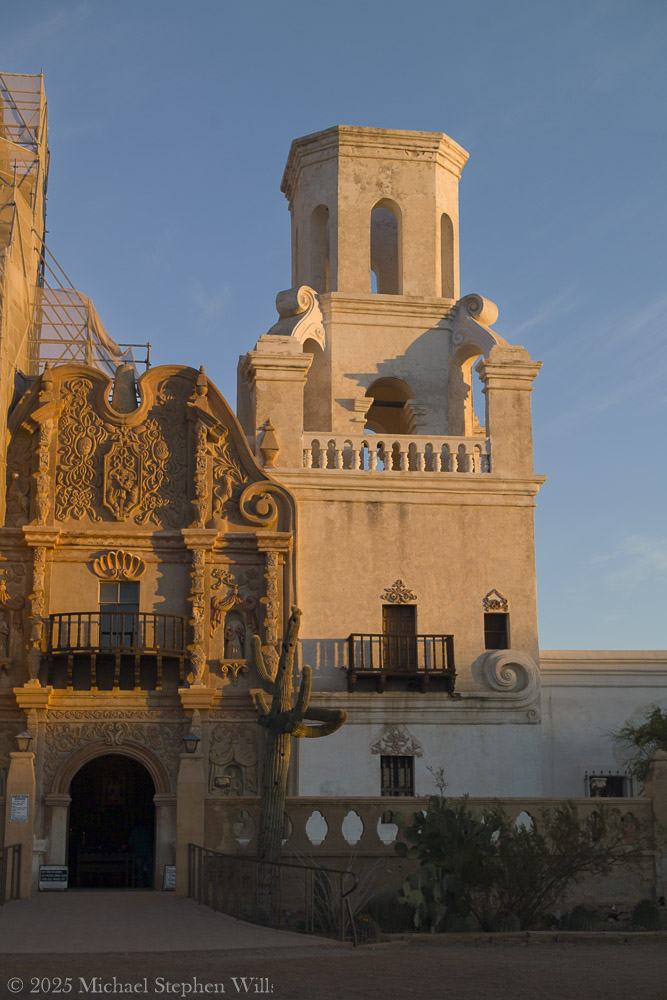
Stepping into the courtyard, I tilt my head back to absorb the facade’s details. The ornate Baroque façade is a symphony of carved plaster and painted relief, an exuberant blend of Moorish, Spanish, and Indigenous influences. Faded yet still vivid, saints and angels watch from their niches on the church front. Every arch and cornice is edged in shadow and dawn light, revealing craftsmanship considered one of the finest examples of Mexican Baroque architecture in the United States
The front entrance is flanked by intricate scrolls and whimsical carvings – floral motifs, seashell patterns, and statuary wearing serene expressions. I gently run my fingers along the weathered wooden doors, feeling the grain that generations of hands have touched. Through a crack in the door, I catch a glimpse of the dim interior: candles flicker on the altar and the air carries a hint of melted wax and sweet incense. Thesanctuary seems to exude centuries of devotion. Even outside, I sense a whisper of ancient prayers in the silence.
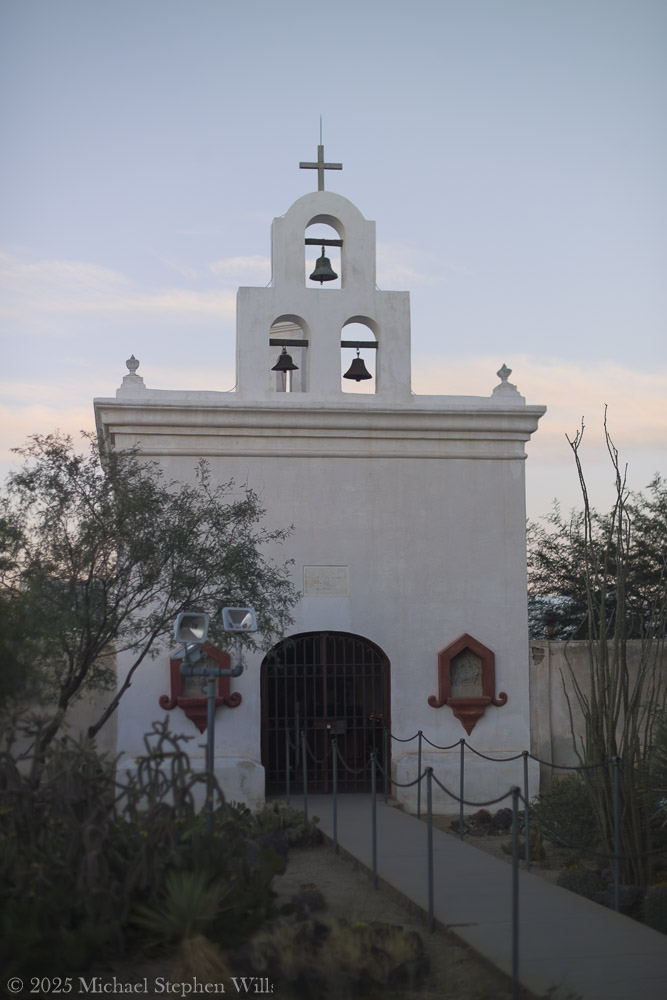
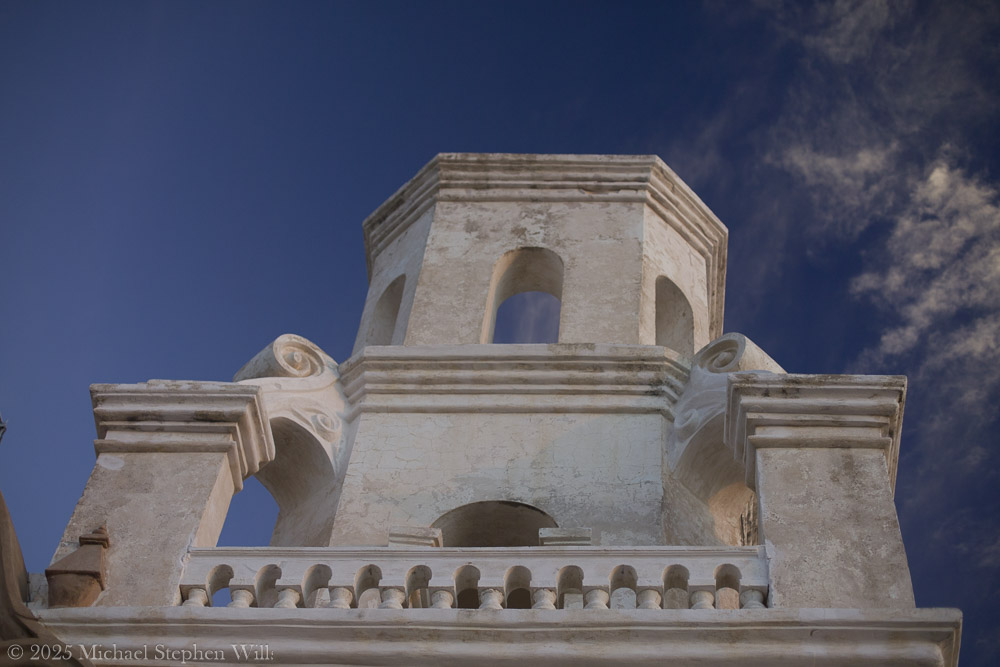
The Bell Tower in dawn light
As the day progresses, the world feels alive again. A pair of children laugh and chase each other across the dusty plaza, their voices echoing off the thick adobe walls. Nearby, the aroma of fresh frybread lingers – evidence of Tohono O’odham vendors who often set up stands by the church, selling frybread “popovers” and Indian tacos to visitors. This mingling of old and new, sacred and every day, makes the mission feel utterly genuine, the heart of a living community. I see an elderly O’odham woman in a shawl kneel at a side shrine, lips moving in quiet prayer, and I realize that for the Tohono O’odham, this mission is more than a historic landmark. It is a living spiritual home that continues to anchor their community. Indeed, the church is still an active parish that serves the local O’odham families, with regular Masses and gatherings held within its walls
The sense of continuity is palpable – the faith that built this place in the 18th century endures unwaveringly today.
Standing in front of San Xavier del Bac, I feel a personal connection that is hard to put into words. The centuries-old mission glows fresh in morning light. I close my eyes and sense the presence of all who have been here before – the O’odham villagers, the Spanish padres, the countless pilgrims and visitors. In the stillness, time blurs. Past and present mingle in the desert air. When I finally turn to leave, my heart is quiet, uplifted by the encounter. In this sacred and remote place, I have touched a living history and felt the embrace of a peace that transcends centuries. I carry that gentle peace with me into the day, grateful for the memories of light, silence, and the enduring soul of San Xavier del Bac.
Bibliography
Wikipedia. “Mission San Xavier del Bac.” (2025).
National Park Service. “San Xavier del Bac Mission.” (2021).
Patronato San Xavier. “History of the Mission – Timeline.” (2025).
Alpha-lipoic acid (ALA) is considered safe for oral use, even long-term, with mild side effects. It supports metabolism, improves insulin sensitivity, and aids weight management.
Overall, ALA’s metabolic effects can be summarized as: improved insulin action, enhanced mitochondrial energy metabolism, reduced oxidative stress, and slight promotion of fat utilization.
For seniors, it’s prudent to stay at the effective lower range (e.g. 300–600 mg/day) unless higher doses are medically supervised, given that doses above 600 mg may not confer extra benefit but could cause unnecessary GI side effects.
NOW Foods ALA offers the best cost-to-benefit ratio and is suitable for the majority of users (including the elderly), given its proven purity and high dosage. Doctor’s Best is a comparable alternative in the same tier. Jarrow provides a unique formulation that can improve tolerability (a key consideration for sensitive individuals like some seniors). Life Extension and Thorne cater to those prioritizing form specificity (R-ALA) and rigorous quality assurance, respectively. All these leading brands have positive consumer reputations and efficacious dosages – choosing between them may come down to personal priorities such as budget, any digestive sensitivity, and trust in certifications.
Effects of ALA on Metabolism
ALA plays multiple beneficial roles in metabolic health. It is both a mitochondrial cofactor and a powerful antioxidant, which allows it to influence energy production, glucose metabolism, and lipid oxidation.
Glucose Metabolism and Insulin Sensitivity
One of ALA’s most notable effects is improving insulin-dependent glucose utilization. ALA facilitates the transport of blood sugar into cells and combats insulin resistance. Clinical studies have shown that ALA supplementation enhances insulin sensitivity – for example, clamp trials in type 2 diabetics demonstrated significantly increased glucose disposal after a month of oral ALA therapy
pmc.ncbi.nlm.nih.gov. In prediabetic individuals, ALA reduced fasting insulin levels and HOMA-IR (an index of insulin resistance), even without changing body weight
pmc.ncbi.nlm.nih.gov. These improvements mean cells respond better to insulin, helping to lower blood sugar. In fact, ALA is used therapeutically in some insulin-resistant conditions (it’s prescribed in Germany for diabetic neuropathy in part due to this effect).
A recent dose–response meta-analysis of 16 trials (over 1,000 patients with type 2 diabetes) confirmed that oral ALA produces small but significant improvements in glycemic control
pmc.ncbi.nlm.nih.gov. Every 500 mg of ALA added per day led to reductions in HbA1c (average blood glucose), fasting plasma glucose, and markers of inflammation like C-reactive protein
pmc.ncbi.nlm.nih.gov. For example, around 600 mg/day of ALA lowered HbA1c by about 0.3 percentage points and modestly reduced fasting glucose – a notable benefit, though not a dramatic cure
pmc.ncbi.nlm.nih.gov. These changes, while statistically significant, were relatively modest in magnitude (often below the threshold of clinical significance
pmc.ncbi.nlm.nih.gov). This suggests ALA won’t replace diabetes medications, but can act as a helpful adjunct for improving metabolic markers. Notably, ALA also tends to lower triglycerides and inflammatory markers in metabolic syndrome patients
Mechanistically, ALA activates cellular energy sensors (AMPK) and transcription factors (PPAR-γ) that enhance insulin signaling and glucose uptake
mdpi.com. It can upregulate GLUT4 glucose transporters in muscle and reduce oxidative stress that impairs insulin action. Collectively, these actions translate to better insulin sensitivity and blood sugar utilization, which is why ALA has been tested in conditions like type 2 diabetes, metabolic syndrome, and even polycystic ovary syndrome.
Mitochondrial Function and Energy Production
ALA is often dubbed the “metabolic antioxidant” because of its critical role in mitochondria – the energy powerhouses of cells. Endogenously, ALA is a coenzyme for key mitochondrial enzyme complexes (e.g. pyruvate dehydrogenase and α-ketoglutarate dehydrogenase) that drive the Krebs cycle and ATP production
lifeextension.com. Supplementing with ALA can bolster these enzymatic functions. ALA is easily absorbed and crosses into mitochondria, where it assists in converting nutrients into energy and simultaneously neutralizes free radicals generated in the process
mdpi.com. This dual action supports healthier mitochondrial function, especially under oxidative or aging-related stress.
Research indicates ALA can improve mitochondrial performance and even promote new mitochondria formation. For instance, ALA has been shown to stimulate mitochondrial biogenesis in cells
pmc.ncbi.nlm.nih.gov. Its antioxidant capacity helps prevent damage to mitochondrial membranes and DNA, preserving efficiency of energy metabolism
pmc.ncbi.nlm.nih.gov. In animal studies of aging, ALA (alone or with other “mitochondrial nutrients” like acetyl-L-carnitine) reversed age-related declines in mitochondrial structure and function
accurateclinic.com. Notably, ALA-treated older rats showed improvements in memory that correlated with restored mitochondrial health and lower oxidative damage in brain cells
accurateclinic.com. By elevating intracellular glutathione and other antioxidants, ALA creates a more reducing (protective) environment in mitochondria
pmc.ncbi.nlm.nih.gov. This is particularly relevant for seniors, as mitochondrial decay is a hallmark of aging. The evidence suggests ALA may help mitigate age-associated mitochondrial dysfunction, potentially improving energy levels and organ function in older adults
It’s important to note that while much of the mitochondrial benefit is documented in lab and animal models, human trials also hint at improved fatigue and muscle performance in conditions of mitochondrial stress. At the cellular level, ALA’s ability to chelate redox-active metals and scavenge reactive oxygen species prevents the oxidative damage that slows down mitochondrial enzymes
pmc.ncbi.nlm.nih.gov. In summary, ALA serves as a critical cofactor and antioxidant “tune-up” for mitochondria, supporting efficient metabolism and potentially contributing to healthy aging of cells.
Weight Management and Fat Oxidation
ALA has garnered interest as a weight management supplement, due to its effects on energy expenditure and fuel utilization. Preclinical studies suggest ALA can reduce fat accumulation through multiple pathways. In animal models, ALA supplementation led to lower food intake and increased calorie burn – partly by acting on the hypothalamus to suppress appetite via AMPK (AMP-kinase) modulation
pmc.ncbi.nlm.nih.gov. Rodents given ALA show a decrease in body fat and weight, as ALA may enhance fat oxidation and mitochondrial activity in muscle and brown fat
pmc.ncbi.nlm.nih.gov. These anti-obesity signals raised hopes that ALA might aid human weight loss as well.
Human trials indicate ALA’s weight loss effects are modest. A comprehensive meta-analysis of randomized controlled trials found that, on average, subjects taking ALA lost about 1.2 kg more than those taking a placebo over the study period
pmc.ncbi.nlm.nih.gov. This translated to a small but statistically significant drop in BMI (~0.4 unit) compared to placebo
pmc.ncbi.nlm.nih.gov. In practical terms, ALA can modestly enhance weight loss when combined with caloric restriction or diet changes, but it is not a magic bullet. The meta-regression found no clear dose-response – higher doses didn’t necessarily produce more weight loss – but longer study duration was associated with slightly greater effects on BMI
pmc.ncbi.nlm.nih.gov. So, ALA may help “a little bit” with weight management, especially over longer periods and as part of a comprehensive diet/exercise plan.
Interestingly, some trials in overweight individuals have shown improvements in body composition. For example, in obese participants on a calorie-controlled diet, those who added ALA lost slightly more weight and fat mass than those on diet alone
pmc.ncbi.nlm.nih.gov. ALA’s activation of AMPK and PPAR signaling can encourage the body to use fat for fuel and improve metabolic rate. It also attenuates inflammation (lowering CRP) which is linked to obesity
pmc.ncbi.nlm.nih.gov. That said, the consensus is that ALA’s effect on weight is small – typically on the order of 1–2% of body weight – but it may enhance fat oxidation and help overcome metabolic hesitations during weight loss
pmc.ncbi.nlm.nih.gov. Because even modest weight reductions can improve health markers, this adjunct effect of ALA is seen as a positive side benefit to its main role in glycemic and antioxidant support.
pmc.ncbi.nlm.nih.gov. These biochemical effects underlie its use in diabetic neuropathy, its investigation in cognitive decline, and its popularity as an anti-aging supplement.
Safety Profile of ALA (General Population and Seniors)
Alpha-lipoic acid is considered to have a strong safety profile in oral supplement doses commonly used. A 2020 meta-analysis of 71 clinical trials (over 2,500 people on ALA) found no higher incidence of adverse events with ALA than with placebo
mdpi.com. In other words, taking ALA did not increase overall side-effect risk compared to not taking it. Reported side effects are usually mild, most often gastrointestinal (GI) upset (e.g. nausea, stomach discomfort) or occasionally skin reactions (like rash or itching)
mdpi.com. Even long-term use appears safe – for example, diabetic neuropathy patients taking 600–1,200 mg of ALA daily for 2 years had no serious adverse effects and rated tolerability as “good” or “very good”
For older adults (age 65–70+), studies indicate ALA is generally well-tolerated at standard doses. In a trial of seniors (≥65 years) escalating doses, 600 mg/day was well tolerated with no complaints
pmc.ncbi.nlm.nih.gov. At higher doses (800–1,200 mg) a few participants experienced flushing (skin warmth/redness) or GI discomfort
pmc.ncbi.nlm.nih.gov. Notably, at 1,200 mg three of 15 elderly subjects could not tolerate the dose due to GI upset or flushing, though those taking stomach protectants had no issues
pmc.ncbi.nlm.nih.gov. These findings suggest that older individuals can safely take ALA, but very high doses may cause minor intolerance in some; starting at a moderate dose (e.g. 300–600 mg) and taking it with food may improve comfort.
No specific organ toxicity has been documented from oral ALA. However, as a potent insulin-sensitizer, ALA can enhance glucose uptake, so diabetics on medication should monitor blood sugar to avoid hypoglycemia
lpi.oregonstate.edu. (This is a theoretical risk; in one study a 600 mg ALA dose did not cause hypoglycemia when taken with diabetes drugs
lpi.oregonstate.edu, but caution is still advised for those on insulin or sulfonylureas.) Extremely large accidental overdoses are unsafe – there are case reports of seizures and acidosis in adolescents who ingested gram-quantities far beyond recommended doses
lpi.oregonstate.edu – but such scenarios are very rare. Overall, ALA is viewed as safe for adults and seniors at typical supplemental doses, with an excellent tolerability record over up to several years
mdpi.com. For seniors, it’s prudent to stay at the effective lower range (e.g. 300–600 mg/day) unless higher doses are medically supervised, given that doses above 600 mg may not confer extra benefit but could cause unnecessary GI side effects.
Oral Supplementation and Natural Sources of ALA
This report focuses on oral ALA supplementation, as opposed to intravenous use. Orally, ALA is typically taken in capsule or tablet form, in doses ranging from 100 mg up to 600 mg per serving. Common regimens for general health or diabetic support are 300–600 mg per day (higher doses are split into two doses). Importantly, taking ALA with food can reduce its bioavailability – food competes with ALA for absorption
lpi.oregonstate.edu. Therefore, it’s often recommended to take ALA on an empty stomach (30 minutes before a meal or 2 hours after) for best absorption
lpi.oregonstate.edu. ALA is both water- and fat-soluble, so it doesn’t require dietary fat for absorption, but an empty stomach helps maximize how much gets into your bloodstream. Once absorbed, ALA is readily transported into cells throughout the body, including crossing the blood–brain barrier, which is why oral ALA can have systemic antioxidant effects.
In the oral supplement market, ALA comes in a few forms: most products use the standard racemic mixture (R,S-ALA), which includes both the natural R-enantiomer and its mirror-image S form. The R-form is the biologically active form produced in the body, and has slightly better absorption
lpi.oregonstate.edu. Some premium supplements provide pure R-ALA or a stabilized sodium-R-ALA, which may offer higher potency per dose. However, all the major clinical trials have used racemic ALA, and it has proven effective. Interestingly, the S-form in racemic ALA might even help stabilize the R-form, preventing it from polymerizing, thus the mix could be beneficial for shelf-stability
lpi.oregonstate.edu. In any case, both forms are eliminated from the body relatively quickly (ALA has a short half-life of only a few hours), which has led to development of sustained-release ALA tablets to prolong its action. Sustained-release formulations can lessen peak plasma levels (potentially reducing side effects like nausea) and maintain blood levels longer.
For those interested in dietary (food) sources of ALA, it’s important to note that ALA is present in foods only in very small quantities. ALA in food is found covalently bound to proteins (as lipoamide), particularly in mitochondrial enzymes. Rich sources include organ meats and some vegetables. For example, animal organs like kidney, heart, and liver have the highest ALA content – on the order of ~1–3 micrograms per gram dry weight
lpi.oregonstate.edu. Plant sources with notable (but still tiny) amounts include spinach and broccoli (also around 1 µg/g dry weight)
lpi.oregonstate.edu. To put this in perspective, even a large serving of spinach or liver provides only a few micrograms of ALA, whereas supplements provide milligrams – a difference of about 1,000-fold
lpi.oregonstate.edu. For instance, a 300 mg supplement dose is roughly equivalent to what you’d get from eating over 100 kg of spinach in terms of ALA content. Thus, while a healthy diet includes ALA-rich foods, you cannot attain therapeutic ALA levels from diet alone.
It’s also worth noting that ALA from food is bound (lipoyllysine) and must be freed during digestion to be absorbed, which occurs inefficiently. By contrast, supplement ALA is “free” and readily absorbed (though as mentioned, timing around meals matters). This is why supplements are used to exploit ALA’s pharmacological effects. In summary, natural sources of ALA include red meat (especially organ meats) and vegetables like spinach, broccoli, yams, carrots, beets, and potatoes
healthline.com, but the amounts in foods are nutritionally meaningful yet far below what’s used in research on metabolism and disease. Oral supplementation is the practical way to achieve the doses associated with improved insulin sensitivity or neuropathic symptom relief.
(Aside: Intravenous ALA is another delivery mode – used in some European protocols for neuropathy at 600 mg IV doses – but IV use is outside the scope of this report. The focus here is on oral ALA, which is more relevant for general supplementation.)
Comparison of Leading ALA Supplement Brands
When choosing an ALA supplement, factors to consider include the dosage and form of ALA, the purity and quality testing of the product, any added ingredients (e.g. biotin, which is sometimes included), third-party certifications, cost/value, and suitability for specific needs (such as easy swallowing or lower dose options for seniors). Below is a comparative overview of several reputable ALA supplement brands, with an emphasis on how NOW Foods (a popular brand) compares to others:
Brand & Product
Form & Dosage
Quality & Purity
Consumer Ratings
Price (Approx.)
Senior Suitability
NOW Foods – Alpha Lipoic Acid Extra Strength (NOW brand)
– Racemic ALA, 600 mg per veg capsule – Also available in 100 mg and 250 mg strengths
– cGMP certified manufacturing – In-house and 3rd-party lab tested for purity (110% of label claim found in assays)nowfoods.com – Non-GMO, vegetarian formula
~4.6★ (Amazon average) – Well-reviewed for potency and value
~$0.25 per 600 mg capsule (very affordable) (e.g. ~$18 for 60 caps)
Yes. High-potency 600 mg can benefit seniors (e.g. neuropathy patients); lower-dose options allow gradual dosing. Generally well-tolerated – start with 1 × 300 mg if concerned about sensitivity.
Doctor’s Best – Alpha Lipoic Acid 600
– Racemic ALA, 600 mg per veggie cap – Standard capsule format (no additives)
– cGMP, made with “Science-Based” approach – Non-GMO, gluten/soy free, vegan – Purity tested (no formal certification published)
~4.5★ – Positive user feedback for efficacy and quality
$0.25 per 600 mg capsule<br>($20–$25 for 90 caps)
Yes. Similar to NOW in dose and tolerability. Easy-to-swallow capsules. No special senior formulation, but widely used by older adults for glucose support and nerve health.
– Racemic ALA, 300 mg sustained-release tablet + ^biotin^ (explained below) – Sustained release reduces GI upset and prolongs action
– Reputable brand with strict quality control (cGMP) – Non-GMO; vegetarian – Includes biotin to prevent biotin depletion by high-dose ALA
~4.7★ – Users like the sustained-release (less stomach discomfort)
$0.45 per 300 mg tablet<br>($27 for 60 tablets)
Yes. Lower 300 mg dose and slow-release format are gentler on the stomach – a good choice if seniors experience acid reflux or nausea with 600 mg instant-release. Biotin included for safety.
Life Extension – Super R-Lipoic Acid 240
– R-ALA only, 240 mg stabilized R-lipoic per capsule (equivalent to ~480 mg racemic activity) – Vegetarian capsule
– High purity R-isomer (bio-enhanced form) – Produced under NSF GMP (Life Extension has rigorous in-house testing) – Non-GMO, no unnecessary fillers
~4.6★ – High satisfaction, though niche due to price; noted for effectiveness in blood sugar management
$0.50–$0.60 per 240 mg cap<br>($30–$36 for 60 caps)
Yes (with considerations). The R-ALA form gives strong effects at lower dose, which can be advantageous for sensitive seniors. Capsule size is moderate. Ensure other medications are reviewed, as R-ALA might potentiate insulin effects more strongly. Higher cost may be a drawback on fixed incomes.
Thorne Research – Alpha Lipoic Acid 300 (Thiocid-300)
– Racemic ALA, 300 mg per capsule – Also offered in 100 mg capsules for flexible dosing
– NSF Certified for Sport (third-party tested for potency & contaminants)info.nsf.org – Pharmaceutical-grade purity; free of gluten, soy, and major allergens – Trusted by healthcare practitioners (Thorne has rigorous quality audits)
~4.8★ (fewer reviews; premium brand trust) – Praised for quality, no additives
~$0.65 per 300 mg cap ($39 for 60 caps)
Yes. High quality and purity ideal for seniors concerned about contaminants. Lower-dose 100 mg option allows titration for those who want to “start low and go slow.” More expensive, but top-tier safety for long-term use.
^Notes:^ The inclusion of biotin in Jarrow’s ALA Sustain is to counteract a theoretical biotin deficiency when taking high-dose ALA. (ALA and biotin share similar transporters, and large doses of ALA could competitively inhibit biotin absorption
lpi.oregonstate.edu.) Most people likely get enough biotin from diet, but Jarrow adds 300 µg biotin per tablet as a safeguard.
From the above comparison, NOW Foods ALA stands out as an excellent value – it provides a high dosage per capsule, has verification of its content (in fact, NOW deliberately overfills by ~5% to ensure full potency through shelf life
nowfoods.com), and is very affordable per dose. NOW’s internal and external testing has revealed that some bargain brands sold online delivered as low as 50–70% of their label claim of ALA
nowfoods.com, whereas NOW consistently meets or exceeds its label dosage. This reliability, combined with widespread positive reviews, makes NOW a trusted choice for many consumers, including older adults who may be on multiple supplements and need confidence in label accuracy.
Comparatively, Doctor’s Best offers a similar price and formula to NOW – also a good value with clean ingredients. It’s likewise a solid choice, essentially interchangeable with NOW in terms of what a user gets (600 mg ALA, veg capsule, etc.). Those who prefer a sustained-release or lower dose may lean toward Jarrow Sustain (300 mg), especially if mild stomach upset has been an issue with other ALA supplements. Sustained-release can also be beneficial for maintaining steadier blood levels if one is taking ALA for glucose control throughout the day. The addition of biotin in Jarrow’s product is a thoughtful inclusion for high-dose users.
For individuals specifically seeking the most bioactive form, Life Extension’s Super R-Lipoic Acid provides the R-isomer which is the natural form the body uses. Users report it to be effective at a lower dose, and Life Extension is known for quality, but it does come at a higher cost per mg. Seniors who are very health-conscious and willing to invest may choose this for its potency – for instance, a senior with significant insulin resistance might try R-ALA to potentially get a stronger response with fewer capsules. It’s wise, however, to monitor blood sugar closely, as R-ALA might enhance insulin action more per milligram.
Finally, Thorne Research’s ALA is a premium supplement that prioritizes purity – the NSF certification means an independent body vetted its contents for accuracy and absence of contaminants. This can be particularly reassuring for older adults who are often more vulnerable to heavy metals or impurities. Thorne’s product is priciest, but you are paying for exceptional quality control. The availability of a 100 mg capsule from Thorne is useful for those who want to slowly ramp up dosage or who only need a small amount (for example, a senior adding ALA mainly for general antioxidant support rather than high-dose therapy).
References
Sarezky et al. (2016). Tolerability in the elderly population of high-dose alpha lipoic acid: a potential antioxidant therapy for the eye.Clinical Interventions in Aging, 11, 19-25. pmc.ncbi.nlm.nih.gov
Cicero et al. (2020). Safety Evaluation of α-Lipoic Acid Supplementation: A Systematic Review and Meta-Analysis of Randomized Controlled Studies.Antioxidants, 9(10):1011. mdpi.commdpi.com
Ziegler et al. (2016). Oral treatment with alpha-lipoic acid improves diabetic polyneuropathy.Experimental and Clinical Endocrinology & Diabetes, 124(5): 295-301. mdpi.com
Shilo et al. (2022). Oral Alpha-Lipoic Acid in Type 2 Diabetes: A Dose–Response Meta-Analysis.J of Clinical Endocrinology & Metabolism, 107(11): e4731-e4742. pmc.ncbi.nlm.nih.govpmc.ncbi.nlm.nih.gov
Liu et al. (2008). Mitochondrial nutrient α-lipoic acid alleviates age-associated mitochondrial and cognitive dysfunction.Neurochemical Research, 33(1): 194-203. accurateclinic.com
Salehi et al. (2019). Alpha-Lipoic Acid as a Dietary Supplement: Molecular Mechanisms and Therapeutic Potential.Biomolecules, 9(8): 356. pmc.ncbi.nlm.nih.gov
Yi & Ma (2019). Efficacy and safety of alpha-lipoic acid supplementation for diabetic neuropathy.Journal of International Medical Research, 47(11): 5338-5354.
Linus Pauling Institute, Oregon State University – Micronutrient Information Center: Lipoic Acid (Alpha-Lipoic Acid). Updated 2018.lpi.oregonstate.edulpi.oregonstate.edu
NOW Foods – Quality testing report (2020): NOW Reports Testing on Brands of Alpha Lipoic Acid.nowfoods.comnowfoods.com
Evans & Goldfine (2021). α-Lipoic Acid (ALA) as a Supplement for Weight Loss: Results of a Meta-Analysis.Obesity Reviews, 22(7): e13266. pmc.ncbi.nlm.nih.govpmc.ncbi.nlm.nih.gov
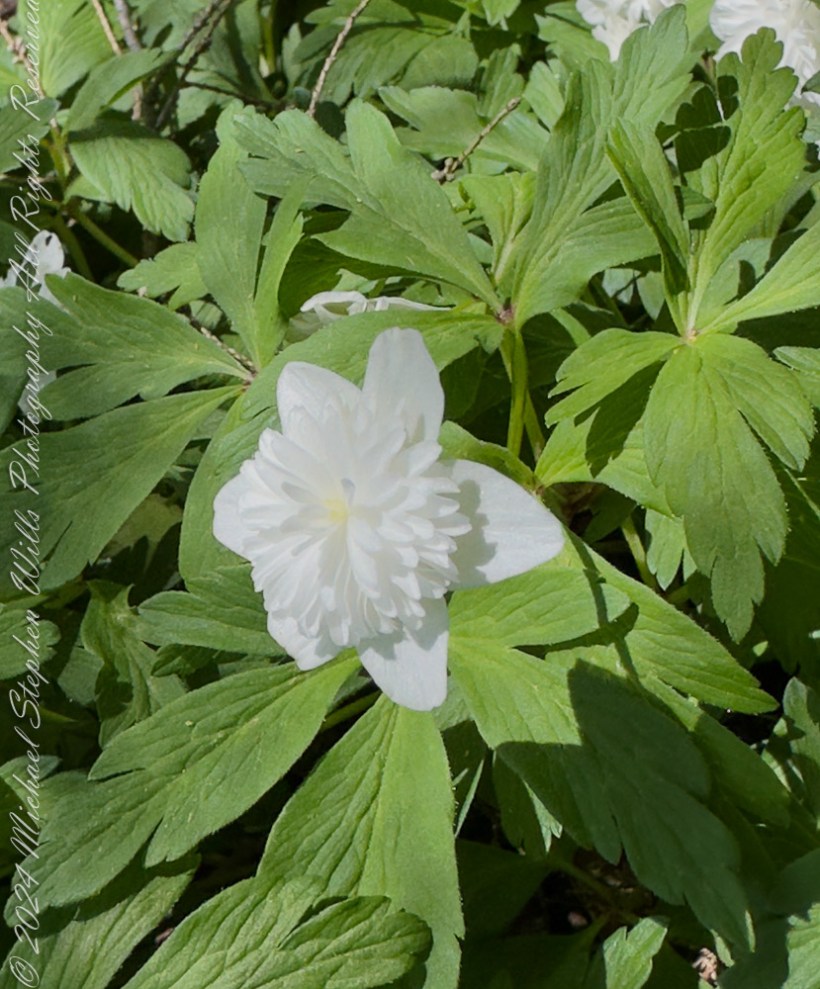
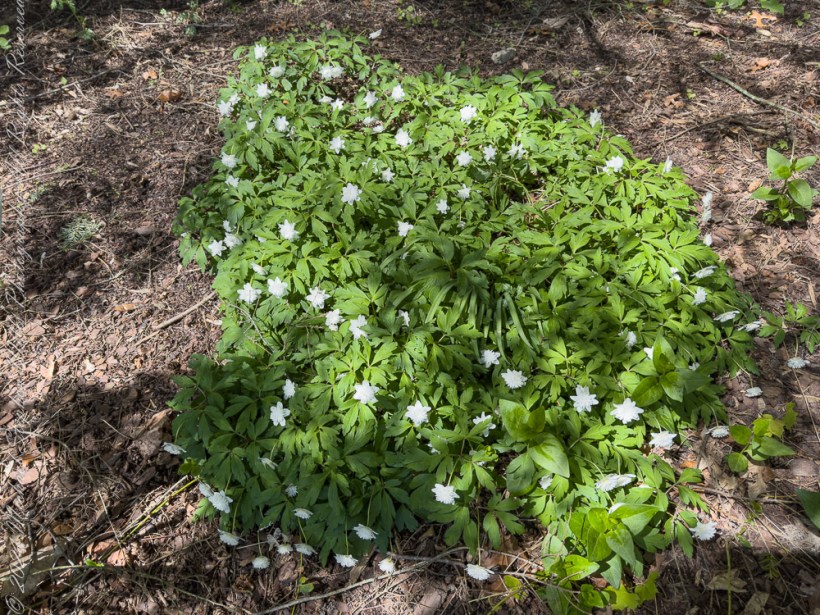
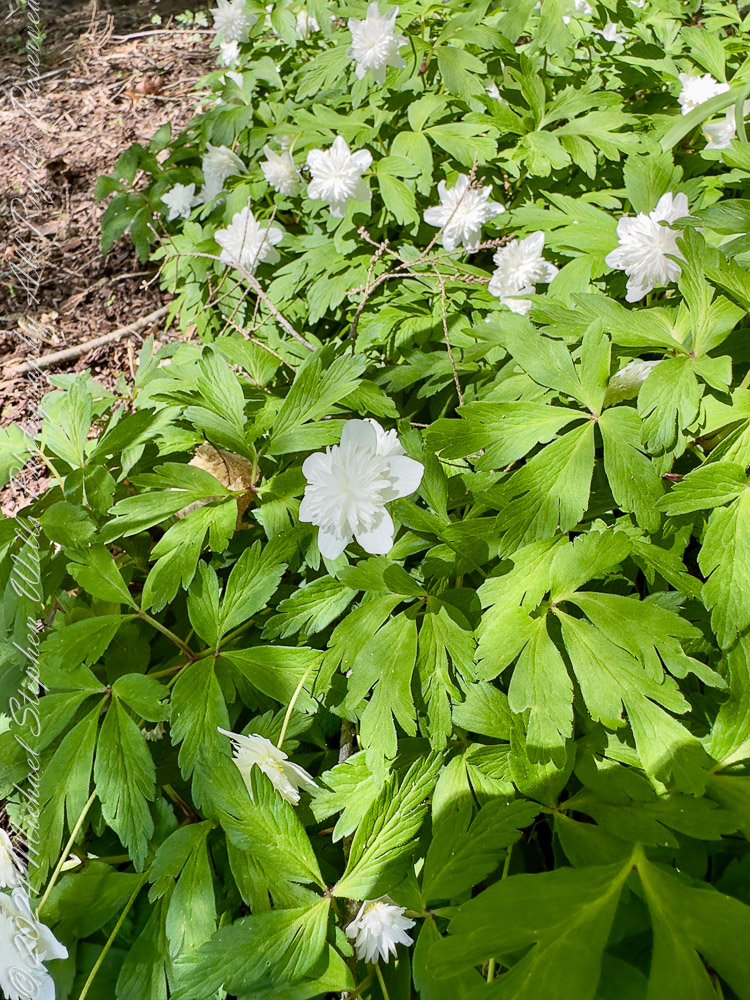
As I wander through our yard, my gaze is irresistibly drawn to a mesmerizing carpet of white blossoms, illuminated by the dappled sunlight filtering through the graceful boughs of our hemlocks. Each bloom, delicate and intricately ruffled, resembles a cluster of tiny, pure clouds resting gently atop a vibrant sea of green. These are Anemone nemorosa, affectionately known as wood anemone or windflower. This particular patch, adorned with a double-flowered variety, owes its presence to the thoughtful hands of our parents, who landscaped the property during the 1970s and 1980s. Their vision continues to bloom each spring, as the cascading petals exude an understated elegance that feels both luxurious and unpretentious—a living legacy woven into the fabric of this place we call home.
The wood anemone is a perennial plant, its rhizomatous growth weaving an intricate tapestry under the dappled sunlight of the forest floor. Each flower arises on its slender stem, surrounded by finely divided trifoliate leaves, their fresh green hue amplifying the purity of the blossoms. The flowers themselves, with their many layers of petal-like sepals, are a marvel of nature’s design, combining elegance and resilience.
The scientific name, Anemone nemorosa, carries echoes of ancient understanding. The genus name Anemone originates from the Greek word ánemos, meaning “wind.” According to classical mythology, these flowers were said to spring forth from the tears of the goddess Venus as she mourned the death of Adonis. The appellation of “windflower” ties to this myth, suggesting that the blooms open only at the bidding of the wind. The species name nemorosa comes from the Latin nemorosus, meaning “of a wooded grove,” aptly describing its preferred habitat.
There is a certain humility in the way the wood anemone thrives—spreading slowly but persistently through deciduous woodlands, forming colonies that greet the spring with their pristine blooms. While the double-flowered variety lacks the simplicity of the single-layered wild form, it retains all the grace that has inspired poets and naturalists alike. It is as if each bloom whispers its secrets to the passing breeze, stories of centuries gone by when druids and herbalists revered the plant as a symbol of protection and healing.
Culturally, the wood anemone has deep roots. In folklore, it was believed to bring luck to those who carried it, while others regarded it as a harbinger of illness if picked prematurely. The flowers were said to close tightly in response to rain, a trait lending them an air of sentience as they interact with their environment.
In medieval herbalism, the plant was thought to possess medicinal properties, though its potent compounds also rendered it toxic if mishandled. It was used cautiously to treat ailments such as rheumatism and respiratory issues. Modern understanding has largely relegated these medicinal uses to history, but the plant’s ability to captivate the senses remains undiminished.
Looking at this verdant patch before me, I am reminded of the transient beauty of spring. Anemone nemorosa emerges briefly, a fleeting celebration of life before retreating into its quiet dormancy beneath the soil. It thrives in the undisturbed spaces of the world, reminding us of the importance of preserving the ecosystems that allow such delicate wonders to flourish.
Today, as the soft May sunlight streams through the trees, illuminating each ruffled blossom, I am filled with gratitude for the enduring gift left by our parents, who lovingly planted these flowers decades ago. The wood anemone, whether viewed as a mythological symbol, a natural marvel, or a fleeting delight, offers a gentle reminder to cherish the beauty that surrounds us. Its ephemeral blooms, returning each spring, stand as a testament to nature’s quiet yet profound artistry—a living masterpiece and a poignant connection to the legacy of those who shaped this cherished landscape here in Ithaca, New York.
Enter your email to receive notification of future postings. I will not sell or share your email address.
Copyright 2024 All Rights Reserved Michael Stephen Wills
As I stood at the edge of Punta del Este, Uruguay, I marveled at the wild beauty of the place. We were at Punta de las Salinas, the very tip of the peninsula, the edge of where the Atlantic Ocean meets the Río de la Plata. This easternmost point of Uruguay, where time feels suspended as restless waves crash against rocky shores. A sea breeze carries a distinct salty tang.
This is at Great Britain Square, Punta de las Salinas of Punta del Este. We are at the tip of the peninsula, the easternmost point of Uruguay. Punta del Este, Departamento de Maldonado, Uruguay
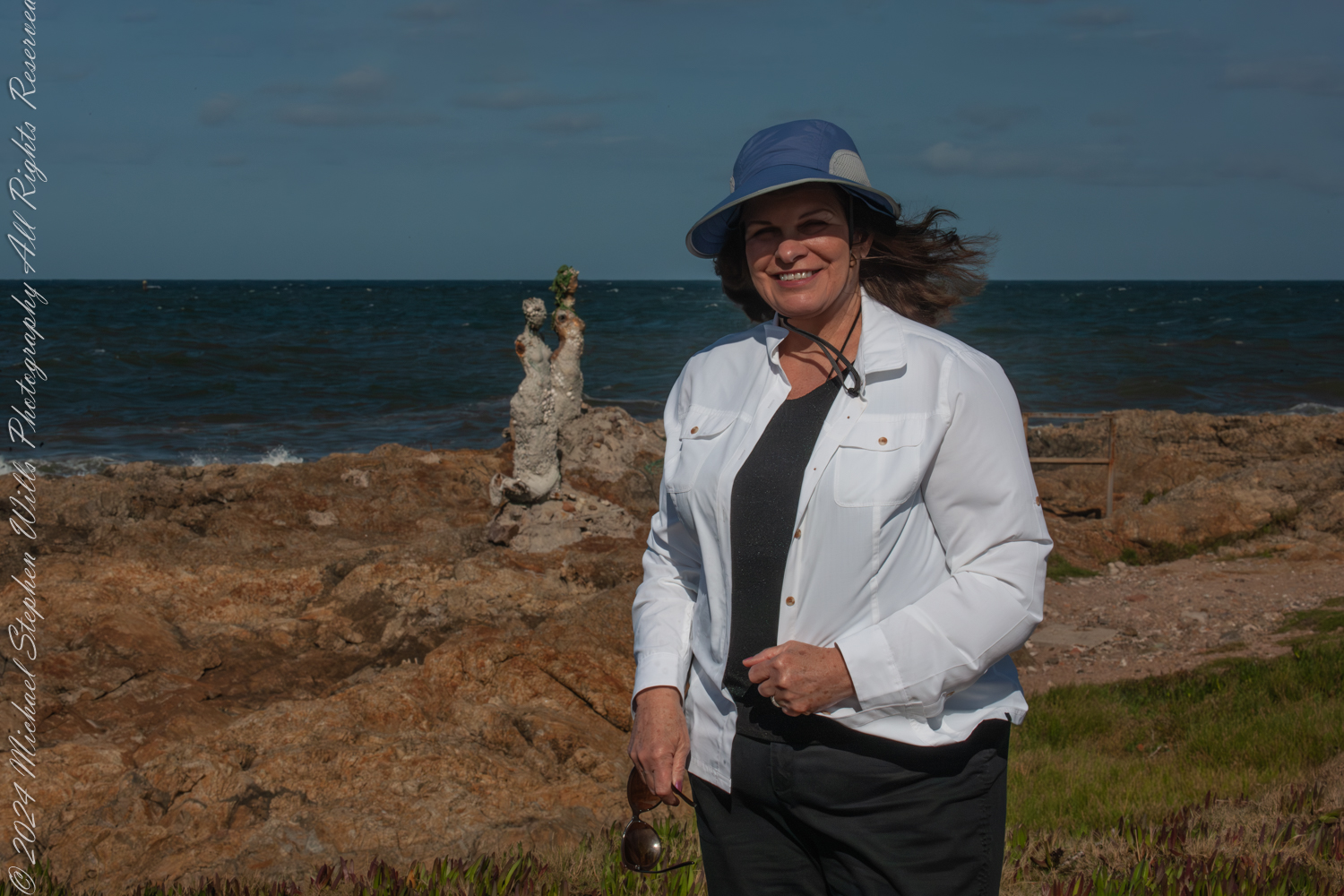
Pam, my wife, stood beside me, a bright smile on her face as the ocean wind tugged at her sunhat. Behind her, rising among the rocks, was an art installation that seemed to embody the spirit of the place “El Canto de las Sirenas” (The Song of the Mermaids). These sculptures by the artist Lily Perkins, their forms shaped and worn by the elements, appeared almost as though they were natural extensions of the rocky coastline. They gazed out to sea, their haunting beauty a poignant reminder of myth and humanity’s eternal connection with the ocean.
The sirens, crafted with an earthy texture and adorned with bits of marine debris, seemed to tell a story of resilience and adaptation. They stood stoically against the backdrop of the churning waves, their barnacle-like surfaces merging seamlessly with their rugged surroundings. I felt a strange connection to them, as if they were silent witnesses to the ever-changing dance of the sea and sky.
Pam during our 2016 South American tour. This is at Great Britain Square, Punta de las Salinas of Punta del Este. We are at the tip of the peninsula, the easternmost point of Uruguay. Over her shoulder is the art installation “El Canto de las Sirenas” (The Song of the Mermaids) (2012) by the artist Lily Perkins. Punta del Este, Departamento de Maldonado, Uruguay
The morning was perfect for photography. I adjusted my Canon camera, capturing the interplay of light and shadow across the jagged rocks, the turquoise waves, and the statues. The textures of the sirens came alive through the lens, each detail hinting at the passage of time and the endless conversations between water and stone. Pam posed in front of one of the sculptures, her presence adding a touch of humanity to the scene, as though she were part of this mythological tableau.
I took a moment to step back and absorb the scene. The coastline stretched out before me, rugged and raw, with the waves crashing in an eternal rhythm. The sirens belonged here, their forms shaped artist hands, then also by the elements. They merged into this unique place, much like the wind, the rocks, and the ocean.
As we walked along the rocky outcrop, the sound of the waves filled the air, drowning out any other noise. It was easy to lose oneself in the hypnotic patterns of the water, the spray catching the sunlight like tiny jewels. I found myself reflecting on the history of this place—Punta del Este, a meeting point of cultures and stories, a place where the natural world and human creativity converge.
Great Britain Square, where we started this journey, seemed an apt setting for such an installation. The name itself evokes a sense of exploration and connection across vast distances, much like the sirens that seem to call out across the waves. The symbolism was not lost on me as I thought about how we, too, were travelers, drawn to the edges of the earth by a desire to explore and understand.
Plaza Gran Bretana (Great Britain Square) is named for the World War II naval battle near here between the German battleship Graf Spee and the English ships Ajax, Achilles and Exeter. The plaza also has an anchor marking the boundary between Rio de la Plata and the Atlantic Ocean.
Pam and I lingered for a while longer, taking in the scenery and enjoying the peacefulness of the moment. The sculptures seemed almost alive, their forms shifting subtly as the light changed. They reminded me of the stories of sirens from ancient mythology—creatures that lured sailors to their doom with their enchanting voices. But here, they seemed more like guardians, watching over the waters and the land, their presence a testament to the enduring power of art and nature.
As the morning wore on, we made our way back, leaving the sirens behind to their eternal vigil. The experience stayed with me, though, a vivid memory of a place where myth and reality intertwine. Punta de las Salinas, with its rugged beauty and its mysterious sirens, had left an indelible mark on my heart.
Enter your email to receive notification of future postings. I will not sell or share your email address.
Copyright 2024 All Rights Reserved Michael Stephen Wills















 Michael Stephen Wills Photography