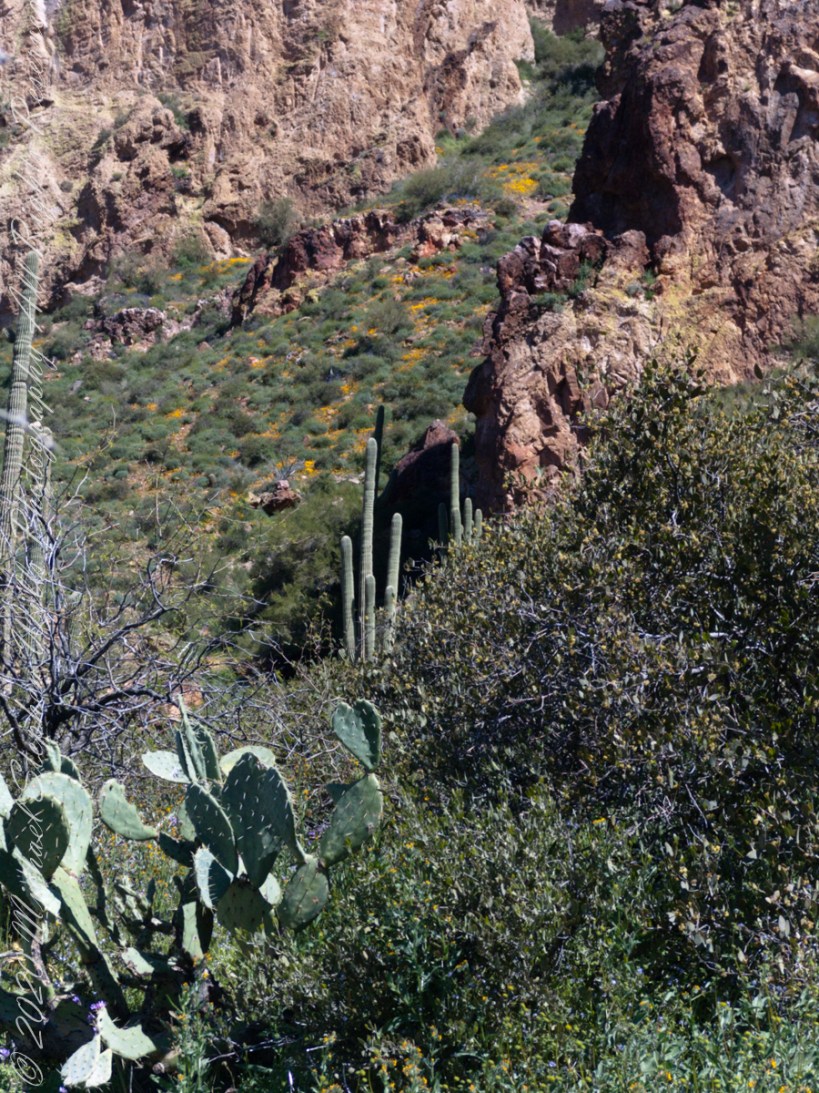
Step into the heart of the Sonoran Desert with me, where the saguaro cactus stands as a timeless giant, a symbol of resilience and beauty. This majestic sentinel of the Southwest is not just a plant; it’s a vibrant ecosystem and a cultural icon, embodying the spirit of endurance. Let’s explore its centuries-long journey, its role as a haven for desert wildlife, and its deep significance to the indigenous peoples. Join me in celebrating the saguaro’s enduring legacy, a narrative of survival and the profound beauty of life in the harshest conditions.
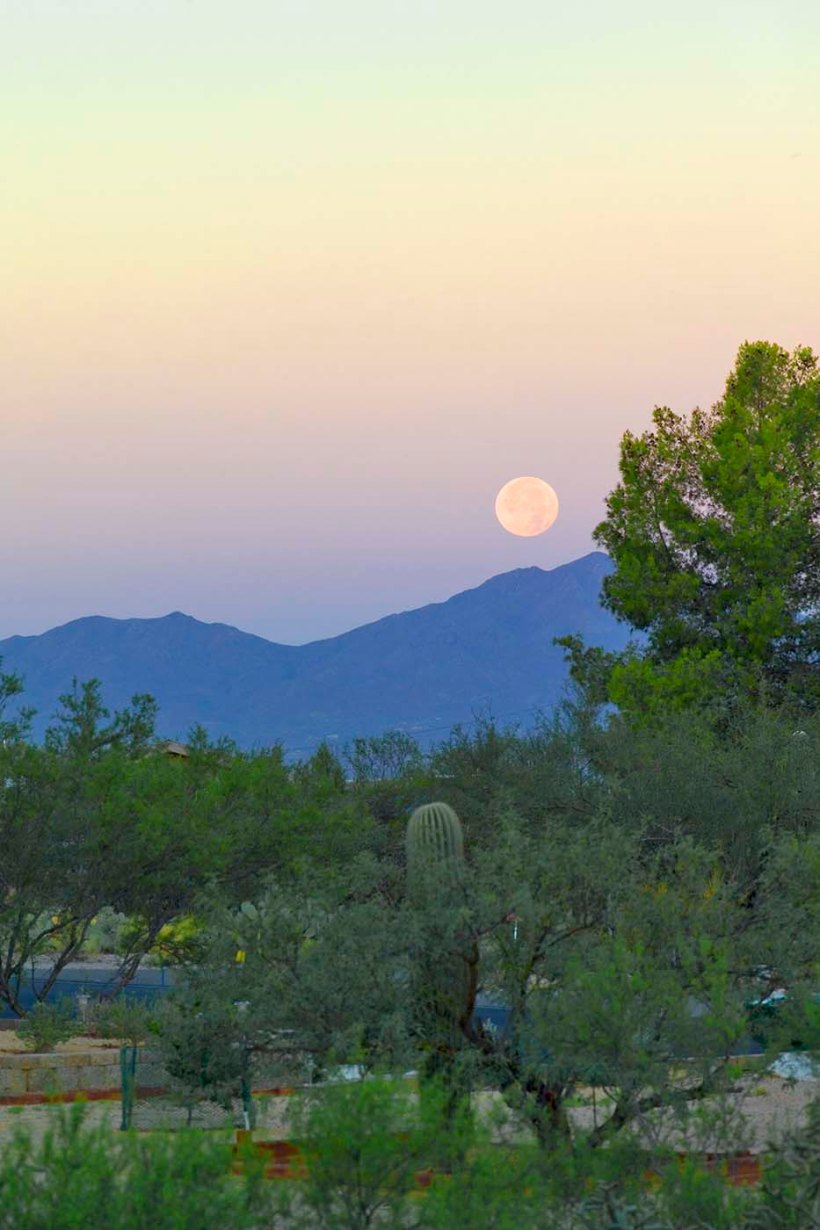
Join me in exploring the depths of “Hamlet,” where the phrase “revisits thus the glimpses of the moon” unveils a world where the supernatural meets the mysterious moonlight. Let’s unravel this imagery together, reflecting on life’s transient beauty, seeking understanding, and contemplating the cycles of change under the moon’s spell.
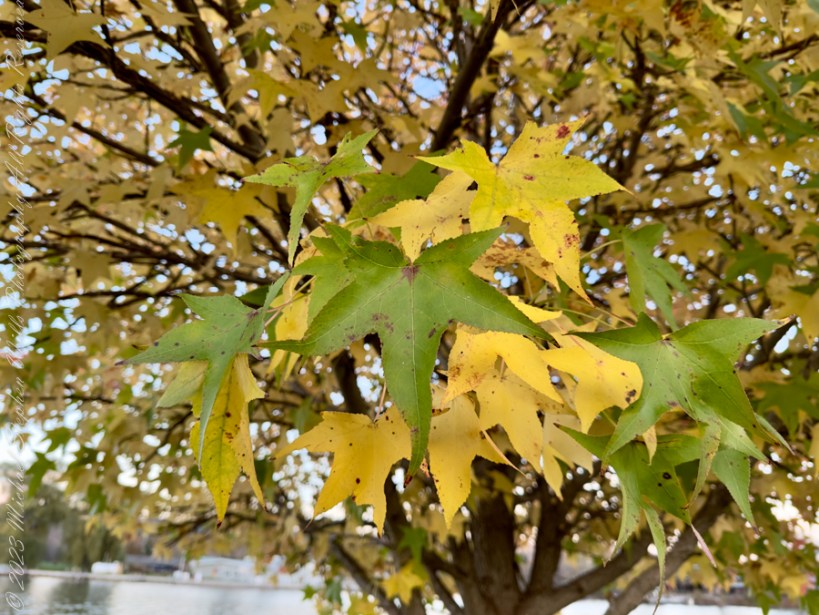
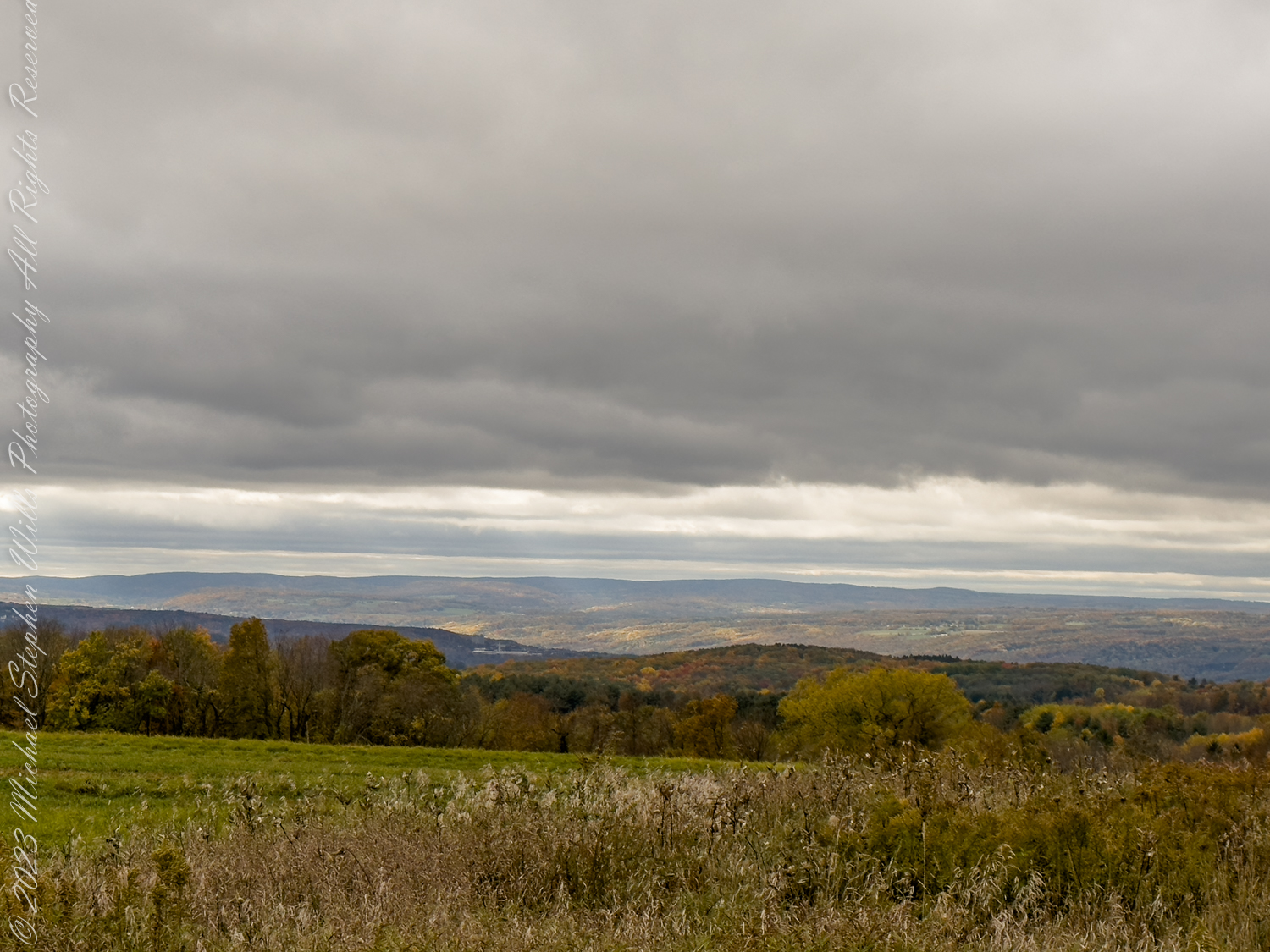
Fillmore Glen State Park in Moravia, New York, offers a changing landscape that serves as a living canvas, with the ironically named Dry Creek feeding its lush greenery. The ebb and flow of water from the creek creates a dynamic setting. Seasons dramatically alter the scenery, from tranquil springs to vibrantly colored autumns, beautifully captured through fine art photography.
As the sun dipped lower, casting its farewell in hues of amber and soft gold, Pam and I stood beside the serene Cayuga Lake Inlet, gazing westward. The stillness of the evening was a quiet symphony, punctuated only by the gentle lapping of water against the shore. It was November 5th, and the world seemed to hold its breath in the golden hour, that perfect moment minutes before the sun would bid its final adieu for the day.
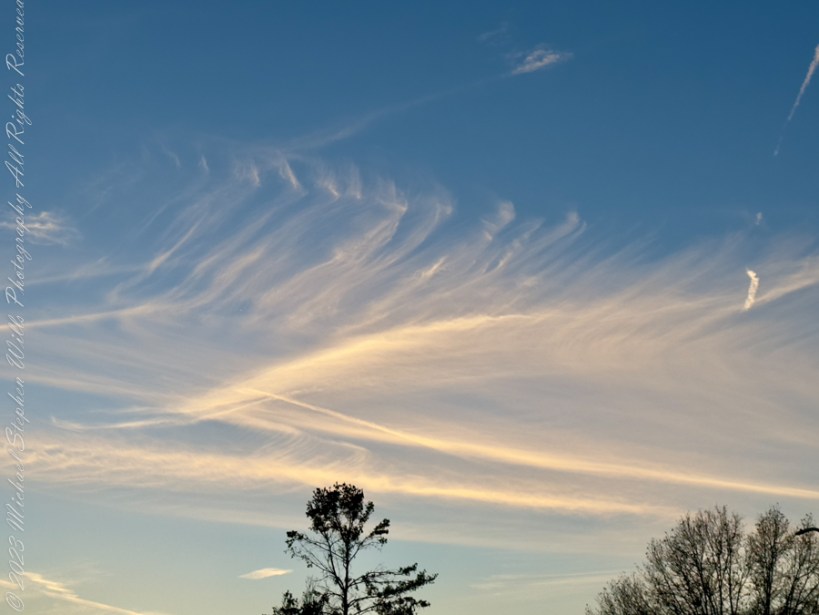
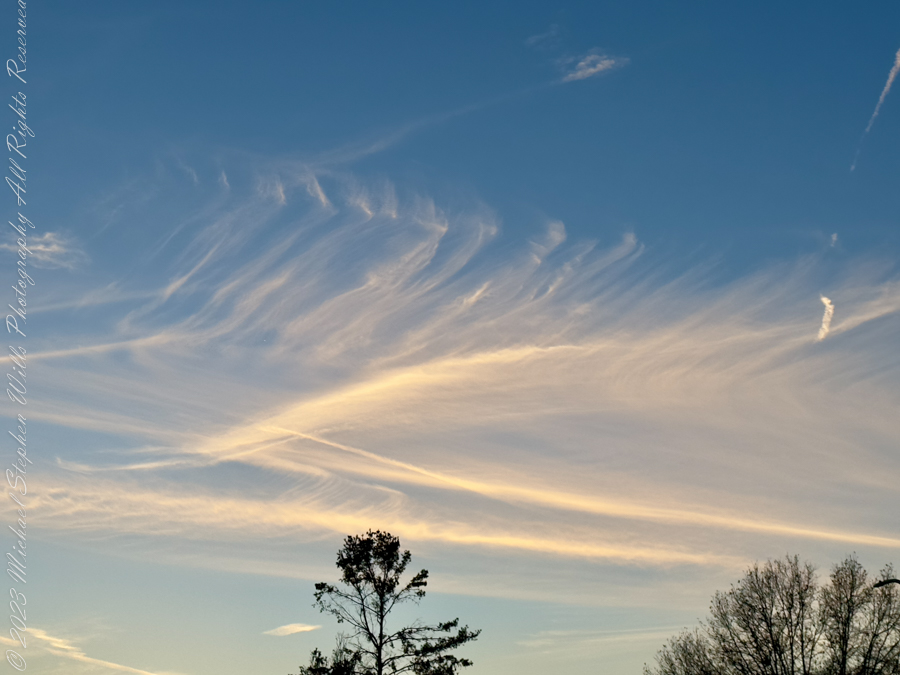
Above us, the sky was a canvas of nature’s delicate brushwork – the Cirrus fibratus. These high-altitude clouds, ethereal and wispy, stretched across the sky like strands of silken thread. The cirrus clouds, the feathery remnants of far-travelled storms, are the poets of the atmosphere, telling tales of weather yet to come. Their presence was both a testament to the day’s tranquility and a harbinger of change looming on the horizon.
Taken with the Apple IPhone 14 ProMax, raw format
Cloud Lore
Cirrus fibratus clouds, in their striated splendor, often signal the approach of a warm front and are associated with the shifts in weather patterns. As we stood there, the clouds seemed to be etching the sky with messages in a cryptic script, hints of the coming days. These clouds, so high in the sky, are formed from ice crystals, and their very existence speaks of the coldness of the upper atmosphere, as the days down here by the lake inlet lengthen towards the winter solstice.
The days of early November, with their crisp air and the promise of winter, bring a change in the light, a deepening of colors, and a certain clarity to the world. The skies seem grander, a vast dome of ever-changing artistry, and the Cirrus fibratus are our guides to the imminent transformation. They remind us that the earth is tilting away from the sun in our hemisphere, pulling us into the cooler seasons.
Eternal Change
These cirrus formations, while signaling the shifts in weather, also play with the light of the lengthening days. The sun’s rays, ever lower on the horizon, catch the ice crystals, creating a prism effect that can result in sundogs, those bright spots of light that occasionally grace the sky at solar dawn or dusk. They add a mystical quality to the already enchanted time of day.
As the twilight deepened, the Cirrus fibratus began to glow with the sun’s final touch, turning from white to shades of pink and fiery orange. This spectacle was a gentle reminder of the passage of time, the cycles of nature, and the endless dance between the earth and the sun. The clouds foretold of cooler weather, perhaps a sign that we should cherish these last vestiges of autumnal warmth.
As night began to embrace the sky, the clouds slowly faded from our sight, but the memory of their beauty and the secrets they carried lingered. They are not just ice and air; they are messengers, carrying the stories of the atmosphere from one part of the world to another, connecting us with the rhythms of the earth in their ceaseless journey.
Signs and Wonders
In the coming days, we would watch the sky, taking note of the cirrus and the subtle cues they offered. Would there be rain, a storm, or perhaps a clear day that belies the cold snap in the air? Only time would tell, but for now, we stood in silent appreciation of nature’s grace, feeling the profound connection to the world around us that only a sunset watched together can bring.
Ithaca’s bedrock, formed 370 million years ago, deeply influences its landscape, neutralizes rainwater’s acidity, and carries a story of Earth’s resilience and transformation.
In Ithaca, New York, the story of the land is deeply rooted in its geology. Beneath the vibrant autumn leaves and along the path of Lick Creek lies a bedrock formed 370 million years ago. This ancient foundation, once the sediment of a vast inland sea, now forms the solid base upon which the city stands.
The bedrock here is a silent witness to Earth’s long history. Originating in the Devonian period, it marks a time when vast seas covered much of the Earth’s surface. Within these ancient waters, life flourished, leaving behind sediments that, over eons, transformed into the layered rock beneath Ithaca.
These layers are more than just historical records; they actively shape the landscape. The bedrock influences soil composition, affects plant growth, and directs the flow of streams. Lick Creek, with its clear waters, is one such stream that interacts intimately with this bedrock.
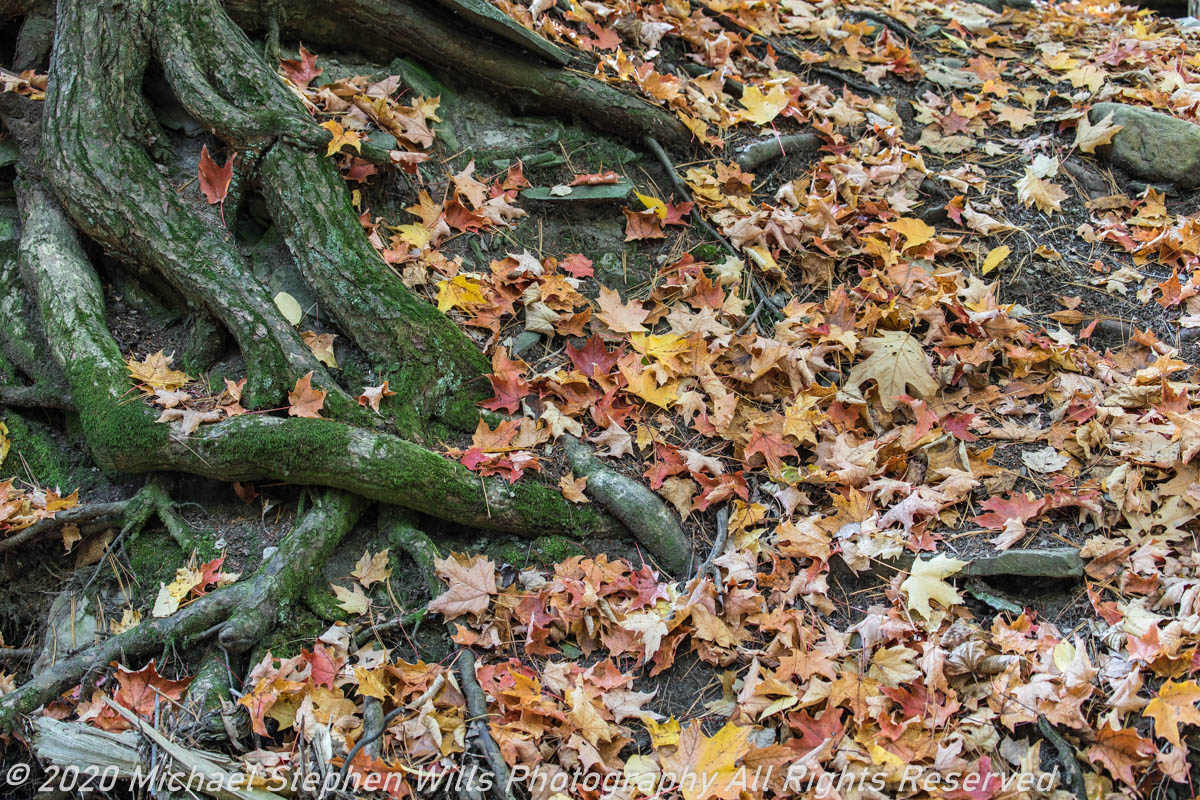
In autumn, the beauty of this interaction is vividly displayed. The red and yellow maple leaves create a striking contrast against the grey-blue backdrop of the bedrock, a blend of the vibrant present with the ancient past. These fallen leaves, over time, decompose and enrich the soil, continuing a cycle of life that this bedrock has supported for millions of years.
This bedrock also plays a crucial role in water chemistry. As acidic rainwater percolates through it, a remarkable transformation occurs. The bedrock naturally neutralizes the acidity of the rainwater. By the time the water emerges as streams, it is buffered to a neutral pH. This process is vital for maintaining the ecological balance of the area. The streams that flow out, including Lick Creek, support diverse ecosystems thanks to this natural filtration process.
Click photograph for larger view. Use combination keys to enlarge/reduce: Ctrl+ (Control / Plus) and Ctrl- (Control / Minus)
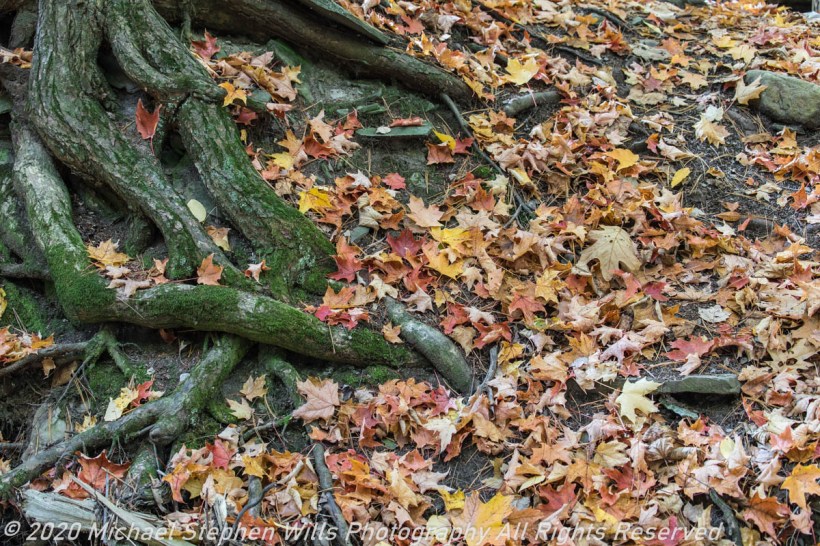
The bedrock on which Lick Creek flows formed 370 million years ago from sediment of a vast inland sea, making a soothing grey-blue backdrop to this year’s autumn foliage.
The neutral pH water is crucial for the flora and fauna of Ithaca. It sustains the forests, the wildlife, and the natural beauty that defines the region. This water, once acid rain, purified by the ancient bedrock, now nurtures life in its journey.
In Ithaca, the bedrock is a testament to the enduring nature of our planet. It reminds us of the continuous cycle of transformation that defines the Earth. The contrast of the autumn leaves against the bedrock is not just a scene of ephemeral beauty; it symbolizes the dynamic interplay between the living and the geological, between the present and the deep past.
The bedrock of Ithaca, with its ability to neutralize acidic water, highlights the interconnectedness of natural processes. It shows how the Earth self-regulates and sustains life in intricate ways. As the buffered, neutral pH water of Lick Creek flows over this bedrock, it carries with it the story of a planet that is constantly renewing and sustaining itself.
In this landscape, the past is not just a memory; it is an active participant in the present. The bedrock, the autumn leaves, and the flowing streams tell a story of resilience, continuity, and the beauty of nature’s balance. This is the legacy of Ithaca’s bedrock, a legacy of endurance, transformation, and life.
Maple leaves and hemlock roots share an environment yet play distinct roles in the ecosystem. Maple leaves, broad and vibrant, capture sunlight. This process fuels their growth and contributes to the air we breathe. Each fall, these leaves turn yellow and brown, signaling a natural change. They fall, joining the forest floor. Here, they decompose, becoming part of the soil. This enriches the earth, supporting new plant life.
Hemlock roots anchor these mighty trees. Reaching deep into the soil, drawing up water and nutrients. These roots also stabilize soil, preventing erosion and are a network, unseen but vital, connecting the tree to its environment.
Click photograph for larger view. Use combination keys to enlarge/reduce: Ctrl+ (Control / Plus) and Ctrl- (Control / Minus)
These natural processes have parallels in human generations. Like the leaves, each generation has its time in the sun. People grow, contribute to their world, and then make way for the next. The knowledge and experiences they leave behind enrich the lives of those who follow, much like fallen leaves nourish the soil.
Similarly, the hemlock roots parallel the foundational elements of human society. Traditions, cultures, and values are passed down, anchoring each new generation. They provide stability and nourishment, helping to guide growth and development.
Over time, just as the forest evolves through the cycles of leaves falling and roots growing, human societies change. Each generation builds upon the last, growing in the richness left behind. This ongoing cycle speaks to the resilience and interconnectedness of life, whether in a forest or in human communities.
In both nature and human experience, there is a rhythm of growth, contribution, and renewal. The falling of maple leaves, and the steadfastness of hemlock roots illustrate this beautifully, reminding us of the continuity and change inherent in all living systems.
Hartung–Boothroyd Observatory is a leading educational facility, aiding in the study of astrophysics, tracking asteroids, and fostering diverse academic collaborations.
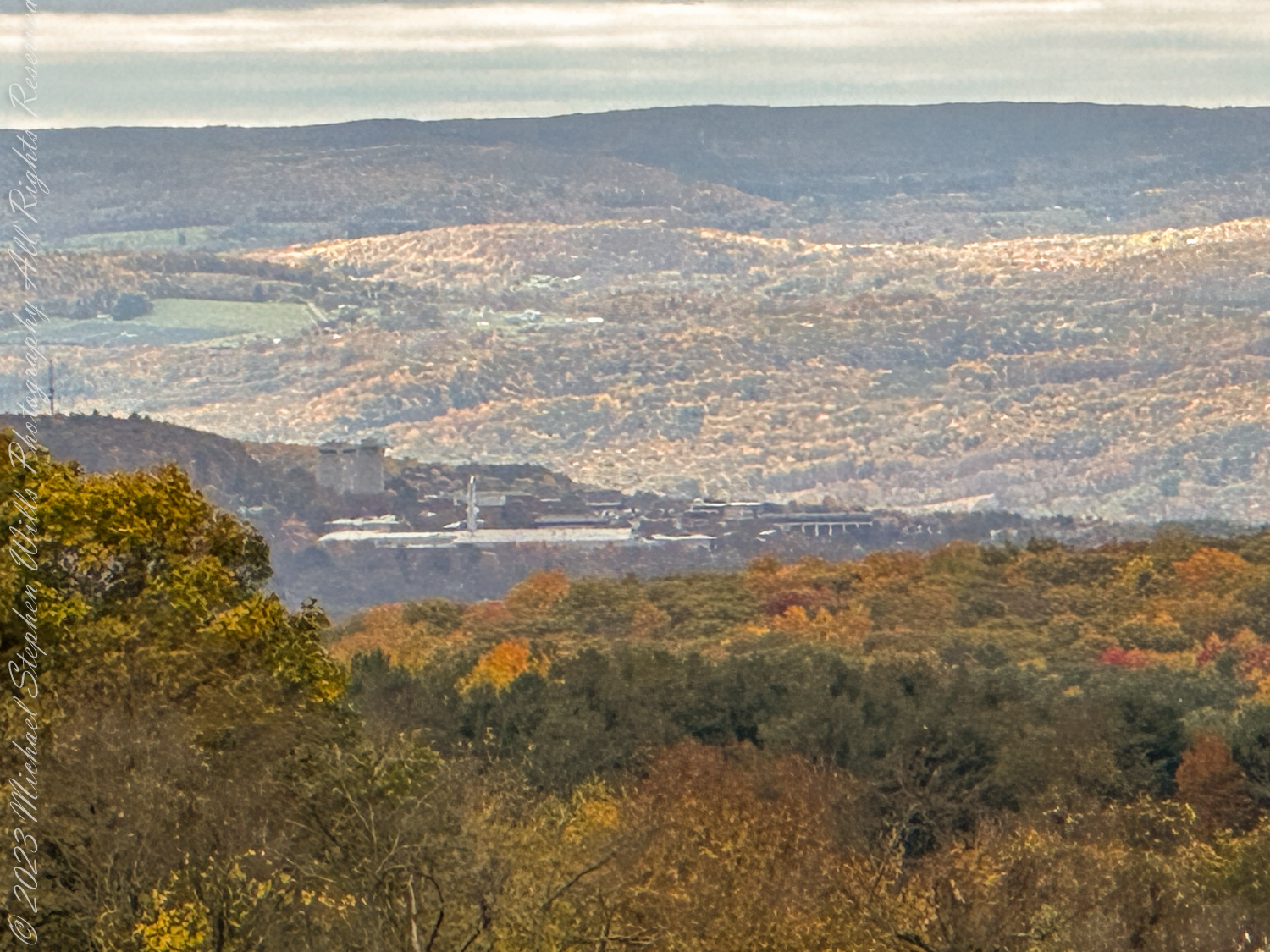
Perched on Mount Pleasant in the town of Dryden, New York, the Hartung-Boothroyd Observatory (HBO) stands as a testament to the celestial curiosity that Cornell University has nurtured for decades. It is a gateway to the stars, a place where the heavens unfold in wondrous detail to the eyes of astrophiles and the lenses of powerful telescopes.
The observatory is home to a reflecting telescope, one of the largest in New York State dedicated to both education and research. This remarkable instrument, housed under a retractable dome, has provided students and researchers with direct experience in astronomical observations since its establishment in 1974.
HBO isn’t just an observatory; it is a bridge between the terrestrial and the cosmic. It represents an educational philosophy that values direct engagement with the subject of study. Undergraduates, graduates, and faculty members flock to the facility to engage in projects that range from studying variable stars and exoplanets to tracking asteroids. Here, theoretical astrophysics meets the tactile world, allowing for an integrated understanding of the universe’s complexities.
Are images are from a handheld Apple Iphone 14 ProMax, raw files edited on camera and then from Adobe Lightroom.
It is used mainly as a Cornell University (Ithaca, New York) teaching facility for upper-level astronomy classes. The observatory is named financial contributions of M. John Hartung ’08 (chemical industrialist and donor) and in honor of the labor of Samuel L. Boothroyd (founding professor and chairman of astronomy 1921–1942). The telescope construction began in the 1930s and the observatory was dedicated in 1974. It contains the James R. Houck 60 centimeter telescope and various instruments.
View east from Cornell University’s Hartung–Boothroyd Observatory
The James R. Houck telescope at HBO was a project initiated by its namesake in 1972, using optics and a lightweight tube which had been fabricated in the late 1930s by Samuel T. Boothroyd, Cornell’s first astronomer, and a mounting constructed by George Gull ’72 as his senior design thesis in Mechanical Engineering.
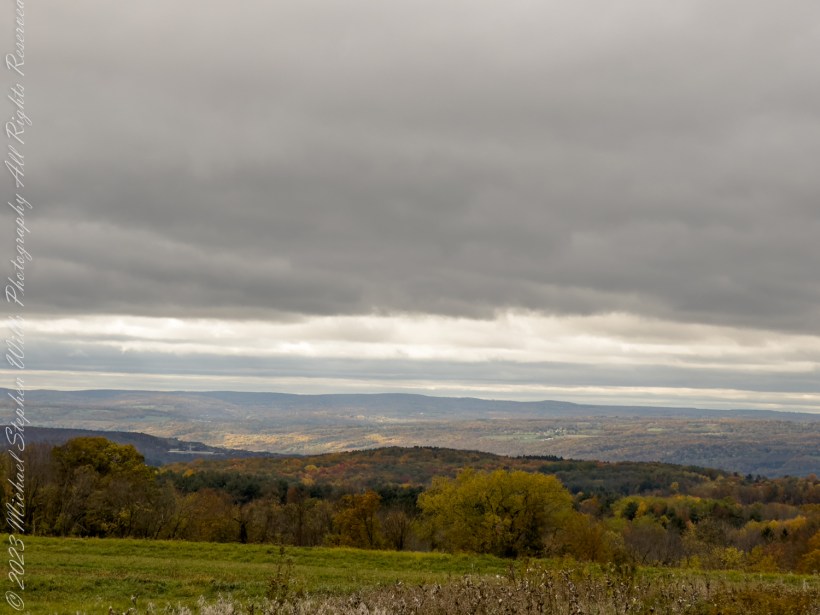
View southwest toward Ithaca College
The telescope, control electronics and instruments are largely the result of work done by undergraduates since 1970. It was manufactured by the students at the Tompkins, Tioga and Seneca BOCES and by Therm, Inc., with mirror coatings by Evaporated Metal Films corporation, all in Ithaca. The latter corporation was founded by members of Boothroyd’s scientific team, as he pioneered the use of evaporated metal coatings in astronomical optics. The telescope and observatory were dedicated in 1974.
View southwest toward Ithaca College I zoomed in to see the residential towers.
The primary mirror is made of Pyrex from the Corning Glass Works and is in fact from a 1/8-scale test pour by the Corning company in preparation for the making of the 200″ Palomar mirror. It is 0.635 m (25 inches) in size, but the outer half inch is masked. The focal length of the mirror is 2.5m (100″) or f/4.
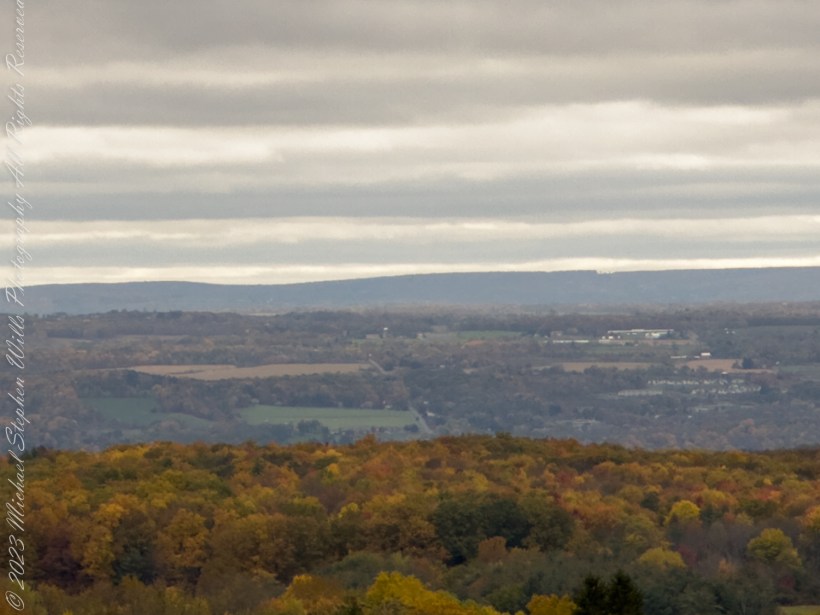
View southeast toward Hammond Hill
The Cassegrain design of the James R. Houck telescope is a combination of a primary concave mirror and a secondary convex mirror, often used in optical telescopes, the main characteristic being that the optical path folds back onto itself, relative to the optical system’s primary mirror entrance aperture. This design puts the focal point at a convenient location behind the primary mirror and the convex secondary adds a telephoto effect creating a much longer focal length in a mechanically short system.
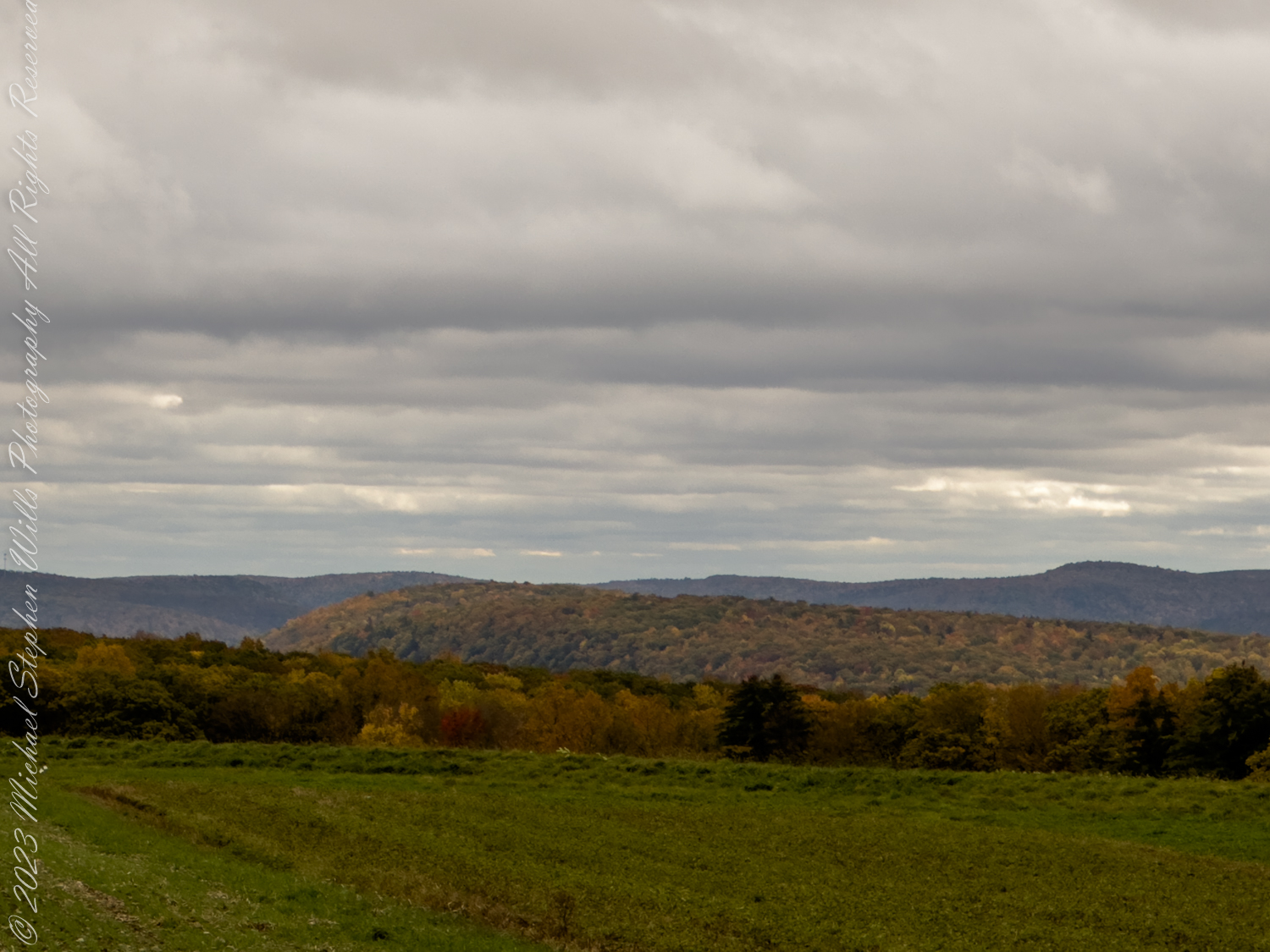
View south
The secondary is an 8″ mirror made of Cervit (a low thermal coefficient material). In combination with the primary, it yields a final f/13.5 beam to the nominal focus, which lies 18.5″ behind the primary mirror’s vertex. At nominal focus, the plate scale is about 24 arcsec/mm, with an effective focal length of 8.57 m.
View southwest toward Ithaca College
The telescope, control electronics and instruments are largely the result of work done by undergraduates since 1970. It was manufactured by the students at the Tompkins, Tioga and Seneca BOCES and by Therm, Inc., with mirror coatings by Evaporated Metal Films corporation, all in Ithaca. The latter corporation was founded by members of Boothroyd’s scientific team, as he pioneered the use of evaporated metal coatings in astronomical optics.
The dome itself, like all professional observatories, is unheated. The telescope and instrumentation can be controlled from a neighboring control room which is heated and offers standard amenities plus several computers for simultaneous data reduction.
The observatory was founded by James Houck and managed by him through 2006. The principal contact is Don Barry, who managed the facility from 2006-2015, and taught Experimental Astronomy using the facility.
“Graduates” of the HBO project are now senior engineers and technical managers as well as graduate students, research associates and faculty at major universities.
Moreover, the observatory is a beacon for interdisciplinary collaboration. It’s not uncommon to find astronomers working alongside computer scientists, engineers, and educators. This cross-pollination of ideas enhances the potential for innovation, fostering new techniques in data analysis, instrument design, and educational methods. The observatory’s role extends beyond its primary function; it is a hub of convergence for diverse academic disciplines, all under the umbrella of exploring the unknown.
HBO also contributes to the global astronomical community through its research. The data collected here feed into larger networks of observation and analysis, aiding in the collective endeavor of mapping and understanding the universe. Its strategic location in upstate New York, away from the light pollution of large urban centers, grants it relatively clear night skies, making it an invaluable resource for both optical astronomy and astrophotography.
In an era where space exploration has captured the public imagination like never before, observatories such as the Hartung-Boothroyd are more crucial than ever. They serve as terrestrial launchpads, propelling minds into the realm of scientific inquiry. Here, the vastness of space becomes approachable, the mechanics of the cosmos decipherable, and the mysteries of the universe a little less mysterious.
As the night falls and the stars emerge, the Hartung-Boothroyd Observatory continues its silent vigil over the heavens. It stands as a beacon of knowledge and discovery, an educational catalyst, and a gateway to the stars. For the students and astronomers who work from this dome on Mount Pleasant, HBO is more than an observatory—it is a vessel navigating the infinite ocean of the night sky, a journey that begins in the heart of Cornell University and extends to the edges of the observable universe.
Ferns, ancient plants with unique reproduction strategies and ecological significance, adapt to diverse environments while contributing to overall biodiversity and human culture.
In the vast tapestry of the plant kingdom, ferns occupy a unique and enduring place. These ancient plants, often overlooked in favor of their flowering counterparts, have a fascinating and seemingly eternal existence that spans millions of years. Ferns, with their lush green fronds and distinctive reproductive mechanisms, offer us a glimpse into the enduring legacy of life on Earth and the remarkable adaptations that have allowed them to persist through the ages.
Walking Up A Leaf Strewn Dry Creek to find….
Ferns belong to the group of plants known as Pteridophytes, which evolved more than 360 million years ago during the late Devonian period. Their evolutionary history predates the appearance of flowering plants, making ferns some of the oldest living organisms on our planet. This remarkable longevity raises the question: how have ferns managed to survive and thrive for so long?
One key to the success of ferns lies in their unique reproductive strategy. Unlike flowering plants that produce seeds, ferns reproduce via spores. These small, dust-like structures contain the genetic material necessary for ferns to reproduce. When mature, ferns release spores into the environment, where they can be carried by the wind or water to new locations. Once a spore finds a suitable environment, it can germinate and develop into a new fern plant.
The spore-based reproduction of ferns is not only ancient but also highly efficient. It allows ferns to colonize diverse habitats, from moist, shaded forests to arid deserts. Additionally, ferns can form extensive networks of underground rhizomes, which are creeping stems that give rise to new fronds. This vegetative propagation further contributes to their resilience and adaptability.
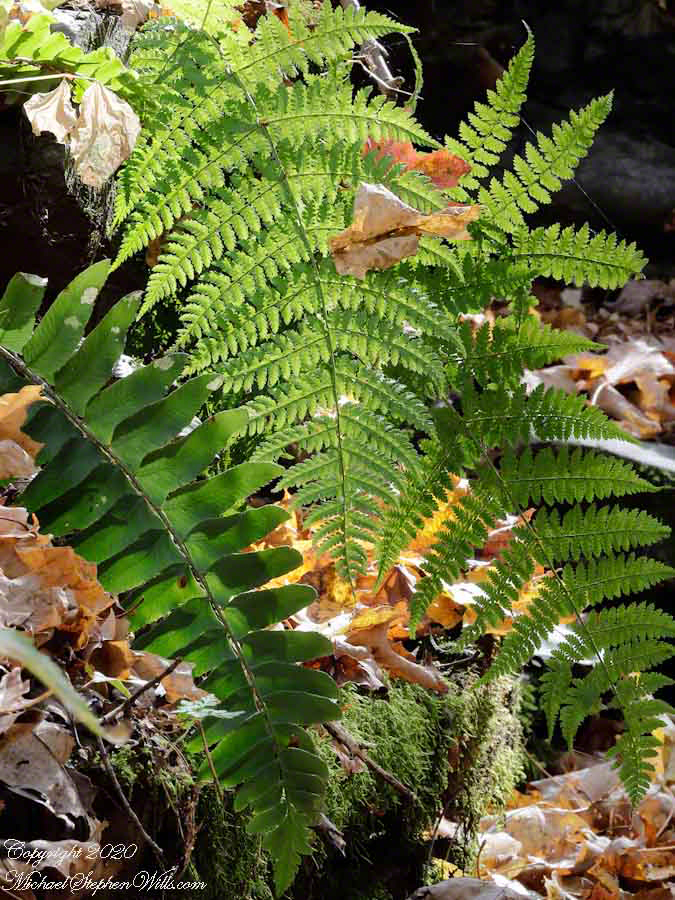
Ferns have also developed a range of adaptations that enable them to thrive in various environmental conditions. Some fern species, such as the resurrection fern (Pleopeltis polypodioides), can endure extreme desiccation. When conditions are dry, these ferns curl up and appear dead, but they can quickly revive and unfurl their fronds when moisture returns. Backpacking through mountainous Arizona wilderness I encountered small ferns growing in the shade of rock ledges, maybe this was Phillips Cliff Fern (Woodsia phillipsii). My guide called it “Ridgeline Fern” and claimed it was important for desert survival, could be eaten in extremis situations. This remarkable ability to withstand drought and promote human survival is a testament to the tenacity and usefulness of ferns.
...a backlit fern frond.
Another intriguing aspect of ferns is their mutualistic relationship with mycorrhizal fungi. These fungi form symbiotic associations with fern roots, aiding in nutrient absorption and enhancing the fern’s ability to thrive in nutrient-poor soils. This partnership has likely contributed to the fern’s ability to colonize a wide range of habitats and compete with other plant species.
While ferns have proven to be resilient survivors, they have also played a crucial role in shaping Earth’s ecosystems. Ferns are often early colonizers in disturbed or newly formed habitats, and their presence can help stabilize soils and create conditions suitable for the establishment of other plant species. In this way, ferns contribute to the ecological succession and overall biodiversity of ecosystems.
Beyond their ecological significance, ferns have captured the human imagination for centuries. Their delicate and intricate fronds have inspired art, literature, and even garden design. Many garden enthusiasts cultivate ferns for their ornamental beauty and unique charm.
In conclusion, the eternal life of ferns is a testament to the remarkable adaptability and resilience of these ancient plants. Their longevity, dating back millions of years, serves as a reminder of the enduring nature of life on Earth. Ferns have evolved unique reproductive strategies, adaptations to various environments, and mutualistic relationships that have allowed them to persist and thrive. Whether they are serving as pioneers in newly formed habitats or gracing our gardens with their elegance, ferns continue to capture our fascination and enrich the natural world. Their legacy reminds us of the intricate and interconnected web of life that has persisted on our planet through the ages.
Copyright 2023 Michael Stephen Wills All Right Reserved MichaelStephenWills.com
The red berries of the Jack-in-the-Pulpit plant play a key role in seed dispersion, wildlife sustenance, and fueling its energy storage organ, the corm.
As the crisp air of autumn settles in and the leaves begin their spectacular transformation into hues of red, orange, and yellow, the forest floor comes alive with a myriad of hidden wonders. Among these wonders, the Jack-in-the-Pulpit (Arisaema triphyllum) stands out for its striking red berries and the role they play in the fall glory of the woodland ecosystem. In this essay, we will explore the beauty and significance of these red berries and how they are intrinsically linked to the plant’s corm.
Equipped with a Canon dslr / variable lens and Manfrotto carbon fiber (light) tripod, these macro still lifes were possible by keeping to shadow pools on a cloudless early October weekday
The Jack-in-the-Pulpit, a native perennial herbaceous plant of North America, is known for its distinctive appearance, featuring a hood-like structure known as the spathe and a tall, slender stalk called the spadix. It is during the fall season that the plant’s fascinating red berries make their appearance, contrasting vividly against the backdrop of autumn’s colors. These berries are the result of a process that begins in the spring, when the plant first emerges from its underground corm.
Throughout the growing season, the Jack-in-the-Pulpit devotes its energy to producing these striking red berries, which serve several important ecological functions. The red berries are not only visually appealing but also function as a means of reproduction for the plant. They contain seeds that, once mature, can be dispersed to establish new Jack-in-the-Pulpit plants. These seeds are often transported by animals that consume the berries, such as birds and rodents, which then disperse them in their droppings, contributing to the plant’s spread throughout the forest.
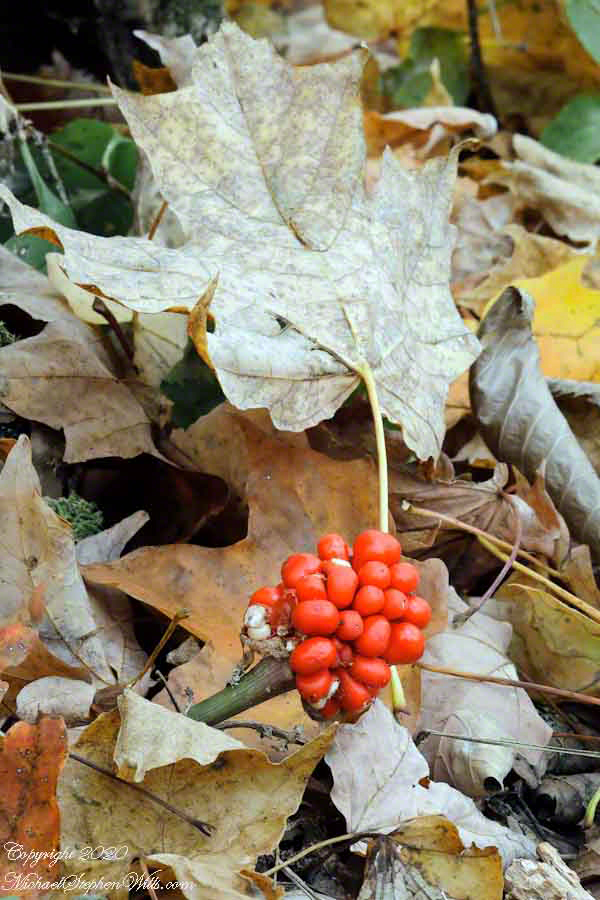
Jack-in-the-Pulpit Berries
The bright red color of the berries is a key feature that attracts birds, making them an essential food source during the fall and early winter months. Birds like thrushes, cardinals, and robins are known to feed on the Jack-in-the-Pulpit berries, aiding in seed dispersal while benefiting from the nutrient-rich fruits. This mutualistic relationship between the plant and its avian dispersers showcases the interconnectedness of the forest ecosystem, where each species relies on the other for survival and propagation.
The significance of the Jack-in-the-Pulpit’s red berries extends to the corm beneath the surface. The corm serves as an energy storage organ for the plant, helping it survive through the harsh winter months when the above-ground parts of the plant wither and die. During the fall, as the plant directs its energy toward producing berries, it also transfers nutrients to the corm, ensuring its vitality and readiness for the following spring.
Furthermore, the corm itself can serve as an energy reserve for the production of future berries and the growth of new shoots. As the plant enters dormancy, it relies on the stored energy in the corm to fuel its growth when conditions become favorable in the next growing season. In this way, the corm and the red berries are intricately linked, with the berries representing the culmination of a year-long process of energy accumulation and reproduction.
In conclusion, the red berries of the Jack-in-the-Pulpit are a captivating and vital component of the fall glory that graces our woodlands. Their vibrant color and ecological role in seed dispersal highlight the plant’s contribution to the forest ecosystem’s richness and diversity. Moreover, these berries are a testament to the interconnectedness of nature, as they are not only visually stunning but also an essential food source for wildlife. As we marvel at the beauty of fall and explore the wonders of the natural world, let us take a moment to appreciate the significance of the red berries of the Jack-in-the-Pulpit and their role in the intricate web of life that surrounds us.
Copyright 2023 Michael Stephen Wills All Right Reserved MichaelStephenWills.com