PeruRail to Machu Picchu IX

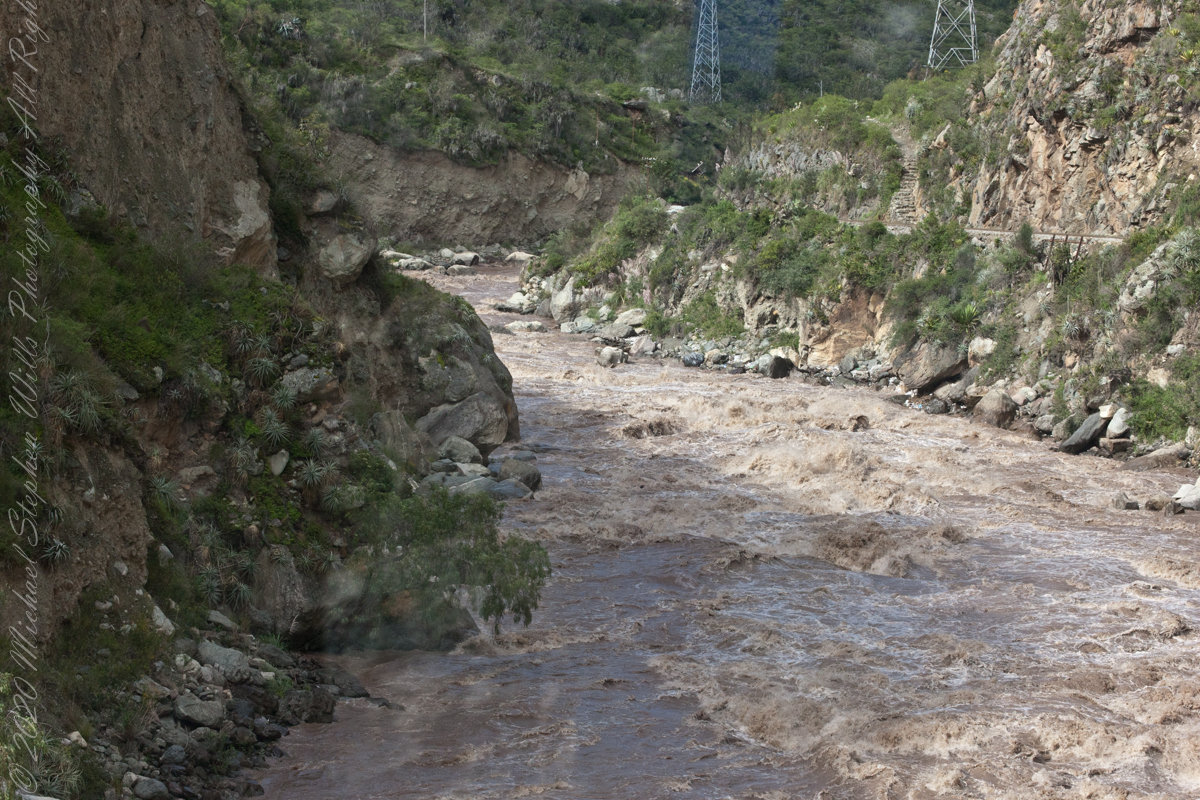
Urubamba River or Vilcamayo River (possibly from Quechua Willkamayu, for “sacred river”)

Click Me for my Online Gallery

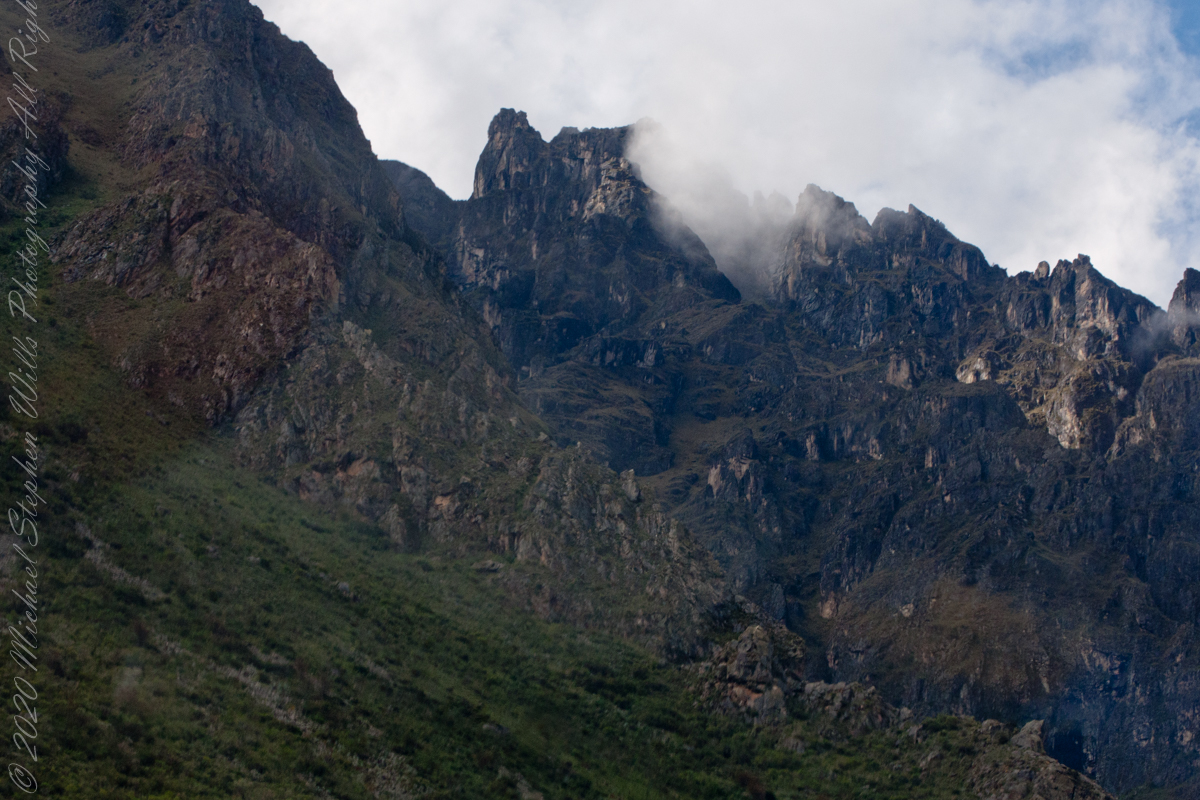
As we crossed the border of the Historic Sanctuary of Machu Picchu the valley walls rose steeply on either side, the land transitioning to rain forest.
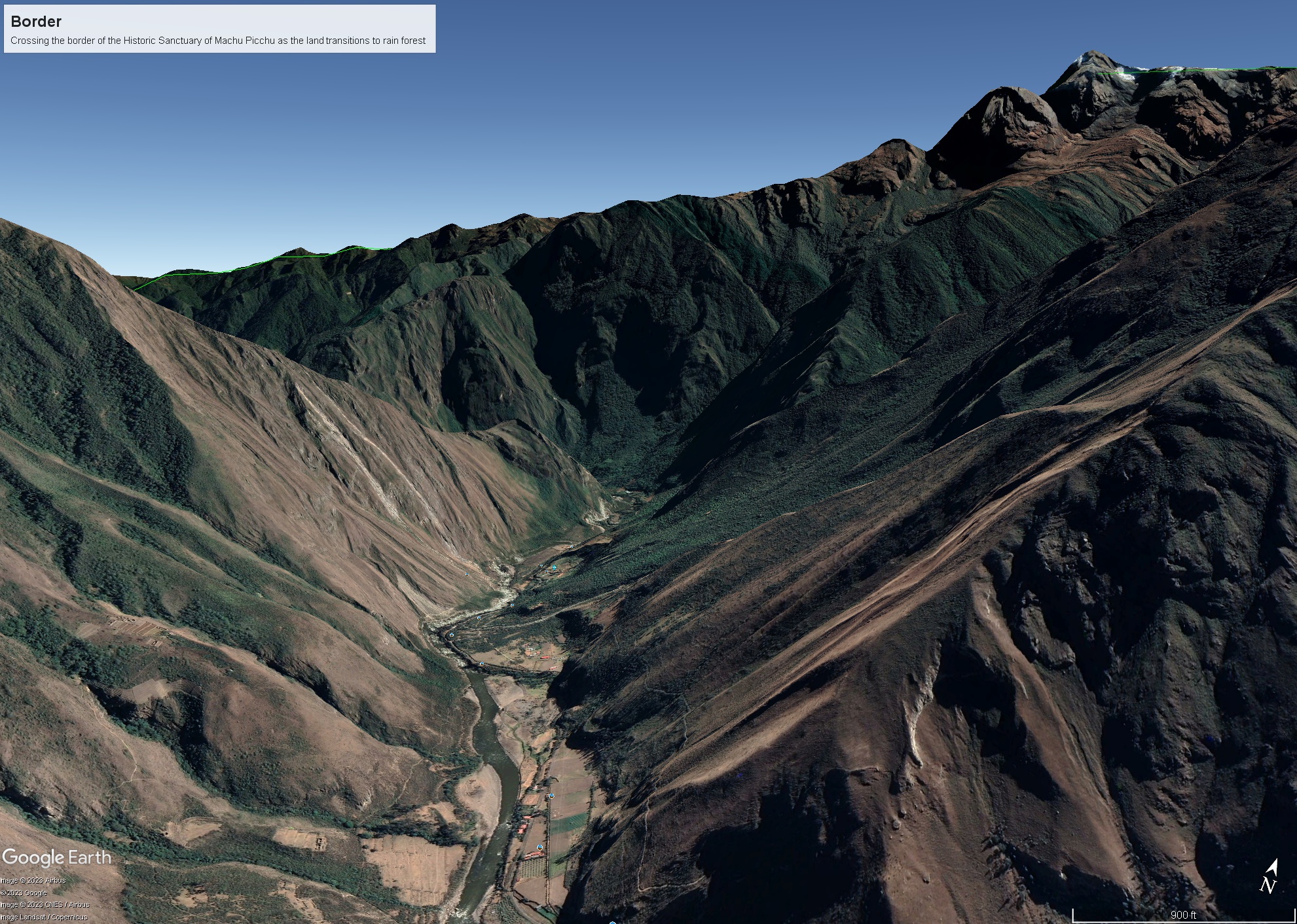
Google Earth We approach the border of the Historic Sanctuary of Machu Picchu

We entered a short tunnel through a mountain ridge, providing us this close view of the Urubamba River.
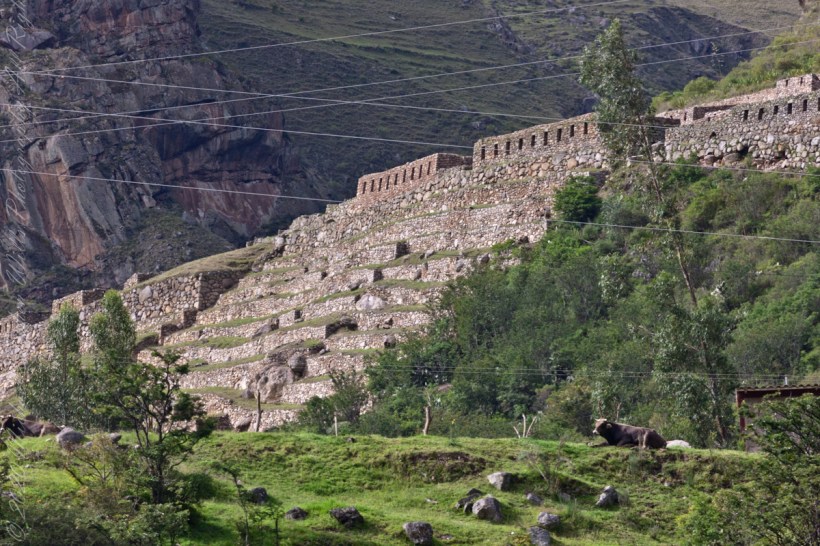
Next we came upon the Toronto Ruins.
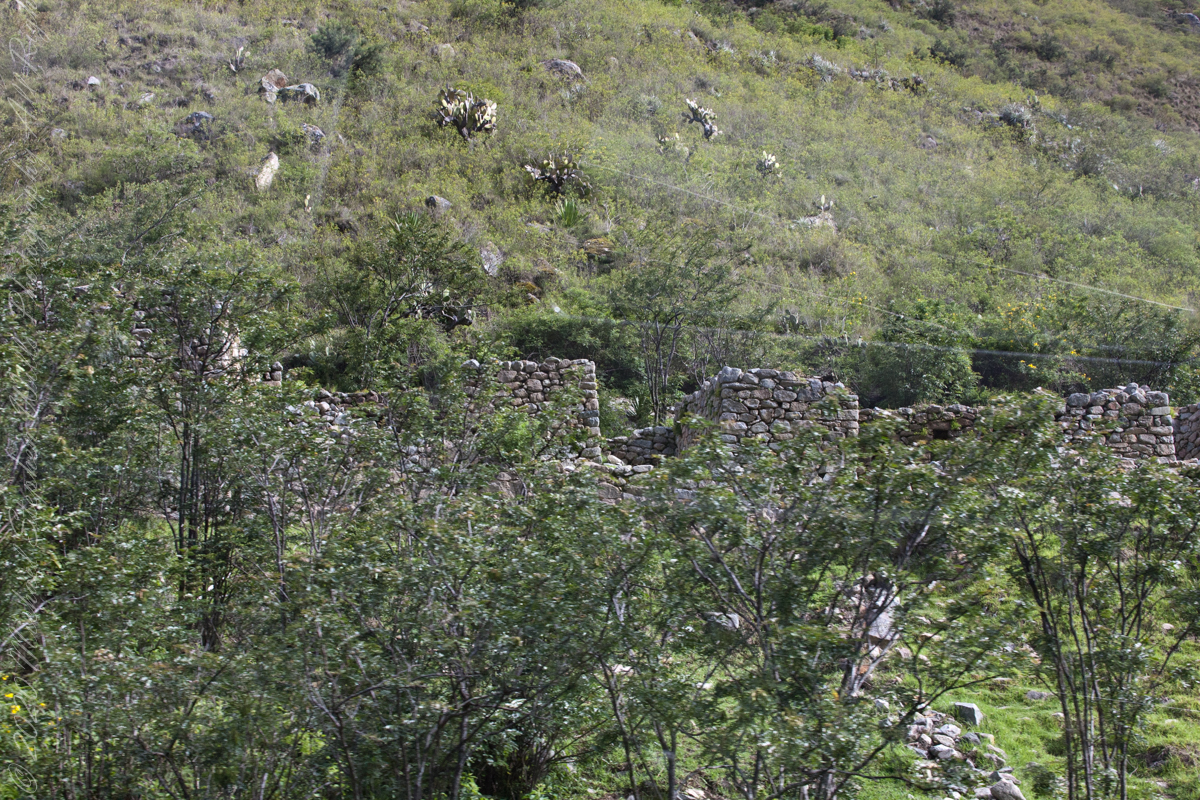
The Toronto complex includes seven (7) archaeological groups and is in front of the Q’ente Complex, separated only by the Urubamba River, possibly they were independent chiefdoms with a strong economic bond.
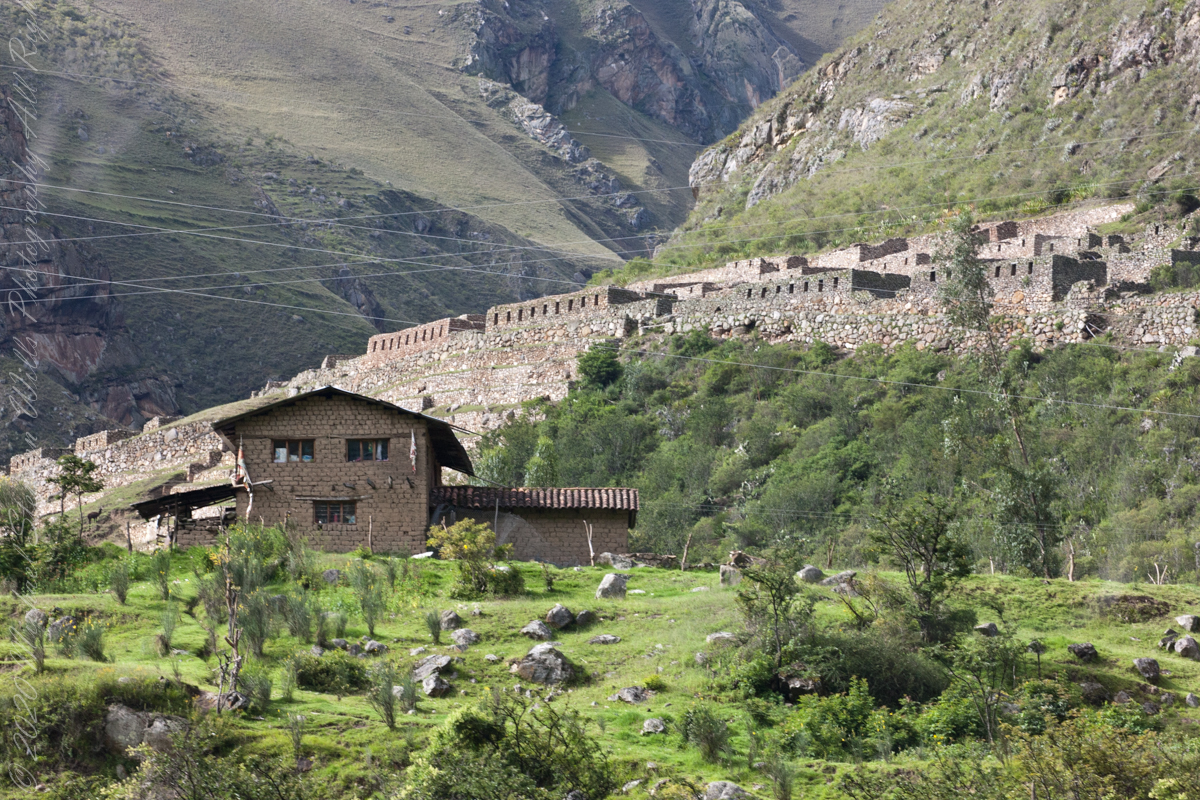
The seven (7) archaeological groups are Torontoy: The local farmers call it Inkaperqa or Inca raqay, alluding to what they see. In this place we can find a main doorway, several groups of enclosures, patios or free areas separating the buildings, vestiges of a liturgical bath and a central enclosure with a lithic piece of more than 40 angles that joins other twenty-eight pieces with exact interlocking in the joints.
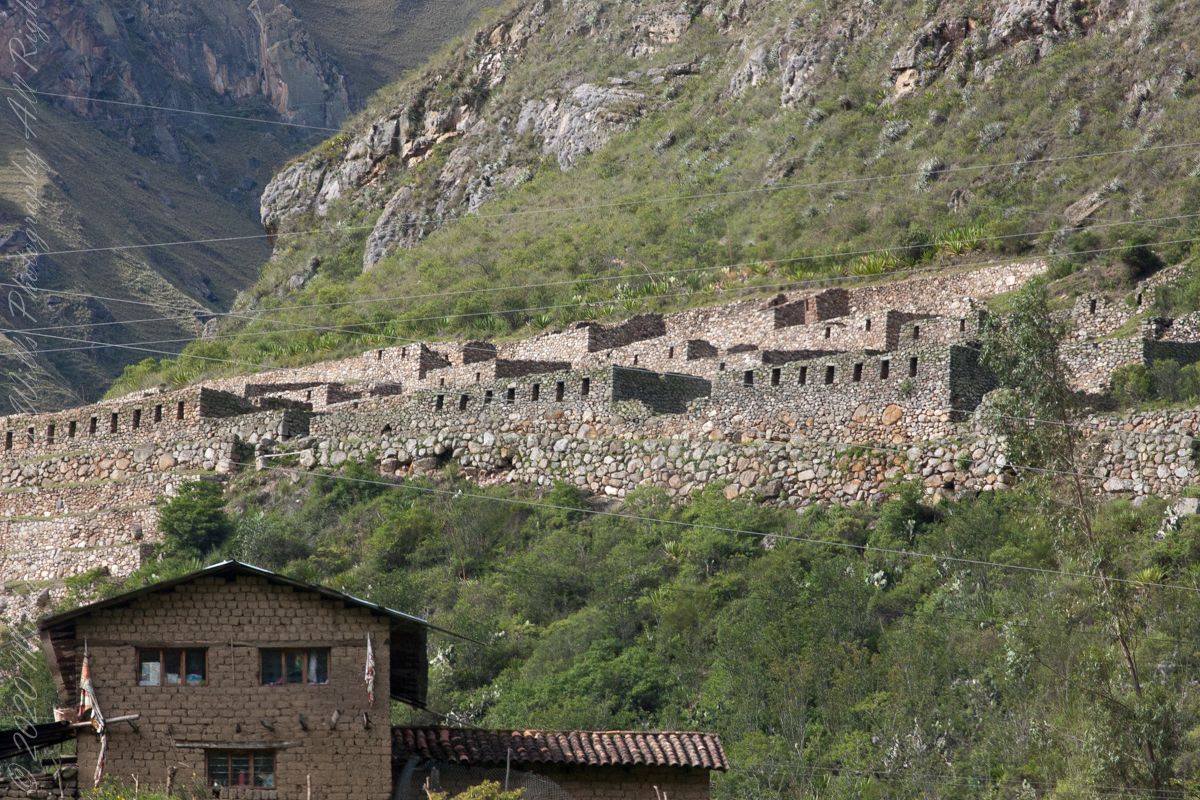
Salapunku: means hall door in the Inca language, because what is most obvious is a wide door that is on a platform that runs as a street in front of the wall. Behind the door we find cyclopean platforms and plains with remains of stairways, interior roads and remains of aqueducts. Qhanabamba translates to pampa where the grass “qhana” grows. It is at the height of Km. 85 of the railroad line. We can find a series of one-story buildings and a two-story building which is the largest. Wayrajpunku: meaning windy door (alluding to a windy place). In this group we find remains of buildings and a partially standing enclosure, there are vestiges of aqueducts, paths and overcrowding of canted stones that were part of constructions.
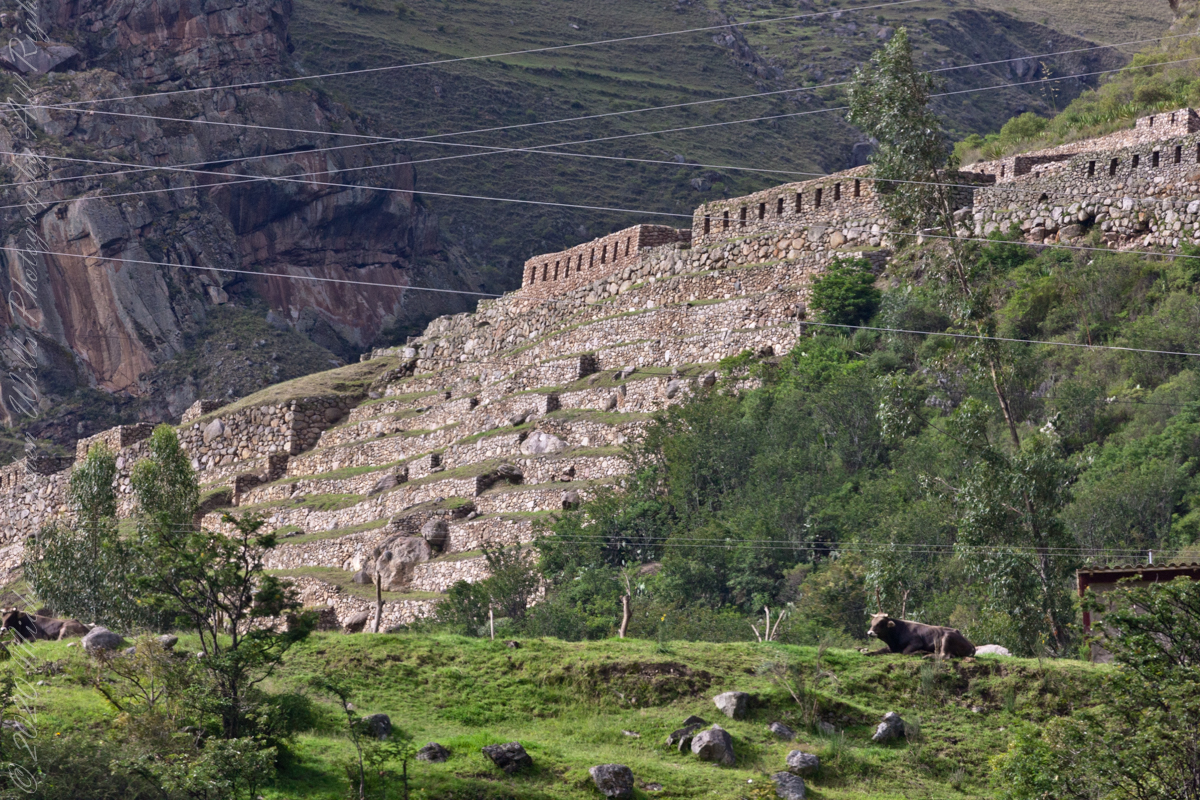
Pincha Unuyuj: Here were made the best hydraulic works of the zone, the crystalline waters that descend, appear channeled by wide lithic channels; also we find from the bank of the river a succession of parallel platforms, a road that leads to an adoratory carved in the rock insitu, ascending some houses and an observation tower. Qoriwayrachina It means gold winnowing. We can find the following: A huge staircase with more than one meter wide, semicircular ramparts, platforms as retaining walls and a vertical slope worked that is on the turbulent waters of the river.
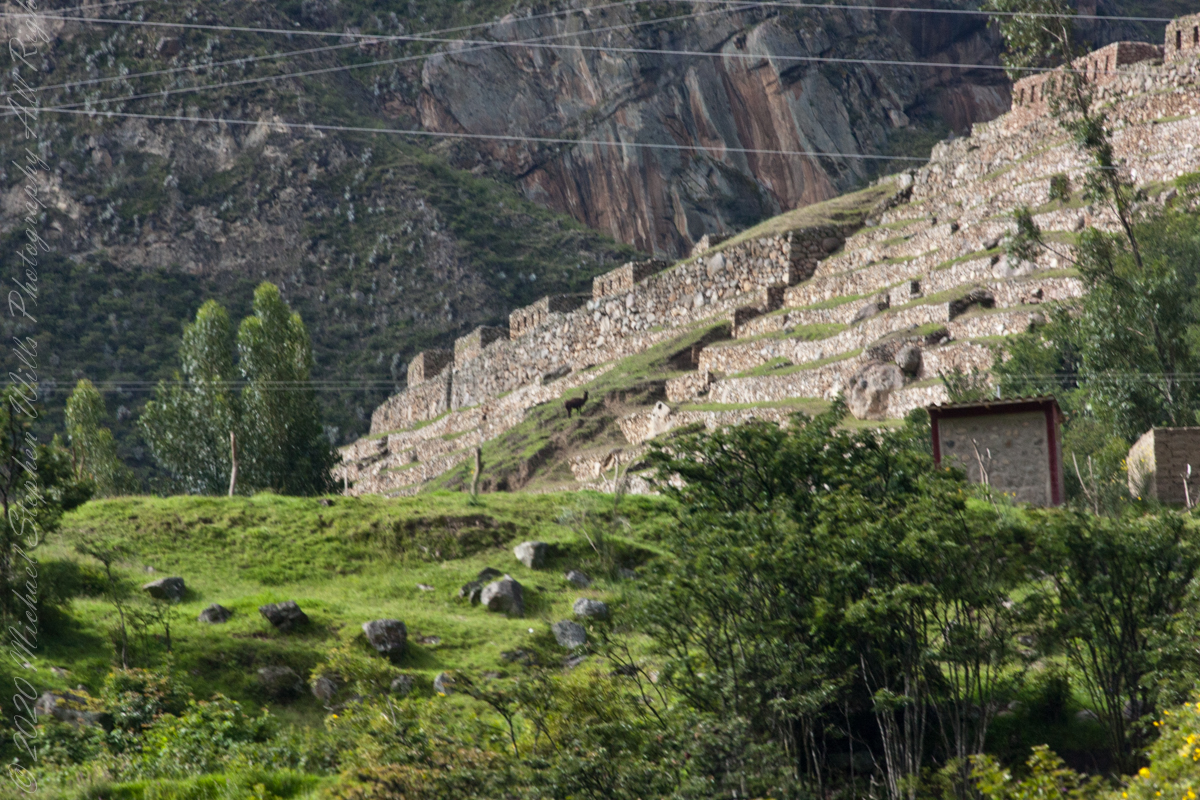
Retamayuj, having a broom, in this group we can find long platforms with semi-cyclopean walls, tombs that are desecrated at the base of the mountain and others intact. In 2008 A team from Peru’s National Institute of Culture (INC) working on the ruins of Torontoy in the Historic Sanctuary of Machu Picchu, discovered the tomb of an Inca with full funerary regalia. The gender and age of the tomb’s owner has not yet been determined but found with the body were a number of decorated ceramics and two pins.

Copyright 2023 Michael Stephen Wills All Rights Reserved

A Visit to Salado Ruins

Happy April First “this post is no joke”

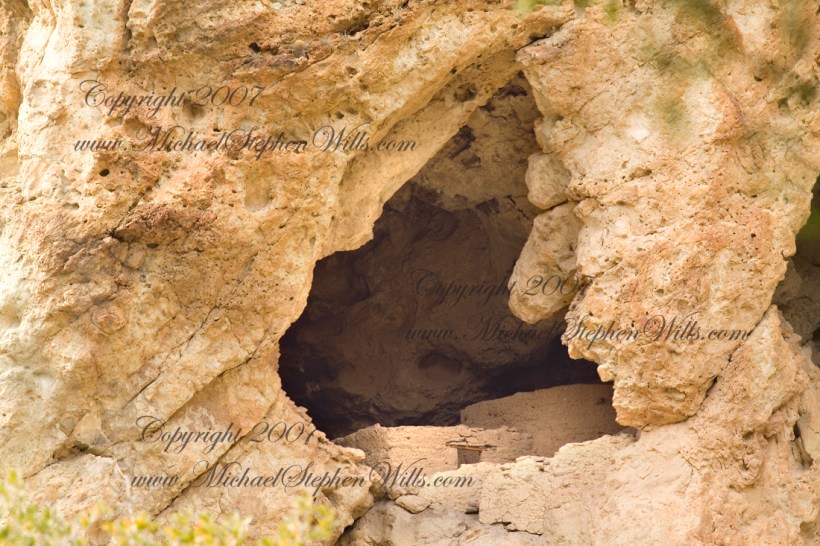
About 700 years ago, when the expansion of the Mongol empire was under way, on the other side of the planet people discovered a series of caves, formed in tuff, with a favorable location in a south facing cliff near water.  Tuff, a rock formed from volcanic ash, is hard, brittle and soluble in water.  From these properties this series of caves formed.  The southern exposure provided excellent climate control for people, like those we now call the Salado, who understood how to exploit the location.

They constructed from local materials (mud, plants and rock) rooms in the upper cave just far enough inside to be warmed by the winter sun and protected during the summer when the sun’s sky-path was higher.  Who knows how long the Salado lived in what must have been this paradise or why they left. 

Click me for an Arizona Gallery of Fine Art prints by Michael Stephen Wills
Rogers Canyon

In March 2006, after returning from a nine-day backpack trip to the remote eastern Superstition Wilderness I used a four-wheel vehicle to reach the Roger’s Trough trailhead for a day trip to this site in Roger’s Canyon.  The advantage of Roger’s Trough is the high elevation that leaves “just” about 1,100 feet of climbing (2,200 total) for the day.  As it happens, it is downhill to the ruins though there is plenty of ups and downs plus scrambling over rocks.

I started late morning and a returning party met me on the way out and warned against leaving packs unattended.  It seems they were victimized by pack rats.  My timing was lucky and I had the site to myself.

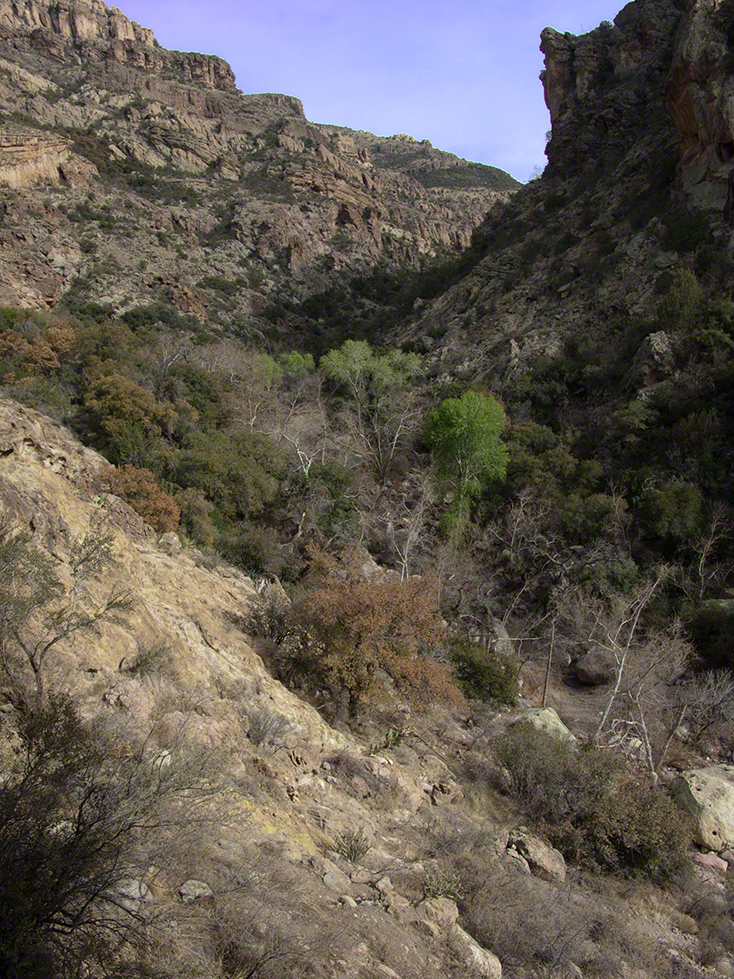
First (refer to the “Roger Canyon” photograph,  above) I climbed the cliff opposite from the ruins to set up a tripod an telephoto lens to shoot through the trees to capture the main building inside that very interesting looking tuff (see below).  That central column (to the right) divides the cave opening and there are views from inside, up and across the canyon.  In season, the cliffs are occupied by nesting birds and, higher up, there are fascinating caves in locations too high and steep to reach without the proper equipment.

As it is, climbing into the upper cave requires an exposed rock scramble.  By “exposed” I mean the climber is exposed to falling.  That is an intact wooden lintel of the visible structure opening and the larger structure, to the right, has curved walls.

Salado Cave Ruin

I then explored in and around the site.  The location of a lower cave made it useful for storage, it was walled off and the sturdy structure still stands today.  By the way, I inverted this view for artistic purposes.

Lower Storage Room

A lower cave is opened and accessible.  Looking out, I felt the original inhabitants were with me and then a raven started calling over and over and over.

Lower Cave

I was so fascinated by the possibilities of the site that time got away from me until this incessant cawing of a raven made me notice the lengthening cliff shadows.  Here is a view (see below) of my way home, back up Rogers Canyon.  My last shot before packing up.  It took just over two hours to get out, at a steady pace.  It was twilight as I approached the Rogers Trough trail head.

By the way, my posting before this one (“Finding Circlestone”) includes a shot of White Mountain.  In that view, these ruins are on the other side of White Mountain.

View up Rogers Canyon from the Ruins

Copyright 2023 Michael Stephen Wills All Rights Reserved

Very Old, Very New

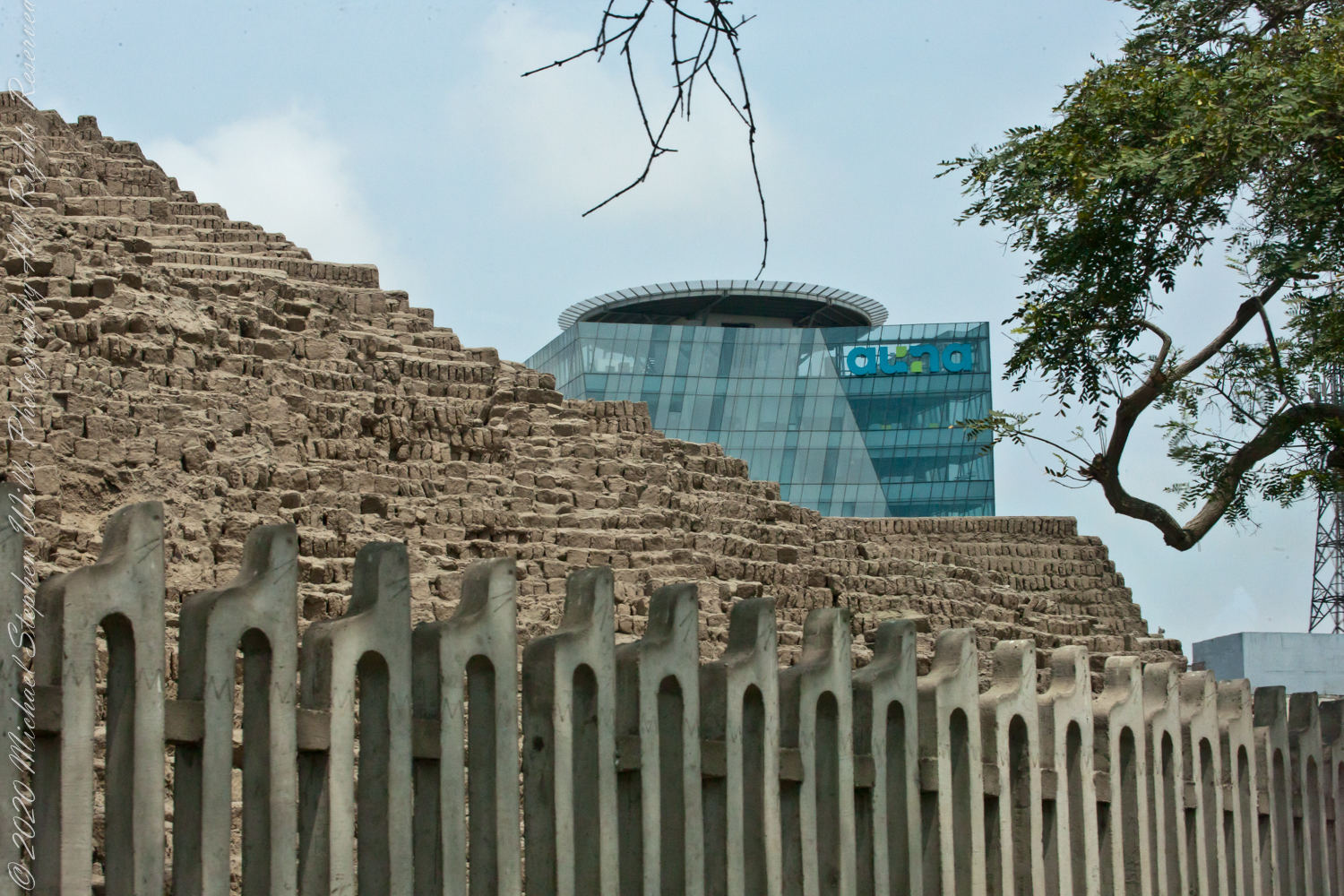
Lima is home to 10 million Peruvians and over 1000 historical sites.

View of Clinica Delgado (hospital) from Lima Peru’s Elias Aguirre (street), Huaca Pucllana filling the foreground. Huacas are commonly located in nearly all regions of Peru outside the deepest parts of the Amazon basin in correlation with the regions populated by the pre-Inca and Inca early civilizations. They can be found in downtown Lima today in almost every district, the city having been built around them. Huaca Pucllana, located in Miraflores district, is an adobe and clay pyramid built from seven staggered platforms. It served as an important ceremonial and administrative center for the advancement of the Lima Culture, a society which developed in the Peruvian Central Coast between the years of 200 AD and 700 AD. 

This is the New York Times article that inspired me to remember visiting Huaca Pucllana during our February 2016 tour of Lima, Peru. “3,000 Years of History Are Literally Just Beneath Our Feet.”

Copyright 2022 Michael Stephen Wills All Rights Reserved

Introduction to the Loughan an Lochan Ruins

Romance of Ruins

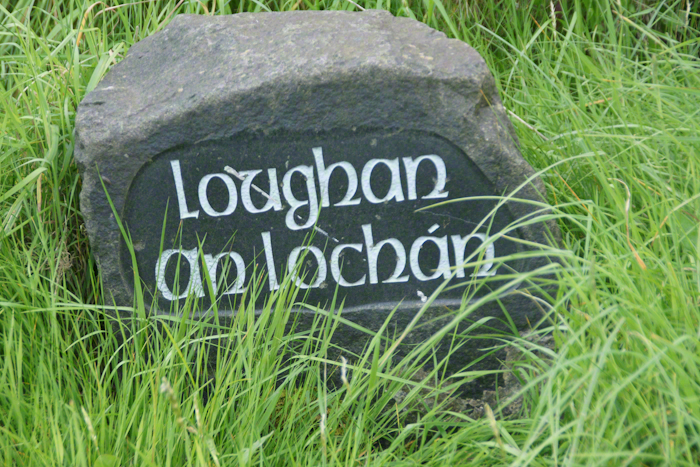
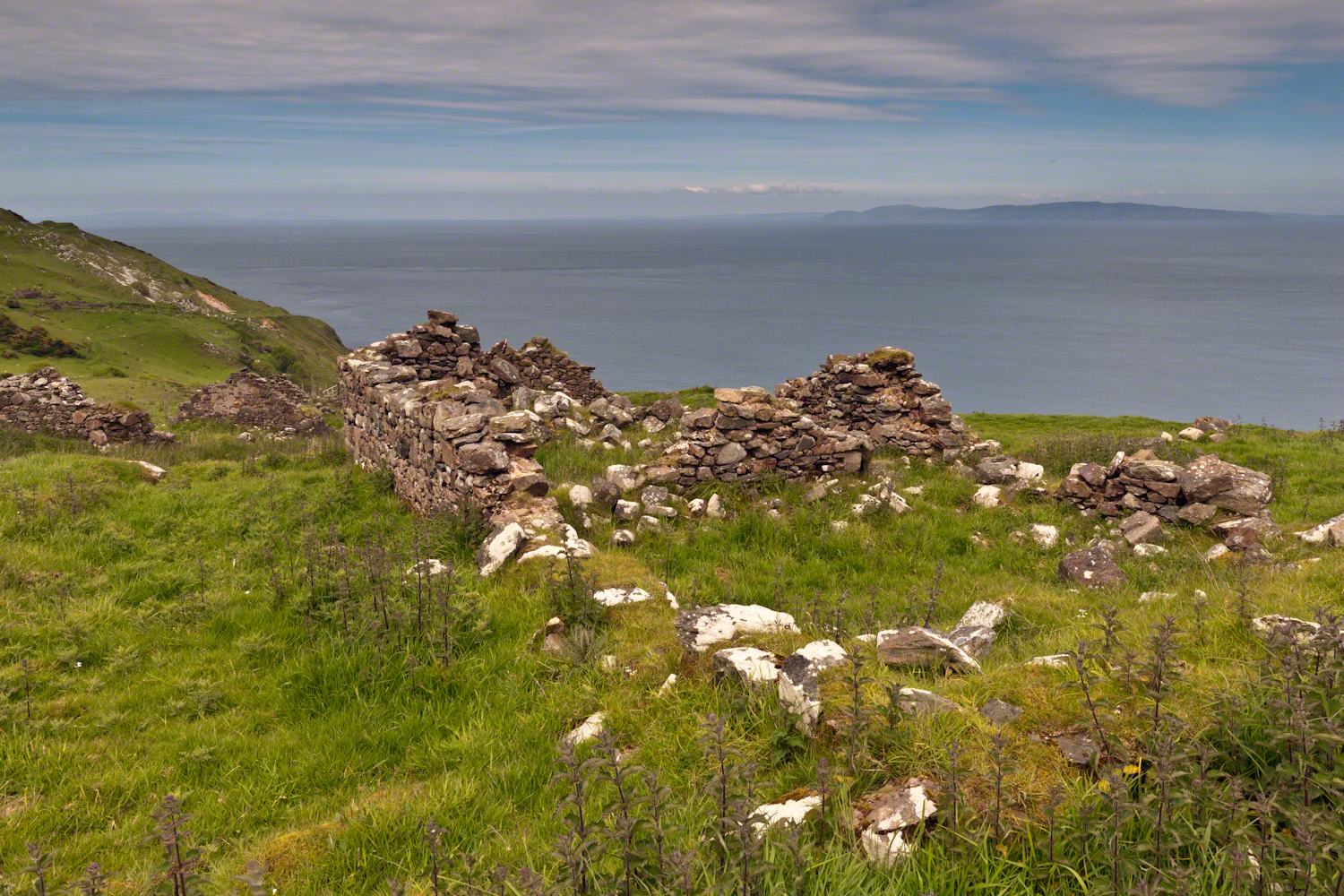
Here is a photograph from our day touring the Glens of Antrim.  While making our way up the coast to Torr Head a group of stone walls resolved into ruins. A cluster of cottages on grassy slopes above the Irish sea above Loughan Bay.  This is the townland of Loughan.  Along the road are wonderful signs providing in handsome carved letters the place name in english and gaelic.  Here a signed only provided a gaelic name: “Loughan an Lochan”…near enough to meaning “Loughan Bay” in English.  The bay is a shallow scallop shaped indentation of the coast, a margin of narrow sand strand.

Ruins are spread across the slope.  Immediately before the views are traces of a foundation above the grass.  Beyond the top of a gable, an entire gable to the left.  On the far ridge, just visible, is an entire structure with doorways, gables, walls.

Across the Irish Sea, 13 miles distant, is the Mull of Kintyre.  In faint outline, rising above the horizon, find the highlands of Islay more than 30 miles.  Both are tips of peninsulas jutting from Scotland.

Click pic for larger view in a new browser tab. If you are in WordPress Reader, open the post to use this feature.

The ruins lead to curiosity over who live here?  What were their lives like?  Why did they leave?

Want more? Click the link for my Ireland Gallery

Enter your email to receive notification of future postings. I will not sell or share your email address.

Island Shrine

part of the Irish landscape

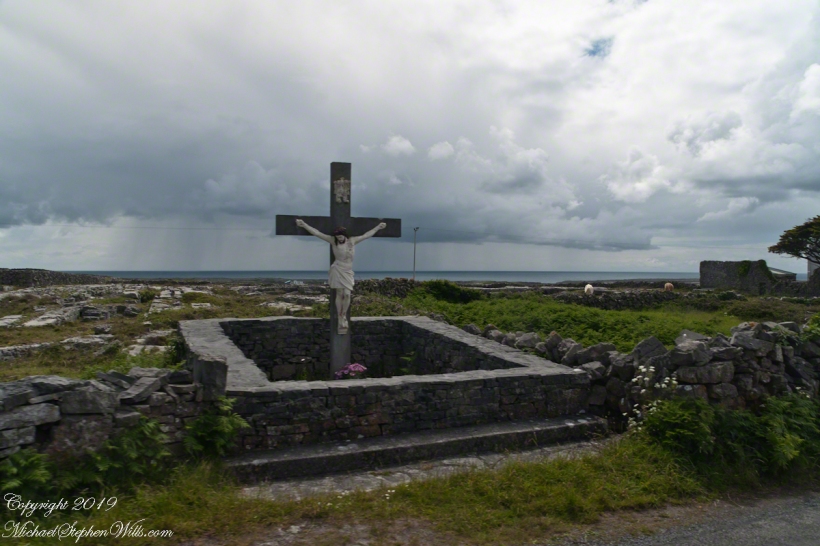
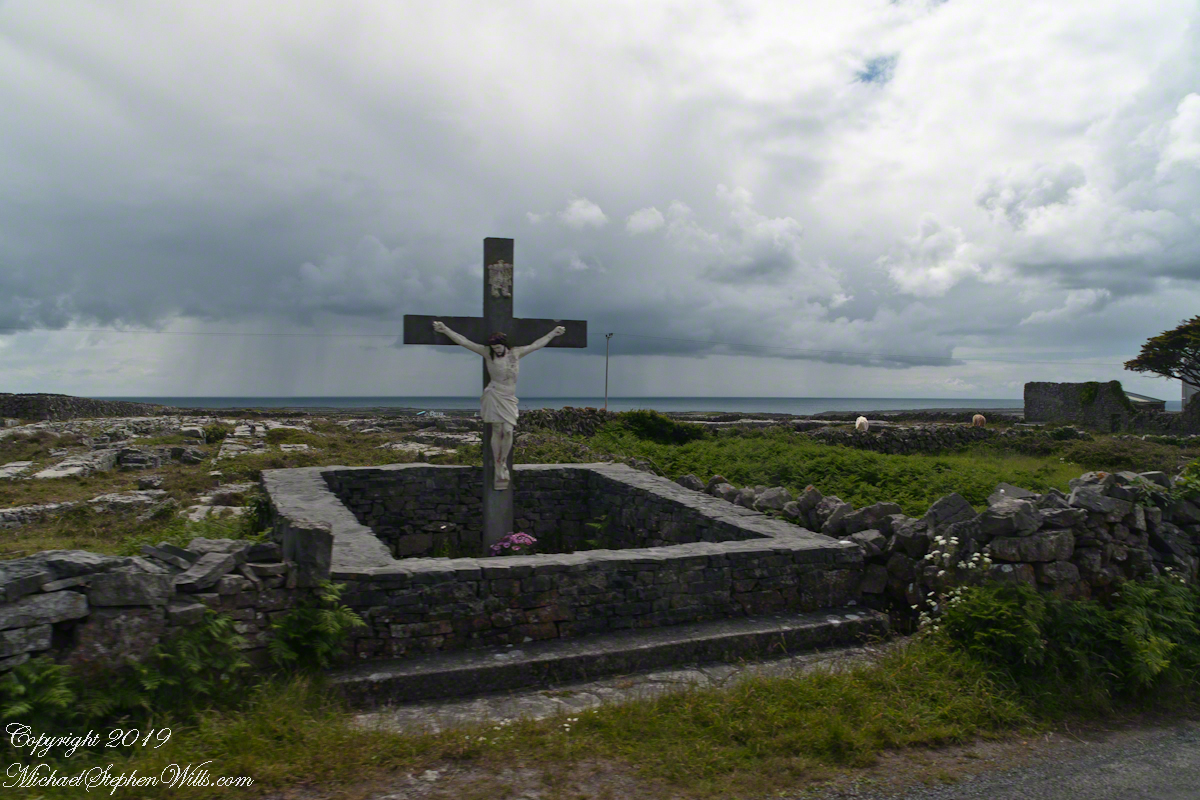
A roadside shrine on Cottage Road, Inishmore. The faith brought by the saints has deep roots here.

A large crucifix set with wet stone walls with cut flowers. The walls are the native limestone.

It is a spring (early June) afternoon and there are fern and wildflowers. The white flowers are Greater Burnet saxifrage (Scientific Name: Pimpinella major).

Click Me for Getty IStock photography of the Aran Islands

The existing dry stone wall was interrupted by the shrine. In the distance are dry stone walls around fields, a stone shed, feeding horses and the sea, being Galway Bay, storm clouds with distant rain.

Aran Islands, County Galway, Ireland.

Click me for the first post of this series, “Horse Trap on Inishmore.”

References: search google “Wet Stone”

Copyright 2022 Michael Stephen Wills All Rights Reserved

Cliff Edge II

Flowers on the edge

From the commanding location of Dun Aonghasa, looking northeast across Inishmore island, we can understand why the ancient builders chose this location.

We also see the transition from exposed limestone to the fields built literally from the ground up (see my post “The How of Soil”).  For a closer view of island houses see my posts “Settled In” and “Cottage Road Cottage.”

The field walls are described in my posts, “What is a rock, what is a stone?” and “Stone on Stone.”

Click the photograph for a larger view.  Enjoy!!

Click the link for my Getty IStock photography of the Aran Islands

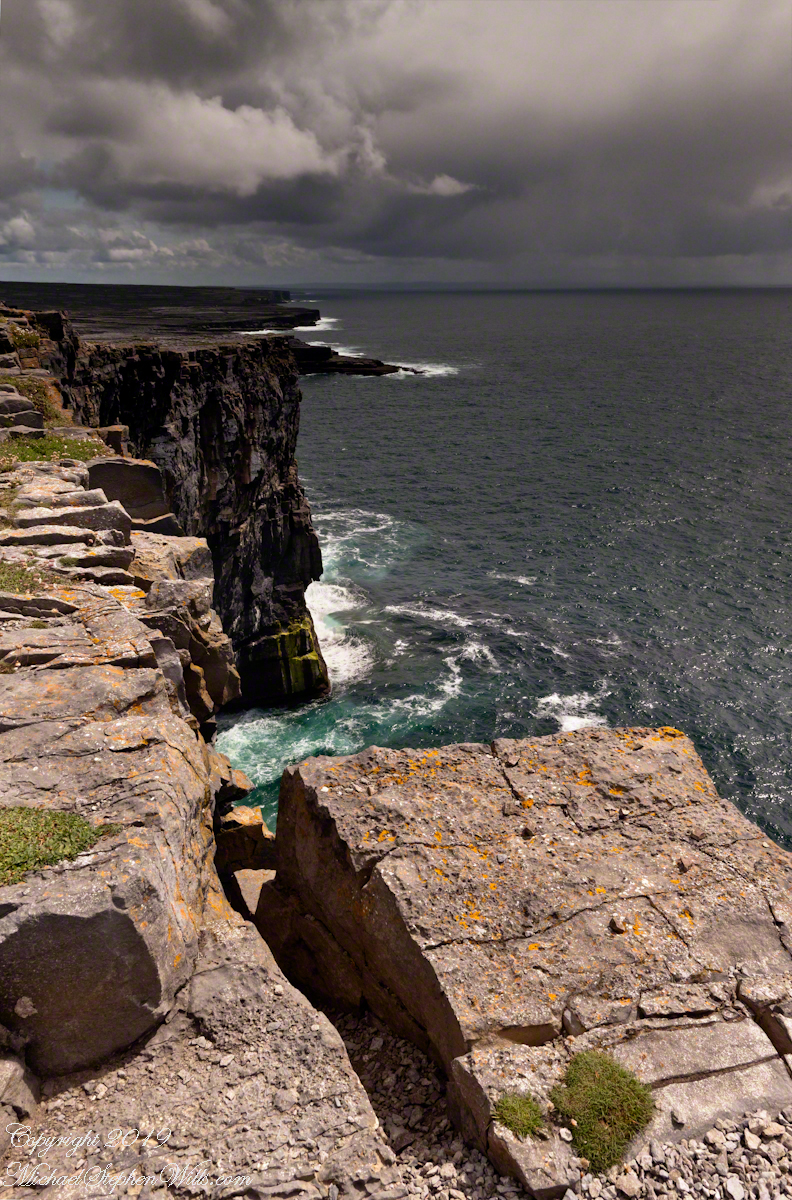
Breaking waves, turquoise sea below the dramatic cliffs of the ancient fort Dun Aonghasa (Dun Aengus),

in the distance the karst landscape of Inishmore with clouds of an approaching storm over Galway Bay.

Sea Campion (scientific name: Silene uniflora) (irish name: Coireán mara) clings to the edge.

Inishmore, Aran Islands, County Galway, Ireland.

Click me for the first post of this series, “Horse Trap on Inishmore.”

Copyright 2022 Michael Stephen Wills All Rights Reserved

Cliff Edge I

Beware of falling rock

From the commanding location of Dun Aonghasa, looking northeast across Inishmore island, we can understand why the ancient builders chose this location.

We also see the transition from exposed limestone to the fields built literally from the ground up (see my post “The How of Soil”).  For a closer view of island houses see my posts “Settled In” and “Cottage Road Cottage.”

The field walls are described in my posts, “What is a rock, what is a stone?” and “Stone on Stone.”

Click the photograph for a larger view.  Enjoy!!

Click the link for my Getty IStock photography of the Aran Islands

Breaking waves below the dramatic cliffs of the ancient fort Dun Aonghasa (Dun Aengus),

in the distance the karst landscape of Inishmore with clouds of an approaching storm over Galway Bay.

A crack in the limestone foretells the next cliff erosion, “don’t step there!!.”

Inishmore, Aran Islands, County Galway, Ireland.

Click me for the first post of this series, “Horse Trap on Inishmore.”

Copyright 2022 Michael Stephen Wills All Rights Reserved

Inner Ring, entrance

a storm threatens

In a previous post, “Inner Ring, at last” we passed over the entrance to the inner enclosure.

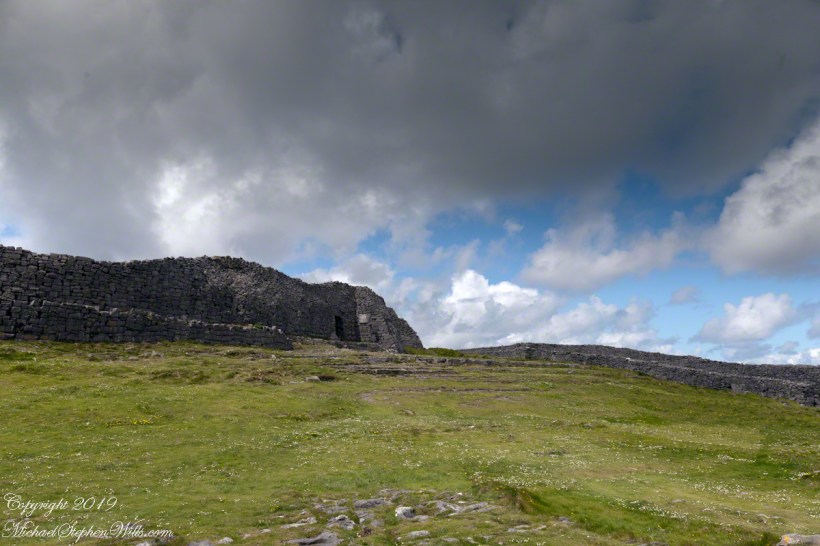
A long path through fields, karst landscapes and outer walls leads to this entrance to the inner ring of Dun Aonghasa (Dun Aengus) of Inishmore, Aran Islands, County Galway, Ireland. The image composition is as a dramatic landscape with the surrounding walls and the cloudscape of an approaching storm.

Click me for the first post of this series, “Horse Trap on Inishmore.”

Reference: wikipedia Dún Aonghasa

Copyright 2022 Michael Stephen Wills All Rights Reserved

Inner Ring, look down

A time of wildflowers

My previous post, “Inner Ring, at last”, lowered the horizon. Here, we study the base of the inner wall.

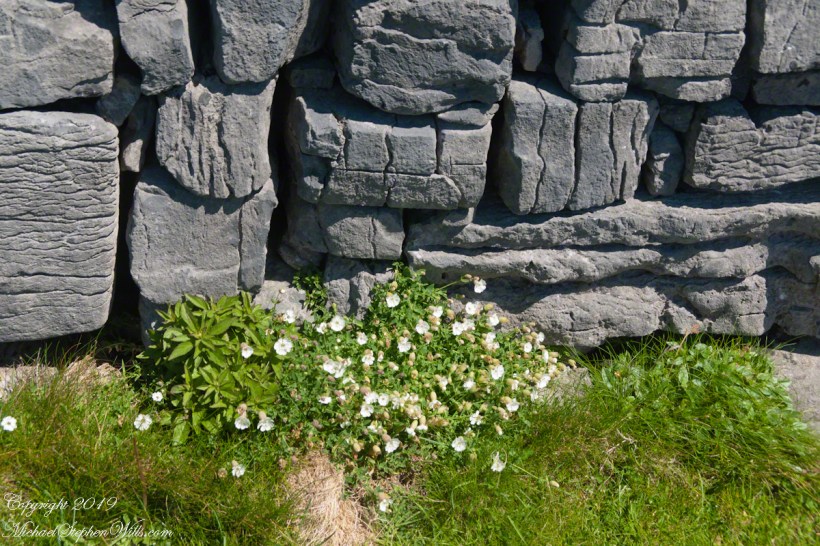
A detail of the interior wall of Dun Aonghasa (Dun Aengus) in springtime. White flowers of Sea Campion (Scientific Name: Silene uniflora) (Irish Name: Coireán mara) set against the ancient dry stone wall. Inishmore, Aran Islands, County Galway, Ireland.

We found Sea Campion throughout the west Ireland coast.

Wishing a blessed All Saints Day (November 1st) for all my readers.

Click me for the first post of this series, “Horse Trap on Inishmore.”

Reference: wikipedia Dún Aonghasa, Sea Campion

Copyright 2022 Michael Stephen Wills All Rights Reserved

Inner Ring, at last

Site of earliest construction, 1,100 BC

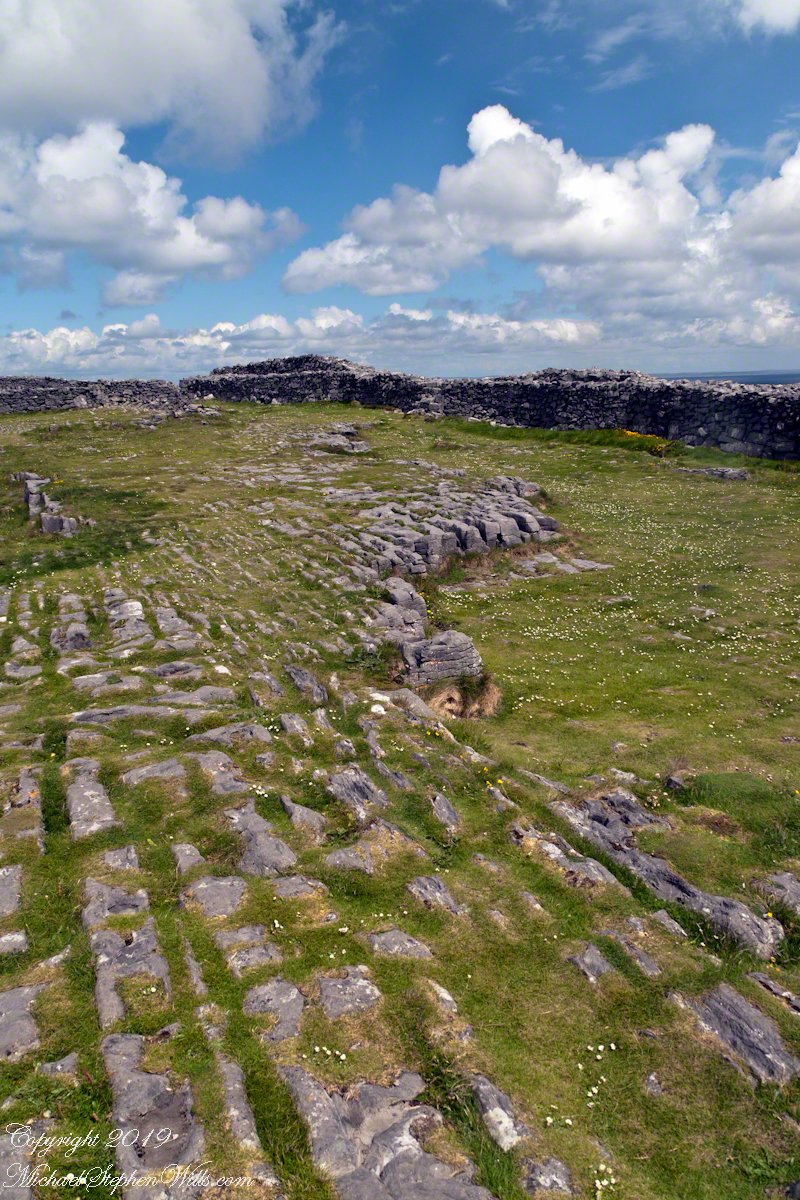
A view to the northwest from within Dun Aonghasa in springtime. The interior a karst formation (see my post, ” Galway Bay View from Dún Aonghasa”), the grikes filled with grass and a sprinkling of white and yellow flowers, a cloudscape rising over the walls. Inishmore, Aran Islands, County Galway, Ireland.

Click me for the FIRST post of this series, “Horse Trap on Inishmore.”

Reference: wikipedia Dún Aonghasa

Copyright 2019 Michael Stephen Wills All Rights Reserved