A bench beside a cedar, unchanged through time, stirred memory and gratitude—reminding me that some places wait quietly, holding space until we find them again.
A lingering memory hovers over this spot. The soft crunch of gravel beneath my boots, the filtered light through pine and oak, the scent of warm stone and moss—all of it felt at once familiar and distant, like a half-remembered tune that returns in full when you hear the first few notes. I hadn’t thought about the simple bench until I turned the bend this summer day on the South Rim Trail.
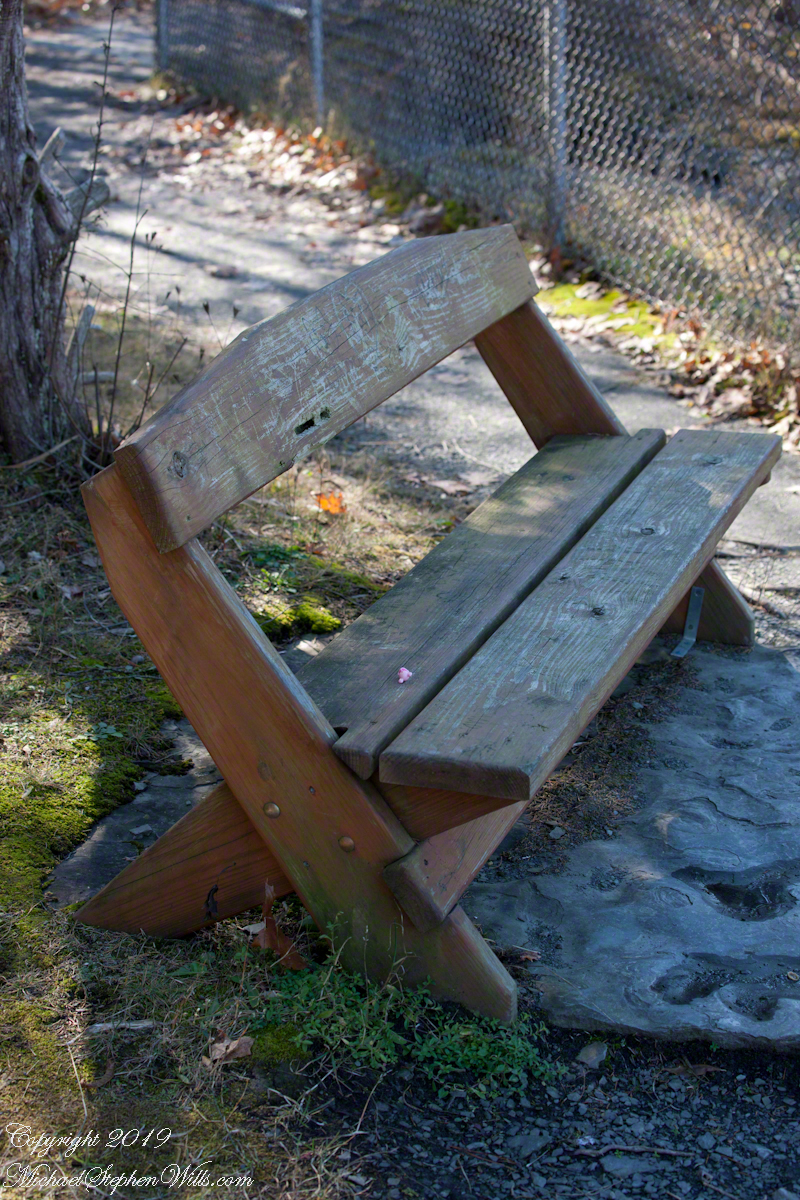
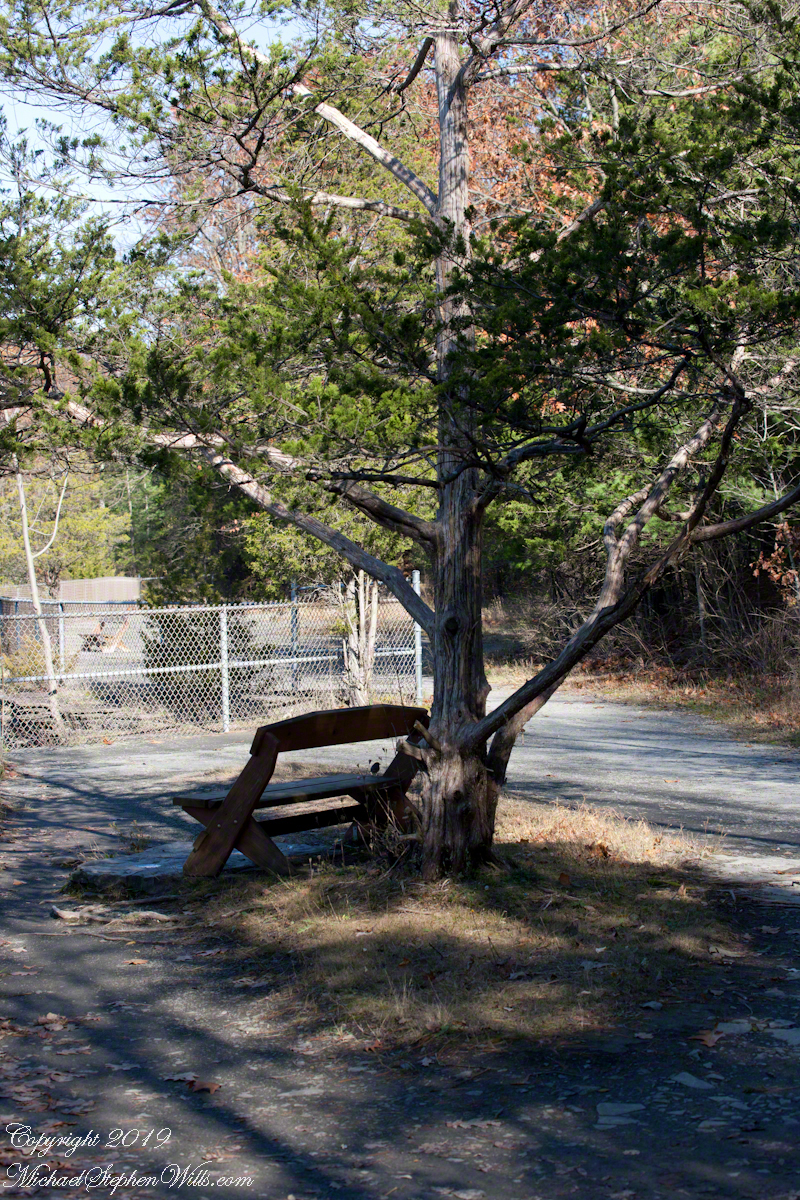
It was still there. The same humble bench nestled beside a cedar, its weathered frame now bearing the patina of years. The tree remained slightly bowed as if in silent conversation with the bench it had embraced.. The space between them, still and shaded, seemed to invite reflection without demanding it.
Welcome Summertime Shade
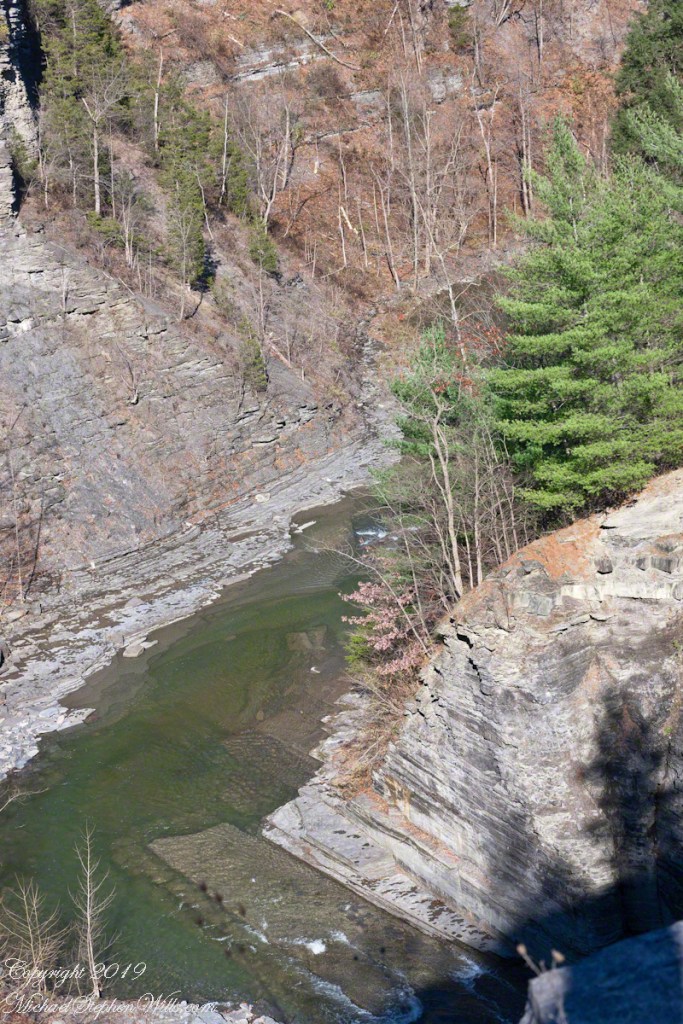
I sat down, letting the moment settle around me. In the gorge below, water moved quietly through sculpted shale, the same layered gray that once caught my attention through a camera lens long packed away. From this overlook, the view had scarcely changed: stone and water, green clinging to cliff, sky rolling in above it all. My photograph captures it now just as it might have then—perhaps from the same angle. The gorge unfolding in a graceful arc, with trees perched impossibly along the sheer face.
It struck me, not as a grand revelation but with quiet certainty, that very few places in life offer such stillness. So much shifts in the world—landscapes erode, trails are rerouted, lives move forward. Yet here I was again, sitting in the same spot, as though the intervening decades had folded in on themselves.
The Why for the Bench
Back then, I had rested here out of curiosity, pausing to take in the view, enjoy a respite. Now, I sat with a deeper kind of stillness. The second photograph holds the space as I found it—quiet, dappled with shadow, edges softened by time. The fence beyond it remains, unchanged, a modest boundary between the trail and the deep gorge beyond.
I don’t remember what thoughts filled my mind that first time. But today, a kind of gentle gratitude rose instead. Gratitude for the bench, yes—but also for the path that led me here again, for the act of remembering, and for the rare gift of finding something familiar, something steady.
Left Behind or an Offering?
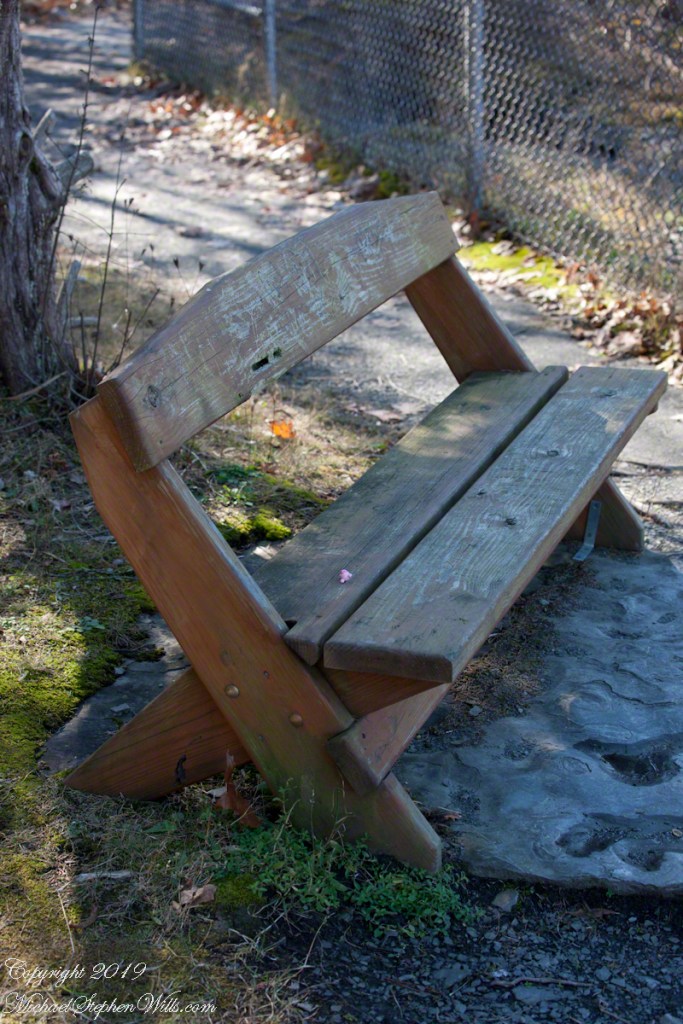
A final image frames just the bench, its surface worn smooth, its structure slightly leaning now. A single flower petal had fallen on the wood—a quiet grace note in the morning light. I stood and took that last photo as a way of holding the moment, though I knew no picture could fully capture what it meant to find something that had waited without fanfare.
As I turned and walked back along the rim, I felt lighter. Not because time had reversed or been conquered, but because it had been witnessed—and somehow, that was enough.
Enter your email to receive notification of future postings. I will not sell or share your email address.
Copyright 2025 All Rights Reserved Michael Stephen Wills
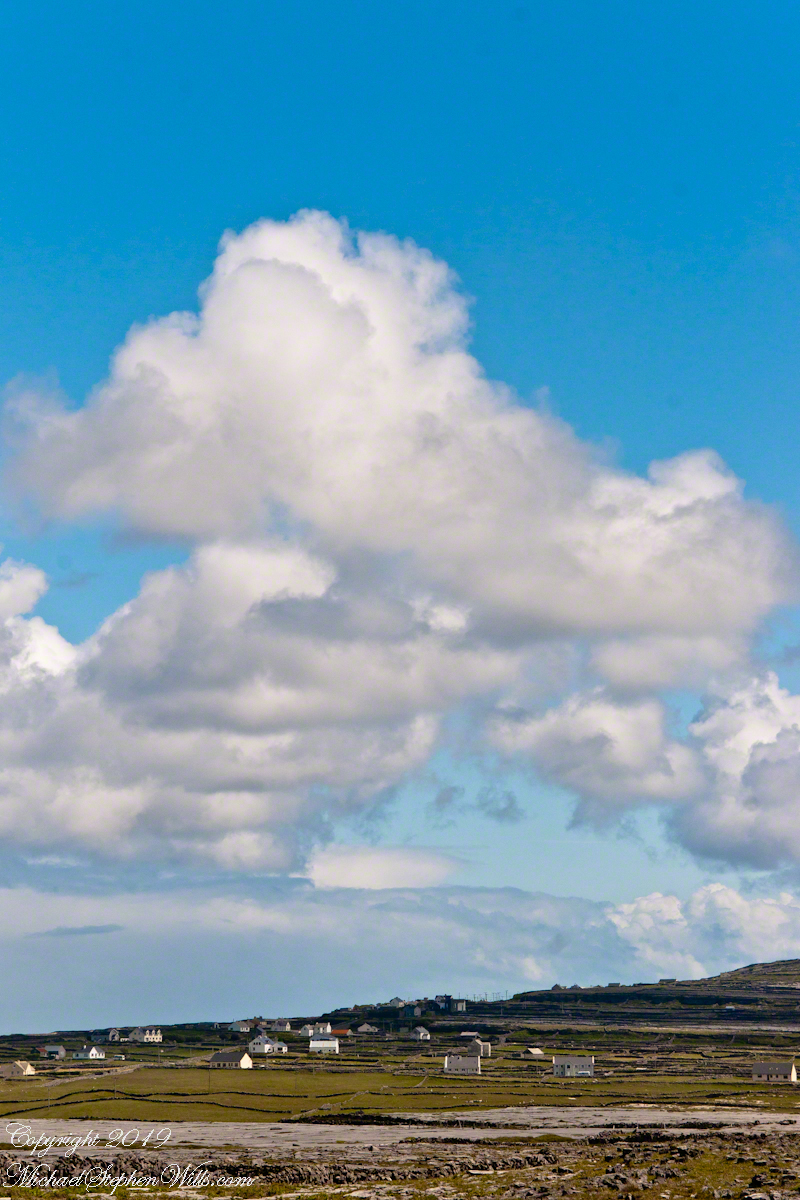
From the commanding location of Dún Aonghasa, looking northeast across Inishmore, the logic of the ancients becomes clear. No better vantage could be found—land unfurling like a hand toward Galway Bay, cottages nestled in green folds, clouds billowing above like sails caught mid-journey. A place of presence. A place of permanence.
Perched high on the cliff’s edge, the fort behind, the Atlantic at the back, the wind carried stories—unwritten, unspoken, but felt in the bones. Below, stone walls divided the island into patterns of memory. Fields outlined in rock, laid long ago by hands familiar with hardship and patience. The sea’s pulse echoed faintly in the distance, as steady and unfathomable as time itself.
No words were needed in that moment. Just the hush of sky and stone. Cottages, bleached bright by limewash—kalsomine, the old name still whispered by some—stood resilient against the elements, each one a witness to generations. Each one seemed to carry a personal reverence, a tenderness carved into the landscape.
Paths led gently inland, where wind slowed and voices from distant homes rose faintly through the open air. Along those paths, the rhythm of island life could be read in hoof prints, scattered wool, and the sharp, clean edges of hand-cut stone. There, among the hedges of limestone and wild grass, the living and the lost felt close.
The cloud cover shifted constantly. Shadows passed like thoughts across the land. Toward the shore, the sky opened wide. A silence filled the lungs, as bracing and deep as the Atlantic itself. Time seemed to slow, the mind slipping into the rhythm of the land.
Limestone pavement, rough beneath the boots, told its own tale of erosion and survival. That the earth here could sustain even the most modest farming seemed improbable. Yet here it was: a testament to stubborn hope and quiet ingenuity. In that quiet, ancient energy rose—something older than the fort, older than language. A pulse shared with the rock and wind.
The fort eventually came back into view—perched as if grown from the cliff itself, curved walls enclosing nothing but air and sky. I perceived no defensive bluster, only presence. And what a view it commanded. On days like this, the clouds formed towering cathedrals overhead, white and gold in the sun. Below, the cottages and fields seemed miniature, perfect, enduring.
The wind played echoes of prayer, lullaby, and laughter mingled with the call of seabirds. The thought came that nothing here was ever truly lost—only layered. Generation upon generation, each leaving some trace: a stone placed just so, a wall mended one final time, a cottage roof patched for another winter.
Here, even the air speaks. It moves gently but insistently, brushing the cheeks and stirring something ancient within the chest. Beneath it, the island breathes: not loudly, not urgently, but with the slow, deep rhythm of the tides.
As the sun dipped slightly westward, light changed across the fields, cottages glowing warm against darkening green. The wind softened. The clouds drifted, still massive but no longer looming. Time to return. A glance back offered one last communion with sky, stone, and silence.
Inishmore, on that day had been absorbed. Understood not with the mind, but with something quieter. Something that listens without need for words.
It was the kind of overcast morning that seems to cradle the island in a blanket of mist, a gentle hush falling over the land as though even the Atlantic held its breath. Pam and I had arrived by ferry at Kilronan, the main settlement on Inishmore (Inis Mór), the largest of the Aran Islands nestled in Galway Bay. There, amid the bustle of arrivals and greetings, we found our driver—a wiry, weather-worn man with a soft brogue and kind eyes—and his horse trap, a simple two-wheeled carriage with room enough for three and the sounds of hooves to accompany our journey.
We set out up Cottage Road, the stone-paved track winding westward from the harbor. The sea fell away behind us as we climbed, a gray shimmer stretching to the hazy outline of Connemara’s mountains on the far side of the bay. Our destination was the dramatic cliffside ringfort of Dún Aonghasa, a place older than memory. But it was the unexpected moments in between—the ones not printed in guidebooks—that linger longest in the mind.
As we rounded a bend flanked by low stone walls, wildflowers blooming defiantly in the cracks, our driver pulled the reins gently and pointed with his crop.
“There,” he said, nodding ahead, “is a fine example of a traditional Aran cottage.”
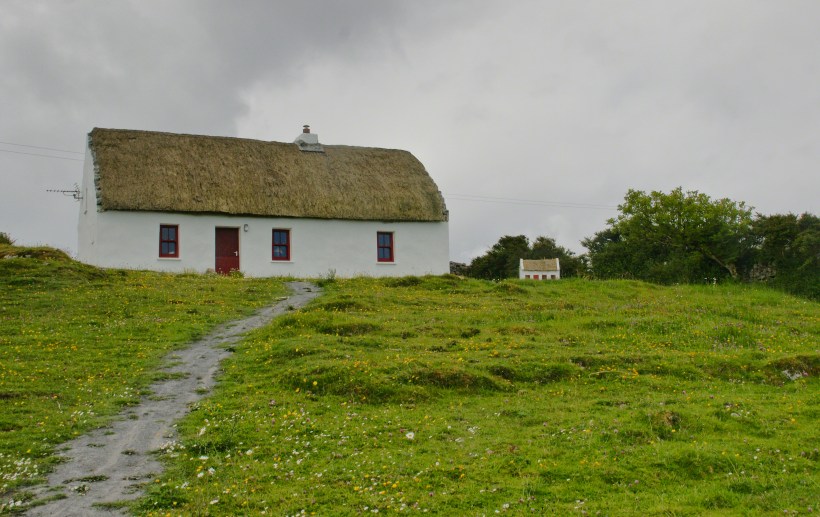
And there it was—a vision from another time. The thatched roof curved softly like a that blanket itself, straw golden against the brooding sky. The walls were whitewashed to a perfect matte sheen, gleaming in spite of the cloud cover. A crimson door and two window frames punctuated the front façade like punctuation in a poem. Just to its right, set further back on the hill, stood a tiny replica of the same cottage, identical in every feature. I blinked, half believing it was an illusion.
This thatched cottage with matching child’s playhouse is on Cottage Road out of Kilronan Village on the Aran island, Inishmore, County Galway, Ireland.
We only stopped briefly—it was a private residence—but the sight of it left a kind of imprint. I turned in the trap seat to keep it in view as long as I could. The cottage was perfectly placed, facing Galway Bay with a commanding view. I imagined the light pouring across the line of mountains, catching the glint of sea and sky.
“There’s a name for that finish,” I said, recalling something I’d read, “whitewash, or lime paint.”
Our driver nodded. “That’s the old way. Made from slaked lime. We’d call it ‘whitening’ when I was a lad.”
Whitewash differs from paint in the most elemental of ways. It becomes part of the stone, absorbed into the very surface. Like a memory of bone. And yet, it requires care. Apply it to a wall not properly cleaned or moistened, and it flakes, pulls away like a broken promise. But done right, it lasts, breathes with the building.
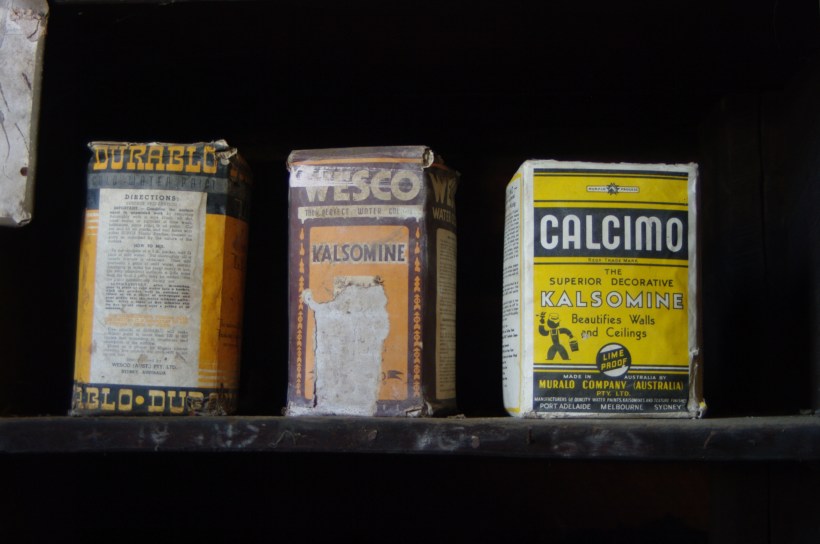
Upon our return, researching “whitewash,” if found this photograph from the Yarloop railway workshops Yarloop, Western Australia. There, on a shelf, where three old boxes sat like relics: DURABLO, WESCO, and CALCIMO. All contained kalsomine—the powdered form of lime paint. CALCIMO promised to “beautify walls and ceilings” and was proudly marked “LIME PROOF.” There was something quietly heroic in that. Lime-proof, as though against time itself.
Looking at the box of Calcimo, a product of the Murabo Company of Australia, I was struck by how far the tradition had traveled. From island cottages in the Atlantic to distant corners of the Southern Hemisphere, the language of whitewash—of simplicity and purity—had touched the world.
We returned by the same road, past that same cottage, the small one still keeping watch beside it like a child beside a parent. And I knew then that the islands hadn’t just given me sights—they had offered stories, silent ones written in thatch and stone, in lime and wind.
Sources for this post: search wikipedia for “White Wash”. White wash photo author: Wikipedia commons user Gnangarra
On a serene May morning, a small flock of Rose-breasted Grosbeaks graced the author’s yard, showcasing their vibrant plumage and bringing beauty to the tranquil scene of nature.
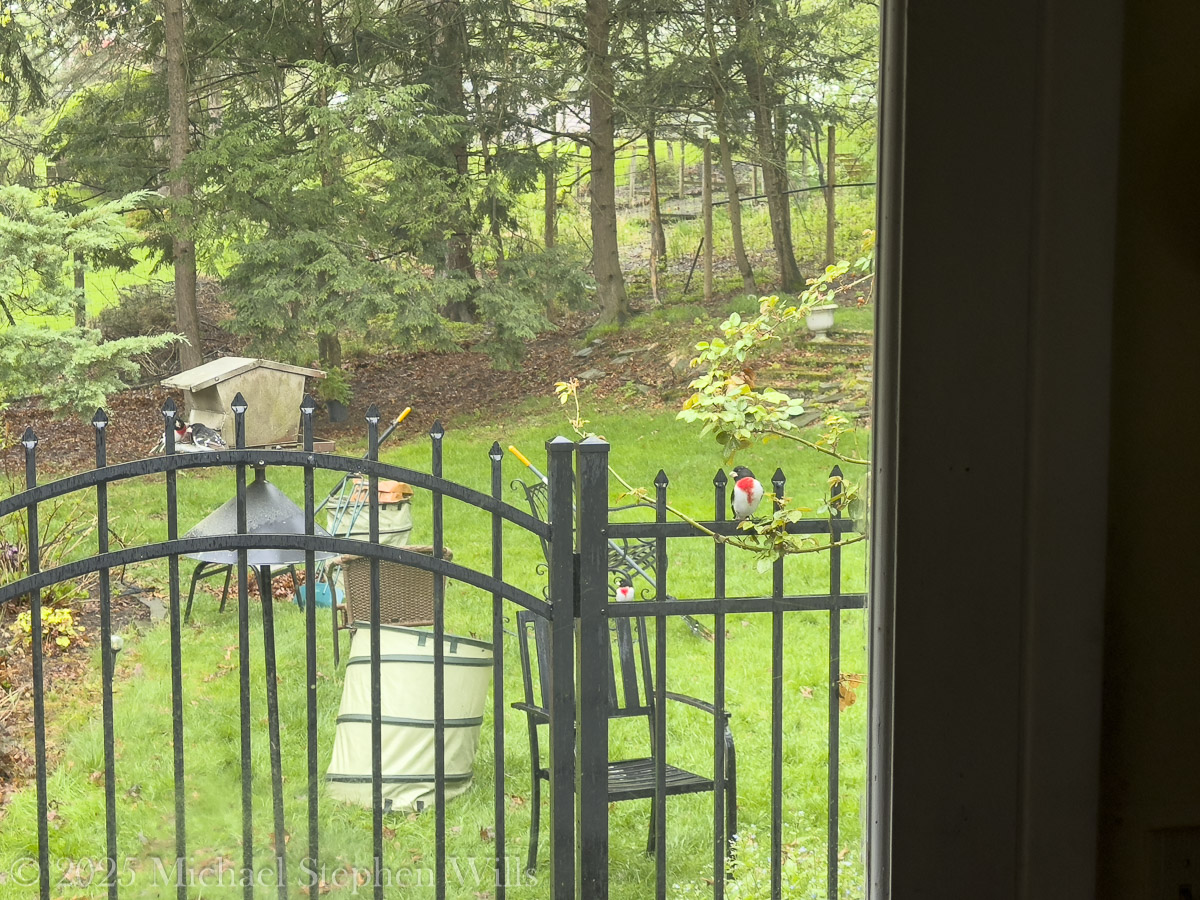
It was a gentle May morning, the kind that seems to hush even the wind, as though nature were holding its breath for something wonderful. Through the kitchen window, just past the black iron gate entwined with the fresh green of climbing rose, I spotted them—feathered heralds of spring’s deepening promise—perched like jeweled notes on a musical staff.
The Rose-breasted Grosbeaks had arrived.
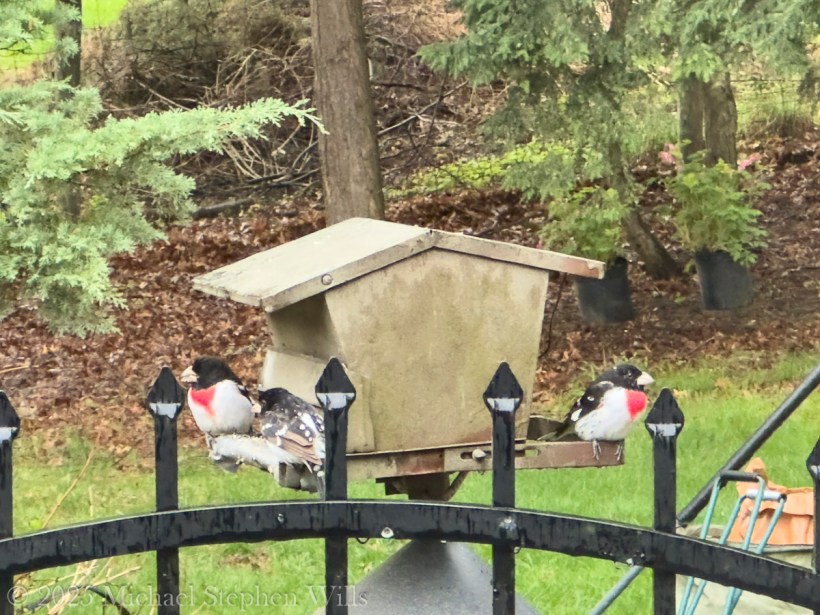
May 3, 2025 Four Male Rose Brested Grosbeaks visited our backyard bird feeder during spring cleanup.
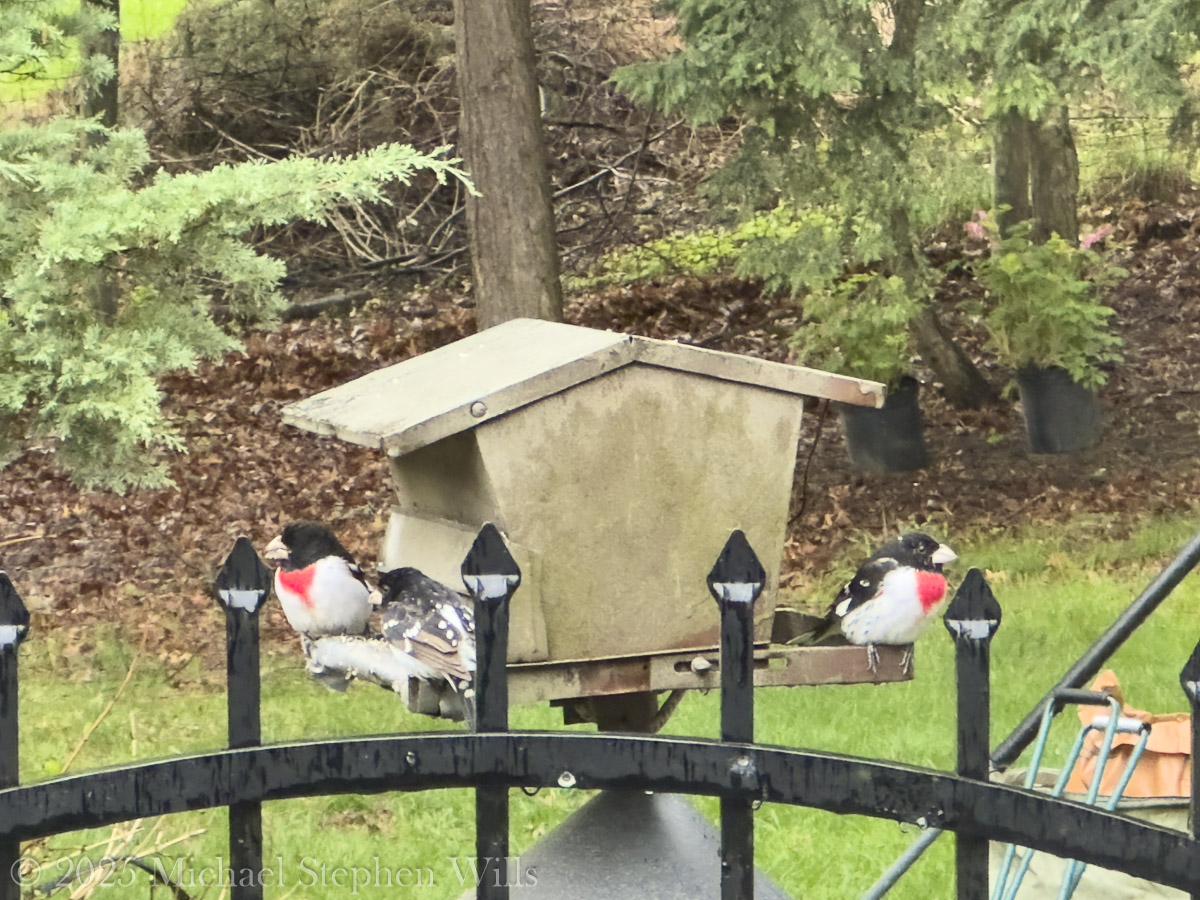
Not one or two, but a small flock, draped in raindrops, feathered in contrast and charm. They gathered around our backyard feeder like guests invited to a familiar table. At 5:56 a.m., the camera captured the first image: two males on the feeder and one each on fence and chair, a bold bib of crimson splashed across snowy chests, huddled against the gray of the feeder, their plumage brilliant even in the diffused dawn light. I couldn’t help but smile. This was a scene of quiet splendor, a symphony for the eyes and soul.
The males, unmistakable in their attire, wore tuxedos of black and white, with the defining rose-red marking on the breast that gives the species its common name. Their scientific name, Pheucticus ludovicianus, is less poetic but equally telling. “Pheucticus” comes from the Greek pheuktikos, meaning “shy” or “avoiding,” reflecting their reclusive habits in forested nesting grounds. “Ludovicianus” refers to Louisiana, an early French colonial name for a vast region including their breeding range—a nod to their North American roots.
At 5:58 a.m., the lens captured more details: a male with slightly mottled wing feathers, suggesting he was a younger bird, still dressing up in adult finery. The trio clung to the feeder’s edge, their heavy, conical beaks—perfect for cracking seeds—clearly visible. That oversized bill gives them the name “grosbeak,” from the French gros bec, literally “large beak.” Functional beauty, you might say.
May 3, 2025 Three of the Four Male Rose Brested Grosbeaks visited our backyard bird feeder during spring cleanup.
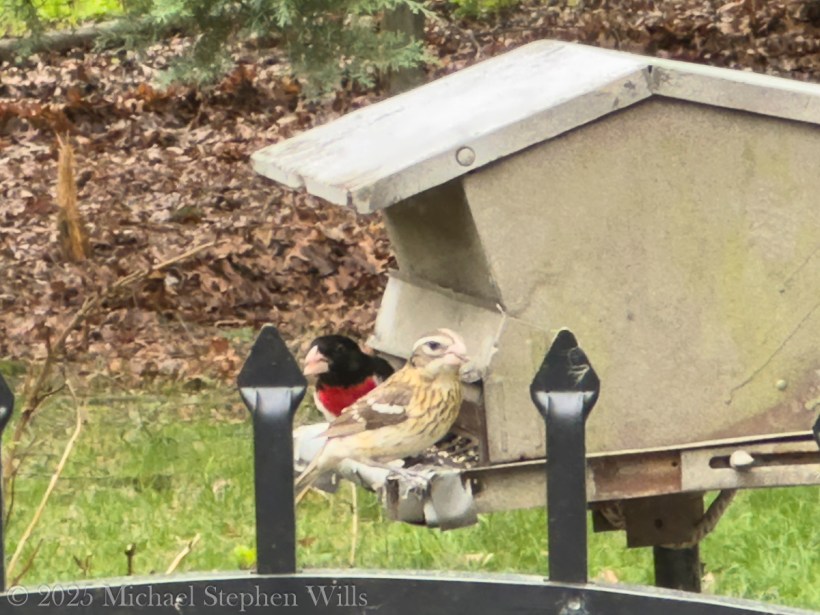
Then, at 6:08 a.m., came the contrast—the female. Subtly adorned in warm browns, with creamy streaks and a wash of yellow near the wings, she perched beside her flamboyant mate, as if to say: elegance need not shout. The two birds looked momentarily toward each other, and I was struck by their balance—his flair and her grace. Her eyebrow stripe, called a supercilium, lent her a composed, alert expression. While the male might catch the eye, the female commands attention in her own, quieter way.
May 3, 2025 Male and Female Rose Breasted Grosbeaks visited our backyard bird feeder during spring cleanup.
Rose-breasted Grosbeaks are migratory, long-distance travelers who winter in Central and South America and return each spring to North America’s deciduous and mixed woodlands to breed. Here in upstate New York, our yard is a brief rest stop on their northward journey—or, if I’m lucky, a summer home. They often nest in dense foliage, and their song, a melodic, whistled warble—like a robin who’s taken voice lessons—is often the first clue to their presence.
This morning, no song was needed. Their silent presence was enough.
Watching them, I felt time slow, the kind of moment when the ordinary yard becomes cathedral. Watching them, I felt time slow, the kind of moment when the ordinary yard becomes cathedral. The wet fence and chair under the feeder, even the crumpled leaf bag—everything was blessed by the company of these birds. Rain softened the world, and the birds brought color to its hush.
Later that day, reviewing the photos with metadata timestamps from my iPhone—each image like a verse in a poem—I marveled at what I had witnessed. These weren’t just birds. They were stories in flight, living punctuation marks in the sentence of my morning.
Nature gives us these moments, brief as birdsong and just as sweet. You only have to be still, and ready to receive them.
Enter your email to receive notification of future postings. I will not sell or share your email address.
Copyright 2025 All Rights Reserved Michael Stephen Wills
References
Pheucticus ludovicianus (Rose-breasted Grosbeak). Cornell Lab of Ornithology – All About Birds.
Jobling, James A. The Helm Dictionary of Scientific Bird Names. London: Christopher Helm, 2010.
Merriam-Webster Dictionary: Etymology of “Grosbeak.”
iPhone 14 Pro Max image metadata (May 3, 2025; 5:56 a.m. to 6:08 a.m.; Ithaca, NY).
A reflective springtime journey through Robert H. Treman and Fillmore Glen State Parks reveals the quiet beauty and botanical mysteries of red and white trilliums—exploring their species differences, color shifts, and the wonder of their ephemeral blooms.
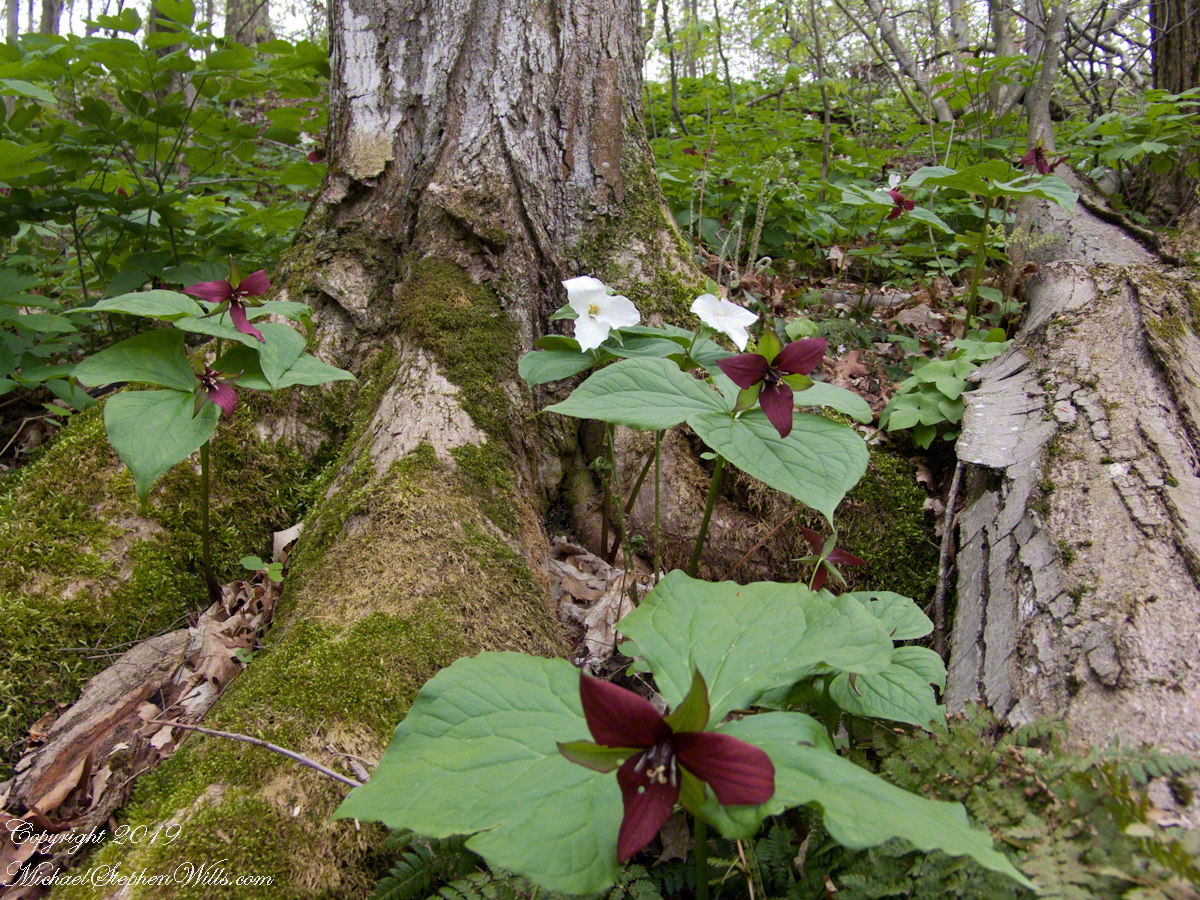
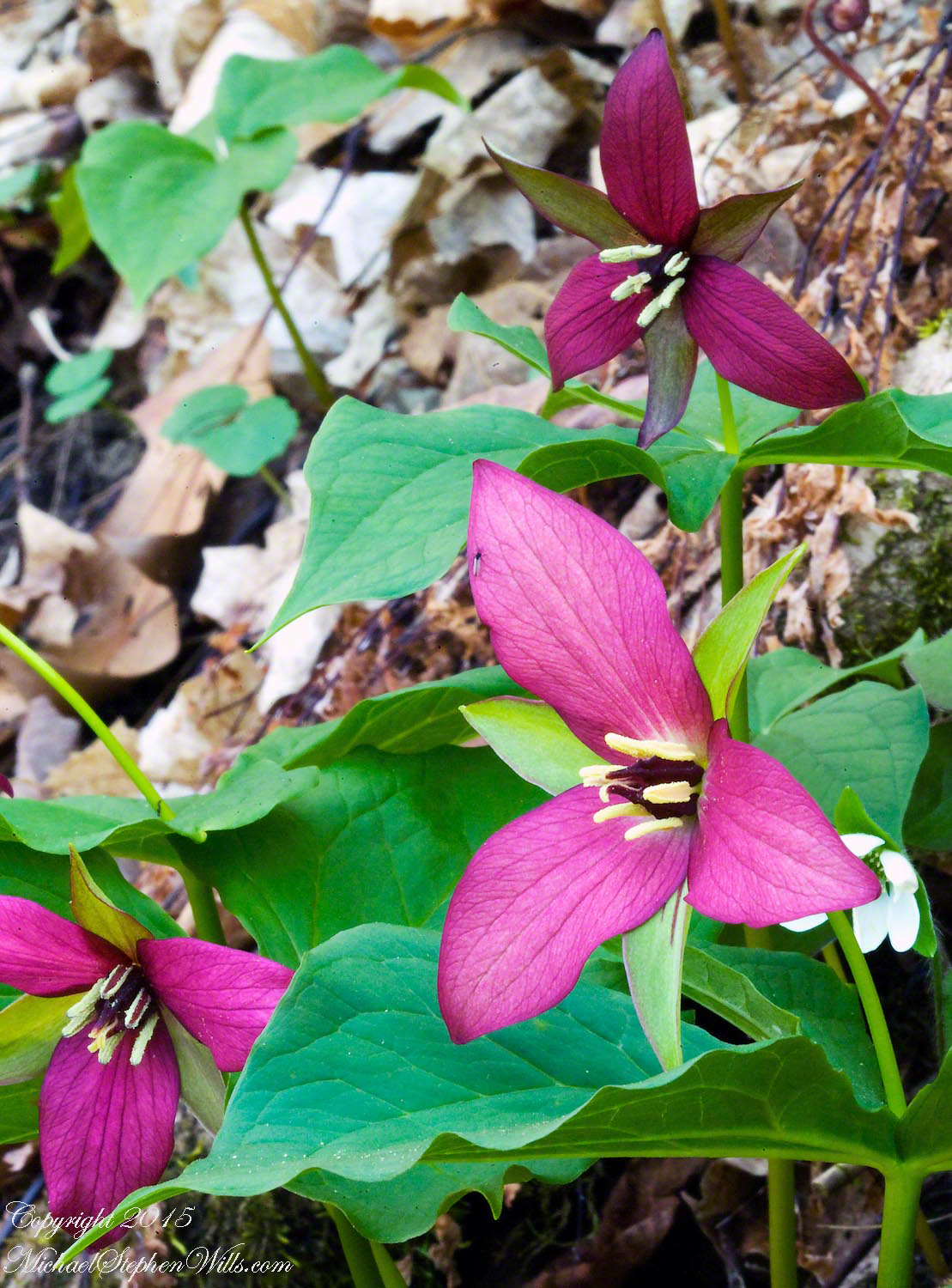
I follow a winding trail through hemlock and maple woods, the air cool and earthy after a spring rain. Under the canopy of budding leaves, I spot a flash of deep burgundy among the moss. Kneeling, I find a red trillium blooming at the base of an old oak. Its three velvety petals are a rich wine color against the green moss and damp leaf litter. A faint musky scent wafts from the flower – no wonder some call it “Stinking Benjamin.” Nearby stands another trillium, but this one is a pristine white star facing upward toward the light. Its broad petals have a gentle wavy edge and no noticeable odor. The red flower droops modestly while the white one opens itself to the sky. Different in color and posture, I realize these are two distinct species1 sharing the same springtime stage.
Red trilliums (Trillium erectum) and white trilliums (Trillium grandiflorum) thrive side by side on the mossy roots of a tree. The maroon “wake robin” flowers nod toward the earth, while the white blooms stand upright to catch the light.
Seeing the red and white blooms side by side feels like meeting two woodland siblings – each unique yet part of the same family. The white trillium is almost luminous in the forest gloom, while the red trillium blends into the shadows with its dark hues. Both emerge from the soil after long, cold months, timing their bloom for the brief sunny window before the trees fully leaf out. Knowing how slowly these perennials grow and how long they live makes their yearly return even more special to witness. Their resilience in coming back each spring fills me with quiet awe.
Early May – Fillmore Glen State Park
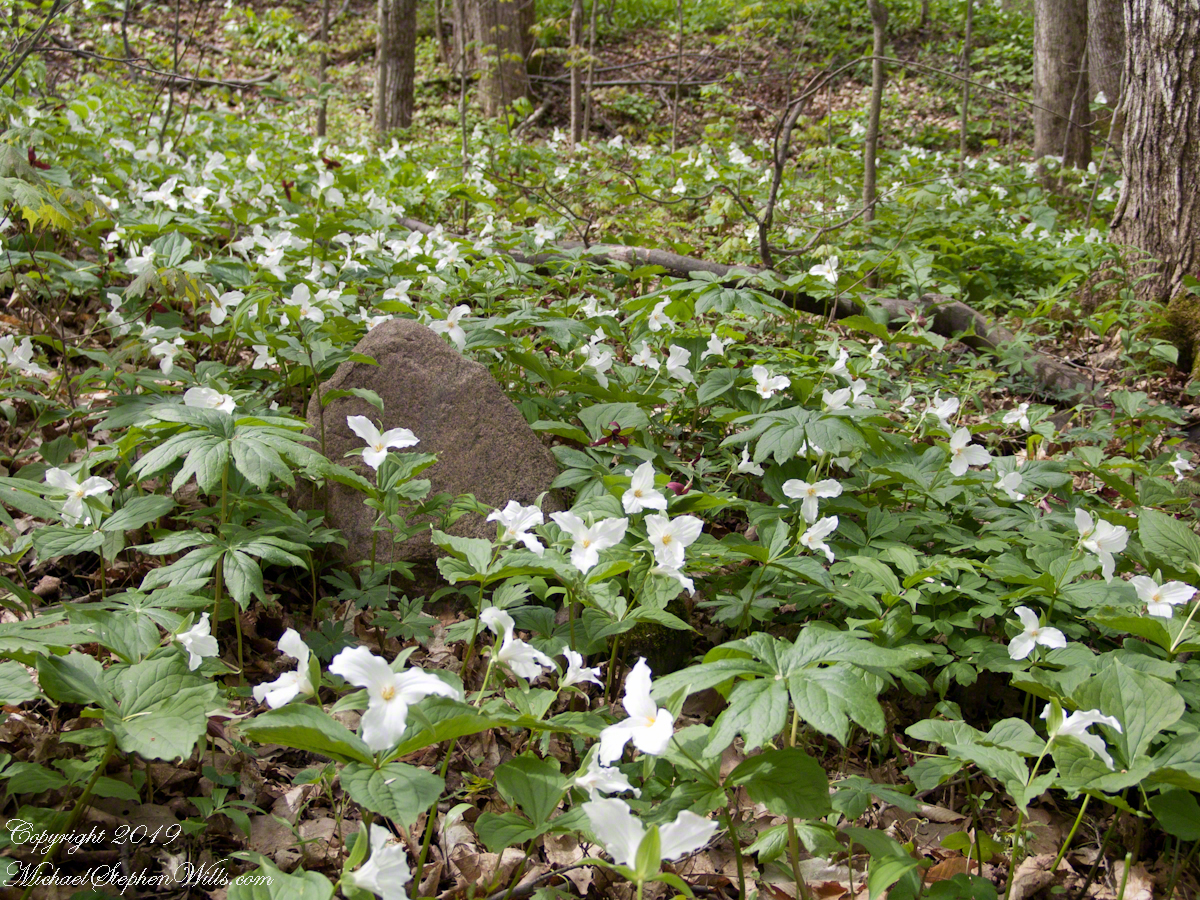
A week later, I wander the lush gorge of Fillmore Glen. The trail is alive with birdsong and the rush of a creek. Dappled sunlight slips through the greening canopy, illuminating patches of the forest floor. Rounding a bend, I catch my breath — the hillside ahead is blanketed with hundreds of white trilliums, a breathtaking constellation of blooms across the ground that feels almost sacred. Careful not to tread on any, I step closer to admire them at eye level.
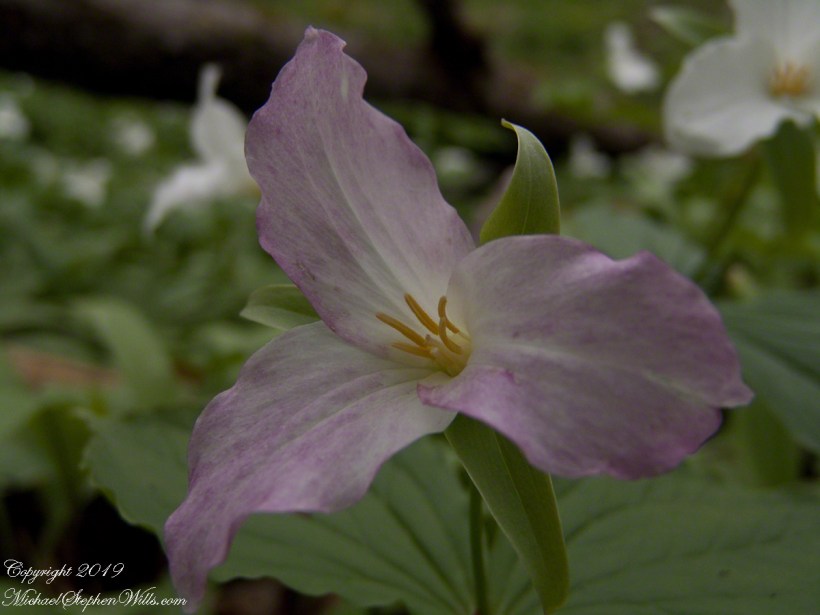
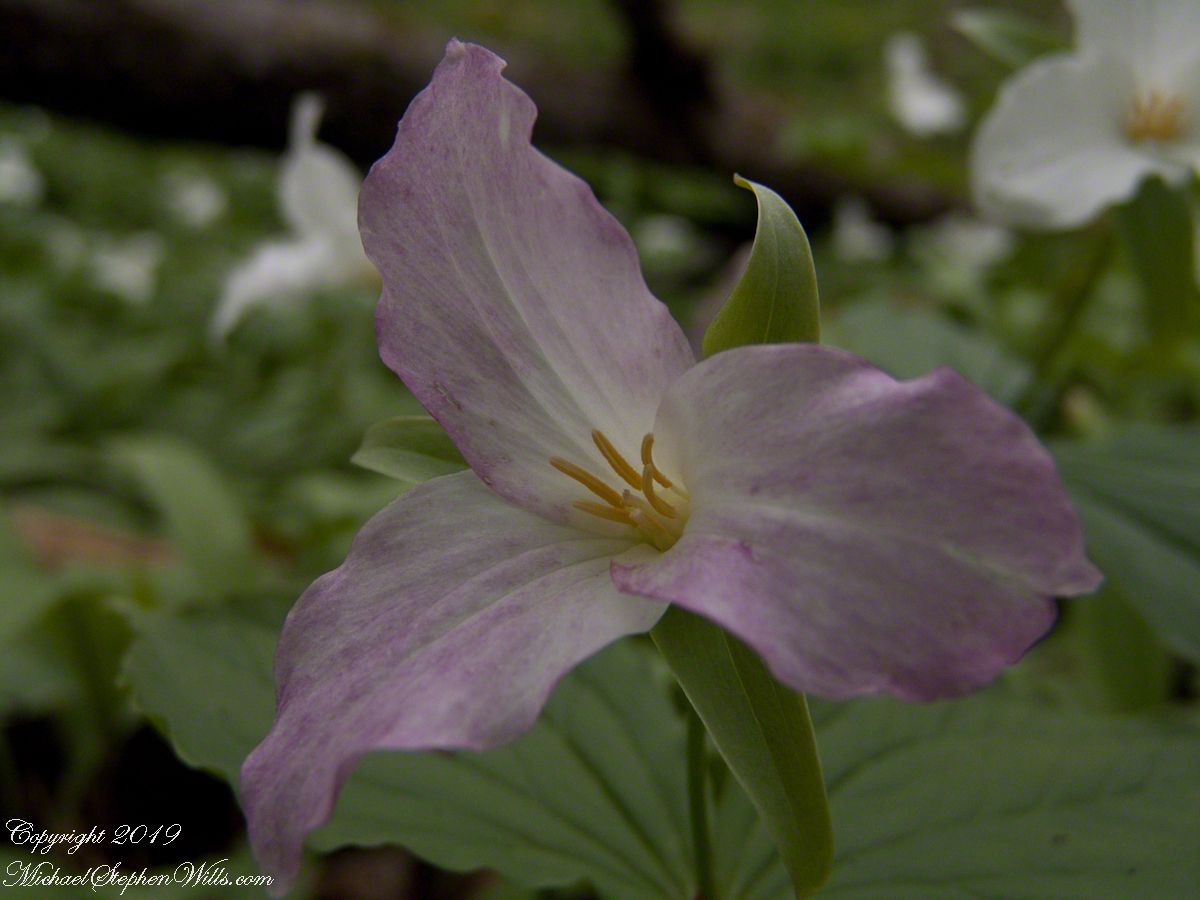
Up close, one large white trillium reveals a surprise: a delicate wash of pink across its aging petals, as if it were blushing. It’s known that after pollination the snow-white petals of Trillium grandiflorum often turn rose-pink with age2. Indeed, many blossoms here wear a faint pink tint, especially those that have been open for a while. This blush of maturity gives the colony a quietly celebratory air – fresh ivory blooms mingling with older siblings tinted softly rose.
The petals of a white trillium take on a soft pink blush as the flower ages, adding a new hue to the spring palette. Fresh white trilliums bloom in the background while older ones show a rosy tint.
In a shaded nook at the edge of the colony, a lone red trillium blooms among the white. I wonder if the red and white trilliums ever hybridize. I see no intermediate colors and recall that the white trillium rarely hybridizes with other species3. The red trillium, by contrast, can swap pollen with certain close relatives, yielding various forms elsewhere. But a true red–white cross never occurs here – each species keeps to its own.
Trillium bloom April through May in central New York State. I found these blooming on the rim of Fillmore Glen near Owasco Lake and the town of Moravia.
The red trillium even has a rare white-petaled form4 easily mistaken for its white-flowered cousin. I linger a bit longer among these graceful “trinity flowers,” my questions answered and my appreciation deepened. As I turn to go, a sunbeam breaks through and illuminates one last trillium by the trail, its white petals touched with pink. I smile, grateful for the chance to witness this woodland wonder.
Enter your email to receive notification of future postings. I will not sell or share your email address.
Copyright 2025 All Rights Reserved Michael Stephen Wills
Footnotes
Different species: Red trillium and white trillium are separate species (Trillium erectum and Trillium grandiflorum, respectively), distinguished by traits like flower orientation and petal shapeidentifythatplant.com.
White petals turn pink: The large white trillium’s petals are pure white upon opening but gradually develop a rose-pink or purple tint as the flower agesnj.gov.
Rare hybridization: Unlike some trilliums that hybridize readily, Trillium grandiflorum (white trillium) is not known to form hybrids with other speciesen.wikipedia.org. Trillium erectum can hybridize with its close relatives, but a red–white trillium cross is not observed in nature.
White form of red trillium:Trillium erectum (normally red) has a variety with white petals, classified as T. erectum var. album, which can be mistaken for a white trillium at a glancemidatlanticnature.blogspot.com.
On April 22, 2025, a wanderer discovers a trout lily, representing nature’s cycles, patience, and the interconnectedness of life through blooming, pollination, and nutrient cycling.
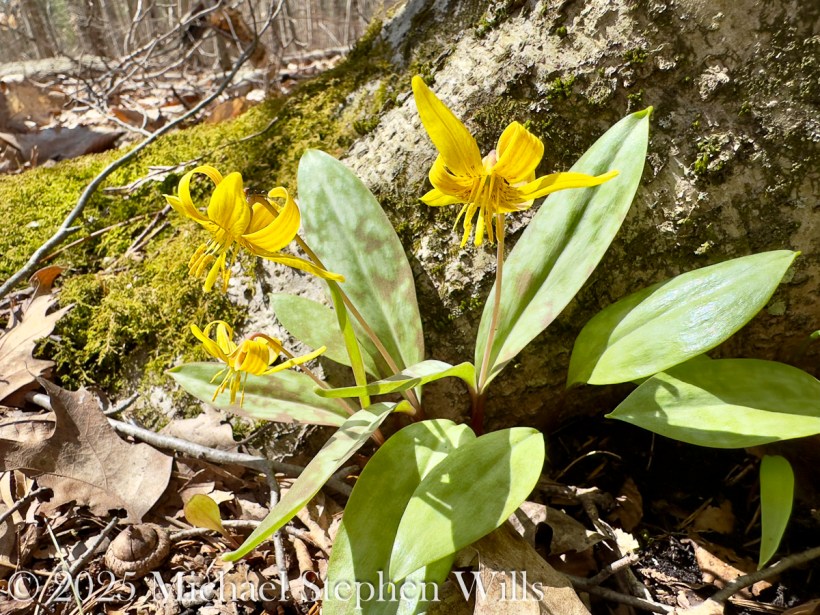
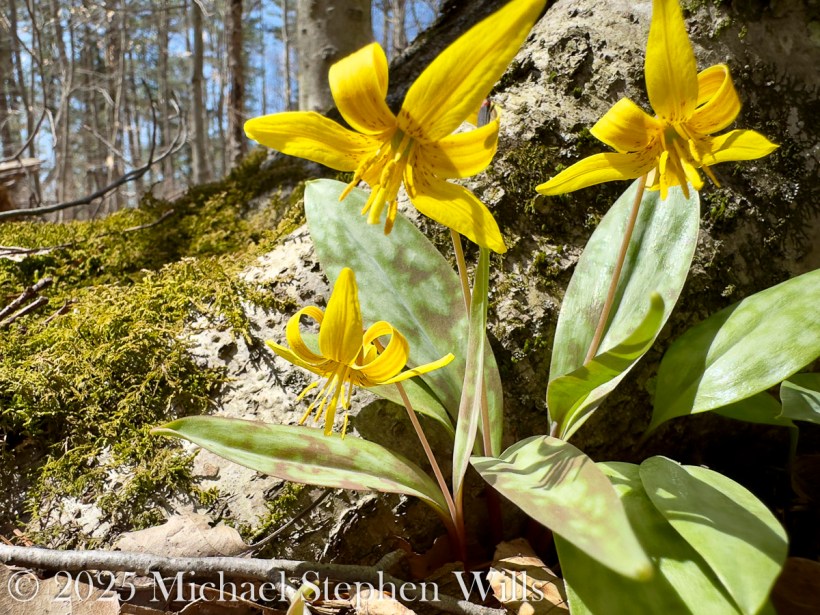
On the bright afternoon of April 22, 2025, I wander slowly through Sapsucker Woods, last year’s oak leaves soft underfoot and the smell of damp earth in the air. The trees stand bare, and somewhere a woodpecker drums as I search the ground for any sign of spring. A flash of gold catches my eye at the mossy base of a tree. Kneeling down, I find among the leaf litter a small wildflower glowing yellow. It is a trout lily – Erythronium americanum – a solitary, nodding bloom on a slender stem. Six delicate petals flare backward, golden with a few reddish freckles near the throat; long stamens dangle beneath. Two lance-shaped leaves hug the ground, green marbled with burgundy-brown. Their mottled pattern looks like a brook trout’s flank. This flower is known by many names: “trout lily” for its fish-like leaves, “dogtooth violet” for its pointed white bulb 1, and “adder’s tongue” for its tongue-shaped leaf tip.
Its formal name, Erythronium americanum, comes from the Greek for “red”2—odd for a yellow bloom until one remembers the purple dogtooth violets of Europe. Americanum simply marks it as native here. I soon realize these trout lilies are not alone – dozens of dappled leaves carpet the damp earth around me. Most show no blossom at all, only a single freckled leaf standing alone. Only the older plants with two leaves manage to lift a yellow flower. In fact, they often form extensive colonies on the forest floor. I’ve learned a trout lily may wait seven years to bloom its first time3. Seasons of patience pass unseen underground, and then one spring it earns the chance to unfurl a golden star. That slow, patient rhythm of growth fills me with wonder.
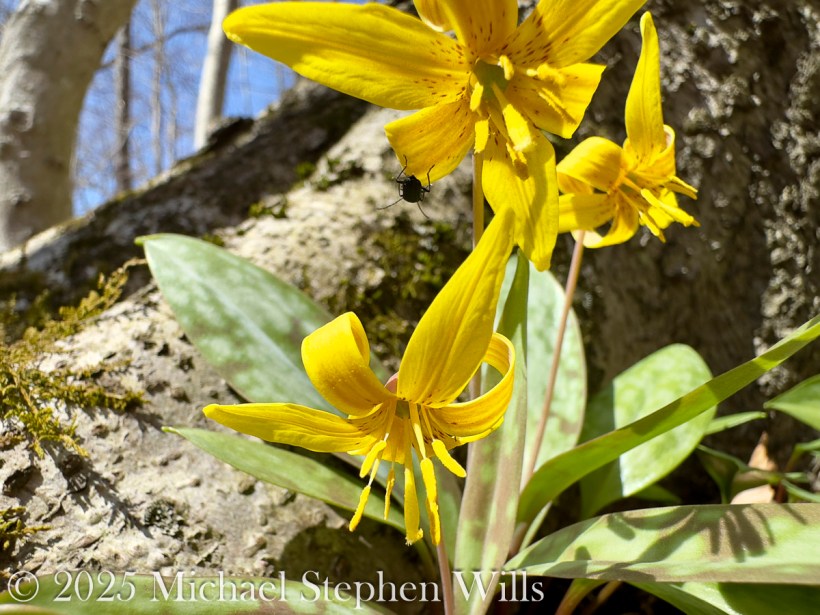
A tiny black bee—or maybe a fly—lands on the trout lily’s bloom, drawn by its promise of pollen. It disappears into the flower’s downturned bell, brushing against the dusting of pollen inside. In early spring, few other blossoms are open, so this little lily is a lifeline for hungry pollinators4. There is even a solitary “trout lily bee” that times its life to these flowers5. Flower and insect share an ancient pact: the lily feeds the visitor, and the visitor carries the lily’s pollen onward to another bloom.
Within a week, the trout lily’s golden star will wither. By the time the canopy closes overhead, the flower will have curled into a green seedpod that splits open by early summer, releasing its seeds6. Each seed carries a tiny parcel of food irresistible to ants7. Ants haul the seeds to their nest, eat the morsel, and abandon the seed in their tunnels—unwittingly planting the next generation. The name for this circular ecological dance is myrmecochory. Over time, the colony inches across the forest floor, guided by these tiny gardeners. During its short life above ground, this little lily helps the forest. Its roots soak up nutrients from the damp soil, keeping them from washing away in spring rains8. When the plant dies back, those nutrients return to the earth as the leaves decay, nourishing other life. In this way, a patch of trout lilies forms a quiet bridge between seasons—capturing nutrients in spring and returning them by summer’s end. I touch one cool leaf, feeling connected to this cycle.
I rise and take a final look at the little yellow lily. Its brief bloom reminds me that life’s most beautiful moments are fleeting yet return each year. This blossom will vanish in a few days, a blink of the season, but it will come back next spring as faithful as hope. In its patience and generosity, I sense kinship. Like the trout lily, we too have long periods of waiting and rare moments of blooming. We also rely on small kindnesses to help us thrive—like a friend in hard times or a community that carries our dreams to fertile ground. And we are part of a larger cycle, giving and receiving, leaving something of ourselves to nurture the future. As I continue down the trail, I carry the image of that humble flower with me—a gentle assurance that even the smallest life can leave a lasting impression, and that hope will always return with the spring.
Enter your email to receive notification of future postings. I will not sell or share your email address.
Copyright 2025 All Rights Reserved Michael Stephen Wills
Footnotes
wildadirondacks.org Trout lily’s common names: “Trout lily” refers to the trout-like mottling on its leaves, while “dogtooth violet” refers to the tooth-like shape of its underground bulb (despite not being a true violet). It is also sometimes called “adder’s tongue.” ↩
en.wikipedia.org The genus name Erythronium comes from the Greek erythros, meaning “red,” originally referring to the red-purple flowers of the European dogtooth violet (Erythronium dens-canis). The species name americanum denotes that it is native to America. ↩
peacevalleynaturecenter.org Trout lilies often grow in large colonies and most individuals in a colony are non-flowering. A plant typically needs about seven years of growth before it produces its first bloom. ↩
peacevalleynaturecenter.org Spring ephemeral wildflowers like the trout lily provide crucial early nectar and pollen for pollinators (bees, flies, butterflies) emerging in early spring. ↩
appalachianforestnha.org The trout lily miner bee (Andrena erythronii) is a solitary bee whose life cycle is closely tied to the trout lily; it forages primarily on trout lily flowers, making it a specialist pollinator of this species. ↩
wildadirondacks.org After pollination, trout lily flowers are replaced by seed capsules that ripen and split open to release the seeds in late spring. ↩
atozflowers.comErythronium americanum seeds have a small fleshy appendage called an elaiosome, which attracts ants. The ants carry the seeds to their nests, aiding in dispersal in exchange for the food reward, a mutualism known as myrmecochory. ↩
pubmed.ncbi.nlm.nih.gov By growing and taking up nutrients during the brief spring season, trout lily plants help retain important nutrients (like potassium and nitrogen) in the ecosystem. When the plants die back and decay, those nutrients return to the soil, contributing to the forest’s nutrient cycle. ↩
Monument Valley, or Tsé Biiʼ Ndzisgaii, embodies a profound connection between the Diné people and the land, contrasting imposed names with cultural significance and sacred narratives.
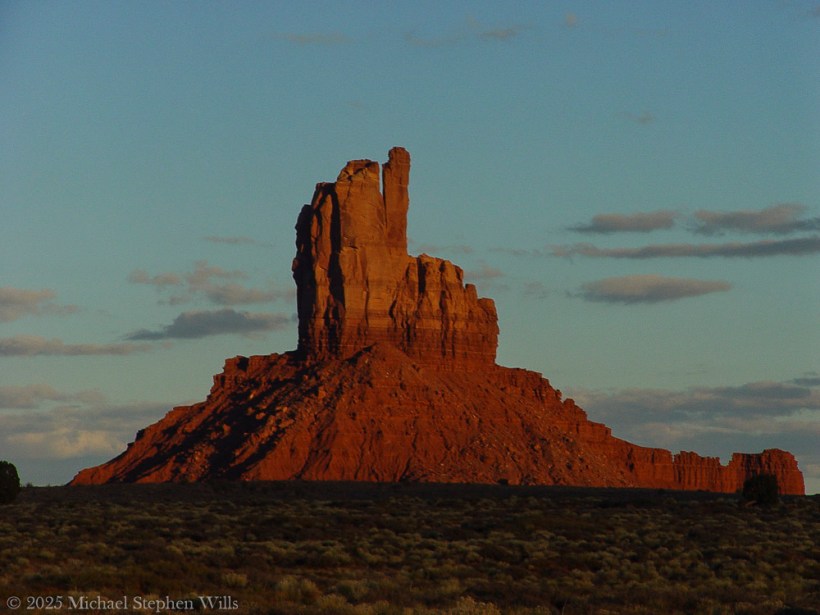
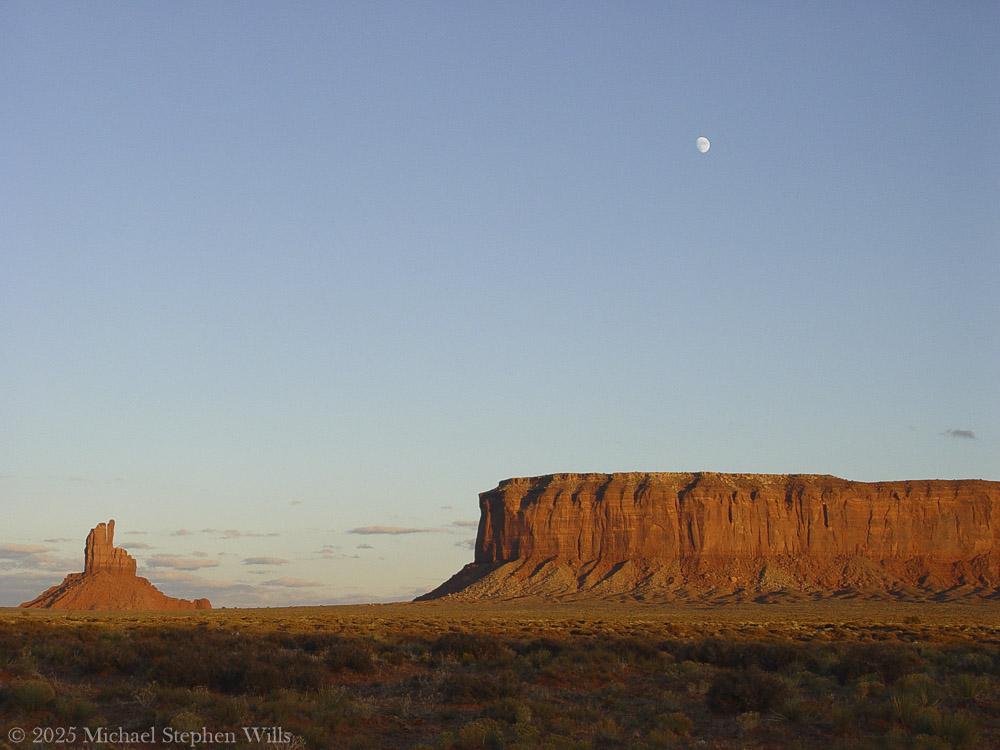
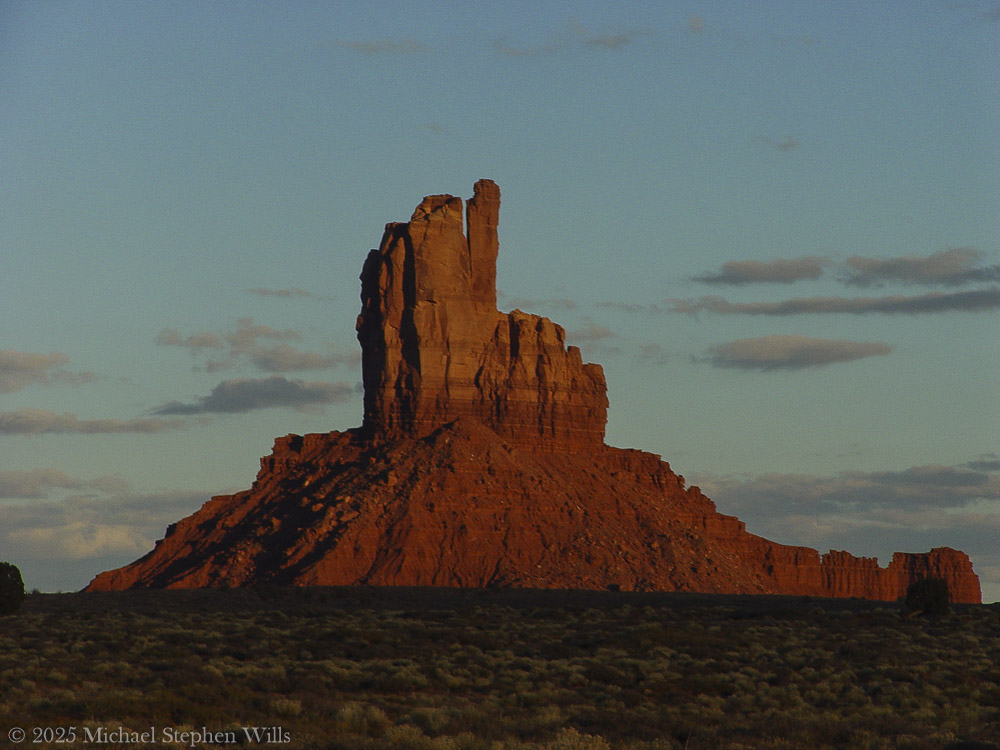
In the golden hush of this November sunset, Monument Valley stretches before us – an endless desert plain punctuated by towering red rock sentinels. The sky is vast and translucent blue, as a pale three-quarter moon rises silently above a solitary spire of sandstone. That spire is known on maps as Big Indian, a stone pillar glowing russet in the low sun. It stands apart from the mesas, its silhouette uncanny against the evening sky. In this serene moment, the land feels alive with presence. And the name “Big Indian” lingers in the air, raising quiet questions about what we call this place – and what it truly is.
From a distance, the spire does suggest a figure: tourists are told to squint, tilt their heads, and “see” the profile of a Native face gazing outward. One can imagine the first person to name it must’ve been a bored prospector, half-delirious from the heat after a lunch of canned beans, declaring: “I swear that rock looks like Uncle Joe in a feathered headdress.” And so the name stuck – a geological Rorschach test gone slightly colonial.
These whimsical titles – Totem Pole, Stagecoach, Big Indian – come not from the land, but from a long habit of outsiders labeling what they didn’t fully understand. “Big Indian” is particularly layered. The term “Indian” itself was born from Columbus’s navigational misfire, mistaking the Caribbean for Asia and its people for “Indios.” The Diné, the people who have lived here for centuries, never called themselves that. So this towering formation now bears the echo of a 15th-century directional blunder —like a name tag on the Sphinx that reads “Buckeye” because someone once thought Egypt was in Ohio. It’s a reminder: names given in haste can cling for centuries, even when they miss the mark entirely.
But beyond the names imposed by mapmakers, the spire simply is, in all its silent grandeur. In Diné lands, this valley has a different name: Tsé Biiʼ Ndzisgaii, often translated as Valley of the Rocks. In the Navajo tongue the name literally evokes “rock within white streaks around” – referring to the light bands of sediment that ring the red buttes. Those pale streaks wrap the spire like faded paint, remnants of ancient layers of earth. Here the Diné language whispers a description born of the land itself, unlike the English names that often project an outsider’s story. Tsé Biiʼ Ndzisgaii speaks to the truth of the place: stone and light, strata and shadow. As the sun lowers, you can actually see those whitish bands catching the last glow, encircling the butte like old memory. The Diné name honors what the eye sees – the layered geology – rather than imposing an unrelated label. This spire and its neighbors were not built by human hands, though their sheer stature can feel like architecture of the gods. Millions of years of natural artistry shaped Monument Valley.
Long before any person walked here, this land was a low basin collecting sediments. Layer upon layer of sand and silt hardened into rock, and a slow uplift in the earth heaved the basin into a plateau. Wind and water became patient sculptors over the last 50 million years, carving the plateau and peeling away the softer material. What remains today are the skeletal monuments of that erosion: buttes, mesas, and spires rising up to a thousand feet above the desert floor. Each is made of stratified stone – the broader bases of red shale and sandstone, and a cap of harder rock that resists the elements. Big Indian’s sturdy pedestal and slender crest tell this story of layered resilience. In the red-orange rock, oxides of iron tint the cliffs a deep rust, while streaks of black manganese oxide – “desert varnish” – trace down their sides like natural paint. Time and the elements have sculpted a masterpiece here.
Standing at its foot, one needs imagine the immeasurable ages of sun and storm that chiseled this lone tower from the earth. And yet, facts of geology alone fail to capture the spirit one feels in Tsé Biiʼ Ndzisgaii. The Diné know that spirit well – this valley is sacred to the Navajo Nation. To them, these colossal rocks are alive with meaning. The people have lived and wandered among these mesas for centuries, blessing the land with their stories and prayers.
In Navajo cosmology, the landscape itself is imbued with life and purpose. The buttes are often seen as ancestors, guardians, or holy figures watching over the People. For example, the famous twin buttes called the Mittens are said to be a pair of spiritual beings – one male, one female – forever facing each other across the valley, protecting and balancing the land. Another hulking mesa, Sentinel Mesa, is known as a “door post” of the valley, a guardian at the entrance, paired with another butte as the opposite door post. The valley, in the Diné way of seeing, resembles a great hogan, a home blessed by the gods: the mesas at its threshold are like the posts of a doorway, and a butte called The Hub is imagined as the central fire hearth of this immense home.
In this way, the Diné landscape is a living, storied environment. Even the spindly formations carry sacred narrative. Seven miles southeast from Big Indian stand slender pinnacles known to the Navajo as Yei Bi Chei, named for the masked spiritual dancers who emerge on the last night of a winter healing ceremony.
Each dawn, as the first light breaks over the mesas, it’s said the Navajo families come out of their hogans to greet the sun with prayers – their doorways always face the east to receive blessings of the day. In the same way, the great stone hogan of Monument Valley opens eastward, with its door-post buttes and its eternal fireplace. In Diné worldview, earth and sky are intertwined with their lives; they speak of Mother Earth from whom they emerged and to whom they owe care. Here in Monument Valley, it is possible to feel that harmony – the sense that every column of rock, every whispering juniper shrub, every beam of sunlight and moonrise is part of a whole living tapestry.
We watch as the moon climbs higher above the Big Indian spire, its silvery light softening the rock’s hard edges. This place has known many names and will outlast many more. The Paiute people who roamed here before called it “Valley Amid the Rocks” and wove myths of gods and giants into its features. Later came the labels of explorers and filmmakers: Monument Valley, a monumental canvas for Western legends. And of course, the simplistic tag Big Indian for this lone rock – a name that says more about those who coined it than about the land itself.
Names, in the end, are stories we tell about the world. The colonial names imposed here are like brief echoes across the ages, while the Diné stories run deep as the red earth. The Diné prefer to call themselves Diné – meaning “the People”– and they call this land by names that describe its true character. I imagine that to the People, this spire might be thought of not as an “Indian” at all, but perhaps as a sentinel or an old friend standing watch. Its Diné name, if it has one, would likely emerge from its form or its role in a story, spoken with reverence.
As dusk turns to twilight, an immense peace settles. The monolith before me is no longer just Big Indian on a map; it is an ancient entity shaped by time and honored by generations. In the silence, we can almost hear the land speaking in the old language – telling of how it was born from oceans and sand, how it saw the first people wander through, how it endures through centuries of memory. The rock shares with us a moment beyond names: just the whisper of wind, the glow of moon, and a feeling of connection and wonder. This is Monument Valley, Tsé Biiʼ Ndzisgaii, in all its truth. In this contemplative dusk, I bow to the tower of stone, misnamed yet never truly defined by that misnomer. It remains what it has always been – a creation of earth and spirit, a witness to history, a source of humble awe. Tuning to leave, I softly speak a word of thanks – Ahéheeʼ – grateful to have listened, if only briefly, to the sacred voice of the valley.
Bibliography
Encyclopædia Britannica – Tribal Nomenclature: American Indian, Native American, and First Nation britannica.com (origin of the term “Indian” as a colonial misnomer)
Navajo Nation Parks & Recreation – Monument Valley (Tsé Bii’ Ndzisgaii) navajonationparks.orgnavajonationparks.org (official site detailing Monument Valley’s geology and formation)
Robert S. McPherson – Monument Valley.Utah History Encyclopediauen.orguen.org (history, geology, and indigenous lore of Monument Valley)
Aztec Navajo County – Monument Valley PDF Guide aztecnm.comaztecnm.com (descriptions of formations, including Navajo perspectives on their meanings and names)
Navajo Word of the Day – Tsé Biiʼ Ndzisgaii navajowotd.com (explanation of the Navajo name for Monument Valley, meaning “white streaks in the rocks”)
Enter your email to receive notification of future postings. I will not sell or share your email address.
Copyright 2025 All Rights Reserved Michael Stephen Wills
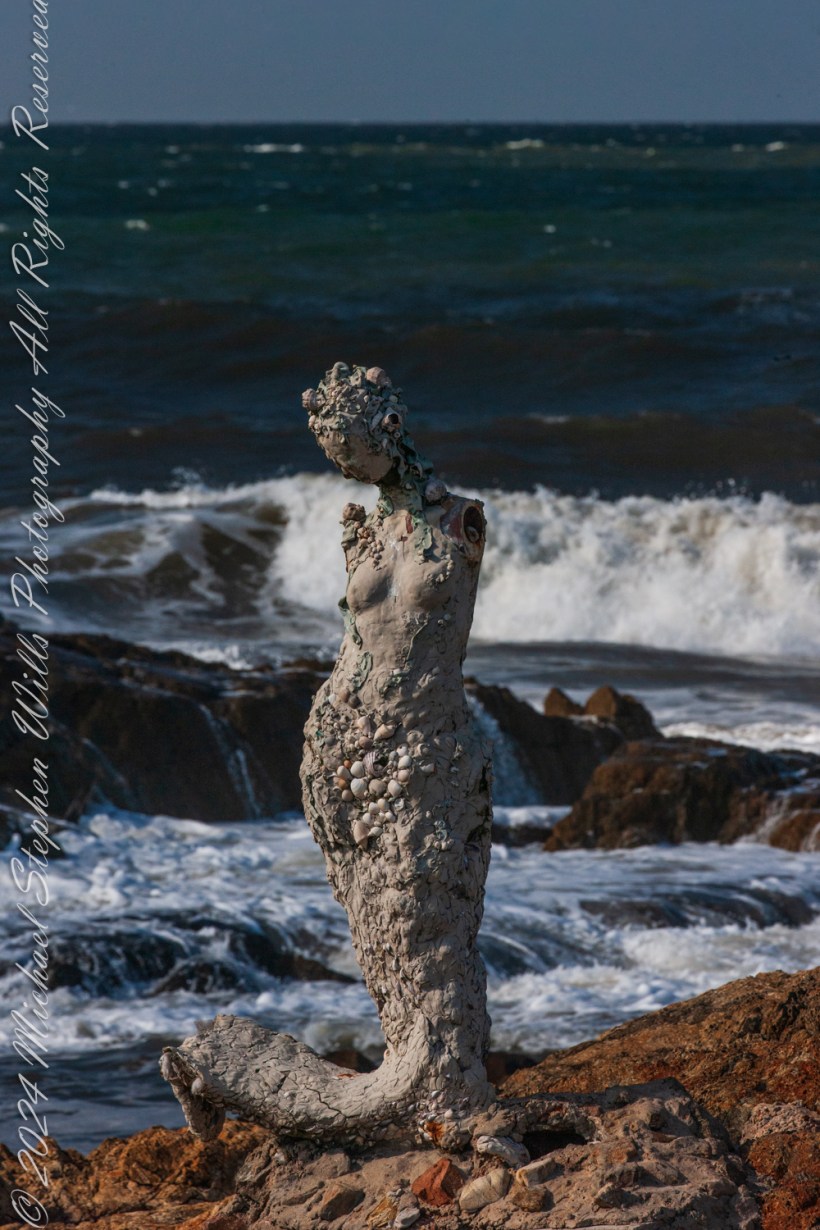
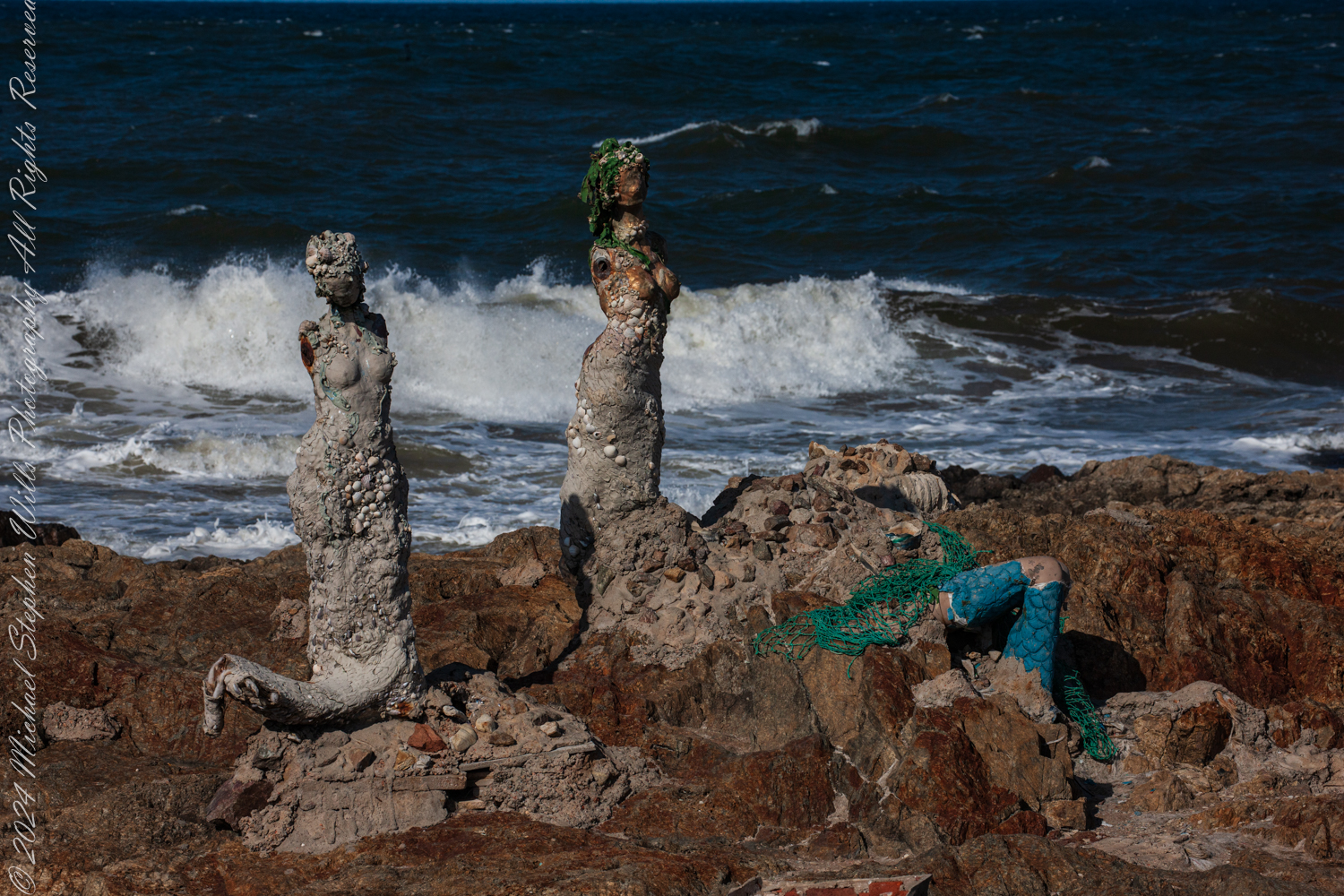
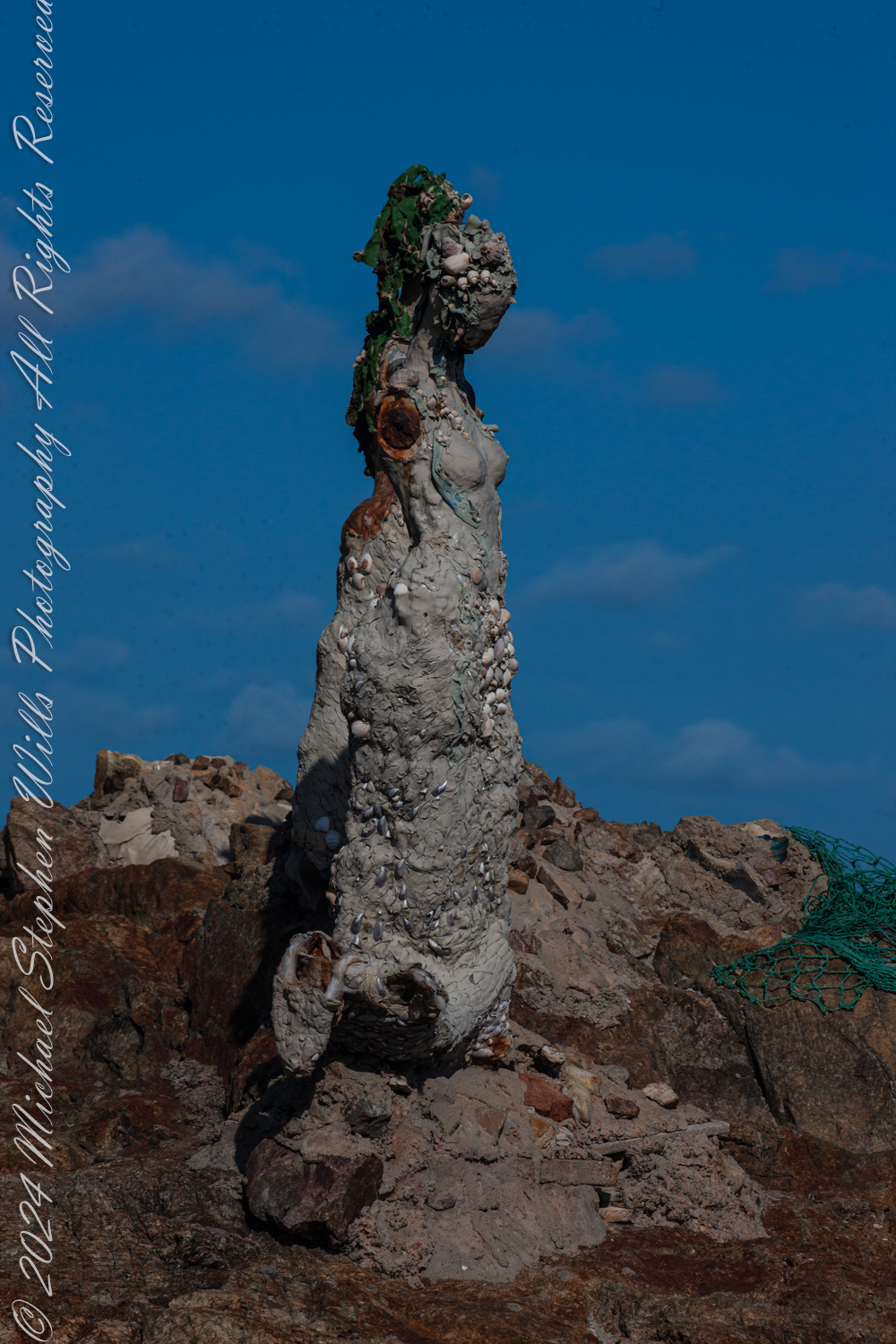
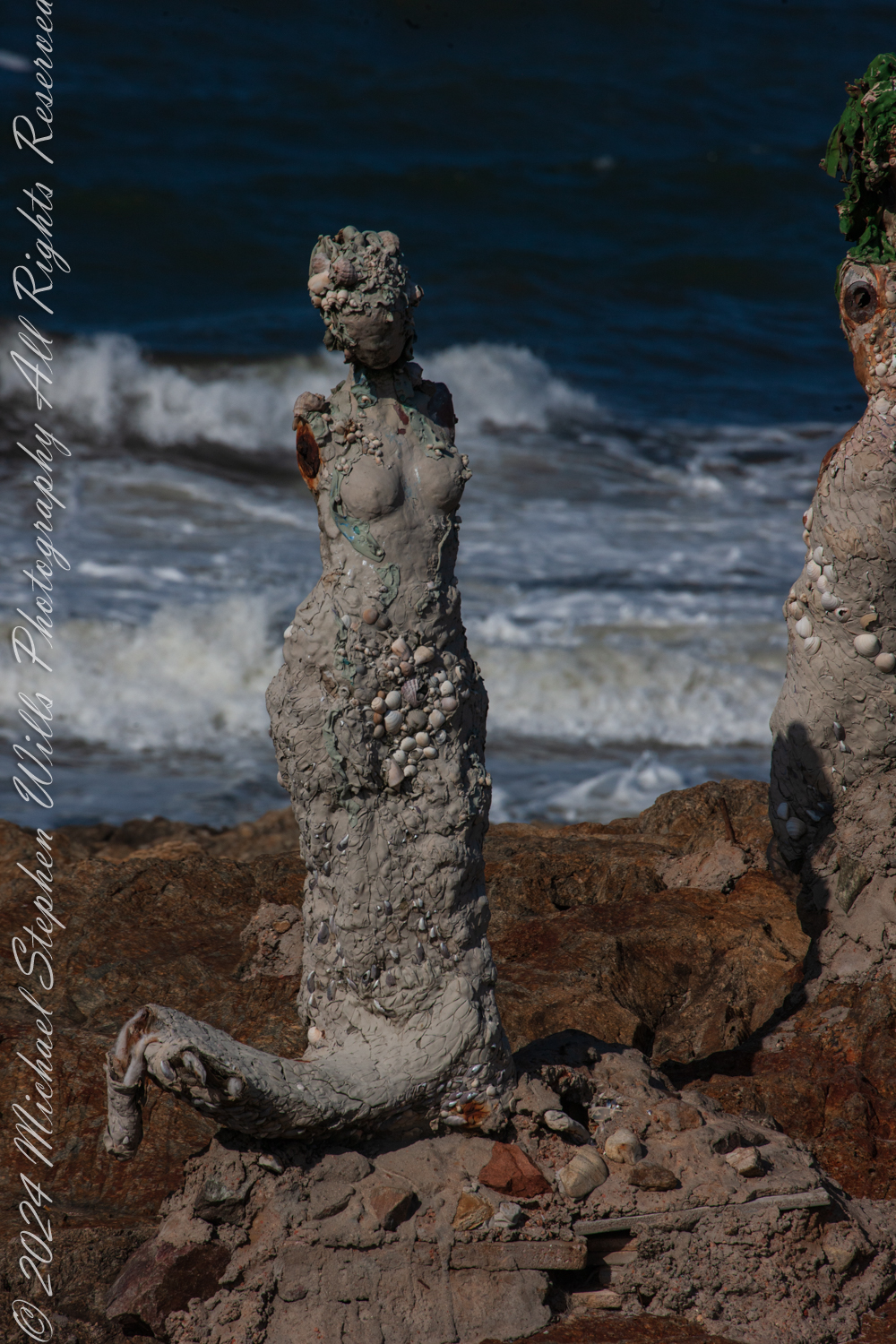
The wind carried the scent of the sea as we stood at Punta de las Salinas, the furthest tip of Punta del Este, Uruguay. This was a place of myth and mystery for us, where the Atlantic Ocean merged with the Río de la Plata, and where the rocks bore witness to the timeless interplay of water and stone. Here stood “El Canto de las Sirenas” (The Song of the Mermaids), an evocative art installation by Lily Perkins, first completed in 2012. The sculptures seemed perfectly at home here, their placement deeply intertwined with the mythology they evoked.
This is at Great Britain Square, Punta de las Salinas of Punta del Este. We are at the tip of the peninsula, the easternmost point of Uruguay. This is the art installation El Canto de las Sirenas” (The Song of the Mermaids) (2012) by the artist Lily Perkins. Punta del Este, Departamento de Maldonado, Uruguay
The sirens of ancient lore were said to dwell at perilous points where land met the untamed sea, luring sailors to their doom with haunting songs. These rocky outcrops, both a boundary and a threshold, have long held symbolic power as places where the natural world is at its most raw and elemental. Punta de las Salinas is such a place. Its jagged rocks and churning waves create an environment as beautiful as it is treacherous. It is easy to imagine mythical sirens choosing this very spot to weave their spellbinding melodies.
This is at Great Britain Square, Punta de las Salinas of Punta del Este. We are at the tip of the peninsula, the easternmost point of Uruguay. This is the art installation El Canto de las Sirenas” (The Song of the Mermaids) (2012) by the artist Lily Perkins. Punta del Este, Departamento de Maldonado, Uruguay
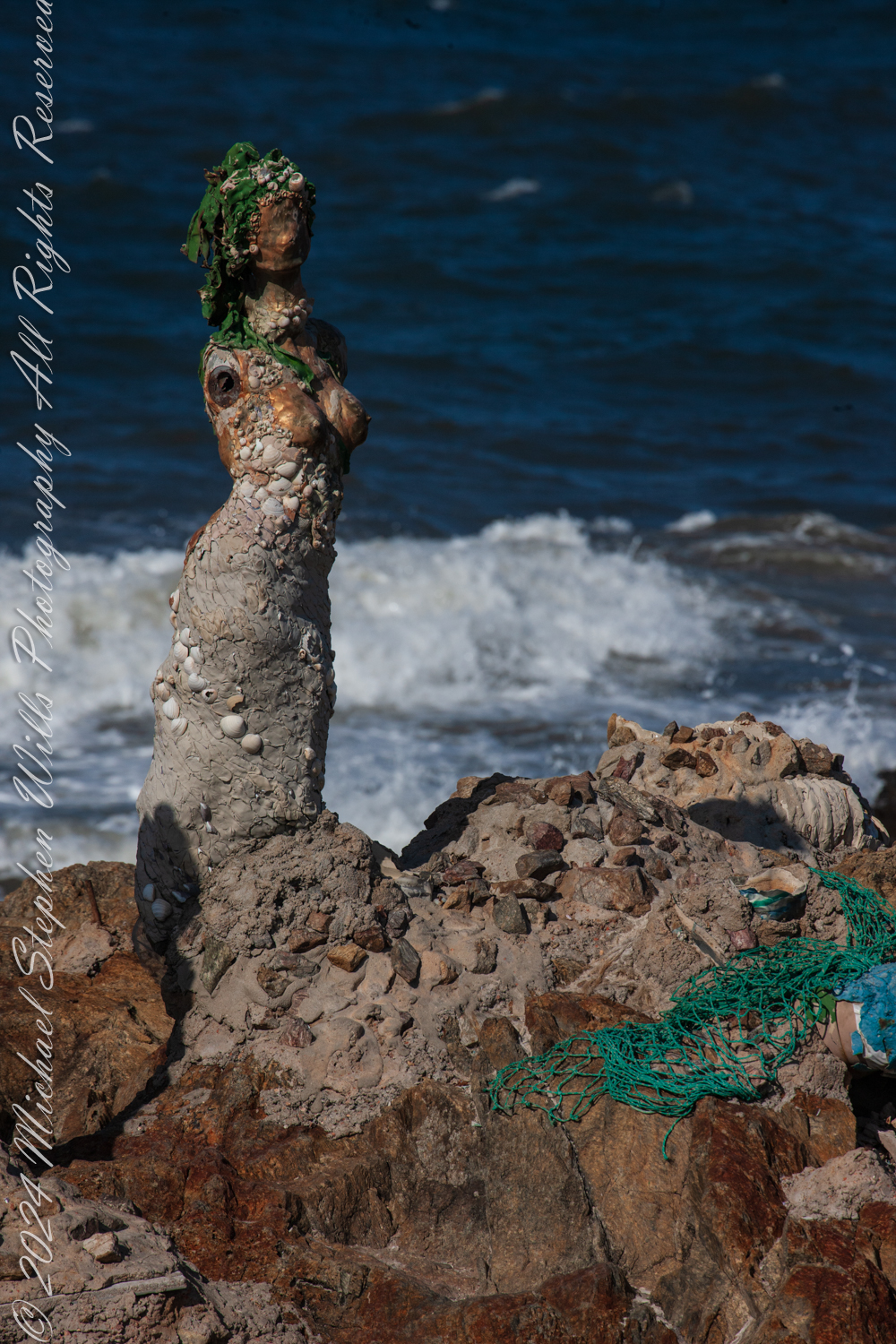
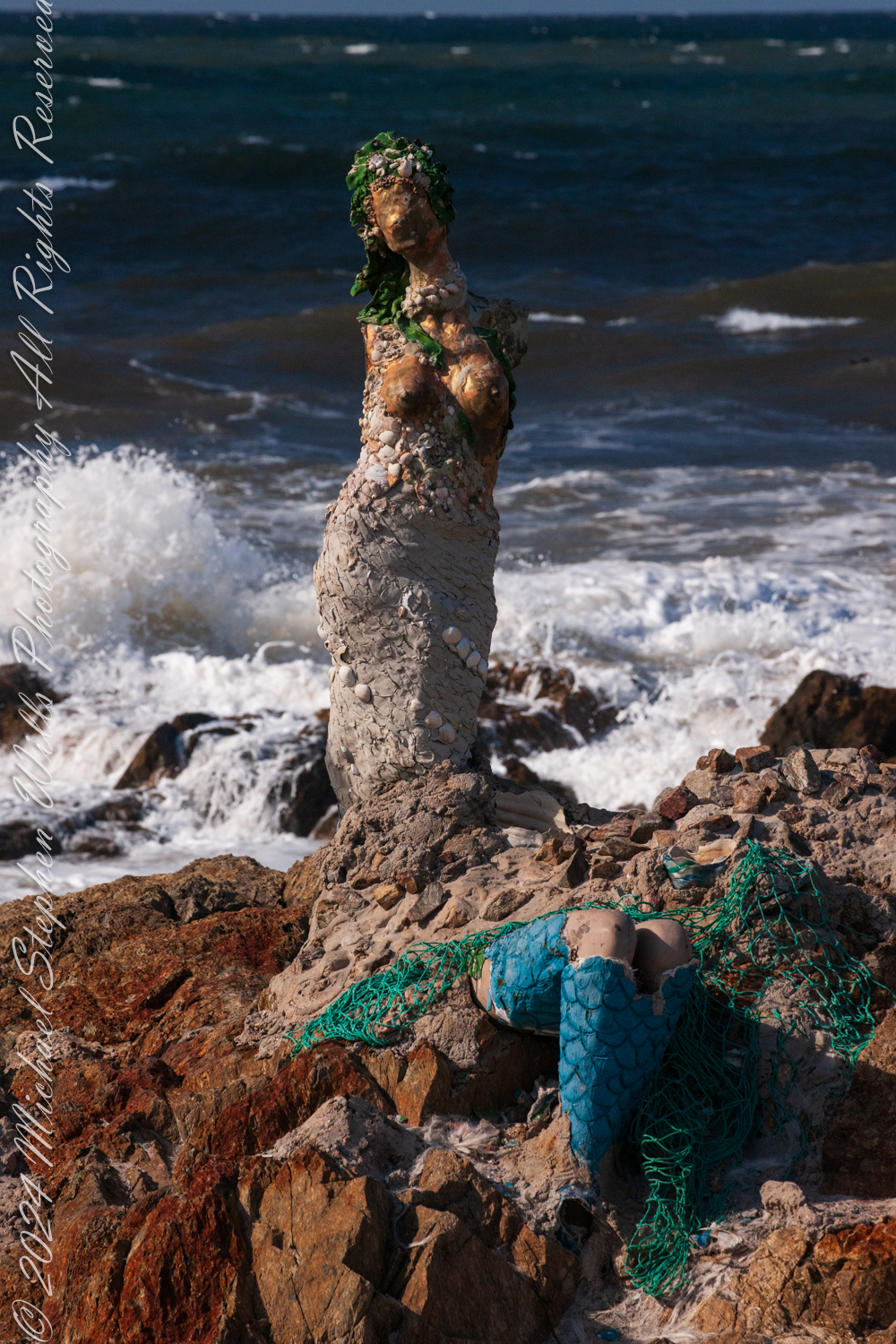
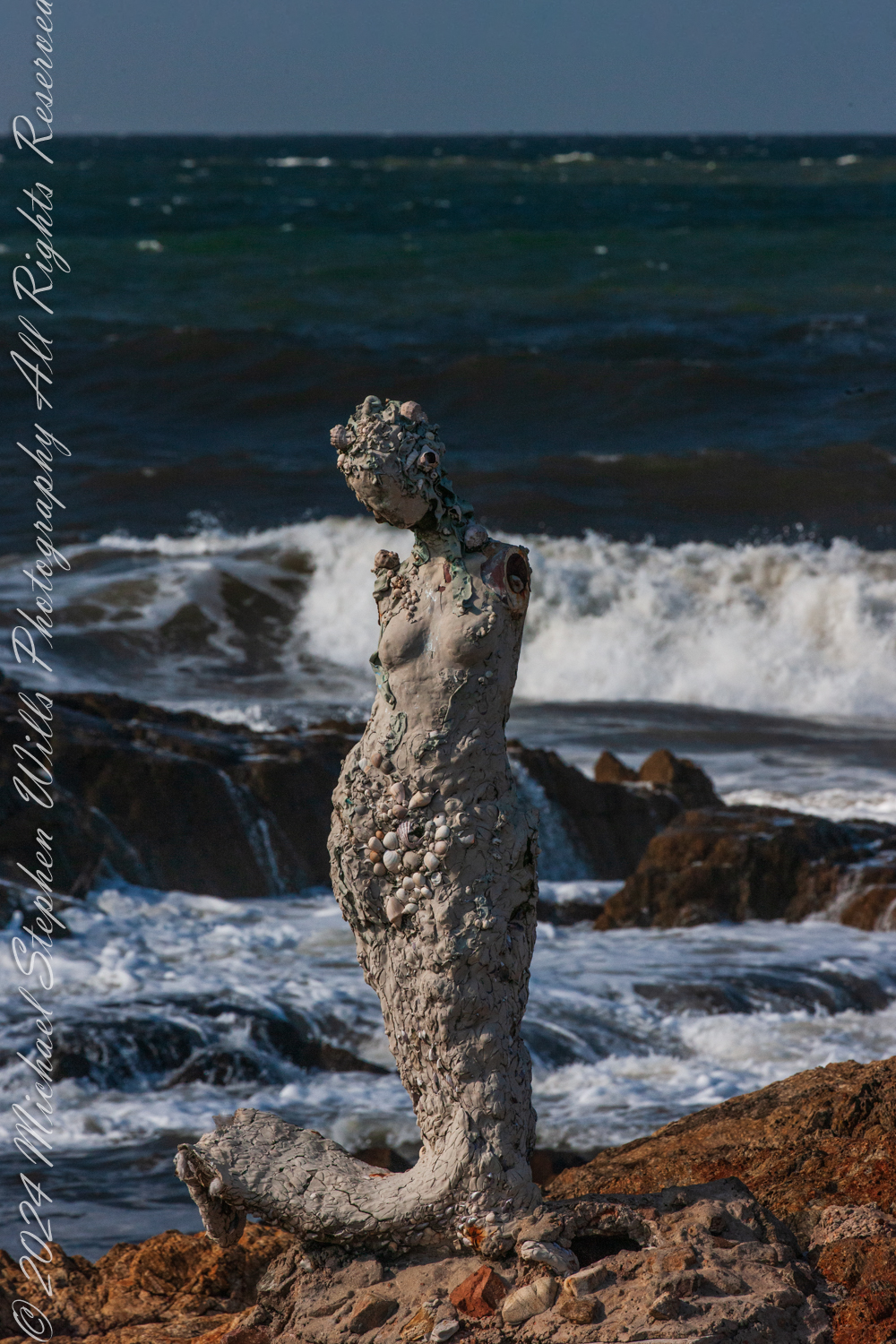
Lily Perkins’ installation captures this essence. The sculptures are not idealized depictions of mermaids; they are rugged and raw, encrusted with shells, stones, and marine debris. Their weathered forms mirror the harsh, untamed beauty of their surroundings. It is as if they have emerged from the ocean itself, born of the waves and the salt-laden air, to stand as sentinels at the edge of the world.
The central figure, with her face turned skyward, evokes the myth of the siren’s song—a melody so enchanting that it drove sailors to risk their lives against the rocks. Her posture suggests longing, perhaps for a connection beyond the horizon, or perhaps for the very mortals she is fated to ensnare. Nearby, a broken figure reclines against the rocks, her form partially encased in green netting and mosaic-like tiles. She seems more grounded, her siren’s call muted, as if weighed down by the realities of the modern world. The use of marine materials in her construction—a blend of natural and human-made debris—suggests an awareness of humanity’s impact on the seas.
The third figure, slightly apart, is the most enigmatic. Encrusted with barnacles and weathered by the elements, she seems lost in thought. Her gaze is directed not toward the sea but toward the land, as if contemplating her place at this meeting of worlds. In mythology, sirens were liminal creatures, existing between realms—the sea and the shore, the mortal and the divine. This figure embodies that in-between state, rooted in the rocks yet shaped by the sea.
The placement of these sculptures at Punta de las Salinas is no accident. This headland is the easternmost point of Uruguay, a natural boundary and a crossroads where two vast bodies of water meet. For centuries, sailors navigated these waters, their journeys fraught with danger. The rocks here are unforgiving, and the waves crash with relentless power. To stand at this point is to feel the raw energy of the ocean and to understand why myths of sirens arose in such places. The sirens symbolize both allure and peril, a reminder of the ocean’s capacity to inspire and to destroy.
As I walked among the sculptures, the mythology seemed to come alive. The sound of the waves crashing against the rocks could easily be imagined as the sirens’ song—a hypnotic rhythm that draws you in and holds you spellbound. The figures, though silent, seemed to hum with an energy that echoed the sea’s eternal motion.
I feld these sculptures were not merely placed at Punta de las Salinas; but had emerged from it, their forms shaped by the same forces that shaped the rocks beneath our feet. The shells and stones embedded in their surfaces tied them physically to the sea, while their mythical resonance tied them spiritually to the place.
The mythology of the sirens speaks to the duality of the sea—its beauty and its danger, its capacity to give and to take away. Standing at Punta de las Salinas, surrounded by Perkins’ sculptures, I felt that duality in a profound way. The ocean stretched endlessly before us, a vast, unknowable expanse, while behind us lay the solid ground of the peninsula—a place of safety, but also a place that ended here, at this edge.
Lily Perkins sculptures are restored…..
As we left, the figures seemed to watch us go, their silent song lingering in my mind. The sirens of Punta del Este are more than art; they are a dialogue between myth and reality, between the natural world and the human imagination. In their weathered beauty, they remind us of the stories the sea has always told, and of the enduring power of those who give those stories form.
Enter your email to receive notification of future postings. I will not sell or share your email address.
Copyright 2025 All Rights Reserved Michael Stephen Wills
Discover the delicate beauty of early meadow-rue (Thalictrum dioicum) along the Gorge Trail at Robert H. Treman State Park. Explore its unique spring blooms, cultural significance in Native American traditions, and the poetry of its quiet role in the woodland ecosystem.
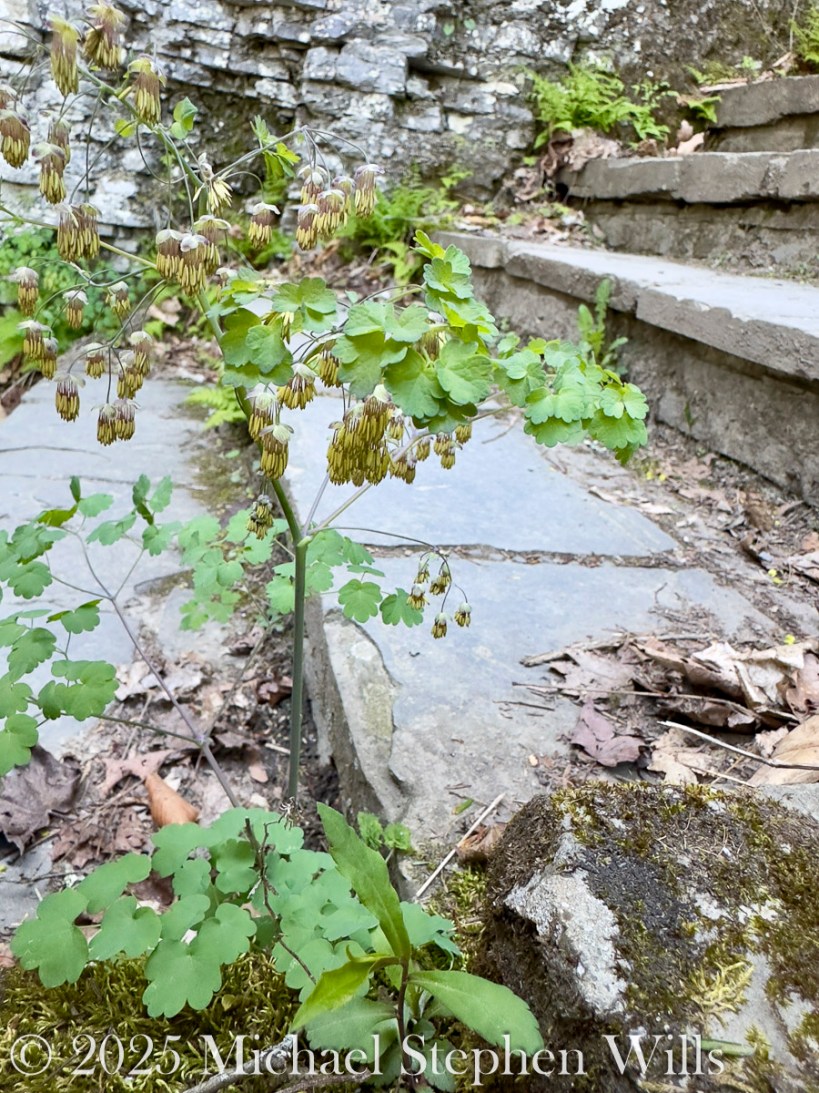
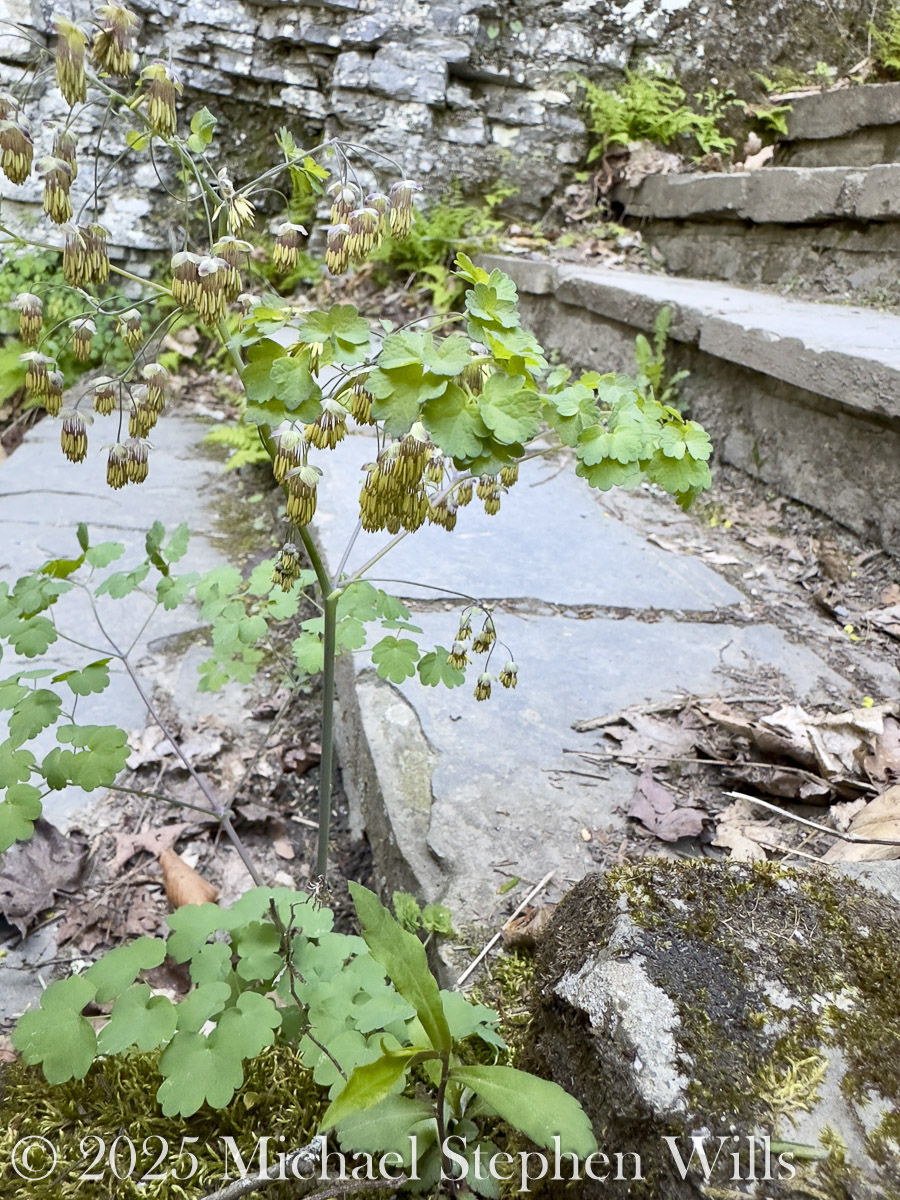
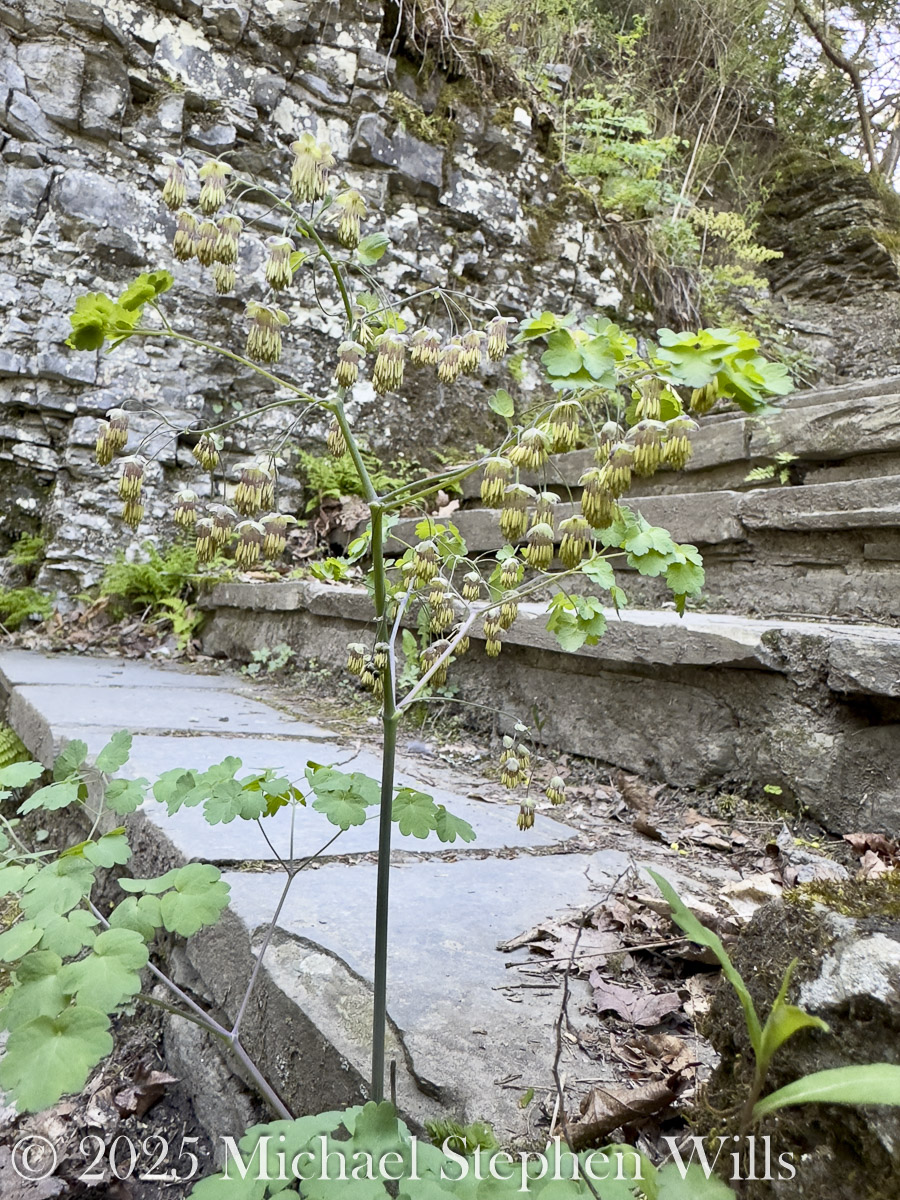
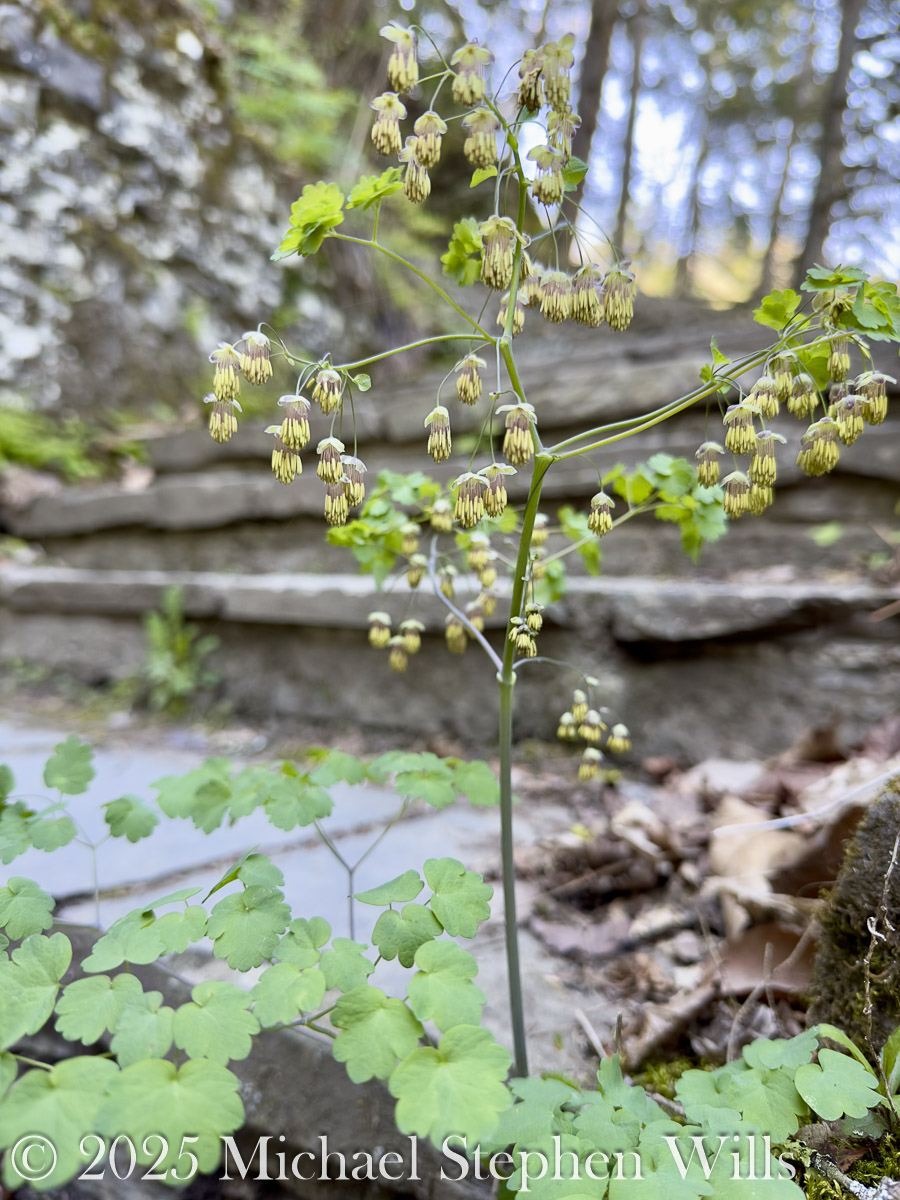
April 28, 2025 – Robert H. Treman State Park, Ithaca, NY. I step lightly along the damp stone stairs of the Gorge Trail, hemmed in by towering rock walls and the whisper of waterfalls. There, at a turn in the path, I encounter an unassuming woodland plant waving in the breeze. Its delicate green foliage could be mistaken for a young fern or columbine, but from its arching stems hang dozens of tiny yellow tassels, swaying like fairy lanterns. This is a male Thalictrum dioicum – commonly known as early meadow-rue, or more whimsically, quicksilver-weed. One of the earliest wildflowers to emerge in spring forests of the Northeast, it offers a subtle spectacle: golden anthers dangling in the cool April breeze, each tiny stamen a pendulum of pollen.
Delicate Botany of a Woodland Rue
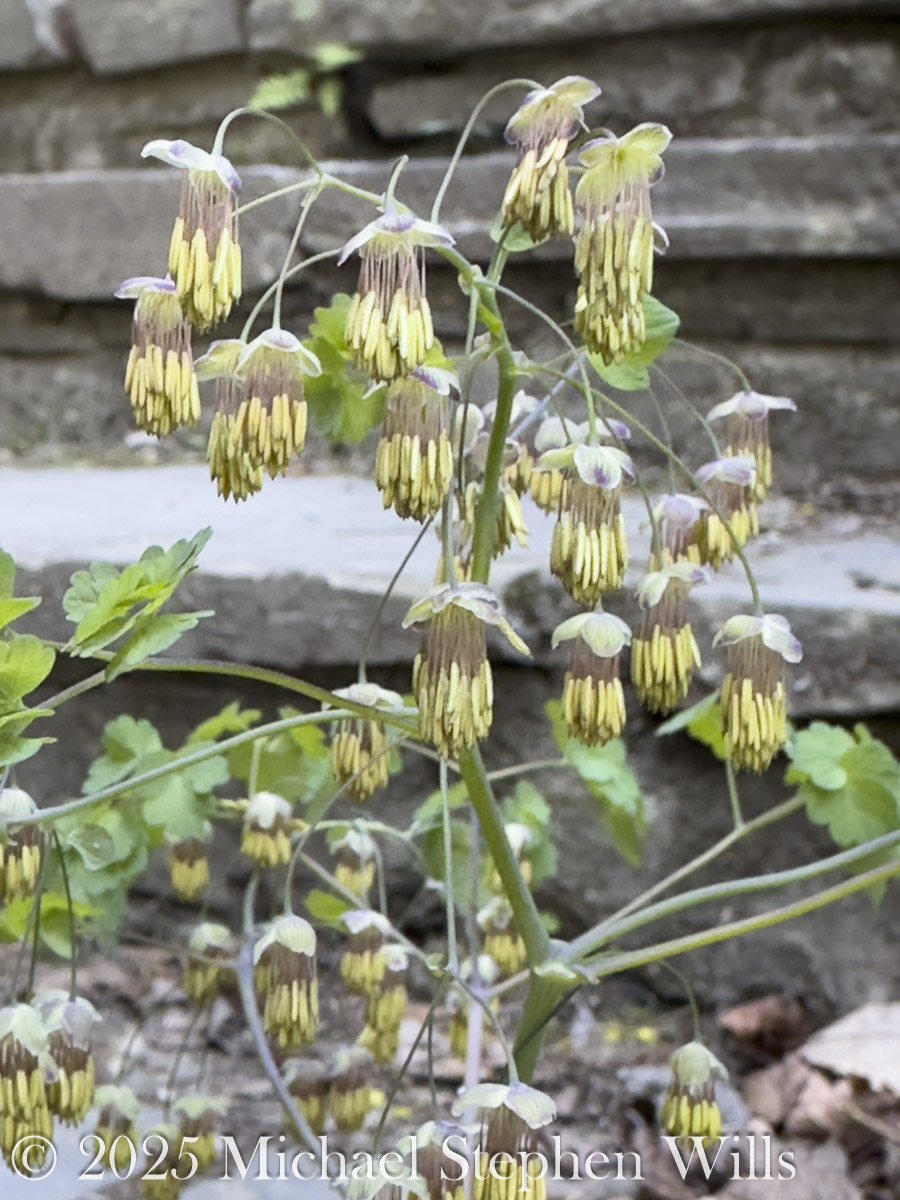
At a glance, Thalictrum dioicum might not shout for attention – standing barely one to two feet tall – yet a closer look reveals intricate beauty. Each male plant is a miniature chandelier of blossoms, the flowers having no petals at all but instead a simple fringe of sepals and a flurry of stamens. In fact, the male flowers are the showiest part of this species, with numerous slender, dangling yellow stamens that earn meadow-rue a second look. These dangles are the anthers – pollen-bearing organs – swinging freely to release golden dust on the wind. Female plants, on separate nearby stalks, are more reserved: their flowers hold up clusters of pale pistils like tiny green stars, which, if wind-blessed with pollen, will swell into achenes (dry fruits) later in the season. The separation of sexes in different “houses” is the trait that gives the species its name dioicum, meaning “of two households” in Greek. Early meadow-rue’s foliage is equally enchanting. The leaves are twice or thrice divided into lobed leaflets that resemble the herb rue (Ruta) – hence the common name “meadow-rue”. A misty green above and silvery underside, the leaflets have a rounded, almost columbine-like form with soft scalloped edges. As botanist Eloise Butler once noted, casual hikers often exclaim “what a pretty fern!” upon seeing the airy foliage before noticing any flowers. Indeed, the plant’s fern-like grace and early spring timing give the forest understory a verdant, lacy trim well before the summer plants take over.
What’s in a Name (Etymology and Lore)
Even the name of this humble wildflower carries poetry. The genus Thalictrum harkens back to the Greek word thaliktron, a term used by the ancient physician Dioscorides to describe plants with finely divided leaves. It’s a fitting nod to the meadow-rue’s delicate foliage. The species name dioicum, as mentioned, translates to “two houses,” nodding to its dioecious nature – male and female flowers on separate plants. As for “quicksilver-weed,” an old folk name, one can only imagine it arose from the plant’s ephemeral shimmer: appearing quickly in spring and perhaps glinting with dew like liquid silver. Early meadow-rue also earns its “early” title by being among the first woodland perennials to bloom as the snow melts – a true harbinger of spring in the eastern North American woods. The “rue” in meadow-rue is a bit of a misnomer botanically (meadow-rue is in the buttercup family, not related to true rue). However, the moniker stuck because of a shared appearance – those divided leaves echo the shape of true rue’s foliage. There’s no strong odor or bitterness here, though. Instead, Thalictrum dioicum is gentle in aspect and entirely non-toxic, making it a welcome companion in shady gardens and wild places alike. Gardeners sometimes cultivate it for its graceful foliage and dangling blooms, a little wild treasure in cultivated shade gardens.
A Quiet Role in the Forest Understory
In its native habitat, early meadow-rue lives a low-key life in the understory. It thrives on dappled woodland slopes, often on rich, rocky soils near streams – exactly the sort of place the Gorge Trail winds through. Preferring partial shade, it is comfortable in both moist and well-drained sites. As a spring ephemeral, it takes advantage of the window before the canopy fully leafs out, unfurling its leaves and flowers in April and May, then quietly dying back by midsummer to wait out the year’s end. This strategy allows it to catch the sunlight of early spring and avoid competition later on. Unlike showy wildflowers that beckon bees and butterflies, meadow-rue’s pollinator is the breeze. Being wind-pollinated (anemophilous), it has no need for bright petals or nectar rewards. Instead, those dangling stamens tremble with each gust, shedding pollen into the air – a dance of chance that some of it will drift over to a waiting female flower nearby. The light, swinging tassels are perfectly adapted to this purpose, increasing the odds of pollen dispersal with every sway. Even without offering nectar, early meadow-rue still contributes to its ecosystem. Its tender leaves provide an early snack for rabbits and deer venturing out after winter. A few specialized moth species also use it as a host plant in their caterpillar stage, nibbling on the foliage. By going dormant in summer, meadow-rue returns nutrients to the soil and opens space for later-emerging plants, maintaining the ebb and flow of diversity in the forest floor community. In autumn and winter, only its fibrous roots and a small caudex (rootstock) persist under the leaf litter, ready to send up new growth when spring returns.
Roots in Culture and Folklore
This demure wildflower has also found its way into human stories and herbal traditions. Native American communities, especially in the Northeast, knew and used early meadow-rue in subtle ways. Though not a superstar of indigenous medicine, it had its roles. Cherokee healers brewed tea from the roots to treat diarrhea and stomach troubles, and to ease vomiting. In Haudenosaunee (Iroquois) lore, a decoction of meadow-rue roots was used as a wash for sore, tired eyes, and even taken to steady a palpitating heart – perhaps the gentle plant lending calm through belief or mild effect. Beyond medicine, Thalictrum dioicum tiptoes into the realm of romance and harmony.
According to ethnobotanical notes, young Blackfoot women in the northern Plains would weave the pretty tassels or seed clusters into their hair, believing it would help them attract the attention of a desired young man – a bit of springtime love charm from the wilds. Among some eastern Woodlands tribes, such as the Ojibwa and Potawatomi, the seeds of meadow-rue were a secret tool for domestic peace: slipping a pinch of seeds into the food of a quarreling couple was thought to help dispel discord and restore harmony to the relationship. Whether through mild pharmacological effect or sheer faith, one imagines it brought a hopeful smile to those administering this folk remedy.
Early meadow-rue even made a brief appearance in early colonial folklore. In Canada, it’s said that some of the First Peoples used the crushed roots to treat venomous snake bites, likely as a poultice. The plant’s leaves were also dropped into spruce beer – the fermented drink made by settlers and Natives alike – perhaps as a flavoring or tonic ingredient. Interestingly, despite these uses, meadow-rue never became a staple in European-American herbal medicine. 19th-century herbal texts noted that American Thalictrums were largely ignored by formal medicine, overshadowed by their European cousins. This lends our Thalictrum dioicum an aura of a plant mostly known by those who dwell close to the land – a quiet ally in the forest, employed in pinch when needed and otherwise simply appreciated for its beauty and symbolism.
Reflections on a Spring Encounter
A close-up of Thalictrum dioicum male flowers, often called “quick-silver weed” for the way these golden tassels catch the light. The plant’s lack of petals is evident – instead, dozens of pollen-laden stamens dangle, ready for the wind’s call.
Encountering this early meadow-rue along the gorge felt like stumbling upon a small secret of the woods. In the waterfall haunted gorge, with slate-gray cliffs towering overhead, these frail yellow tassels swayed and twirled as if performing for an unseen audience. There was a breezy playfulness in that moment – the plant nodding in the wind, pollinating by dancing rather than by the busy work of bees.
I was struck by how ancient and new it all felt: this same species blooming every April for thousands of years, used by generations of indigenous peoples for healing and hope, yet to me on that day it was a delightful surprise, as fresh as the spring itself. As I crouched to take a closer look, I imagined the threads of history and myth that early meadow-rue carries. Its presence here is a sign of a healthy, layered woodland. It whispered of resilience – how something so delicate survives the torrents of spring rain and the deep freezes of winter underground, year after year. In the golden afternoon light of the gorge, those dangling blossoms were like drops of quicksilver sunlight, fleeting and brilliant.
I felt grateful to have noticed this little plant, to share a moment of connection across time and cultures. The next bend of the trail would lead me on, but the image of quicksilver weed in bloom stayed with me – a reminder that even the quietest corners of nature are filled with stories waiting to be noticed.
Enter your email to receive notification of future postings. I will not sell or share your email address.
Copyright 2025 All Rights Reserved Michael Stephen Wills
References
Thalictrum dioicum (Early Meadow-rue) – Wikipedia Friends of the Wild Flower Garden – Early Meadow-rue (Thalictrum dioicum) plant description and naming henriettes-herb.com Institute for American Indian Studies – Medicinal Monday: Early Meadow Rue, blog post (Jan 22, 2024) Henriette’s Herbal – Thalictrum dioicum excerpt from Drugs and Medicines of North America (1884-1887) henriettes-herb.com Friends of the Wild Flower Garden – Eloise Butler’s note on Early Meadow-rue (1911)
Two men experience the breathtaking beauty and vastness of Monument Valley, reflecting on nature’s timelessness while feeling small against the grandeur of the landscape at dusk.
They drove on through the late November light with the road falling away toward the valley. In the west the sun hung low, a copper disk above the red land. The two men squinted through the windshield. Before them, Monument Valley unveiled itself in towering silhouettes and stone ramparts where the world opened to an ancient scene held in amber light. A long black ribbon of highway led onward, straight and true, toward those looming buttes etched against the sky. The older man eased the truck to the shoulder and killed the engine. In the newfound quiet, they sat as the wind ticked against the cooling hood. Ahead, the valley’s monuments stood waiting in the orange glow of sundown.
“Hell of a sight,” the driver said softly.
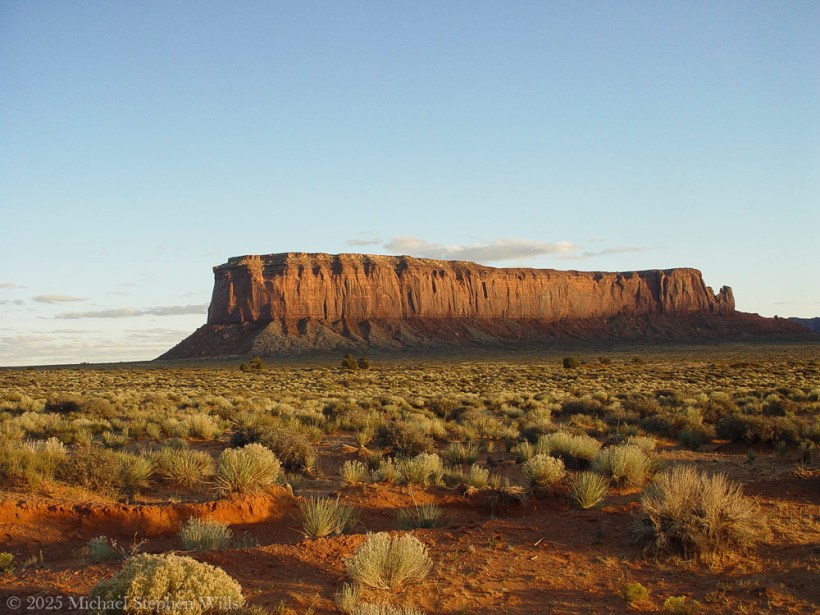
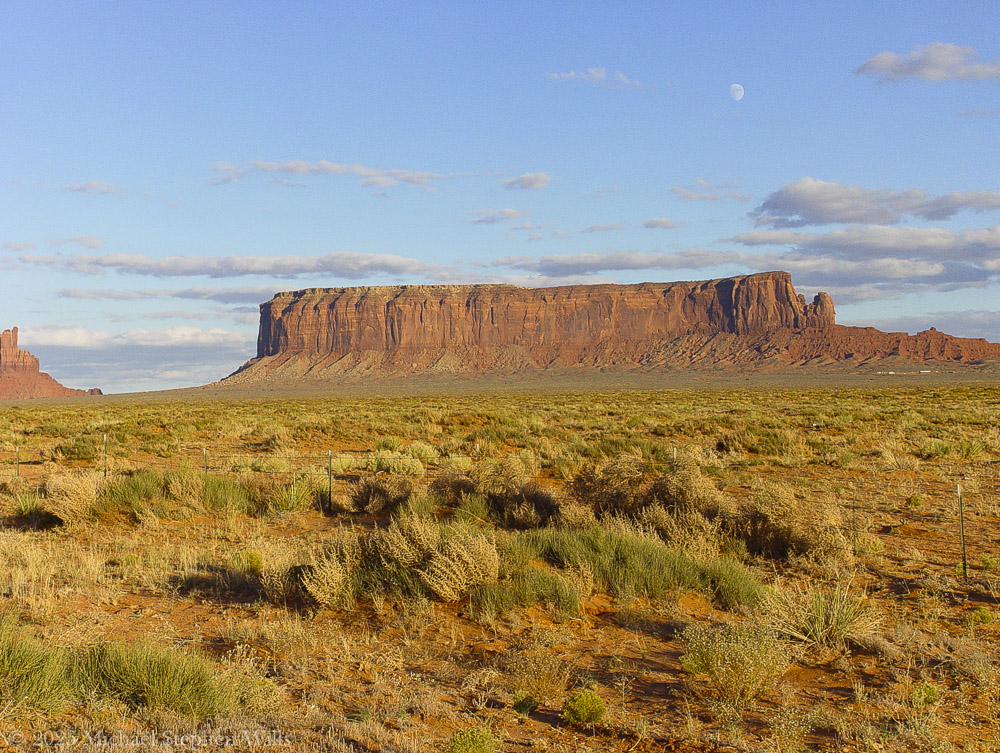
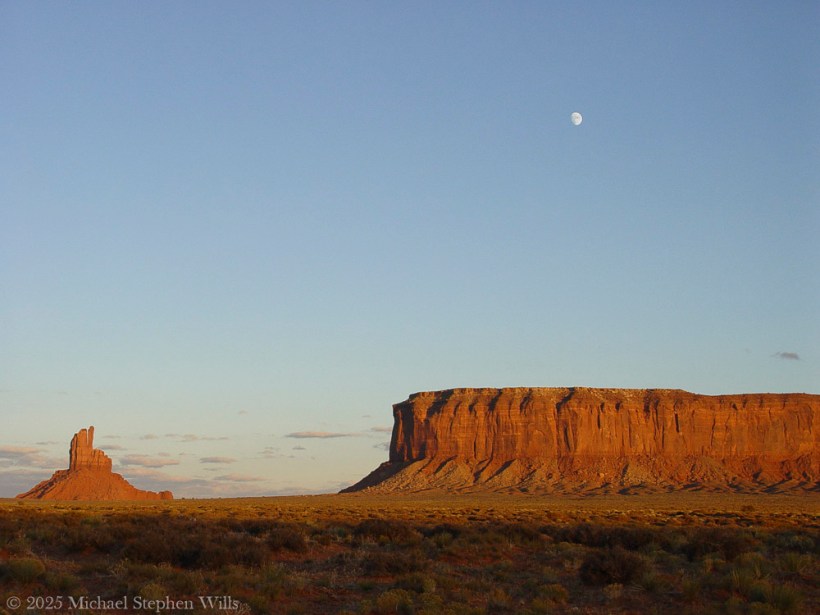
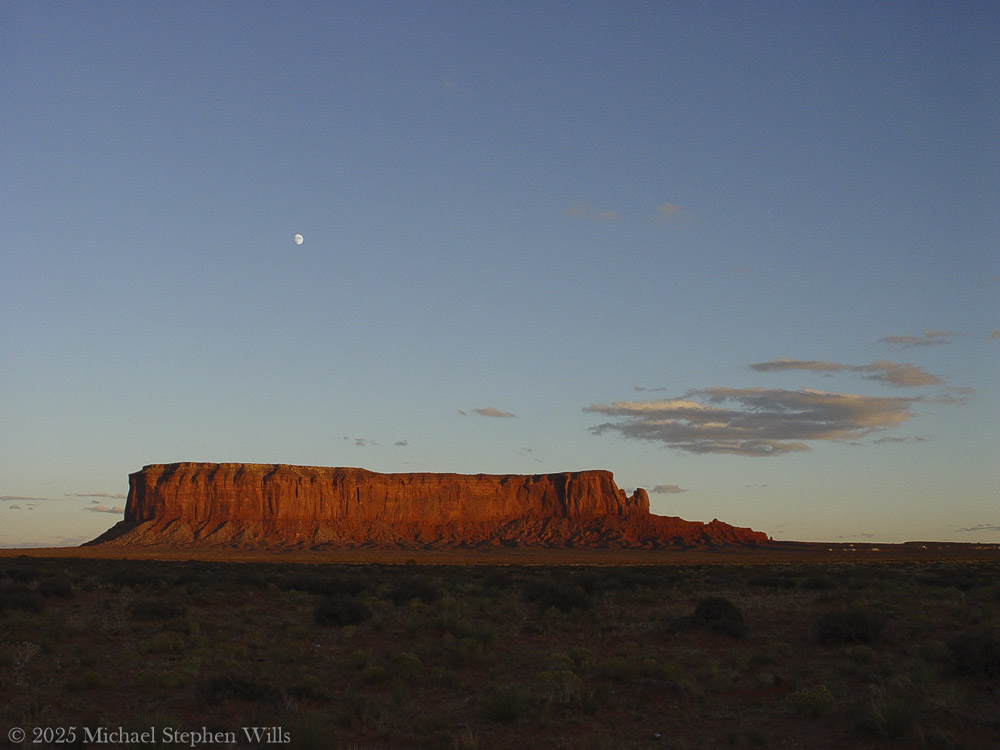
Sentinel Mesa and a slice of Big Indian peak to the left. A risen moon above all.As the day progressed here is Big Indian to the left, a portion of Sentinel Mesa with the risen moon above all
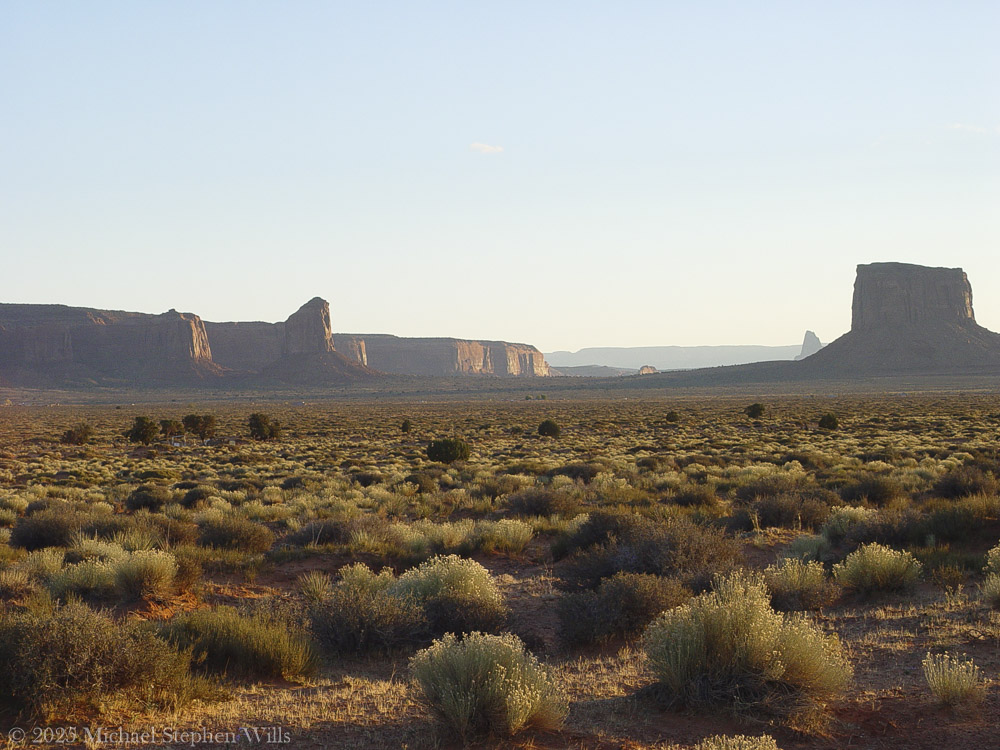
To the east, Sentinel Mesa rose broad and dark, its flat summit catching the last aureate light. The mesa loomed like a great natural battlement guarding the valley’s entrance. Aside, a solitary pinnacle known as the Big Indian stood in muted vermilion hues. In profile it did resemble a weathered face—a monumental visage gazing eternally south over the sacred lands. Farther south, Mitchell Butte jutted upward, its sheer walls burnished red-gold on one side where the sunlight still lingered. A mile or so southeast, the land climbed again to the massive bulk of Mitchell Mesa, now mostly in shadow. The sun was dropping behind it, outlining that mesa’s far rim in a halo of pale fire. Near to Mitchell Butte, a tall slender Gray Whiskers Butte rose like a lonely watchman. Its pinnacle was streaked with dusk, the stone fading from blood-red at its base to a somber gray at its crown. One of the men pointed toward it silently, and the other simply watched, understanding the unspoken thought: how small they were below these giants of rock.
Mitchell Butte, Grey Wiskers Butte and Mitchell Butte
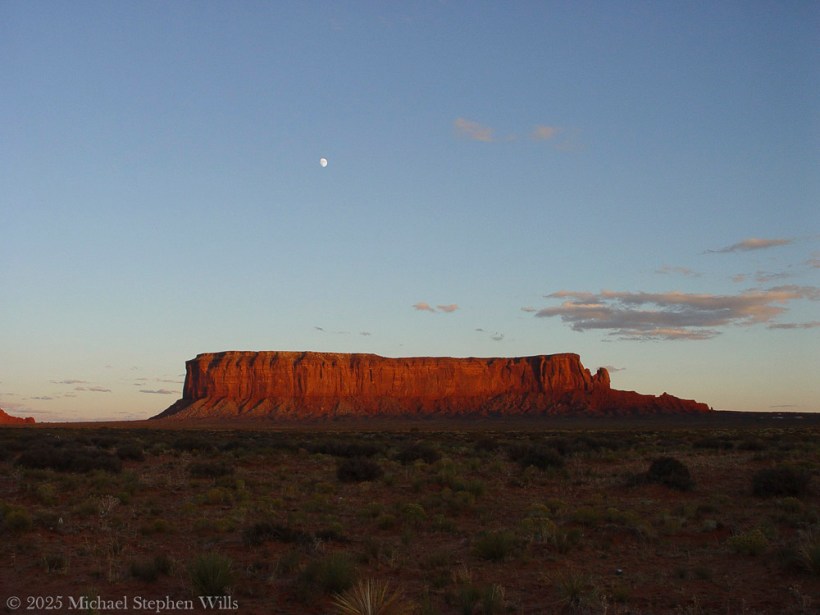
High above Sentinel Mesa, the evening swan of this desert had already appeared — a waxing moon, nearly full and ghostly white. It floated just over the mesa’s dark crown as twilight gathered, like an omen or a blessing. The sky behind the landforms had begun to take on the deep indigo of coming night. In the east, opposite the dying sun, the heavens were lavender and faintly banded with pink. The moon climbed in silence, gaining strength as the sun bled out in a final flare of vermilion along the horizon. In that half-light the mesas and buttes became blackened shapes, cut from the twilight itself, their identities merging with the land’s dusk. November’s chill crept in with the dark. The younger man drew his jacket closed. Neither of them had thought to speak for minutes now. They simply wandered a few yards from the truck, eyes turned outward and upward, silhouettes of their own against the dimming day.
Sentinel Mesa with risen moon
His companion nodded. He opened the door and stepped out. “Never seen anything like it,” the younger man said. His voice was reverent, almost a whisper. The driver climbed out too, boots crunching on red grit. They walked a few paces from the road, drawn forward as if on a tide. The evening air was cool and carried a dry, dusty scent tinged with sage. In the far distance, the monuments cast long blue shadows over the valley floor. The travelers stood for a long moment without speaking, each alone with the scale of it.
The land was vast and inscrutable. In the silence it felt holy. It was easy to believe no one else in the world existed at this hour — only these two and the ancient valley spread before them. The wind came from the west in a long sigh, carrying the dust of the desert. It whispered through dry bunches of brush at their feet and stirred a lonely tumbleweed across the cracked earth. The younger man removed his hat and ran a hand through his hair as if to assure himself this was real. The older man stood with thumbs hooked in his belt, head tilted back to drink in the view. His face was lined and still, the dying light painting one side in gentle umber. If either man harbored any burdens or regrets from the road behind, the land seemed to dwarf those worries into nothing. They felt themselves small as insects on an endless painted floor.
After a time, the driver cleared his throat. “We’ll lose the light soon,” he said. His voice was low. He seemed unwilling to break the spell with anything louder.
The younger man nodded again but did not take his eyes off the valley. “Just a few more minutes,” he replied.
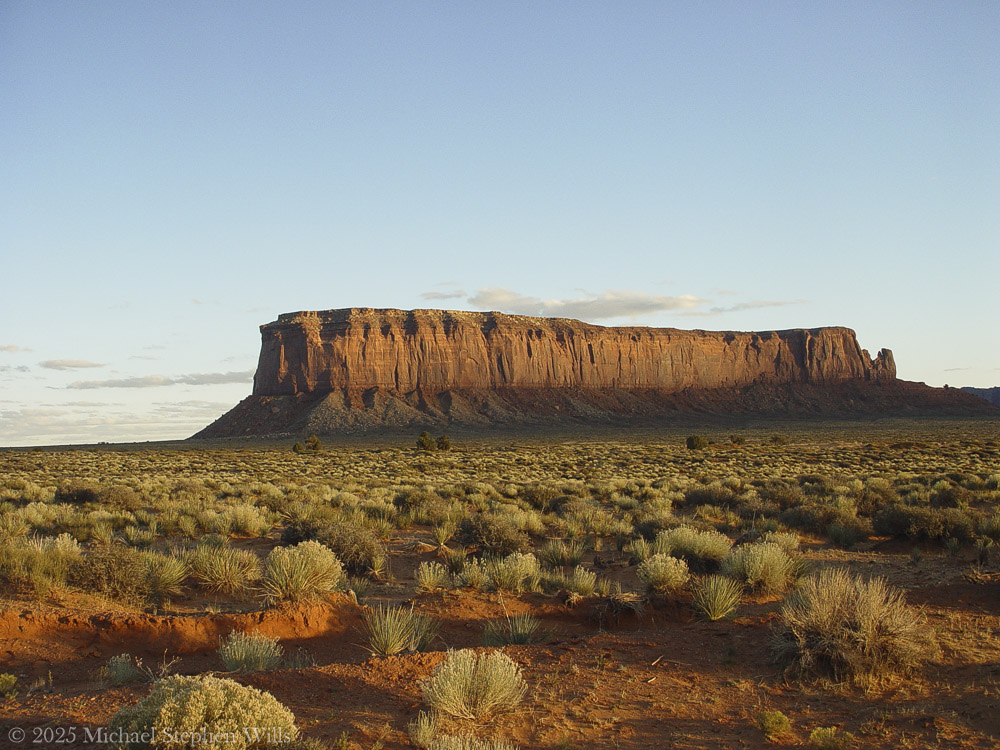
“All right.” The driver smiled thinly and pulled out a cigarette. He struck a match and cupped it against the breeze, the brief flame reflecting in his narrowing eyes. In the glow of the match the canyons of his face showed for an instant, then vanished into shadow again. He drew in and exhaled a plume of smoke that the wind instantly seized and unraveled. Sentinel Mesa crouched out there like a great shadow, crowned now by a silver moon that grew brighter by the minute. The older man followed that mesa’s outline with his eyes, tracing the crenellated cliffs and the slope of rubble at its base. “They named that one right,” he said, mostly to himself.
“What’s that?” the other asked softly.
“Sentinel. Standing guard.” The driver gestured with the glowing tip of his cigarette. “Feels like it’s been watching this place forever.”
Sentinel Mesa standing guard with the red desert floor and fauna in the last light of sunset
The young man considered the hulking form of the mesa. In the twilight it did have the aspect of a watchtower keeping vigil over the valley. “It probably has,” he said. “Long before we ever came.”
On the road behind them a faint glint of chrome from the hood caught a stray moonbeam.
The younger man broke the long quiet. “You ever been down here before?”
The older man nodded. “A time or two.”
“You see all this then?”
A chuckle from the older man, low in his throat. “Not quite like this. First time I come through here I didn’t see a damn thing.”
The younger man looked over, puzzled. “What do you mean?”
“Well,” the old man said, “I’d been driving since Durango, and I’d run out of good sense somewhere near Shiprock. Rolled in with the rain. Thought I’d catch a nap and wake up to a postcard.”
He paused, lighting another cigarette, letting the flame flicker in the cooling breeze.
“Only I parked across from a big ridge in the moonless dead wet dark, didn’t think much of it. Woke up next morning to what I thought was the edge of a landfill. Just a big wall of brown rock. Figured I took a wrong turn and ended up behind a gas station.”
The young man laughed. “You’re kidding.”
“Nope. Got out, stretched, cursed the road and the view and the whole damn state. Got out to take a leak, figured I’d head on. And just as I’m zippering up, I look to the right—and there it is.”
He waved his hand toward the black outline of Mitchell Mesa, vast and solemn in the moonlight.
“The whole valley,” he said. “Caught me sideways. I parked blind to all of it. Missed the whole show.”
He shook his head, the cigarette ember glowing orange.
“Spent the next half hour cussing myself out. Sat there red-faced with a thermos of cold coffee like a man at the symphony who showed up deaf and late.”
The younger man laughed, full-throated now. “You mean to tell me you slept in Monument Valley and thought you were behind a gas station?”
The old man shrugged. “In my defense, it was cloudy.”
They both laughed then, the sound rolling out over the scrub and rocks and into the vastness.
He walked a little farther from the road, and the older man paced beside him. Ground crunching underfoot, fine dust kicking up around their boots. They ascended a slight rise where the terrain leveled off in a broad expanse leading toward the valley proper. Beneath their feet the earth was soft and powdery—red earth, lit now by the dim purple of dusk and the growing lunar light. The younger man scuffed the toe of his boot in it, and a little crimson cloud rose and drifted away. By daylight this soil was a vivid rust-red, the color of dried blood. It was as if the ground itself had a memory of violence or sorrow, but the truth of that color was simpler and older: the iron in the earth, left behind by ancient oceans, oxidizing over eons in the sun and airen.wikipedia.org. The land bled red because the very minerals of its making had rusted in the long passage of time. In places the valley floor was cracked clay, in others loose sand, all part of the same great story of stone turned to dust.
The two men walked out a bit further into the open, where scattered plants clung to life in the hardpan. There were low shrubs of sagebrush exuding a faint herbal scent, and clumps of purple sage with gray-green leaves, their summer blooms long spent. Here and there jutted the spiky forms of yucca, bayonet-tipped leaves fanning out from the base of each plant. Most everything that grew here hugged the ground and wore the dusty colors of the soil. In the failing light, the sage and grass tuft looked almost colorless, pale as ash. Only when lightning storms rolled through would the desert briefly bloom green; in these dry weeks of autumn the vegetation lay dormant, patient. A scraggly juniper tree crouched in a shallow gully nearby, twisted by wind and drought, its bark bleached where it faced the sun. These were the survivors of an unforgiving climate – rabbitbrush, snakeweed, hardy shrubs that lived on almost nothing. The young man knelt and pinched a bit of sage between his fingers, releasing its sharp fragrance. This smell, to him, was the perfume of the desert itself.
In the sand at the base of the sagebrush, he noticed a faint track. He brushed aside some dust to reveal the imprint of tiny claws: the delicate spoor of a lizard that had passed earlier when the ground was warm. It wound off between the rocks and vanished. Other tracks crisscrossed subtly in the dirt – a jackrabbit’s long-toed prints, nearly indistinguishable amid scuffs, and the delicate imprints of some small bird that had hopped about pecking for seeds. Life was here, though it was seldom seen. A red-tailed hawk wheeled silently high above, cutting black circles into the dim sky. Perhaps it was hunting one last time before full dark. The younger man stood again and looked out over the valley with new wonder, realizing that countless creatures lived and moved in this terrain largely unseen. In the daytime heat they sheltered in burrows and shadow. At dusk they came forth. He imagined a coyote trotting through a distant wash on soft paws, nose to the ground; a mule deer picking its way among these rocks somewhere beyond sight; a mountain lion watching from high up on a ledge as it had watched all afternoon. This desert did not easily give up its secrets, but they were there.
The older man stepped out onto a broad flat of rock and ground his cigarette butt under his heel. In the silence his companion could hear the scrape of boot leather on stone. The rock was part of an exposed slab that had broken off from a greater outcrop. It sloped gently down into the valley and was strewn with fine gravel from its own slow decay. The driver pressed his bootsole into a brittle crust of the rock’s surface, and it crumbled with a dry sound. These monoliths around them were not as immutable as they looked. Wind and rain had been gnawing at them for ages uncounted. Every thunderstorm that swept these flats cut new gullies in the shale, undercutting the bases of the cliffs. Every hot summer day the rock expanded, and every cold night it contracted, fissures growing by imperceptible degrees. Water trickled into cracks and ice pried them wider in winter. In time, great slabs would calve off with a roar and a billow of red dust, adding another heap of boulders to the talus at a butte’s feet. The valley was strewn with such piles like fallen ramparts. Erosion was the master sculptor here, patient and inexorable, chewing away the softer rock beneath and leaving the harder stone standing in great towers and tablelands. Each butte, each spire, had endured unthinkable ages to remain in this moment as a seemingly permanent fixture—and yet they too were slowly disappearing grain by grain. In a thousand years the difference might be subtle; in a million, perhaps these forms would be gone entirely, ground down to the flatness of the surrounding plain. The land was alive in geological time, though to human eyes it appeared frozen in a grand and silent repose.
They wandered farther, and now the truck was a small shape behind them on the roadside pullout. Neither man minded. The road was empty; no other vehicle had come along for a while, and only a lone set of headlights glimmered many miles away, moving slowly, probably a rancher or a late tourist heading home. The two travelers were alone with the land and sky. Overhead, the first stars were coming out in earnest, timid specks appearing in the dome of night. The moon was higher now and bright enough to cast shadows. The tall profile of Big Indian was cut into the moonlit sky, unmistakable and solemn, and on the valley floor the leaning spire of Gray Whiskers stood lit on one side by the cold glow. Away to the east, the open desert beyond the valley was falling into darkness, a great stretch of unknown country into which the highway disappeared. And still the west flared with afterlight — a band of deep red on the horizon, fading to gold, then greenish and up into the endless blue-black. It was a sky that seemed too vast for the world.
The younger man found a boulder at the edge of the flat and sat down. He removed his hat and set it beside him. The stone felt cool now under his legs. The heat of the day had fled so quickly that the air itself seemed to crackle with cold. He drew a deep breath and let it out. The land gave back only silence. A great and ageless solitude reigned here, the kind that makes its home in deserts and high places where man has no authority. He could feel it pressing in, not unkindly. It was the solitude of a world largely unchanged long before humans and likely long after. Under that eternal sky and the gaze of those stony sentinels, their own lives felt momentarily trivial. Yet the feeling was not bitterness or despair. Rather, it was humbling and strangely reassuring, as if all the griefs and triumphs that had ever marked a human life were nothing next to the calm presence of these rocks. The earth endured. The earth would always endure. Time and wind would wear down even mountains, but until then these mesas would keep witness over the days and nights, the storms and still mornings, the generations of men who came wandering through seeking something larger than themselves.
The older man walked over and eased himself down on the same boulder. He groaned softly as he sat, rubbing one knee. They both looked out over the emerging night. For a long while, neither spoke. Far in the distance, a coyote yipped — a brief, high sound, then silence again. The younger man smiled in the dark.
“The cold is coming fast,” the older man said after a time.
“Yeah. It does that quick out here.” He picked up his hat and dusted it off, though no dust truly could be kept off in this country. Dust was the true sovereign of the valley — red dust that coated boots and clothes, that hung in the air at midday, that settled on skin like a fine powder. It would ride back with them in their vehicle no matter how well they shook their coats. It had a way of clinging on, a reminder of where one had been.
“You ready?” with a tilt of his head back toward the truck.
The younger man took one last sweeping look over Monument Valley. The forms of Sentinel Mesa and its neighbors were nearly indistinguishable from the dark of the sky now, save where the moonlight etched a line or two along a cliff. The valley floor was lost in shadow. In the east, a few scattered clouds caught a faint silver luminescence from the risen moon. The beauty of the scene was stark and almost aching — a kind of beautiful emptiness that a man carries away inside him, knowing he has witnessed something that can never properly be told. He opened his mouth as if to speak, but no words came. Instead, he simply nodded and got to his feet. They began walking back toward the truck, side by side.
Behind them, the desert night continued its slow unfurling. One by one, stars pierced the darkness. The moon climbed higher on its silent arc. The great stone silhouettes stood unchanged, as they had through countless nights. In a few hours the dawn would come and paint them in rose and gold once more. But for now the valley slumbered under the pale glow of the moon. As the two men reached their vehicle and the engine turned over, its headlights flaring to life, they took one last look across the plains of Monument Valley. Then the truck pulled back onto the highway and receded down the lonesome ribbon of asphalt, two red taillights diminishing and finally vanishing into the boundless Navajo night. The land remained as it was, vast and indifferent to their departure. Sentinel Mesa and Mitchell Mesa stood like opposing pillars at the great gateway of the valley, keeping their eternal watch. The wind sighed over the road and across the sleeping rocks. The footprints the men had left were already beginning to blur with settling dust. Above, the indifferent stars traveled their courses. And the red earth of the desert stretched away in all directions—ancient, patient, and still, beneath the enduring sky.
Enter your email to receive notification of future postings. I will not sell or share your email address.
Copyright 2025 All Rights Reserved Michael Stephen Wills




 Michael Stephen Wills Photography