A span of 10,000 years spreads between now and the first possibility of settlement on the island of Eire, then swept clean to bare rock by the weight of ice. Current scholarship of the Dún Aonghasa ruins, Inishmore, County Galway, the Irish Republic place a settlement within the inner of the four dry stone rings after 6,500 years (1,500 BC or 3,500 years ago). By way of scale, the first settlement took about 30 times the duration of the U.S. Constitution ratification through 2025: the last state, Rhode Island, ratified the Constitution 1789.
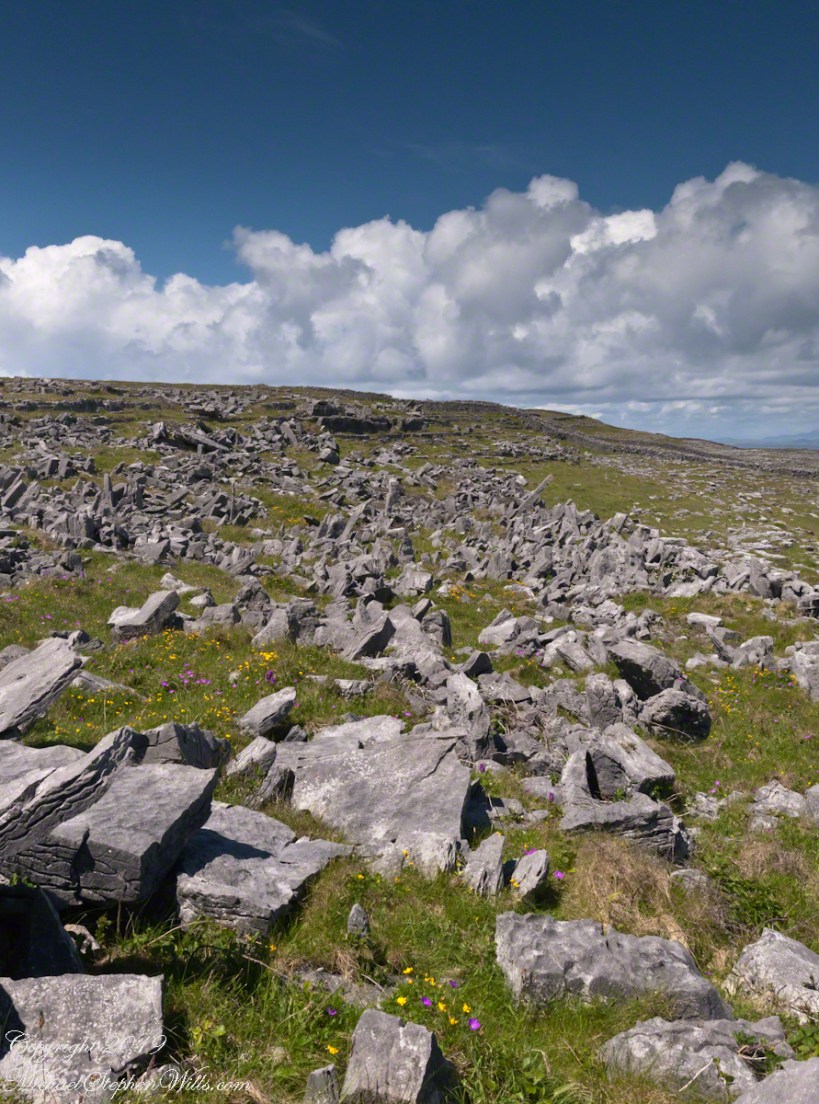
By 700 BC, 2,700 years ago, a series of upright, closely placed stones, were erected between the second and third rings called a cheval de fries field (“Frisian horses” in English) today, this defensive structure evokes the enormous scale of the struggles around this place of defense.
This is a portion of that field, I believe, taken as Pam and I approach the inner ring entrance, walking a wide path cleared of barriers. Click the photograph for a larger image with caption.
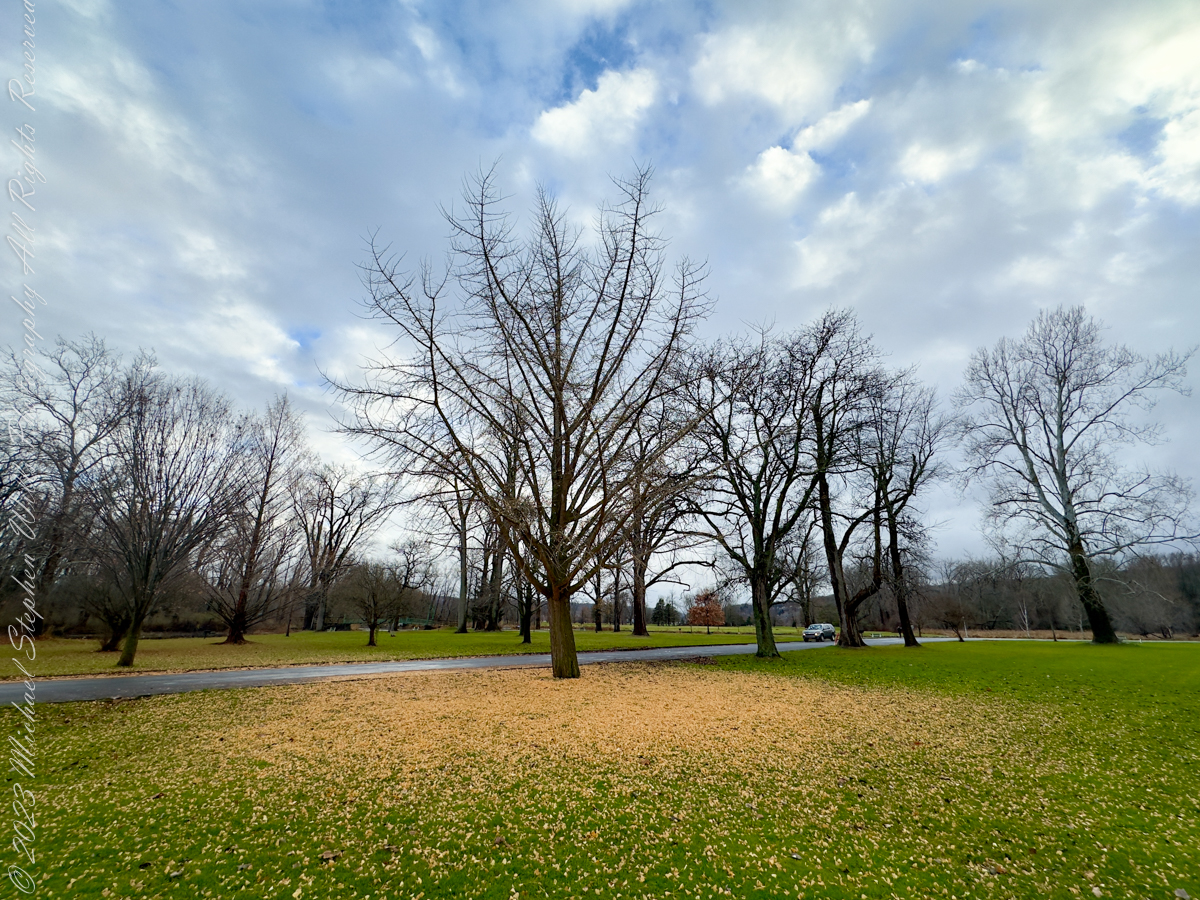
Standing before these two trees on a unseasonably warm autumn day, I am struck by the intricate patterns of their fallen leaves. Against the vibrant green of the grass, the golden leaves form halos around the trunks, as if nature herself were sketching mandalas. There’s something profoundly mathematical about these arrangements—a quiet order amidst what might initially seem like chaos.
The first tree, its barren branches reaching skyward, stands on a carpet of yellow that radiates outward in near-perfect symmetry. The leaves have fallen in such a way that their density decreases as the distance from the trunk increases. It reminds me of the inverse square law—a principle in physics that governs how light, gravity, and sound diminish with distance. Here, instead of energy dispersing, it’s the leaves thinning out, their graceful scatter dictated by the wind’s whims and gravity’s pull. There’s an undeniable harmony in this seemingly random process, a convergence of natural forces creating an elegant gradient.
Stewart Park, Ithaca, New York
The second tree presents a different story, yet one equally mesmerizing. Its leaves, still clinging in part to the branches, form a looser ring at the base. The distribution is uneven, hinting at prevailing winds or the sheltering influence of nearby buildings. But even in this asymmetry, I see fractals—the self-similar patterns that repeat at different scales throughout nature. Look closely, and you’ll notice clusters of leaves mimicking the broader structure of the canopy above. It’s as if the tree’s essence is echoed in the ground below, a reminder of how deeply interconnected every part of a system can be.
Robinia pseudoacacia, commonly known as the black locust
These patterns invite reflection on the mathematical principles governing our world. Fibonacci sequences, golden ratios, and fractals—abstract concepts are not confined to textbooks. They are etched into the fabric of existence, visible in the spiral of a sunflower’s seeds, the curve of a nautilus shell, and the fall of leaves beneath a tree. Even the chaos of autumn is underpinned by order, a dance choreographed by countless variables: the angle of the branches, the strength of the wind, the moisture in the air.
I find myself wondering about the unseen forces at play. How many leaves fell straight down, obeying only gravity? How many were carried aloft by a breeze before settling farther afield? Could we model these patterns with algorithms, tracing the arc of each leaf’s descent? Would the data reveal a perfect equation, or would it remind us that some mysteries resist full comprehension?
As I stand here, I feel a deep gratitude for these natural equations. They ground me in the present moment while also connecting me to the infinite. The pattern of leaf fall is a reminder of life’s balance: chaos and order, randomness and structure, fleeting moments and timeless principles. The trees, now shedding their golden crowns, invite me to pause, observe, and marvel at the beautiful mathematics of autumn.
Enter your email to receive notification of future postings. I will not sell or share your email address.
Copyright 2025 All Rights Reserved Michael Stephen Wills
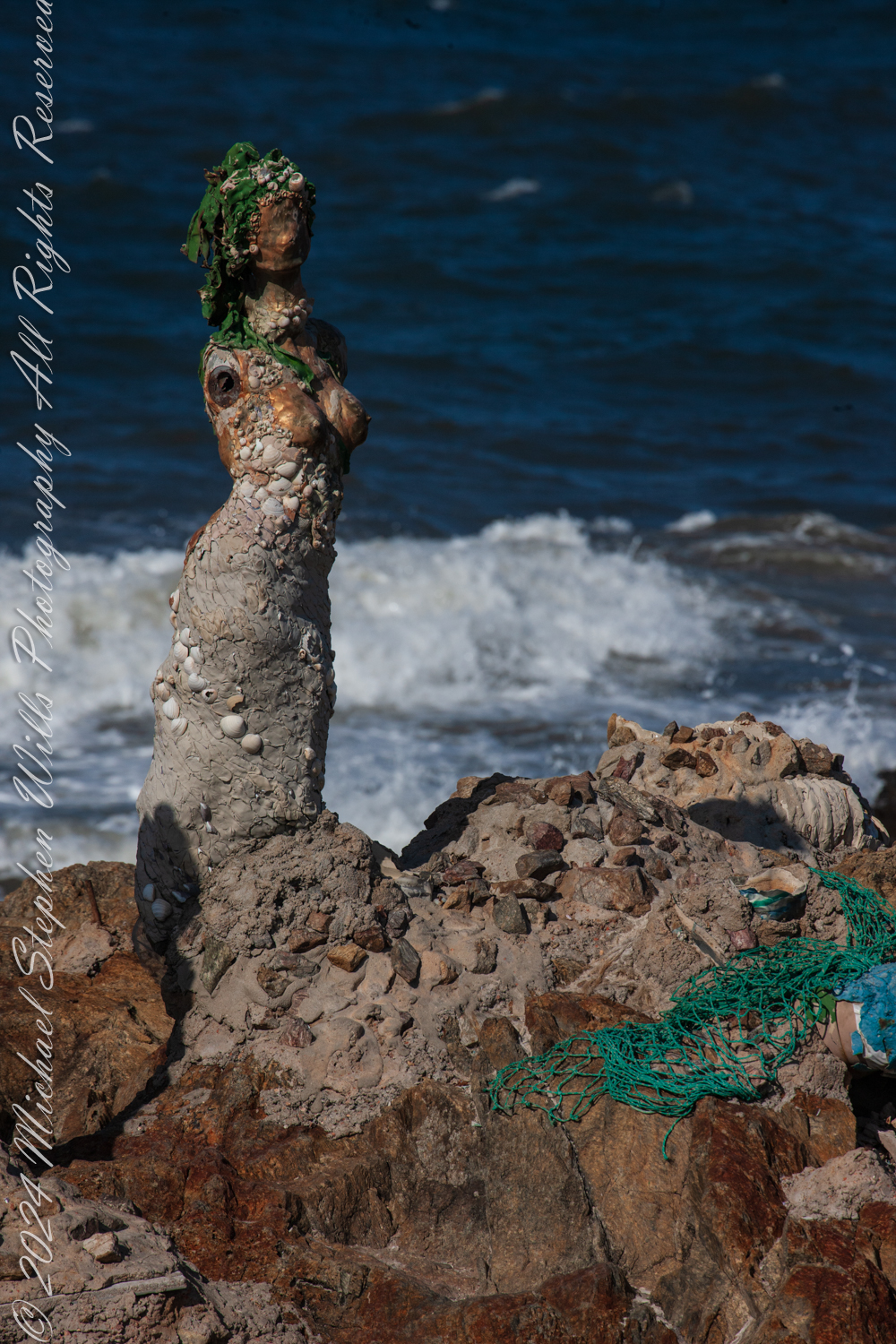
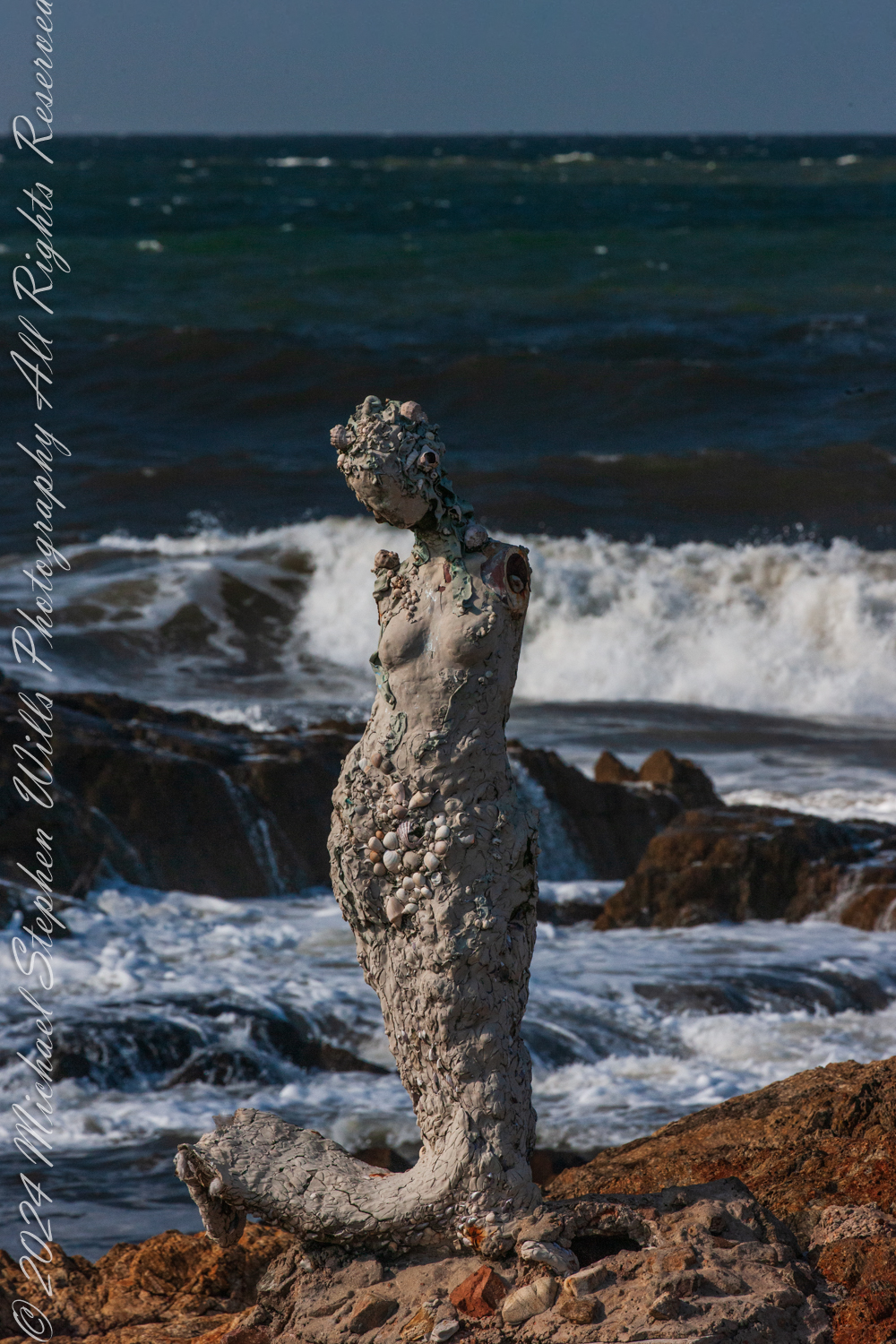
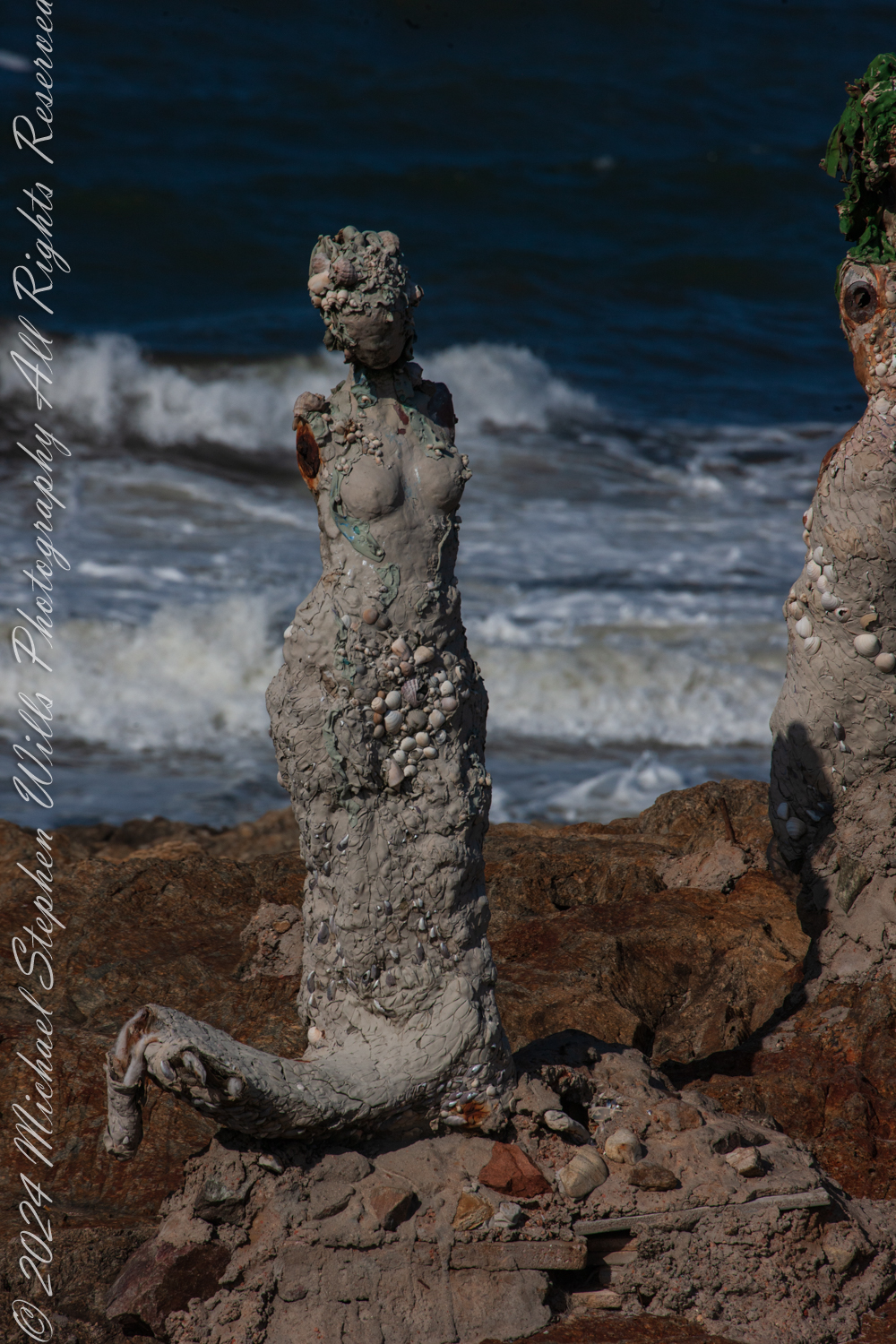
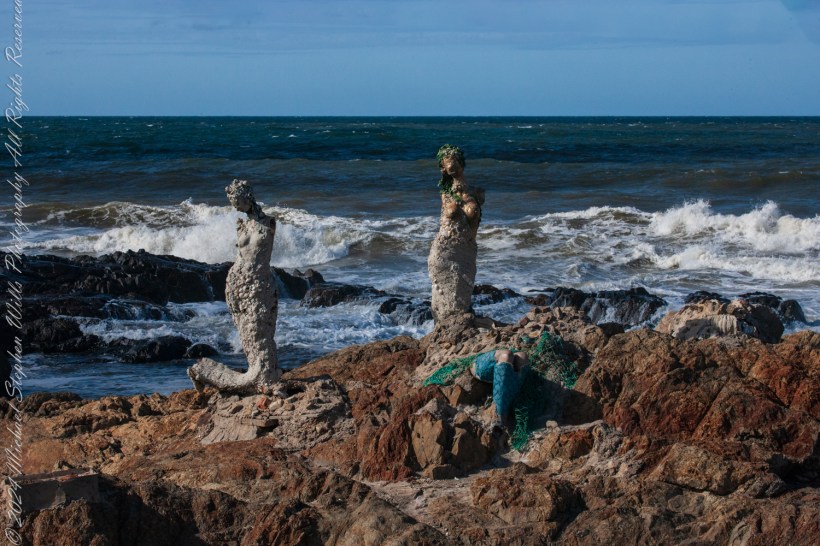
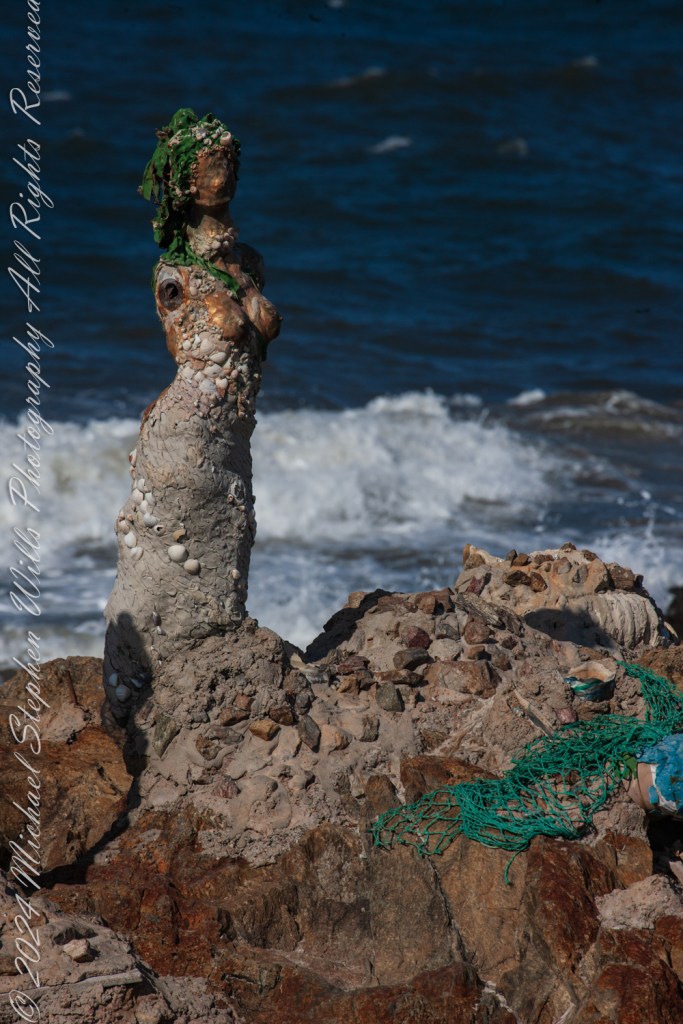
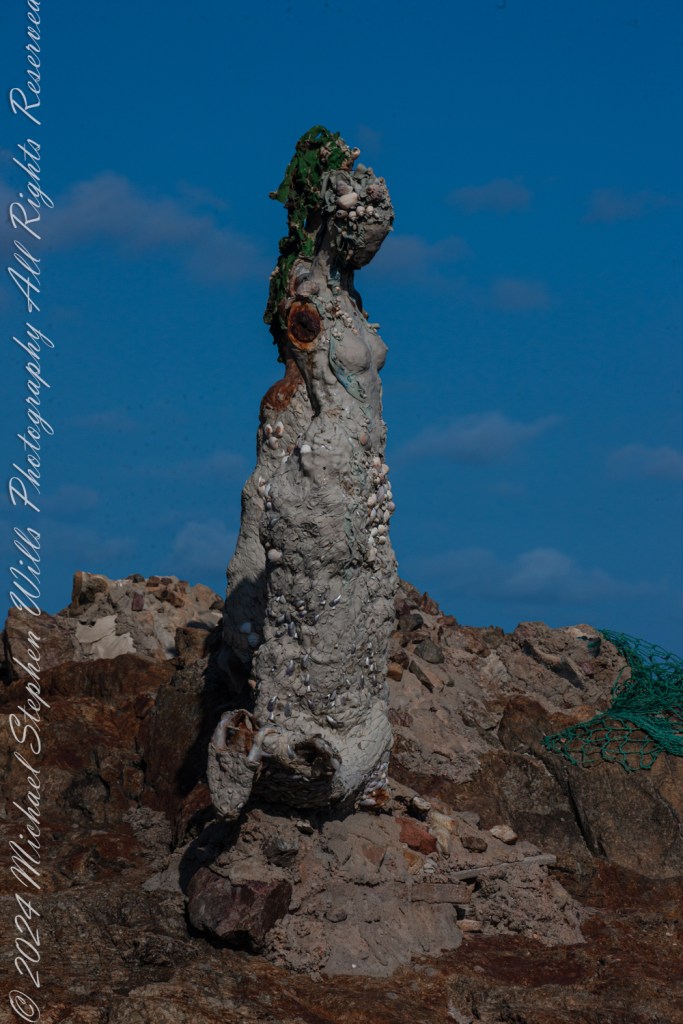
The wind carried the scent of the sea as we stood at Punta de las Salinas, the furthest tip of Punta del Este, Uruguay. This was a place of myth and mystery for us, where the Atlantic Ocean merged with the Río de la Plata, and where the rocks bore witness to the timeless interplay of water and stone. Here stood “El Canto de las Sirenas” (The Song of the Mermaids), an evocative art installation by Lily Perkins, first completed in 2012. The sculptures seemed perfectly at home here, their placement deeply intertwined with the mythology they evoked.
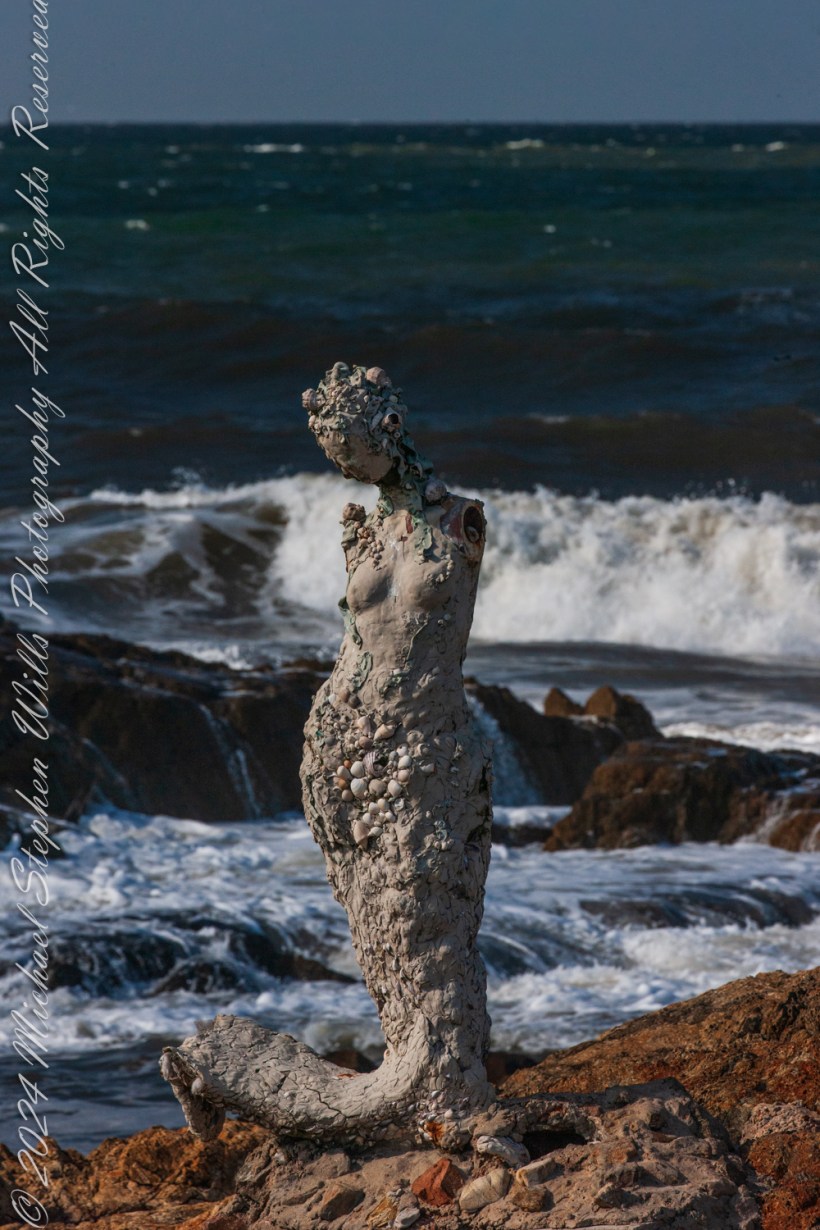
This is at Great Britain Square, Punta de las Salinas of Punta del Este. We are at the tip of the peninsula, the easternmost point of Uruguay. This is the art installation El Canto de las Sirenas” (The Song of the Mermaids) (2012) by the artist Lily Perkins. Punta del Este, Departamento de Maldonado, Uruguay
The sirens of ancient lore were said to dwell at perilous points where land met the untamed sea, luring sailors to their doom with haunting songs. These rocky outcrops, both a boundary and a threshold, have long held symbolic power as places where the natural world is at its most raw and elemental. Punta de las Salinas is such a place. Its jagged rocks and churning waves create an environment as beautiful as it is treacherous. It is easy to imagine mythical sirens choosing this very spot to weave their spellbinding melodies.
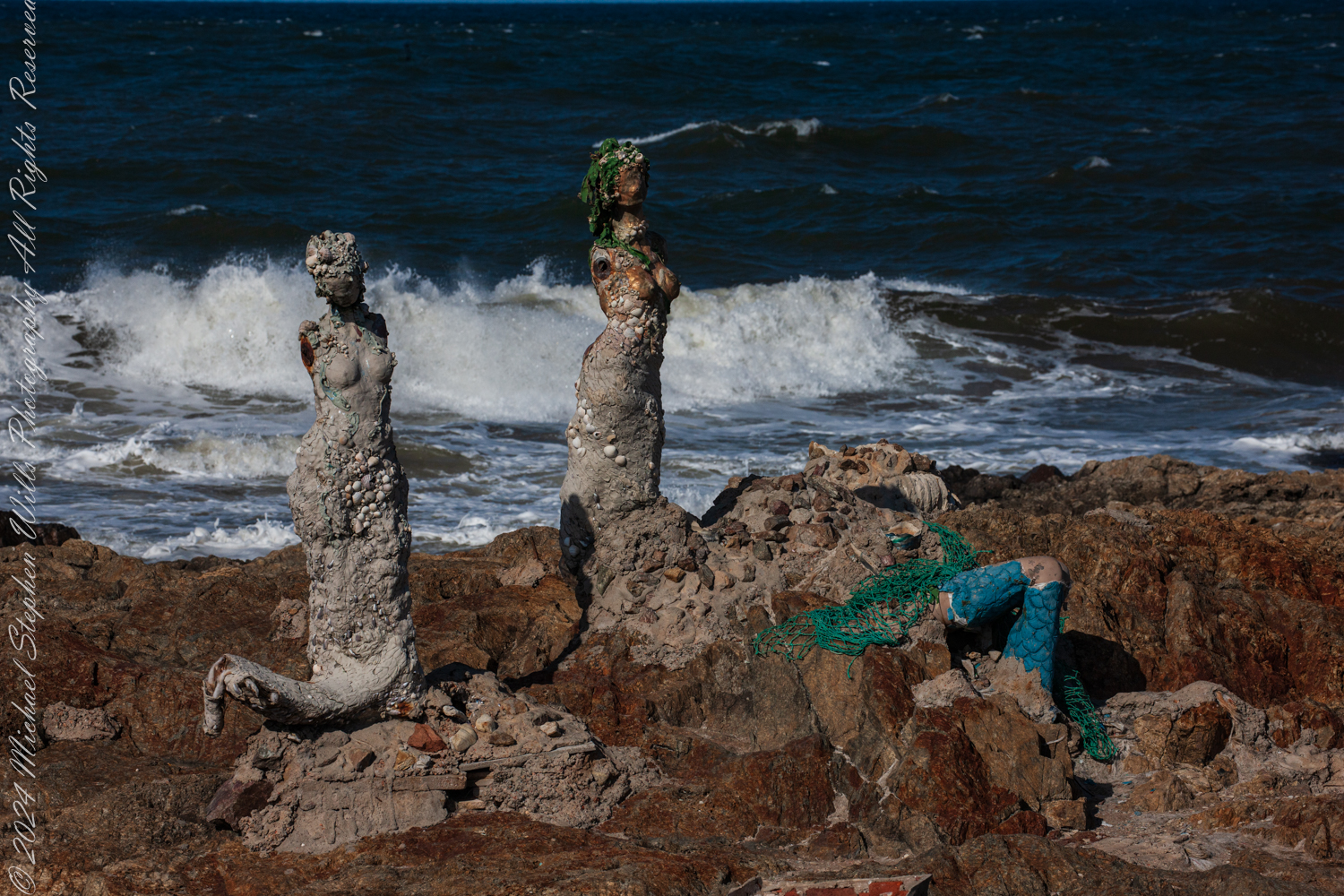
This is at Great Britain Square, Punta de las Salinas of Punta del Este. We are at the tip of the peninsula, the easternmost point of Uruguay. This is the art installation El Canto de las Sirenas” (The Song of the Mermaids) (2012) by the artist Lily Perkins. Punta del Este, Departamento de Maldonado, Uruguay
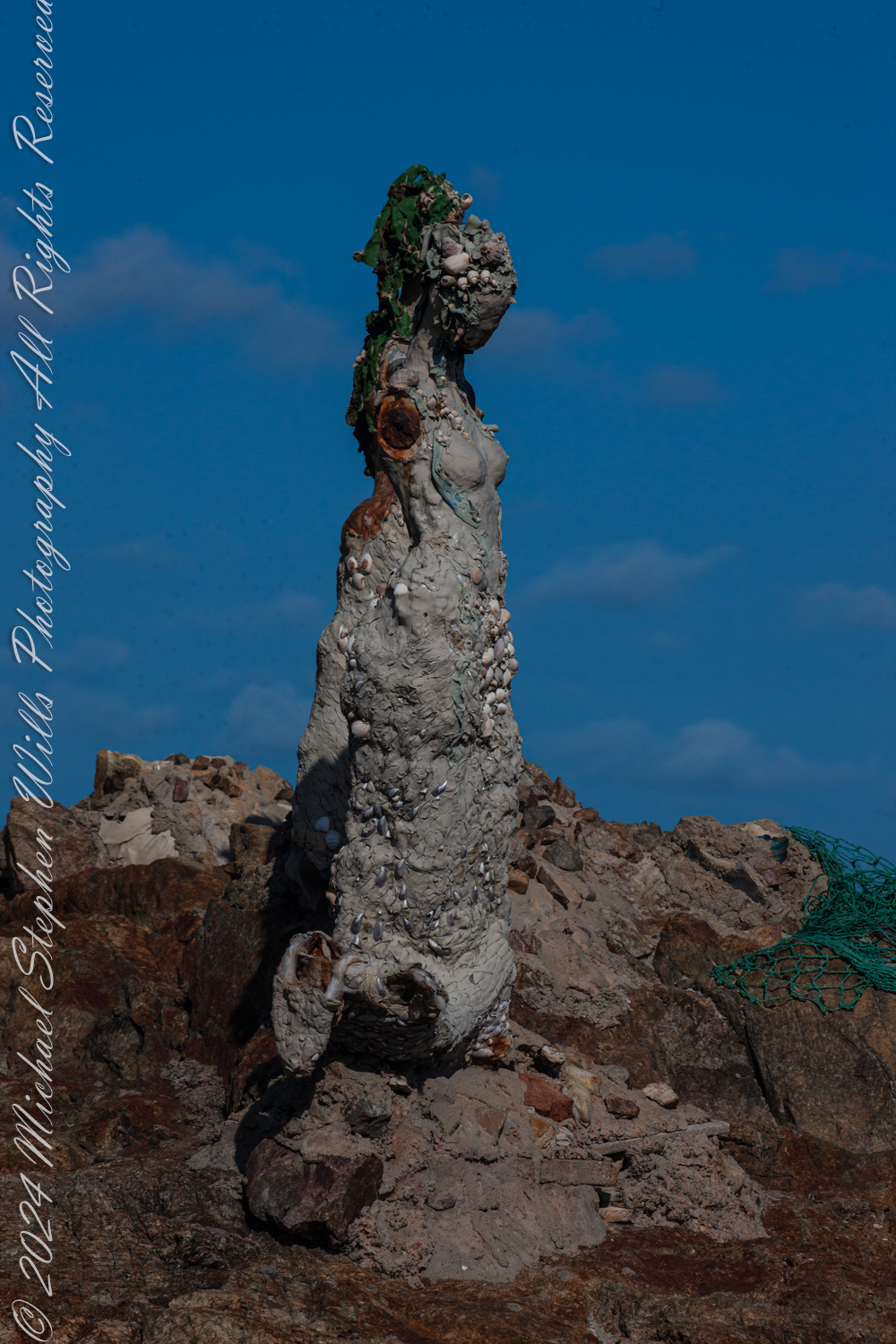
Lily Perkins’ installation captures this essence. The sculptures are not idealized depictions of mermaids; they are rugged and raw, encrusted with shells, stones, and marine debris. Their weathered forms mirror the harsh, untamed beauty of their surroundings. It is as if they have emerged from the ocean itself, born of the waves and the salt-laden air, to stand as sentinels at the edge of the world.
The central figure, with her face turned skyward, evokes the myth of the siren’s song—a melody so enchanting that it drove sailors to risk their lives against the rocks. Her posture suggests longing, perhaps for a connection beyond the horizon, or perhaps for the very mortals she is fated to ensnare. Nearby, a broken figure reclines against the rocks, her form partially encased in green netting and mosaic-like tiles. She seems more grounded, her siren’s call muted, as if weighed down by the realities of the modern world. The use of marine materials in her construction—a blend of natural and human-made debris—suggests an awareness of humanity’s impact on the seas.
The third figure, slightly apart, is the most enigmatic. Encrusted with barnacles and weathered by the elements, she seems lost in thought. Her gaze is directed not toward the sea but toward the land, as if contemplating her place at this meeting of worlds. In mythology, sirens were liminal creatures, existing between realms—the sea and the shore, the mortal and the divine. This figure embodies that in-between state, rooted in the rocks yet shaped by the sea.
The placement of these sculptures at Punta de las Salinas is no accident. This headland is the easternmost point of Uruguay, a natural boundary and a crossroads where two vast bodies of water meet. For centuries, sailors navigated these waters, their journeys fraught with danger. The rocks here are unforgiving, and the waves crash with relentless power. To stand at this point is to feel the raw energy of the ocean and to understand why myths of sirens arose in such places. The sirens symbolize both allure and peril, a reminder of the ocean’s capacity to inspire and to destroy.
As I walked among the sculptures, the mythology seemed to come alive. The sound of the waves crashing against the rocks could easily be imagined as the sirens’ song—a hypnotic rhythm that draws you in and holds you spellbound. The figures, though silent, seemed to hum with an energy that echoed the sea’s eternal motion.
I feld these sculptures were not merely placed at Punta de las Salinas; but had emerged from it, their forms shaped by the same forces that shaped the rocks beneath our feet. The shells and stones embedded in their surfaces tied them physically to the sea, while their mythical resonance tied them spiritually to the place.
The mythology of the sirens speaks to the duality of the sea—its beauty and its danger, its capacity to give and to take away. Standing at Punta de las Salinas, surrounded by Perkins’ sculptures, I felt that duality in a profound way. The ocean stretched endlessly before us, a vast, unknowable expanse, while behind us lay the solid ground of the peninsula—a place of safety, but also a place that ended here, at this edge.
Lily Perkins sculptures are restored…..
As we left, the figures seemed to watch us go, their silent song lingering in my mind. The sirens of Punta del Este are more than art; they are a dialogue between myth and reality, between the natural world and the human imagination. In their weathered beauty, they remind us of the stories the sea has always told, and of the enduring power of those who give those stories form.
Enter your email to receive notification of future postings. I will not sell or share your email address.
Copyright 2025 All Rights Reserved Michael Stephen Wills
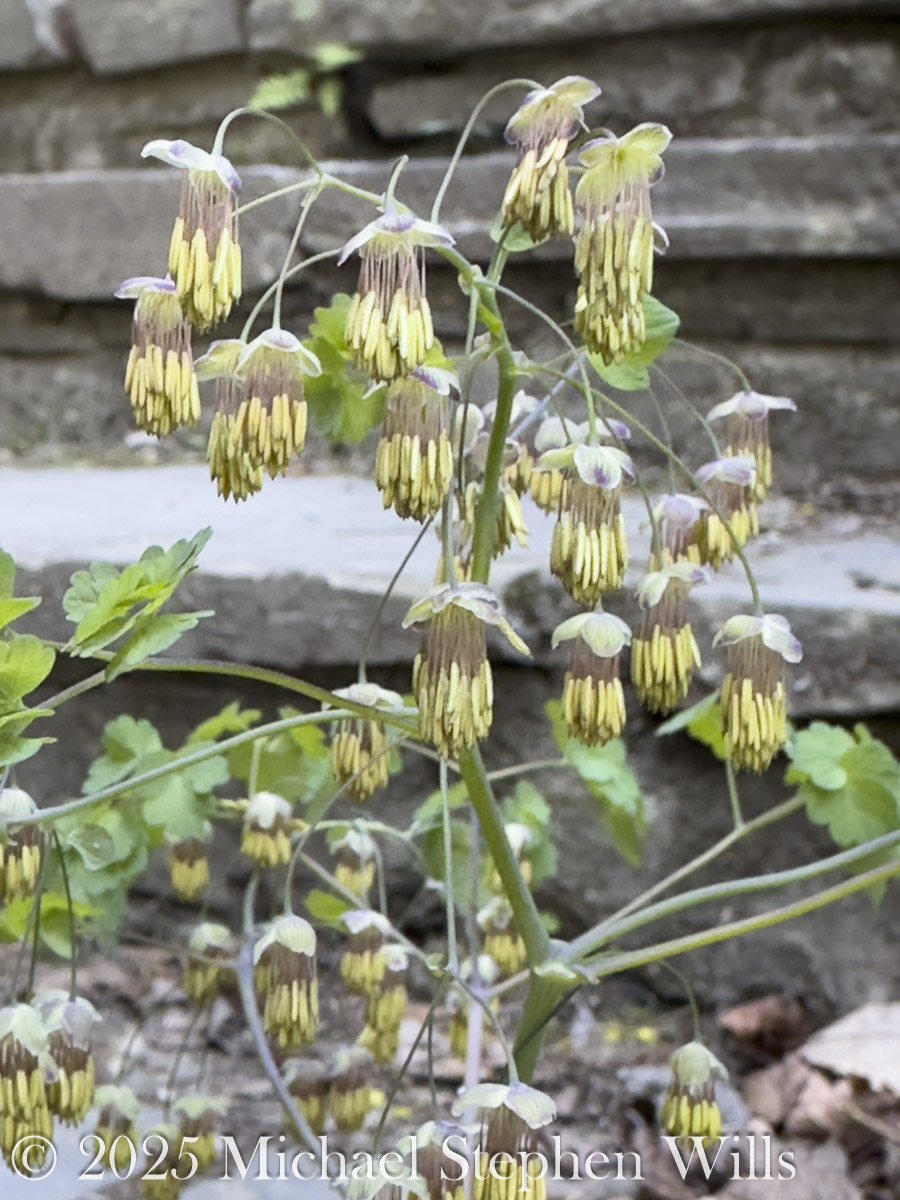
Discover the delicate beauty of early meadow-rue (Thalictrum dioicum) along the Gorge Trail at Robert H. Treman State Park. Explore its unique spring blooms, cultural significance in Native American traditions, and the poetry of its quiet role in the woodland ecosystem.
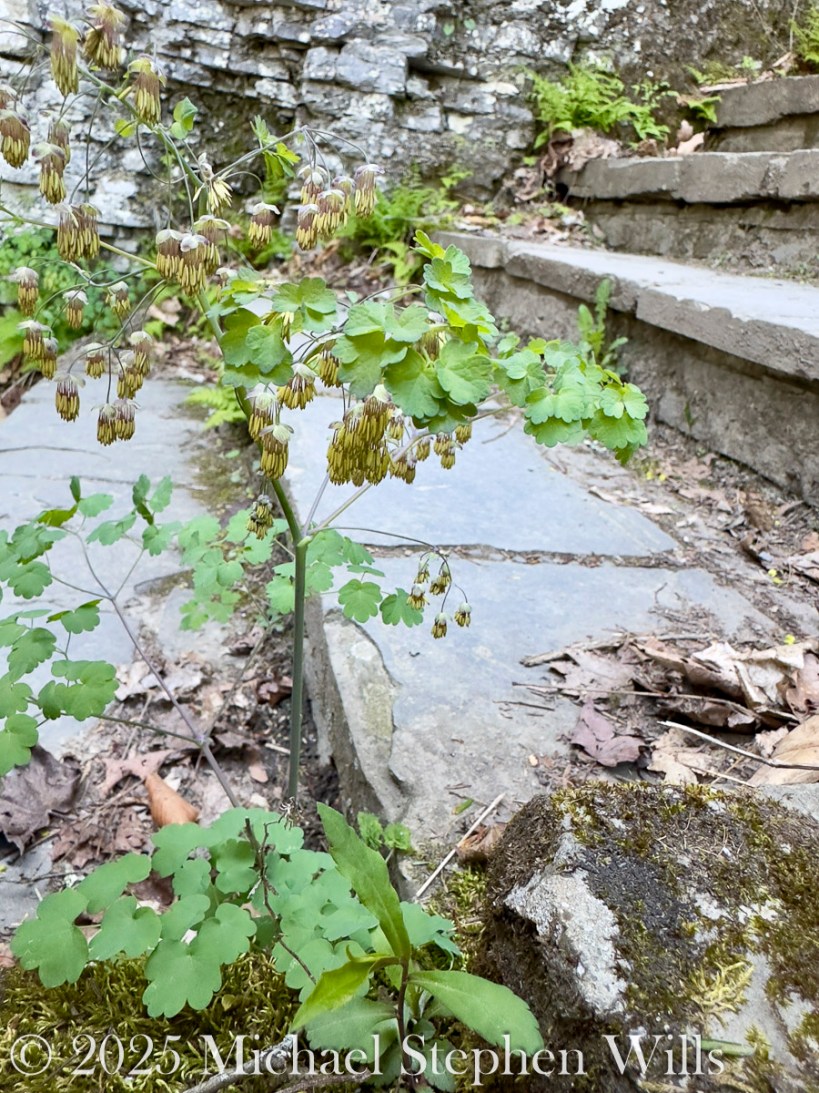
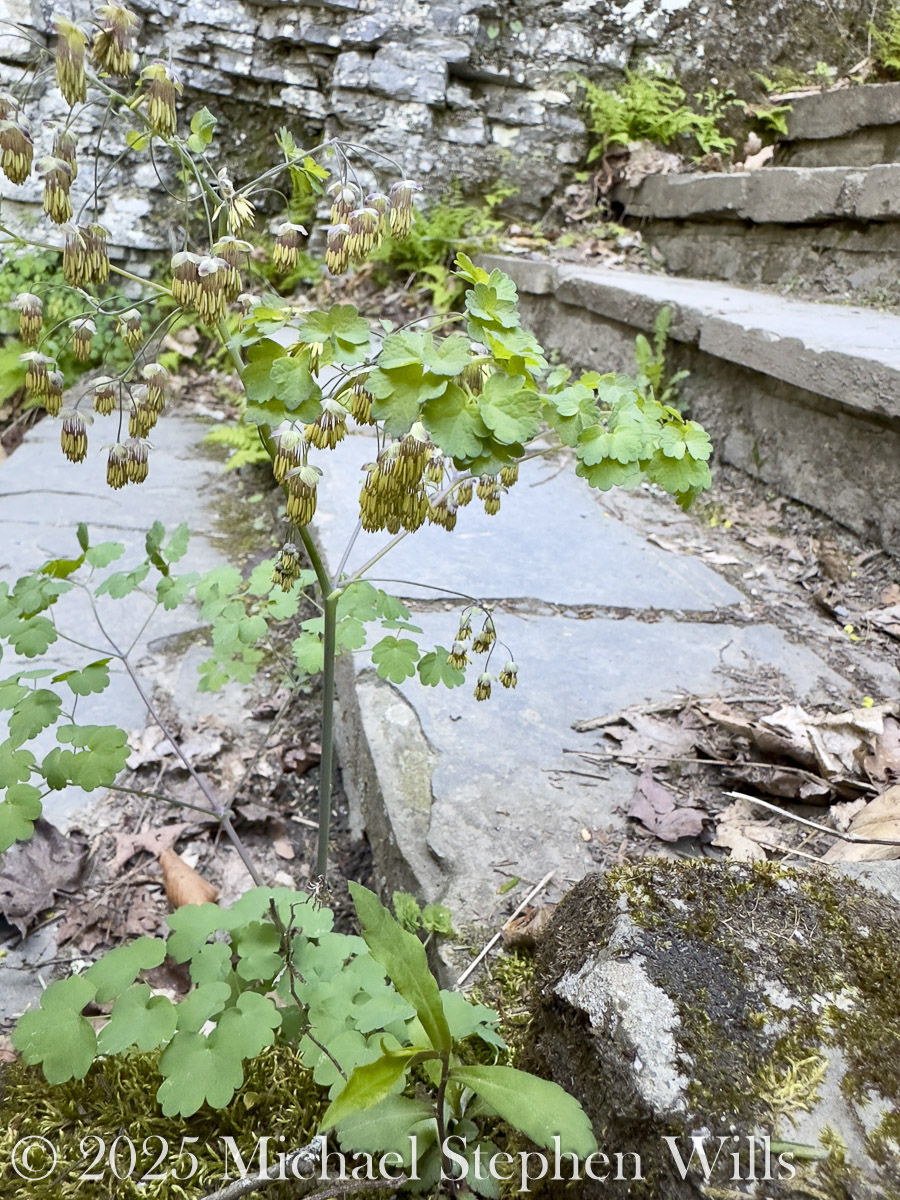
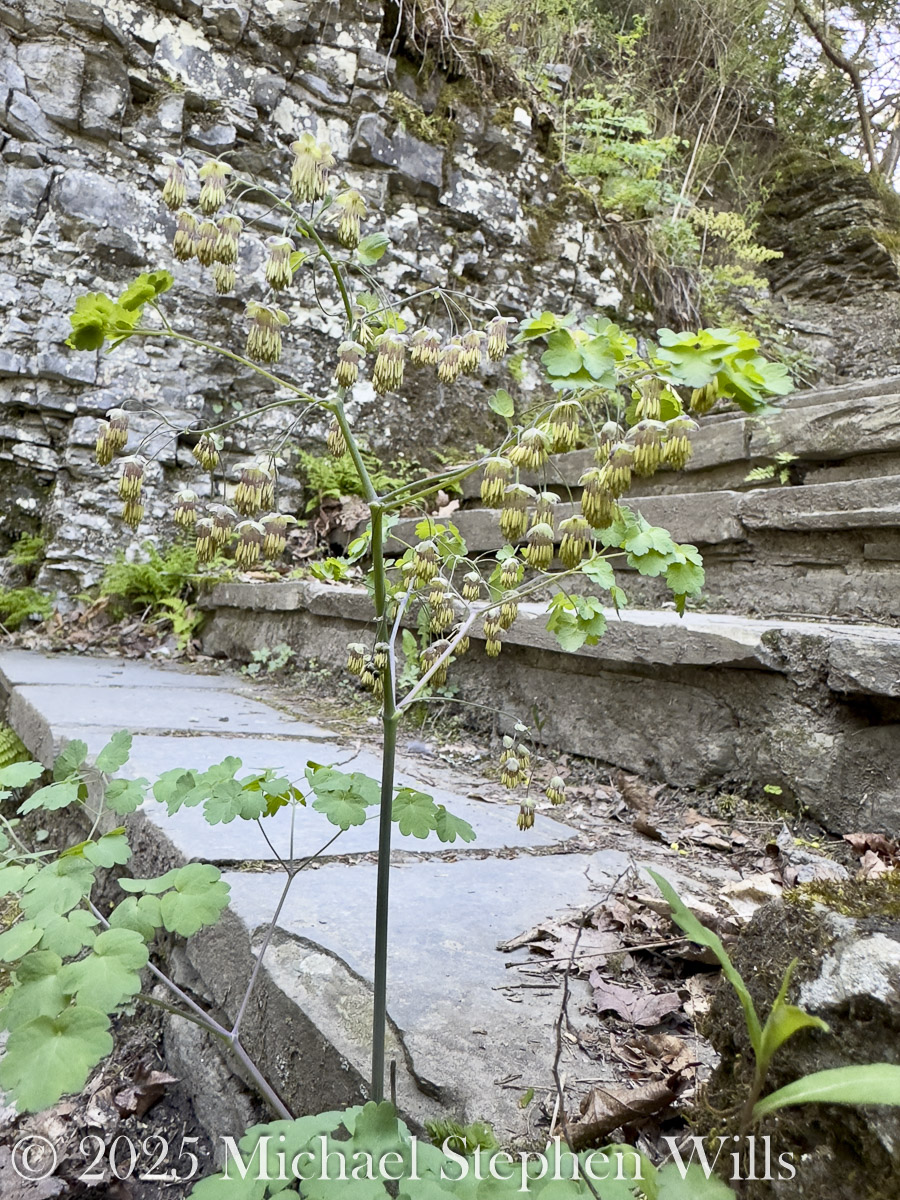
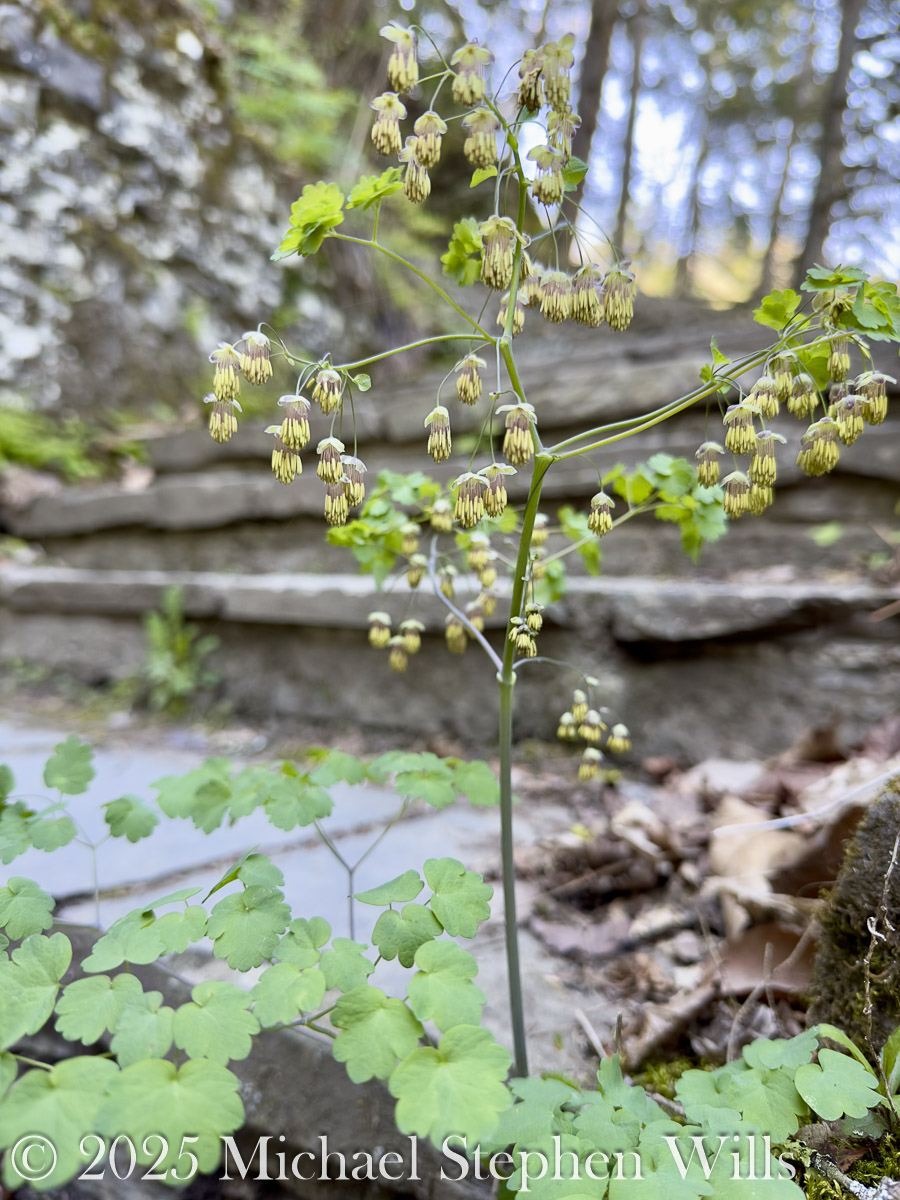
April 28, 2025 – Robert H. Treman State Park, Ithaca, NY. I step lightly along the damp stone stairs of the Gorge Trail, hemmed in by towering rock walls and the whisper of waterfalls. There, at a turn in the path, I encounter an unassuming woodland plant waving in the breeze. Its delicate green foliage could be mistaken for a young fern or columbine, but from its arching stems hang dozens of tiny yellow tassels, swaying like fairy lanterns. This is a male Thalictrum dioicum – commonly known as early meadow-rue, or more whimsically, quicksilver-weed. One of the earliest wildflowers to emerge in spring forests of the Northeast, it offers a subtle spectacle: golden anthers dangling in the cool April breeze, each tiny stamen a pendulum of pollen.
Delicate Botany of a Woodland Rue
At a glance, Thalictrum dioicum might not shout for attention – standing barely one to two feet tall – yet a closer look reveals intricate beauty. Each male plant is a miniature chandelier of blossoms, the flowers having no petals at all but instead a simple fringe of sepals and a flurry of stamens. In fact, the male flowers are the showiest part of this species, with numerous slender, dangling yellow stamens that earn meadow-rue a second look. These dangles are the anthers – pollen-bearing organs – swinging freely to release golden dust on the wind. Female plants, on separate nearby stalks, are more reserved: their flowers hold up clusters of pale pistils like tiny green stars, which, if wind-blessed with pollen, will swell into achenes (dry fruits) later in the season. The separation of sexes in different “houses” is the trait that gives the species its name dioicum, meaning “of two households” in Greek. Early meadow-rue’s foliage is equally enchanting. The leaves are twice or thrice divided into lobed leaflets that resemble the herb rue (Ruta) – hence the common name “meadow-rue”. A misty green above and silvery underside, the leaflets have a rounded, almost columbine-like form with soft scalloped edges. As botanist Eloise Butler once noted, casual hikers often exclaim “what a pretty fern!” upon seeing the airy foliage before noticing any flowers. Indeed, the plant’s fern-like grace and early spring timing give the forest understory a verdant, lacy trim well before the summer plants take over.
What’s in a Name (Etymology and Lore)
Even the name of this humble wildflower carries poetry. The genus Thalictrum harkens back to the Greek word thaliktron, a term used by the ancient physician Dioscorides to describe plants with finely divided leaves. It’s a fitting nod to the meadow-rue’s delicate foliage. The species name dioicum, as mentioned, translates to “two houses,” nodding to its dioecious nature – male and female flowers on separate plants. As for “quicksilver-weed,” an old folk name, one can only imagine it arose from the plant’s ephemeral shimmer: appearing quickly in spring and perhaps glinting with dew like liquid silver. Early meadow-rue also earns its “early” title by being among the first woodland perennials to bloom as the snow melts – a true harbinger of spring in the eastern North American woods. The “rue” in meadow-rue is a bit of a misnomer botanically (meadow-rue is in the buttercup family, not related to true rue). However, the moniker stuck because of a shared appearance – those divided leaves echo the shape of true rue’s foliage. There’s no strong odor or bitterness here, though. Instead, Thalictrum dioicum is gentle in aspect and entirely non-toxic, making it a welcome companion in shady gardens and wild places alike. Gardeners sometimes cultivate it for its graceful foliage and dangling blooms, a little wild treasure in cultivated shade gardens.
A Quiet Role in the Forest Understory
In its native habitat, early meadow-rue lives a low-key life in the understory. It thrives on dappled woodland slopes, often on rich, rocky soils near streams – exactly the sort of place the Gorge Trail winds through. Preferring partial shade, it is comfortable in both moist and well-drained sites. As a spring ephemeral, it takes advantage of the window before the canopy fully leafs out, unfurling its leaves and flowers in April and May, then quietly dying back by midsummer to wait out the year’s end. This strategy allows it to catch the sunlight of early spring and avoid competition later on. Unlike showy wildflowers that beckon bees and butterflies, meadow-rue’s pollinator is the breeze. Being wind-pollinated (anemophilous), it has no need for bright petals or nectar rewards. Instead, those dangling stamens tremble with each gust, shedding pollen into the air – a dance of chance that some of it will drift over to a waiting female flower nearby. The light, swinging tassels are perfectly adapted to this purpose, increasing the odds of pollen dispersal with every sway. Even without offering nectar, early meadow-rue still contributes to its ecosystem. Its tender leaves provide an early snack for rabbits and deer venturing out after winter. A few specialized moth species also use it as a host plant in their caterpillar stage, nibbling on the foliage. By going dormant in summer, meadow-rue returns nutrients to the soil and opens space for later-emerging plants, maintaining the ebb and flow of diversity in the forest floor community. In autumn and winter, only its fibrous roots and a small caudex (rootstock) persist under the leaf litter, ready to send up new growth when spring returns.
Roots in Culture and Folklore
This demure wildflower has also found its way into human stories and herbal traditions. Native American communities, especially in the Northeast, knew and used early meadow-rue in subtle ways. Though not a superstar of indigenous medicine, it had its roles. Cherokee healers brewed tea from the roots to treat diarrhea and stomach troubles, and to ease vomiting. In Haudenosaunee (Iroquois) lore, a decoction of meadow-rue roots was used as a wash for sore, tired eyes, and even taken to steady a palpitating heart – perhaps the gentle plant lending calm through belief or mild effect. Beyond medicine, Thalictrum dioicum tiptoes into the realm of romance and harmony.
According to ethnobotanical notes, young Blackfoot women in the northern Plains would weave the pretty tassels or seed clusters into their hair, believing it would help them attract the attention of a desired young man – a bit of springtime love charm from the wilds. Among some eastern Woodlands tribes, such as the Ojibwa and Potawatomi, the seeds of meadow-rue were a secret tool for domestic peace: slipping a pinch of seeds into the food of a quarreling couple was thought to help dispel discord and restore harmony to the relationship. Whether through mild pharmacological effect or sheer faith, one imagines it brought a hopeful smile to those administering this folk remedy.
Early meadow-rue even made a brief appearance in early colonial folklore. In Canada, it’s said that some of the First Peoples used the crushed roots to treat venomous snake bites, likely as a poultice. The plant’s leaves were also dropped into spruce beer – the fermented drink made by settlers and Natives alike – perhaps as a flavoring or tonic ingredient. Interestingly, despite these uses, meadow-rue never became a staple in European-American herbal medicine. 19th-century herbal texts noted that American Thalictrums were largely ignored by formal medicine, overshadowed by their European cousins. This lends our Thalictrum dioicum an aura of a plant mostly known by those who dwell close to the land – a quiet ally in the forest, employed in pinch when needed and otherwise simply appreciated for its beauty and symbolism.
Reflections on a Spring Encounter
A close-up of Thalictrum dioicum male flowers, often called “quick-silver weed” for the way these golden tassels catch the light. The plant’s lack of petals is evident – instead, dozens of pollen-laden stamens dangle, ready for the wind’s call.
Encountering this early meadow-rue along the gorge felt like stumbling upon a small secret of the woods. In the waterfall haunted gorge, with slate-gray cliffs towering overhead, these frail yellow tassels swayed and twirled as if performing for an unseen audience. There was a breezy playfulness in that moment – the plant nodding in the wind, pollinating by dancing rather than by the busy work of bees.
I was struck by how ancient and new it all felt: this same species blooming every April for thousands of years, used by generations of indigenous peoples for healing and hope, yet to me on that day it was a delightful surprise, as fresh as the spring itself. As I crouched to take a closer look, I imagined the threads of history and myth that early meadow-rue carries. Its presence here is a sign of a healthy, layered woodland. It whispered of resilience – how something so delicate survives the torrents of spring rain and the deep freezes of winter underground, year after year. In the golden afternoon light of the gorge, those dangling blossoms were like drops of quicksilver sunlight, fleeting and brilliant.
I felt grateful to have noticed this little plant, to share a moment of connection across time and cultures. The next bend of the trail would lead me on, but the image of quicksilver weed in bloom stayed with me – a reminder that even the quietest corners of nature are filled with stories waiting to be noticed.
Enter your email to receive notification of future postings. I will not sell or share your email address.
Copyright 2025 All Rights Reserved Michael Stephen Wills
References
Thalictrum dioicum (Early Meadow-rue) – Wikipedia Friends of the Wild Flower Garden – Early Meadow-rue (Thalictrum dioicum) plant description and naming henriettes-herb.com Institute for American Indian Studies – Medicinal Monday: Early Meadow Rue, blog post (Jan 22, 2024) Henriette’s Herbal – Thalictrum dioicum excerpt from Drugs and Medicines of North America (1884-1887) henriettes-herb.com Friends of the Wild Flower Garden – Eloise Butler’s note on Early Meadow-rue (1911)
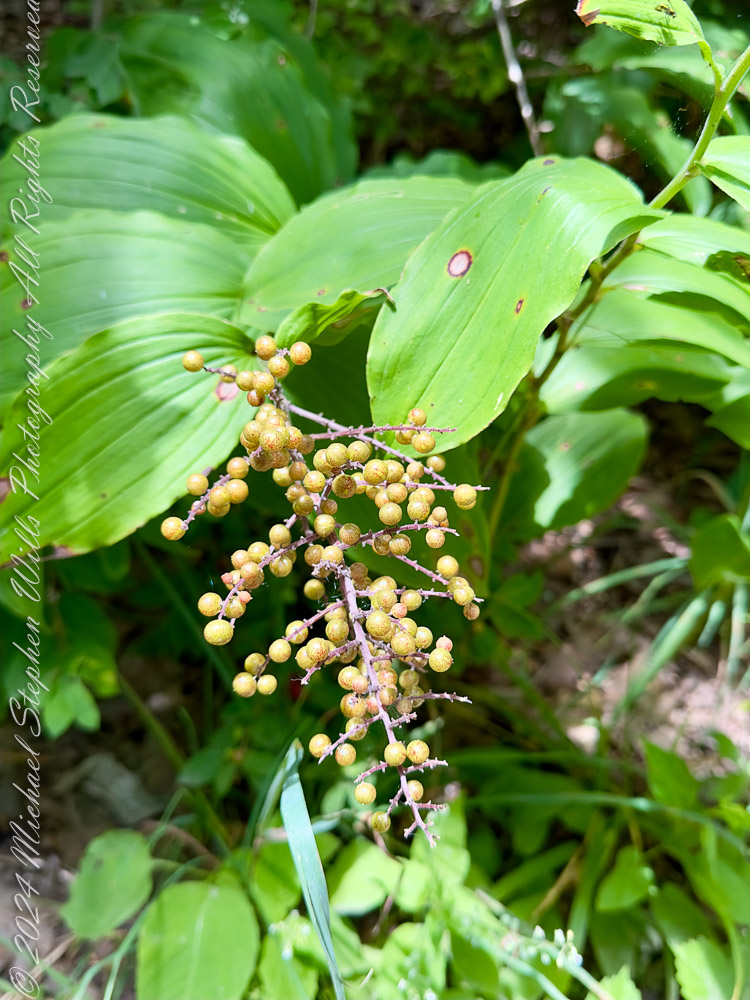
The trails of Taughannock Falls State Park always hold surprises, and on that July day, they did not disappoint. As I paused to take in the tranquility of the woods, my gaze fell upon a plant whose graceful arch and clusters of berries demanded attention. Its broad, lance-shaped leaves alternated along the stem, framing the stem’s terminal cluster of small green berries. Recognizing the plant as Maianthemum racemosum, commonly known as False Solomon’s Seal, I took a moment to admire its understated elegance.
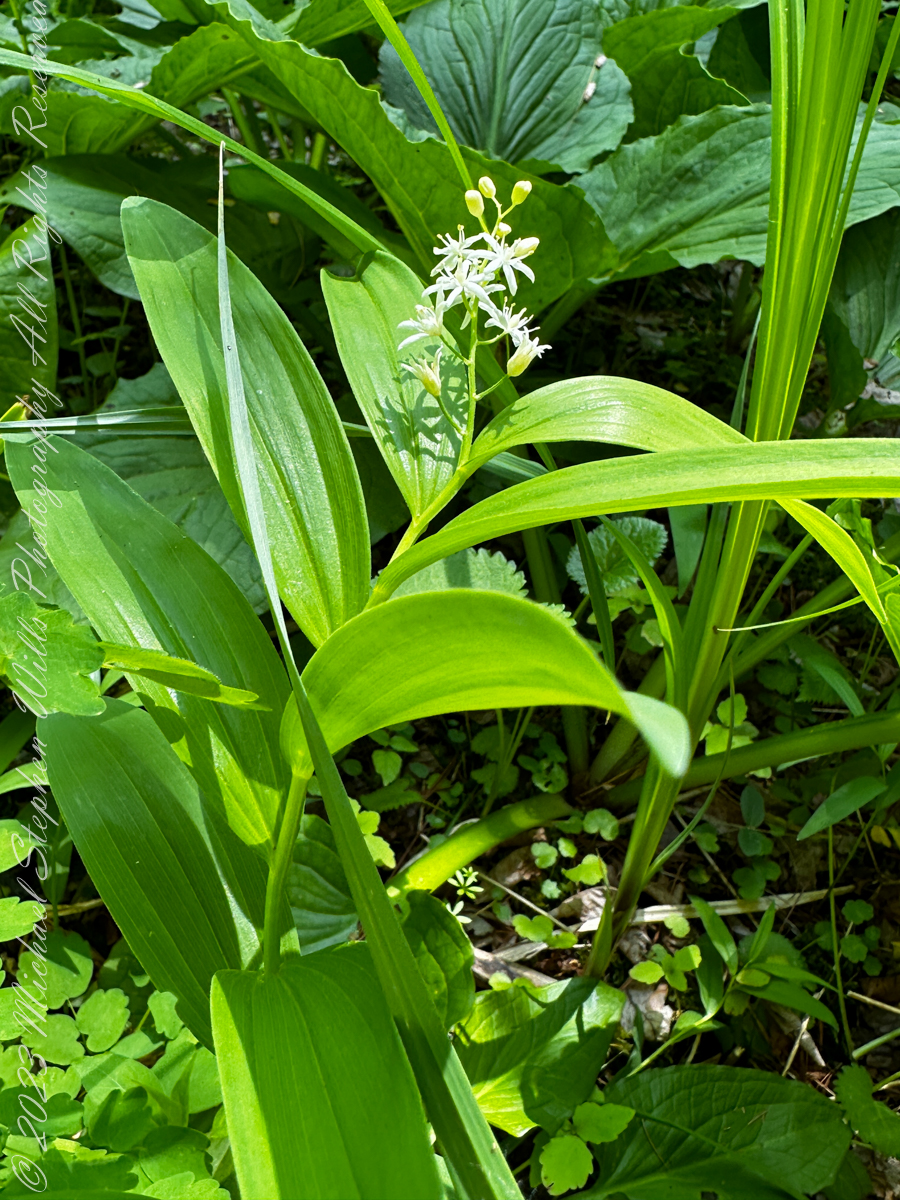
False Solomon’s Seal, scientific name Maianthemum racemosum, is common in the Finger Lakes Region. I found this specimen during a walk with the grandchildren in a local fen among the post-glacial terrain of the Finger Lakes Region. Eames Memorial Natural Area, Cornell Botanic Gardens, Town of Dryden, Tompkins County, Finger Lakes Region, New York State
Characteristics of the Plant
False Solomon’s Seal is a perennial herbaceous plant belonging to the asparagus family (Asparagaceae). It can grow up to three feet tall, its arching stems giving it a unique and recognizable silhouette. The leaves are broad and lance-shaped, with prominent veins running their length, arranged alternately along the stem. At the tip of each stem is a cluster of tiny, spherical green berries, which later in the season ripen to a speckled reddish hue. The plant blooms in late spring to early summer, producing delicate, star-shaped white flowers before transitioning to its fruiting phase.
Found throughout much of North America, Maianthemum racemosum thrives in moist, shaded woodlands, making the lush forests of Taughannock Falls State Park an ideal home. Its ability to grow in the dappled light beneath the forest canopy highlights its adaptability to varying light conditions.
Etymology of the Name
The genus name, Maianthemum, comes from the Greek words “mai” (May) and “anthemon” (flower), reflecting the plant’s tendency to bloom in late spring or early summer. The species name, racemosum, refers to the plant’s inflorescence, which forms a raceme—a cluster of flowers or berries along a single stem. Its common name, False Solomon’s Seal, derives from its superficial resemblance to Solomon’s Seal (Polygonatum spp.), though the latter has bell-shaped flowers hanging beneath its stems, in contrast to the terminal clusters of Maianthemum racemosum.
History and Folklore
False Solomon’s Seal has long been valued for its medicinal and culinary uses by Indigenous peoples and early settlers. The young shoots were harvested and cooked as a vegetable, while the ripe berries were sometimes used in jellies or preserves, though their slightly bitter flavor limited their appeal. Medicinally, teas made from the roots and leaves were used to treat a variety of ailments, including digestive issues, coughs, and sore throats. The roots were also applied as poultices for cuts and bruises, reflecting the deep understanding of natural remedies held by those who lived in harmony with the land.
The plant’s name has sparked legends. While the “false” in its name denotes its distinction from Solomon’s Seal, some folklore suggests that the plant was used to counterfeit the medicinal properties of its namesake. Others believe that its graceful arch and persistent berries symbolize resilience and adaptability, qualities often attributed to those who lived in its native habitats.
Uses and Ecological Role
Although not widely cultivated, Maianthemum racemosum is a valuable plant in its native ecosystems. Its flowers provide nectar for pollinators such as bees and butterflies, while the berries are a food source for birds and small mammals. Its rhizomatous roots also play a role in stabilizing soil in forested environments, preventing erosion and supporting the health of the woodland floor.
For those contemplating harvesting these plants be advised that collection of plants from New York State Parks is prohibited to protect natural resources and maintain ecological balance. According to the New York State Office of Parks, Recreation and Historic Preservation (OPRHP) regulations, “No person shall… remove… any… plant life” within state parks without proper authorization. Therefore, collecting plants in state parks without explicit permission is not allowed. If you have a specific research or educational purpose, you may contact the park administration to inquire about obtaining the necessary permits. However, for casual visitors, it’s best to enjoy the flora from a distance. False Solomon Seal ecological contributions are significant. In addition to its pollinator support and soil stabilization, the plant’s presence is an indicator of a healthy woodland ecosystem.
A Moment of Reflection
As I rose from my crouched position, having taken in the details of Maianthemum racemosum, I felt a quiet gratitude for the opportunity to encounter such a plant. False Solomon’s Seal, with its graceful leaves and unassuming berries, serves as a reminder of the interconnectedness of life in the forest. Its role in the ecosystem, its history with humans, and its understated beauty all speak to the richness of the natural world.
Walking onward, I carried with me a sense of awe for the intricate web of life that thrives in the woods. The False Solomon’s Seal, standing quietly among the ferns and leaf litter, seemed to embody the resilience and balance of the forest—a gentle presence in a vibrant community.
Enter your email to receive notification of future postings. I will not sell or share your email address.
Copyright 2024 All Rights Reserved Michael Stephen Wills
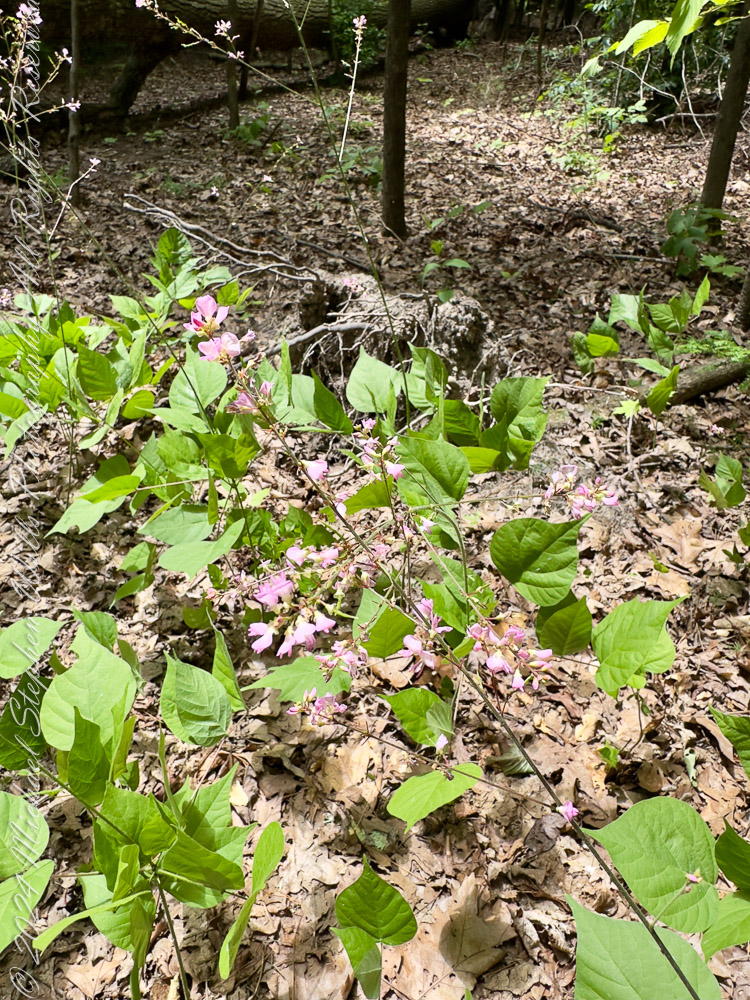
It was a high summer day as I enjoyed a customary hike around of Taughannock Falls State Park on the South and North Rim trails. Here sunlight filtered through the dense canopy, dappling the forest floor with shifting patches of light. Along the trail, my attention was drawn to a cluster of pink blossoms rising on slender, upright stems. Intrigued by their delicate beauty, I crouched down for a closer look. The plant rose above the forest floor, its trifoliate leaves broad and prominently veined, each leaflet slightly larger than I would have expected. These leaves seemed to anchor the plant to the shaded understory, while its flowers reached upward, as though eager to catch the fleeting rays of sun. I captured the plant in this photographs, later used it to identify Hylodesmum glutinosum, or Large-Flowered Tick Trefoil.
Characteristics of the Plant
The Large-Flowered Tick Trefoil is a striking member of the pea family (Fabaceae). Its pink, pea-like flowers are arranged in graceful racemes along the upper portions of its stems, their vibrant color contrasting beautifully with the green foliage around them. The leaves, broad and trifoliate, lend the plant its distinctive appearance. The name “tick trefoil” refers to the plant’s seed pods, which are flat and segmented, equipped with tiny hooks that cling stubbornly to passing animals or hikers, hitchhiking their way to new locations.
The plant is native to eastern North America, including the forests and trails of New York State. Its preference for rich, well-drained soils in partially shaded woodlands makes it a common sight in places like Taughannock Falls State Park. Blooming from mid to late summer, it provides an essential nectar source for bees and other pollinators, playing its part in the intricate web of the forest ecosystem.
Etymology of the Name
The genus name, Hylodesmum, was established only twenty-five years ago when the plant was reclassified from the genus Desmodium to a new genus within the tribe Desmodieae. The name reflects its forested habitat, with “hylo” derived from the Greek word for “wood” or “forest.” Previously described in 1802 as Hedysarum glutinosum and later placed in Desmodium, the species name glutinosum remains unchanged, meaning “sticky” in Latin. This aptly describes the plant’s seed pods, which adhere to anything that brushes past them. Together, these names encapsulate both the botanical structure and the unique dispersal strategy of this plant.
History and Folklore
Native Americans and early settlers were intimately familiar with tick trefoils. The plant’s seeds, notorious for clinging to clothing and fur, earned it a reputation as a nuisance, but its resilience and utility could not be overlooked. Indigenous peoples utilized various parts of the plant for medicinal purposes. The roots and leaves were brewed into teas to treat fevers and digestive ailments, while poultices made from the leaves were applied to wounds to promote healing. Such uses highlight the depth of knowledge early inhabitants had about their environment.
The plant’s sticky seed pods also became the subject of folklore. Children in rural communities would playfully call it “hitchhiker’s weed,” competing to see who could collect the most seeds on their clothing during outdoor adventures. These seeds, so adept at attaching themselves to passersby, were seen as symbols of persistence and adaptability, traits that many admired.
Uses and Ecological Role
While Hylodesmum glutinosum is not commonly cultivated, its ecological contributions are significant. As a member of the Fabaceae family, it has the ability to fix nitrogen in the soil through a symbiotic relationship with rhizobia bacteria in its root nodules. This makes it a valuable plant in maintaining soil fertility in its native ecosystems. Its flowers attract pollinators like bees and butterflies, ensuring that the forest remains vibrant and full of life.
In addition to its ecological importance, the plant’s seeds have a curious modern use: they’ve been studied for their ability to help detect movement in the environment. Researchers have examined the sticky pods’ structure as a natural model for creating adhesives and tracking devices, proving once again that even the smallest details in nature can inspire human ingenuity.
A Moment of Reflection
As I rose to my feet, brushing the leaf litter from my hands, I felt a renewed sense of wonder for the intricate lives of the plants surrounding me. The Large-Flowered Tick Trefoil, with its vivid pink flowers and ingenious seed pods, seemed to embody the essence of the forest: a harmonious blend of beauty, resilience, and interconnection.
Walking away, I carried with me not just the memory of its vibrant blooms, a deep respect for its role in the natural world. In the quiet of Taughannock’s wooded trails, Hylodesmum glutinosum had shared its story, a tale of persistence, adaptation, and the hidden wonders that flourish when we take the time to notice.
Enter your email to receive notification of future postings. I will not sell or share your email address.
Copyright 2024 All Rights Reserved Michael Stephen Wills
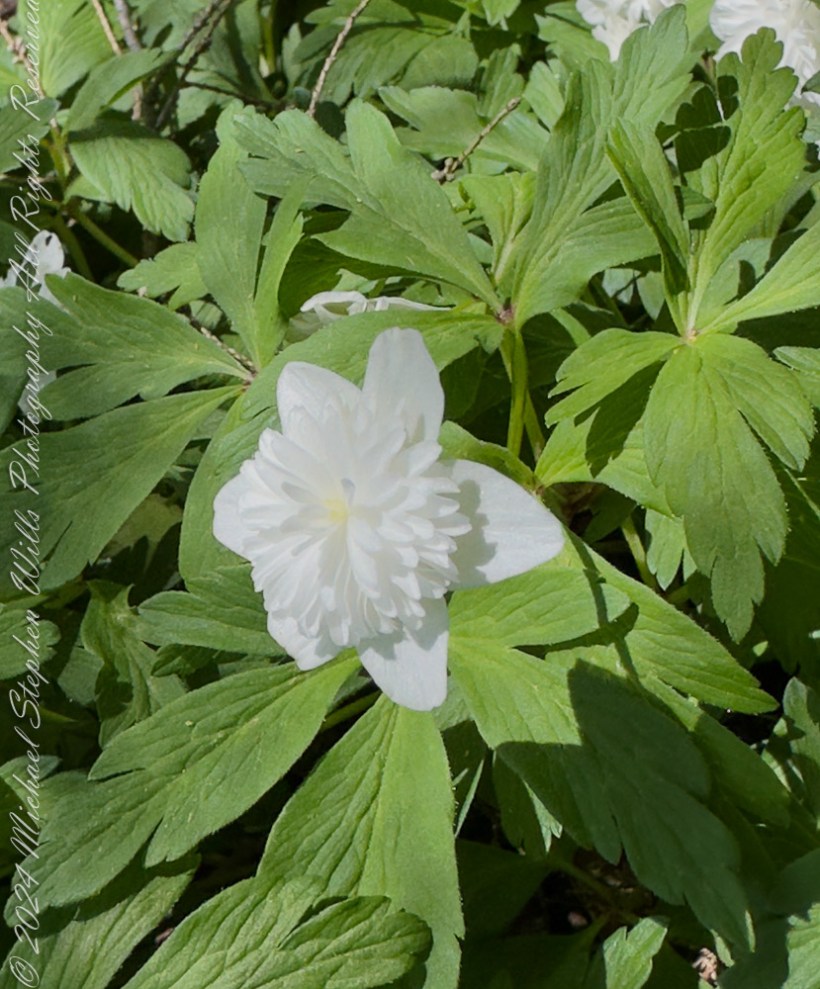
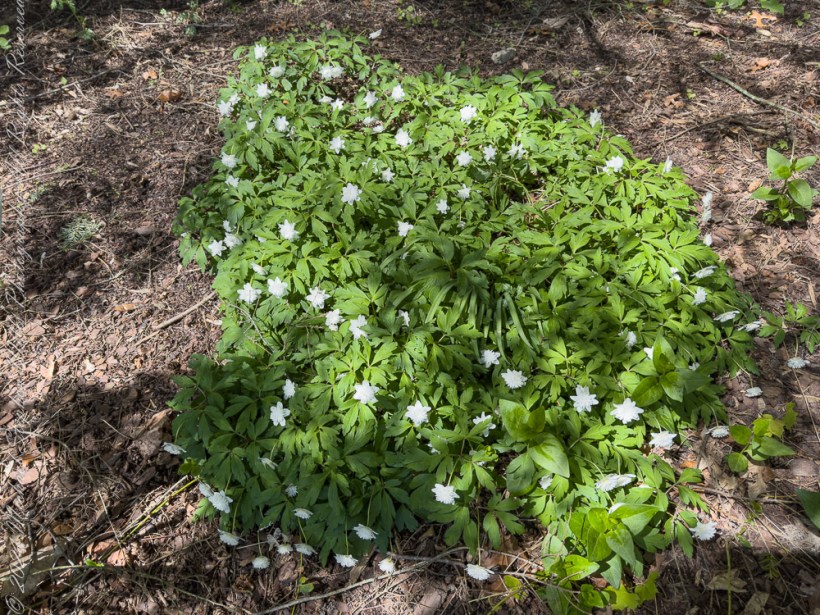
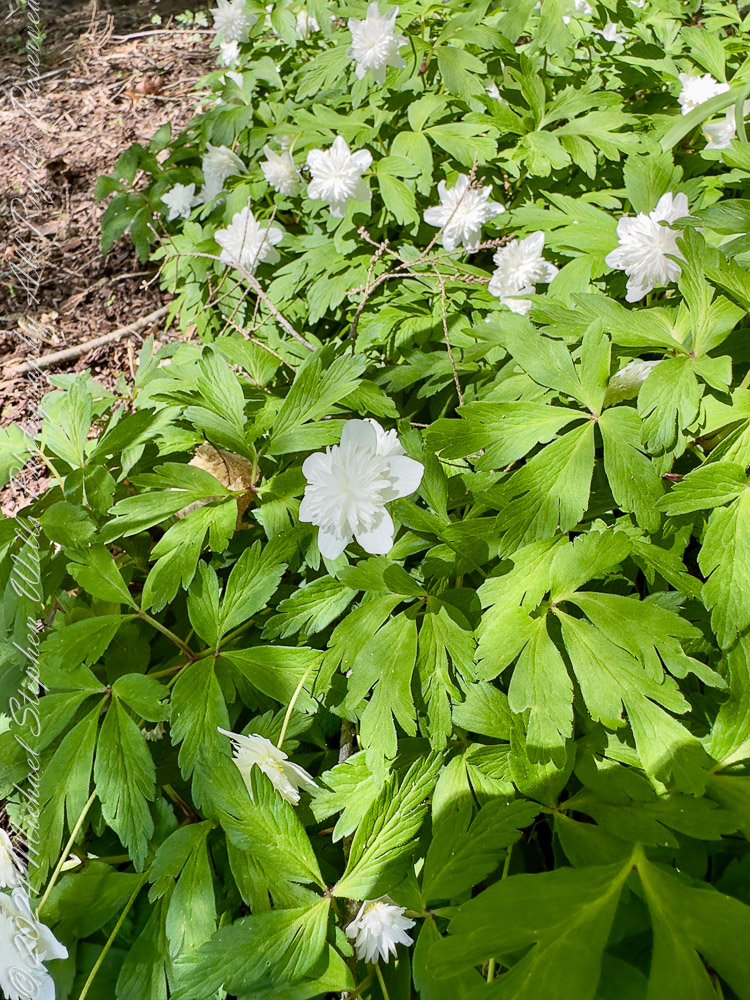
As I wander through our yard, my gaze is irresistibly drawn to a mesmerizing carpet of white blossoms, illuminated by the dappled sunlight filtering through the graceful boughs of our hemlocks. Each bloom, delicate and intricately ruffled, resembles a cluster of tiny, pure clouds resting gently atop a vibrant sea of green. These are Anemone nemorosa, affectionately known as wood anemone or windflower. This particular patch, adorned with a double-flowered variety, owes its presence to the thoughtful hands of our parents, who landscaped the property during the 1970s and 1980s. Their vision continues to bloom each spring, as the cascading petals exude an understated elegance that feels both luxurious and unpretentious—a living legacy woven into the fabric of this place we call home.
The wood anemone is a perennial plant, its rhizomatous growth weaving an intricate tapestry under the dappled sunlight of the forest floor. Each flower arises on its slender stem, surrounded by finely divided trifoliate leaves, their fresh green hue amplifying the purity of the blossoms. The flowers themselves, with their many layers of petal-like sepals, are a marvel of nature’s design, combining elegance and resilience.
The scientific name, Anemone nemorosa, carries echoes of ancient understanding. The genus name Anemone originates from the Greek word ánemos, meaning “wind.” According to classical mythology, these flowers were said to spring forth from the tears of the goddess Venus as she mourned the death of Adonis. The appellation of “windflower” ties to this myth, suggesting that the blooms open only at the bidding of the wind. The species name nemorosa comes from the Latin nemorosus, meaning “of a wooded grove,” aptly describing its preferred habitat.
There is a certain humility in the way the wood anemone thrives—spreading slowly but persistently through deciduous woodlands, forming colonies that greet the spring with their pristine blooms. While the double-flowered variety lacks the simplicity of the single-layered wild form, it retains all the grace that has inspired poets and naturalists alike. It is as if each bloom whispers its secrets to the passing breeze, stories of centuries gone by when druids and herbalists revered the plant as a symbol of protection and healing.
Culturally, the wood anemone has deep roots. In folklore, it was believed to bring luck to those who carried it, while others regarded it as a harbinger of illness if picked prematurely. The flowers were said to close tightly in response to rain, a trait lending them an air of sentience as they interact with their environment.
In medieval herbalism, the plant was thought to possess medicinal properties, though its potent compounds also rendered it toxic if mishandled. It was used cautiously to treat ailments such as rheumatism and respiratory issues. Modern understanding has largely relegated these medicinal uses to history, but the plant’s ability to captivate the senses remains undiminished.
Looking at this verdant patch before me, I am reminded of the transient beauty of spring. Anemone nemorosa emerges briefly, a fleeting celebration of life before retreating into its quiet dormancy beneath the soil. It thrives in the undisturbed spaces of the world, reminding us of the importance of preserving the ecosystems that allow such delicate wonders to flourish.
Today, as the soft May sunlight streams through the trees, illuminating each ruffled blossom, I am filled with gratitude for the enduring gift left by our parents, who lovingly planted these flowers decades ago. The wood anemone, whether viewed as a mythological symbol, a natural marvel, or a fleeting delight, offers a gentle reminder to cherish the beauty that surrounds us. Its ephemeral blooms, returning each spring, stand as a testament to nature’s quiet yet profound artistry—a living masterpiece and a poignant connection to the legacy of those who shaped this cherished landscape here in Ithaca, New York.
Enter your email to receive notification of future postings. I will not sell or share your email address.
Copyright 2024 All Rights Reserved Michael Stephen Wills
As I stood at the edge of Punta del Este, Uruguay, I marveled at the wild beauty of the place. We were at Punta de las Salinas, the very tip of the peninsula, the edge of where the Atlantic Ocean meets the Río de la Plata. This easternmost point of Uruguay, where time feels suspended as restless waves crash against rocky shores. A sea breeze carries a distinct salty tang.
This is at Great Britain Square, Punta de las Salinas of Punta del Este. We are at the tip of the peninsula, the easternmost point of Uruguay. Punta del Este, Departamento de Maldonado, Uruguay
Pam, my wife, stood beside me, a bright smile on her face as the ocean wind tugged at her sunhat. Behind her, rising among the rocks, was an art installation that seemed to embody the spirit of the place “El Canto de las Sirenas” (The Song of the Mermaids). These sculptures by the artist Lily Perkins, their forms shaped and worn by the elements, appeared almost as though they were natural extensions of the rocky coastline. They gazed out to sea, their haunting beauty a poignant reminder of myth and humanity’s eternal connection with the ocean.
The sirens, crafted with an earthy texture and adorned with bits of marine debris, seemed to tell a story of resilience and adaptation. They stood stoically against the backdrop of the churning waves, their barnacle-like surfaces merging seamlessly with their rugged surroundings. I felt a strange connection to them, as if they were silent witnesses to the ever-changing dance of the sea and sky.
Pam during our 2016 South American tour. This is at Great Britain Square, Punta de las Salinas of Punta del Este. We are at the tip of the peninsula, the easternmost point of Uruguay. Over her shoulder is the art installation “El Canto de las Sirenas” (The Song of the Mermaids) (2012) by the artist Lily Perkins. Punta del Este, Departamento de Maldonado, Uruguay
The morning was perfect for photography. I adjusted my Canon camera, capturing the interplay of light and shadow across the jagged rocks, the turquoise waves, and the statues. The textures of the sirens came alive through the lens, each detail hinting at the passage of time and the endless conversations between water and stone. Pam posed in front of one of the sculptures, her presence adding a touch of humanity to the scene, as though she were part of this mythological tableau.
I took a moment to step back and absorb the scene. The coastline stretched out before me, rugged and raw, with the waves crashing in an eternal rhythm. The sirens belonged here, their forms shaped artist hands, then also by the elements. They merged into this unique place, much like the wind, the rocks, and the ocean.
As we walked along the rocky outcrop, the sound of the waves filled the air, drowning out any other noise. It was easy to lose oneself in the hypnotic patterns of the water, the spray catching the sunlight like tiny jewels. I found myself reflecting on the history of this place—Punta del Este, a meeting point of cultures and stories, a place where the natural world and human creativity converge.
Great Britain Square, where we started this journey, seemed an apt setting for such an installation. The name itself evokes a sense of exploration and connection across vast distances, much like the sirens that seem to call out across the waves. The symbolism was not lost on me as I thought about how we, too, were travelers, drawn to the edges of the earth by a desire to explore and understand.
Plaza Gran Bretana (Great Britain Square) is named for the World War II naval battle near here between the German battleship Graf Spee and the English ships Ajax, Achilles and Exeter. The plaza also has an anchor marking the boundary between Rio de la Plata and the Atlantic Ocean.
Pam and I lingered for a while longer, taking in the scenery and enjoying the peacefulness of the moment. The sculptures seemed almost alive, their forms shifting subtly as the light changed. They reminded me of the stories of sirens from ancient mythology—creatures that lured sailors to their doom with their enchanting voices. But here, they seemed more like guardians, watching over the waters and the land, their presence a testament to the enduring power of art and nature.
As the morning wore on, we made our way back, leaving the sirens behind to their eternal vigil. The experience stayed with me, though, a vivid memory of a place where myth and reality intertwine. Punta de las Salinas, with its rugged beauty and its mysterious sirens, had left an indelible mark on my heart.
Enter your email to receive notification of future postings. I will not sell or share your email address.
Copyright 2024 All Rights Reserved Michael Stephen Wills
I had a haunting experience at Cocoa Beach, witnessing a rare fogbow—a ghostly arc formed by fine mist—evoking emotions and reflections on nature’s beauty.
The fog haunted Cocoa Beach for days, softening the edges of the afternoon. I had been walking along Cocoa Beach, feeling the cool ocean breeze on my face, when I noticed a change in the light. It was a little after four, the sun drifting lower in the western sky, its warmth fading into a hazy glow. The air smelled of salt and mist, and waves lapped gently at the shore, their rhythm unbroken by the deepening fog.
And then I saw it.
A pale arc stretched across the horizon, a ghost of a rainbow bending above the waves. At first, I wondered if my eyes were playing tricks on me—where were the usual bright bands of red, orange, and violet? But no, the arc was real, a fogbow, forming where sunlight met the fine sea mist. Unlike the rainbows that appear after summer storms, this one was almost entirely white, as if the ocean had conjured it from air and silence.
Sailors once whispered of such things—a white rainbow at sea, a sign of hidden land or wandering souls. Some believed it to be a bridge between realms, a fleeting passage where the living and the lost might momentarily brush against one another. Others saw it as an omen, a spectral warning of treacherous fog ahead. I wondered what the mariners of old might have thought, standing at the bow of a ship, watching a pale arc rise from the mist, its edges dissolving like breath against glass.
I stood still, watching, as the science of the moment unfolded before me. Unlike traditional rainbows, which form when light bends through large raindrops, fogbows are born from infinitesimally smaller droplets, often less than 0.1 millimeters in diameter. Their size diffuses the light, scattering it so finely that the colors blend together into a spectral whisper rather than a vibrant shout. The physics of it fascinated me—this was diffraction in action, nature bending light in a way that rendered it nearly colorless.
The effect was surreal. The fogbow arched over the breaking waves like something out of a dream, a halo of sea and sky, momentary yet timeless. It seemed to pulse in the shifting mist, visible one moment, fading the next, as if deciding whether to reveal itself fully or slip back into the fog’s embrace.
For several minutes, I just stood there, taking it in. The world felt different inside that mist, quieter, more reflective. The fog dampened the usual sounds of the beach—the calls of shorebirds, the laughter of distant walkers—leaving only the hush of the waves and the distant hum of the ocean’s breath.
I knew that fogbows were rare, requiring just the right balance of thin fog, moisture, and a low-angled sun. I was lucky to be in the right place at the right time, a witness to something subtle yet profound.
And just as silently as it had appeared, the fogbow began to dissolve. The mist thickened, swallowing its arc, the sky shifting back to its usual muted gray. But the memory of it lingered—a white rainbow over the sea, ephemeral and elusive, like a secret the ocean had briefly chosen to share.
Enter your email to receive notification of future postings. I will not sell or share your email address.
Copyright 2024 All Rights Reserved Michael Stephen Wills
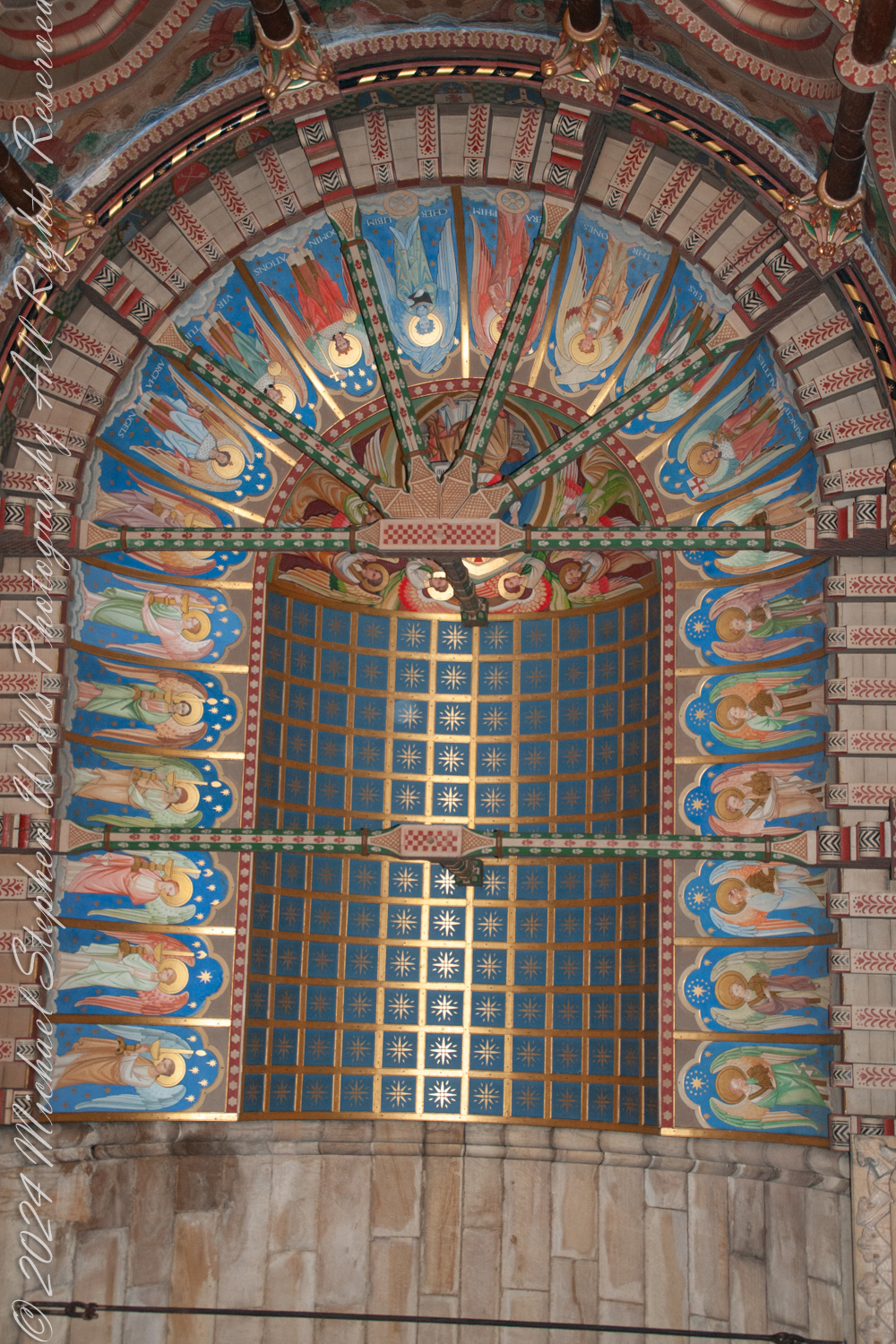
Saint Fin Barre’s Cathedral features stunning Victorian Gothic artistry, with symbolic ceilings and intricate designs reflecting divine themes and craftsmanship.
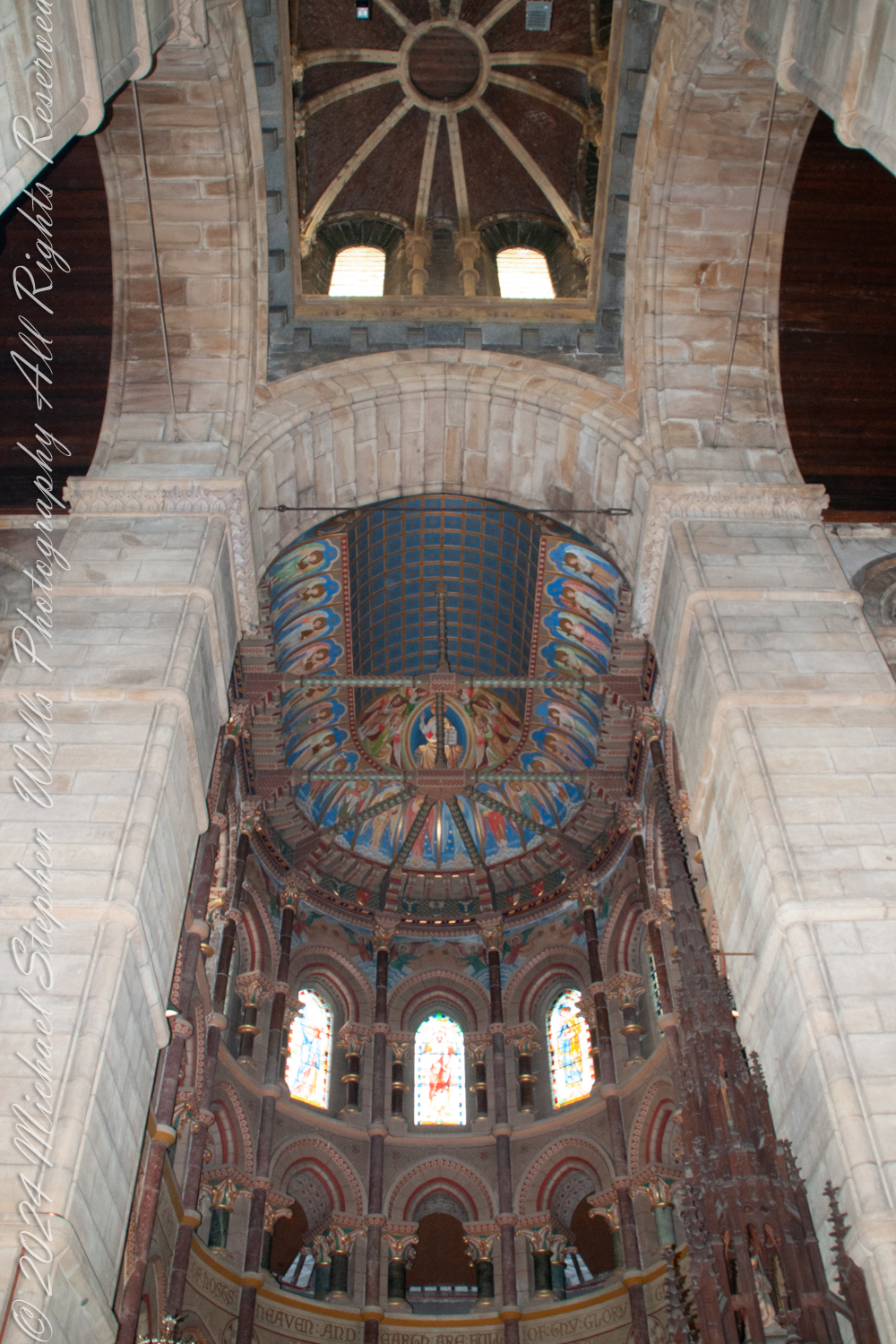
As I stood on the floor of Saint Fin Barre’s Cathedral in Cork, Ireland, I gazed upward toward the Apse and sanctuary ceiling at the eastern end. Turning my eyes directly to the west, I found myself captivated by the crossing ceiling—the very heart where the nave intersects with the transepts, forming the iconic cross shape typical of Gothic cathedral architecture.
In my imagination the central tower and spire soared majestically above the crossing ceiling. The ceiling there featured intricate architectural elements like ribbed vaults and a lantern tower, allowing light to flood into the space below. This crossing served as a beautiful transitional space between the sanctuary and the main body of the cathedral, the nave.
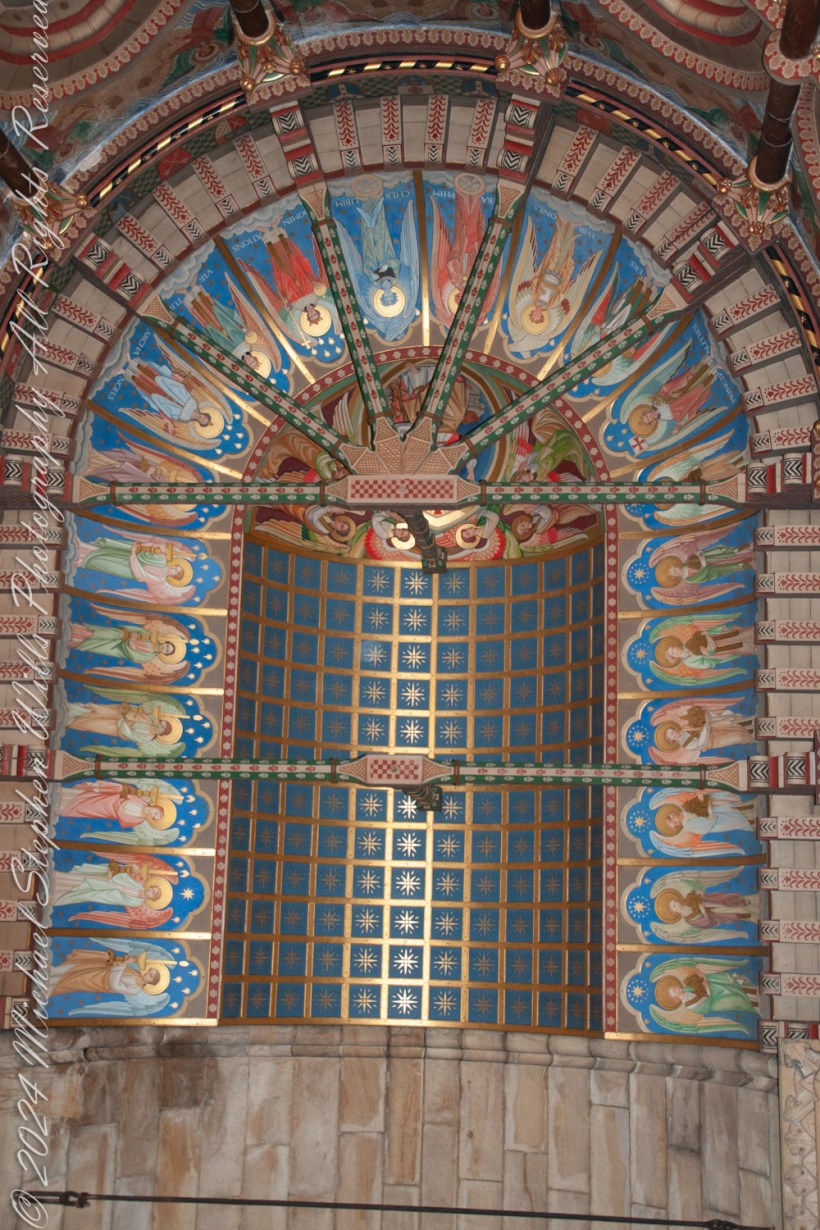
Focusing my camera on the Sanctuary Ceiling of Saint Fin Barre’s Cathedral, I was struck by the stunning example of Victorian Gothic Revival artistry before me. Designed by the architect William Burges, who envisioned every detail of the cathedral, the ceiling reflected his meticulous attention to detail and his love for vibrant colors and symbolic ornamentation.
The rich iconography drew me in. Angels adorned the ceiling, likely representing the celestial hierarchy or the glorification of Christ. Each angel held symbolic items—trumpets, stars, or scrolls—emphasizing their roles as messengers and worshippers of God.
The radiant color scheme was breathtaking. Deep blues, shimmering golds, lush greens, and vivid reds combined to create a striking visual effect, symbolizing heaven and divine majesty. Gold accents caught and reflected the light, reinforcing the idea of heavenly glory.
Geometric and star patterns embellished the vaults. The blue panels dotted with gold stars symbolized the heavens—a common motif in Gothic church ceilings. These stars seemed to represent divine guidance or eternity, adding another layer of meaning to the already rich tapestry above me.
The structural elements themselves were works of art. Painted ribs intersected across the ceiling, highlighting the Gothic architecture’s ribbed vaulting. Their intricate designs in green and red emphasized both structural beauty and functional elegance.
The symbolism was profound. The angels with their instruments and the starry heavens collectively evoked themes of divine worship and the glory of God’s kingdom. This alignment with the Victorian Gothic ideal of infusing spiritual symbolism into architectural elements was evident in every brushstroke.
Knowing that William Burges envisioned Saint Fin Barre’s Cathedral as a “Bible in stone,” I felt a deep connection to his purpose. Standing beneath the Sanctuary Ceiling—the focal point above the altar—I sensed how it served to elevate worshippers’ gaze and spirits toward the divine.
Capturing these scenes through my lens, I was documenting a testament to the artistic and architectural achievements of the 19th century. Saint Fin Barre’s Cathedral is a place of worship and also a living gallery of history, faith, and unparalleled craftsmanship.
Enter your email to receive notification of future postings. I will not sell or share your email address.
Copyright 2024 All Rights Reserved Michael Stephen Wills











 Michael Stephen Wills Photography